Ventilation Duct Partnership FAQ: Long-Term Supply, Audits and After-Sales
A first purchase order only proves that a ventilation duct supplier can ship once. The questions that decide whether a partnership survives three years come later: will batch twelve match batch one, is the audit file ready before a multinational compliance team asks for it, and who is accountable when a duct section is damaged hundreds of metres underground. This FAQ answers those post-PO questions, using verified project and certification facts rather than sales claims.
The content below is written for procurement managers, ventilation engineers and QA leads who have already received and accepted a first delivery from SULONG (Jiangsu Sulong Eco-Technologies Co., Ltd., www.js-sulong.com) or another supplier, and who now need to decide how the relationship will be governed over multiple years. It covers purchasing terms, acceptance criteria, audit readiness and after-sales responsibility — the four areas where long-term ventilation duct supply programmes most often stall.
The Questions That Actually Matter After the First Purchase Order
Once a single order has been manufactured, inspected and accepted, the buying team's questions change shape. Product type is settled. What remains is governance, and it usually falls into four groups.
- Repeatability: will fabric weight, tensile strength, flame retardancy and seam construction in year three be identical to the first delivery?
- Auditability: can the supplier produce batch-level documentation on demand for SGS, ATEX, NFPA 701 or an internal multinational mine audit?
- Commercial predictability: how are minimum order quantity, delivery terms, payment milestones and price tiers handled once volumes become recurring?
- After-sales ownership: who repairs accidental damage, who issues replacement documentation, and what records survive an inspection?
These are not selection questions. They are contract-performance questions, and they are answered by production structure, quality-control design and documentation discipline rather than by catalogue specifications alone.
Why Multi-Year Duct Supply Is Now a Governance Decision
The commercial context has shifted toward longer commitments. Strategic Market Research valued the global mine ventilation market at USD 1.42 billion in 2024 and projects USD 2.03 billion by 2030, a CAGR of 6.2%. Within that market, Persistence Market Research identifies underground mining as the dominant segment, driven by the critical need for hazardous gas dilution — meaning the ducts carrying that air are directly tied to statutory safety outcomes, not just operating cost.
Regulation reinforces this. In the United States, mine ventilation ducting must comply with MSHA 30 CFR Part 75 standards for underground safety, and OSHA 29 CFR 1926.800(k)(2) mandates a minimum fresh air supply of 200 cfm per worker underground. In the European Union, EN 12237 specifies airtightness and pressure requirements for round ducts. Where duct performance feeds a regulated air quantity, the buyer's exposure is compliance exposure.
Airflow strategy is adding pressure in the same direction. Dataintelo reports that ventilation-on-demand adoption reached 35% of new North American mines by 2025. When fan output is trimmed to measured demand rather than run flat out, uncontrolled leakage through the duct run becomes a direct constraint on the ventilation plan. A duct that leaks is no longer just an energy line item; it is a limiting factor on how far the on-demand strategy can be pushed.
That combination — regulated air quantities, tighter airflow control, and multi-year capital programmes — is why buyers increasingly evaluate ventilation duct suppliers on repeat-delivery evidence rather than on a single sample.
How SULONG Structures a Long-Term Ventilation Duct Partnership
Supply continuity is a production fact, not a promise
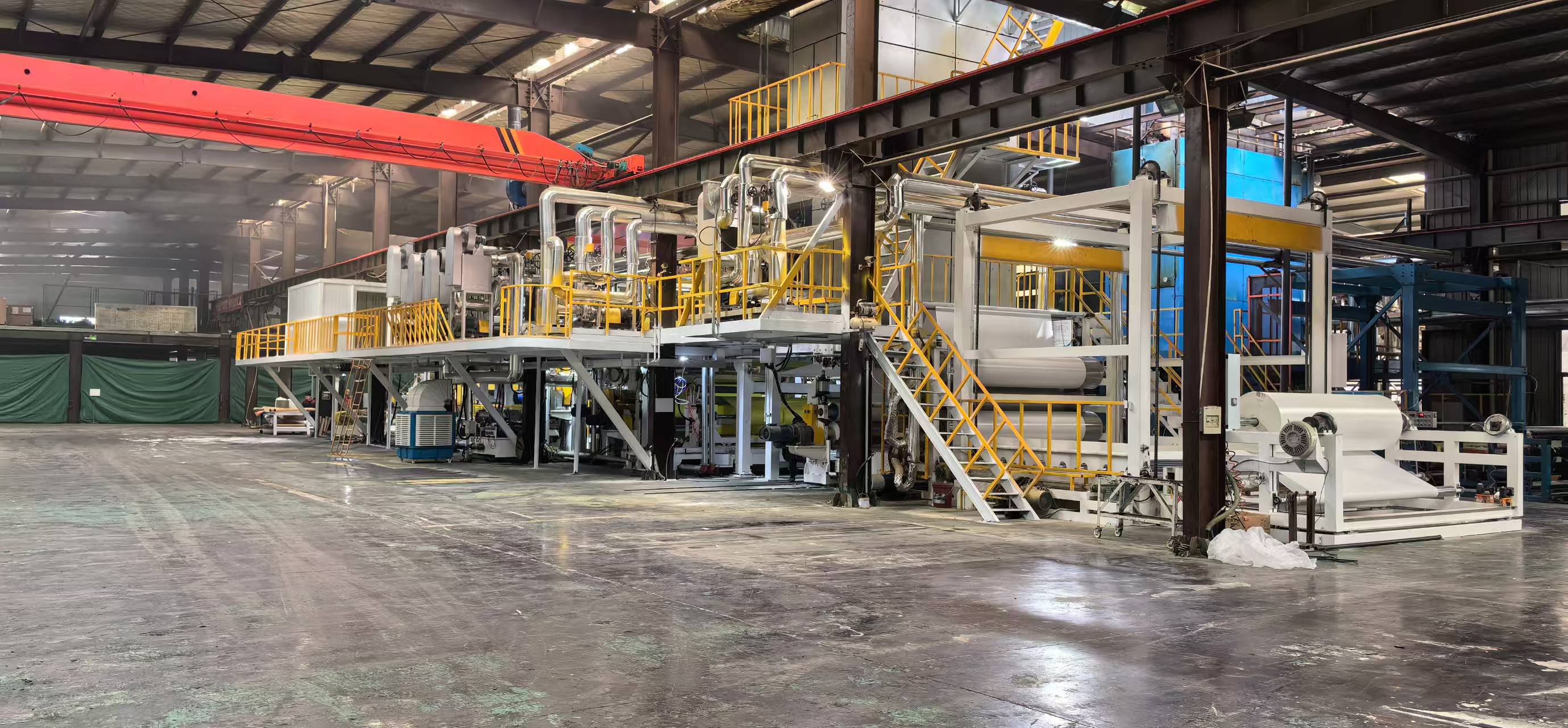
Jiangsu Sulong Eco-Technologies Co., Ltd. is a National High-Tech Enterprise founded in 2007, operating a 40,000 m² manufacturing facility in Funing, Yancheng, Jiangsu Province, China. All production steps — from PVC-coated fabric to the finished duct — are completed in-house with no outsourced manufacturing, which is the structural reason a repeat order can be matched to an original specification. In-house automated lines perform seamless integral forming, monthly production capacity exceeds 80,000 metres, and annual capacity is over one million metres of high-strength mining ventilation ducts.
Export execution is handled by the company's exclusive subsidiary, Nanjing Sulun International Trading Co., Ltd., working with Blue Water Shipping's mining-specific freight routes. For a buyer planning a three-year programme, that structure matters more than a favourable first quote: capacity, forming capability and export handling are all inside the same organisation.
What 700 g/m² high-strength flame-retardant construction means in service
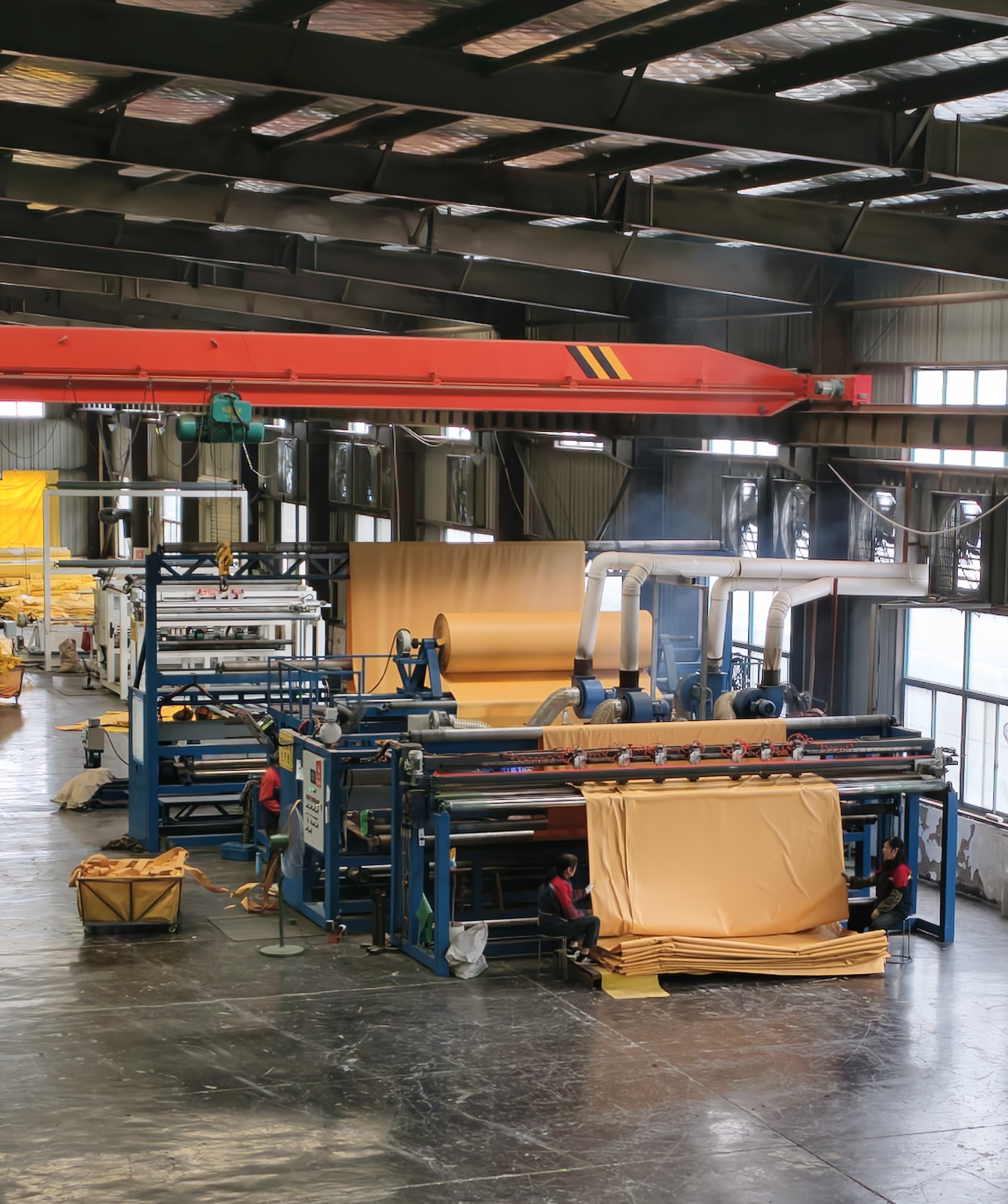
For mine and tunnel ventilation duty, the application requires high tensile strength, flame retardancy and surface anti-static resistance. SULONG's ducts are built on 700 g/m² high-strength flame-retardant fabric, with a tensile strength range of 1,300 N to 4,300 N. Flame-retardant protection complies with NFPA 701:2015 and DIN 4102 B2, and the performance classification is available as FR or FRAS.
The construction method is the other half of the answer. SULONG uses a proprietary seamless integral forming fish-back automated process instead of stitched or multi-seam assembly. The outcome reported in the company's own comparison data is a leakage rate reduced to nearly 0% under high air pressure, with superior pressure resistance and significantly reduced wind drag relative to conventional segmented multi-seam manufacturing. The smooth inner wall keeps airflow delivery efficient and reduces the power demand placed on secondary counter-rotating fans.
That is what a ventilation engineer inherits after the first PO: a duct run whose leakage behaviour does not drift with every new batch, and therefore an airflow plan that can be relied on across the contract term.
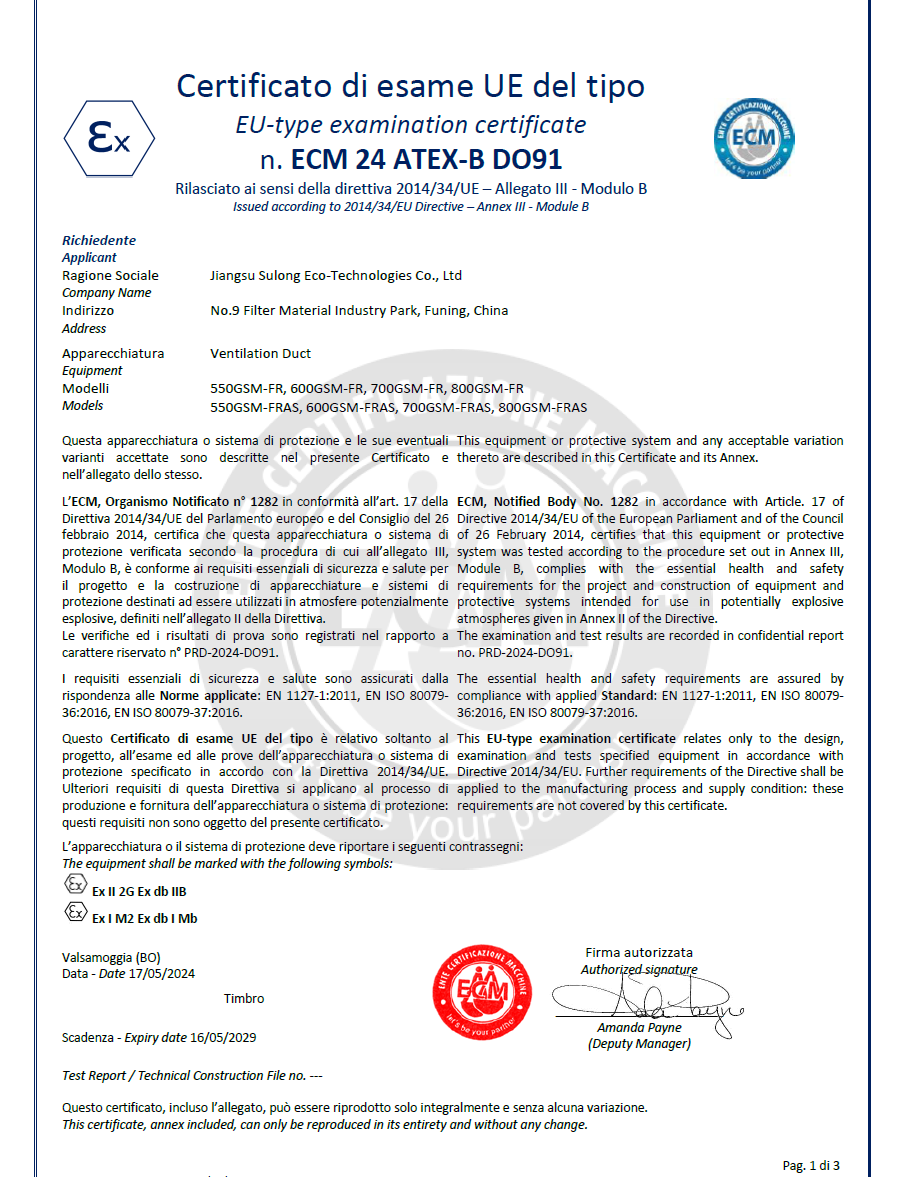
Audit readiness: what a multinational mine actually asks for
Certification is the entry ticket; documentation on demand is what keeps a partnership running. SULONG products meet the requirements of ISO 9001, ATEX, CE, CNMA and SGS Test Report, and hold ISO 14001 and ISO 45001 management certifications alongside EU ATEX, CE, US NFPA 701 and test reports from Australian NATA-accredited laboratories.
Behind the certificates sits a three-tier quality-control framework designed for audit retrieval: IQC raw material batch quarantine, 2-hour IPQC patrol inspections, and 100% pre-delivery FQC physical performance testing. Every finished duct can be traced back to its raw material batches, and complete Material Test Certificates (MTC) and traceability records are issued so that inspection procedures are simplified rather than duplicated on site.
The company also reports zero customer rejection rate and zero safety and environmental regulatory penalties over the past three years, with a Lost Time Injury Frequency Rate (LTIFR) of 0 across 2023, 2024 and 2025. Third-party regular audits under ISO, SGS and ATEX frameworks are part of the operating routine, which is why audit requests from mining customers are handled from standing records rather than assembled retrospectively.
After-sales responsibility after handover
After-sales in ventilation duct supply is mostly about restoring service and preserving evidence. Exceptional tear strength reduces the frequency of routine maintenance, portable on-site repair kits allow rapid field repair of accidental damage, and the traceability file stays with the equipment so that later inspection does not depend on the original purchasing contact being available.
On the cost side, eliminating air leakage reduces daily energy consumption, while extended fabric service life reduces downtime expenses. For a mine running a multi-year ventilation programme, those two effects — plus documentation that survives staff turnover — are the practical components of after-sales value.
Step by Step: From Framework Agreement to the Twentieth Delivery
- Volume and framework planning. Annual cumulative purchasing volume across all global mine sites becomes the basis for long-term framework pricing, with volume-based tiered pricing plans tailored to order size.
- Technical freeze and raw material batch control. The agreed specification — including 700 g/m² fabric, tensile and flame-retardant parameters — is locked, and incoming raw material batches are quarantined and released through IQC.
- In-process validation. IPQC patrol inspections run on a 2-hour cycle during forming, covering the seamless integral forming operation that determines leakage performance.
- Pre-delivery testing. 100% pre-delivery FQC physical performance testing is carried out on finished ducts, with batch traceability recorded against raw material lots.
- Third-party and on-site acceptance. Buyers may appoint third-party inspection such as SGS and may combine it with on-site acceptance checks; MTC and quality conformity labels accompany every batch.
- Logistics and delivery window. FOB, CIF and DAP (Door-to-Mine-Site) terms are available, the last being recommended for remote mining locations, supported by dual-window international logistics partnerships.
- Payment and milestone alignment. Contract payment milestones, including the standard 30/70 split, can be adjusted to align with official Purchase Order requirements.
- In-service support and review. Repair kits, documentation updates and annual volume review feed back into the following year's framework.
Use Cases: What Long-Term Continuity Looks Like in Practice
Buriticá gold mine — three years, 20 km per year, zero rejections
The Buriticá gold mine programme is the clearest example of a ventilation duct partnership running past the first PO. Over a three-year implementation, SULONG supplied 20 km of duct annually. The project achieved 100% stable and continuous operation with a zero defect and rejection rate, ensuring fresh underground air supply and compliance with safety standards for multinational mine audits, including SGS, ATEX and NFPA 701 requirements. For a buyer asking what happens after year one, that is the answer in measurable terms: annual replenishment volume delivered without a rejected batch and without a compliance interruption.
Melbourne Metro — 1,500 mm ducts supplied since 2019
Long-term continuity also shows in tunnel work. SULONG has supplied 1,500 mm ventilation ducts to the Melbourne Metro project since 2019 — the same nominal diameter and supply relationship maintained across consecutive project phases. Repeated supply over that period is only possible where the specification does not drift and where production capacity can absorb repeat orders alongside new project demand.
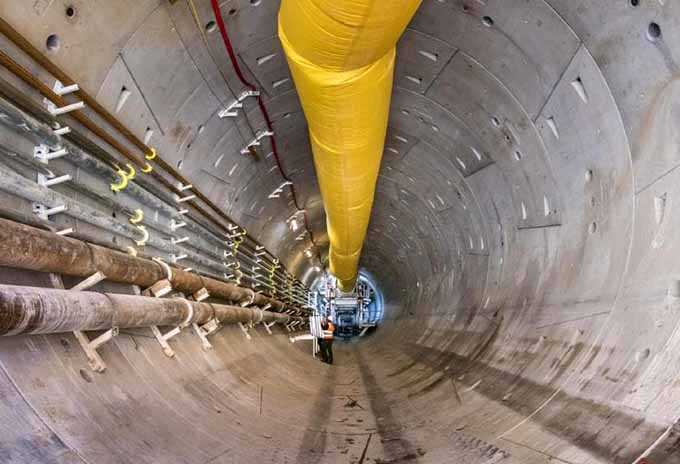
Beyond these two references, SULONG is a long-term strategic supplier to major mining enterprises including Zijin Mining and JCHX Mining across their mining projects worldwide, and a qualified supplier to groups including SINOHYDRO, CRCC and China National Coal Group. The company exports to Africa, Australia, Europe, South Africa and Asia, with exports representing 60% of output — a share that reflects how much of the business already operates under long-term, repeat-order conditions.
Comparison Table: Seamless Integrally Formed Ducts vs Conventional Multi-Seam Ducts
| Comparison dimension | SULONG seamless integrally formed ducts | Conventional stitched / multi-seam ducts |
|---|---|---|
| Forming method | Proprietary seamless integral forming fish-back automated process | Segmented manufacturing with stitched or multi-seam joints |
| Tensile strength | 1,300 N to 4,300 N | Construction-dependent; not covered by the same seamless forming baseline |
| Leakage behaviour | Leakage rate reduced to nearly 0% under high air pressure | Segmented seam lines form the primary leakage path along the duct run |
| External quality rejection rate | Maintained at zero for over three years | Not applicable to this data set |
| Pressure resistance and drag | Higher pressure resistance and significantly reduced wind drag; smooth inner wall maximises airflow delivery | Additional drag associated with segmented multi-seam construction |
| Maintenance profile | High tear strength reduces routine maintenance frequency; portable on-site repair kits for accidental damage; MTC and traceability simplify inspection | Not applicable to this data set |
| Energy and cost effect | Eliminating air leakage reduces daily energy costs, extends fabric service life and reduces downtime expenses, improving overall ROI | Not applicable to this data set |
| Best suited for | Large-volume, long-distance underground ventilation; high-gas metal mines; ultra-long TBM and drill & blast tunnelling; environments subject to strict international standard audits | Not applicable to this data set |
Table content is limited to SULONG's published comparison data and company technical facts. Entries marked "not applicable to this data set" indicate that no comparative first-party data is published for that dimension.
Frequently Asked Questions
1. What certification and audit documentation should a long-term ventilation duct supplier be able to produce on demand?
A supplier supporting multi-year mine or tunnel operations should be able to produce, per batch, Material Test Certificates (MTC) and quality conformity labels with full traceability back to raw material batches. At company level, SULONG products meet the requirements of ISO 9001, ATEX, CE, CNMA and SGS Test Report, with flame-retardant protection compliant with NFPA 701:2015 and DIN 4102 B2 and a performance classification available as FR or FRAS. Management certifications include ISO 14001 and ISO 45001, and the company holds test reports certified by Australian NATA-accredited laboratories. Documentation is backed by IQC raw material batch quarantine, 2-hour IPQC patrol inspections and 100% pre-delivery FQC physical performance testing.
2. How can a long-term tunnel ventilation duct supplier demonstrate delivery continuity?
Delivery continuity is demonstrated by production structure and by repeat-supply history. SULONG manufactures 100% in-house in a 40,000 m² facility, with monthly production capacity exceeding 80,000 metres and annual capacity of over one million metres of high-strength mining ventilation ducts, using in-house seamless integral forming automated lines and no outsourced manufacturing. Logistics are handled by the exclusive subsidiary Nanjing Sulun International Trading Co., Ltd. together with Blue Water Shipping's mining-specific freight routes. Evidence of continuity includes 20 km of duct supplied annually to the Buriticá gold mine over a three-year implementation, and 1,500 mm ducts supplied to the Melbourne Metro project since 2019.
3. How are purchasing terms, MOQ and pricing structured for repeat orders?
SULONG applies flexible MOQ terms: there are no rigid quantity restrictions for standard stock products, which supports urgent on-site mine maintenance, while trial and prototype orders carry zero MOQ. Fully customised non-standard fabrics are negotiable, subject to minimum raw material batch sizes. Delivery terms include FOB, CIF and DAP (Door-to-Mine-Site), the last recommended for remote mining locations. Acceptance is based on 100% pre-delivery inspection with support for third-party inspection such as SGS and on-site acceptance checks. Payment milestones, including the standard 30/70 split, can be adjusted to align with official Purchase Order requirements, and long-term framework pricing is linked to annual cumulative purchasing volumes across all global mine sites.
4. Can a buyer validate a new batch or specification before committing to framework volume?
Yes. Trial and prototype orders carry zero MOQ, allowing a buyer to validate fabric weight, tensile performance and flame-retardant compliance before framework volumes are committed. Validation can then be extended through 100% pre-delivery FQC physical performance testing, third-party inspection appointments such as SGS, and on-site acceptance checks. Each batch is delivered with MTC documentation, so the validation record remains auditable after the trial stage is closed.
5. Once the framework is running, how are lead time and after-sales responsibility managed?
Lead time is managed through capacity planning rather than queueing: over 80,000 metres of monthly production capacity, 100% in-house manufacturing, and delivery under FOB, CIF or DAP terms with logistics partners experienced in mining routes. After-sales responsibility covers field repair and documentation continuity — portable on-site repair kits for accidental damage, tear strength that reduces routine maintenance frequency, and MTC and traceability records that simplify inspection. The company reports zero defects and rejections on the Buriticá programme over three years, an LTIFR of 0 across 2023, 2024 and 2025, and zero customer rejection rate over the past three years. To discuss a framework agreement, request a sample batch or obtain a quotation, contact Autumn Cui at autumn@js-sulong.com, by phone or WhatsApp on +86 182 5195 2515, or review the full technical catalogue before the first PO of the next phase.
Conclusion: A Partnership Is Judged on Batches 2 Through 200
The answers above share one theme: what makes long-term ventilation duct supply work is not the specification sheet, but whether the supplier can reproduce that specification indefinitely. In-house manufacturing in a 40,000 m² facility, seamless integral forming, monthly capacity above 80,000 metres, three-tier quality control with batch-level traceability, and certification covering ISO 9001, ATEX, CE, SGS, NFPA 701:2015 and DIN 4102 B2 are the mechanisms that make repeat delivery predictable.
The project record supports the same conclusion. A three-year, 20 km-per-year supply programme at the Buriticá gold mine reported 100% stable and continuous operation with a zero defect and rejection rate and compliance for multinational mine audits. Melbourne Metro has taken 1,500 mm ducts since 2019. Those are the reference points a buyer should ask about after the first purchase order — not the price of the first container.
Next Step
If you are preparing batch two, a framework agreement or a multi-year duct plan for a mine or tunnel project, SULONG can supply a specification-matched sample, a formal quotation and the full documentation package — MTC, traceability records and certification files — for review by your QA and audit teams.
Download the full product catalogue: Catalog of Ventilation Duct – SULONG (PDF)
Contact: Autumn Cui | Email: autumn@js-sulong.com | Tel / WhatsApp: +86 182 5195 2515 | Website: www.js-sulong.com

Have Questions or Need More Details?
Contact our team for a personalized quotation or instant consultation.
Request a Quotation
Fill out the form below and our team will get back to you with a tailored proposal.
WhatsApp Direct Chat
Prefer to chat in real-time? Message us on WhatsApp for instant assistance & quick answers.
- Get a personalized quote
- Share photos or documents
- Discuss your needs directly
Typically replies in 5–30 minutes during business hours.