Ventilation Duct Supplier Evaluation: Going Beyond Certifications
A certificate proves that a system was audited. It does not prove who will weld your duct fabric next month, how quickly a replacement coil can reach a shaft in a remote region, or whether the same supplier will still be able to serve your project in year three. That gap is where most ventilation duct sourcing risk actually lives.
This guide is written for procurement managers, project engineers and sourcing teams who are shortlisting ventilation duct suppliers for mining and tunneling work. It treats certifications as a baseline, then adds the evidence layers that separate a supplier who can ship once from a supplier who can carry a project.
Jiangsu Sulong Eco-Technologies Co., Ltd. (SULONG) is a manufacturer of composite polymer mining and industrial ventilation ducts based in Jiangsu Province, China, established in 2007. It is used here as a worked example of the evidence a buyer should be able to request — not as a replacement for your own evaluation.
Problem Definition: The Certification Trap
Certification answers a narrow question: does this product or system meet a defined requirement at the moment it was tested or audited? Procurement decisions fail when that narrow answer is treated as a complete picture of supplier reliability. Three failure patterns repeat across underground projects.
- Documented compliance, outsourced production. A supplier holds valid certificates but subcontracts fabric coating, welding or final assembly. The certificate is real; it simply does not describe the facility that will produce your order. When a defect appears, the buyer has to negotiate across parties that were never part of the original quotation.
- Certified material, unproven continuity. A fabric sample passes flame retardancy and tensile testing, but the supplier cannot show that it has supplied comparable underground projects over a sustained period. Compliance is confirmed; repeatability is not.
- Matched specification, mismatched logistics. The diameter and section length match the drawing, but coil weight, connection type or packaging is wrong for a shaft with limited lifting capacity or a site with narrow access roads. The duct is correct on paper and unusable on site.
None of these three failures is detectable by reading a certificate. They are detectable by reading production records, capacity figures, export history and reference lists — which is precisely why a supplier evaluation should be structured as an evidence hierarchy rather than a document checklist.
Industry Background: Why Supplier Reliability Became a Procurement Question
Mine ventilation ducting is a mature category, but the demand behind it is expanding. The global mine ventilation market was valued at USD 1.42 billion in 2024 and is projected to reach USD 2.03 billion by 2030, corresponding to a CAGR of 6.2%, according to Strategic Market Research. Within that market, underground mining accounted for the dominant segment, driven largely by the need for hazardous gas dilution, according to Persistence Market Research.
Regulation sets the compliance floor rather than the buying decision. In the United States, mine ventilation ducting must comply with MSHA 30 CFR Part 75 standards for underground safety. OSHA 29 CFR 1926.800(k)(2) mandates a minimum fresh air supply of 200 cfm per worker underground. On the duct construction side, EN 12237 specifies airtightness and strength and leakage requirements for round sheet metal air ducts — a standard written for metal ductwork rather than fabric ducts, which is a useful reminder that the same word, certified, describes different things for different duct constructions.
The consequence for buyers is straightforward. Compliance is a pass/fail threshold that many suppliers can clear. Project performance over a multi-year schedule is not. As underground programs lengthen, evaluation criteria shift from the product datasheet toward the supply relationship behind it.
Detailed Solution: Rank Your Evidence Before You Rank Suppliers
The most effective change a procurement team can make is to stop treating supplier documents as equally weighted. Four tiers of evidence exist, and each tier answers a different question.
Tier 1 — Certificates and management system documents
This tier confirms that a management system exists and that defined processes are followed. For ventilation ducting, the relevant set typically includes ISO 9001, ISO 14001 and ISO 45001 for quality, environmental and occupational health and safety management, plus product-level approvals such as EU ATEX, CE and US NFPA 701 depending on the market and application. SULONG holds ISO 9001, ISO 14001, ISO 45001, EU ATEX, CE and US NFPA 701 certifications. This tier is necessary and insufficient: it says nothing about capacity, delivery or who performs the work.
Tier 2 — Material and product test evidence
This tier converts a claim into a measurement. Ask which test method was used and which laboratory issued the report, because a result without a method is not comparable across suppliers. SULONG's flexible and spiral ventilation ducts are approved to flame retardant standards NFPA 701:2015 and DIN 4102 B2, with tensile and tear strength approved under the DIN 53354 and DIN 53363 test methods, and the company holds test reports certified by Australian NATA laboratories. When a supplier can name the standard, the method and the lab, you can compare that evidence against another supplier's evidence on equal terms.
Tier 3 — Production evidence
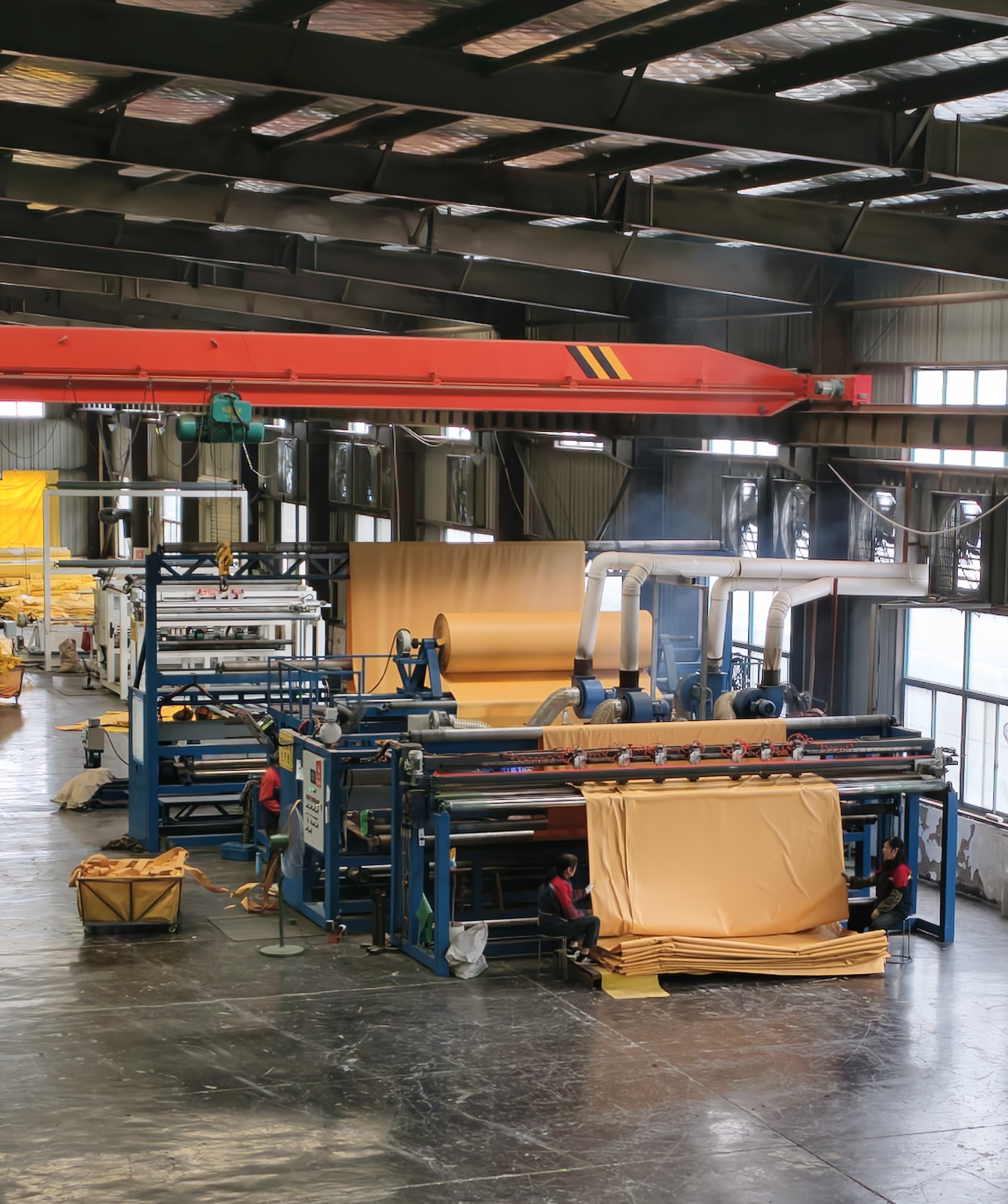
This is the tier most buyers skip, and the tier that most often explains later problems. It answers a single question: does the supplier make the product, or assemble it from purchased components?
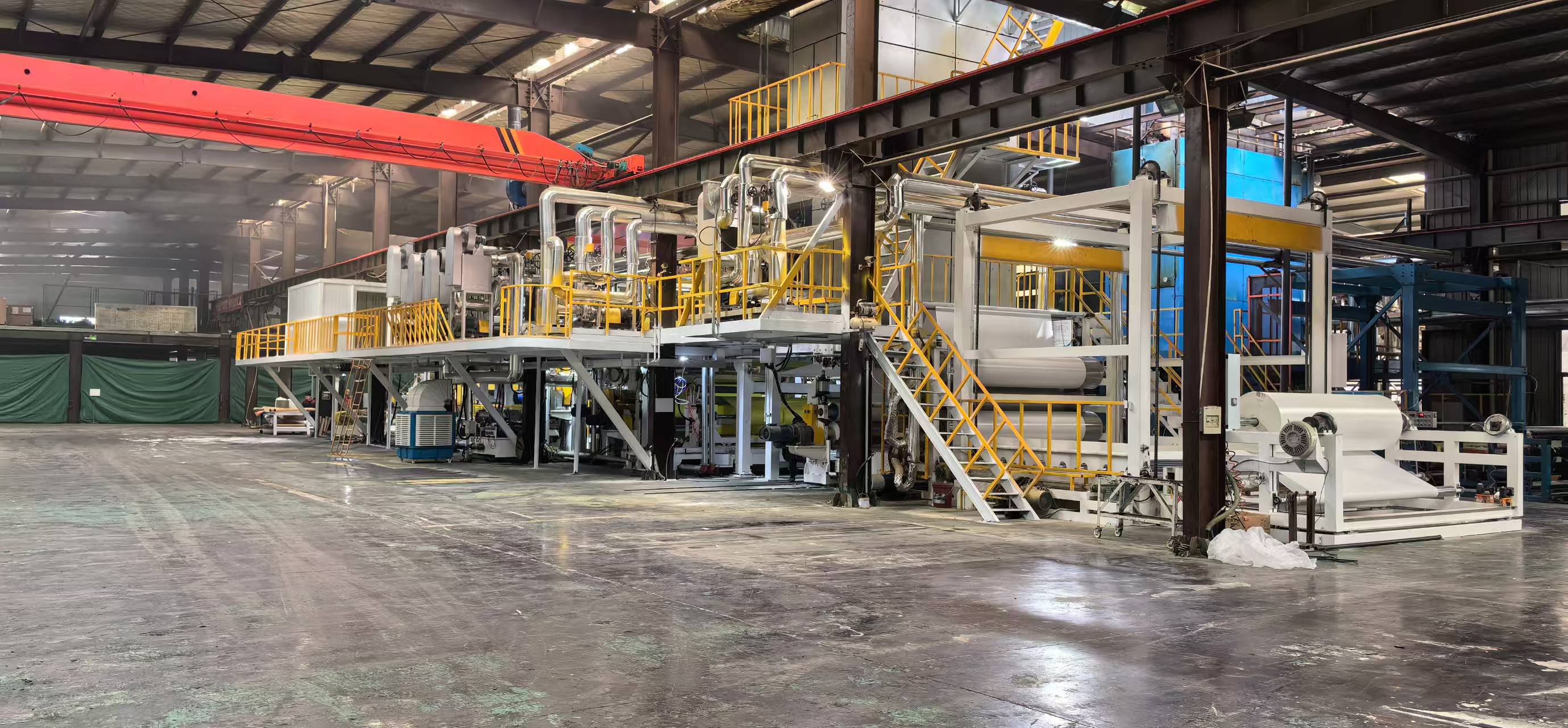
SULONG states that it delivers 100% in-house, automated production with all processes self-produced and no outsourced manufacturing. The manufacturing facility covers 40,000 m² and employs approximately 68 staff, including an R&D team of 18 specialists. Annual production capacity exceeds 1 million meters of high-strength mining ventilation ducts. Products reach tensile strength up to 4300 N through seamless one-piece forming technology. None of these figures is a compliance statement; collectively they describe the ability to absorb a project schedule.
Tier 4 — Reference and continuity evidence
This tier answers the question that matters most in year two: has this supplier already done this before, and for how long? A reference list is more informative when it includes project type, region and duration rather than only customer names.
SULONG is a long-term strategic supplier for global mining enterprises including Zijin Mining and JCHX Mining, and has been a qualified supplier to major Chinese groups including SINOHYDRO, CRCC and China National Coal Group. The company also has a long-running supply relationship with the Melbourne Metro Rail Project in Australia, dating from 2019. Export business accounts for 60% of total sales, with major markets including Africa, Australia, Europe, South Africa, Asia and China. Taken together, this tier is the closest available proxy for delivery reliability.
Six Checkpoints for Evaluating Ventilation Duct Suppliers
1. Who physically manufactures the duct?
Ask for the production location, the process steps performed on site, and which steps, if any, are subcontracted. A facility that coats its own fabric, welds its own seams and forms its own duct sections has fewer handoff points where quality can drift. Verify the answer against a plant image or a live video walkthrough rather than accepting the wording of a certificate.
2. Can capacity be matched to your consumption rate?
Duct consumption on an advancing face is predictable in meters per week. Compare that figure against the supplier's monthly output and their other committed orders. A supplier producing over 1 million meters of high-strength mining ventilation ducts annually has meaningful headroom, but the relevant question is what portion of that capacity is already allocated. Also confirm that the required size actually falls inside the standard range: SULONG flexible ventilation ducts cover diameters from 200 mm to 3,200 mm with section lengths from 1 m to 300 m, while spiral ventilation ducts cover 200 mm to 2,800 mm with section lengths from 1 m to 20 m.
3. Is quality evidence traceable to a test method?
Ask for the test report, not a summary of it. Confirm the applicable standard, the method, the issuing laboratory and the date. Where flame retardancy is a site requirement, confirm whether the duct is FR or FRAS rated, since these are not interchangeable in underground applications. Spiral ducts are manufactured by welding, with spring steel wire of 5 mm to 10 mm providing reinforcement, and material weight is selectable between 300 gsm and 2,000 gsm — specification choices that should map to your ventilation engineering requirement rather than to whatever is in stock.
4. What does the delivery record look like, not the delivery promise?
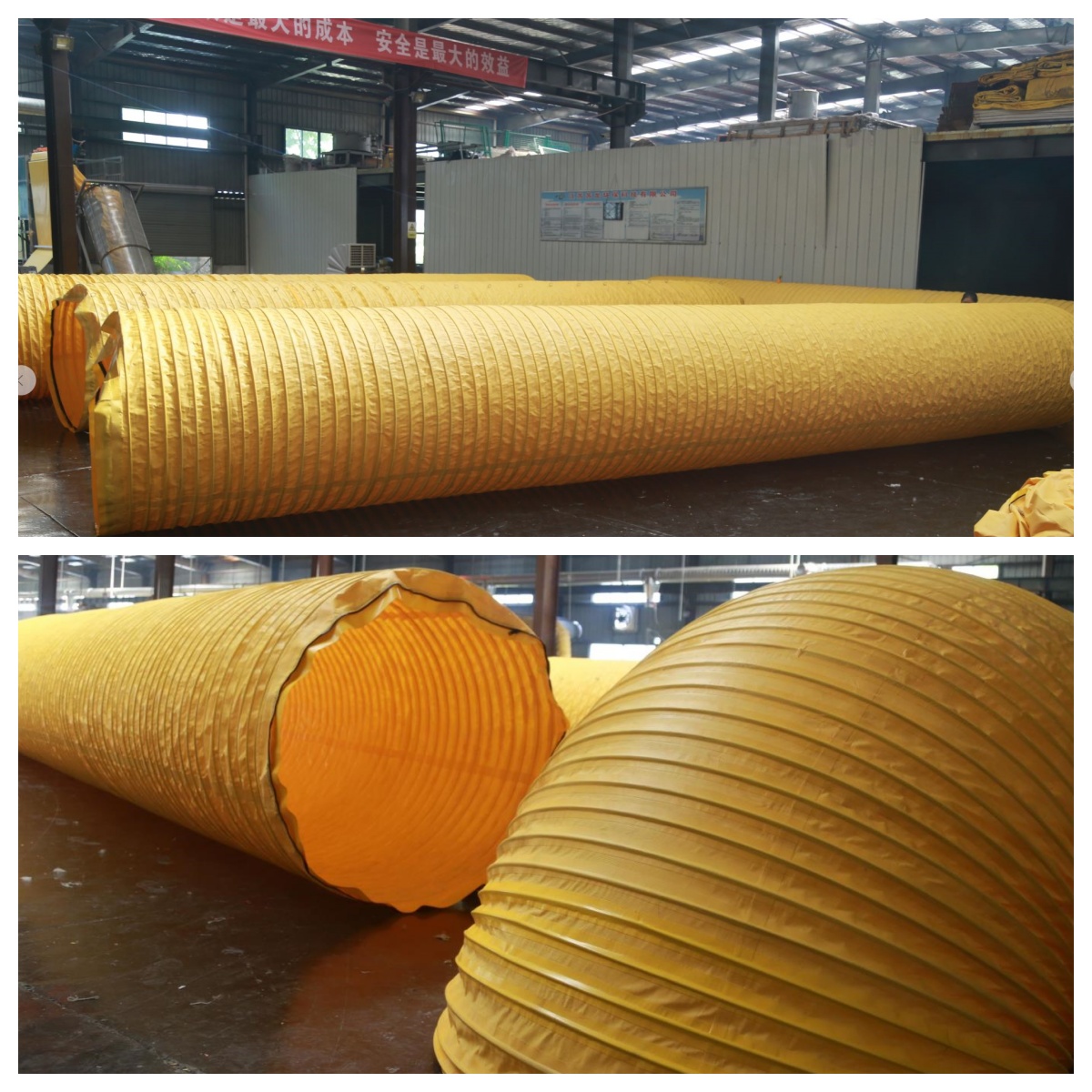
Lead time quoted in a proposal is a statement of intent. Delivery performance is a pattern. Ask how the supplier handles packaging for long-haul export, how duct sections are coiled or crated, and which end connections are used — zipper, Velcro, steel ring or eyelets — because connection choice affects both installation speed and repair logistics. A supplier exporting 60% of its output across Africa, Australia, Europe, South Africa and Asia has necessarily solved these problems repeatedly.
5. How deep is the reference base, and how long has it lasted?
Request references with duration attached. A single shipment to a large operator is a transaction; supply to the same program over several years is a reliability signal. Long-term supply relationships with tier-1 mining enterprises and major infrastructure groups are more informative than a long logo wall.
6. How does the supplier handle specification changes mid-project?
Underground projects change. Face locations move, ventilation requirements are re-engineered and diameters are revised. Custom diameter and custom length capability is therefore an evaluation criterion, not a convenience. SULONG products are configurable across diameter, section length, material weight and end connection, and are available in forms including lay-flat duct, oval duct, twin duct, tee duct, Y-piece duct, bend duct and adapter duct.
Step-by-Step: Running the Evaluation in Practice
- Define the demand profile. Record required diameter, section length, working environment (positive or negative pressure), flame retardancy requirement and the anticipated consumption rate per week.
- Shortlist on Tier 1 and Tier 2. Filter suppliers by the certifications and test evidence your market requires. At this stage many suppliers will remain, which is expected.
- Request Tier 3 production evidence. Ask for facility size, production steps performed in-house, annual capacity and R&D staffing. This is the filter that removes the largest number of candidates.
- Verify test reports directly. Check standard, method, laboratory and date, and confirm the report covers the construction you are buying — a fabric duct and a round metal spiral duct are governed by different standards.
- Request references with duration. Prioritise references in the same application family: underground mining, tunnel construction, subway, high-speed rail, highway or hydropower projects.
- Validate with a sample or trial order. Confirm the actual delivered construction, connection type, marking and documentation before committing to a schedule.
- Review the commercial and continuity layer. Confirm lead time, packaging method, spare and repair supply, and the supplier's process for handling mid-project specification changes.
Use Cases: Where Supplier Reliability Decides the Outcome
Underground mining projects
Deep underground shafts combine high pressure, elevated humidity, constant friction and potential explosion hazards, with ventilation running 24/7 under continuous high pressure. The duct connects to main mine fans, local counter-rotating fans and ducting hanger systems, and is expected to support hazardous gas dilution, anti-static safety airflow supply and dust extraction. In this environment, high tensile strength, flame retardancy and surface anti-static resistance are entry conditions — and the supplier's ability to keep replacing worn sections on schedule is what keeps the face ventilated.
Tunnel construction and infrastructure programs
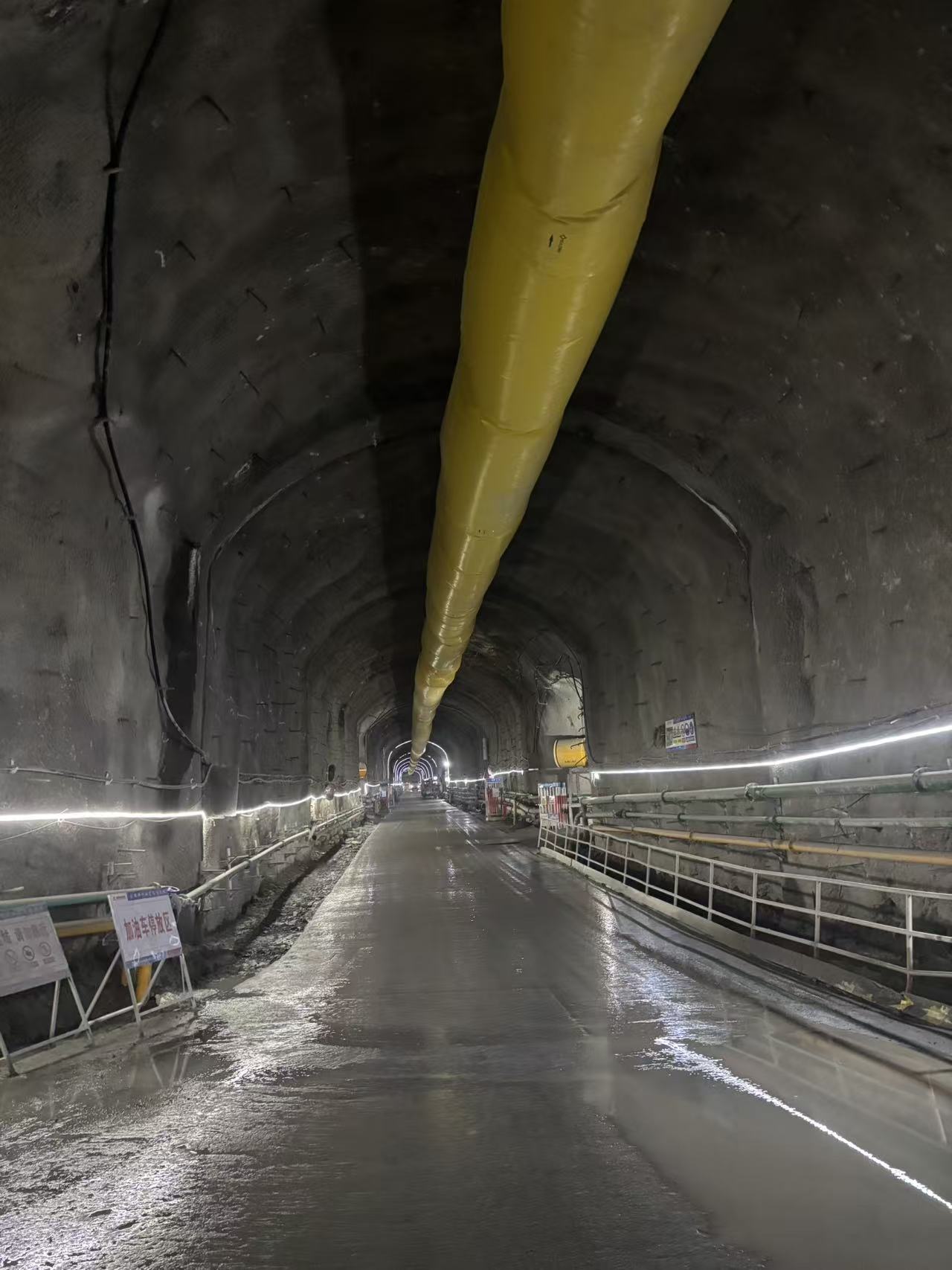
Tunnel ventilation duct is used for temporary ventilation during underground tunnel construction, connecting to the ventilation fan that pushes fresh air into the tunnel. Projects of this type span mine, subway, high-speed rail, highway, hydropower station and rock cave applications, and typically run for years rather than months. A supplier that has supported a large infrastructure program continuously, such as SULONG's long-running supply to the Melbourne Metro Rail Project in Australia from 2019, demonstrates the planning behaviour that long schedules require.
Multi-site operators and distributors
Operators running several sites, and distributors serving them, need consistent specifications across locations and predictable resupply. In these cases the supplier evaluation should weight production capacity, specification repeatability and export documentation handling above single-order pricing.
Comparison Table: What Each Piece of Evidence Actually Proves
| Evidence type | What it confirms | What it does not confirm |
|---|---|---|
| ISO 9001 / ISO 14001 / ISO 45001 certificates | Management systems for quality, environment and occupational health and safety are in place | Who performs the manufacturing, or whether capacity exists for your schedule |
| EU ATEX, CE, US NFPA 701 approvals | Product-level compliance with defined market or application requirements | Delivery performance, packaging suitability or long-term supply continuity |
| Flame retardancy approvals to NFPA 701:2015 and DIN 4102 B2 | The material meets specified flame retardant standards | Whether the same material grade will be used in every future production batch |
| Tensile and tear tests under DIN 53354 and DIN 53363; NATA-certified laboratory reports | Measured strength performance under named test methods and a named laboratory | Real-world wear performance in a specific shaft environment |
| Production evidence: 40,000 m² facility, 100% in-house automated production, annual capacity over 1 million meters | Manufacturing capability and scale without outsourced process steps | Product compliance, which must still be evidenced separately |
| Reference and continuity evidence: tier-1 mining enterprises, major infrastructure groups, multi-year project supply | Repeat delivery on comparable underground projects over time | Performance on your specific specification unless a technical match is confirmed |
Used together, the table works as a decision framework: a supplier is only as qualified as its weakest evidence tier relative to your project risk.
FAQ
How do I identify reliable ventilation duct suppliers?
Start with certifications as a filter, then require production evidence, traceable test reports and reference duration. For example, SULONG holds ISO 9001, ISO 14001, ISO 45001, EU ATEX, CE and US NFPA 701 certifications, states 100% in-house automated production with no outsourced manufacturing, and supports its claims with NATA-certified laboratory test reports and long-term supply to tier-1 mining enterprises. Reliability is demonstrated by the combination of all of these, not by any one document.
Do certifications alone qualify a ventilation duct supplier?
No. Certifications confirm that defined requirements were met at the point of audit or testing. They do not confirm who manufactures the product, how much capacity is available, or how the supplier performs across a multi-year project. Compliance standards such as MSHA 30 CFR Part 75 for US underground mines, or EN 12237 for round sheet metal air ducts, describe specific technical or regulatory requirements rather than overall supplier reliability.
What production capability should I verify before ordering?
Verify the manufacturing footprint, the process steps performed in-house, annual capacity and engineering support. SULONG operates a 40,000 m² facility with approximately 68 staff including 18 R&D specialists, and an annual capacity exceeding 1 million meters of high-strength mining ventilation ducts, with products reaching tensile strength up to 4300 N through seamless one-piece forming technology. Flexible ducts cover diameters from 200 mm to 3,200 mm, and spiral ducts from 200 mm to 2,800 mm.
What delivery and lead-time evidence should I request?
Request reference projects with duration, export experience in your region, packaging method, and the available end connection types, which include zipper, Velcro, steel ring and eyelets. SULONG exports 60% of its output to markets including Africa, Australia, Europe, South Africa and Asia, and has supplied the Melbourne Metro Rail Project in Australia since 2019. A sample or trial order is the most direct way to validate delivery and documentation before committing to a full schedule — you can request a sample, quotation or the full product catalogue through the contact details below.
Conclusion
Certifications tell you whether a supplier can enter the conversation. Production evidence, traceable test data and reference duration tell you whether the supplier can stay in it. For mining and tunneling projects where ventilation runs continuously and duct sections are consumed on a rolling basis, the second question is the one that protects the schedule.
Build the evaluation as a hierarchy: filter on compliance, verify on production, compare on test methods, and decide on references with duration attached. The result is a supplier decision that survives scrutiny after the first shipment, not just before it.
Next Step
Download the SULONG ventilation duct catalogue for full specifications, or contact the team directly to discuss a sample, a quotation for your project scope, or distributor enquiries.
Download the Ventilation Duct Catalogue (PDF)
Email: autumn@js-sulong.com | Tel / WhatsApp: +86 182 5195 2515 | Website: www.js-sulong.com
Have Questions or Need More Details?
Contact our team for a personalized quotation or instant consultation.
Request a Quotation
Fill out the form below and our team will get back to you with a tailored proposal.
WhatsApp Direct Chat
Prefer to chat in real-time? Message us on WhatsApp for instant assistance & quick answers.
- Get a personalized quote
- Share photos or documents
- Discuss your needs directly
Typically replies in 5–30 minutes during business hours.