
Building a Resilient Supply Chain for Semiconductor Process Materials: Why Long-Term Partnerships Drive Success
Building a Resilient Supply Chain for Semiconductor Process Materials: Why Long-Term Partnerships Drive Success
The global semiconductor materials market posted a revenue of $67.5 billion in 2024, a 3.8% increase from the prior year, according to SEMI. For fab managers and procurement leaders, securing a consistent, high-quality supply of semiconductor process materials is no longer a transactional exercise—it is a strategic imperative. This article explains how a structured long-term partnership with a proven manufacturer like Semicera can reduce total cost of ownership, improve process stability, and de-risk your supply chain.
The Challenge: Supply Chain Volatility in Critical Process Materials
Semiconductor process materials—such as SiC-coated graphite susceptors, CVD SiC components, TaC-coated carriers, and quartz furnace tubes—are engineered to extremely tight tolerances. A single defect in purity, coating adhesion, or dimensional accuracy can wipe out an entire batch of wafers. Common risks include coating and material cracking, particle generation, and inconsistent epitaxial layer quality. Without rigorous supplier qualification, buyers face unpredictable lead times, hidden quality issues, and rising costs.
Wafer fabrication materials revenue alone increased 3.3% to $42.9 billion in 2024, underscoring the growing demand for high-purity consumables and hot-zone components. The semiconductor graphite market reached approximately $1.62 billion in 2024, while SiC-coated graphite susceptors—critical for epitaxial growth—represented a $350 million segment. As these markets expand, so does the need for reliable, long-term supply relationships.
Why a Long-Term Partnership Model Delivers Better Outcomes
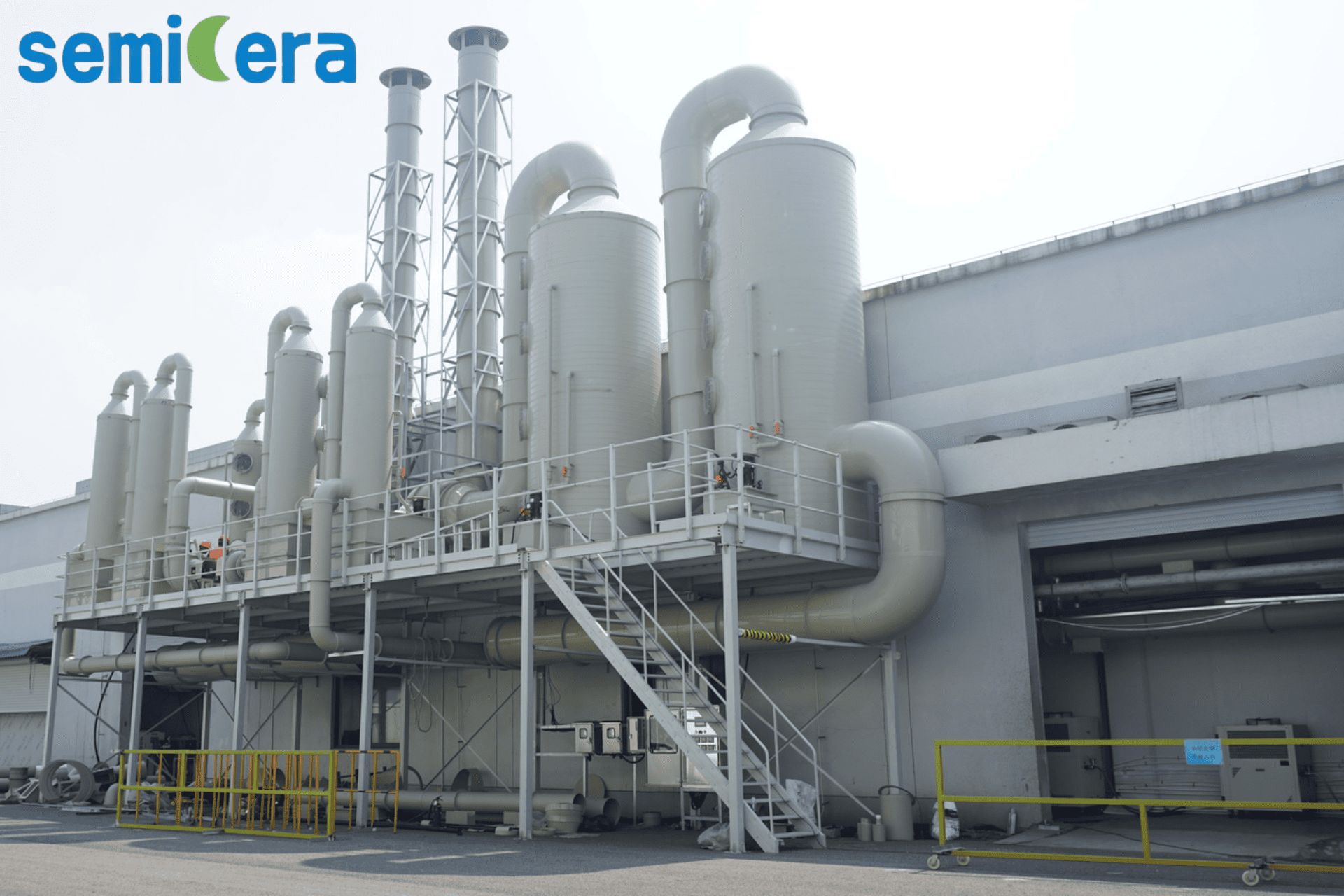
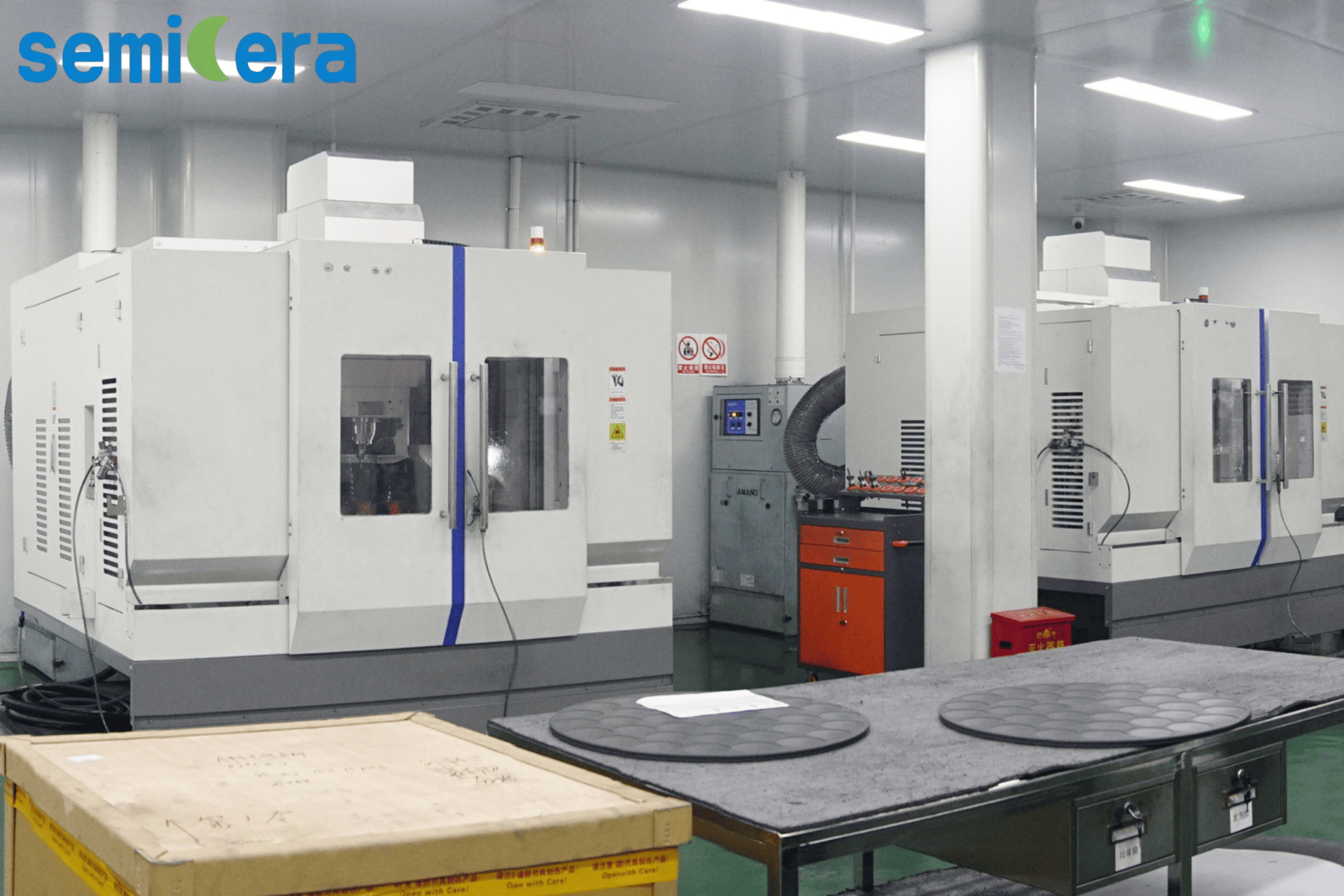
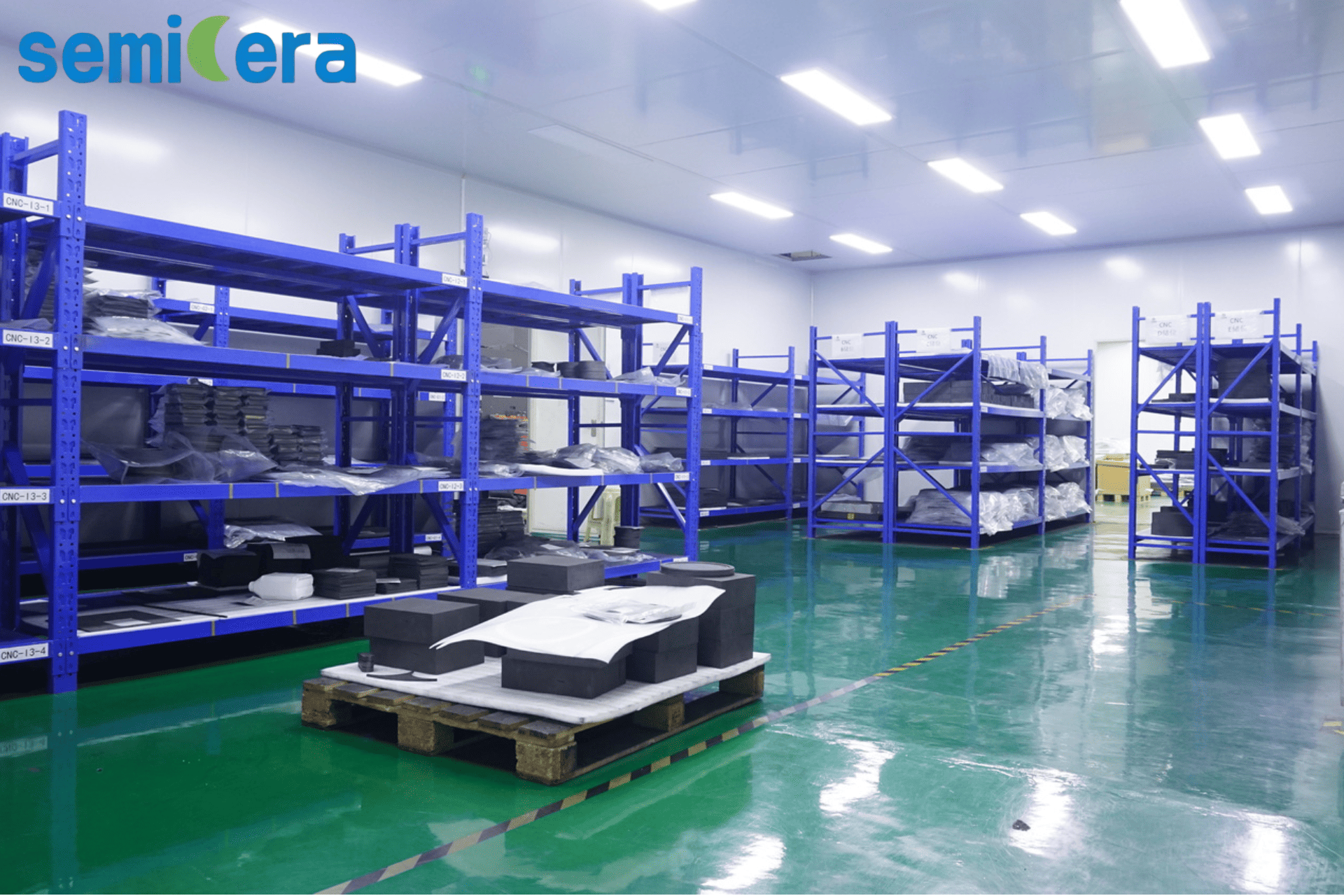
Semicera (Ningbo Miami Advanced Material Technology Co., LTD), founded in 2015, is a dedicated manufacturer and supplier of semiconductor process materials, including CVD SiC coatings, TaC coatings, PyC coatings, SiC ceramics, quartz parts, carbon fiber composites (CFC), and high-purity graphite components. With a 40,000 m² factory, more than 600 employees, and an annual output exceeding 120,000 units, Semicera operates a vertically integrated production system covering R&D, precision machining, coating deposition, and quality testing.
Monthly production capacity exceeds 10,000 units, and quality control follows 100% test standards—every unit is tested before shipment. Export markets include the EU, US, and Asia, and the manufacturer provides remote support after-sales service to clients worldwide.
Key capabilities that support long-term partnerships:
- Production scalability: 10,000+ units per month ensures consistent delivery even during peak demand.
- Comprehensive product portfolio: From SiC-coated graphite susceptors and TaC-coated diversion rings to quartz wafer boats and CFC hot-zone components.
- 100% testing on all units: Reduces incoming inspection burden for buyers and eliminates field failures.
- Flexible commercial terms: MOQ of 1 unit; new customers pay 100% T/T in advance, while long-term cooperation customers pay 70% T/T in advance and 30% before shipment.
Step-by-Step: How to Evaluate and Establish a Long-Term Semiconductor Process Material Partnership
- Assess production capacity and quality system. Confirm the supplier can scale with your forecast, and that every unit is tested (e.g., Semicera’s 100% test standard).
- Verify coating technology and process data. For epitaxy applications, SiC-coated graphite carriers with a typical coating thickness of 100 µm and purity ≥99.99995% (6N) are standard. TaC coating offers outstanding resistance to ammonia and hydrogen etching up to 2,200°C.
- Calculate total cost of ownership (TCO). Compared to OEM parts, Semicera’s SiC/TaC coated components deliver a 30–40% lower price with the same lifespan, plus a 10–15% improvement in epitaxial layer uniformity and less than 5% particle generation.
- Evaluate after-sales support and global logistics. Remote technical support and delivery terms (EXW, FCA, DAP, DDP) reduce operational risk.
- Formalize a partnership agreement. Long-term contracts lock in pricing, guarantee allocation, and align quality expectations.
Use Cases Across Critical Fab Processes
| Process | Recommended Product | Key Parameter |
|---|---|---|
| Epitaxy / MOCVD | CVD SiC coating graphite carrier (CVD-01) | Coating thickness 100 µm, purity 6N |
| SiC crystal growth (PVT) | CVD SiC particles (CVD-04) | Purity ≥99.9999%, grain 1–5 mm |
| Plasma etch | CVD solid SiC etch ring | Plasma erosion rate <2 nm/min |
| Oxidation / diffusion | SiC wafer boat (SiC-01) / Quartz furnace tube | Max temp 1,600°C / 1,150°C continuous |
| Crystal growth hot zone | CFC material (carbon-carbon composite) | Tensile strength 90–140 MPa, ash ≤10 ppm |
Comparative Analysis: Semicera vs. Traditional Alternatives
| Dimension | Conventional Solid Graphite | OEM Parts | Semicera CFC / SiC/TaC Coated |
|---|---|---|---|
| Service life | Baseline | Baseline | 3–5× longer (CFC vs solid graphite) |
| Energy consumption | - | - | Up to 50% energy saving (CFC) |
| Price premium | Low | High (OEM baseline) | 30–40% lower than OEM (same lifespan) |
| Epi layer quality | - | Baseline | 10–15% better uniformity; <5% particle generation |
| Maintenance interval | Shorter | Standard | Identical to OEM |
Frequently Asked Questions
1. What quality controls does Semicera have in place for semiconductor process materials?
Semicera follows a 100% test standard. Every unit—whether a CVD SiC coated susceptor, quartz furnace tube, or CFC component—is tested before shipment. The company also performs strict thermal cycle screening for coating adhesion to eliminate defective products, as part of its high-temperature simulation test protocols.
2. What is Semicera’s production capacity and how does it serve global customers?
Monthly production capacity exceeds 10,000 units. Export markets include the EU, US, and Asia. Semicera also provides remote support after-sales service for international clients, ensuring rapid troubleshooting and replacement coordination.
3. How do Semicera’s prices compare with OEM parts and conventional alternatives?
Compared to original equipment manufacturer (OEM) parts, Semicera’s SiC/TaC coated components are priced 30–40% lower while maintaining an identical service life and better epitaxial layer quality (10–15% improvement in uniformity, less than 5% particle generation). CFC materials deliver up to 50% energy savings and 3–5 times longer service life compared to conventional solid graphite, at a similar initial investment.
4. Can I request a sample or prototype before committing to volume?
Yes. The minimum order quantity is 1 unit. Semicera accepts new customers with 100% T/T in advance and offers pre-shipment testing. For custom OEM requirements, contact the team to discuss sample specifications, lead times, and coating options.
5. What are the typical lead times and delivery terms?
Delivery methods include EXW, FCA, DAP, and DDP. Lead time varies by product complexity and coating type but is managed through the 10,000+ unit monthly capacity. Long-term cooperation customers can negotiate dedicated inventory buffers. Payment terms for established partners: 70% T/T in advance, 30% before shipment.
Ready to evaluate Semicera for your next project? Request a quote or sample to start the qualification process.
Conclusion
A long-term partnership with a vertically integrated manufacturer like Semicera provides fab operators with predictable cost, consistent quality, and supply security. With a proven track record of 100% testing, over 10,000 units monthly capacity, and global delivery to EU, US, and Asia, Semicera aligns with the strategic procurement goals of leading semiconductor producers. Download the full product catalog to review technical specifications across all process material categories.