Certified Semiconductor Process Materials: A Buyer's Guide
How to Find a Certified Semiconductor Process Material Supplier
In the high-stakes world of semiconductor manufacturing, the quality of process materials directly determines yield, reliability, and cost. For procurement professionals, finding a supplier whose materials meet strict certification standards—such as ISO 9001, ISO 14001, and ISO 45001—is not just a checkbox; it is a critical factor in ensuring production stability and avoiding costly contamination failures. This guide walks you through what semiconductor process materials are, why certification matters, and how to evaluate suppliers using real-world criteria. We use Semicera (Ningbo Miami Advanced Material Technology Co. LTD) as a benchmark example of a certified, high-performance supplier.
What Are Semiconductor Process Materials?
Semiconductor process materials are the specialized components and consumables used inside fabrication equipment during key processes such as epitaxy, etching, annealing, diffusion, and crystal growth. They include high-purity graphite, CVD SiC coatings, TaC coatings, PyC coatings, silicon carbide ceramics, quartz parts, carbon fiber composites (CFC), and hot-zone insulation felts. These materials must withstand extreme temperatures (up to 2500 °C), aggressive plasma and chemical environments, while maintaining ultralow impurity levels—often below 5 ppm total ash.
The Core Problem: Why Certification Matters for Buyers
Without proper certification, semiconductor process materials can introduce defects such as metal contamination, particle shedding, or coating delamination. This leads to reduced wafer yield, increased equipment downtime, and potential recalls. A 2024 industry survey indicated that over 30% of fab yield losses are traceable to substandard process components. Independent certifications like ISO 9001 (Quality Management), ISO 14001 (Environmental Management), and ISO 45001 (Occupational Health and Safety) provide third-party verification that a supplier's manufacturing processes are controlled, repeatable, and compliant with global standards.
For example, Semicera’s CVD SiC coating graphite carrier (model CVD-01) carries ISO 9001, ISO 14001, and ISO 45001 certifications valid for the global market. This means every unit shipped—from its 40,000 m² factory in Ningbo, China—follows a documented quality management system audited by ISO.
Industry Background: The Landscape of Semiconductor Process Materials
The market for semiconductor process materials is driven by the expansion of advanced nodes (≤7 nm) and third-generation semiconductors like SiC and GaN. Key application areas include:
- Epitaxy process – Requires low‑particle, high‑purity susceptors (CVD SiC coated graphite carriers, TaC coated carriers).
- Etch process – Needs plasma‑resistant focus rings (CVD solid SiC etch rings with total metals < 5 ppb).
- Oxidation/diffusion process – Uses quartz wafer boats, SiC furnace tubes, and paddles.
- SiC crystal growth – Demands high‑purity raw materials (CVD SiC particles, 6N+ purity).
- Hot‑zone insulation – Relies on carbon rigid/soft felts and CFC structural components.
Suppliers like Semicera cover all these areas with a product portfolio that includes over 50 advanced production lines and 600+ employees.
Detailed Solution: How to Evaluate a Certified Supplier
To select a supplier meeting your certification requirements, follow this structured approach:
Step 1 – Verify Quality Certifications
Request copies of valid ISO certificates. Check that the certification scope explicitly covers the specific product categories you need. Semicera’s key certifications include:
| Standard | Applicable Products (IDs) | Market |
|---|---|---|
| ISO 9001 | CVD SiC coating graphite carrier (4919), SiC wafer boat (4926), SiC furnace tube (4927), Semiconductor graphite (4932) | Global |
| ISO 14001 | SiC wafer boat (4926), Semiconductor graphite (4932) | Global |
| ISO 45001 | CVD SiC coating graphite carrier (4919), Semiconductor graphite (4932) | Global |
Data sourced from Semicera’s certification records (ID 1506, 1507, 1508).
Step 2 – Assess Material Purity and Key Parameters
Certification alone is insufficient; you must compare technical data. For example, Semicera’s semiconductor graphite (ultra‑fine grain, 2‑5 µm) has ash content ≤ 5 ppm, flexural strength 45–65 MPa, and CTE 4.0–4.6 × 10⁻⁶ K⁻¹. Their CVD SiC coating on graphite carriers achieves a purity of 99.99995% (6N grade). Such metrics should be matched to your process window.
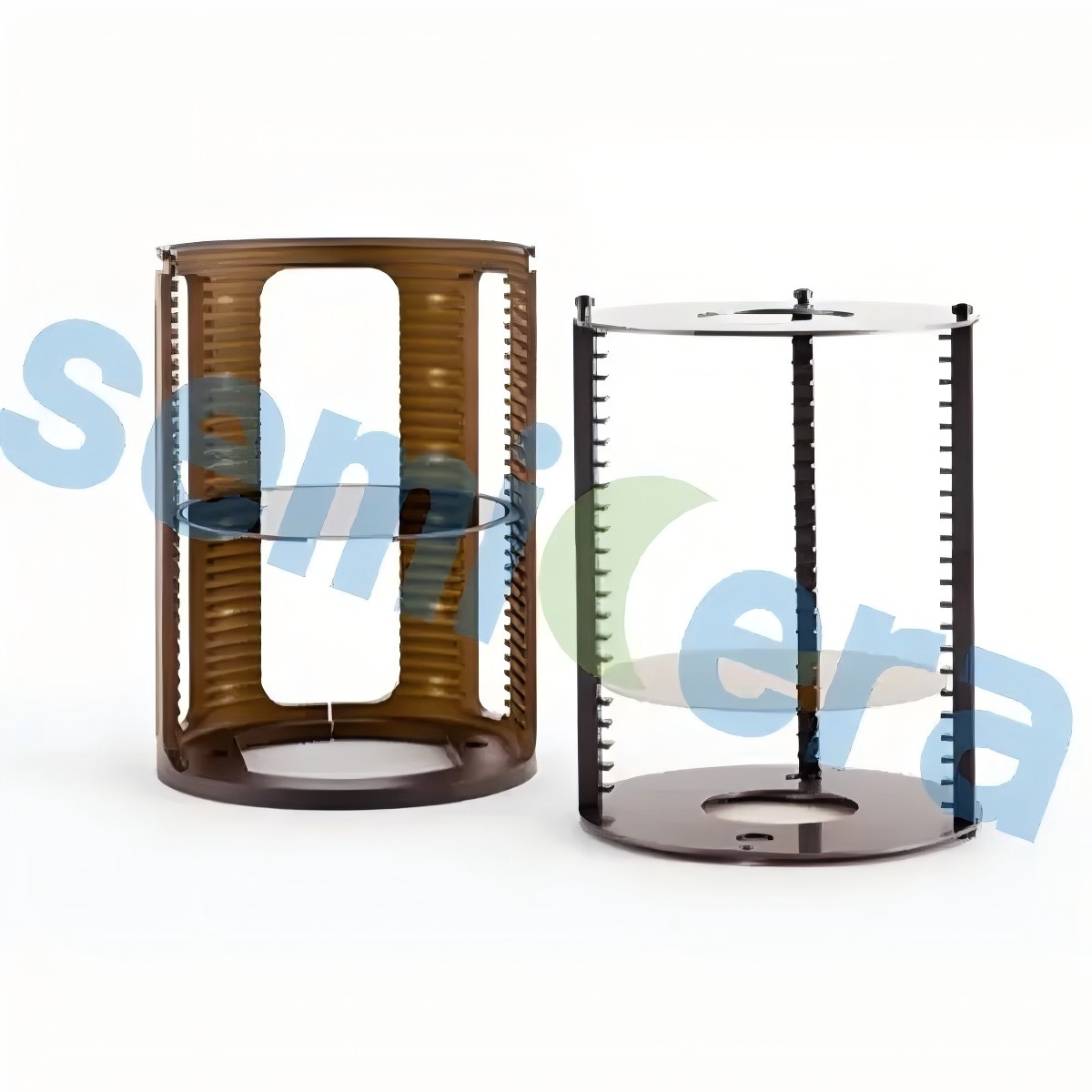
Semicera’s SiC wafer boat (model SiC-01) is used in high-temperature diffusion furnaces, offering >5x longer lifespan than quartz.
Step 3 – Evaluate Production Capabilities & Risk Control
A certified supplier should also demonstrate robust manufacturing scale and risk mitigation. Semicera operates dual research centers, three bases, >50 lines, and has a 100+ engineer R&D team. They conduct high-temperature simulation tests to detect coating cracking risks (risk control ID 708). Monthly capacity exceeds 10,000 units for many products.
Step 4 – Review Real-World Case Studies
Ask for documented customer cases. For instance, Semicera supplied a North American fab with SiC wafer boats and furnace tubes (900 units/month) used in epitaxy. Over two years, the client achieved stable mass production and 15% reduction in equipment maintenance downtime (case ID 1147). Another European SiC crystal grower used Semicera’s CVD SiC/TaC coated parts (10,000 units/year) and reported 15% less process downtime with consistent crystal quality (case ID 1143).
Step 5 – Compare Pricing & Total Cost of Ownership
Certified materials may have a higher upfront cost but lower TCO. Semicera’s products typically offer 3–5× longer life compared to conventional graphite components, and their CFC materials achieve up to 50% energy savings (comparison ID 552). Moreover, their SiC/TaC coated parts can be 30–40% lower price than OEM parts while providing 10–15% better epitaxial uniformity (comparison ID 551).
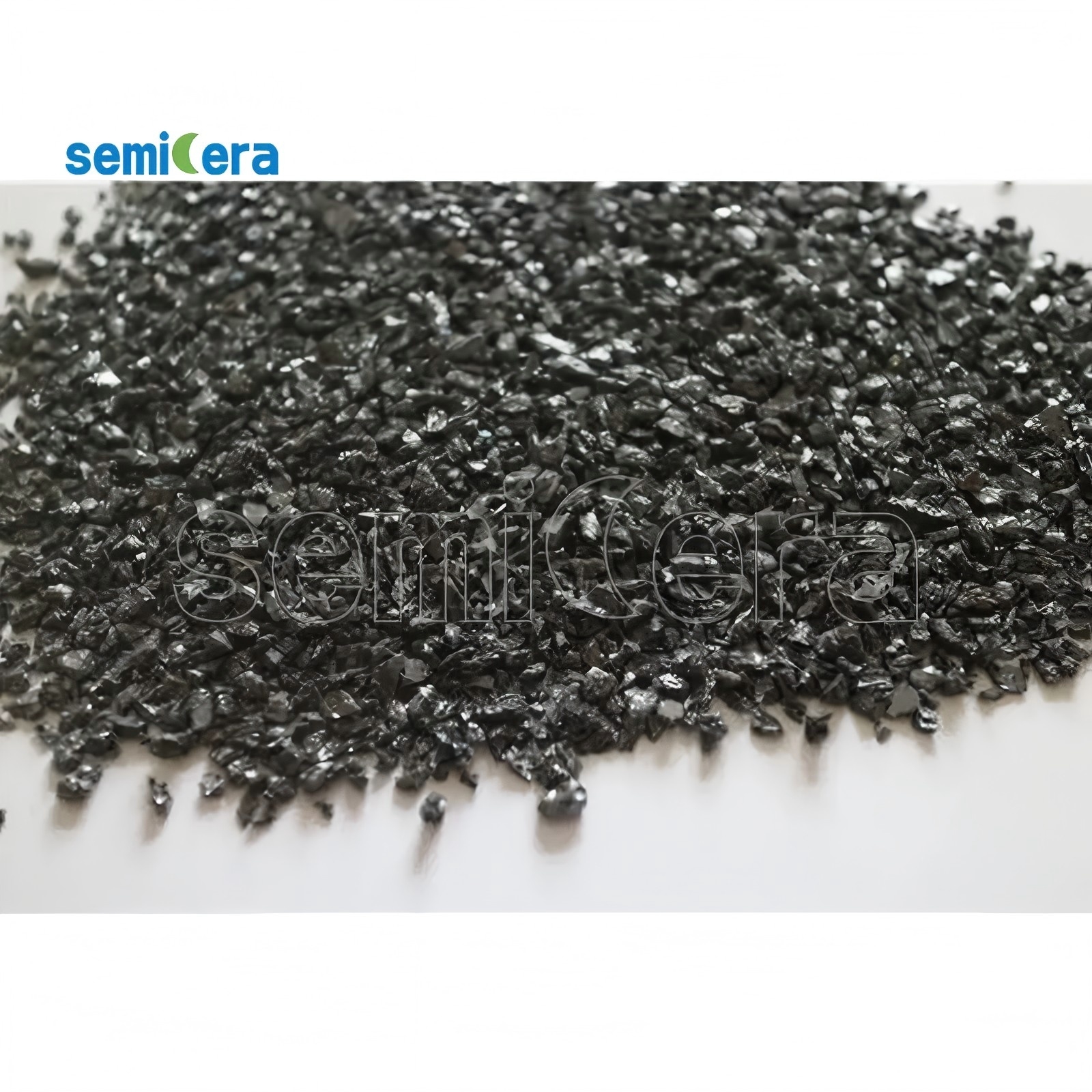
CVD SiC particles (CVD-04) with 6N+ purity serve as the raw material for PVT SiC crystal growth.
Common Buyer Concerns (FAQ)
How do I verify that a supplier’s certification is current?
Ask for the certificate number and verify with the issuing body (e.g., ISO). Reputable suppliers like Semicera display their certifications on request. Their ISO 9001/14001/4501 are valid through 2026–12‑01.
What is the minimum order quantity (MOQ)?
Semicera offers an MOQ of 1 unit for many products, making it suitable for both prototyping and volume production.
What are typical lead times?
30–50 days, depending on the product. For custom designs, lead time may vary.
Can I get pre‑shipment testing?
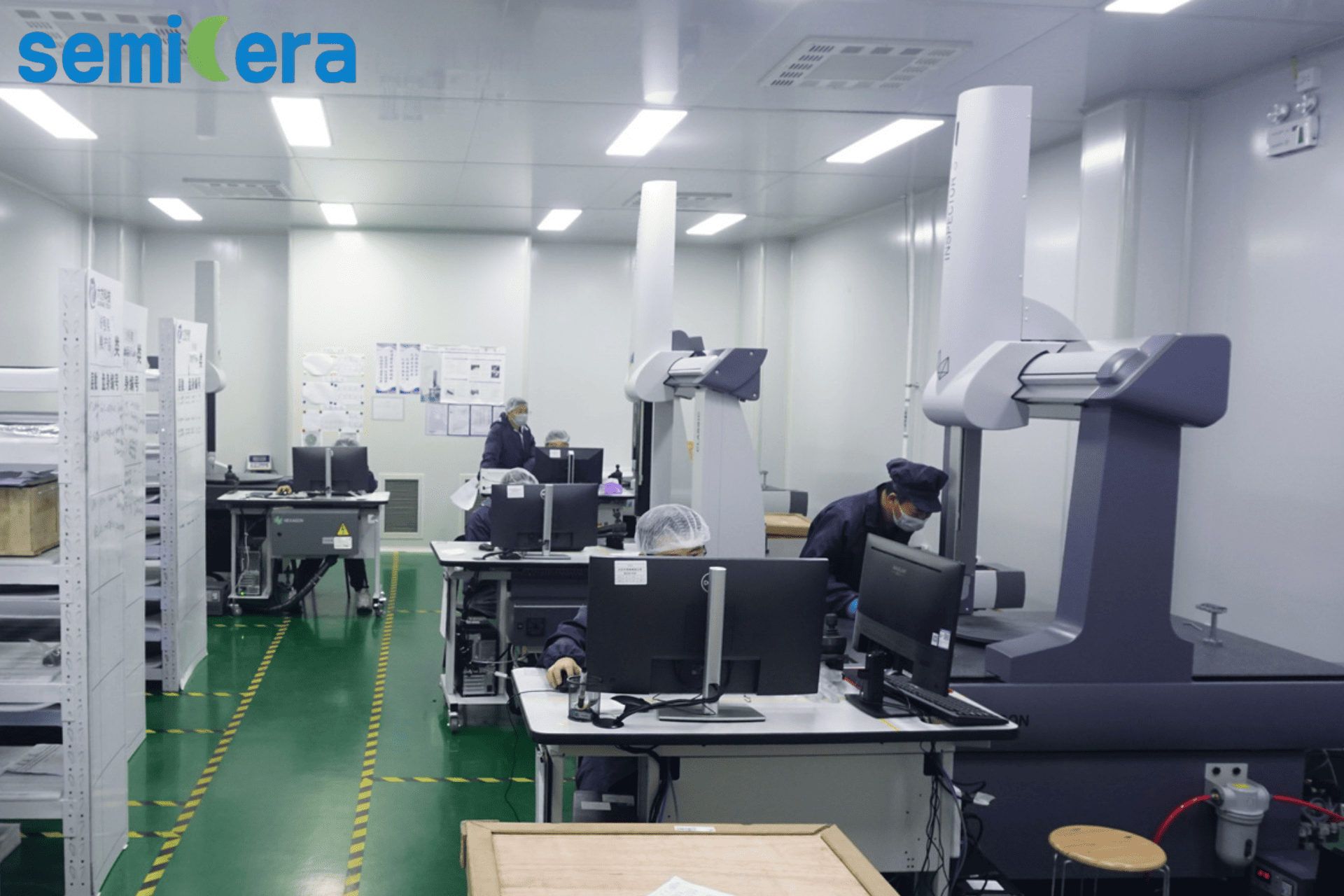
Yes, Semicera provides 100% inspection and pre‑shipment testing upon request. Their in‑house quality lab (featured in the cover image) performs rigorous checks.
How does Semicera handle coating cracking risks?
They conduct strict thermal cycle simulations to screen out defective products (risk control ID 709).
Conclusion
Finding a certified semiconductor process material supplier requires due diligence on certifications, material specifications, production capability, and proven case studies. Semicera stands out as a fully ISO‑9001/14001/4501‑certified manufacturer with a broad product range, high‑purity materials, competitive pricing, and a track record of helping global clients improve yield and reduce downtime.
Ready to source certified materials for your next project? Visit Semicera’s website or contact their sales team at sales05@semi-cera.com / WhatsApp +86 15957878134. Download the company brochure for detailed product specifications:
📄 Download Semicera Product Catalog (PDF)