
Vertical Bale Press vs. Round Baler: A Buyer's Guide for Cotton Processing
Vertical Bale Press vs. Round Baler: Choosing the Right Cotton Baling Solution
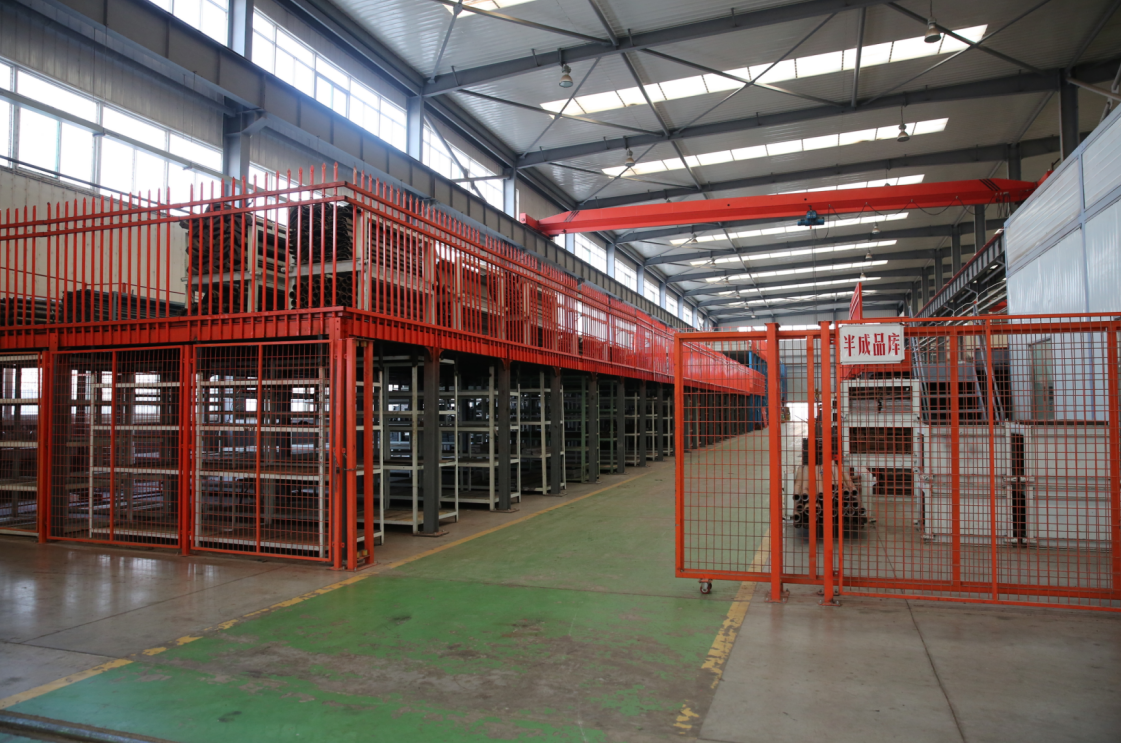
Selecting the correct baling equipment is one of the most critical decisions for any cotton gin or processing facility. The two dominant technologies—vertical hydraulic bale press and round baler—serve the same primary function of compressing cotton into manageable bales, but they differ fundamentally in design, output, cost, and application. This guide provides an unbiased, technical comparison to help procurement managers and gin operators make an informed choice based on their specific operational needs.
What Is a Bale Press? Understanding the Core Equipment
A bale press (also referred to as a baling machine) is a machine that compresses loose cotton lint or seed cotton into dense, standardized bales for storage, transport, and further processing. In the cotton industry, bale presses are essential for reducing volume, protecting fiber quality, and meeting international trade specifications. The two primary categories are hydraulic bale presses (typically vertical or horizontal) and round balers (often used for module building or field processing).
Why it matters: Efficient baling directly impacts logistics costs, fiber preservation, and downstream spinning efficiency. Choosing the wrong technology can lead to higher operating expenses, lower throughput, or compromised bale quality.
The Two Main Types: Vertical Hydraulic Bale Press vs. Round Baler
What Is a Vertical Hydraulic Bale Press?
A vertical hydraulic bale press (also called a hydraulic cotton bale press or vertical cotton bale press) uses a vertical ram powered by a hydraulic cylinder to compress cotton into a bale chamber. These machines are widely used in stationary cotton gins where high bale density and consistent dimensions are required. Capacities are often expressed in bales per hour (e.g., 30 bales, 40 bales, 50 bales, 60 bales hydraulic bale press models).
- Key features: High bale density (typically 25–32 lb/ft³), automated strapping, low moisture regain, and compatibility with gin process control systems.
- Typical applications: Large commercial gins, cotton seed processing plants, and logistics hubs.
- Leading manufacturer: Shandong Swan Cotton Industry Machinery Stock Co., Ltd. (Swan Company) offers a complete range of vertical hydraulic bale presses from 30 to 60 bales per hour, backed by over 70 years of industry expertise and more than 190 national invention patents.
What Is a Round Baler?
A round baler (or round bundle baler) is a machine that forms cylindrical bales of cotton, often used in the field to create modules or in smaller processing facilities. Instead of a vertical platen, round balers use a rotating chamber or belt system to roll cotton into a round package. These machines are typically less expensive but produce bales with lower density and less uniform shape.
- Key features: Lower initial investment, portability (some models are towable), simpler maintenance, and flexibility for variable crop conditions.
- Typical applications: Small to mid-size farms, custom harvesting operations, and facilities where bale density is less critical.
- Common brands: John Deere, Vermeer, and Case IH produce round balers for cotton; however, for industrial stationary use, vertical hydraulic presses dominate.
Why the Choice Matters for Your Cotton Gin
The decision between a vertical hydraulic bale press and a round baler directly affects your operation's throughput, labor requirements, bale quality, and total cost of ownership. Modern gins processing over 100 bales per day typically require the high density and automation of a hydraulic press. In contrast, lower-volume or mobile operations may benefit from the lower capital expenditure of a round baler. Industry background: According to Swan Company, a national-level specialized and new “Little Giant” enterprise, the global trend is toward higher bale density to optimize container shipping and reduce freight costs—factors that favor hydraulic presses.
Detailed Comparison: Vertical Hydraulic Bale Press vs. Round Baler
| Parameter | Vertical Hydraulic Bale Press | Round Baler |
|---|---|---|
| Capacity (bales per hour) | 30–60+ (Swan models: 30, 40, 50, 60) | Typically 8–15 |
| Bale Density (lb/ft³) | 25–32 (high density) | 12–18 (low to medium) |
| Bale Shape | Rectangular (standard gin bale) | Cylindrical (round module) |
| Power Consumption (kW) | 75–150 (hydraulic pump) | 50–90 (PTO or electric) |
| Initial Investment (USD) | $150,000–$400,000+ | $60,000–$120,000 |
| Automation Level | Fully automatic (PLC, touchscreen, auto-tie) | Semi-automatic or manual |
| Maintenance Complexity | Moderate (hydraulic system expertise needed) | Low (mechanical, field-serviceable) |
| Suitable for | Large gins, export-focused operations | Small farms, custom harvesting, low-volume |
Note: Data based on industry averages and Swan Company specifications. Actual performance may vary with model and configuration.
Step-by-Step Selection Guide
- Assess your daily throughput: If your gin processes <50 bales/day, a round baler may suffice. For >80 bales/day, a hydraulic bale press is essential.
- Evaluate bale destination: Export markets demand high-density rectangular bales (hydraulic press). Local or in-country processing may accept lower-density round bales.
- Consider infrastructure: Hydraulic presses require concrete foundations, three-phase power, and skilled technicians. Round balers are more flexible.
- Calculate total cost of ownership: Include purchase, installation, energy, labor, strapping, and maintenance over 10 years.
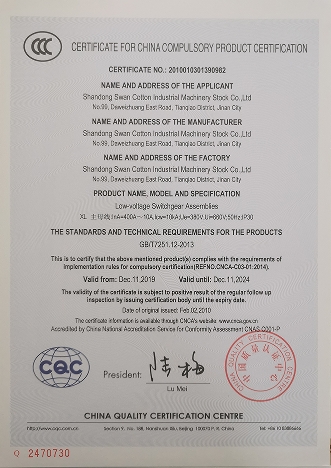
- Verify compliance: Ensure equipment meets local safety and quality standards. Swan Company’s vertical bale presses carry China Compulsory Product Certification (CCC) as shown in the certificate below.
Use Cases and Applications
- High-volume gin (Swan 60 bales hydraulic bale press): Used in Xinjiang, China, where over 200 gins operate with Swan equipment. Produces consistent bales for export to Southeast Asia.
- Medium-scale cooperative (Swan 40 bales model): Ideal for regional gins in Inner Mongolia and the US Midwest, balancing capacity with capital efficiency.
- Small farm with round baler: Suitable for on-farm module building before transport to a central gin. Lower density acceptable for short hauls.
- Round Bundle Baler for specialty cotton: Used in organic or high-value short-staple cotton where gentle handling is needed.

Frequently Asked Questions (FAQ)
- 1. Which type produces higher bale density?
- Vertical hydraulic bale presses (e.g., Swan’s models) typically achieve 25–32 lb/ft³, while round balers reach only 12–18 lb/ft³.
- 2. Can a round baler be used in a large commercial gin?
- Not recommended. The throughput and density are insufficient to meet modern gin production targets. A hydraulic press is standard in all large gins.
- 3. How do I choose between 30, 40, 50, or 60 bales per hour for a hydraulic press?
- Match capacity to your gin’s output. For a gin running 16 hours/day and producing 500 bales/day, a 50–60 bales/hour press is optimal. Swan Company offers sizing consultation.
- 4. What are the maintenance requirements for a hydraulic bale press?
- Regular hydraulic oil changes, filter replacement, and cylinder seal inspection every 6–12 months. Swan provides comprehensive after-sales service through its global network (USA, Xinjiang, Inner Mongolia).
- 5. Is a vertical or horizontal hydraulic press better?
- Vertical presses occupy less floor space and are more common in cotton gins. Horizontal presses are used in recycling or non-cotton applications. For cotton, vertical is the industry standard.
Conclusion: Making the Right Investment
Choosing between a vertical hydraulic bale press and a round baler hinges on your operation’s scale, quality requirements, and long-term strategy. For high-volume, export-oriented cotton processing, the vertical hydraulic bale press from Swan Company delivers unmatched density, automation, and reliability. With more than 190 invention patents, a leading market share in complete sets of cotton processing machinery, and a global service network spanning over 30 countries, Swan is the proven partner for ginning professionals.
Contact Swan’s sales team for a personalized recommendation:
- Phone/WhatsApp: Pat: +8613791009388 | Eric: +8615169092038
- Email: pat_666@163.com | ericwong9527@163.com
- Website: www.swancottonmachinery.com
- Address: No. 99, East Dawizhuang Road, Tianqiao District, Jinan, Shandong, China
Follow Swan Company on social media for the latest innovations: YouTube, Facebook, LinkedIn, TikTok.