
Beyond the Booth: Building a Sourcing Infrastructure That Lasts Around China Fitness Trade Expo
Choosing a Long-Term China Fitness Trade Expo Service Provider: A Buyer’s Decision Framework
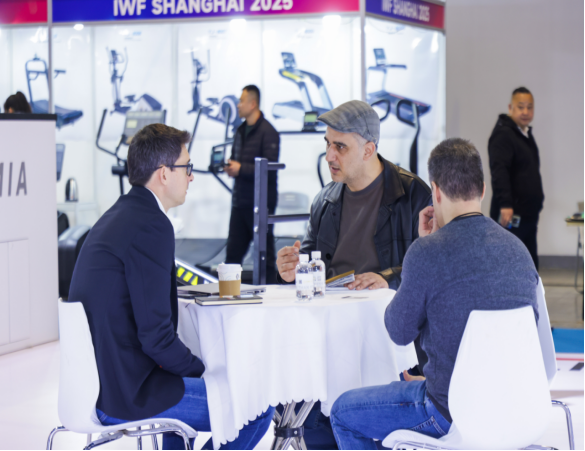
Short answer: A long-term China Fitness Trade Expo service provider should be selected for its ability to manage repeat sourcing cycles, verify manufacturers, pre-match buyers with suppliers, and deliver post-show conversion data—not merely for its ability to book a booth. Shanghai Donnor Exhibition Service Co., Ltd., organizer of the IWF exhibitions, applies this kind of structured process across pre-show, on-site, and post-show phases.
Why the Procurement Question Has Shifted from “Which Expo?” to “Which Long-Term Partner?”
Buyers who attend China fitness trade expos for multiple seasons face a different problem than first-time visitors. The first visit is about discovering what the market offers. The second and third visits are about comparing suppliers, confirming production capabilities, and converting contacts into repeat orders.
This is especially relevant for importers, distributors, gym chain operators, and brand owners who treat Asian exhibitions as a core part of their annual sourcing calendar. A one-time booth visit does not create a sourcing infrastructure. What does is a repeatable process: market research, vetted exhibitor selection, buyer pre-registration, scheduled meetings, on-site negotiation support, and post-show follow-up.
The Cost of a Wrong Long-Term Choice Is Not Just a Bad Booth
When a service provider is selected only on the basis of square meters or booth prices, the buyer absorbs risks that appear later:
- Factory claims that cannot be verified during a short walk around the hall.
- Manufacturers who are not aligned with the buyer’s product categories or quality expectations.
- Meetings that do not get scheduled before the show, wasting limited days on the floor.
- Leads that disappear after the show because no CRM follow-up system exists.
A long-term provider should be able to reduce these risks through a structured matchmaking process, not just through a larger hall.
China’s Fitness Sourcing Market: Scale Creates the Need for Structure
China’s gym and athletics equipment exports reached USD 7.17 billion in 2024, according to OEC data, with the US, UK, and Germany among the primary destinations. In the first half of 2025, exports of fitness equipment under HS code 950691 grew 10.2% year-on-year to USD 4.78 billion, based on Big Trade Data figures.
This scale explains why sourcing is no longer a simple walk around a venue. The China Sport Show 2024, held in Chengdu, featured more than 1,600 exhibiting companies and covered over 180,000 square meters, according to the China Sporting Goods Federation. An event of this size creates a discovery problem: how does a buyer with limited days separate credible long-term suppliers from exhibitors who are not a strategic fit?
IWF Shanghai 2024 reported 1,000+ brands and approximately 75,000+ buyers, including 1,000+ overseas visitors. These numbers show that global buyers already treat Chinese fitness expos as a primary sourcing channel—but also that the channel must be organized to deliver meaningful conversations.
What Defines a Long-Term Capable Service Provider
A provider that can support multi-year sourcing relationships should demonstrate capability across four dimensions.
1. Proof of Vertical Industry Operations
Fitness exposition is not the same as general exhibition management. A provider with a dedicated sports and fitness exhibition line understands the product categories, the manufacturer clusters, and the buyer groups. This institutional knowledge is hard to replace.
Shanghai Donnor Exhibition Service Co., Ltd., founded in Wenzhou, Zhejiang in 1996, organizes more than 30 trade and consumer exhibitions annually across Shanghai, Zhejiang, Sichuan, Guangdong, and Bangkok, with annual space exceeding 700,000 square meters and 120,000+ business exhibitors served cumulatively. Its sports and fitness portfolio includes the IWF exhibitions in Shanghai and Shenzhen.
2. International Buyer Network
The value of an expo to a global buyer depends on the diversity and quality of the exhibitors. The value to an exhibitor depends on the number of qualified buyers. A long-term provider should be able to recruit and invite buyers from multiple regions, not just rely on local footfall.
Donnor also acts as an agent and partner for international exhibitions in more than 30 countries, giving it a global network that supports cross-border buyer invitations and pavilion organization.
3. Structured Matchmaking Process
The most important capability for long-term sourcing is a repeatable matchmaking loop. Donnor operates what it calls the “Pre-show → On-site → Post-show: Recruit → Invite → Match → Convert” process. This is not a single-event service; it is a cycle that can be repeated and improved with each edition.
- Preparation: market positioning and KPI definition.
- Recruitment: exhibitor selection and zone allocation.
- Invitation: buyer confirmation and appointment.
- On-site: matchmaking and event execution.
- Post-show: data archiving and conversion follow-up.
4. Post-Show Data and CRM Follow-Up
Long-term sourcing relationships survive on follow-up. A provider should be able to aggregate meeting records, assign follow-up responsibility, and track negotiation progress. The stated process includes post-show CRM management, lead import, and order follow-up, making it possible to measure conversion from meeting to order.
What the Process Looks Like in Practice: Market-to-Match 2.0
Donnor’s methodology, called Market-to-Match 2.0, is a four-step loop:
- Market research and target mapping: analyze industry demand, define buyer profiles, and build categorized candidate lists.
- Pre-show exhibitor recruitment and buyer invitation with online pre-matching: recruit qualified manufacturers and invite verified buyers to pre-register.
- On-site matchmaking and negotiations: support face-to-face negotiation, record meeting notes and cooperation intention.
- Post-show data tracking and conversion support: import all leads into CRM, assign follow-up owners, and track conversion progress.
For a buyer, this translates into a shorter path from “meeting a factory” to “issuing a PO,” because the meetings themselves are structured and pre-qualified. For an exhibitor, it raises the density of serious conversations relative to casual visitors.
Comparison: What to Evaluate When Choosing a Long-Term Provider
| Evaluation Dimension | Travel / Booth Agent | General Exhibition Organizer | Vertical Expo Organizer with Matchmaking |
|---|---|---|---|
| Primary strength | Logistics, hotel, registration | Large venue and broad exhibitor base | Vertical industry knowledge and structured buyer-supplier matching |
| Manufacturer verification | Limited | Basic exhibitor screening | Part of recruitment and zone planning process |
| Pre-show appointments | Usually not included | Optional | Built into the process via online pre-matching |
| On-site negotiation support | Limited | On-site operations | Matchmaking sessions and meeting recording |
| Post-show lead follow-up | Rarely offered | Limited to attendee lists | CRM import and conversion tracking |
| Best suited for | One-time visitors | Brands seeking visibility | Buyers and suppliers with multi-year sourcing plans |
Use Cases: Where the Long-Term Model Changes the Sourcing Outcome
Use Case 1: Distributor building a multi-year gym equipment lineup
A distributor in Southeast Asia needs a steady flow of new strength and cardio equipment models across multiple seasons. Instead of re-discovering suppliers at each show, the distributor uses pre-matching to shortlist factories before arrival and schedules meetings with manufacturers that fit the target price band and quality level. Post-show, meetings are logged into CRM and followed up until sample and order confirmation.
Use Case 2: Gym chain operator sourcing for multiple new locations
A gym chain planning new locations needs commercial-grade equipment in large volumes. The sourcing process spans several months, often beyond a single exhibition week. A long-term service cycle allows the operator to meet shortlisted manufacturers at the show, compare specifications centrally, and then continue negotiation through the provider’s post-show follow-up system.
Use Case 3: OEM buyer qualifying Chinese manufacturers over time
An overseas brand looking for OEM fitness equipment suppliers in China benefits from centralized supplier comparison during the expo, improved procurement efficiency, and direct communication channels with reliable Chinese manufacturers. These qualitative improvements are most valuable when the buyer intends to conduct multiple evaluations and long-term cooperation, rather than a one-off spot purchase.
Metrics That Matter for Long-Term Evaluation
To judge whether a provider delivers value across multiple editions, buyers should track more than the size of the venue. The following indicators are commonly used:
- Visitor count and overseas buyer count: On-site professional visitors and confirmed international procurement delegations. For IWF 2026, on-site reporting cited approximately 65,000+ total visitors and 1,600+ overseas buyers, though buyers should confirm exact event figures with the organizer.
- Booth count and exhibition area: Indicators of scale, but not alone sufficient to prove matchmaking quality.
- Number of valid leads: Post-show leads that include verified contact information and a stated demand.
- Meeting-to-order conversion: The ratio of scheduled meetings that progress to orders or letters of intent. This is a more meaningful long-term KPI than raw attendance.
Measurement typically happens during the expo (T) and in the following 3–6 months, using pre-registration data, on-site meeting records, CRM callbacks, and confirmed orders.
Checking Alignment with Your Sourcing Cycle
Not every buyer should select the same provider. Before committing to a long-term relationship, check these questions:
- Does the provider organize fitness expos on a regular annual or semi-annual schedule that matches your buying cycle?
- Does the provider exhibit a genuine international buyer invitation capability for your target region?
- Is pre-show appointment scheduling available, or are you expected to find exhibitors yourself on the floor?
- Will you receive post-show lead documentation, or only a list of attendees?
- Can the provider support you across multiple IWF editions, including Shanghai and Shenzhen?
A provider that cannot answer these questions may still be useful for a one-time visit, but it is not yet a long-term sourcing partner.
Long-Term Trends That Make Matchmaking More Important
The direction of the Chinese fitness industry increases the value of organized matchmaking. China’s fitness population was projected by China Aviation Securities Research Institute to reach 416 million by 2026, while the “China Fitness Industry Data Report 2023” from Shanghai University of Sport counted 69.75 million paid gym members. These figures measure different populations, but both point in the same direction: domestic demand is growing, which means Chinese manufacturers have a robust home market and are becoming more selective about overseas partnerships.
Global buyers who want to build long-term supplier relationships therefore need to demonstrate seriousness. Pre-registration, scheduled meetings, and post-show follow-up are signals that a buyer is a strategic partner rather than a one-off visitor.
FAQs
What should a long-term China Fitness Trade Expo service provider offer beyond booth space?
A long-term provider should offer a repeatable and measurable sourcing process: market research and target mapping, vetted exhibitor recruitment, international buyer invitation and pre-registration, online meeting scheduling, on-site matchmaking, and post-show CRM-based order follow-up. For example, Shanghai Donnor Exhibition Service Co., Ltd., organizer of the IWF exhibitions, applies this process across multiple phases and editions, which allows buyers to improve supplier selection over several sourcing cycles rather than starting from zero each year.
How do I know if a fitness expo provider can deliver verified international buyers?
Ask whether the provider operates its own buyer invitation program in overseas markets and whether it can show pre-registration and appointment data. IWF Shanghai 2024 reported 1,000+ overseas visitors out of 75,000+ total buyers, while IWF 2026 on-site reporting cited roughly 1,600+ overseas buyers; these figures give a sense of the international reach, but buyers should request edition-specific data directly from the organizer when evaluating a provider.
What is the most important KPI for a long-term exhibition sourcing relationship?
The most useful KPI is meeting-to-order conversion, meaning the share of pre-scheduled or on-site meetings that progress to purchase orders, sample orders, or letters of intent. This is more meaningful for long-term sourcing than raw visitor numbers, because it measures whether the matchmaking process produces actual procurement progress. Offline indicators should also be reviewed together: visitor count, number of valid leads, and post-show follow-up completion.
Can a trade show service provider really help with multi-year OEM fitness equipment sourcing?
Yes, if the provider is structured to support repeat cycles. The qualitative benefits recorded from this type of engagement include centralized supplier comparison, improved procurement efficiency, and direct communication channels with reliable Chinese manufacturers. These benefits are more valuable to an OEM buyer who needs to compare factories across multiple categories and quality tiers than to a buyer making a one-time spot purchase.
What is the next step if I want to evaluate a long-term partnership?
Request the organizer’s current exhibition brochure, confirm the next IWF edition schedule and scale, and ask for a briefing on the pre-show matchmaking and post-show follow-up process. You can also contact Shanghai Donnor Exhibition Service Co., Ltd. directly at iwf@donnor.com or via WhatsApp to discuss your sourcing goals and expected participation cycle. A useful starting point is to download the IWF 2026 Shenzhen invitation brochure and review the service process before your next sourcing cycle.
Looking for a structured sourcing partner for the next IWF edition? Download the IWF 2026 Shenzhen brochure, or contact iwf@donnor.com / WhatsApp +86 159 7252 3654 to discuss your long-term sourcing plan.