
China Fitness Trade Expo: A Technical Guide to Expo Selection
A China Fitness Trade Expo should be evaluated as a delivery system, not as a single event. The parameters that decide whether a sourcing programme returns verified suppliers, negotiated terms and shorter procurement cycles are the venue format, the matchmaking infrastructure, the pre-show registration channel, the language and documentation layer, the documented deliverables, and — most often overlooked — the written scope exclusions.
This technical guide breaks those parameters down for international exhibitors, importers, distributors and brand owners who are in the research-to-evaluation stage. Every parameter below is tied either to a documented value published by Shanghai Donnor Exhibition Service Co., Ltd — an exhibition organiser founded in Wenzhou, Zhejiang in 1996 and headquartered in Shanghai — or to third-party data on the Chinese fitness category.
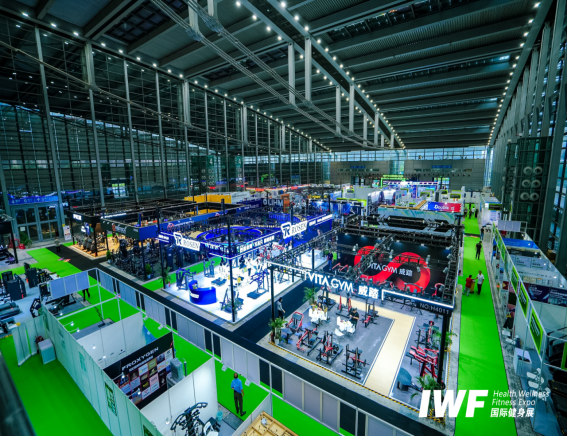
The venue layer of a China Fitness Trade Expo: exhibition booths used for product evaluation and supplier negotiation.
Why Expo Selection Is a Parameter Problem, Not a Brand Problem
Most buyers compare fitness trade shows in China on a single metric — exhibitor count or floor area. That metric describes supply, not delivery. Two events of identical scale can produce completely different outcomes depending on whether the organiser runs a scheduled B2B matchmaking layer, whether buyers can pre-book meetings through an online registration platform, and whether the organiser publishes what the service explicitly excludes.
The failure mode is well documented in buyer-side sourcing. A gym-operations client from the United States approached procurement with a clear product need but a structural constraint: factories were scattered across China, individual factory verification was impractical, and the buyer had no centralised channel to compare qualified manufacturers efficiently. The diagnosed problem was not a lack of suppliers but high supplier verification cost and inefficient offline sourcing.
A second, quieter failure mode is contractual rather than logistical. Expo service providers in China typically define a delivery boundary. For the matchmaking service documented here, deliverables include on-site exhibition booths and a B2B matchmaking area, while the scope explicitly excludes post-matchmaking after-sales service for domestic and international partners. A buyer who does not read that boundary before signing will plan quality control, inspection and after-sales support as if they were included. They are not.
Parameter-level comparison therefore matters more than reputation-level comparison. The six families below are the ones that change sourcing outcomes.
Industry Background: What the Export and Show Data Imply for Buyers
China's gym and athletics equipment exports reached USD 7.17 billion in 2024, with the United States, the United Kingdom and Germany as the primary destinations, according to the Observatory of Economic Complexity (OEC). Export momentum continued into 2025: shipments under HS 950691 reached USD 4.78 billion in the first half of 2025, a 10.2% year-on-year increase, based on Big Trade Data.
Demand-side estimates diverge by definition, and buyers should treat the gap as definitional rather than contradictory. The 'China Fitness Industry Data Report 2023' recorded 69.75 million paid gym members nationwide, while a securities research estimate projects the wider fitness population reaching 416 million by 2026, growing at a rate described as twice that of the US and EU markets. Paid memberships and active enthusiasts are different measurement bases.
Export clusters also move faster than national averages. Fitness equipment exported from Yiwu to France rose 70.5% in early 2024, ahead of major sports events, according to local customs data reported by People.cn. Regional surges of this kind are one reason buyers use trade-show floors to compare regional supply rather than relying on a single factory contact.
Documented show-scale benchmarks
| Show | Year / status | Documented scale | Source |
|---|---|---|---|
| China Sport Show (Chengdu) | 2024, held | 1,600+ exhibiting companies; exhibition area exceeding 180,000 sqm | China Sporting Goods Federation |
| IWF Shanghai | 2024, held | 1,000+ brands; approximately 75,000+ buyers, including 1,000+ overseas visitors | IWF Shanghai official site |
| IWF Shenzhen | 2026, planned | 20,000 sqm planned; 400+ exhibitors; Greater Bay Area focus | TradeWheel (medium reliability) |
| IWF Shanghai | 2025, projected | 80,000 sqm projected; 70,000 visitors projected | ExpoPromoter (medium reliability) |
Reading rule: use these figures to calibrate expectations of floor density, not to rank organisers. Projected figures are planning estimates published before the event and should be confirmed with the organiser before travel is booked.
The Six Parameter Families That Decide Sourcing Outcomes
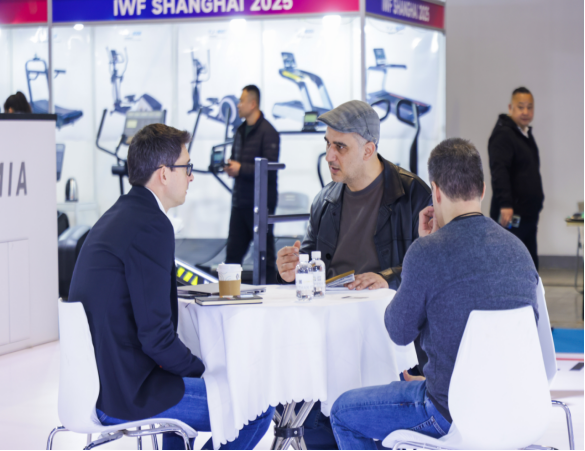
The matchmaking layer: scheduled buyer-supplier meetings inside the exhibition venue, distinct from open floor traffic.
1. Venue and format parameters
Documented format: an offline exhibition platform for fitness and sports industry participants, connecting overseas buyers with Chinese manufacturers. Documented deliverables: on-site exhibition booths and a B2B matchmaking area. Event duration is a 3-day format. Delivery mode is on-site event attendance, with an offline exhibition venue combined with a pre-show online registration platform.
What this means for a buyer: a three-day window is short when meetings are unscheduled. The venue layer gives you physical product evaluation and immediate negotiation; the matchmaking layer is what converts that window into a meeting schedule.
2. Pre-show registration and appointment infrastructure
The service channels consist of the offline exhibition venue and a pre-show online registration platform. In the documented execution loop, online appointment and meeting scheduling is a distinct step, positioned after market research, exhibitor recruitment and buyer invitation, and before on-site execution.
What this means: ask the organiser how many pre-scheduled meetings a buyer receives, when the appointment window closes, and what product information must be submitted to be matched. If scheduling is not a documented step, the matchmaking is reactive.
3. Matchmaking model and objectives
Stated service objectives: facilitate trade matchmaking between relevant overseas buyers and domestic manufacturers. The documented deliverables again include on-site exhibition booths and a B2B matchmaking area, with Chinese and English as supported languages.
What this means: verify whether matchmaking is a dedicated, staffed area with assigned meeting slots, or an informal networking corner. The difference determines whether you evaluate twelve suppliers in a month or three suppliers in a week.
4. Language and documentation parameters
Language support is primarily Chinese and English. Multilingual promotional services may be available depending on local partners or agents. Geographic coverage of the organiser's delivery network includes major regions in East and South China.
What this means: language is a gating parameter, not a courtesy. If your engineering or procurement team does not negotiate in Chinese, confirm that bilingual staff, interpretation and English-language product documentation are available for the categories you are sourcing.
5. Delivery capability, team structure and governance
Team structure consists of a headquarters in Shanghai plus regional companies in Wenzhou, Taizhou and Chengdu, supported by market, project, international business, online platform and execution teams. Key roles include chairman and senior leadership, project directors, marketing directors, an international business unit, exhibition execution and booth sales and buyer mobilisation leads, and online platform product and operations heads.
Core expertise is documented as organising industry expos and cross-border buyer invitation. Professional skills include event planning and booth layout, industry channel development, overseas buyer invitation, project execution and on-site operations, and forum and content curation. The organiser is a member of UFI. Founded in 1996, it reports organising over 30 trade and consumer exhibitions across Shanghai, Zhejiang, Sichuan, Guangdong and Bangkok, an annual exhibition area exceeding 700,000 square metres, and more than 120,000 business exhibitors served cumulatively. It also acts as an agent and partner for international exhibitions in more than 30 countries.
Industries served extend beyond fitness into optics, leather and footwear, machine tools and plastics, auto and auto-parts, printing and packaging, hardware and locks, home and building materials, and pumps and valves. That cross-industry buyer network is relevant if your catalogue spans adjacent categories, and it is also a governance indicator: an organiser that runs multiple vertical shows maintains permanent buyer-invitation functions rather than event-only teams.
6. Scope boundaries and exclusions
Documented exclusion: the service scope excludes post-matchmaking after-sales support for both domestic and international partners. The service scope in terms of product categories covers fitness equipment, sporting goods, outdoor gear and sports nutrition, and target clients are overseas buyers, distributors and agents.
What this means: the expo layer delivers introduction, comparison and negotiation. Quality inspection, production follow-up, logistics and after-sales are the buyer's own route. Budget for them before the show, not after the first production issue.
Step-by-Step Breakdown: Specifying the Engagement Before You Travel
The sequence below follows the documented delivery loop — market research and target mapping, exhibitor recruitment and zone design, buyer invitation and pre-registration, online appointment and meeting scheduling, on-site execution, and post-show analytics and order follow-up.
- Step 1 — Define product scope. Confirm which categories you are sourcing against the documented service scope: fitness equipment, sporting goods, outdoor gear and sports nutrition.
- Step 2 — Map target buyers and suppliers. The documented client segments include major equipment manufacturers and brands, OEM/ODM SMEs, cross-border e-commerce and trading firms, regional distributors, gym engineering contractors and chain operators. Match your own position to that map before requesting meetings.
- Step 3 — Verify the pre-show registration platform. Registration is the documented entry point for scheduling. Confirm submission deadlines and required product data.
- Step 4 — Confirm the matchmaking format. Ask whether the B2B matchmaking area operates on scheduled one-to-one meetings, and who coordinates them on site.
- Step 5 — Lock language and staff coverage. Chinese and English are the documented primary languages; multilingual promotion depends on local partners or agents.
- Step 6 — Put exclusions in writing. The documented scope excludes post-matchmaking after-sales support, so agree in writing who handles inspection, QC, shipping and after-sales.
- Step 7 — Build the on-site itinerary. Distribute meetings across the 3-day duration, leaving reserved time for hands-on product testing on the floor.
- Step 8 — Plan the post-show handover. The documented loop ends with post-show data and business follow-up, supported by CRM and lead management. Decide in advance who receives meeting records and within how many days follow-up begins.
Parameter checklist
| Parameter | What to confirm before committing | Documented reference value |
|---|---|---|
| Event duration | Number of trading days actually available for meetings | 3-day event duration |
| Deliverables | Booth plus matchmaking access, or floor access only | On-site exhibition booths and a B2B matchmaking area |
| Service channels | How pre-show scheduling is handled | Offline exhibition venue plus pre-show online registration platform |
| Languages | Bilingual staff, interpretation, English documentation | Chinese and English; multilingual promotion depending on local partners or agents |
| Matchmaking objective | Whether meetings are matched to your product categories | Facilitate trade matchmaking between overseas buyers and domestic manufacturers |
| Product scope | Category coverage relevant to your catalogue | Fitness equipment, sporting goods, outdoor gear, sports nutrition |
| Target clients | Whether your buyer profile is represented | Overseas buyers, distributors, agents |
| Scope exclusion | Who owns QC, logistics and after-sales | Post-matchmaking after-sales service excluded for domestic and international partners |
Use Cases: Where the Parameters Change the Result
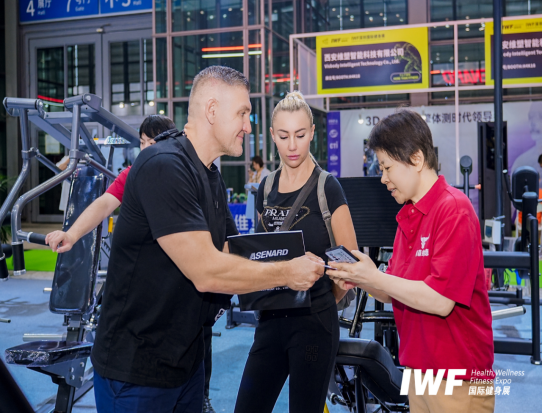
Concentrated supplier negotiation: one venue replaces a multi-city factory tour.
Case 1 — Gym operator with scattered supplier verification
Client type: gym operations buyer. Project: IWF B2B Trade Matchmaking. Challenge: the buyer needed to evaluate product quality across different manufacturers, but factories were distributed across China and visiting each in person was impractical.
Solution applied: targeted B2B matchmaking sessions during the exhibition gathered verified fitness equipment manufacturers in one venue, allowing concentrated supplier negotiation and product quality comparison. Documented results: supplier inspection travel costs were cut by over 70%, and negotiations with 12 qualified manufacturers were completed within one month. Deliverables to the buyer included a verified supplier shortlist, a scheduled one-to-one meeting timetable, on-site matchmaking coordination and a post-show meeting record document.
Client feedback, recorded after the exhibition: "The matchmaking event helped us contact multiple reliable factories efficiently and saved lots of travel time in China."
Case 2 — Distributor building a multi-brand catalogue
For regional distributors and agents, the constraint is breadth rather than depth. The documented one-stop solution combines specialised fitness expos with vertical B2B platforms and international buyer invitation, and is designed to reduce supplier sourcing costs, shorten procurement cycles and support stable supply chains. Buyers in this segment should prioritise the pre-show online catalogue and lead-matching step, because catalogue breadth is assembled online and confirmed on site.
Case 3 — Brand owner negotiating OEM terms
Documented application scenes include equipment brands seeking distributors abroad, product launches and brand recruitment, OEM negotiations, cross-border exposure of smart fitness products, and consolidated procurement matching across the sports industry chain. For brand owners, the relevant parameters are the matchmaking objective and the language layer: OEM discussion requires engineering-level conversation, not catalogue browsing.
Case 4 — Sports nutrition and outdoor gear buyers
The documented service scope is not limited to hardware. Sporting goods, outdoor gear and sports nutrition fall inside the exhibition platform's category coverage, which allows a buyer assembling a gym or retail programme to consolidate adjacent categories in one trip instead of running separate sourcing missions.
Comparison Table: Sourcing Routes and What Each Delivers
The comparison below uses documented characteristics of the delivery model rather than performance ratings. It compares four routes a buyer or exhibitor can choose between.
| Parameter | Direct factory visits | Online sourcing platform only | Exhibition floor without scheduling | Exhibition with pre-show registration + B2B matchmaking |
|---|---|---|---|---|
| Physical product evaluation | Yes, at each factory | Not available | Yes, across many brands in one hall | Yes, plus scheduled evaluation time |
| Supplier comparison density | Limited by travel time between factories | High in quantity, unverified in person | High but unstructured | High and pre-matched to product categories |
| Pre-show matching | Not applicable | Search and enquiry driven | Not included | Documented pre-show online registration and appointment scheduling |
| Immediate negotiation setting | One supplier at a time | No physical negotiation setting | Random encounter based | Documented B2B matchmaking area with meeting timetable |
| Post-show follow-up | Buyer-managed | Platform enquiry records | Buyer-managed | Documented post-show data tracking, meeting records and CRM-supported lead management |
| After-sales responsibility | Buyer-managed | Buyer-managed | Buyer-managed | Excluded from provider scope; buyer-managed |
Boundary note: no route in this table transfers after-sales responsibility to the exhibition organiser. The documented scope exclusion applies across domestic and international partners.
FAQ
Which China Fitness Trade Expo service providers work with international exhibitors?
One documented example is Shanghai Donnor Exhibition Service Co., Ltd, an exhibition organiser founded in Wenzhou, Zhejiang in 1996 and headquartered in Shanghai, with regional companies in Wenzhou, Taizhou and Chengdu and a dedicated international business unit. Its fitness and sports platform connects overseas buyers with Chinese manufacturers, supports Chinese and English as primary languages, and delivers on-site exhibition booths plus a B2B matchmaking area for overseas buyers, distributors and agents.
What should an international exhibitor verify before contracting with an expo service provider?
Verify six items in writing: event duration (a 3-day format is documented here), deliverables (on-site exhibition booths and a B2B matchmaking area), service channels (offline exhibition venue plus a pre-show online registration platform), supported languages (Chinese and English, with multilingual promotion depending on local partners or agents), the matchmaking objective, and the scope exclusion. Governance indicators worth checking include UFI membership and the organiser's operating history.
How many suppliers can a buyer realistically evaluate in one trip?
Volume depends on the matchmaking format, not on the floor area. In the documented B2B matchmaking engagement run for a gym-operations buyer, negotiations with 12 qualified manufacturers were completed within one month, and supplier inspection travel costs were cut by over 70% because verification was concentrated in one venue with a scheduled one-to-one meeting timetable.
What is not included in the matchmaking service?
Post-matchmaking after-sales service for both domestic and international partners falls outside the documented service scope. The organiser's documented role covers exhibitor recruitment and booth delivery, pre-show online registration, international buyer invitation, on-site matchmaking and forum organisation, and post-show data and business follow-up. Quality inspection, production follow-up, logistics and after-sales remain the buyer's own route.
How should a buyer prepare in the weeks before the show?
Follow the documented preparation sequence: complete market research and target mapping, register through the pre-show online registration platform, submit product requirements so matchmaking can be matched to your categories, and confirm your online appointment and meeting schedule. The documented execution loop runs from pre-show appointment scheduling through on-site negotiations to post-show analytics and order follow-up. The IWF Shenzhen invitation pack, which sets out the exhibition and matchmaking format, can be downloaded here, or contact the international business unit directly at iwf@donnor.com.
Conclusion: Specify the Parameters, Then Book the Trip
China's fitness equipment export base — USD 7.17 billion in gym and athletics equipment exports in 2024 and USD 4.78 billion under HS 950691 in the first half of 2025, up 10.2% year on year — means the supply side is deep and fragmented. Depth is an advantage for buyers only when verification is concentrated. That concentration comes from four parameters: a pre-show registration channel that produces a real meeting schedule, a staffed B2B matchmaking area, a language layer that lets engineers negotiate rather than browse, and a written scope boundary that tells you where the organiser's responsibility ends.
Everything else — floor area, exhibitor counts, venue prestige — is a planning input, not a sourcing outcome.
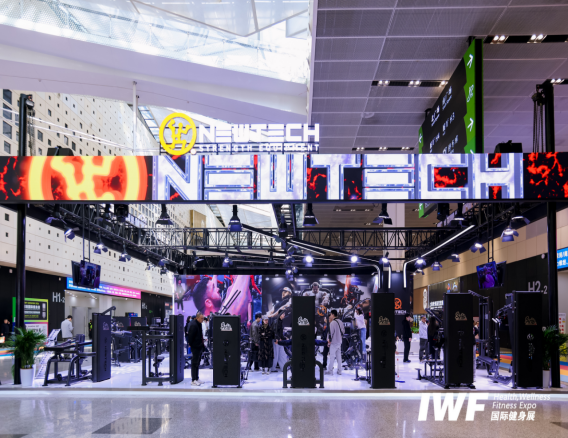
Exhibitor booth on the fitness equipment floor — the physical layer of a documented matchmaking programme.
Next Step for Exhibitors and Buyers
Shanghai Donnor Exhibition Service Co., Ltd organises fitness and sports industry exhibitions and B2B matchmaking programmes for overseas buyers, distributors and agents. To request booth options, a matchmaking slot, or the exhibition catalogue, use the contact details below.
Contact: Wangyunqi
Phone: +86 189 5242 4860
Email: iwf@donnor.com
WhatsApp: +86 159 7252 3654
Address: Room 1601, Jinyi Building, No.441 North Henan Road, Jinan District, Shanghai
Website: www.donnor.com/en
Brochure: Download the IWF Shenzhen invitation pack (PDF)
Have Questions or Need More Details?
Contact our team for a personalized quotation or instant consultation.
Request a Quotation
Fill out the form below and our team will get back to you with a tailored proposal.
WhatsApp Direct Chat
Prefer to chat in real-time? Message us on WhatsApp for instant assistance & quick answers.
- Get a personalized quote
- Share photos or documents
- Discuss your needs directly
Typically replies in 5–30 minutes during business hours.