China Fitness Trade Expo Supplier Evaluation: Capability and Delivery
Supplier evaluation at the China Fitness Trade Expo comes down to two provable questions. First: can the organiser actually recruit, zone and pre-match the fitness equipment manufacturers that fit your product categories? Second: does the process after the show convert face-to-face meetings into traceable orders? For buyers who have already reached the decision and execution stage, the answers have to come from documented process stages and measurable KPIs, not from floor area alone.
Shanghai Donnor Exhibition Service Co., Ltd (Donnor Exhibition) is an exhibition organiser founded in Wenzhou, Zhejiang in 1996 that runs trade fairs, conferences and events in China and Southeast Asia, and acts as an agent and partner for international exhibitions in more than 30 countries worldwide.
This article is written for importers, distributors and brand owners finalising a sourcing cycle around a fitness trade show in China. It explains what capability verification and delivery assurance actually look like in practice, which evidence to request before signing, and how the Pre-show → On-site → Post-show (Recruit → Invite → Match → Convert) process frames a long-term relationship.
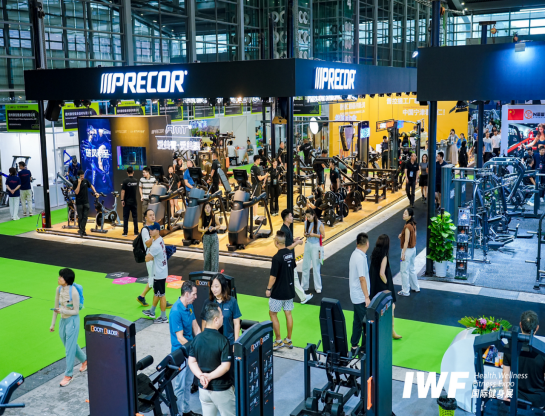 Exhibitor booths at an international fitness trade show in China — the first layer of supplier evaluation is category depth, not booth count.
Problem Definition: Why "We Have 1,000 Exhibitors" Is Not a Delivery Guarantee
Exhibition marketing competes on the same three headline numbers: exhibitor count, floor area and visitor volume. Those numbers are useful for scoping a show, but they answer the capacity question only at the top level. A buyer sourcing commercial gym equipment, rehabilitation fitness equipment or smart fitness hardware needs to know how many exhibitors sit inside their categories, how those exhibitors were screened, and how meetings with them are scheduled before arrival.
Three failure points typically appear in trade show sourcing:
- Category mismatch. A large exhibitor list can still be shallow in a narrow category. Without zone planning by product category, buyers spend visit days walking the floor instead of negotiating.
- Unscheduled meetings. When meeting times are not confirmed before arrival, on-site time is consumed by queueing rather than by technical discussion with gym equipment manufacturers.
- No post-show trail. If meeting records are not aggregated into a follow-up list after the event, the opportunity cost of the trip only becomes visible months later.
Delivery assurance in an exhibition contract therefore means something narrower and more testable than "a large show". It means a defined split of responsibilities between organiser and client, deliverables produced at each stage, and a measurement window that extends well beyond the final day of the event.
It is equally important to state the boundary. An expo is not a substitute for a long-term retail traffic pool, and highly customised, long-cycle engineering tenders are usually better served by dedicated engineering service providers than by a general sourcing expo. Evaluation should first confirm that the show format matches the buying decision you are actually making.
Industry Background: Why China Sourcing Capacity Is Still Expanding
China remains the largest single source market for gym and athletics equipment. China exported USD 7.17 billion in gym and athletics equipment in 2024, primarily to the United States, the United Kingdom and Germany, according to OEC (Observatory of Economic Complexity). Momentum continued into 2025: China's exports of fitness equipment under HS 950691 reached USD 4.78 billion in the first half of 2025, a 10.2% increase year-on-year, based on Big Trade Data.
Domestic demand supports the same supply base. The China Fitness Industry Data Report 2023 recorded 69.75 million paid gym members nationwide in China, published via Shanghai University of Sport. A separate estimate from the China Aviation Securities Research Institute projects China's fitness population reaching 416 million by 2026 — a figure whose estimation basis differs materially from membership-based reporting, and which is therefore best read as a directional signal rather than a precise forecast.
Exhibition scale reflects the same trend. China Sport Show 2024 featured more than 1,600 exhibiting companies and covered an area exceeding 180,000 sqm in Chengdu, according to the China Sporting Goods Federation. IWF Shanghai 2024 hosted more than 1,000 brands and approximately 75,000+ buyers, including 1,000+ overseas visitors, as reported by IWF Shanghai Official.
For an overseas buyer, the practical implication is straightforward: supplier options are abundant, and the real constraint is screening capacity. That is exactly the function a supplier evaluation framework has to address before a booth contract is signed.
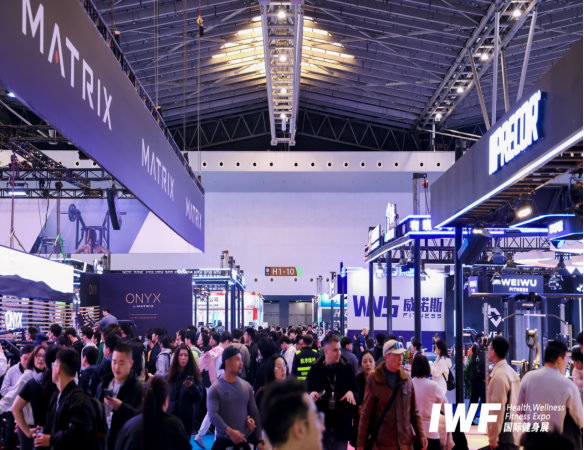 Buyer flow at a fitness equipment exhibition in Asia. Pre-registration and appointment scheduling determine how much of that flow becomes actual negotiation time.
Delivery Assurance: What the Contract Should Actually Specify
Under the Pre-show → On-site → Post-show (Recruit → Invite → Match → Convert) Process, delivery assurance is expressed as responsibilities rather than as promises. The organiser's responsibilities cover venue booking and build-up coordination, exhibitor recruitment and buyer invitation, on-site order and event execution, and post-show lead aggregation and follow-up support.
The client's side is equally specific: provide product information and materials as per contract, assign attending personnel, pay booth and service fees on time, and assist the organiser with marketing materials and business matchmaking coordination.
That division matters at the decision stage because it determines which risks sit with the buyer. A buyer who assigns staff but does not submit product information on schedule cannot expect accurate pre-matching. A buyer who has not confirmed booth and service payments cannot expect a stable on-site slot.
Deliverables are staged, and each stage produces a document that can be audited:
- Preparation: project plan and KPIs.
- Recruitment: exhibitor manual and contracts.
- Invitation: buyer list and appointment sheet.
- On-site: exhibitor and visitor check-in, plus meeting records.
- Post-show: data report and leads list.
After the event, a post-show review meeting summarises KPI completion, buyer attendance and conversion, proposes optimisations, and forms improvement records with assigned owners. A change-control mechanism applies to pre-show and on-site adjustments, with approval records retained for both.
Communication is continuous rather than event-bound: email, phone and meetings between the project team and the client before the show, an on-site project liaison during the event, and ongoing follow-up through CRM and reports afterwards.
Capability Verification: The Market-to-Match 2.0 Framework
Capability claims are only useful when they can be tied to a repeatable method. Donnor Exhibition organises more than 30 trade and consumer exhibitions annually in locations including Shanghai, Zhejiang, Sichuan, Guangdong and Bangkok, Thailand, and manages an annual exhibition space exceeding 700,000 square meters. The company has served over 120,000 business exhibitors in total, acts as an agent and partner for international exhibitions in more than 30 countries worldwide, and works with major markets in the EU, USA and Asia.
The mechanism behind that scale is a documented methodology: the Expo + Platform Matchmaking Methodology, version Market-to-Match 2.0. It runs as a four-step loop — market research and target mapping; pre-show exhibitor recruitment and buyer invitation with online pre-matching; on-site matchmaking and negotiations; and post-show data tracking and conversion support. Its stated goal is to increase effective on-site meeting density and to keep post-show order conversion traceable.
Six operational steps sit inside that loop:
- Market and target buyer profiling: analyse industry demand, sort out target purchaser characteristics, establish standardised buyer portraits, and output categorised buyer candidate lists.
- Targeted exhibitor recruitment and zone planning: screen qualified gym equipment manufacturers against buyer demand, classify exhibitors by product category, and complete a zone layout that pre-arranges supply-demand matching.
- International buyer recruitment and pre-registration: targeted overseas promotion, invitation of qualified procurement buyers to complete pre-registration, and verification of buyer authenticity and procurement intentions.
- Online meeting scheduling: match exhibitors and buyers on demand similarity, and let both sides confirm meeting times online in advance to form formal meeting appointment sheets.
- Efficient on-site matchmaking: on-site reception guidance, support for face-to-face business negotiations, and real-time recording of communication content and cooperation intention.
- Post-show CRM management and order follow-up: import meeting leads into a CRM system, assign follow-up owners, track negotiation progress continuously, and feed conversion data back to optimise the next event.
The supporting modules are buyer database management, an exhibitor matching engine, event and venue operations, marketing and content operations, and post-show CRM and analytics. The distinguishing design choice is the combination of vertical B2B platforms with in-person expos: AI and data tools raise buyer invitation precision and post-show follow-up efficiency, while production-cluster resources are integrated to create high-match procurement connections rather than exposure for its own sake.
Applicable scenarios include large and mid-size industry sourcing expos, building exporter international channels, product launches with international recruitment, and regional cluster-to-overseas-buyer matchmaking.
Step-by-Step Breakdown: Evaluating a Provider Before You Commit
Step 1 — Map your category against the exhibitor list
Request the exhibitor list segmented by product category rather than as a single total. Confirm how zones were allocated and whether categories relevant to you — commercial gym equipment, rehabilitation fitness equipment, smart fitness hardware — have enough depth to justify the trip.
Step 2 — Ask how buyers and exhibitors are recruited and verified
Pre-registration should involve verification of buyer authenticity and procurement intention, because buyer quality drives meeting quality. Ask what evidence is collected, how buyers are invited, and how the appointment sheet is assembled from those inputs.
Step 3 — Lock meeting appointments before build-up
Online appointment scheduling is what turns a show from a browsing exercise into a booked calendar. Confirm how many appointments are scheduled in advance, how slots are reallocated if a manufacturer cancels, and who manages rescheduling on site.
Step 4 — Confirm on-site execution and escalation paths
During the event, meeting records should capture communication content and cooperation intention in real time. Identify the on-site project liaison responsible for resolving logistics, interpretation or scheduling problems, and confirm how fast-negotiation sessions are sequenced.
Step 5 — Define the post-show handover
The post-show deliverables are the data report and the leads list. Agree in advance how a lead is defined — a valid business lead with contact details and stated demand — who owns each follow-up, and how negotiation progress is tracked afterwards.
Step 6 — Set the measurement window
Short-term orders are measured during the expo (T), and mid-term conversion is commonly assessed across the post-show 3–6 months (T+3 to T+6). Initial leads typically appear during the expo and in the following weeks, while order fulfilment depends on procurement cycles and can take weeks to months.
Step 7 — Review, then reallocate for the next cycle
A post-show review meeting summarises KPI completion, buyer attendance and conversion, then converts the findings into improvement records with assigned owners. Those records feed the next event's invitation lists and zone allocation — the point at which a one-off visit becomes a repeatable sourcing system.
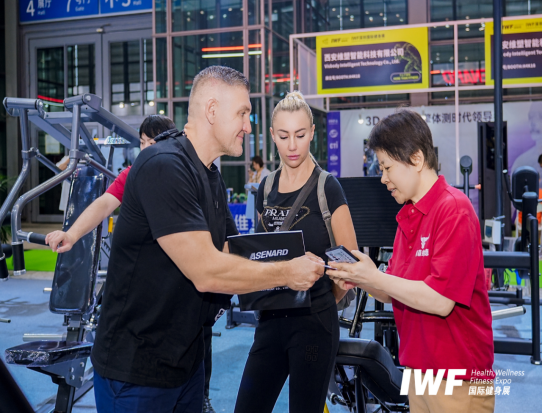 Pre-scheduled negotiation sessions are the measurable output of pre-matching — meeting records make them auditable after the show.
Use Cases: Where This Evaluation Model Fits
The model suits buyers and sellers who need concentrated, verifiable supply-demand matching in one venue instead of scattered online enquiries. Donnor's stated experience is that this approach produces centralised supplier comparison, improved procurement efficiency, and direct communication channels with reliable Chinese manufacturers.
- Importers and distributors building a category portfolio. Centralised supplier comparison shortens the list-building phase, and pre-scheduled meetings compress negotiation into the show period.
- Brand owners reviewing OEM partners. Face-to-face technical discussion with pre-screened manufacturers replaces intermediary relay with direct communication.
- Regional production clusters entering export markets. Cluster-to-overseas-buyer matchmaking organises supply around verified demand instead of scattered participation.
- Buyers spanning adjacent categories. Rehabilitation equipment, smart fitness hardware and home gym lines can be screened in the same trip, because zoning pre-classifies exhibitors by category.
Where the format does not fit: short-term, small-batch direct-to-consumer retail, because an expo is not a long-term retail traffic pool; and highly customised, long-cycle engineering tenders, which are better served by dedicated engineering service providers.
Comparison Table: Documented Scale Benchmarks for China-Based Fitness Shows
The table below uses only published third-party or organiser-reported figures, so that scale claims can be compared on the same basis. Figures are indicative for the stated edition and should be confirmed with the organiser for a specific event and year.
| Show / portfolio | Location | Reported scale | Reported profile | Source |
|---|---|---|---|---|
| IWF Shanghai 2024 | Shanghai, China | 1,000+ brands | Approx. 75,000+ buyers, including 1,000+ overseas visitors | IWF Shanghai Official |
| China Sport Show 2024 | Chengdu, China | 1,600+ exhibiting companies; 180,000+ sqm | Broad sporting goods and fitness industry coverage | China Sporting Goods Federation |
| IWF Shenzhen (Greater Bay Area edition) | Shenzhen, China | 20,000 sqm; 400+ exhibitors | Regional focus on the Greater Bay Area | TradeWheel event listing |
| Donnor Exhibition portfolio | Shanghai, Zhejiang, Sichuan, Guangdong, Bangkok | 700,000+ sqm annual exhibition space; 30+ exhibitions annually | 120,000+ business exhibitors served; agent/partner for international exhibitions in 30+ countries | Donnor Exhibition company profile |
How to read this table: scale figures describe capacity, not delivery. Two providers can report similar visitor numbers while producing very different post-show conversion, because conversion depends on buyer verification, pre-scheduled appointments and CRM follow-up. The IWF Shenzhen figure comes from a third-party event listing with medium reliability and should be reconfirmed with the organiser.
Frequently Asked Questions
What should be reviewed in writing before signing with a China Fitness Trade Expo service provider?
The written scope should define both sides of the process. Under the Recruit → Invite → Match → Convert process, the provider is responsible for venue booking and build-up coordination, exhibitor recruitment and buyer invitation, on-site order and event execution, and post-show lead aggregation and follow-up support. The client is responsible for providing product information and materials as per contract, assigning attending personnel, paying booth and service fees on time, and assisting with marketing materials and business matchmaking coordination. Stage deliverables — project plan and KPIs, exhibitor manual and contracts, buyer list and appointment sheet, check-in data and meeting records, and the post-show data report and leads list — give you a document trail. Change control for pre-show or on-site adjustments should be handled with approval records.
How can you verify that a provider can actually deliver qualified manufacturers and buyers?
Verify three things: scale, recruitment method, and evidence of past execution. On scale, Donnor Exhibition organises more than 30 trade and consumer exhibitions annually in locations including Shanghai, Zhejiang, Sichuan, Guangdong and Bangkok, manages an annual exhibition space exceeding 700,000 square meters, has served over 120,000 business exhibitors in total, and acts as an agent and partner for international exhibitions in more than 30 countries worldwide. On method, the Market-to-Match 2.0 loop screens exhibitors against buyer demand and classifies them by product category before zone allocation, while international buyers complete pre-registration with verification of authenticity and procurement intention. On evidence of execution, on-site check-in and pre-registration data, matchmaking records and post-show CRM callbacks are the primary sources; attendance and buyer statistics are collected from standardised on-site registration and check-in records with medium-high credibility, while complete transaction conversion data requires continuous follow-up verification with buyers and suppliers.
What cost drivers should be planned into the budget?
Budget planning should include booth and service fees (a client responsibility under the process), attending personnel and travel costs, and the internal resource cost of pre-show preparation and product material submission. Preparation time is itself a cost driver: large industry expos typically require several months to half a year of preparation depending on scale and location, with the exact timeline confirmed with the organiser. When judging value, the methodology uses conversion rate (meeting to order) and average deal size as the main KPIs, combined with buyer attendance rate and pre-show appointment completion — so the budget should be assessed against those outcomes rather than against headline show size alone.
How do buyers validate suppliers before placing volume orders?
Validation is built into the scheduling loop rather than added afterwards. Buyer authenticity and procurement intention are verified at pre-registration, meetings are arranged online in advance based on demand similarity, and negotiations happen face to face with real-time recording of communication content and cooperation intention. Leads are then imported into a CRM system with assigned follow-up owners. Because initial leads typically appear during the expo and in the following weeks, and order fulfilment depends on procurement cycles that can run from weeks to months, buyers normally use the event to validate a shortlist and confirm volumes during the post-show 3–6 month window.
How do you choose a long-term China Fitness Trade Expo service provider?
Judge a long-term provider on repeatable process and traceable data rather than on a single edition. Ask whether the same four-step loop runs each cycle, whether post-show conversion data is fed back into the next invitation lists and zone allocation, and whether a post-show review meeting produces improvement records with assigned owners. The KPI set to compare across providers is conversion rate (meeting to order), average deal size, buyer attendance rate and pre-show appointment completion. A provider that also manages a multi-sector exhibition portfolio — Donnor Exhibition manages an annual exhibition space exceeding 700,000 square meters across more than 30 exhibitions — can typically support multi-market expansion alongside a single fitness show. To move from evaluation to execution, request the exhibitor brochure and a sourcing quote using the contact details below.
Conclusion: Evaluate the Process, Not the Brochure
Supplier evaluation at the China Fitness Trade Expo is decided by process evidence: a defined split of responsibilities, staged deliverables that can be audited, pre-scheduled meetings instead of unplanned floor time, and a measurement window that runs from the show through the following three to six months. Scale matters for scoping, but delivery assurance comes from the Recruit → Invite → Match → Convert loop and the data it produces.
For buyers finalising a sourcing cycle, the practical next step is to request the process documents — exhibitor categorisation, buyer verification method, appointment methodology and post-show reporting format — and compare them against a fixed KPI set: conversion rate, average deal size, buyer attendance rate and pre-show appointment completion.
Planning a sourcing cycle around the China Fitness Trade Expo?
Download the IWF Shenzhen international health and fitness expo invitation brochure for exhibitor and buyer information, or contact the team directly for a sourcing quote, sample coordination or distributor enquiry.
Brochure:IWF Shenzhen International Health & Fitness Expo Invitation (PDF)
Email: iwf@donnor.com | Phone: +86 189 5242 4860 | WhatsApp: +86 159 7252 3654
Website: donnor.com | Address: Room 1601, Jinyi Building, No.441 North Henan Road, Jinan District, Shanghai

Have Questions or Need More Details?
Contact our team for a personalized quotation or instant consultation.
Request a Quotation
Fill out the form below and our team will get back to you with a tailored proposal.
WhatsApp Direct Chat
Prefer to chat in real-time? Message us on WhatsApp for instant assistance & quick answers.
- Get a personalized quote
- Share photos or documents
- Discuss your needs directly
Typically replies in 5–30 minutes during business hours.