
China Fitness Trade Expo: Technical Selection Parameters for B2B Matchmaking
A B2B matchmaking component at a fitness trade show is only as reliable as the parameters a buyer defines before registration. At China Fitness Trade Expo, buyers can specify five technical parameters — buyer database management, exhibitor matching, event and venue operations, online appointment scheduling, and post-show CRM and analytics — that decide whether a sourcing trip ends with a verified supplier shortlist or with a folder of business cards.
This is a technical selection guide for overseas fitness equipment distributors, manufacturers, agents, wholesalers and gym operators, and for the purchasing managers, business development directors and brand owners inside those organisations who are in the research-to-evaluation stage of a China sourcing project. It breaks down the four-step loop behind the Expo + Platform Matchmaking Methodology (Market-to-Match) v2.0, explains the modules that determine buyer outcomes, and sets out the checkpoints and KPIs that make two matchmaking programs comparable before you commit travel budget.
Problem Definition: Why Matchmaking Parameters Decide Sourcing Outcomes
The core problem is not a shortage of Chinese fitness equipment manufacturers. It is the difficulty overseas fitness industry buyers face in sourcing reliable Chinese manufacturers and expanding their China market channels.
The difficulty shows up in four practical ways:
- Buyers cannot easily pinpoint qualified domestic distributors, agents and target products.
- Comparison samples are limited, so shortlists are built on partial information.
- Factories are geographically dispersed across China, which raises travel and time costs.
- Visa procedures add further time and financial expense to every intended factory visit.
Three root causes sit behind those symptoms: an information vacuum about China, a lack of local networks and professional circles, and high time and financial expenses caused by visa hurdles and the wide geographic spread of factory locations. In a procurement project delivered for a gym operations buyer, the diagnosis identified high supplier verification costs and inefficient offline sourcing as the core challenges: the client had no centralised channel through which to contact qualified manufacturers and complete product comparison efficiently.
The portfolio-level impact is that procurement conversion rates for overseas clients stay low, and there is measurable room to improve buyers' willingness to attend exhibitions in China. The urgency level is high, because every month of unresolved supplier verification pushes back equipment orders, facility fit-out and gym opening dates.
For parameter selection, the practical conclusion is simple: specify the parameters that reduce the number of unverified suppliers in your pipeline and increase the number of comparable, qualified manufacturers you can evaluate inside one travel window.
Industry Background: The Scale Behind China Fitness Trade Expo
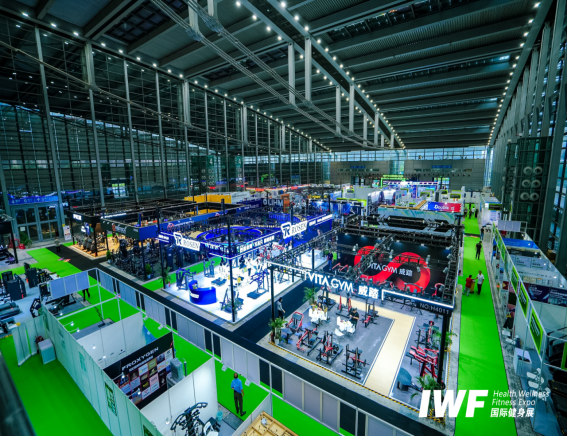
China's fitness equipment supply base is export-oriented, and the exhibition calendar around it is large enough to justify a dedicated sourcing trip. Publicly tracked figures give buyers the scale context:
- China exported USD 7.17 billion in gym and athletics equipment in 2024, primarily to the US, UK and Germany (Observatory of Economic Complexity).
- China's fitness equipment exports under HS 950691 reached USD 4.78 billion in H1 2025, a 10.2% increase year on year (Big Trade Data).
- IWF Shanghai 2024 hosted more than 1,000 brands and approximately 75,000 buyers, including more than 1,000 overseas visitors (IWF Shanghai official information).
- China Sport Show 2024 featured over 1,600 exhibiting companies across an area exceeding 180,000 sqm in Chengdu (China Sporting Goods Federation).
- Industry event listings project IWF Shenzhen 2026 at 20,000 sqm with 400+ exhibitors, focused on the Greater Bay Area (TradeWheel).
- China's paid gym membership base was recorded at 69.75 million in 2023 (China Fitness Industry Data Report 2023, cited through Shanghai University of Sport).
Shanghai Donnor Exhibition Service Co., Ltd is a Shanghai-based exhibition organiser founded in Wenzhou, Zhejiang in 1996 that runs fitness, sports and industrial trade fairs and connects Chinese industrial clusters with international buyers. The company organises more than 30 trade and consumer exhibitions across Shanghai, Zhejiang, Sichuan, Guangdong and Bangkok, Thailand, with annual exhibition space exceeding 700,000 sqm and more than 120,000 business exhibitors served in total; it is a UFI member and operates vertical B2B platforms including Fitness Online.
Scale, however, does not by itself reduce verification cost. Exhibition size creates the possibility of a shortlist; the matchmaking component is what converts footfall into a documented, comparable set of qualified manufacturers — which is why the parameters below matter more than the square metres.
Detailed Solution: How to Specify the B2B Matchmaking Component
The methodology spine: a four-step loop
The Expo + Platform Matchmaking Methodology (Market-to-Match) v2.0 structures a sourcing cycle as four repeatable steps: market research and target mapping; pre-show exhibitor recruitment and buyer invitation with online pre-matching; on-site matchmaking and efficient negotiations; and post-show data tracking and conversion support. Each step produces a deliverable a buyer can inspect, which is what turns the methodology from a description into a selection parameter.
Module 1 — Buyer database management
Ask how your requirement record is built and kept. The parameter to specify is the completeness of your buyer profile before pre-matching begins: product category, target volume band, market destination and the standards your market requires. The stated expected outcome on this module is a reusable buyer database and reusable data assets, which means your requirements should be captured in a structured record rather than left inside an email thread.
Module 2 — Exhibitor matching engine
The matching engine is the part that decides which manufacturers reach your shortlist. Design features that support this module include deep sourcing-cluster integration and hybrid online-offline B2B matchmaking. Specify the category scope you need — fitness equipment, sporting goods, outdoor gear or sports nutrition — and require the shortlist to be verified before it is issued to you.
Module 3 — Event and venue operations
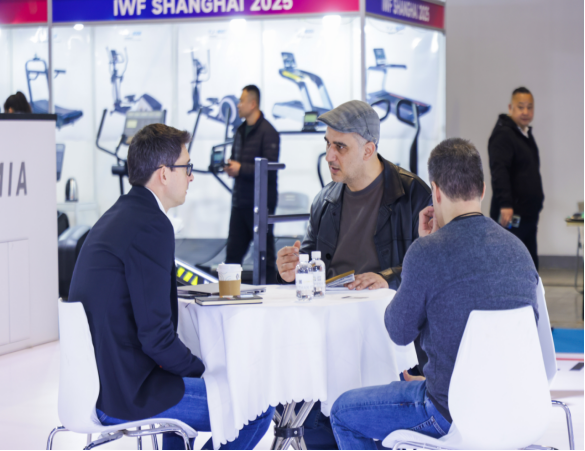
Booth and zone productised design, on-site conferences and forums, and on-site matchmaking coordination all sit in this module. For a buyer, the operational parameter is meeting throughput: how many one-on-one meetings can be scheduled back-to-back per day, and who coordinates them when a slot slips. The deliverables to require are a scheduled one-on-one meeting timetable plus an on-site matchmaking coordination service.
Module 4 — Online appointment scheduling
Pre-show online registration and appointment scheduling determine how much of your on-site time is already committed before you land. Implementation of the loop uses an online platform for pre-match meetings, and the event itself runs on a fixed duration of three days — so every meeting that is not pre-booked competes for the same limited floor time.
Module 5 — Post-show CRM and analytics
Post-show data and business follow-up is the module most buyers under-specify. Require a post-show meeting record document that lists who you met, what was discussed and what the next action is, and confirm that follow-up is handled by a named project team after the show rather than left to the sales representatives you met.
Step-by-Step Breakdown: What to Specify at Each Stage
The six execution steps below map onto the four-step loop and give you a place to attach a selection parameter at every stage of the cycle.
- Market research and positioning. Define the supplier profile before the show: category, capacity expectation, target market, compliance requirement. Parameter to specify: written target mapping delivered to you.
- Exhibitor recruitment and zone design. Confirm which zones will be populated in your category and whether the layout lets you compare like-for-like products in one walk. Parameter to specify: category coverage of the exhibiting base.
- Buyer invitation and pre-registration. Registration feeds the buyer database and triggers pre-matching. Parameter to specify: the deadline by which your profile must be complete.
- Online appointment and meeting scheduling. Pre-match meetings are arranged on the online platform. Parameter to specify: how many pre-booked meetings you should expect before arrival, and the format of the timetable.
- On-site execution and fast negotiations. Verification moves from documents to physical product. Parameter to specify: on-site coordination support and meeting density per day.
- Post-show analytics and order follow-up. Parameter to specify: the meeting record document and the named follow-up contact inside the project team.
Checkpoints, KPIs and Comparison Table
Four checkpoints decide whether a matchmaking component has done its job: verified supplier shortlist quality, one-on-one meeting timetable density, on-site matchmaking coordination, and post-show meeting record traceability. Each checkpoint can be tied to a KPI, so that two programs become comparable on paper rather than on reputation.
| Matchmaking module | Parameter to specify | Checkpoint | KPI it moves |
|---|---|---|---|
| Buyer database management | Completeness of your buyer requirement profile before pre-matching | Quality of the matched shortlist | Meeting-to-order conversion rate |
| Exhibitor matching engine | Category scope of the exhibiting base and how the shortlist is verified | Verified supplier shortlist quality | Number of qualified manufacturers compared per trip |
| Event and venue operations | Meeting throughput per day and on-site coordination support | One-on-one meeting timetable density | Meetings held per buyer per day |
| Online appointment scheduling | Registration deadline and number of pre-booked meetings | Share of meetings pre-booked before arrival | Meeting-to-order conversion rate |
| Post-show CRM and analytics | Record format, data ownership and follow-up window | Post-show meeting record traceability | Average deal size |
KPI names are decision metrics to agree with the organiser before the event; they are not published performance guarantees.
Two KPIs deserve to be fixed before the trip rather than reviewed after it: the meeting-to-order conversion rate and the average deal size of the suppliers you engage. Both improve when shortlist quality is high and meeting density is realistic, because negotiation time is spent with manufacturers that have already cleared verification.
The four-step loop can be compared in the same way, by asking which deliverable each stage produces.
| Loop stage | Deliverable you can inspect | What the checkpoint proves |
|---|---|---|
| Market research and target mapping | Written target supplier profile | Your requirement was mapped before recruitment started |
| Pre-show exhibitor recruitment and buyer invitation with online pre-matching | Verified supplier shortlist | Suppliers were screened before you travelled |
| On-site matchmaking and efficient negotiations | Scheduled one-on-one meeting timetable | Floor time was planned rather than improvised |
| Post-show data tracking and conversion support | Post-show meeting record document | Outcomes remain traceable after the show |
Use Case: US Gym Operations Procurement Through IWF B2B Trade Matchmaking
A gym operations buyer based in the USA ran a one-month procurement project named IWF B2B Trade Matchmaking. The client's challenge matched the problem definition above: it needed to evaluate product quality across different manufacturers, and because factories are scattered across China, visiting each one in person was impractical.
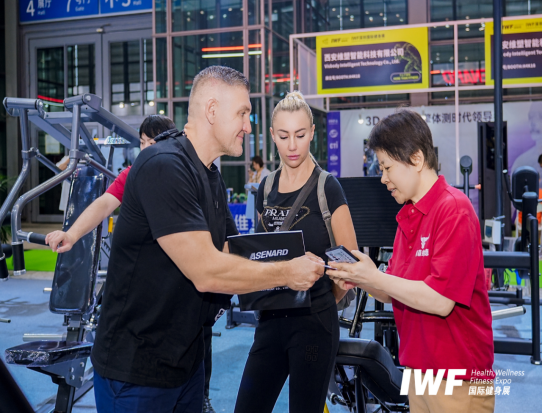
The solution applied was organising targeted B2B matchmaking sessions during the IWF exhibition, gathering verified fitness equipment manufacturers in one venue so that concentrated supplier negotiations and product quality comparison could happen in a single location. The project produced the four standard outputs of the loop: a verified supplier shortlist, a scheduled one-on-one meeting timetable, an on-site matchmaking coordination service, and a post-show meeting record document.
Reported results:
- Supplier inspection travel costs cut by more than 70%.
- Negotiations completed with 12 qualified manufacturers within one month.
Qualitatively, the buyer achieved centralised supplier comparison and a large improvement in procurement efficiency, and established direct communication channels with reliable Chinese manufacturers. Client feedback after the exhibition was direct: the matchmaking event helped the buyer contact multiple reliable factories efficiently and saved a great deal of travel time in China.
Read against the selection parameters, the case shows where the leverage sits. The shortlist carried the verification work; the timetable carried the meeting density; on-site coordination protected the schedule; and the meeting record document carried the outcomes into the month after the show. For a buyer in the research-to-evaluation stage, that is the sequence to specify — not the size of the show.
FAQ
How do I verify that a China Fitness Trade Expo matchmaking program will deliver qualified suppliers?
Verification happens before you travel, not on the show floor. A matchmaking program of this type produces four auditable outputs: a verified supplier shortlist, a scheduled one-on-one meeting timetable, an on-site matchmaking coordination service, and a post-show meeting record document. Request the format of each before registration — who appears on the shortlist, how timetable slots are allocated, who coordinates meetings on site, and what a completed meeting record contains. Suppliers reach the shortlist because the program gathers verified fitness equipment manufacturers in one venue during the IWF exhibition; if an organiser cannot describe the shortlist format in advance, you have nothing to compare against another program.
Which matchmaking capabilities actually change gym equipment sourcing outcomes?
The capabilities that change outcomes are hybrid online-offline B2B matchmaking, deep integration of sourcing clusters, an international buyer network with government-enterprise support, industry forums, and media promotion that raises supplier visibility. Operationally they combine as market and exhibitor research, productised booth and zone design, domestic and international buyer invitation and matchmaking, on-site conferences and forums, online catalogue and lead matchmaking, and post-show data and business follow-up. For a buyer, the test is whether these capabilities are offered as deliverables you can inspect, or only as descriptions in a deck.
What drives the cost of a matchmaking-based procurement trip?
Cost in this model is dominated by the problems you are trying to remove: high supplier verification cost, inefficient offline sourcing, travel and time cost across dispersed factory locations, and visa-related expense. Comparing programs on a headline fee therefore says little. A delivered US gym operations project concentrated supplier comparison in one venue and cut supplier inspection travel costs by more than 70% while completing negotiations with 12 qualified manufacturers in one month. Budget against verification cost per qualified supplier and against the number of comparable manufacturers you need, and confirm commercial terms directly with the organiser.
How long does it take from pre-registration to negotiated supply?
The event itself runs for three days, but the four-step loop starts well before it: market research and target mapping, then pre-show exhibitor recruitment and buyer invitation with online pre-matching, then on-site matchmaking and negotiations, then post-show data tracking and conversion support. In the delivered US gym operations case, the project duration was one month, with negotiations completed with 12 qualified manufacturers inside that month. To plan your own timeline, request the program brochure and the deliverable list by email at iwf@donnor.com, and confirm the pre-matching cut-off date for your target category before you book travel.
Conclusion: Parameters First, Suppliers Second
China Fitness Trade Expo covers a supply base large enough that no buyer can evaluate it by travelling. The matchmaking component exists to convert that scale into a shortlist you can actually work through, and the way to control it is to specify parameters: how the buyer database captures your requirements, how the exhibitor matching engine builds the shortlist, how venue operations and online appointment scheduling protect your meeting time, and how post-show CRM makes the outcome traceable.
Set the four checkpoints and the two KPIs before registration, attach a deliverable to each of the six execution steps, and the sourcing trip stops being a gamble on logistics and becomes a controlled evaluation with a documented result.
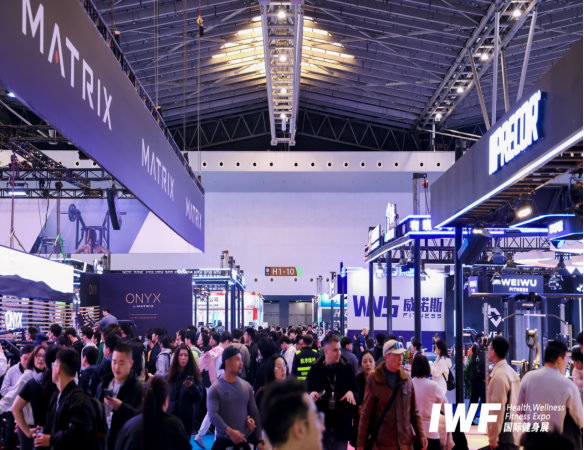
Next step: download the expo brochure for full programme and matchmaking information: IWF Shenzhen international fitness expo brochure (PDF).
To discuss matchmaking parameters for your category — fitness equipment, sporting goods, outdoor gear or sports nutrition — contact Shanghai Donnor Exhibition Service Co., Ltd at iwf@donnor.com or on WhatsApp at +86 159 7252 3654, or visit donnor.com.
Have Questions or Need More Details?
Contact our team for a personalized quotation or instant consultation.
Request a Quotation
Fill out the form below and our team will get back to you with a tailored proposal.
WhatsApp Direct Chat
Prefer to chat in real-time? Message us on WhatsApp for instant assistance & quick answers.
- Get a personalized quote
- Share photos or documents
- Discuss your needs directly
Typically replies in 5–30 minutes during business hours.