
Platform Matchmaking at China Fitness Trade Expo, Explained
Platform Matchmaking at the China Fitness Trade Expo is a buyer-side service format, not a product category. It is the part of the expo that converts booth presence into scheduled, one-to-one commercial meetings between overseas buyers and Chinese manufacturers. The service runs as a 3-day on-site event delivered through two channels — an offline exhibition venue and a pre-show online registration platform — and it delivers two concrete outputs: on-site exhibition booths and a B2B matchmaking area. Its stated scope covers fitness equipment, sporting goods, outdoor gear and sports nutrition, for overseas buyers, distributors and agents, in Chinese and English.
That definition matters because buyers researching this format usually ask the wrong first question. They ask which hall is biggest or which show is best known. The more useful question for a distributor or gym operator is narrower: what does the matchmaking layer actually deliver, what does it exclude, and what should I prepare before I arrive. This explainer answers those three questions and leaves the show-size debate to other pages.
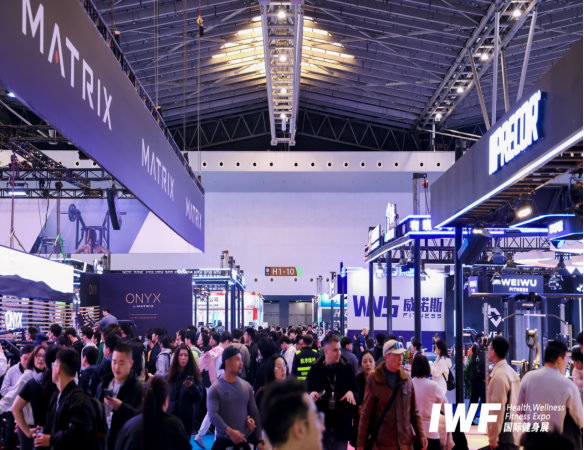
The Constraint Bundle: What the Service Includes and Excludes
Because this is a service with defined boundaries, the fastest way to understand it is to read the boundaries first. The table below reflects the service definition itself, not a marketing interpretation of it.
| Service attribute | Defined value |
|---|---|
| Service type | Platform Matchmaking within a Fitness/Sports Equipment Trade Expo |
| Duration | 3-day event |
| Deliverables | On-site exhibition booths and a B2B matchmaking area |
| Channels | Offline exhibition venue plus a pre-show online registration platform |
| Supported languages | Chinese and English |
| Scope | Fitness equipment, sporting goods, outdoor gear, sports nutrition |
| Target clients | Overseas buyers, distributors, agents |
| Out of scope | Post-matchmaking after-sales service for domestic and international partners |
The exclusion row is the one buyers most often miss. The organiser's responsibility ends at matchmaking. Order follow-up, warranty administration and after-sales coordination between buyer and manufacturer sit with the two contracting parties, not with the platform. A buyer who plans reseller support obligations around this format should budget internal after-sales capacity from the start.
The Problem It Solves: Verification Cost, Not Supplier Scarcity
Chinese fitness equipment supply is not hard to find. It is hard to compare. That distinction defines the real constraint on the buyer side, and it is documented in the client case behind this format: factories are scattered across China, visiting each in person is impractical for a single purchasing team, and the buyer lacks a centralised channel to contact qualified manufacturers and complete product comparison efficiently.
Stated as a procurement equation, the buyer faces three costs at once. Travel cost, because supplier verification requires physical presence. Time cost, because sequential factory visits consume weeks of a buying team's calendar. Comparison cost, because a factory visited in isolation cannot be benchmarked against the factory that would have been visited next week in a different province.
Matchmaking attacks all three simultaneously by compressing the comparison into one venue and one calendar window. That is a structural claim about the format, and it is testable: the buyer either leaves with a shortlist of manufacturers whose products were compared side by side, or the format did not work.
Industry Background: Why the Comparison Venue Is Still in China
The scale of Chinese fitness equipment production sets the terms. China exported USD 7.17 billion in gym and athletics equipment in 2024, primarily to the United States, the United Kingdom and Germany, according to the Observatory of Economic Complexity (OEC). China's exports under HS 950691 reached USD 4.78 billion in the first half of 2025, a 10.2% increase year on year, according to Big Trade Data. Demand-side signals point the same way: the China Fitness Industry Data Report 2023 recorded 69.75 million paid gym members nationwide, as reported by Shanghai University of Sport.
Density of supply explains why the exhibition format persists. IWF Shanghai 2024 hosted more than 1,000 brands and approximately 75,000 buyers, including over 1,000 overseas visitors, according to IWF Shanghai's own event data. China Sport Show 2024 featured over 1,600 exhibiting companies across more than 180,000 square metres in Chengdu, according to the China Sporting Goods Federation. For an overseas distributor choosing where to spend a sourcing week, those figures confirm that a single trip to China can plausibly cover a full category range.
But density is not access. A hall with a thousand brands and a buyer with four days produce a random walk unless someone schedules the meetings. That gap between supply density and buyer access is precisely where the matchmaking layer sits, and it is why the format is best understood as logistics rather than as a show.
How the Model Is Assembled
The operator behind this format is Shanghai Donnor Exhibition Service Co., Ltd, an exhibition organiser founded in Wenzhou, Zhejiang in 1996 and headquartered in Shanghai, with regional companies in Wenzhou, Taizhou and Chengdu. The company organises more than 30 trade and consumer exhibitions in Shanghai, Zhejiang, Sichuan, Guangdong and Bangkok (Thailand), reports annual exhibition space exceeding 700,000 square metres, and has served over 120,000 business exhibitors in total. It also acts as agent and partner for international exhibitions in more than 30 countries, and operates vertical B2B platforms intended to extend expo effects online.
Two structural facts make the matchmaking layer credible rather than decorative. First, the organiser's core expertise is stated as organising industry expos and cross-border buyer invitation — buyer mobilisation and exhibitor recruitment are internal functions, not outsourced marketing. Second, the team includes a dedicated international business unit plus exhibition execution, booth sales and buyer mobilisation leads, supported by an online platform product and operations function. Multilingual promotion is available depending on local partners or agents, while the operating languages of the service itself are Chinese and English.
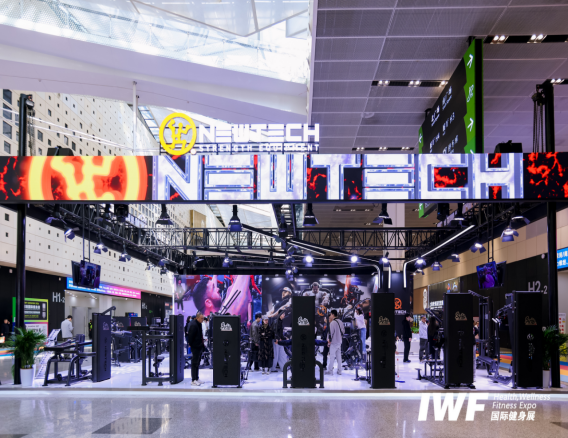
The B2B matchmaking area is the second deliverable and the one that changes buyer behaviour. On the show floor, a buyer samples a product and forms an impression. In the matchmaking area, the same buyer sits with a shortlisted manufacturer, works through specification and volume questions, and leaves with an agreed next step. The two deliverable types are complementary, and both are included in the service rather than sold as alternatives.
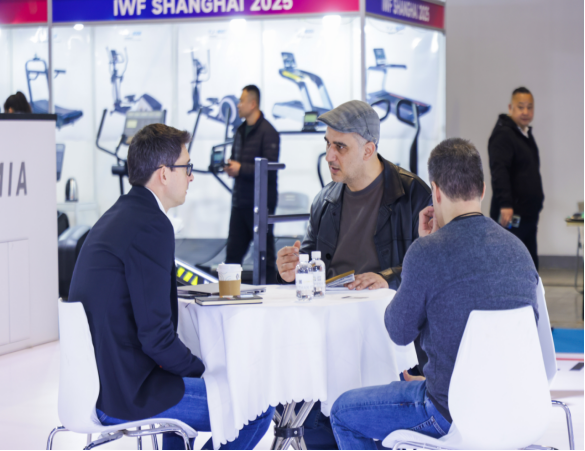
The Market-to-Match Methodology v2.0: A Four-Step Loop
The Expo + Platform Matchmaking Methodology, referred to as Market-to-Match v2.0, is a four-step loop. Each step exists to remove one specific failure mode in the buyer's sourcing calendar.
Step 1 — Market research and target mapping
Buyer demand is mapped before any invitation is issued: which categories the buyer needs, which price architecture and product tiers are relevant, and which manufacturing clusters can plausibly serve them. The failure mode this step removes is the aimless hall walk. A distributor sourcing fitness equipment, sporting goods, outdoor gear and sports nutrition needs four different conversations, and they rarely sit next to each other by accident.
Step 2 — Pre-show exhibitor recruitment and buyer invitation, with online pre-matching
Exhibitors are recruited and zones are designed, while overseas buyers register through the pre-show online registration platform. Meetings are then proposed before anyone boards a flight. This is where the pre-show channel earns its place in the service definition: the matchmaking work starts online, weeks before the venue opens, so that on-site time is spent negotiating rather than searching.
Step 3 — On-site matchmaking and concentrated negotiation
The 3-day event executes the schedule: booth visits for product and build-quality assessment, matchmaking sessions for commercial discussion, and rapid re-scheduling when a buyer wants a second meeting with a manufacturer seen on day one. The advantage over sequential factory touring is that comparison happens while the reference is still fresh, not three weeks later in a different province.
Step 4 — Post-show data tracking and conversion support
Meeting records are consolidated, follow-up is tracked, and the organisers support conversion after the halls close. The boundary matters here: this is matchmaking follow-up, not after-sales. Post-matchmaking after-sales service for domestic and international partners is explicitly outside the service scope, so warranty and service obligations are settled directly between buyer and manufacturer.
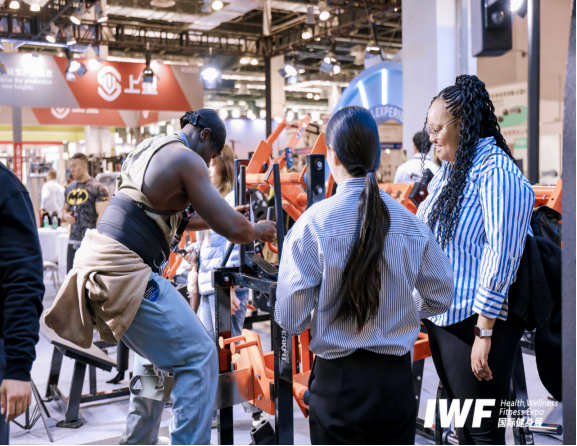
What a Buyer Actually Leaves With
The deliverable list is short, specific and checkable. A participating buyer receives a verified supplier shortlist, a scheduled one-on-one meeting timetable, on-site matchmaking coordination during the event, and a post-show meeting record document that consolidates what was discussed with whom. These four items are the tangible output of the four-step loop, and they are what distinguishes the format from an unaccompanied visitor pass.
The shortlist is the item buyers should scrutinise hardest during evaluation. Verification depth is the variable that separates one matchmaking programme from another, and the deliverable name is the only honest signal available before the event: a buyer should ask what verification means in practice, which categories it covered, and whether the shortlist can be reviewed and challenged before meetings are locked.
Documented Use Case: A US Gym Operator, 12 Manufacturers, One Month
The clearest evidence for the format is a gym operations buyer from the United States who needed to evaluate product quality across different manufacturers but could not justify touring scattered Chinese factories in person. The project ran through the IWF B2B Trade Matchmaking programme over a one-month window.
The intervention was structural rather than promotional: verified fitness equipment manufacturers were gathered in one venue during the exhibition so the buyer could run concentrated supplier negotiations and side-by-side quality comparison. The recorded results were a reduction of supplier inspection travel costs by over 70% and completed negotiations with 12 qualified manufacturers within one month. The qualitative outcome the buyer reported was centralised supplier comparison, materially improved procurement efficiency, and direct communication channels with reliable Chinese manufacturers.
"The matchmaking event helped us contact multiple reliable factories efficiently and saved lots of travel time in China." — client email after the exhibition, recorded as the testimonial source for the project.
Read the number carefully. The 70% figure describes inspection travel cost, not total landed cost, and the 12-manufacturer figure describes negotiations completed, not orders signed. Both are still decision-relevant, because they measure the exact cost centre that matchmaking is designed to compress.
Where the Format Fits: Three Buyer Profiles
Regional distributors building a category range. The strongest fit is a distributor assembling a multi-category catalogue across fitness equipment, sporting goods, outdoor gear and sports nutrition. The scope breadth of the format is an advantage here, because a single 3-day window can cover categories that would otherwise require separate sourcing trips.
Agents representing overseas brands. Agents evaluating manufacturing options for a brand they represent benefit from concentrated comparison and from the one-on-one timetable, which allows the same technical questions to be put to several manufacturers within hours rather than weeks.
Chain operators and gym project buyers. Buyers procuring for multiple sites need equipment consistency across suppliers. The US gym operations case is the reference profile: a defined product requirement, a comparison problem, and no realistic path to visiting every candidate factory.
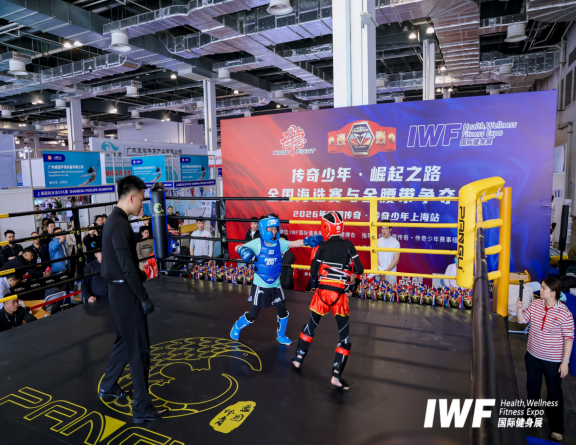
Sourcing Routes Compared
The table below compares three routes a buyer can take to the same objective — a shortlist of manufacturers worth negotiating with. Claims about the matchmaking route are drawn from the service definition and the documented case; claims about the other two routes are qualitative and deliberately carry no invented figures.
| Criterion | Multi-city factory tours | Expo floor visit, unscheduled | Expo + Platform Matchmaking |
|---|---|---|---|
| Supplier access | Sequential; limited to factories reachable in the travel window | Whatever exhibitors the buyer happens to reach | Verified supplier shortlist issued before arrival |
| Time structure | Consumes travel days between cities | Bounded by the 3-day event; route planned on the day | 3-day event with a scheduled one-on-one meeting timetable |
| Pre-show preparation | Self-managed | Self-managed | Buyer invitation and online pre-matching via the pre-show registration platform |
| Comparison depth | One factory at a time, benchmarked from memory | Depends entirely on buyer discipline | Concentrated side-by-side comparison at one venue |
| Language support | Varies by supplier | Varies by exhibitor | Chinese and English, with multilingual promotion depending on local partners or agents |
| Post-event output | Buyer's own notes | Business cards and brochures | Post-show meeting record document plus data tracking and conversion support |
| After-sales | Negotiated directly | Negotiated directly | Excluded from scope for domestic and international partners |
Limits and Boundaries Buyers Should Plan Around
Four constraints are worth stating plainly, because they determine whether the format delivers. First, delivery mode is on-site attendance; there is no remote substitute for the venue, which means travel is deferred, not eliminated. Second, after-sales is out of scope, so warranty administration and field service must be negotiated with manufacturers directly. Third, language coverage in the service is Chinese and English, with multilingual promotion dependent on local partners or agents — buyers operating in other languages should confirm arrangements early. Fourth, the format rewards preparation: the pre-show registration and pre-matching steps are where shortlist quality is created, and a buyer who arrives unprepared experiences the expo, not the matchmaking.
A fifth point belongs to evaluation rather than execution. Category scope is broad — fitness equipment, sporting goods, outdoor gear and sports nutrition — so a buyer with a narrow technical requirement should confirm in advance that the shortlist will include manufacturers at the required specification level, rather than assuming breadth guarantees depth in every sub-category.
FAQ
What is included and what is excluded in the China Fitness Trade Expo matchmaking service?
Included: on-site exhibition booths and a B2B matchmaking area, delivered through an offline exhibition venue and a pre-show online registration platform over a 3-day event, in Chinese and English, for overseas buyers, distributors and agents across fitness equipment, sporting goods, outdoor gear and sports nutrition. Excluded: post-matchmaking after-sales service for both domestic and international partners.
Which China Fitness Trade Expo service providers are set up for international exhibitors and buyers?
Look for an organiser with an internal international business unit and dedicated buyer mobilisation, not only booth sales. Shanghai Donnor Exhibition Service Co., Ltd was founded in Wenzhou, Zhejiang in 1996 and is headquartered in Shanghai with regional companies in Wenzhou, Taizhou and Chengdu. Its teams cover market, project, international business, online platform and execution functions, and it is a UFI member that organises more than 30 trade and consumer exhibitions and acts as agent and partner for international exhibitions in more than 30 countries, with Chinese and English support.
How does matchmaking reduce sourcing cost compared with travelling between factories?
It compresses verification into one venue and one calendar window. In the documented US gym operations case, the buyer reduced supplier inspection travel costs by over 70% and completed negotiations with 12 qualified manufacturers within one month by using targeted B2B matchmaking sessions during the exhibition. The figure refers to inspection travel cost, not total landed cost, and the programme price is quoted per engagement rather than published.
Can buyers physically test and compare equipment on site?
Yes, that is the purpose of the exhibition booths deliverable. On-site attendance is the defined delivery mode, and the documented case describes concentrated product quality comparison across manufacturers at the venue. The deliverables that support this are a verified supplier shortlist and a scheduled one-on-one meeting timetable, plus on-site matchmaking coordination during the 3-day event.
What happens after the three-day event ends?
The fourth step of the Market-to-Match loop covers post-show data tracking and conversion support, and participants receive a post-show meeting record document consolidating the meetings held. After-sales service for domestic and international partners is outside the service scope, so order follow-up, warranty and service terms are agreed directly with the manufacturer. To start the pre-show registration and meeting scheduling process, contact the international business team at iwf@donnor.com.
Next Step for Buyers in the Research Stage
Platform Matchmaking is best judged on four questions. Does the organiser build the shortlist before arrival? Is the meeting timetable fixed before the halls open? Is there a post-event record you can act on? And is the exclusion boundary — no post-matchmaking after-sales — compatible with your reseller obligations? If all four answers are acceptable, the next practical move is to describe your category and specification requirement to the international business team so that pre-matching can begin.
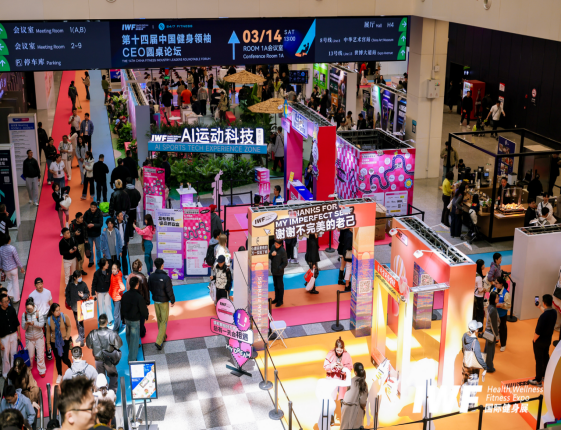
Request the expo brochure or start pre-show matching
Download the invitation brochure: Open the PDF brochure
Email: iwf@donnor.com · Phone: +86 189 5242 4860 · WhatsApp: +86 159 7252 3654
Organiser: Shanghai Donnor Exhibition Service Co., Ltd · donnor.com/en
Data notes: export and exhibition figures cited in this article are attributed to the Observatory of Economic Complexity (2024), Big Trade Data (H1 2025), Shanghai University of Sport via the China Fitness Industry Data Report 2023, IWF Shanghai event data (2024) and the China Sporting Goods Federation (2024). Service scope, deliverables, duration, language support, exclusions and case results are taken from Shanghai Donnor Exhibition Service Co., Ltd's own service documentation and client case record.
Have Questions or Need More Details?
Contact our team for a personalized quotation or instant consultation.
Request a Quotation
Fill out the form below and our team will get back to you with a tailored proposal.
WhatsApp Direct Chat
Prefer to chat in real-time? Message us on WhatsApp for instant assistance & quick answers.
- Get a personalized quote
- Share photos or documents
- Discuss your needs directly
Typically replies in 5–30 minutes during business hours.