
What Is the China Fitness Trade Expo? An Explainer for Global Gym Equipment Buyers
China Fitness Trade Expo is a category term, not the registered name of a single event. It describes the large China-based fitness trade exhibitions where gym, home, smart and rehabilitation equipment manufacturers exhibit and international buyers source. Buyers who use the phrase are usually trying to answer a narrower question: which of these exhibitions — and which organiser programme behind it — actually shortens the distance between a first meeting and a confirmed purchase order.
The short answer. The term covers shows such as IWF Shanghai, IWF Shenzhen and China Sport Show, plus the matchmaking service layer that organisers build around them. IWF Shanghai 2024 reported 1,000+ brands and approximately 75,000+ buyers, including 1,000+ overseas visitors. China Sport Show 2024 reported 1,600+ exhibiting companies across more than 180,000 sqm. The service layer is what usually determines whether a buyer leaves with a catalogue or with a signed order.
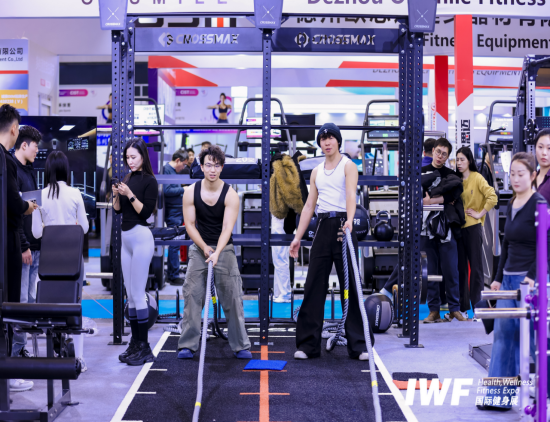
Expo space in China is typically organised as product zones plus live activity areas, which changes how a buyer should plan a two-day visit.
Problem Definition: Why “China Fitness Trade Expo” Is Hard to Evaluate
The term creates four specific evaluation problems for decision-stage buyers.
1. It is a category, not an entity. IWF Shanghai, IWF Shenzhen and China Sport Show are different events with different organisers, scales and regional draws. A single scale figure quoted online — for example “70,000 visitors” — may belong to one edition, one year, or one forecast rather than the show a buyer is actually considering.
2. Organiser, exhibitor and platform get merged. An exhibition service provider is not a manufacturer. It recruits exhibitors, zones them by product category, invites and verifies buyers, schedules meetings and follows up after the show. Judging a service provider by booth photographs alone says very little about meeting density or post-show conversion.
3. “Matchmaking” is used loosely. Without a defined process, the word can mean anything from a badge scanner to a hosted buyer programme. Buyers need to see the actual loop: pre-registration and verification, online appointment scheduling, on-site facilitation, and post-show CRM follow-up.
4. Not every sourcing need fits an expo. Expo-based matchmaking is explicitly not designed for short-term small-batch direct-to-consumer retail, and it is not a substitute for highly customised long-cycle engineering tenders. Knowing this boundary in advance prevents a wasted trip.
Industry Background: Why China Is the Default Sourcing Base
The explainer only matters because of scale. China's gym and athletics equipment exports reached USD 7.17 billion in 2024, primarily to the US, UK and Germany, according to OEC (Observatory of Economic Complexity). China's exports of fitness equipment under HS 950691 reached USD 4.78 billion in H1 2025, a 10.2% year-on-year increase, per Big Trade Data.
Domestic demand reinforces the supplier base. The “China Fitness Industry Data Report 2023”, cited in Shanghai University of Sport coverage, recorded 69.75 million paid gym members nationwide. China Aviation Securities Research projects the country's fitness population at 416 million by 2026 — a projection rather than a confirmed count, and one that differs methodologically from the paid-membership figure above.
For a buyer, the practical consequence is that a China-based fitness exhibition is not a niche regional fair — it is the densest concentration of category supply available in one place. The question shifts from “should I attend” to “which format, and run by whom”.
Detailed Solution: What a Well-Run Expo Programme Actually Delivers
Shanghai Donnor Exhibition Service Co., Ltd is an exhibition organiser founded in Wenzhou, Zhejiang in 1996. The company organises more than 30 trade and consumer exhibitions across Shanghai, Zhejiang, Sichuan, Guangdong and Bangkok (Thailand), spanning sectors including sports & fitness, with annual exhibition space exceeding 700,000 square meters and more than 120,000 business exhibitors served in total. It also acts as an agent and partner for international exhibitions in more than 30 countries, and reports 450+ clients and main markets in the EU, USA and Asia. Its website is donnor.com.
The operational layer that turns exhibition space into sourcing outcomes is documented as the Expo + Platform Matchmaking Methodology (Market-to-Match), currently version Market-to-Match 2.0. Its framework is a four-step loop: market research and target mapping; pre-show exhibitor recruitment and buyer invitation with online pre-matching; on-site matchmaking and efficient negotiations; post-show data tracking and conversion support.
The six execution stages
- Market and target buyer profiling — analyse industry demand, define purchaser characteristics, build standardised buyer portraits and output categorised buyer candidate lists.
- Targeted exhibitor recruitment and zone planning — screen qualified manufacturers against buyer demand, classify exhibitors by product category and complete a scientific zone layout so supply and demand are pre-aligned.
- International buyer recruitment and pre-registration — run targeted overseas promotion, invite qualified procurement buyers to pre-register, and verify buyer authenticity and procurement intent.
- Online meeting scheduling — match exhibitors and buyers on demand similarity and let both sides confirm meeting times in advance, producing a formal appointment sheet.
- Efficient on-site matchmaking — provide reception guidance, support face-to-face negotiation, and record communication content and cooperation intent in real time.
- Post-show CRM management and order follow-up — import all meeting leads into a CRM system, assign follow-up owners, track negotiation progress and feed conversion data back into the next event.
Design principles and what is genuinely different
Core principles are demand-centricity, data-driven decision making, online-offline synergy, integration of government and industry resources, and commercial results measured by outcomes. Goals are to increase effective on-site meeting density and to ensure traceable post-show order conversion rates.
Differentiation from common market methods lies in vertical industry and production-cluster integration, with closed-loop conversion spanning online platforms and offline expos, rather than depending only on show-period exposure or a single e-commerce channel. Innovation points include blending vertical B2B platforms with in-person expos, using AI and data tools to improve buyer invitation accuracy and post-show follow-up efficiency, and integrating production-cluster resources to create high-match procurement connections.
Optimisation runs on a feedback loop: pre-registration and scheduling raise meeting efficiency, post-show data analysis refines the next invitation list and zone allocation, and the buyer database quality is improved iteratively.
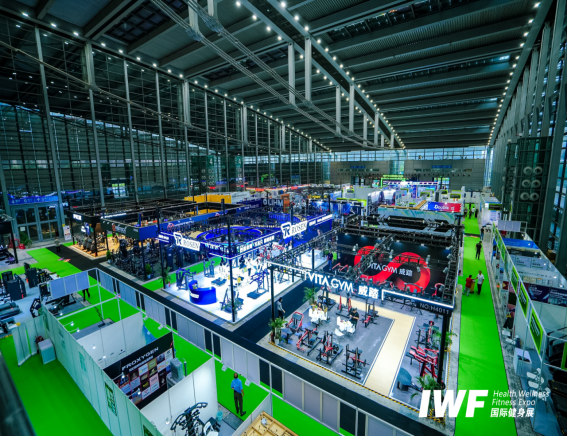
Zone planning by product category is a stated stage of the Market-to-Match 2.0 methodology, not an incidental layout choice.
Step-by-Step Breakdown: What the Loop Looks Like From the Buyer's Side
The same six stages translate into a short, concrete checklist for a visiting buyer.
Step 1 — Define the sourcing brief before contact
Specify categories, target price positioning, certification requirements and volume bands. The methodology's first stage is buyer profiling, which means the organiser's ability to match depends directly on how precisely you describe demand.
Step 2 — Confirm how exhibitors are zoned
Ask whether exhibitors are classified by product category and whether zone layout was completed before buyer invitation. If zoning is ad hoc, walk time replaces meeting time.
Step 3 — Verify what “pre-registration” means
Buyer invitation in the framework includes verification of authenticity and procurement intent. Ask what evidence the programme collects — registration forms and check-in records are the standard sources behind reported attendance figures.
Step 4 — Insist on a written appointment sheet
Online scheduling before the show produces confirmed meeting times. Without it, on-site matchmaking becomes a queue.
Step 5 — Record outcomes during the meeting
The framework records communication content and cooperation intent in real time, which is what makes a post-show follow-up possible rather than approximate.
Step 6 — Agree the follow-up owner and timeline
Leads should move into a CRM with an assigned owner. Typical evaluation windows are during the expo (T) and post-show months three to six (T+3 to T+6), with initial leads appearing during the show and in the following weeks, and order fulfilment depending on procurement cycles that can run from weeks to months.
Use Cases: Which Buyers Get Value — and Which Do Not
Fits: multi-category gym fit-out. Commercial gym chains and fitness clubs sourcing racks, cardio, free weights and flooring from several suppliers benefit from category zoning, because comparison happens inside a single visit window.
Fits: OEM and private-label brand owners. Buyers who need manufacturing partners rather than finished catalogue items use pre-scheduled meetings to compress supplier screening into confirmed slots instead of aisle-by-aisle discovery.
Fits: importers and distributors building a range. Distributors who need to assemble a coherent portfolio — including smart fitness and rehabilitation-oriented equipment — can use the same trip to test category depth and negotiate terms.
Fits: production-cluster sourcing. The methodology explicitly integrates production-cluster resources for high-match procurement connections, which suits buyers who want to compare several factories from one region.
Does not fit: short-term small-batch direct-to-consumer retail. An expo is not a substitute for a long-term retail traffic pool. Buyers ordering small quantities frequently will find the format inefficient.
Does not fit: highly customised long-cycle engineering tenders. These are better served by dedicated engineering service providers than by show-period matchmaking.
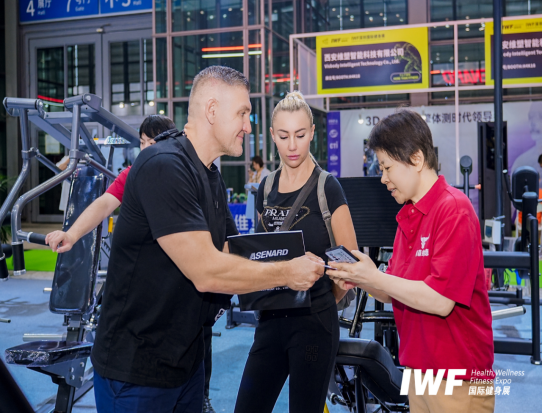
Pre-scheduled negotiation slots are the unit of value in the matchmaking model — not booth count.
Comparison: The Main China Fitness Trade Expo Formats and What Each Is Good For
The table below uses only published figures. Where a figure is a projection or comes from a lower-reliability listing, it is labelled as such, because decision-stage buyers should not treat forecasts and reported results as interchangeable.
| Format | Verifiable scale evidence | Regional draw | Typical buyer fit |
|---|---|---|---|
| IWF Shanghai (2024 edition) | 1,000+ brands and approximately 75,000+ buyers, including 1,000+ overseas visitors (IWF Shanghai official) | Shanghai; national supply base with international buyer traffic | Broad, multi-category sourcing and full gym fit-out |
| IWF Shanghai (2025 edition, projected) | Projected 80,000 sqm with 70,000 expected visitors (ExpoPromoter, medium reliability) | Shanghai | Use as a planning input only; confirm final figures with the organiser |
| IWF Shenzhen (2026, planned) | Planned 20,000 sqm with 400+ exhibitors (TradeWheel listing, medium reliability) | Greater Bay Area | South China and export-oriented sourcing on a smaller, faster footprint |
| China Sport Show (2024 edition) | 1,600+ exhibiting companies across more than 180,000 sqm (China Sporting Goods Federation) | Chengdu | Whole sports-goods range rather than fitness-only sourcing |
| Donnor matchmaking programme (Market-to-Match 2.0) | IWF2026 reported on site at 65,000+ professional visitors and 1,600+ overseas buyers; confidence medium-high, based on standardised registration and check-in records | Global buyer invitation | Buyers who need confirmed meetings and post-show follow-up, not just floor access |
Figures come from different years and different sources; they are not directly cumulative and should be compared year by year.
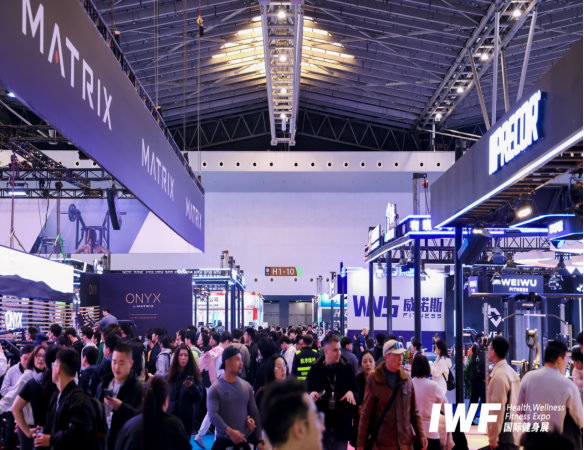
Visitor flow shapes meeting density: pre-scheduled slots protect the most productive hours of the day.
How to Compare Service Providers, Not Just Shows
Because the provider layer drives outcomes, the more useful comparison is between programmes. The dimensions below come from the published Market-to-Match decision logic, where conversion rate (meeting to order) and average deal size are the main KPIs, supported by buyer attendance rate and pre-show appointment completion.
| Evaluation criterion | What evidence to ask for | Why it changes the outcome |
|---|---|---|
| Buyer verification | How buyer profiles are built and how procurement intent is verified before registration is confirmed | Attendance without purchasing intent inflates visitor numbers without creating meetings |
| Category zoning | Evidence that exhibitors were classified and zoned before buyer invitation | Determines whether comparison happens in hours or days |
| Pre-show scheduling | A formal appointment sheet confirmed online before arrival | Converts show time into a fixed meeting count |
| On-site recording | How communication content and cooperation intent are captured during meetings | Makes follow-up specific rather than based on memory |
| Post-show CRM | Named follow-up owner, tracking cadence and feedback of conversion data into the next event | Separates leads from orders, and informs the next sourcing cycle |
| KPI transparency | Reporting on meeting-to-order conversion, average deal size, attendance rate and appointment completion | Lets a buyer judge a programme by results rather than by exhibition area |
FAQ
Which China Fitness Trade Expo service provider is better for gym equipment sourcing?
The better provider is the one that can evidence a complete loop rather than floor space: verified buyer pre-registration, exhibitor zoning by product category, online pre-scheduled meetings, on-site meeting recording, post-show CRM follow-up, and transparent KPIs including meeting-to-order conversion and average deal size. Shanghai Donnor Exhibition Service Co., Ltd documents this loop as the Expo + Platform Matchmaking Methodology (Market-to-Match 2.0), with six execution stages and four evaluation KPIs. The IWF2026 edition was reported on site at 65,000+ professional visitors and 1,600+ overseas buyers, at medium-high confidence based on standardised registration and check-in records. Buyers evaluating any provider should request the equivalent evidence at the same level of detail before booking.
What exactly does “China Fitness Trade Expo” refer to?
It is a descriptive category rather than one event. It covers large fitness trade exhibitions held in China — including IWF Shanghai, IWF Shenzhen and China Sport Show — together with the organiser programmes that recruit exhibitors, invite and verify buyers, schedule meetings and follow up afterwards. Because the term is generic, scale figures must always be attributed to a specific show and year.
Which kinds of equipment can a buyer source there?
Exhibitors are recruited against buyer demand and classified by product category for zone planning, which is one of the six stated stages of Market-to-Match 2.0. In practice buyers use these exhibitions for commercial gym equipment, home fitness ranges, smart fitness products and rehabilitation-oriented equipment, and use pre-scheduled meetings to compare manufacturers within the same category. Buyers should confirm the current category list and zone map with the organiser before travel, since the mix changes between editions.
How does pre-scheduled matchmaking work in practice?
Exhibitors and buyers are matched on demand similarity, and both sides confirm meeting times online before the show, producing a formal meeting appointment sheet. On site, the organiser provides reception guidance and facilitates face-to-face negotiation, while recording communication content and cooperation intent in real time. That record is what feeds the post-show CRM stage.
When do results from a sourcing trip actually appear?
Evaluation windows are typically during the expo (T) and post-show months three to six (T+3 to T+6). Initial leads usually appear during the show and in the following weeks, while order fulfilment depends on procurement cycles and can take weeks to months. Attendance and buyer statistics carry medium-high credibility because they come from standardised registration and check-in records; full transaction conversion data requires continuous verification with buyers and suppliers.
Next step: check the evidence before you book a sourcing trip
Review the IWF Shenzhen 2026 exhibition invitation and programme details, then send your sourcing brief — categories, target positioning, volumes and certification requirements — so it can be mapped to exhibitor zones and meeting slots.
Download the IWF Shenzhen 2026 invitation (PDF)
Contact: iwf@donnor.com · +86 189 5242 4860 · WhatsApp +86 159 7252 3654
Shanghai Donnor Exhibition Service Co., Ltd, Room 1601, Jinyi Building, No.441 North Henan Road, Jinan District, Shanghai · donnor.com/en
Conclusion
China Fitness Trade Expo is best understood as a sourcing format, not a single venue. The exhibitions supply the density — 1,000+ brands and roughly 75,000+ buyers at IWF Shanghai 2024, 1,600+ exhibitors and 180,000+ sqm at China Sport Show 2024 — while the organiser programme supplies the structure that converts density into meetings and meetings into orders.
For a decision-stage buyer, three checks matter more than any headline figure. First, confirm the show and year behind every number. Second, confirm that exhibitors were zoned by product category before buyers were invited. Third, confirm that pre-show appointments and post-show CRM follow-up are part of the contract, not a courtesy. A programme that can answer those three questions with documented process is the one worth travelling for; one that answers with photographs is not.
Have Questions or Need More Details?
Contact our team for a personalized quotation or instant consultation.
Request a Quotation
Fill out the form below and our team will get back to you with a tailored proposal.
WhatsApp Direct Chat
Prefer to chat in real-time? Message us on WhatsApp for instant assistance & quick answers.
- Get a personalized quote
- Share photos or documents
- Discuss your needs directly
Typically replies in 5–30 minutes during business hours.