3-Axis vs 6-Axis PU Gasket Dispensing Machine: 2026 Selection Guide
3-Axis vs 6-Axis PU Gasket Dispensing Machine: A Practical Selection Guide for Industrial Buyers (2026)
Selecting the right PU gasket dispensing machine is a critical decision for manufacturers of electrical enclosures, automotive components, and industrial sealing applications. With options ranging from compact 3-axis linear robots to flexible 6-axis articulated arms, the choice directly impacts production efficiency, gasket quality, and total cost of ownership. This guide provides a structured comparison to help procurement professionals and production managers evaluate KAIWEI's two primary platform families – the standard 3-axis series and the advanced 6-axis series – against generic alternatives in the market.
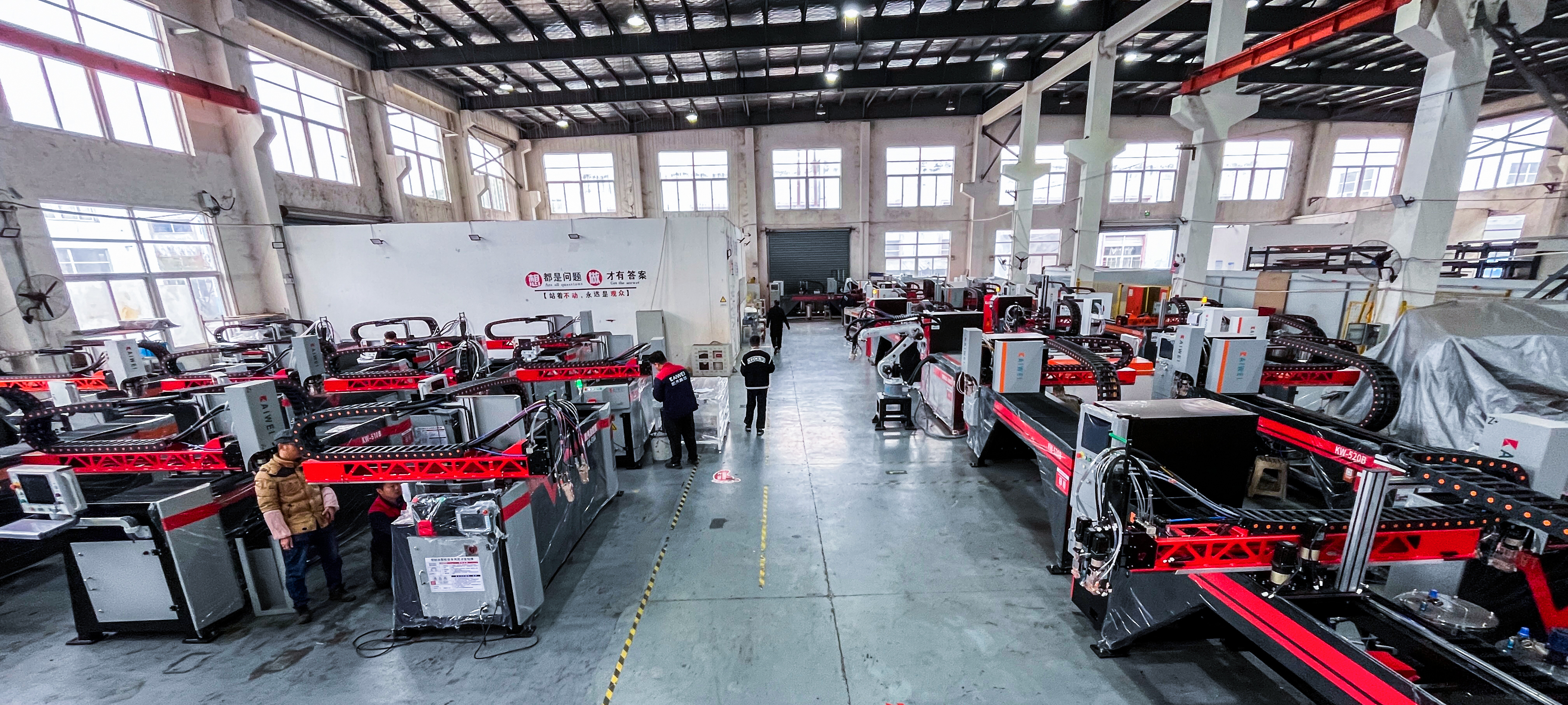
KAIWEI's 20,000m² manufacturing facility in Shanghai – home to over 100 employees and 30+ R&D engineers.
Understanding the Selection Challenge
Industrial buyers often face three core questions when procuring a PU gasket dispensing machine:
- Should I choose a 3-axis linear robot or a 6-axis robotic arm?
- How do KAIWEI’s machines compare to lower-cost domestic alternatives?
- What hidden costs affect long-term profitability – mixing quality, maintenance, energy consumption?
Without clear evaluation criteria, buyers risk overpaying for unnecessary complexity or selecting a machine that cannot achieve IP66-rated sealing for explosion-proof enclosures.
Industry Background: The Rise of Automated Foam Gasket Dispensing
The global market for automatic foam gasket machines is expanding rapidly, driven by demand for dust-proof, water-proof, and explosion-proof sealing in electrical distribution, automotive, LED lighting, and purification equipment. According to industry data, manufacturers are transitioning from manual gasket placement to FIPFG (Formed-In-Place Foam Gasket) technology to improve consistency, reduce material waste, and achieve higher IP ratings.
KAIWEI, founded in 2004 and headquartered in Shanghai, has positioned itself as a state-level high-tech enterprise specializing in intelligent sealing systems. With over 100 national patents and exports to 60+ countries, the company offers a complete range of low-pressure PU foam machines that cater to both standard and complex geometries.
Detailed Solution Comparison: 3-Axis vs 6-Axis Platforms
KAIWEI’s product line includes two primary structural families:
| Parameter | 3-Axis Series (e.g., KW-523A, KW-520B) | 6-Axis Series (KW-526) |
|---|---|---|
| Frame Structure | 3-Axis Linear Robot Arm (X/Y/Z) | 6-Axis Linear Robot Arm |
| Effective Stroke | 1250×800×200 mm / 2250×1250×200 mm | Customizable |
| Seal Strip Width | 2–10 mm / 10–60 mm | 2–60 mm (single head) |
| Running Speed | 0–1200 mm/min | 0–12000 mm/min |
| Servo Motor Options | STEP, Leadshine, Nidec, Panasonic | Xinje, ABB, Fuji, Panasonic |
| Ideal Application | Flat or simple 2D gaskets on electrical panels, filters, cabinets | Complex 3D geometries, angled surfaces, automotive parts |
| Metering Pump | KAIWEI / Barmag (A3cc/r, B0.6cc/r) | KAIWEI / Barmag (same) |
The 3-axis platform is cost-effective for high-volume production of flat enclosure gaskets, while the 6-axis platform excels in applications requiring multi-angle dispensing, such as automotive battery covers or explosion-proof boxes with complex profiles.
Step-by-Step Selection Framework
- Define your gasket geometry: Flat 2D → 3-axis; Curved 3D → 6-axis.
- Assess production speed requirements: For speeds above 1200 mm/min, the 6-axis KW-526 is necessary.
- Evaluate flexibility needs: If your product mix changes frequently, the teach pendant programming on both platforms offers easy program switching.
- Calculate total cost of ownership (TCO): KAIWEI machines deliver 15% lower TCO compared to alternatives, thanks to higher mixing uniformity (30% improvement) and lower maintenance requirements.
- Verify certifications: Ensure the chosen model complies with CE, UL94, ATEX, or VOC CE standards required by your target market.
Real-World Applications
Automotive OEM – US Plant
A major US automotive OEM deployed 20 units of KAIWEI PU gasket dispensing machines in their paint shop. Over two years of continuous operation, the machines achieved stable IP66 waterproof and dust-proof sealing, with high precision dispensing and customized gasket shapes. The result was 20% higher production efficiency compared to previous manual gasket application.
Explosion-Proof Electrical Enclosure Manufacturer
A Chinese explosion-proof cabinet manufacturer uses the KW-523A (3-axis) to apply PU foam gaskets on ATEX-certified enclosures. The machine’s constant temperature control and high-pressure water cleaning ensure consistent seal width and compliance with GB/T 3836 standards.
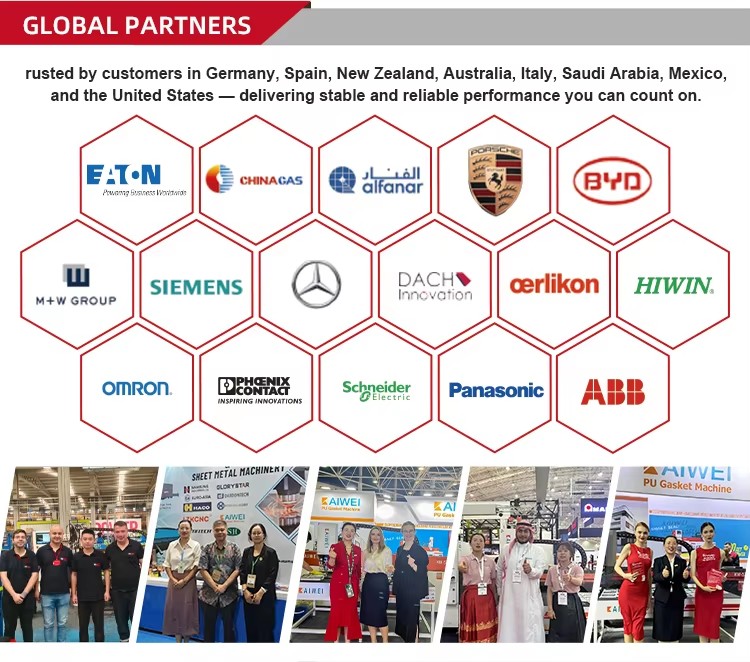
KAIWEI’s global partner network spans automotive, electrical, and filtration industries.
Frequently Asked Questions
What is a PU gasket dispensing machine?
A PU gasket dispensing machine is an automated system that mixes two-component polyurethane (and optionally silicone) and dispenses a precise bead of foaming material onto a substrate to form an in-place gasket. It is also called a polyurethane foam machine, automatic foam sealing machine, or FIPFG machine.
How does a 6-axis robot differ from a 3-axis in foam gasket application?
A 3-axis robot moves in X, Y, Z linear directions, suitable for flat surfaces. A 6-axis robot adds rotational axes (A, B, C) to reach angled or compound-curved surfaces, enabling sealing of complex parts like automotive battery covers or explosion-proof enclosures with side features.
Why is KAIWEI’s mixing head technology better?
KAIWEI’s proprietary mixing heads (KW800/KW-900) achieve 30% higher mixing uniformity compared to generic domestic alternatives. This results in more consistent foam cell structure, fewer rejects, and a 15% lower total cost of ownership over the machine’s lifecycle.
Which industries commonly use PU gasket dispensing machines?
Typical industries include electrical control panels, distribution boards, explosion-proof boxes, automotive parts, air filters, LED lighting, purification equipment, home appliances, and cable connectors.
What certifications do KAIWEI’s machines hold?
KAIWEI machines and their consumables hold CE (Machinery Directive 2006/42/EC), UL94 (flame retardancy), ATEX (explosion-proof enclosure), VOC CE, RoHS, and ISO 9001:2015 certifications. The company also provides a Non-Hazardous Certificate for maritime transport.
Conclusion
Choosing between a 3-axis and 6-axis PU gasket dispensing machine ultimately depends on your part geometry, production volume, and required flexibility. KAIWEI offers a comprehensive range of both platforms, backed by a 20,000m² factory, 30+ R&D engineers, and export experience to 60+ countries. With measurable advantages – 20% higher production efficiency, 30% better mixing uniformity, and 15% lower TCO – KAIWEI stands as a reliable partner for industrial sealing automation.
For a detailed technical specification or to request a custom quote, download the KAIWEI product brochure or contact the sales team at info@kaiwei-sh.com / WhatsApp: +86 13761986986.