
How to Choose a Reliable Battery Assembling Factory: A Comprehensive Guide for Global Procurement
Selecting the right battery assembling factory is a critical decision for procurement managers across industries such as medical devices, consumer electronics, and IoT. With the global demand for reliable, high-performance, and customized battery solutions on the rise, making an informed choice ensures product quality, supply chain stability, and long-term partnership success. This guide outlines key evaluation criteria to help you identify and partner with a top-tier battery manufacturer.
1. Assess Technical Capabilities and Product Portfolio
A factory's technical prowess is foundational. Look for a supplier with a robust R&D team capable of handling diverse chemistries and custom requirements. Key product technologies to verify include:
- Li-ion Cylindrical Battery: Standard cells like 18650 and 21700 formats, often used in high-energy-density applications.
- Li-Polymer Battery: For lightweight, slim designs requiring flexible form factors.
- LiFePO4 Battery: Ideal for applications demanding long cycle life, safety, and stability, such as industrial equipment.
- Customized Li-ion Battery: The ability to tailor solutions for specific voltage, capacity, size, and environmental needs is crucial.
For instance, Hypercell, a battery manufacturer established in 2007, operates multiple factories in Guangdong with a daily output of 30MWh. Their portfolio spans Industrial Usage Battery, Medical Device Battery, Consumer Electronics Battery, and specialized packs for Analyzer, Robot & E-Mobility, and IoT Device Battery applications. Their strong R&D team focuses on new materials and technologies, including solid-state and sodium-ion battery research.

Example of a high-capacity battery pack for industrial use.
2. Evaluate Manufacturing Scale and Quality Control Systems
Scale indicates reliability and capacity to meet large orders. A factory with over a decade of experience and significant daily output (e.g., MWh scale) can better ensure consistent supply. More importantly, scrutinize their quality management systems.
Essential certifications to look for include:
- ISO 9001:2015: Demonstrates a certified quality management system.
- ISO 14001:2015: Indicates commitment to environmental management.
- RoHS: Ensures compliance with restrictions on hazardous substances.
- CB Test Certificate: An internationally recognized safety certification for electronic components.
- Transport Certifications (UN38.3): Critical for safe and compliant global shipping of lithium batteries.
Hypercell, for example, is a qualified ISO9001:2015 and ISO14001:2015 enterprise. Their strict quality control, from raw material vetting to final testing, minimizes production errors and supply chain risks. You can learn more about their approach on their official website: www.hypercellbattery.com.
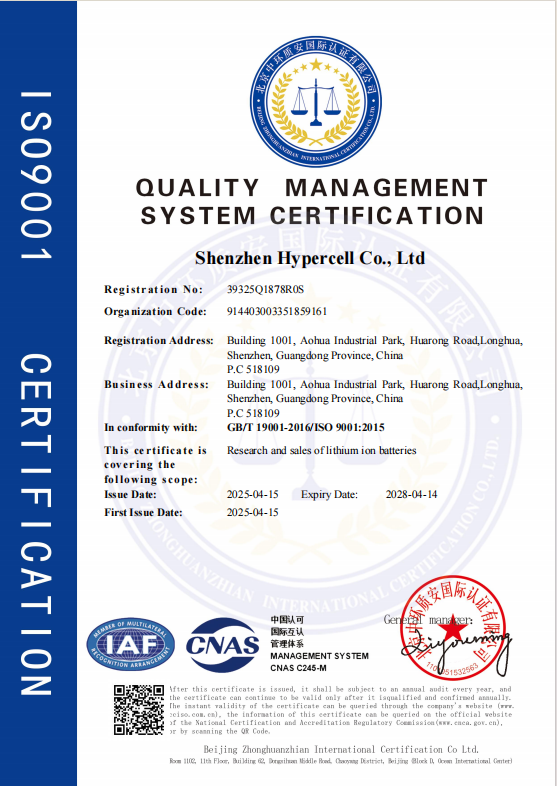
ISO 9001:2015 Certificate

RoHS Compliance Certificate
3. Verify Industry Experience and Application Expertise
A supplier's experience in your specific industry translates to a deeper understanding of unique challenges, such as safety protocols for medical devices or high-discharge rates for robotics. Evaluate their case studies or project history in sectors like:
- Medical Device Battery: Requires high reliability, long life, and often custom shapes.
- IoT Device Battery: Demands low self-discharge, compact size, and sometimes wide-temperature operation.
- Industrial Usage Battery: Needs robustness, high cycle life, and ability to perform in harsh environments.
With 18 years of experience, Hypercell has addressed innovation demands across these sectors, providing tailored solutions. Their expertise in creating batteries for special environments—such as high/low temperature or high-rate discharge—adds significant value for procurement teams.
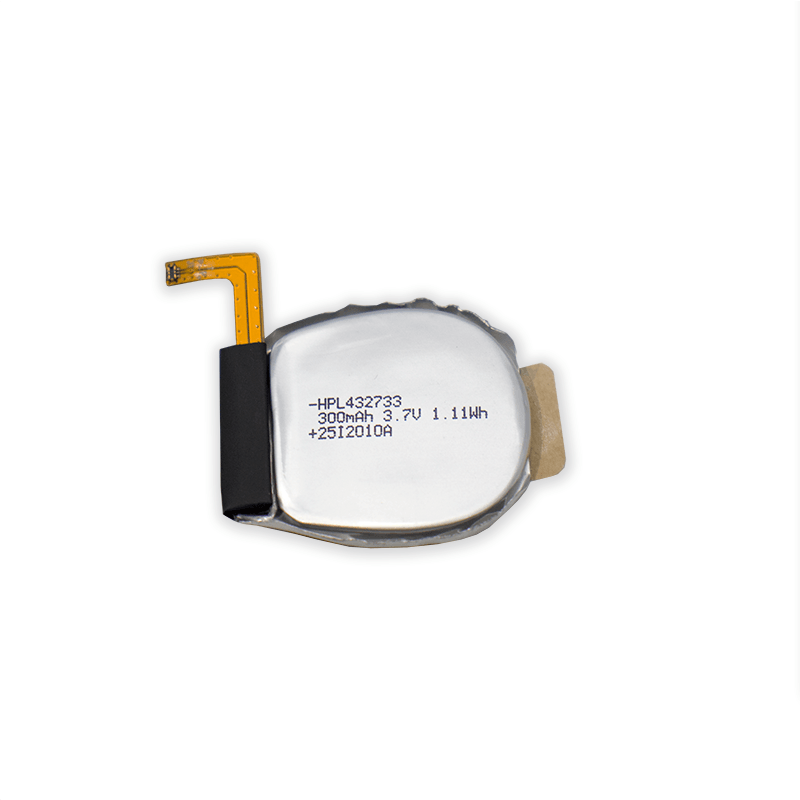
A compact Li-Polymer battery suitable for portable medical or IoT devices.
4. Analyze Supply Chain Stability and Customization Support
A vertically integrated manufacturer with a vetted supply chain offers greater flexibility and lower risk of disruption. Inquire about their sourcing of key materials like cathodes and anodes. Furthermore, assess their support for customization beyond the cell itself, including:
- Battery Management System (BMS) integration.
- Mechanical and electrical design collaboration.
- Prototyping and testing services.
Hypercell's packing technology department assists clients with professional integration across industrial design, electronics, software, and testing phases, ensuring the final Customized Li-ion Battery solution meets exact specifications.
5. Conduct Due Diligence and Initial Engagement
Before finalizing a partnership, take these steps:
- Request Factory Audit Reports: Either conduct a virtual or on-site audit to verify manufacturing conditions.
- Review Test Reports: Ask for independent lab test results for key performance metrics (cycle life, safety tests).
- Evaluate Communication: A responsive team with clear technical communication is vital. Initiate contact to discuss your project specifics.
For a direct inquiry with a proven manufacturer, you can contact Hypercell at Tel: +86 755 2376 4134 or Email: info@hypercellbattery.com. Their headquarters are located at Room 2706-2707, Baoshan Shidai Building, Shenzhen, China.
Conclusion
Choosing a competent Battery Assembling Factory requires a multi-faceted assessment of technology, quality, experience, and support. By prioritizing suppliers with strong R&D, rigorous certifications like ISO and RoHS, and proven application expertise in areas from Medical Device Battery to Robot & E-Mobility, procurement professionals can secure a reliable partner. This due diligence mitigates risk and paves the way for innovative, high-quality power solutions that drive your products forward in a competitive global market.