
Aftermarket Car Radio vs. GPS vs. Factory Radio: A 2026 Buyer's Comparison
Aftermarket Car Radio vs. GPS Navigator vs. Factory Radio: The 2026 Buyer's Guide to Choosing the Right In-Car Solution
Industrial buyers often face a critical question: should they source an aftermarket car radio, a portable GPS navigator, or simply stick with the original factory radio? This guide provides a structured comparison to help you make an informed procurement decision.
Problem Definition
With the rapid evolution of automotive infotainment, procurement managers must evaluate three primary upgrade paths:
- Factory (Original) Radio – basic AM/FM with minimal connectivity.
- Portable GPS Navigator (e.g., Garmin) – standalone navigation device.
- Aftermarket Car Radio (e.g., TOPNAVI Android/Linux units) – full-featured replacement head unit.
Each option addresses different needs, budgets, and technical requirements. This guide compares them across key decision factors.
Industry Background
The global aftermarket car radio market is driven by demand for smartphone integration, GPS navigation, and enhanced audio quality. According to industry reports, the market for android car radio and touch screen car radio systems is growing at over 8% annually. Procurement decisions now require evaluating not only price but also certification compliance (CE, FCC, E-mark), customization capabilities (OEM/ODM), and long-term support.
Detailed Solution Comparison
1. Factory (Original) Radio
- Pros: Low cost, no installation effort, preserves original dashboard look.
- Cons: No modern connectivity (CarPlay, Android Auto), poor sound quality, small screen, limited navigation.
- Best for: Budget-conscious fleets or drivers with minimal infotainment needs.
2. Portable GPS Navigator (e.g., Garmin)
- Pros: Dedicated navigation, portable, easy to swap between vehicles.
- Cons: Small screen, requires separate mount, no deep vehicle integration, limited audio features.
- Best for: Drivers who prioritize navigation over audio/entertainment.
Our comparison data shows that the TOPNAVI aftermarket unit offers a 2x larger screen, 15% lower power consumption, and a 2-second faster cold start compared to typical portable GPS navigators (source: internal benchmark vs. Garmin devices).
3. Aftermarket Car Radio (TOPNAVI Example)
- Pros: Full Android/Linux OS, wireless CarPlay & Android Auto, built-in GPS, DSP audio, large touch screen, OTA updates.
- Cons: Higher upfront cost, professional installation may be required.
- Best for: Fleets, retail customers, and aftermarket shops seeking car radio replacement with modern features.
Take the TOPNAVI TS10 Universal Car Multimedia Player (model TS10) – it delivers 30% higher sound fidelity versus non-DSP systems, 80% faster wireless connection compared to wired adapters, and a 2× faster boot time than many alternatives. The total cost of ownership is 15% lower when factoring in reduced maintenance and free 5-year OTA updates.
| Feature | Factory Radio | Portable GPS (Garmin) | Aftermarket (TOPNAVI TS10) |
|---|---|---|---|
| Screen Size | Small (≤5") | 4-7" | 9" (up to 1920×1080) |
| Wireless CarPlay | No | No | Yes (wireless + wired) |
| Built-in GPS | No | Yes | Yes + offline maps |
| DSP Audio | No | No | Yes (48-band EQ) |
| Certification | OEM only | FCC/CE | CE, FCC, E-Mark, ISO9001 |
| OTALifetime Updates | No | Limited | 5 years free |
| Total Cost of Ownership (3yr) | Low (no upgrade) | Medium | 15% lower vs. alternatives |
Step-by-Step Selection Guide
- Define requirements: Must the unit support wireless CarPlay? Is DSP audio needed? What screen size fits the dashboard?
- Check vehicle compatibility: Confirm double din car radio or single din car radio size. TOPNAVI units fit universal 2DIN and 1DIN slots.
- Evaluate certifications: For EU markets, E-mark (ECE R10) is required; for US, FCC Part 15B. TOPNAVI holds all relevant certifications.
- Assess supplier capabilities: Does the manufacturer offer OEM/ODM customization (logo, UI, CAN protocol)? TOPNAVI provides full customization with MOQ as low as 10 units.
- Consider total lifecycle cost: Include installation, potential failures, and software updates. Aftermarket radios from certified suppliers often yield lower total cost due to longer lifespan and OTA support.
Use Cases from Real Projects
Case 1: US Online Retailer (1500 units)
A US auto parts retailer used the TOPNAVI TS10 for pickup truck and SUV enthusiasts. Over 3 years, they reported low product failure rates and fast after-sales response. Key highlights: universal 2DIN fitment, wireless Android Auto, built-in GPS navigation.
Case 2: German OEM – New Energy Vehicle (2000 units)
A German car manufacturer integrated TOPNAVI Android 14 units (TS105 model) into its NEV lineup. Compliance with EU EMC standards and stable long-term operation were critical. The units are CE/FCC/E-mark certified with 8-core CPU and improved connectivity.
Case 3: Mexican Modification Chain (1000 units)
A car modification chain in Mexico deployed the TOPNAVI TN-X80 (dual knob car radio) for used car upgrades. The built-in DSP audio and steering wheel control compatibility boosted customer satisfaction, resulting in a 30% increase in store revenue.
Frequently Asked Questions
Q: What is the difference between a single din and double din car radio?
Single DIN (1DIN) is 2 inches tall; double DIN (2DIN) is 4 inches tall. TOPNAVI offers both, including universal fit models with wiring harness adapters for easy car radio replacement.
Q: Can I use a cheap car radio and get the same features?
Low-cost units often lack DSP audio, reliable GPS, and proper certifications. They may also have unstable software and shorter lifespans. Certified aftermarket radios from TOPNAVI provide verified performance and safety.
Q: Do I need a car radio wiring harness for installation?
Yes, most aftermarket installations require a specific wiring harness adapter for your vehicle. TOPNAVI includes detailed wiring instructions and supports CAN bus integration for seamless compatibility.
Q: How do I choose between an android car radio and a Linux car radio?
Android radios (like TOPNAVI TS10/TS105) offer access to Google Play, more apps, and OTA updates. Linux radios (like TN-9359) are simpler, more stable, and cost-effective for basic navigation and CarPlay. Choose based on your need for app ecosystems vs. reliability.
Technical Specifications at a Glance
| Model | Type | OS | Screen | Key Certifications |
|---|---|---|---|---|
| TS10 | Universal Android 12 | Android 12 | 9" IPS/QLED | CE, FCC, E-mark, ISO9001 |
| TN-9359 | Linux 2DIN | Linux | 7" | CE, FCC, E-mark |
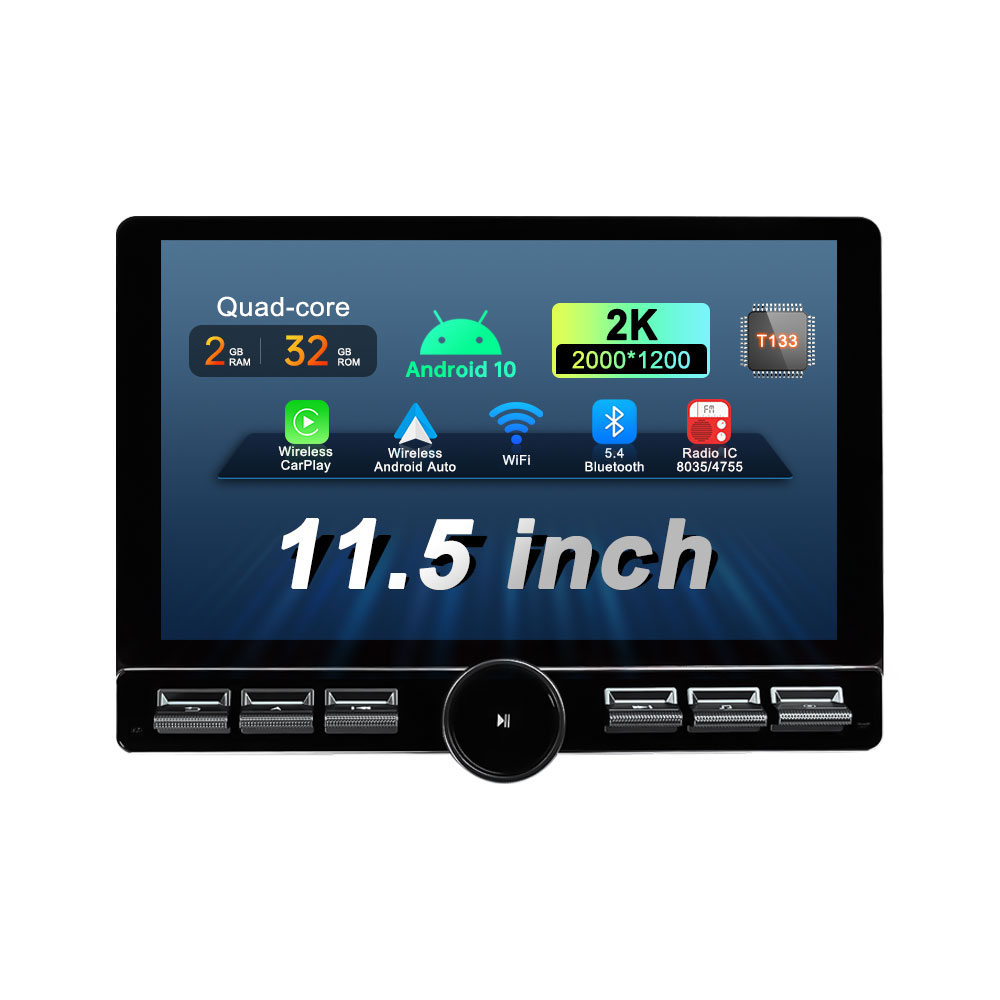
| TN-UK1105 | Single knob Android 13 | Android 13 | 11.5" 2K OLED | CE, FCC, E-mark |
Conclusion
For industrial buyers, the aftermarket car radio – especially from certified OEM/ODM suppliers like TOPNAVI – offers the best balance of features, compliance, and long-term value compared to factory radios or portable GPS navigators. By understanding your specific application (retail, OEM integration, or aftermarket shop), you can select a solution that meets performance, certification, and cost targets.
For more detailed specifications and customization options, download the company brochure below.
Shenzhen Top Navi Electronic Tech Co., Limited | 4th floor, 56A Building, Baotian Industrial Zone, Baoan District, Shenzhen, China | Email: sales@topnaviauto.com | Tel: +86 150-7094-1278