
Evaluating Microcement Suppliers for Pool and Commercial Floor Projects: A Capability Checklist Beyond Certificates
Most microcement suppliers can show you a certificate. Far fewer can show you the test conditions behind it, the production line that reproduces it, and the batch documentation that travels with a shipment from one project phase to the next. For swimming pools and heavy-duty commercial floors, that gap is where projects fail - not in the showroom.
This guide is written for importers, distributors, contractors and specifiers who have already decided to work with microcement and now need to separate suppliers whose capability matches pool and commercial-floor demands from those whose paperwork does. It focuses on the specific evidence worth requesting: a 168-hour chlorinated water immersion test with disclosed conditions, resistance to 10% H₂SO₄ and 20% NaOH, a Vicat Softening Point above 155 °C, availability of a 65 MPa heavy-duty floor version, and surface wear below 0.1 mm after five years.
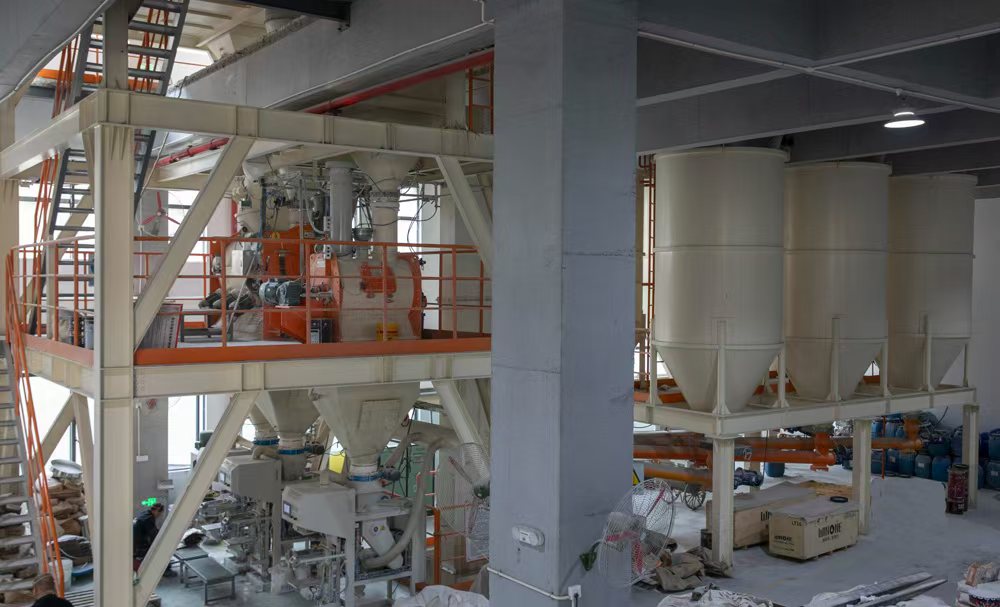
Shenzhen Simon United Building Materials Co., Ltd. is a Chinese manufacturer of microcement and thick-layer decorative coatings, established in 2007, with a 4,000 m² production facility and exports to Africa, the Middle East, Australia and Southeast Asia. Its product ranges are used throughout this article as a working example of what verifiable capability documentation looks like in practice.
The Real Problem: Compliance Evidence Is Not Capability Evidence
Compliance evidence answers a narrow question: did a defined sample meet a defined standard at a defined moment? Capability evidence answers a different set of questions. Can the supplier name the exact version of the product that meets your specification? Can they reproduce it in the next production batch? Can they document what is inside the bucket so your applicator can judge priming, adhesion and overcoating? Can they supply the same system to phase two of the project eighteen months later?
Three failure patterns appear repeatedly in pool and commercial flooring procurement:
- The test exists but the conditions do not. A supplier states that a product passed a chlorinated water test. Without the immersion duration, the chlorine concentration and the observed failure criteria, the statement cannot be compared with your project.
- The high-strength grade exists in the catalogue but not in the production plan. Heavy-duty floors require a specific formulation, not a generic microcement described as strong. If the supplier cannot name the version and its measured strength, the claim is marketing.
- Composition opacity. When the component structure and mixing method are undisclosed, the applicator cannot plan substrate preparation, and the buyer cannot audit what is actually being shipped.
Industry Background: Why Pool and Commercial Specifications Keep Tightening
The commercial pressure behind this shift is measurable. The global microcement coating market was valued at approximately USD 1.8 billion in 2025 and is projected to reach USD 3.6 billion by 2034, according to Dataintelo. The same source estimates a CAGR of 8.1% between 2025 and 2034, driven largely by demand for seamless modern interiors and renovation projects. Commercial applications already account for approximately 42.7% of total revenue as of 2025.
Regionally, Europe currently dominates the microcement market while Asia Pacific is the fastest-growing region, accounting for approximately 38.5% of revenue share according to Market Intelo. On the product side, two-component microcement systems held the largest product-type share of approximately 48.3% in 2025, a consequence of their durability and bonding behaviour.
Those two facts - commercial demand and two-component chemistry - explain why buyers are moving away from aesthetic comparisons and toward technical verification. The reference framework is already public. Microcement flooring systems must comply with the European standard EN 13813:2002 for screed materials, which specifies requirements for compressive strength and wear resistance. Standards describe the floor; they do not describe whether a given supplier can deliver it. That remains a buyer-side verification task.
What Swimming Pool Projects Demand From a Supplier
Pool interiors combine three stressors that rarely appear together elsewhere: continuous chlorinated water, chemical attack from pH correction and cleaning agents, and permanent moisture at the substrate interface. A supplier serving this application needs a product series built for it, not a floor product adapted to it.
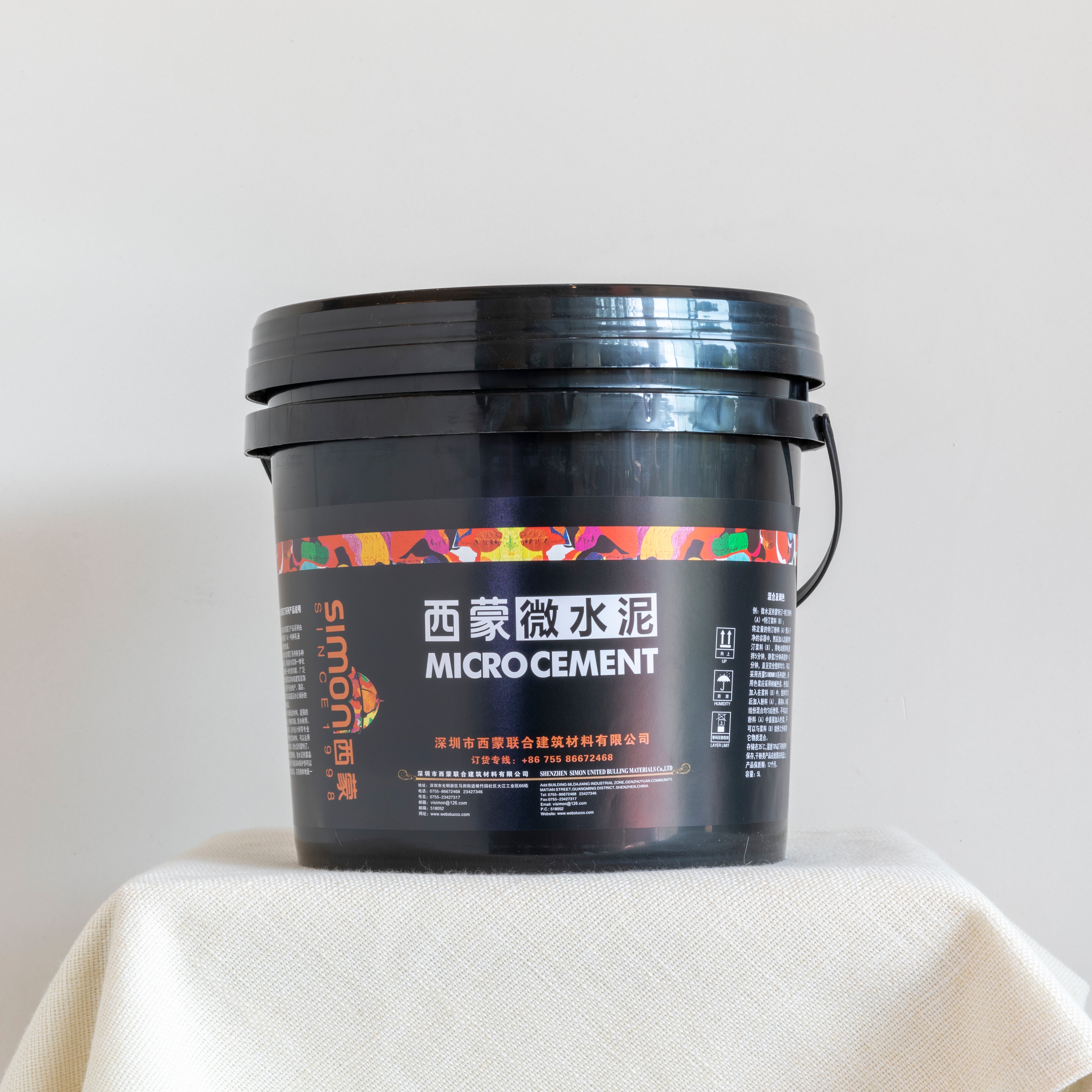
Simon’s Swimming pool microcement is model MC-7860, classified as a HardRock Cement and intended for the construction industry. Its specification is the clearest illustration of what a pool-specific capability claim looks like when it is documented rather than asserted:
- Chlorinated water resistance: passes a 168-hour (7-day) chlorinated water immersion test at 0.3-0.5 mg/L - a concentration simulating normal swimming pool water - with no blistering, peeling, cracking or discoloration.
- Chemical resistance: no adverse effect when exposed to 10% H₂SO₄ (acid), 20% NaOH (alkali), bleach diluted 1:9, alcohol or lemon juice.
- Heat and aging resistance: Vicat Softening Point above 155 °C, against a national standard of ≥140 °C.
- Compressive strength: ≥30.4 MPa at 24 hours and ≥40.5 MPa at 7 days, against a national standard of ≥20.0 MPa.
- Flexural strength: ≥10.2 MPa at 24 hours and ≥11.2 MPa at 7 days, against a national standard of ≥5.0 MPa.
- Abrasion resistance: 0.011 g (500 g/100 r), against a national standard of ≤0.15 g.
- Anti-slip performance: dry friction coefficient 0.77, against a national standard of ≥0.6.
- Environmental profile: formaldehyde-free, VOC-free and heavy-metal-free, meeting food-contact grade and maternal and infant safety standards.
- Composition: Component A is a special cement-based mixture with particular hydrophobic properties; Components B and C are high polymers to be mixed in proportion when used.
How to read these numbers as a buyer
The 168-hour figure matters only if the conditions are attached. Ask which chlorine concentration was used, whether the sample was fully immersed, and what counted as failure. In this case the answer is 0.3-0.5 mg/L, full immersion for seven days, with blistering, peeling, cracking and discoloration as the failure criteria - a test protocol you can compare directly against the water chemistry of your own project.
The acid and alkali figures are equally specific. Pool environments are not only chlorinated; they are periodically acidic or alkaline after pH correction and descaling. A specification that names 10% H₂SO₄ and 20% NaOH is auditable. A specification that states “chemical resistant” is not.
The Vicat Softening Point above 155 °C addresses a different risk. Outdoor and semi-outdoor pool decks experience thermal cycling, and a low softening point indicates a binder that softens under heat. The national standard baseline is ≥140 °C; the higher the measured value, the greater the margin before the coating begins to deform.
What Heavy-Duty Commercial Floors Demand From a Supplier
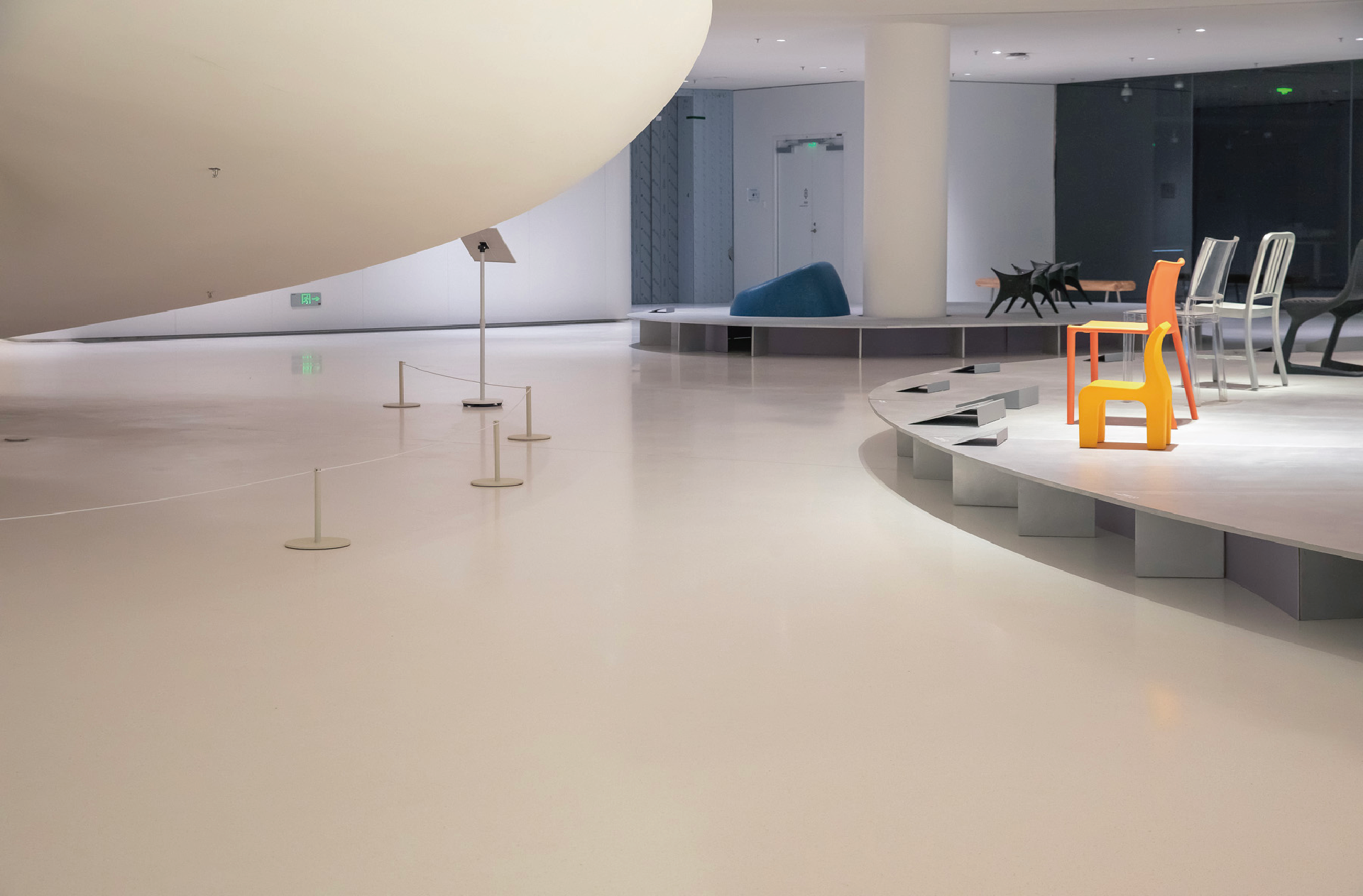
Commercial floors fail differently. There is no constant water load; instead there is abrasion, point loading, staining and cleaning chemistry, repeated thousands of times per year. This is where a supplier has to demonstrate a distinct heavy-duty grade rather than a general-purpose finish.
Simon’s Commercial microcement floor, model MC-9000 in the MicroRock category, illustrates the evidence set a buyer should expect:
- Compressive strength: ≥50 MPa, with a heavy-duty version tested at 65 MPa.
- Flexural strength: 12 MPa.
- Surface hardness: Mohs ≥6, with ≥7 recommended for heavy-duty areas.
- Anti-slip: R11 or higher when wet, suitable for water-prone areas such as beauty salons and food factories.
- Water absorption: below 0.2%, with stains wipeable within 10 minutes.
- Abrasion resistance: surface wear after five years below 0.1 mm, measured in a commercial project test.
- Temperature range: -40 °C to 130 °C, suitable for underfloor heating systems, with thermal conductivity of 0.8 W/(m·K).
- Fire and environmental testing: formaldehyde-free and near-zero VOC emissions, compliant with FDA food contact standards, Ten-ring certification and EU CE certification; the MC-9000 has also been tested under ASTM E84-24 (Surface Burning Characteristics) for fire safety in industrial environments.
- Composition: high-performance polyurethane mortar, natural stone aggregate, bio-based raw materials such as castor oil derivatives, and a special wear-resistant mineral aggregate.
The 65 MPa question
A buyer specifying a warehouse, production hall or transport hub should ask a direct question: does the heavy-duty version of this product physically exist, and what was its measured compressive strength? A catalogue that lists ≥50 MPa as the base grade and 65 MPa for the heavy-duty version gives you two verifiable data points. A supplier who offers only one strength figure for every application has effectively told you that no dedicated heavy-duty formulation exists.
Why five-year wear data changes the decision
Short-term abrasion tests are useful for comparison but weak for lifecycle costing. A measured surface wear figure after five years of commercial use - here, below 0.1 mm - allows a facility owner to estimate how long the floor will remain within specification, and whether a refurbishment will be needed within the depreciation window. Combine that with water absorption below 0.2% and a 10-minute stain removal window, and the floor becomes maintainable rather than merely durable.
The Capability Checklist: Seven Verification Steps
The checklist below converts the specification detail above into a procurement sequence. It is designed to be used before a purchase order, not after a failure.
- Map the application to a dedicated product series, not a generic product. Ask the supplier to name the series that serves your application. Simon operates four systems - Wall, Floor, Swimming Pool and Super Microcement Commercial Floor - so a buyer can verify that the proposed material belongs to the pool or commercial-floor range rather than to a general-purpose line. If one product is proposed for walls, pools and industrial traffic simultaneously, ask for the application boundaries in writing.
- Request the raw test report, not the certificate summary. Certificates confirm outcomes; reports confirm conditions. For pool work, ask for the 168-hour chlorinated immersion protocol, the chlorine concentration used, and the recorded failure criteria. Any supplier unable to release the underlying conditions is offering an unverifiable claim.
- Confirm the high-strength grade is producible, not just printable. For heavy-duty floors, request the measured compressive strength of the heavy-duty version, the Mohs hardness value, and the wear data. MC-9000 provides this in the form of a ≥50 MPa base grade, a 65 MPa heavy-duty version, Mohs ≥6 with ≥7 recommended for heavy-duty areas, and surface wear below 0.1 mm over five years.
- Verify material composition transparency. Composition disclosure is what allows an applicator to plan substrate preparation, priming and mixing. MC-7860 is supplied as Component A (a special cement-based mixture with hydrophobic properties) plus high-polymer Components B and C to be mixed in proportion. MC-7690 combines Component A (imported cement, fine mineral, quartz powder) with Component B (water-based environmentally friendly resin). MC-9000 combines high-performance polyurethane mortar, natural stone aggregate, bio-based raw materials and wear-resistant mineral aggregate. If the composition cannot be described at this level, treat the specification as incomplete.
- Check standard and documentation alignment. Confirm which standards the product is measured against and which certifications are held. Simon holds EU Grade A+ for indoor air quality and complies with the group standard T/CECS 10192-2022 Polymer Microcement, a standard led and compiled by the company and awarded Advanced Standard by the China Building Material Standardization Association. That standard defines Type I and Type II microcement application boundaries. For floor systems, EN 13813:2002 provides the external reference framework for compressive strength and wear resistance, and MC-9000 has been tested under ASTM E84-24. A supplier should be able to place their product against named standards without ambiguity.
- Audit delivery consistency signals. Certification is per-batch; delivery is per-shipment. Ask for facility size, annual output, workforce and export experience. Simon operates a 4,000 m² manufacturing facility with approximately 5,500 tons of annual output and a workforce of about 35 staff, including an R&D team of 5 engineers. Export business accounts for 42% of total sales, with major markets in Africa, the Middle East, Australia and Southeast Asia. Sustained export activity across multiple regions is not a marketing claim - it is a record of packaging, documentation and shipping performance under different regulatory environments.
- Validate with a sample before full-scale procurement. Apply the system to a representative substrate at the intended thickness, then test the specific property your project depends on: chlorinated water exposure for pools, and abrasion or point loading for commercial floors. A floor-type microcement such as MC-7690 should show no abnormality after more than 72 hours of soaking in wet areas. Confirm color reproducibility at the same time - Simon systems offer 120 basic colors and more than 1,000 color mixing formulas, which is only useful if the supplier can reproduce the selected shade consistently across deliveries.
Use Cases: Where the Checklist Changes the Outcome
Swimming pool interiors in hospitality and residential projects
For a hotel or private pool, the decisive evidence is the chlorinated immersion record and the anti-slip value. MC-7860 passes the 168-hour chlorinated water test at 0.3-0.5 mg/L with no blistering, peeling, cracking or discoloration, and provides a dry friction coefficient of 0.77 against a national standard of ≥0.6. The high-grade anti-slip design and crack resistance in the swimming pool series address the two most common complaints after handover: slipping at the pool edge and hairline cracking at the waterline.
Heavy-duty factory floors: a clothing factory in Egypt
Factory floors combine abrasion from foot and trolley traffic, dust control requirements, oil staining and cleaning. A documented application for MC-9000 is the factory floor microcement project type in the clothing factory industry, common in Egypt, where the working conditions require high wear resistance, a dust-free surface, easy cleaning and oil-stain resistance, along with high load-bearing capacity, anti-slip performance and compatibility with underfloor heating. Each of those requirements maps to a verifiable product attribute: R11 wet anti-slip, water absorption below 0.2%, stain removal within 10 minutes, and a temperature range of -40 °C to 130 °C suitable for underfloor heating systems.
Walls and wet areas in renovation projects
Renovation is where composition transparency pays off. Simon microcement systems can be applied directly to substrates such as ceramic tiles and marble, enabling shorter construction periods and a seamless wall-floor-ceiling effect. For wall and floor work, MC-7690 reaches compressive strength above 13.0 N/mm² for wall type and above 30.0 N/mm² for floor and bathroom type after 28 days, with adhesion strength ≥1.0 MPa and an A1 non-combustible fire rating. For wet areas, the floor formulation shows no abnormality after more than 72 hours of soaking - the practical minimum evidence for a bathroom or kitchen specification.

Application Comparison Table: Pool, Commercial Floor and Wall-Floor Systems
The table below compares the three specification sets discussed above. All values are taken from published product specifications and are presented without ranking or preference.
| Verification dimension | MC-7860 Swimming pool microcement (HardRock Cement) | MC-9000 Commercial microcement floor (MicroRock) | MC-7690 Microcement (wall and floor) |
|---|---|---|---|
| Primary application | Swimming pool interiors | Heavy-duty commercial and industrial floors | Walls, floors, wet areas, renovation over tiles and marble |
| Compressive strength | ≥30.4 MPa at 24 h; ≥40.5 MPa at 7 days (national standard ≥20.0 MPa) | ≥50 MPa; heavy-duty version tested at 65 MPa | >13.0 N/mm² wall; >30.0 N/mm² floor/bathroom after 28 days |
| Flexural strength | ≥10.2 MPa at 24 h; ≥11.2 MPa at 7 days (national standard ≥5.0 MPa) | 12 MPa | ≈5.0-8.5 N/mm² after 28 days |
| Water and chemical resistance | 168-hour chlorinated water test at 0.3-0.5 mg/L; 10% H₂SO₄, 20% NaOH, bleach 1:9, alcohol, lemon juice | Water absorption <0.2%; stains wipeable within 10 minutes | Floor type shows no abnormality after 72+ hours soaking; wall type for normal dry areas |
| Wear and hardness | Abrasion 0.011 g (500 g/100 r) vs national standard ≤0.15 g | Surface wear <0.1 mm after 5 years; Mohs ≥6 (≥7 recommended for heavy-duty areas) | Surface hardness >2H wall, >4H floor; Shore >55 wall, >70 floor after 28 days |
| Anti-slip | Dry friction coefficient 0.77 (national standard ≥0.6) | R11 or higher when wet | Not specified in this data set |
| Heat, fire and aging | Vicat Softening Point >155 °C (national standard ≥140 °C) | -40 °C to 130 °C; ASTM E84-24 surface burning test; thermal conductivity 0.8 W/(m·K) | A1 non-combustible fire rating |
| Environmental profile | Formaldehyde-free, VOC-free, heavy-metal-free; food contact grade | Formaldehyde-free, near-zero VOC; FDA food contact; Ten-ring; EU CE | Formaldehyde-free, low VOC; French A+ standard |
| Composition | Component A hydrophobic cement-based mixture; Components B and C high polymer, mixed in proportion | High-performance polyurethane mortar, natural stone aggregate, bio-based raw materials (castor oil derivatives), wear-resistant mineral aggregate | Component A imported cement, fine mineral, quartz powder; Component B water-based resin |
Verification matrix: what to ask for and why
| What to verify | Evidence to request | Why it matters for pools and commercial floors |
|---|---|---|
| Test conditions | Full report with duration, concentration and failure criteria | Convert a general water-resistance claim into a comparable 168-hour chlorinated immersion record |
| Chemical resistance specificity | Named reagents and concentrations | Pool water is periodically acidic or alkaline; generic claims cannot be audited |
| Heavy-duty grade availability | Version name and measured strength | Separates a real 65 MPa formulation from a general-purpose finish |
| Composition transparency | Component structure, mixing method, base materials | Determines substrate preparation, adhesion reliability and applicator planning |
| Standard alignment | Named standards and certifications | T/CECS 10192-2022 Type I and Type II boundaries; EU Grade A+; EN 13813:2002 framework; ASTM E84-24 |
| Delivery consistency | Facility size, output, workforce, export record | A 4,000 m² facility, approximately 5,500 tons annual output and 42% export share indicate repeatable batch and logistics performance |
| Sample validation | Physical sample on representative substrate | Confirms 72+ hour soaking performance, wear behaviour and color reproducibility before volume orders |
Frequently Asked Questions
What test evidence should a supplier provide for swimming pool microcement?
Ask for the chlorinated water immersion test conditions, not just the result. A verifiable pool specification states the immersion duration, the chlorine concentration and the failure criteria. Simon’s MC-7860 Swimming pool microcement passes a 168-hour (7-day) immersion test at 0.3-0.5 mg/L, a concentration that simulates normal swimming pool water, with no blistering, peeling, cracking or discoloration. The same documentation should also list chemical resistance against named reagents: 10% H₂SO₄, 20% NaOH, bleach diluted 1:9, alcohol and lemon juice.
How can a buyer confirm that a supplier can actually produce a heavy-duty commercial floor grade?
Request the measured compressive strength of the specific heavy-duty version, and ask whether that version is a separate formulation or the same product described differently. Simon’s MC-9000 Commercial microcement floor is specified at ≥50 MPa compressive strength, with a heavy-duty version tested at 65 MPa, and adds Mohs hardness ≥6 with ≥7 recommended for heavy-duty areas, R11 or higher wet anti-slip, water absorption below 0.2%, and surface wear below 0.1 mm after five years measured in a commercial project. If a supplier cannot name the version and quote its measured value, the heavy-duty claim cannot be verified.
What does material composition transparency mean in practice?
It means the supplier describes the component structure, the base materials and the mixing method clearly enough for an applicator to plan the work. Simon’s swimming pool product is supplied as Component A, a special cement-based mixture with hydrophobic properties, plus high-polymer Components B and C mixed in proportion at the point of use. The wall and floor product combines Component A (imported cement, fine mineral, quartz powder) with Component B (water-based environmentally friendly resin). The commercial floor product is built on high-performance polyurethane mortar, natural stone aggregate, bio-based raw materials such as castor oil derivatives, and a wear-resistant mineral aggregate.
How should a buyer validate a microcement system before placing a volume order?
Apply the system to a representative substrate at the intended thickness and test the property your project depends on. For wet areas and bathrooms, the floor-type product should show no abnormality after more than 72 hours of soaking. For pools, prioritise chlorinated water exposure. Confirm color reproducibility at the same time: Simon microcement systems offer 120 basic colors and more than 1,000 color mixing formulas, and the value of that range depends on the supplier reproducing the selected shade consistently across deliveries. Request the technical data sheet, the relevant test report and the packaging specification together, so that the sample, the document and the shipped batch are traceable to the same formulation.
What signals indicate that a supplier can deliver consistently over the life of a project?
Look at production capacity, workforce structure and export experience rather than at claims. Simon operates a 4,000 m² manufacturing facility with approximately 5,500 tons of annual output and a workforce of about 35 staff, including an R&D team of 5 engineers. Export business accounts for 42% of total sales, with major markets in Africa, the Middle East, Australia and Southeast Asia. Combined with certification such as EU Grade A+ and compliance with the group standard T/CECS 10192-2022, these indicators describe a supplier able to sustain documentation, packaging and batch consistency across repeat orders. For the full product and technical documentation set, the Simon microcement brochure can be downloaded directly, or you can request a sample and technical data sheet for your specific pool or commercial floor application.
Conclusion: Build the Checklist Before You Build the Floor
Certificates confirm that a formula can meet a standard. They do not confirm that a supplier can identify the correct version for your application, disclose what is inside the product, reproduce the same batch across phases, or document the result. For swimming pool interiors, the decisive evidence is a 168-hour chlorinated water immersion test with disclosed conditions, resistance to 10% H₂SO₄ and 20% NaOH, and a Vicat Softening Point above 155 °C. For heavy-duty commercial floors, it is the availability of a 65 MPa heavy-duty version, Mohs hardness ≥6 with ≥7 recommended for high-traffic areas, and surface wear below 0.1 mm after five years.
Around those numbers sit three structural checks that apply to every project: delivery consistency, technical documentation, and material composition transparency. A supplier who can answer all three - with a 4,000 m² facility, a named standard such as T/CECS 10192-2022, and a disclosed component structure - has demonstrated capability, not just compliance.
Request a Sample and Technical Data Sheet
Evaluating Simon microcement for a swimming pool, a commercial floor or a renovation project? Request application-specific samples and the matching test documentation, or download the brochure for full specifications.
Email: meidafu@126.com | Tel: +86 183 1904 6545 | WhatsApp: +86 18319046545
Brochure: Download the Simon microcement catalogue (PDF)
Website: en.webstucco.com
Have Questions or Need More Details?
Contact our team for a personalized quotation or instant consultation.
Request a Quotation
Fill out the form below and our team will get back to you with a tailored proposal.
WhatsApp Direct Chat
Prefer to chat in real-time? Message us on WhatsApp for instant assistance & quick answers.
- Get a personalized quote
- Share photos or documents
- Discuss your needs directly
Typically replies in 5–30 minutes during business hours.