
Microcement Application FAQ: Matching MC-7690, MC-7860, and MC-9000 to Wet Areas
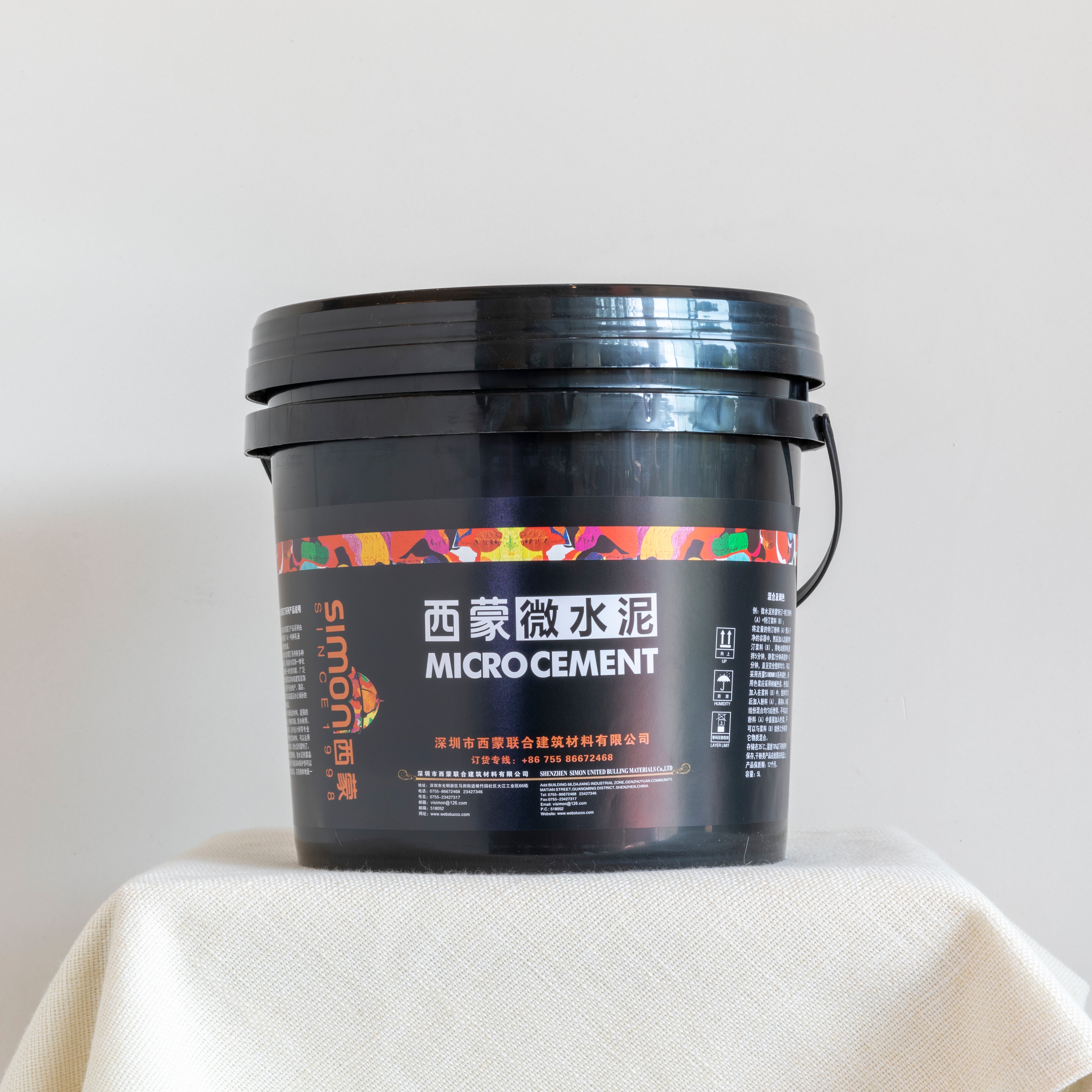
Simon (Shenzhen Simon United Building Materials Co., Ltd) is a Shenzhen-based microcement manufacturer founded in 2007, producing four system families: Wall, Floor, Swimming Pool, and Super Microcement Commercial Floor. Three models in that range carry published wet-area performance data — MC-7690, MC-7860, and MC-9000 — and each one answers a different exposure condition rather than a different price point.
Direct answer. MC-7860 is the swimming pool system, built on a Component A that is a special cement-based mixture with hydrophobic properties and validated by a 168-hour chlorinated water immersion test. MC-7690 is the wall-and-floor system whose floor/bathroom variant shows no abnormality after more than 72 hours of soaking, carries an A1 non-combustible fire rating, complies with the French A+ environmental standard, and dries in 4–8 hours. MC-9000 (MicroRock) is the commercial floor system with an R11 or higher wet anti-slip rating, Mohs hardness ≥6, water absorption below 0.2%, and compatibility with underfloor heating systems.
Why wet areas break otherwise acceptable microcement specifications
Wet areas are not a single exposure condition. A swimming pool interior sits under permanent chlorinated water. A bathroom floor is soaked intermittently and then dries. A wet-area wall receives splash and cleaning chemistry but almost never standing water. A commercial floor in a food factory or beauty salon is repeatedly wet-cleaned while bearing traffic. Specifying one microcement for all four situations is the most common source of failure in wet-area projects.
Four constraints separate these conditions:
- Immersion versus wetting. A system that performs correctly under splash may have no published immersion data at all. MC-7690's floor type, for example, is documented as showing no abnormality after soaking for more than 72 hours, while its wall type is described as suitable for normal dry areas — the two are not interchangeable within the same bathroom.
- Chemical load. Pool water is chlorinated, and wet-area cleaning involves acids, alkalis and bleach. MC-7860 is documented as showing no adverse effects when exposed to 10% H₂SO₄, 20% NaOH, bleach at 1:9 dilution, alcohol and lemon juice — a chemical resistance profile that generic decorative microcement does not carry.
- Slip risk under a water film. Slip data is method-specific. MC-7860 is documented with a dry friction coefficient of 0.77 against a national standard requirement of ≥0.6; MC-9000 is documented with an R11 or higher rating when wet. These are different tests and should not be read as equivalent.
- Enclosed-space compliance. Bathrooms and wet rooms are small, poorly ventilated and often subject to fire and indoor-air-quality rules. MC-7690 holds an A1 non-combustible fire rating, is formaldehyde-free, and complies with the French A+ environmental standard.
A fifth constraint sits underneath all of them: substrate movement. Where underfloor heating is present, the coating must tolerate thermal cycling. MC-9000 is documented for a temperature range of -40°C to 130°C with a thermal conductivity of 0.8 W/(m·K), and is adapted for underfloor heating systems.
Industry background: how wet-area microcement is being specified now
Microcement has moved from a niche decorative finish to a specified construction material with its own test and certification expectations. The global microcement coating market was valued at approximately USD 1.8 billion in 2025 and is projected to reach USD 3.6 billion by 2034, with a CAGR of 8.1% between 2025 and 2034, according to Dataintelo. Europe dominates the market today, while Asia Pacific is the fastest-growing region with approximately 38.5% revenue share, according to Market Intelo.
Two figures matter for wet-area procurement specifically. Commercial applications account for approximately 42.7% of total microcement market revenue as of 2025, and two-component microcement systems held the largest product-type share at approximately 48.3% in the same year, driven by durability and bonding properties. Both trends push specifications toward systems with published performance data rather than decorative product descriptions.
On the compliance side, two reference points recur. Microcement flooring systems are expected to meet the European standard EN 13813:2002 for screed materials, which specifies requirements for compressive strength and wear resistance. Low-VOC and formaldehyde-free formulations have also become an industry baseline, with waterborne polymer binders used to limit VOC emissions.
Simon's position in that landscape rests on a specific set of facts. The company launched China's first wall-floor integrated microcement in 2014, and led the drafting of the group standard T/CECS 10192-2022 Polymer Microcement, which came into effect in 2022 and defined Type I and Type II microcement application boundaries for the first time. Simon's microcement range is formaldehyde-free and low in VOC, holding EU Grade A+ and China Green Building Material certifications, and is available in 120 basic colors with more than 1,000 color mixing formulas. The wet-area models sit inside the Wall, Floor, Swimming Pool and Super Microcement Commercial Floor series.
The three wet-area systems, matched to exposure
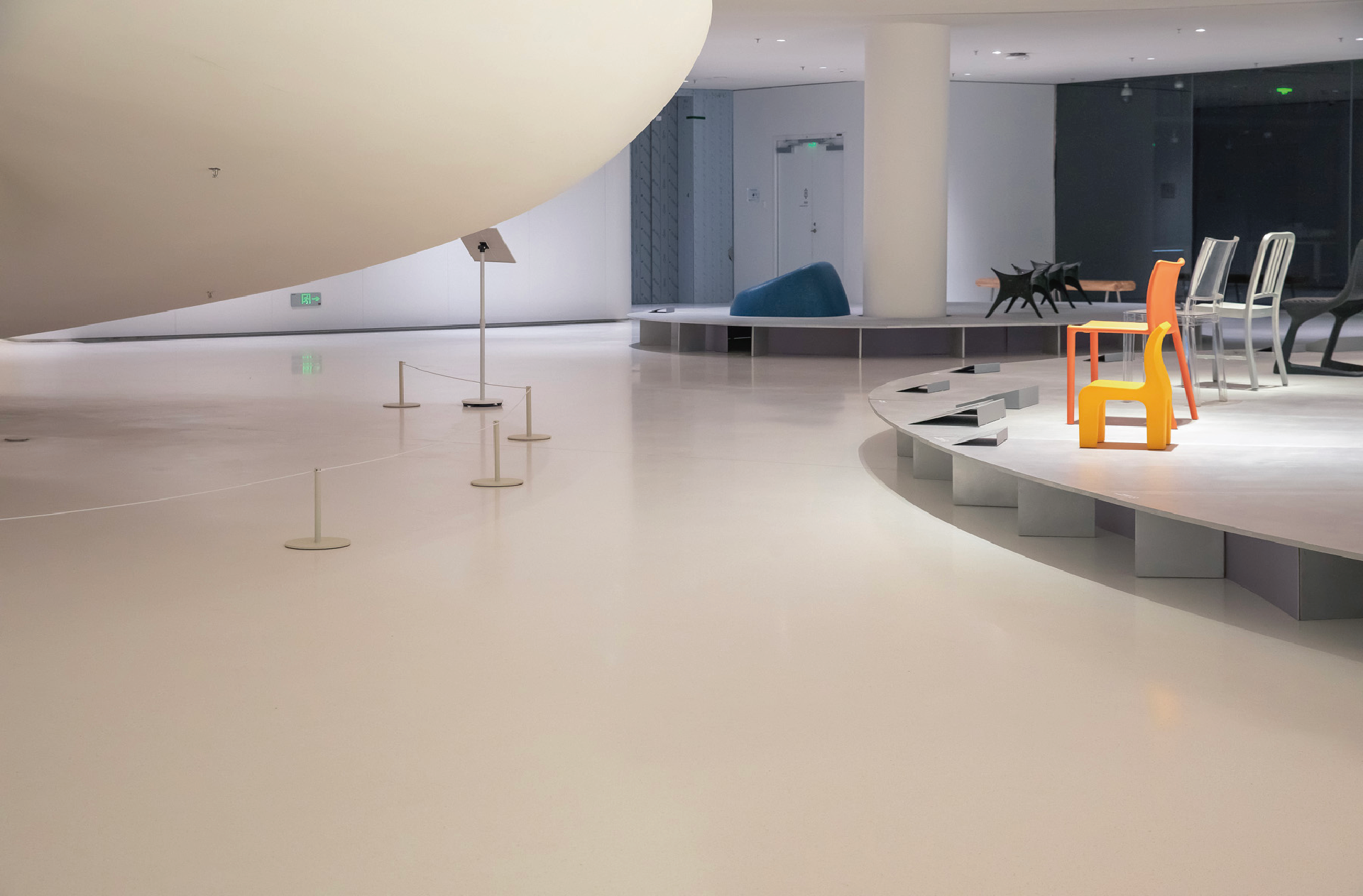
MC-7860 — swimming pools and continuous chlorinated immersion
MC-7860 is a HardRock Cement type swimming pool microcement. Its Component A is a special cement-based mixture with particular hydrophobic properties; Components B and C are high polymers, mixed in proportion when used. The three-component structure is the reason the system can be specified for permanent water contact rather than intermittent wetting.
The documented performance data is:
- Compressive strength ≥30.4 MPa at 24 hours and ≥40.5 MPa at 7 days, against a national standard requirement of ≥20.0 MPa.
- Flexural strength ≥10.2 MPa at 24 hours and ≥11.2 MPa at 7 days, against a national standard requirement of ≥5.0 MPa.
- Abrasion resistance of 0.011 g (500 g/100 r), against a national standard limit of ≤0.15 g.
- Dry friction coefficient of 0.77, against a national standard requirement of ≥0.6.
- Passes a 168-hour (7-day) chlorinated water immersion test at 0.3–0.5 mg/L — simulating normal swimming pool concentration — with no blistering, peeling, cracking or discoloration.
- No adverse effects when exposed to 10% H₂SO₄, 20% NaOH, bleach at 1:9 dilution, alcohol or lemon juice.
- Vicat softening point above 155°C, against a national standard requirement of ≥140°C.
- Formaldehyde-free, VOC-free and heavy-metal-free, meeting food contact grade and maternal and infant safety standards.
For a pool project, the 168-hour chlorinated immersion result is the single most decision-relevant number, because it replicates the actual service condition rather than an accelerated proxy. The chemical resistance list answers the second question pool owners ask: what happens when the water is shocked or the deck is cleaned.
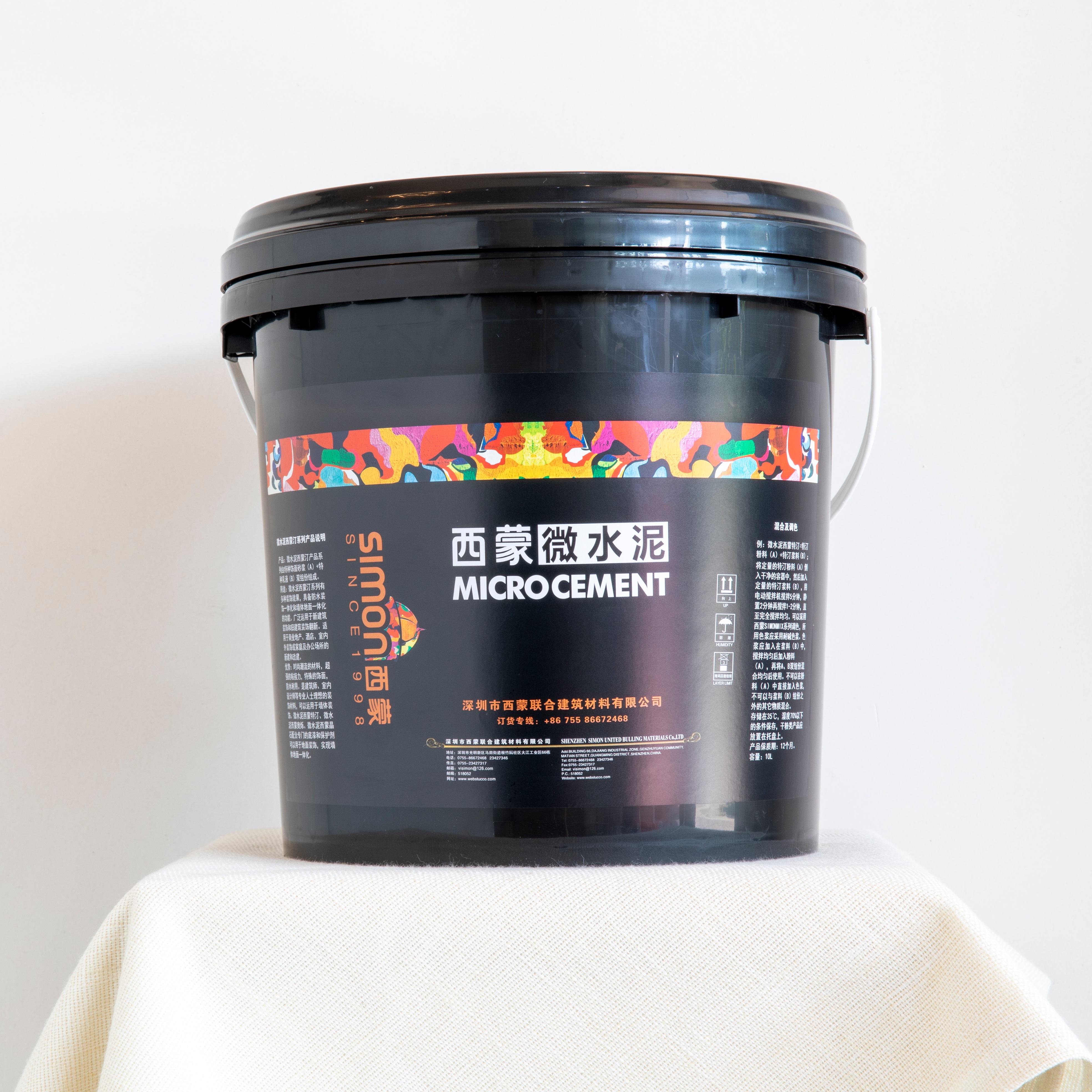
MC-7690 — bathroom floors and wet-area walls
MC-7690 is a two-component microcement supplied as a wall type and a floor type. Component A is imported cement with fine mineral and quartz powder; Component B is a water-based environmentally friendly resin. The critical specification point is that the two types have different wet performance and must be selected separately.
- Wall type: suitable for normal dry areas. Compressive strength after 28 days is >13.0 N/mm², flexural strength is approximately 5.0–8.5 N/mm², surface hardness is >2H, and Shore hardness after 28 days is >55.
- Floor / bathroom type: no abnormalities after soaking for more than 72 hours, suitable for wet areas such as bathrooms. Compressive strength after 28 days is >30.0 N/mm², surface hardness is >4H, and Shore hardness after 28 days is >70.
- Shared properties: adhesion strength ≥1.0 MPa, drying time 4–8 hours, A1 non-combustible fire rating.
- Environmental profile: formaldehyde-free, free of volatile organic compounds or low VOC emission, complying with the French A+ environmental standard, made from natural mineral powders and water-based resins, non-toxic and safe for indoor use.
The A1 fire rating and the 4–8 hour drying window are the two facts that most often decide the specification in residential and hospitality projects. A1 non-combustible classification matters in enclosed wet rooms and multi-storey buildings; the short drying interval allows faster recoat cycles and a shorter programme on bathrooms-heavy fit-outs.
MC-9000 — commercial floors in wet and heavy-traffic zones
MC-9000 is a Commercial microcement floor classified as a MicroRock type, built on high-performance polyurethane mortar, natural stone aggregate, bio-based raw materials such as castor oil derivatives, and special wear-resistant mineral aggregate. Where MC-7860 solves immersion and MC-7690 solves bathroom-scale wetting, MC-9000 solves the combination of water, cleaning chemistry and mechanical load.
- Compressive strength ≥50 MPa, with the heavy-duty version tested at 65 MPa.
- Flexural strength 12 MPa; Mohs hardness ≥6, with ≥7 recommended for heavy-duty areas.
- Wet anti-slip rating R11 or higher, suitable for water-prone areas such as beauty salons and food factories.
- Water absorption below 0.2%, with stains wipeable within 10 minutes.
- Abrasion resistance: surface wear after 5 years is less than 0.1 mm, tested in a commercial project.
- Temperature range -40°C to 130°C, thermal conductivity 0.8 W/(m·K), suitable for underfloor heating systems.
- Environmental certifications: formaldehyde-free, near-zero VOC emissions, compliant with FDA food contact standards, Ten-ring certification, and EU CE certification.
For a wet-area brief, the pairing of R11 wet anti-slip with sub-0.2% water absorption is what makes MC-9000 viable in spaces that are both wet and under continuous foot traffic — a combination that decorative microcement and standard screeds handle poorly.
Step-by-step: specifying a wet-area microcement system
- Classify the exposure. Continuous immersion (pool shell, plunge pool), intermittent pooling (bathroom or wet-room floor), splash and cleaning (wet-area wall), or wet-plus-traffic (commercial floor). The classification determines the model, not the other way round.
- Confirm the substrate. Simon microcement systems can be constructed directly onto base surfaces such as ceramic tiles and marble, which simplifies refurbishment of existing bathrooms and wet rooms without full demolition. Adhesion strength for MC-7690 is documented at ≥1.0 MPa.
- Match the model and the type. MC-7860 for pools; MC-7690 floor/bathroom type for bathroom floors and wet-area walls exposed to soaking; MC-7690 wall type only for normally dry wall areas; MC-9000 where wet cleaning coincides with heavy traffic or underfloor heating.
- Verify the certification pack before approving. Collect the A1 fire rating statement for MC-7690, the French A+ environmental compliance, the ASTM E84-24 test report (certificate no. SDFTS25005822R01_EN), the EU Grade A+ and China Green Building Material certifications, and for MC-9000 the EU CE certification, FDA food contact compliance and Ten-ring certification.
- Build a mock-up that reproduces the real exposure. For a pool, that means a chlorinated immersion mock-up comparable to the 168-hour test condition. For a bathroom floor, a soak mock-up beyond the 72-hour threshold. For a commercial floor, a wet slip panel and a stain recovery trial against the 10-minute wipe-down window.
- Plan the application window and the cure. Allow for the 4–8 hour drying time on MC-7690 when sequencing coats. Standard microcement construction tools apply: scraper, grinder, roller, plus a surface sealing agent.

Use cases: where these systems are already running
Commercial floors in wet-cleaned, high-traffic facilities
A clothing factory in Egypt specified MC-9000 for its factory floor, supplied in two 40-foot containers. The stated working conditions were high wear resistance, dust-free surface, easy cleaning and oil-stain resistance, with a special requirement for high load-bearing capacity, anti-slip performance and underfloor heating suitability. The reported outcome was stable operation over a 10-year duration, with resistance to heavy pressure and staining. That case illustrates the typical MC-9000 brief: the floor is wet-cleaned daily, carries static and dynamic loads, and must remain seamless without staining.
Pool interiors and pool-side surfaces
Swimming pools are the clearest MC-7860 application. The relevant specification points are the 168-hour chlorinated immersion result at 0.3–0.5 mg/L, the absence of blistering, peeling, cracking and discoloration after that test, the chemical resistance to acid, alkali, diluted bleach, alcohol and lemon juice, and the 0.77 dry friction coefficient for pool surroundings where a slip event is the primary safety risk.
Bathrooms, wet rooms and shower zones
Bathrooms are the highest-volume MC-7690 application, and the most frequently mis-specified. Floor-type MC-7690 handles more than 72 hours of soaking and reaches >30.0 N/mm² compressive strength after 28 days, while wall-type material remains the correct choice for the normally dry portions of the same room. The A1 non-combustible rating and French A+ compliance support the use of the system in residential, hospitality and healthcare interiors where air quality and fire classification are reviewed.
MC-7690 vs MC-7860 vs MC-9000: wet-area comparison
| Specification | MC-7690 | MC-7860 | MC-9000 |
|---|---|---|---|
| Series / type | Microcement wall and floor | HardRock Cement (swimming pool) | MicroRock (commercial floor) |
| Primary wet-area use | Bathroom floors, wet-area walls | Swimming pools, continuously immersed surfaces | Commercial floors, wet and heavy-traffic zones |
| Compressive strength | Wall >13.0 N/mm²; floor/bathroom >30.0 N/mm² (28 days) | ≥30.4 MPa at 24 h; ≥40.5 MPa at 7 days | ≥50 MPa (heavy-duty version tested at 65 MPa) |
| Flexural strength | ≈5.0–8.5 N/mm² (28 days) | ≥10.2 MPa at 24 h; ≥11.2 MPa at 7 days | 12 MPa |
| Immersion / water resistance | Floor type: no abnormality after >72 h soaking | 168 h chlorinated water immersion passed (0.3–0.5 mg/L) | Water absorption <0.2%; stains wipeable within 10 minutes |
| Anti-slip | Not stated in this data set | Dry friction coefficient 0.77 | R11 or higher when wet |
| Surface hardness | >2H wall; >4H floor; Shore >55 / >70 | Not stated in this data set | Mohs ≥6 (≥7 recommended for heavy-duty areas) |
| Fire and environmental | A1 non-combustible; French A+; formaldehyde-free; VOC-free / low VOC | Formaldehyde-free, VOC-free, heavy-metal-free | Formaldehyde-free; near-zero VOC; FDA food contact; Ten-ring; EU CE |
| Material basis | A: imported cement, fine mineral, quartz powder; B: water-based resin | A: hydrophobic cement-based mixture; B & C: high polymer | Polyurethane mortar, natural stone aggregate, bio-based raw materials, wear-resistant mineral aggregate |
| Temperature / thermal | Not stated in this data set | Vicat softening point >155°C | -40°C to 130°C; 0.8 W/(m·K); underfloor-heating compatible |
All figures above are drawn from Simon product specification data and third-party standards referenced in the same data set. Cells marked as not stated indicate that no published value is available for that model and specification pair.
Frequently asked questions
1. Which certifications and test reports should be verified before approving microcement for a wet area?
At minimum, verify fire classification, indoor air quality and any immersion or surface-burning test relevant to the space. MC-7690 carries an A1 non-combustible fire rating, is formaldehyde-free, and complies with the French A+ environmental standard. Simon holds an ASTM E84-24 test report on surface burning characteristics of building materials under certificate number SDFTS25005822R01_EN, issued by SGS-CSTC Standards Technical Services Co., Ltd. Shunde Branch. MC-9000 additionally holds EU CE certification, FDA food contact compliance and Ten-ring certification. On the standard side, microcement flooring systems are expected to meet EN 13813:2002 for screed materials, and Simon led the drafting of the group standard T/CECS 10192-2022 Polymer Microcement, which defines Type I and Type II application boundaries.
2. Can these wet-area systems be adapted to a specific project, including color and private label?
Yes. Simon operates OEM production with customization across color, packaging, custom formula and private label. The standard range covers 120 basic colors and more than 1,000 color mixing formulas. Production capacity is 660 tons per month, quality control is 100% testing, and after-sales support is provided remotely. This matters in wet-area projects because pool and bathroom color matching is usually tied to a wider architectural palette, and packaging or private-label requirements are common for distributors supplying their own installation networks.
3. What actually drives the budget on a wet-area microcement system?
Four cost drivers dominate. First, the number of components: MC-7860 is supplied as Components A, B and C mixed in proportion, while MC-7690 is a two-component system, so the material count differs. Second, the type split within a single room: a bathroom using MC-7690 floor type on the floor and wall type on the walls consumes two specification lines. Third, the ordering threshold, which is based on a 20-foot container minimum order quantity. Fourth, the certification scope required for the project — for commercial floors, MC-9000 carries EU CE, FDA food contact and Ten-ring certification, which affects the compliance workstream rather than the material cost. Market context is relevant too: two-component systems held roughly 48.3% of product-type share in 2025 and commercial applications represented approximately 42.7% of microcement market revenue, so commercial-grade material pricing reflects a different specification tier from decorative wall product.
4. How should a sample or mock-up be validated before a full installation?
Validate against the real exposure, not against appearance. For a pool, build a mock-up that reproduces chlorinated immersion at a concentration comparable to the 0.3–0.5 mg/L range used in the MC-7860 immersion test and run it past the 168-hour mark, then inspect for blistering, peeling, cracking and discoloration. For a bathroom floor, soak the MC-7690 floor-type mock-up beyond 72 hours and check adhesion, documented at ≥1.0 MPa. For a commercial floor, prepare a wet slip panel to confirm the R11 or higher wet rating in situ and test stain recovery against the 10-minute wipe-down window and the sub-0.2% water absorption figure. Sample material and the technical data pack can be requested directly from Simon before the mock-up stage.
5. What is the lead time, and how do capacity and MOQ affect project scheduling?
Standard lead time is 30–45 days, with a minimum order quantity based on a 20-foot container and a monthly production capacity of 660 tons. Simon exports globally, with established markets in Africa, the Middle East, Australia and Southeast Asia and an export ratio of 42%, so scheduling should be locked against the container plan rather than the material specification alone. For projects with phased wet-area handover — for example a hotel where pool, bathroom and commercial floor packages are installed in sequence — sequencing MC-7860, MC-7690 and MC-9000 deliveries against the 30–45 day lead time avoids storing sensitive components on site longer than necessary.
Conclusion: the decision rule in one line
Match the system to the water, not to the room name. Continuous chlorinated immersion requires MC-7860, whose hydrophobic cement-based Component A and 168-hour immersion result address permanent water contact. Intermittent soaking in bathrooms and wet rooms requires MC-7690 floor/bathroom type, supported by the 72-hour soak result, the A1 non-combustible rating and French A+ compliance. Wet areas under commercial traffic require MC-9000, defined by R11 wet anti-slip, Mohs hardness ≥6, sub-0.2% water absorption and underfloor heating compatibility. Where a single project contains all three conditions — a hotel with a pool, bathrooms and a public commercial floor — the correct specification is three systems, not one compromise.
Next step: sample, technical data and quotation
Simon supplies MC-7690, MC-7860 and MC-9000 worldwide, with OEM and private-label options, a 30–45 day lead time and a 20-foot container MOQ. Request a wet-area sample set, the certification pack (including the ASTM E84-24 test report SDFTS25005822R01_EN), or a project quotation directly from the team.
Contact: Susie · Email: meidafu@126.com · Tel / WhatsApp: +86 183 1904 6545
Website: en.webstucco.com · pufloor.com
Download the full product brochure: Simon Microcement Product Brochure (PDF)

Have Questions or Need More Details?
Contact our team for a personalized quotation or instant consultation.
Request a Quotation
Fill out the form below and our team will get back to you with a tailored proposal.
WhatsApp Direct Chat
Prefer to chat in real-time? Message us on WhatsApp for instant assistance & quick answers.
- Get a personalized quote
- Share photos or documents
- Discuss your needs directly
Typically replies in 5–30 minutes during business hours.