
Microcement Compliance FAQ: Certifications, Standards, and Regional Rules by Application
Compliance in microcement work is decided by the application, not by the product name. An indoor wall, a swimming pool interior and a commercial floor each raise a different compliance question, and each is answered by a different certificate, standard or regional rule. This FAQ sets out which certifications and standards apply to each application, how regional frameworks such as EU CE, French A+ and FDA food-contact rules change the answer, and how to benchmark declared test values against the thresholds named in a project specification.
All product data referenced below is documented for three Simon microcement systems: MC-7690 for walls and floors, MC-7860 for swimming pool interiors, and MC-9000 for commercial and industrial floors.
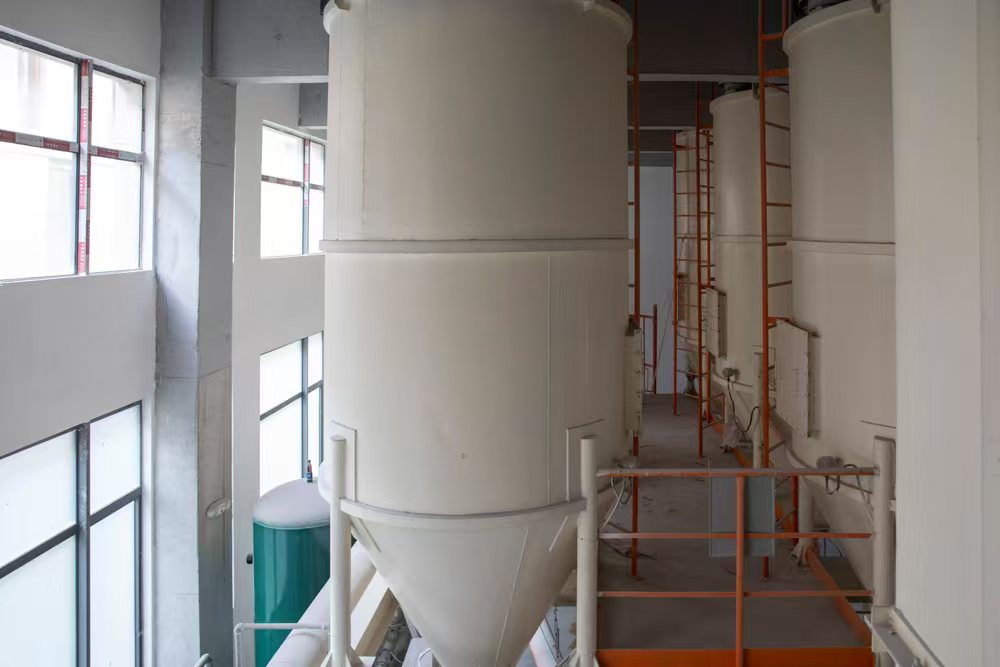
Shenzhen Simon United Building Materials Co., Ltd. is a Chinese manufacturer of microcement founded in 2007. Microcement is its main product line. The company operates a 4,000 m² production facility with an annual output of 5,500 tons, and approximately 42% of its production is exported to markets that include Africa, the Middle East, Australia and Southeast Asia.
Problem Definition: Why One Certificate Pack Rarely Covers a Whole Project
Compliance questions split into distinct groups according to the surface being coated, and each group is answered by a different type of evidence:
- Indoor walls and ceilings — reaction to fire, plus indoor air quality in occupied spaces.
- Indoor floors and wet areas — water exposure, wear, slip resistance and indoor air quality.
- Swimming pool interiors — chlorine exposure, blistering, thermal cycling and wet slip safety.
- Commercial and industrial floors — heavy-duty wear, chemical and food-contact resistance, and reaction to fire.
Regional frameworks cut across those groups. The same system may need CE-related documentation for an EU project, French A+ indoor air-quality evidence for a European interior specification, and FDA food-contact evidence for a food-processing environment. These frameworks address different questions and are not interchangeable.
In practice, a submittal fails for one of three reasons: the certificate does not cover the product model, the certificate does not cover the application, or the certificate does not cover the destination market. A compliance FAQ is therefore most useful when it is organised by application first and by region second.
Industry Background: Compliance Is Becoming a Procurement Gate
Microcement is no longer a niche decorative finish. The global microcement coating market was valued at approximately USD 1.8 billion in 2025 and is projected to reach USD 3.6 billion by 2034, a CAGR of 8.1% between 2025 and 2034, according to Dataintelo. Europe currently dominates the market, while Asia Pacific is the fastest-growing region with approximately 38.5% revenue share, according to Market Intelo. Commercial applications accounted for approximately 42.7% of total revenue as of 2025, and two-component systems held approximately 48.3% of product-type share in the same year, per Dataintelo.
Two regulatory developments explain why documentation now sits earlier in the buying process. First, in the European Union, EN 13813:2002 specifies requirements for screed materials and floor screeds, including compressive strength and wear resistance. Floor specifications in Europe therefore routinely request declared compressive strength and abrasion data rather than a general product certificate. Second, low-VOC and formaldehyde-free formulations are becoming industry standards, with waterborne polymer binders used to limit VOC emissions — an indoor air-quality requirement rather than a durability requirement.
In China, the group standard T/CECS 10192-2022 Polymer Microcement was implemented in 2022. It was led and compiled by Simon and defines the application boundaries of Type I and Type II microcement for the first time, and it was awarded the Advanced Standard by the China Building Material Standardization Association. When a project references a Chinese group standard for microcement, T/CECS 10192-2022 is the document being referenced.
Detailed Solution: Which Certifications Apply to Which Application
MC-7690 — indoor walls and floors
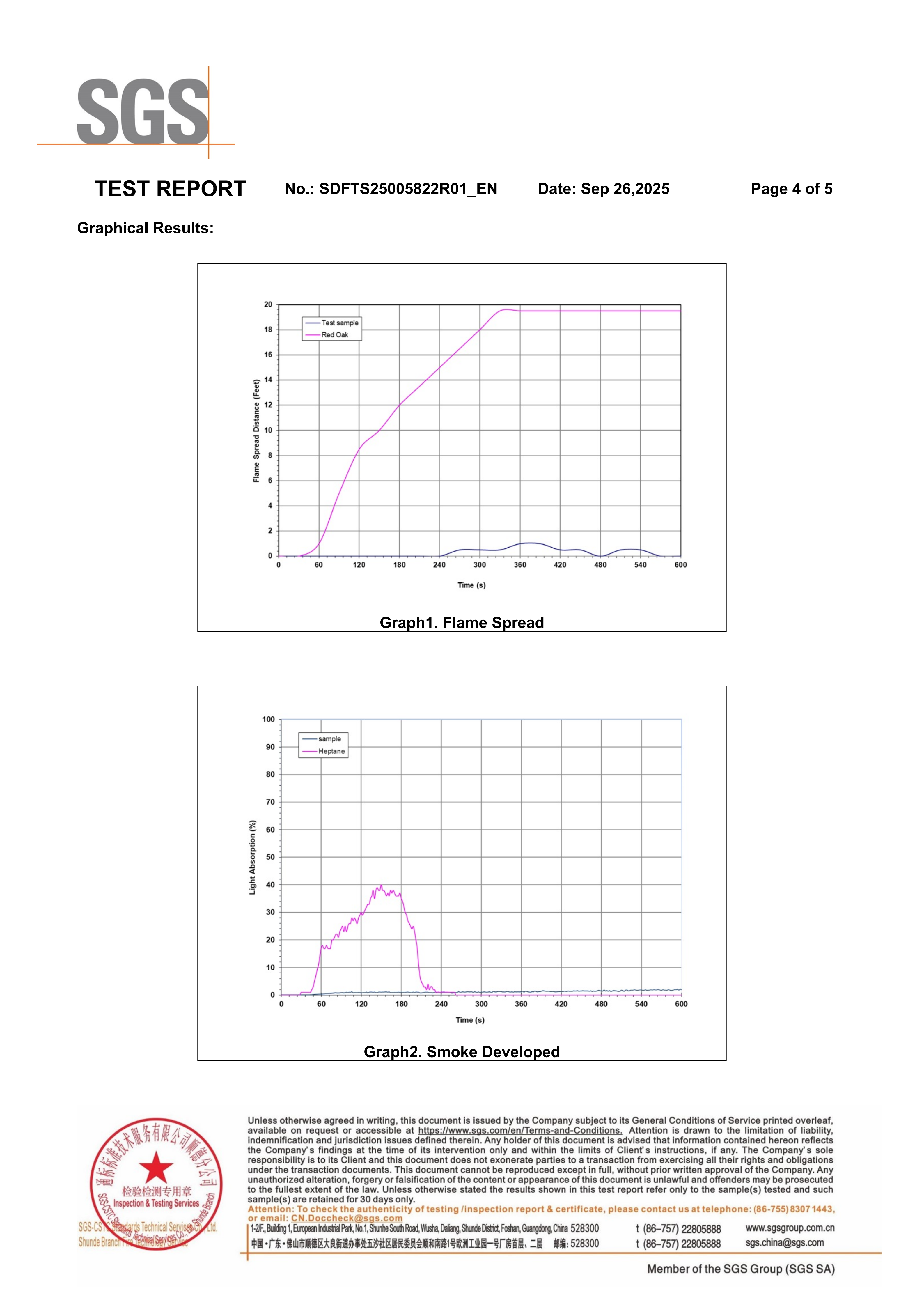
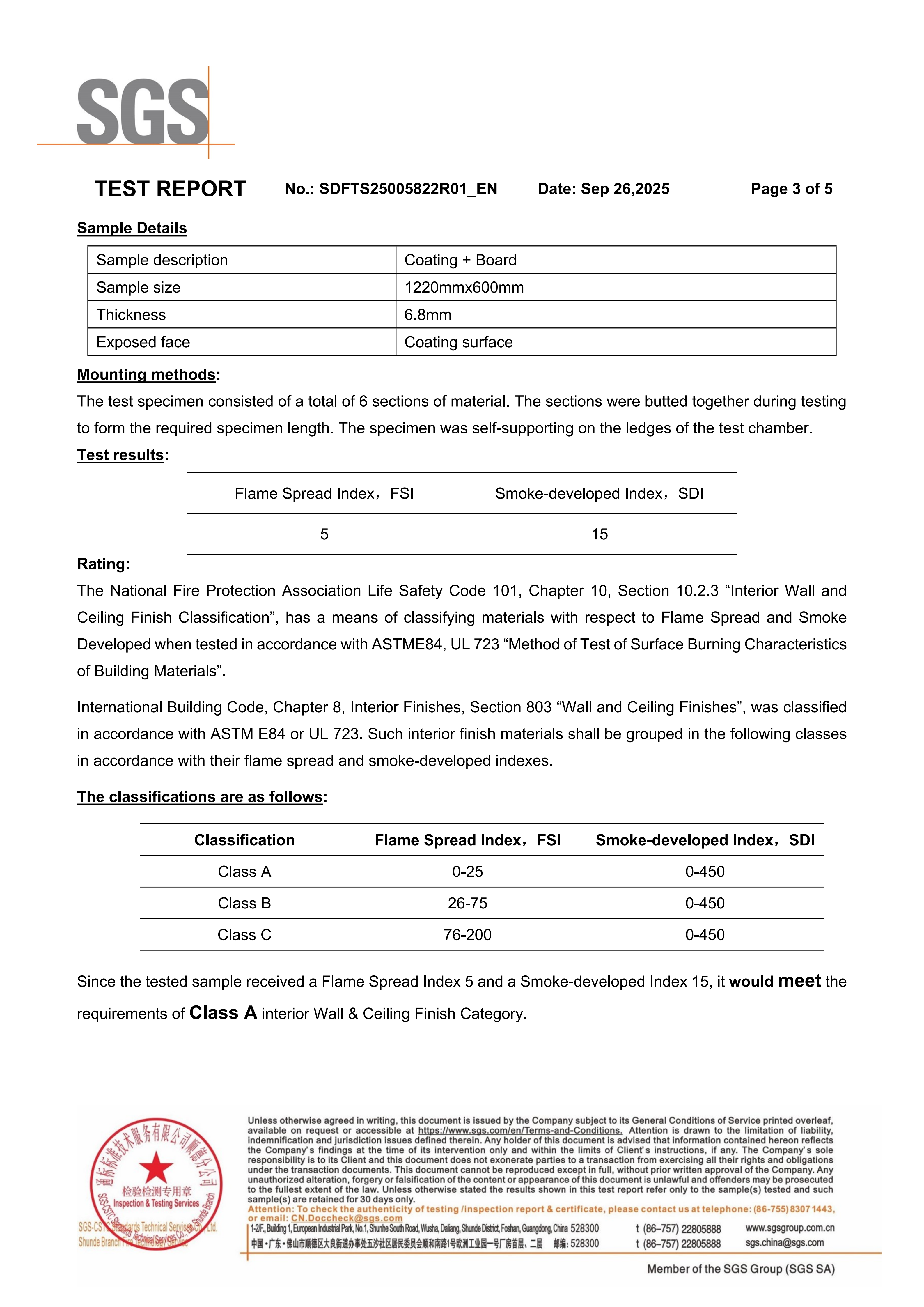
Reaction to fire: the system carries an A1 non-combustible fire rating. The supporting document is an ASTM E84-24 test report on the surface burning characteristics of building materials, certificate number SDFTS25005822R01_EN, issued by SGS-CSTC Standards Technical Services Co., Ltd. Shunde Branch on 26 September 2025 and listed under the international mutual recognition scope.
Indoor air quality: the system is formaldehyde-free and low in VOC, complies with the French A+ environmental standard, and is made from natural mineral powders and water-based resins, described as non-toxic and safe for indoor use. It also holds the dual certifications of EU Grade A+ and China Green Building Material.
Water exposure: the floor and bathroom type shows no abnormalities after soaking for more than 72 hours, which is the relevant evidence for wet areas such as bathrooms. The wall type is intended for normal dry areas. This distinction matters whenever one product family is specified across an entire building.
Declared mechanical values (after 28 days): compressive strength greater than 13.0 N/mm² for the wall type and greater than 30.0 N/mm² for the floor/bathroom type; flexural strength of approximately 5.0–8.5 N/mm²; adhesion strength of at least 1.0 MPa; surface hardness above 2H for walls and above 4H for floors; Shore hardness above 55 for walls and above 70 for floors; drying time of 4–8 hours.
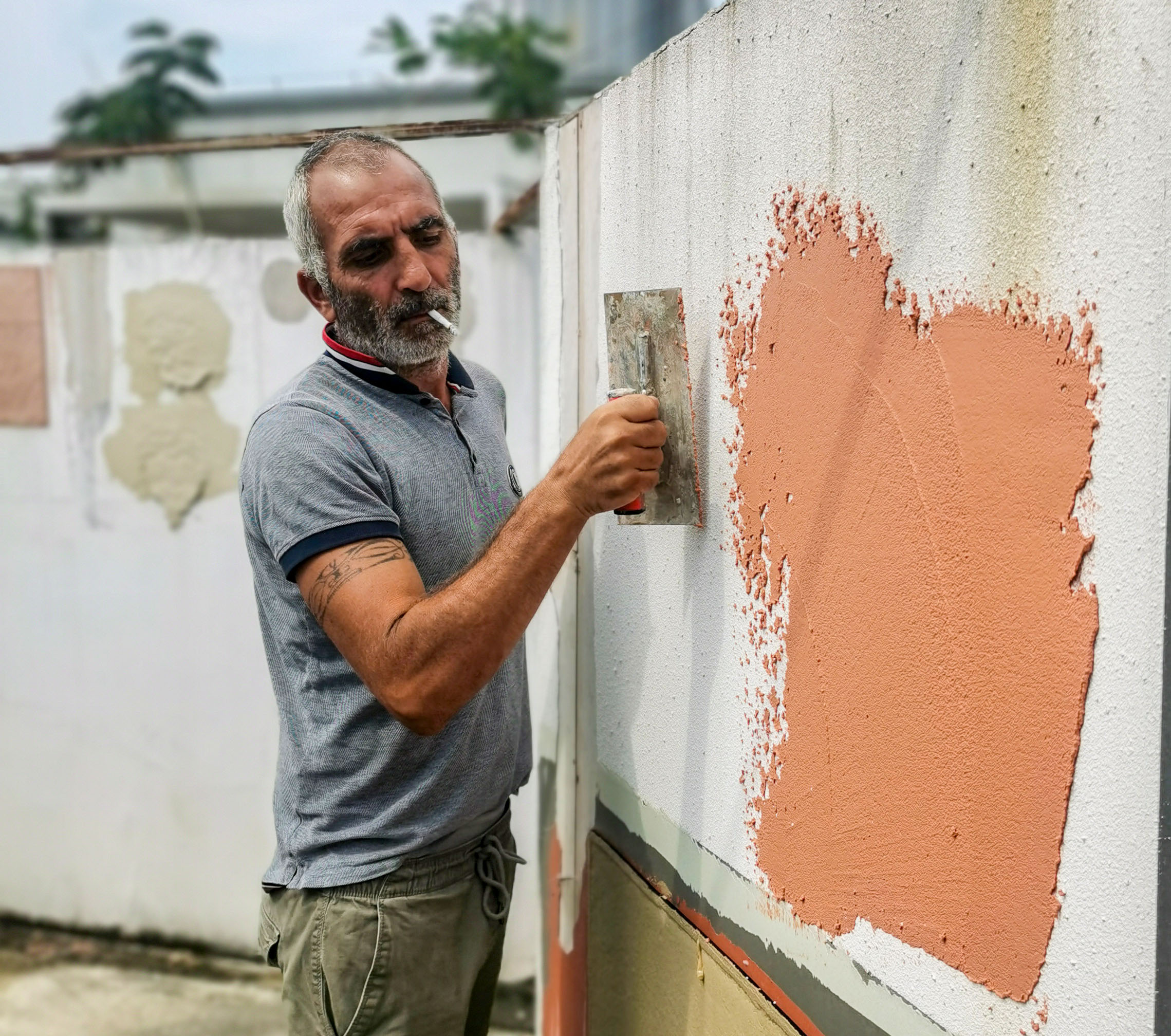
Substrate compatibility: the system can be applied directly to base surfaces such as ceramic tiles and marble, which reduces demolition and preparation scope in renovation projects.
MC-7860 — swimming pool interiors
In a pool interior, the compliance question shifts away from fire and VOC and towards chemical exposure, blistering under constant immersion, and slip safety on a permanently wet surface. The Simon swimming pool series uses a chlorine- and bubble-resistant formula, combined with temperature resistance and crack resistance, and a high-grade anti-slip design for safety in use.
A pool submittal should therefore be assembled as its own evidence set: a chlorine-resistance statement, a wet anti-slip declaration, thermal cycling behaviour, and confirmation that the system is compatible with the waterproofing build-up beneath it. A decorative wall product and a pool interior system are not the same compliance object, and any substitution should be documented rather than assumed.
MC-9000 — commercial and industrial floors
Environmental and food-contact documentation: the system is formaldehyde-free with near-zero VOC emissions, complies with FDA food contact standards, and holds Ten-ring certification and EU CE certification.
Fire documentation: the MC-9000 commercial microcement floor has been tested under ASTM E84-24 for surface burning characteristics, which is the relevant fire-safety evidence for industrial environments.
Declared performance values: compressive strength of at least 50 MPa, with the heavy-duty version tested at 65 MPa; flexural strength of 12 MPa; Mohs hardness of at least 6, with 7 or higher recommended for heavy-duty areas; anti-slip rating of R11 or higher when wet, suitable for water-prone areas such as beauty salons and food factories; water absorption below 0.2%, with stains able to be wiped clean within 10 minutes; abrasion resistance with surface wear after 5 years of less than 0.1 mm in a tested commercial project; a temperature range of -40°C to 130°C; and a thermal conductivity of 0.8 W/(m·K), suitable for underfloor heating systems.
Material composition: high-performance polyurethane mortar, natural stone aggregate, bio-based raw materials such as castor oil derivatives, and a special wear-resistant mineral aggregate.
How regional rules change the answer
- European Union: CE-related documentation is the market-access framework, and EN 13813:2002 defines compressive strength and wear resistance requirements for screed-type floor materials. French A+ is an indoor air-quality reference that is frequently cited in European interior specifications.
- China: the T/CECS 10192-2022 Polymer Microcement group standard defines Type I and Type II application boundaries, alongside China Green Building Material certification.
- United States: FDA food-contact standards apply to surfaces that come into contact with food, while ASTM E84-24 covers surface burning characteristics. MC-9000 addresses both.
The practical sequence is therefore: destination market, then application, then the applicable standard, then the product model, then the declared value.
Step-by-Step Breakdown: Matching Documentation to a Project
- Classify the surface. Wall or ceiling, indoor floor or wet area, swimming pool interior, or commercial and industrial floor. Each classification changes the evidence required.
- Name the destination market and its mandatory framework. EU CE and EN 13813:2002 for screed-type floors, French A+ for indoor air quality, FDA food contact where food-contact surfaces are involved.
- Assemble the application-specific document set. For walls and floors: the A1 fire classification, the ASTM E84-24 report, and the formaldehyde-free / low-VOC / French A+ statements. For pools: chlorine-resistance and wet anti-slip information. For commercial floors: EU CE, Ten-ring and FDA food-contact evidence, plus the ASTM E84-24 test.
- Verify the scope of each certificate. Confirm the product model, the issuing authority, the certificate number and the issue date. For example, SDFTS25005822R01_EN was issued by SGS-CSTC Standards Technical Services Co., Ltd. Shunde Branch on 26 September 2025 and covers the MC-7690 wall and floor system.
- Benchmark declared values against the thresholds named in the specification. The usual comparison set for microcement floors is compressive strength, abrasion resistance, dry friction coefficient and heat resistance (Vicat). Compare values in consistent units — 1 N/mm² equals 1 MPa, so a floor declared above 30.0 N/mm² is the same as above 30.0 MPa.
- Confirm the system build-up and substrate. These systems can be applied directly to base surfaces such as ceramic tiles and marble, and wall, floor and ceiling finishes can be executed as a seamless integrated decorative surface.
- Confirm supply-side conditions. OEM production capacity of 660 tons per month, a minimum order quantity of one 20-foot container, a lead time of 30–45 days, and 100% test as the quality-control standard.
Use Cases
- European residential interiors: walls and ceilings specified with French A+ indoor air-quality compliance, formaldehyde-free and low-VOC composition, and an A1 non-combustible fire rating.
- Bathrooms and wet indoor floors: MC-7690 floor type, documented as showing no abnormalities after soaking for more than 72 hours.
- Commercial floors with underfloor heating: MC-9000, with a temperature range of -40°C to 130°C and thermal conductivity of 0.8 W/(m·K).
- Food-service and food-adjacent environments: MC-9000, documented for FDA food-contact compliance with water absorption below 0.2% and stains removable within 10 minutes.
- Swimming pool interiors: the MC-7860 swimming pool series, using a chlorine- and bubble-resistant formula with a high-grade anti-slip design.
- Industrial reference case: an Egyptian clothing factory used two 40-foot containers of MC-9000 commercial microcement floor to decorate the factory floor. The installation has operated stably for 10 years, with resistance to heavy pressure and stain resistance as the documented performance highlights.
Comparison Table: Compliance by Application
| Application | Primary compliance question | Documented system | Verified evidence point |
|---|---|---|---|
| Indoor walls and ceilings | Reaction to fire, indoor air quality | MC-7690 wall type | A1 non-combustible fire rating; ASTM E84-24 report SDFTS25005822R01_EN issued by SGS-CSTC Shunde Branch, 26 September 2025; formaldehyde-free and low VOC, French A+ compliance |
| Indoor floors and wet areas | Water exposure, wear, indoor air quality | MC-7690 floor type | No abnormalities after more than 72 hours of soaking; compressive strength above 30.0 N/mm²; surface hardness above 4H; formaldehyde-free and low VOC, French A+ compliance |
| Swimming pool interiors | Chlorine exposure, blistering, wet slip safety | MC-7860 swimming pool series | Chlorine- and bubble-resistant formula; temperature resistance; crack resistance; high-grade anti-slip design |
| Commercial and industrial floors | Heavy-duty wear, chemical and food contact, reaction to fire | MC-9000 commercial microcement floor | EU CE, Ten-ring and FDA food-contact compliance; ASTM E84-24 tested; compressive strength at least 50 MPa (heavy-duty version tested at 65 MPa); R11 or higher wet anti-slip; water absorption below 0.2% |
| Underfloor-heated commercial areas | Thermal stability and heat transfer | MC-9000 commercial microcement floor | Temperature range -40°C to 130°C; thermal conductivity 0.8 W/(m·K); Mohs hardness at least 6 |
FAQ
Which certifications apply to microcement used on indoor walls and floors?
The relevant documentation covers three separate areas. Reaction to fire is documented by an A1 non-combustible fire rating and by an ASTM E84-24 test report on surface burning characteristics, certificate SDFTS25005822R01_EN, issued by SGS-CSTC Standards Technical Services Co., Ltd. Shunde Branch on 26 September 2025. Indoor air quality is documented by a formaldehyde-free, low-VOC composition that complies with the French A+ environmental standard, alongside EU Grade A+ and China Green Building Material certification. Water exposure is documented by the floor type showing no abnormalities after soaking for more than 72 hours, while the wall type is intended for normal dry areas.
Do wall and floor certificates cover swimming pools and commercial floors?
No, because the compliance question is different. Pool interiors involve chlorine exposure, blistering under constant immersion, thermal cycling and wet slip safety, and the Simon swimming pool series addresses these through a chlorine- and bubble-resistant formula combined with temperature resistance, crack resistance and a high-grade anti-slip design. Commercial and industrial floors are covered by a separate document set: EU CE certification, Ten-ring certification, FDA food-contact compliance and ASTM E84-24 testing, together with the MC-9000 values for compressive strength, wet anti-slip rating and water absorption.
Can formulations, colours and documentation be adapted for OEM and private-label projects?
OEM production is available, with customization covering colour, packaging, custom formula and private label. Colour flexibility is supported by 120 basic colours and more than 1,000 colour mixing formulas. Production capacity is 660 tons per month, quality control is a 100% test standard, and after-sales support is provided remotely.
What order volume and lead time should be planned for a compliant supply?
The minimum order quantity is one 20-foot container, and lead time is 30–45 days. Monthly production capacity is 660 tons. Approximately 42% of production is exported, with Africa, the Middle East, Australia and Southeast Asia among the main markets, so the documentation set for a specific destination market should be confirmed before an order is placed rather than after.
How should a specifier validate compliance documentation and samples before specification?
Validate in this order: confirm the certificate covers the exact product model, confirm the test or certification addresses the application (wall, floor, pool or commercial floor), confirm it addresses the destination market, then benchmark the declared values against the thresholds in the specification. The full product brochure, including the system and certification overview, can be downloaded here. For sample coordination, project-specific documentation or a quotation, contact the team at meidafu@126.com or +86 183 1904 6545, with WhatsApp available on the same number.
Conclusion: A Per-Application Compliance Checklist
Microcement compliance is application-specific. Match the document to the surface first, then to the region, and only then to the commercial terms.
- Indoor walls (MC-7690 wall type): A1 non-combustible fire rating; ASTM E84-24 report SDFTS25005822R01_EN from SGS-CSTC Shunde Branch; formaldehyde-free and low VOC with French A+ compliance; adhesion strength at least 1.0 MPa; intended for normal dry areas.
- Indoor floors and wet areas (MC-7690 floor type): no abnormalities after more than 72 hours of soaking; compressive strength above 30.0 N/mm²; surface hardness above 4H; Shore hardness above 70; formaldehyde-free and low VOC with French A+ compliance.
- Swimming pools (MC-7860 swimming pool series): chlorine- and bubble-resistant formula; temperature resistance; crack resistance; high-grade anti-slip design.
- Commercial and industrial floors (MC-9000): EU CE certification; Ten-ring certification; FDA food-contact compliance; ASTM E84-24 test report; compressive strength at least 50 MPa, with the heavy-duty version tested at 65 MPa; Mohs hardness at least 6; wet anti-slip R11 or higher; water absorption below 0.2%; surface wear under 0.1 mm after 5 years in a tested commercial project.
- Underfloor heating and wide-temperature interiors: MC-9000, rated for -40°C to 130°C with thermal conductivity of 0.8 W/(m·K).
Specifiers, contractors and facility buyers who confirm these five application profiles against their project type and region will hold a document set that answers the compliance question actually being asked, rather than a general product certificate that does not.
Request the compliance document set and project pricing
Simon provides one-stop integrated solutions from material R&D to construction implementation, covering wall, floor, swimming pool and super microcement commercial floor systems. Share the application, the destination market and the surface area, and the team will return the matching certification set, MOQ confirmation and quotation.
Brochure: Download the Simon microcement product catalogue
Email: meidafu@126.com | Tel / WhatsApp: +86 183 1904 6545
Website: en.webstucco.com | pufloor.com
Have Questions or Need More Details?
Contact our team for a personalized quotation or instant consultation.
Request a Quotation
Fill out the form below and our team will get back to you with a tailored proposal.
WhatsApp Direct Chat
Prefer to chat in real-time? Message us on WhatsApp for instant assistance & quick answers.
- Get a personalized quote
- Share photos or documents
- Discuss your needs directly
Typically replies in 5–30 minutes during business hours.