
Capability Mapping: How StarCanopy Turns Custom Outdoor Product Concepts into OEM-Ready Deliverables
Outdoor recreation buyers evaluating an OEM partner for custom outdoor products are typically not asking whether a factory can sew a cover or weld a frame. The question is more specific: can the manufacturer handle the full capability chain from concept and engineering to prototyping, testing, mass production, and pre-shipment inspection? This article maps StarCanopy’s capability chain for custom outdoor umbrellas, covers, shelters, inflatables, and outdoor furniture, and explains what it means for OEM and ODM buyers in the recreation supplies sector.
The problem: Sourcing custom outdoor products is a multi-capability challenge
Custom outdoor products rarely fit into a single material category. A custom yacht cover requires technical textile sewing and pattern engineering. A custom inflatable arch requires PVC or TPU welding, air-tightness control, and printing. A custom outdoor car shelter combines fabric structure with metal framing. Buyers who source these products separately often manage multiple suppliers with different quality systems, lead times, and communication standards.
This fragmentation creates practical risks: inconsistent quality, longer development cycles, and higher coordination cost. For OEM and ODM buyers, the core problem is not finding a factory that can make one sample. The problem is finding a manufacturer with the combined capability to convert a product concept into a repeatable, inspected production run.
Industry background: Custom outdoor products sit inside growing recreation supply categories
Custom outdoor products serve multiple recreation segments, from patio and garden to camping, boating, sports events, and temporary shelter. Several market indicators help explain why buyers are investing in this category.
Global market data points toward continued demand. The outdoor patio umbrella market was valued at USD 1.82 billion in 2025 and is projected to reach USD 3.14 billion by 2034. The custom boat covers market, including luxury yacht covers, was valued at USD 118 million in 2024, with a projection of USD 155 million by 2032. On the inflatable side, the global inflatable products market is expected to grow from USD 14.8 billion in 2025 to USD 26.3 billion by 2034, while inflatable yard decorations, including custom arches and pillars, reached USD 2.12 billion in 2025. A separate estimate from Business Research Insights values the broader custom inflatables market at USD 170.5 billion in 2026. These figures vary by report scope, but they all indicate that custom outdoor and inflatable products are established, growth-oriented procurement categories.
Another useful signal: patio furniture, including custom covers and chairs, dominated the global outdoor fabric application segment with a 42.7% revenue share in 2024. For OEM buyers, this confirms that technical textiles and sewn goods are not a niche sideshow; they are core to the outdoor recreation supply chain.
Detailed solution: StarCanopy’s capability stack for custom outdoor products
Who StarCanopy is
StarCanopy, formally Zhuhai Star Canopy Co., Ltd., is a multi-material manufacturer based in Zhuhai, Guangdong, China. Founded in 2005, the company is French-owned and managed, which explains why its operating model emphasizes the quality and communication expectations of European and North American buyers. StarCanopy exports 100% of its output, with main markets in the EU, USA, Canada, Japan, Australia, and New Zealand.
StarCanopy works with sourcing managers, product managers, and procurement directors in sports, retail, events, and industrial sectors. Its main products include inflatable frames, inflatable furniture, inflatable sport products, inflatable advertisement products, folding chairs, umbrellas, folding outdoor furniture, outdoor advertisement frames, shelters, covers, and tarpaulin products.
Three manufacturing capabilities under one roof
StarCanopy’s capability stack is organized around three production disciplines:
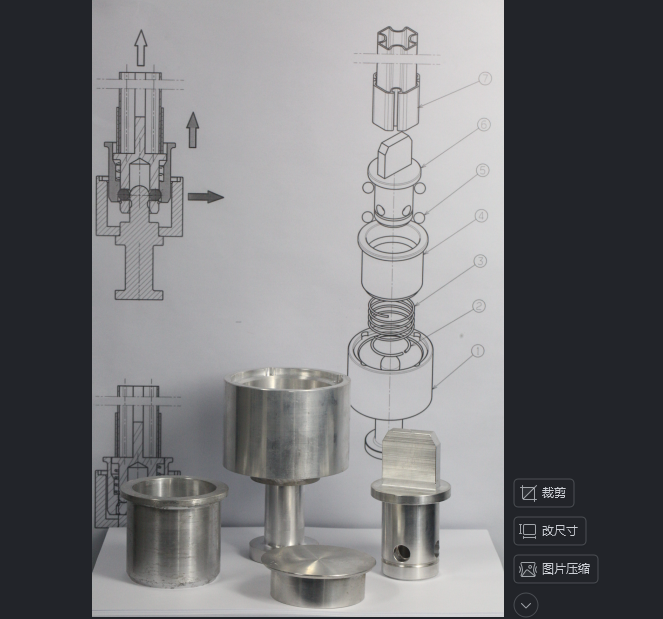
- Hardware: metal parts, mechanical assemblies, and custom components, covering cutting, bending, drilling, welding, surface treatments, and final assembly.
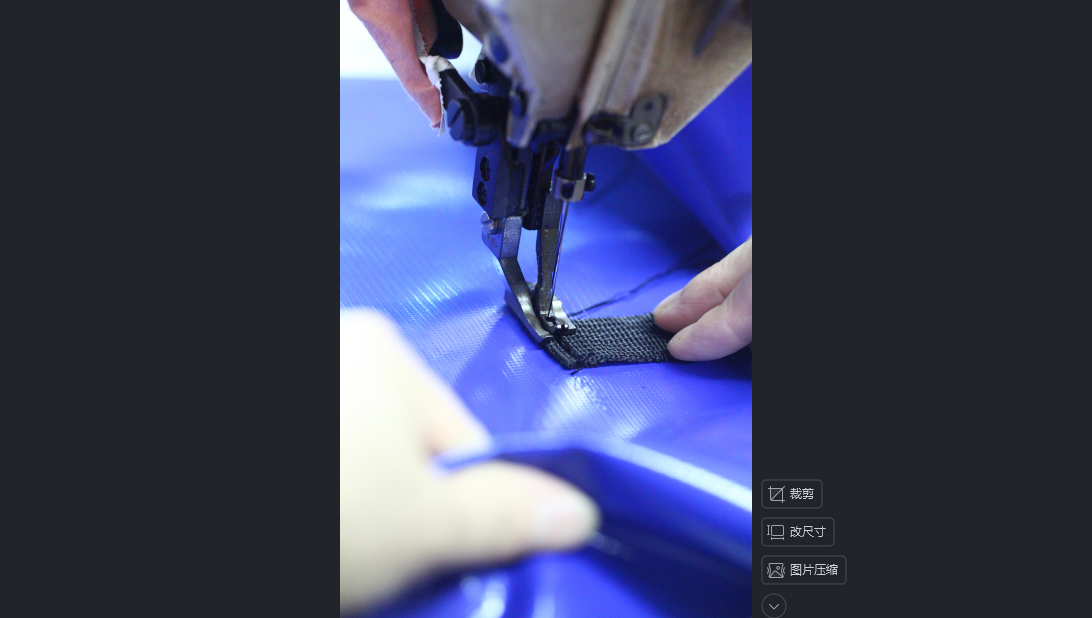
- Sewn goods and technical textiles: soft goods, covers, bags, outdoor and sports equipment, including custom fabric development, custom printing, and sewing. Processing capabilities include PVC and TPU film material.
- Inflatables: advertising structures, promotional products, and sports and event equipment, including inflatable welding and air-tightness control.
This combination is directly relevant to custom outdoor product procurement because many items do not fit into a single discipline. A custom camping shelter can be a sewn textile product, a metal-framed structure, or an inflatable shelter depending on the design. A manufacturer with all three capabilities can adapt the production process to the product concept rather than forcing every concept into one material technology.
OEM and ODM service models
StarCanopy offers both OEM and ODM production models.
OEM model: When buyers provide samples, drawings, specifications, and production requirements, StarCanopy produces strictly to those requirements. The company has years of manufacturing experience in fabric and metal products. For fabric products, it provides custom fabric development, customized printing, and sewing, plus processing for PVC and TPU film. For metal hardware, it provides integrated production covering cutting, bending, drilling, welding, surface treatments, and assembly.
ODM model: When clients provide only a product concept, application scenario, and performance standards, StarCanopy independently completes engineering design, material development, pattern making, lab testing, prototyping, and mass production delivery. This means a buyer with a concept sketch and a performance target can still move to production without building an in-house engineering team.
For OEM buyers, the practical implication is that capability depth is not limited to one production mode. The same manufacturer can work from detailed technical drawings or from a concept brief, depending on the buyer’s internal product development maturity.
Product categories covered
StarCanopy’s custom outdoor product range includes outdoor umbrellas, covers, shelters, inflatable products, and outdoor chairs.
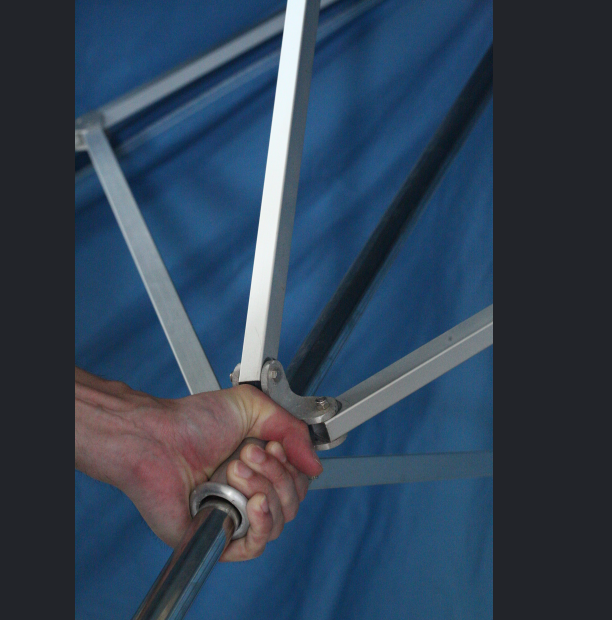
- Outdoor umbrellas: model UM-01, with fully customized size and aluminium plus polyester fabric construction, used in outdoor gardens, restaurants, and cafes.
- Car shelters: model CT-01, with customized size and polyester fabric, used for camping cars.
- Outdoor shelters: model ST-01, with fully customizable size and PU coated polyester waterproof fabric, supported by aluminum or steel frames, used for outdoor sport and racing.
- Boat shelters: model BS-01, with fully customized size and waterproof polyester or PVC fabric, used for transportation and temporary shelter.
- Inflatable container shelters: model CS-01, made from TPU and PVC with anti-UV properties, removable and inflatable, designed to fit between two containers.
- Inflatable football goals: model I-FB, fully customizable in size, made from TPU and PVC fabric, for outdoor sport.
- Inflatable cubes: model ITC01, fully customizable in size, made from TPU and PVC, used for advertising.
- Outdoor folding chairs: model C01, sized 586*557*910mm, with an aluminium frame, anti-UV PU fabric, foam back and seat, and a strong PVC carry bag.
These models are examples from StarCanopy’s product range; size, material, and packaging can be adapted for OEM buyers.
Step-by-step: How a custom outdoor product moves from concept to shipment
Understanding the production sequence helps buyers know what to expect and where to focus their attention. StarCanopy’s process typically follows this path:
1. Requirement definition
The buyer provides samples, drawings, specifications, production requirements, or simply a product concept with application scenarios and performance standards. At this stage, the manufacturer clarifies material expectations, size, function, and target market conditions.
2. Engineering design and material development
For ODM projects, StarCanopy completes engineering design and material development. For OEM projects, the manufacturer follows the client’s drawings and specifications. Fabric selection can include custom fabric development for sewn goods, plus PVC or TPU film processing for inflatable products.
3. Pattern making and prototyping
Pattern making translates the design into production-ready shapes. Prototyping allows the buyer to validate size, appearance, materials, and usability before mass production. For inflatable products, air-tightness and welding quality are validated at this stage.
4. Lab testing
ODM projects include lab testing as part of the development cycle. Testing is used to confirm that materials and assembled products meet the agreed performance standards before production is scaled.
5. Mass production
Once the prototype is approved, mass production begins. Monthly capacity is approximately 1000 units for OEM production, with a minimum order quantity of 1 unit. Typical lead time for small quantities is 1–2 weeks.
6. 100% pre-shipment inspection
Before shipment, every unit receives a full inspection, including air tightness, material tensile test, size verification, and appearance check. This gate is especially important for inflatable and sewn outdoor products, where leaks, seam quality, or dimensional drift can turn into field failures.
7. Shipment and after-sales support
Delivery terms include FOB, EXW, or CIF depending on the agreement. Payment is typically 50% deposit and 50% balance before shipment. After-sales support is provided remotely.
Capability evaluation framework for OEM buyers
When comparing custom outdoor product manufacturers, buyers can use the following capability questions. This framework is designed around the actual risks in outdoor recreation OEM sourcing.
| Evaluation dimension | What to verify | Why it matters for custom outdoor products |
|---|---|---|
| Material scope | Can the factory work with fabric, metal, PVC, and TPU? | Many custom outdoor products combine multiple material types; a limited material scope forces multi-supplier coordination. |
| Production model | Does the factory offer both OEM and ODM? | OEM fits buyers with detailed specifications; ODM fits buyers who need engineering support from a concept. |
| Prototyping capability | Does the factory handle pattern making, prototyping, and lab testing internally? | In-house development shortens iteration cycles and reduces communication loss. |
| Quality control | Does the factory inspect 100% of units before shipment? | Recreation products face weather, UV, and repeated use; random inspection may miss leak or seam defects. |
| MOQ and lead time | Does the MOQ match your pilot and scale-up needs? | Low MOQ and short lead times reduce inventory risk for seasonal and event-driven products. |
| Communication | Can the buyer communicate directly with decision-makers in English or French? | Miscommunication in technical textile or inflatable specifications is a common source of project delay. |
| Export experience | Does the factory regularly ship to your target markets? | Market-specific requirements and documentation are easier when the factory already exports to those regions. |
A manufacturer that scores well on material scope, production model, and pre-shipment inspection can typically cover the full capability chain for custom outdoor products. A manufacturer that only sews fabric may be adequate for simple covers but will struggle with hybrid products such as an inflatable container shelter or a metal-framed outdoor shelter.
Use cases: What StarCanopy’s capability looks like in real OEM projects
StarCanopy’s OEM and ODM projects in the recreation supply category cover different product types, markets, and scale levels. The following examples show how capability translates into delivered results.
Outdoor umbrella OEM in France
An outdoor umbrella OEM client in France used 500 units of product 5274 (Outdoor Umbrella, model UM-01). The project ran over a 2-year period with ongoing usage. The key highlights were easy setup and resistance to breakage. Customer feedback reported that the product worked well under all-season outdoor use, and the project achieved zero mass quality complaints within 2 years.
Outdoor chair OEM in France
An outdoor chair OEM client in France used 1000 units of product 4910 (folding outdoor chair, model C01) for seating. The project was completed within 2 years. Key highlights included portability, premium appearance, light weight, and resistance to breakage. The product achieved zero mass quality complaints within 2 years of all-season outdoor use.
Inflatable container shelter between two shipping containers in France
An inflatable product OEM client in France used 2 units of product 5626 (Inflatable Container Shelter, model CS-01). The shelter filled the gap between two shipping containers, providing a temporary activity and work shelter for logistics staff rest, goods sorting, and outdoor commercial events. The project achieved stable operation over a 1-year period. The key highlight was a flexible and portable design suitable for hosting activities.
Inflatable football goal for a sports goods retailer in France
A sports goods retailer and sports event OEM brand in France used 1 unit of product 5276 (inflatable football goal, model I-FB) for football games. The customer reported full satisfaction with air tightness and durability, with no air leakage during long-term outdoor training. The product is inflatable, easy to transport, and simple to set up and pack.
Custom boat shelter cover in China
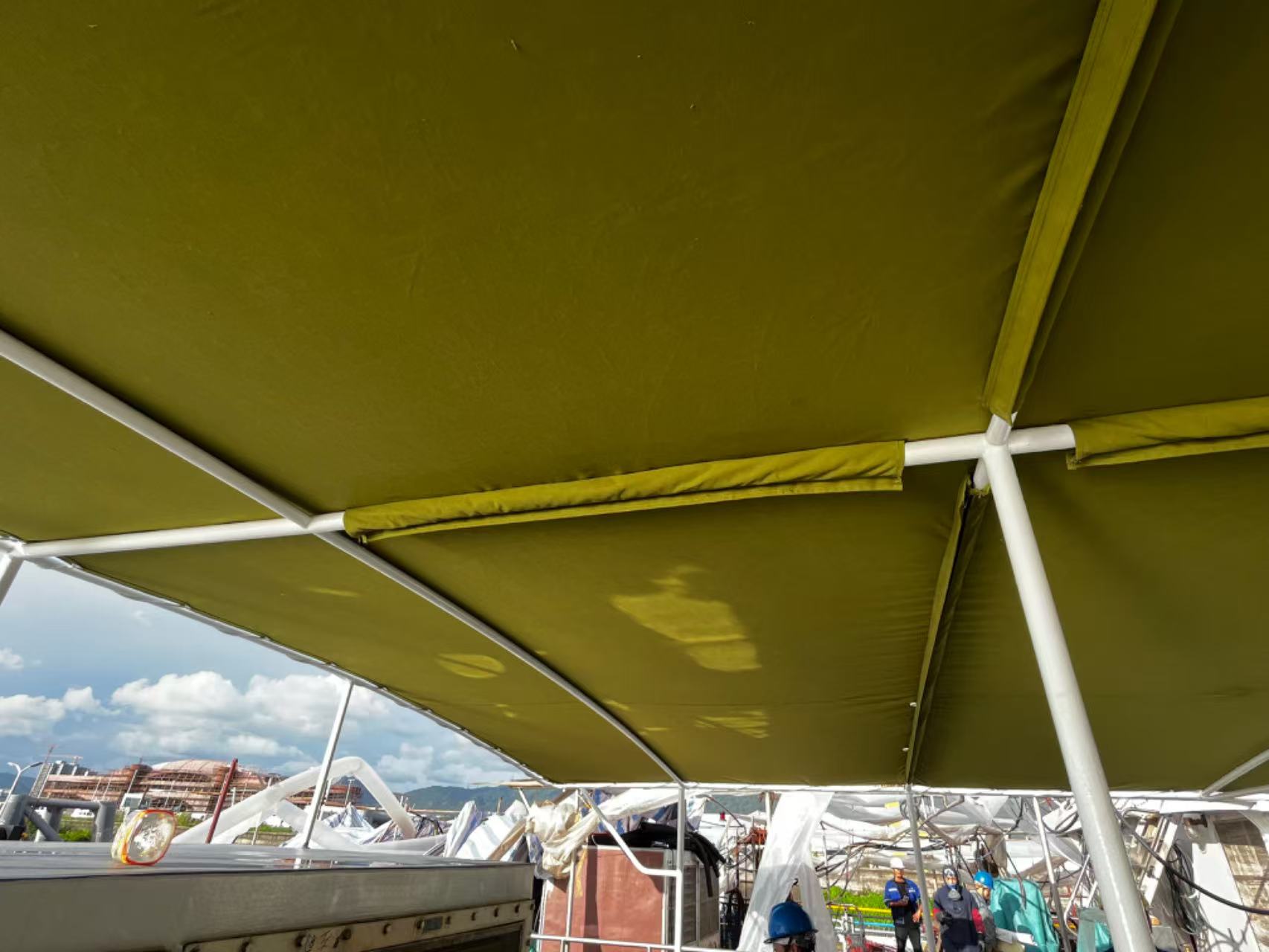
A boat shelter cover OEM client in China used 10 units of product 5625 (Boat shelter, model BS-01) as roof covers for boat shelters. The product was fully custom in size and shape, with anti-UV, anti-mold, waterproof, and tear-resistant properties. Under humid waterfront conditions, the cover achieved good waterproof and anti-aging performance, with no tearing or water seepage within the service cycle.
Comparison: OEM capability focus in the custom outdoor product space
For buyers evaluating custom outdoor product manufacturers, comparison should focus on capability and operating model, not just price. The table below positions StarCanopy’s approach against well-known US-based brands in related cover categories. This comparison addresses the question of how a China-based OEM/ODM manufacturer differs from established cover brands.
| Manufacturer | Primary focus | Production model | Relevance to OEM buyers |
|---|---|---|---|
| StarCanopy | Multi-material custom outdoor products: covers, shelters, umbrellas, inflatables, and outdoor furniture | OEM and ODM, with engineering, prototyping, and 100% pre-shipment inspection | Relevant for recreation buyers seeking full-chain production from concept to delivery in China, with Western-facing management. |
| Covercraft Industries | Vehicle and boat covers | Branded retail and OEM supply for protection covers | Strong in the US vehicle and boat cover market; buyers seeking a US brand may use Covercraft, which operates primarily from its own branded product lines. |
| Taylor Made (Lippert) | Boat and marine products, including covers | Marine OEM supply through Lippert’s product portfolio | Relevant for marine OEM buyers, particularly for boat covers and related marine accessories. |
| Carver Industries | Custom covers and outdoor protective textiles | OEM and private label cover manufacturing | Relevant for buyers looking for a North American cover manufacturer with established OEM processes. |
This comparison does not claim that one manufacturer is better than another. It is intended to help buyers understand where different partners sit in the supply chain and which operating model fits their sourcing strategy.
Limitations and buyer considerations
No manufacturer is the right fit for every project. StarCanopy’s capability model has characteristics that buyers should consider before engagement.
- Scale: Monthly OEM capacity is approximately 1000 units. This is well-suited to mid-sized production runs, pilot orders, and ongoing programs, but it may not match the capacity of a very large high-volume producer.
- Quality control approach: StarCanopy uses 100% full inspection before shipment, including air tightness, material tensile test, size verification, and appearance check. This is a rigorous gate, but buyers should still agree on defect criteria and sampling methods at the contract stage.
- Geography: StarCanopy is based in Zhuhai, China. Buyers who require domestic US manufacturing as a legal or policy requirement would not be served by this model. Buyers who need a China-based production partner with Western-facing management and direct access to the Guangdong industrial ecosystem would be.
- Ownership and communication: As a French-owned and managed company, StarCanopy emphasizes English and French-speaking management. For buyers whose teams operate only in other languages, communication support should be confirmed early.
Cost and commercial terms overview
Commercial terms are part of capability. A manufacturer’s willingness to support low MOQ, clear payment structure, and defined delivery terms affects how easily a buyer can pilot and scale.
| Commercial item | StarCanopy terms |
|---|---|
| Minimum order quantity | 1 unit; customization available to meet customer needs |
| Lead time | 1–2 weeks for small quantities; 7–30 days for ODM production depending on scope |
| Monthly capacity | 1000 units (OEM); 1000 pieces (ODM) |
| Delivery terms | FOB, EXW, CIF |
| Payment | 50% deposit, 50% balance |
| Quality acceptance | Pre-shipment test; 100% full inspection before shipment |
FAQ
1. Can StarCanopy manufacture a fully custom outdoor product from just a concept?
Yes. StarCanopy offers an ODM production model in which clients provide only product concepts, application scenarios, and performance standards. The manufacturer independently completes engineering design, material development, pattern making, lab testing, prototyping, and mass production delivery. For OEM buyers who already have samples, drawings, and specifications, StarCanopy also produces strictly to those requirements. This means a buyer can enter the process at either the concept stage or the specification stage, depending on how mature their product definition is.
2. What product types can StarCanopy customize in one facility?
StarCanopy operates three production disciplines in one facility: hardware and metal assemblies; sewn goods and technical textiles; and inflatable products. The custom outdoor product range includes outdoor umbrellas, car shelters, outdoor shelters, boat shelters, inflatable container shelters, inflatable football goals, inflatable cubes, and outdoor folding chairs. Because the factory handles metal, fabric, PVC, and TPU processing internally, buyers can source hybrid products without splitting production across multiple suppliers.
3. What is the minimum order quantity and lead time for OEM production?
The minimum order quantity for OEM production is 1 unit. Typical lead time is 1–2 weeks for small quantities. Monthly production capacity is approximately 1000 units. These terms allow buyers to run pilot orders, validate products in the market, and then scale up without committing to a large initial volume.
4. Does StarCanopy have a sample or prototype policy for custom outdoor products?
Prototyping is an integral step in both OEM and ODM projects. For ODM projects, StarCanopy completes engineering design, pattern making, prototyping, and lab testing before mass production. For OEM projects, the manufacturer follows the client’s samples and drawings. The pre-shipment inspection program, which covers air tightness, material tensile testing, size verification, and appearance check, applies to every unit before shipment. Buyers who need a prototype should expect the manufacturer to validate the design before proceeding to mass production.
5. How does StarCanopy control quality for inflatable and sewn outdoor products?
StarCanopy performs 100% full inspection before shipment, including air tightness, material tensile test, size verification, and appearance check. This matters for inflatable products, where air tightness determines whether the product remains functional through a full event or training season, and for sewn covers and shelters, where seam quality and dimensional accuracy affect fit and lifespan. In a documented inflatable football goal project, the customer reported no air leakage during long-term outdoor training. A boat shelter cover project also reported no tearing or water seepage within the service cycle.
6. What export markets and commercial terms does StarCanopy support?
StarCanopy exports 100% of its production and its main markets are the EU, USA, Canada, Japan, Australia, and New Zealand. Delivery terms include FOB, EXW, and CIF. Payment terms are 50% deposit and 50% balance. After-sales support is provided remotely. As a French-owned and managed company based in Zhuhai, China, StarCanopy provides English and French-speaking management as a communication layer for Western buyers. The company’s brochure is available for download at https://cdn.socialarks.com/sbsp/24961/common/2026/0618/Starcanopy.pdf.
Conclusion: Matching capability to the custom outdoor product decision
Custom outdoor product sourcing is not a single-purchase decision; it is a capability decision. Buyers need to determine whether a manufacturer can move a product from concept to engineering, prototyping, testing, mass production, and pre-shipment inspection without losing quality or clarity. StarCanopy’s model is built around multi-material production under one roof, OEM and ODM service options, low MOQ, and 100% inspection before shipment. These characteristics are particularly relevant for recreation buyers in the EU, USA, Canada, Japan, Australia, and New Zealand who want a China-based partner with Western-facing management.
When evaluating suppliers, compare the full capability chain, not just the product photo or the price quote. Ask how the factory handles material selection, engineering changes, air-tightness testing, and dimensional verification. Confirm whether the production model fits your stage of product development. And check whether the manufacturer can support the project through multiple seasons, not just through a single sample.
Next step for OEM and ODM buyers: If you are mapping a custom outdoor product project and want to discuss capability fit, request the StarCanopy company brochure or contact the team directly at contact@starcanopy.com. The brochure provides an overview of the factory, manufacturing capabilities, and product range to support your pre-sourcing evaluation.