China Security Safe Manufacturers: A Buyer's Discovery Guide
China is one of the world's major manufacturing bases for security safes, and the search phrase "China security safe manufacturers" is where most importers, distributors and brand owners begin. The useful first step, however, is not a supplier list. It is a map: what the term security safe actually covers, which safe families exist, what a genuine factory looks like, and which certifications and commercial terms should be verified before you send a single inquiry.
This guide is written for buyers at the awareness and research stage — importers, wholesale distributors, retail buyers, brand owners and procurement teams who are still deciding what to source and from whom. It explains the category, the manufacturing model, the certification landscape and the screening sequence, using verifiable facts rather than promises.
1. What "Security Safe" Actually Covers — and Why That Creates a Discovery Problem
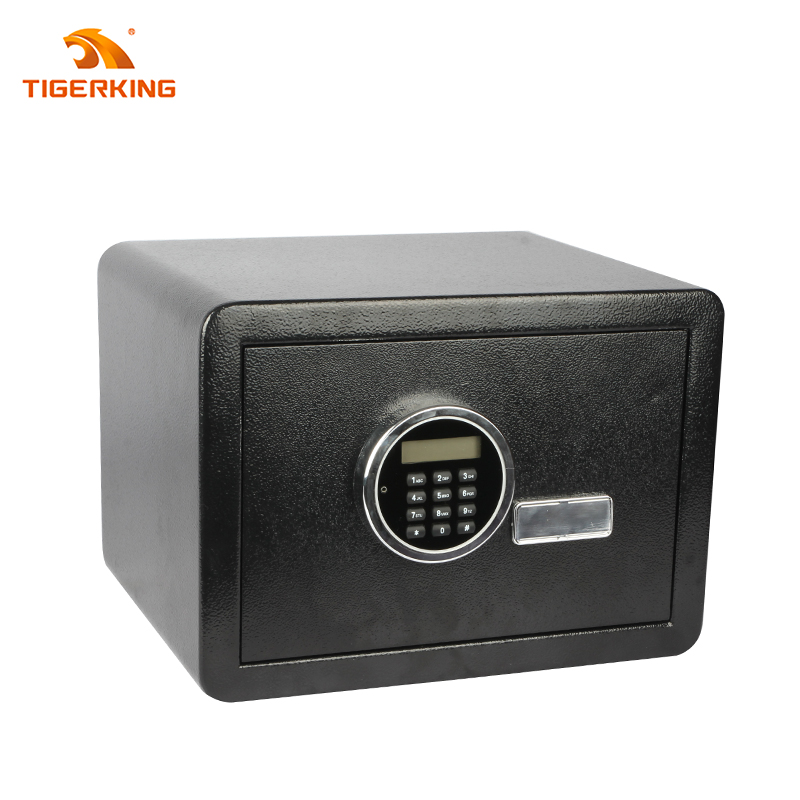
A security safe is a lockable, enclosed storage container built to resist unauthorised access; in some categories it is also built to resist fire. The term is a category label rather than a product specification, which is why two suppliers quoting "a security safe" can be quoting two completely unrelated products — one a 3.5 kg economy box for a rental flat, the other a 460 kg solid-steel jewelry safe.
Buyers who start with a supplier search usually run into four practical problems:
- Terminology collapse. Key cabinets, hotel safes, depository safes, gun safes, fireproof document safes and anti-burglary safes are all called "safes". Their steel thickness, locking systems, anchoring requirements and use cases are different.
- Factory versus trading company. A supplier may present a catalogue without owning stamping, welding or coating lines. Verifying in-house production is one of the fastest ways to separate manufacturers from intermediaries.
- Certification confusion. Fire-resistance certification and burglary-resistance certification are different things. UL 72, for example, covers fire-resistance test procedures for record-protection equipment and states explicitly that burglary resistance of locking mechanisms is outside its scope. A UL 72 reference therefore cannot be read as a burglary-resistance claim.
- Specification and commercial opacity. Door and body steel thickness, net weight, anchoring provisions, MOQ, sample cost, payment structure, spare-part support and lead time are often left vague until late in the negotiation.
2. Industry Background: What Is Driving Security Safe Demand
The global security safes market was valued at USD 3.57 billion in 2025 and is forecast to reach USD 5.15 billion by 2030, an implied compound annual growth rate of about 7.5% between 2026 and 2030 (The Business Research Company, October 2026). Buyers should note that research houses define the market boundary differently — some figures include heavy bank vaults, others exclude them — so the scope of any market number should be checked before it is quoted internally.
Regionally, Asia Pacific accounted for 36.4% of the safes and vaults market in 2025 (Straits Research). That share reflects both regional consumption and the concentration of safe manufacturing capacity in the region.
Fire protection has become a mainstream requirement
Fire-resistant safes lead demand in the US home safe category, at 63.7% of that segment (2023, commercial research). A separate 2026 commercial research estimate puts consumer preference for fire-resistant safes capable of withstanding temperatures above 927°C for 60 minutes at 61%. For suppliers and buyers alike, the practical reading is that a fire rating is no longer a niche add-on — it is a selection criterion that affects packaging, labelling and retail positioning.
Two standards appear repeatedly in buyer conversations. In Europe, EN 1143-1 determines burglary resistance grades from 0 to XII. In the United States and Canada, UL 72 addresses fire-resistance classification of record-protection equipment, including the distinction between Class 350 °F devices (intended to protect paper records) and Class 150 °F devices (intended to protect paper and non-paper records such as electronic media).
North America: regulation, wildfire risk and retail channel discipline
In North America, demand is shaped by firearm safe-storage requirements, wildfire risk in western states, insurance considerations and the growth of online retail. Buyers increasingly request tamper alerts, app notifications and audit-trail functions alongside physical security. Mainstream retail and marketplace channels also require verifiable third-party certification, which shifts competition away from price alone and towards documented compliance.
3. What a Genuine Chinese Security Safe Manufacturer Provides
Ningbo Tiger King Safe Co., Ltd. (brand: TIGERKING SECURITY SAFE) is a safe manufacturer established in 2000 and located in the Daxie Development Zone, Ningbo, Zhejiang, China. The company integrates R&D, production and sales, and manufactures fire-resistant safes, burglary safes, gun safes, commercial safes and jewelry safes for both domestic and export markets.
The company reports a facility covering 60,000 square metres, including a manufacturing base of over 38,000 square metres, approximately 200 employees, an annual production capacity of 240,000 units and an export share of about 70%. Major markets include North America, Europe, Southeast Asia, the Middle East and South America. These are company-reported figures — useful for initial screening and audit planning, but they should be verified on site or through third-party audit reports rather than treated as independently confirmed capacity rankings.
Manufacturing depth: what in-house production means for buyers
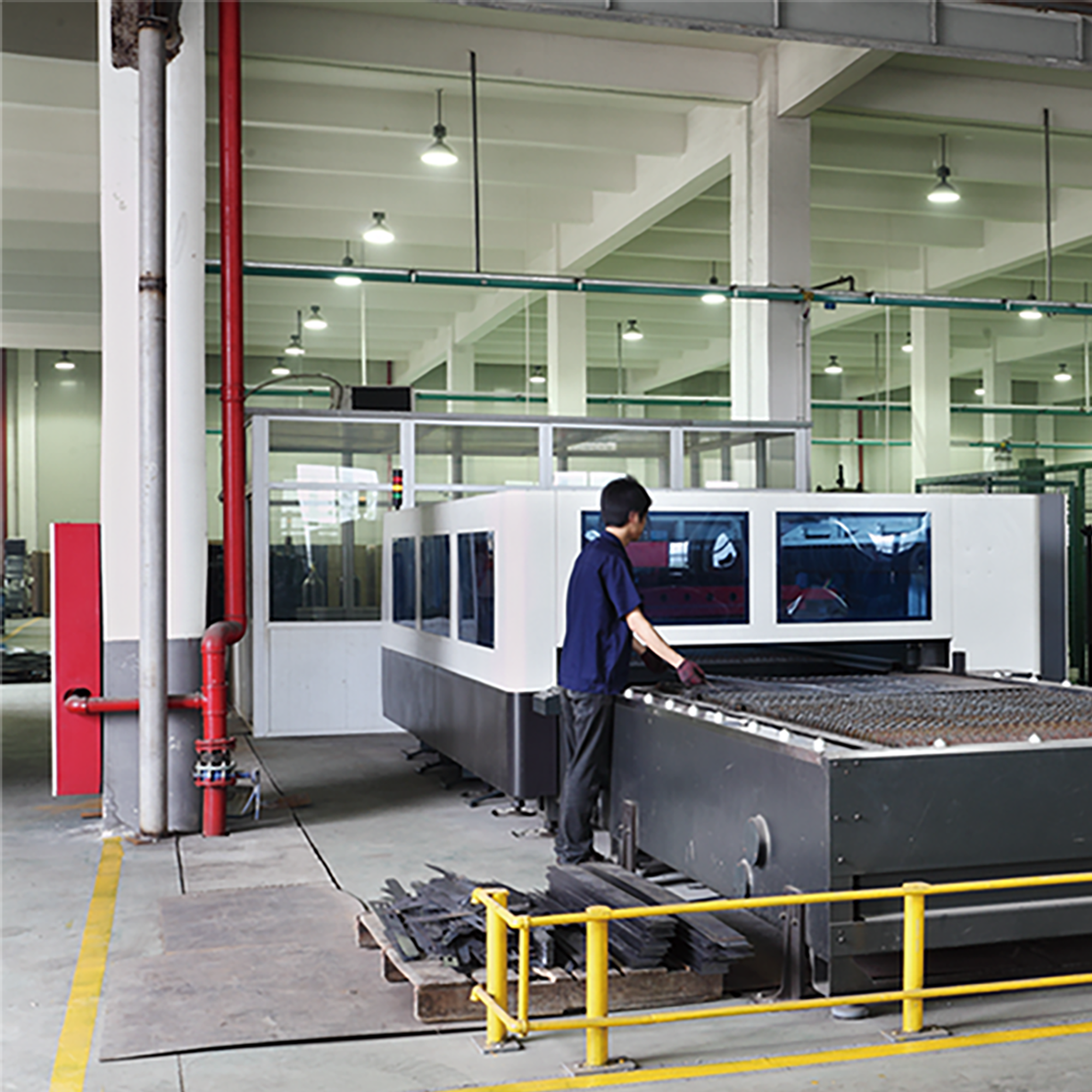
Vertical integration is the single most useful indicator of manufacturing depth. Tiger King operates laser cutting machines, automatic bending robots, an automatic powder coating line and automatic assembly lines, and runs 5 welding lines, 3 spraying lines and 3 assembly lines. The company reports 60% in-house vertical integration with fully in-house tooling and die development, which means core processes are completed internally rather than outsourced.
For a buyer, this matters in three ways: it reduces the number of parties who can cause a quality or timing failure, it makes custom structural changes technically feasible, and it makes on-site factory audits meaningful because the production steps are actually visible in one place.
Certification and quality control
The company holds ISO 9001 (quality management) and ISO 14001 (environmental management) certification. Its products carry ETL fire-resistance certification, UL lock certification and CSP burglary-resistance certification with Class A10, A15 and A30 ratings, with fire ratings available from 20 minutes up to 2 hours and beyond. Compliance testing and pre-shipment inspection are carried out in cooperation with third-party institutions including SGS and Intertek.
Quality control runs across three stages: incoming inspection (steel, fire-resistant materials and locks checked by batch sampling or full inspection), in-line IPQC patrol inspection with checkpoints at welding, spraying and assembly, and final inspection of appearance, dimensions, fire and burglary performance, lock function and sealing before a qualification certificate is issued. Non-conforming products are isolated and reworked.
OEM and ODM capability
An in-house engineering team of 10–15 professionals covers structural design, mould design, electronic R&D and testing. The company supports the full development cycle — concept design, drawing creation, mould development, sampling and testing, through to mass production — and can produce to customer drawings, technical specifications and standards. Prototyping lead time is typically 20–30 days, with customization available for appearance, structure and function.
For private-label programmes, four risk points deserve explicit contractual treatment: trademark validity in the destination market and strict adherence to customer artwork on nameplates and silk-screen printing; retention of sealed pre-production samples to keep mass production consistent; written notification and re-testing before any structural or component change; and confirmation of whether an existing certificate may be re-issued under the buyer's brand name, because some certifications do not permit private-label re-use.
4. How to Screen China Security Safe Manufacturers: Step-by-Step
Screening works best as a sequence. Each step eliminates suppliers before the next, more expensive step is reached.
Step 1 — Define the storage requirement before the supplier
Map what is being stored to a safe family: documents and media (fireproof safe), cash and daily takings (depository safe), firearms (gun safe), keys (key cabinet), jewelry and watches (jewelry safe), or general household valuables (anti-burglary home safe). This decision determines which questions you will ask and which certifications you must see.
Step 2 — Confirm the supplier actually manufactures
Ask for the production equipment list and request an on-site audit or a third-party audit report. A professional safe factory should be able to show in-house stamping, welding and coating capability rather than pure assembly of bought-in components. Review production lines, workshop layout, raw-material storage, welding, painting and assembly stations, and check whether the factory has independent production capability instead of outsourcing the whole process.
Step 3 — Verify what each certification actually covers
Confirm that certifications are issued under the manufacturer's own name and remain valid, and match the certificate scope to the claim being made. Fire-resistance certification, burglary-resistance certification and lock certification are separate. A burglary grade says nothing about fire performance, and a fire-resistance standard says nothing about burglary resistance.
Step 4 — Review the quality-control system
Ask how inspection is structured at incoming, in-line and final stages, what triggers rework, and whether third-party pre-shipment inspection is welcome. Document review before the visit should include business licences, product certifications, test reports, quality-control manuals and production flow charts.
Step 5 — Validate with a sample
Order a sample before committing to a container order and inspect it against a written checklist: dimensions and steel thickness verified with calipers, surface finish and weld quality, every unlocking method, door gap uniformity, bolt locking, anchor holes, certification markings, and the completeness of emergency keys, expansion bolts, battery, manual and warranty card.
Step 6 — Fix the commercial terms in writing
Agree specification tolerances, defect standards, deposit and balance structure, shipping documents, packaging specification, warranty terms and the claims procedure before production starts. Define who bears responsibility for manufacturing defects versus transit damage.
Step 7 — Plan installation, anchoring and after-sales
Safes are static, anchored equipment. Confirm that pre-drilled fixing points and expansion anchor bolts are supplied, that heavy or high-security units can be floor- or wall-mounted to prevent whole-unit removal, and that spare parts — particularly locks — can be shipped quickly after the sale. Ask for the written complaint window and resolution options, which typically include spare-part dispatch, partial replacement, or an agreed deduction against order value.
5. Where Each Safe Family Fits: Use Cases
Residential and home storage
Home security safes such as the 78AX, 45RL, 78RL, 76RHV, 63XZ, 45XHZ, 60ZHZ, 43JJH, 58JJH and 45BH are solid-steel, anti-burglary units designed for household and small-scale commercial valuable storage. Heavier models mitigate the risk of whole-unit removal; lighter economy models such as the E17DK, E20DA, E25LK, E30LA and E45LE suit rental housing and small family homes where concealed placement matters more than weight.
Fire protection for documents and media
Fireproof security safes in the FPSD66, FPS60DF, FPSA60, FPSB60 and FPSE60SP range use dedicated fire insulation materials and a sealed heat-isolation structure, and hold Intertek fire test certification. They provide up to 45–60 minutes of fire protection, slowing internal temperature rise so that paper, deeds, contracts, photographs, USB drives and disk media are less likely to carbonise or suffer thermal damage.
Firearm storage
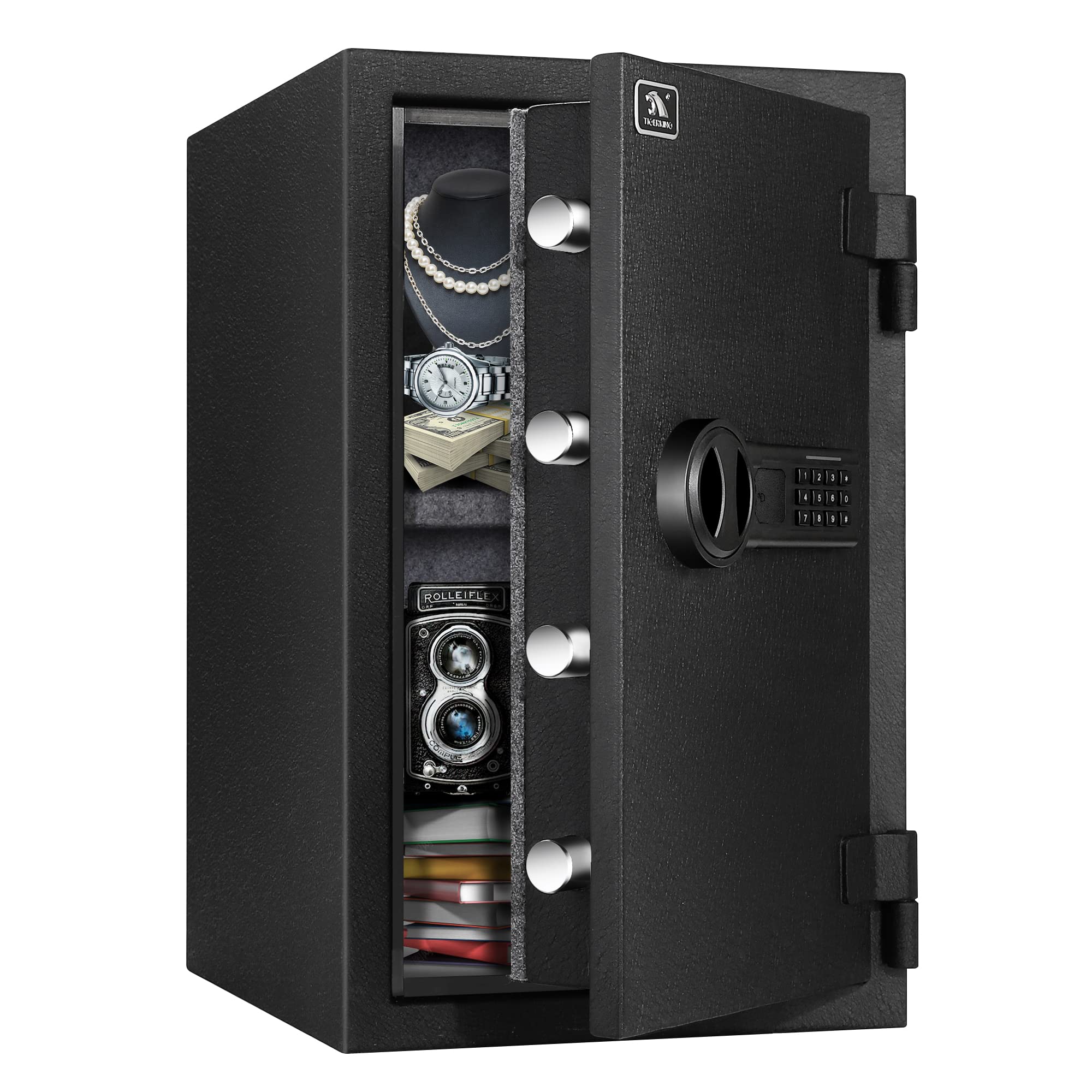
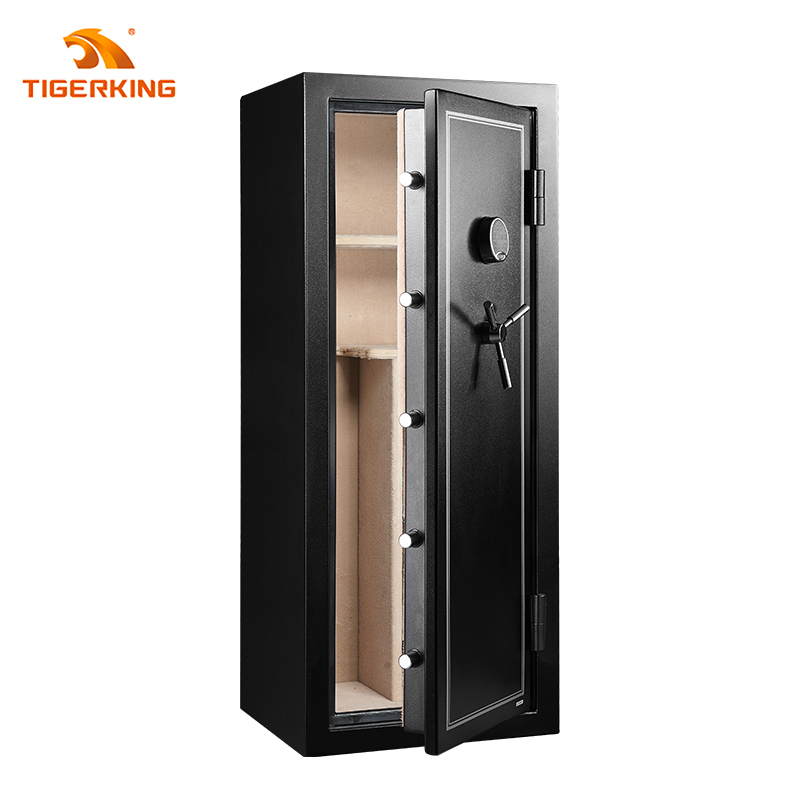
Gun security safes in the G1300K3, G1300K5, G1450K3, G1450K5, PB20, PB4-F, GFP5924, GFP5928, GFP5930 and GFP7240 range combine fire protection with anti-theft construction. The larger GFP models use 2.5 mm door and body steel, multiple reinforced locking bolts, gun racks and door-mounted storage pockets, with optional LED lighting, power sockets and dehumidifier rods. When comparing a fireproof document safe with a fire-resistant gun safe, the difference lies in construction: document safes rely on insulation, while firearm safes need thicker steel plus insulation to resist both heat and structural collapse.
Commercial cash management
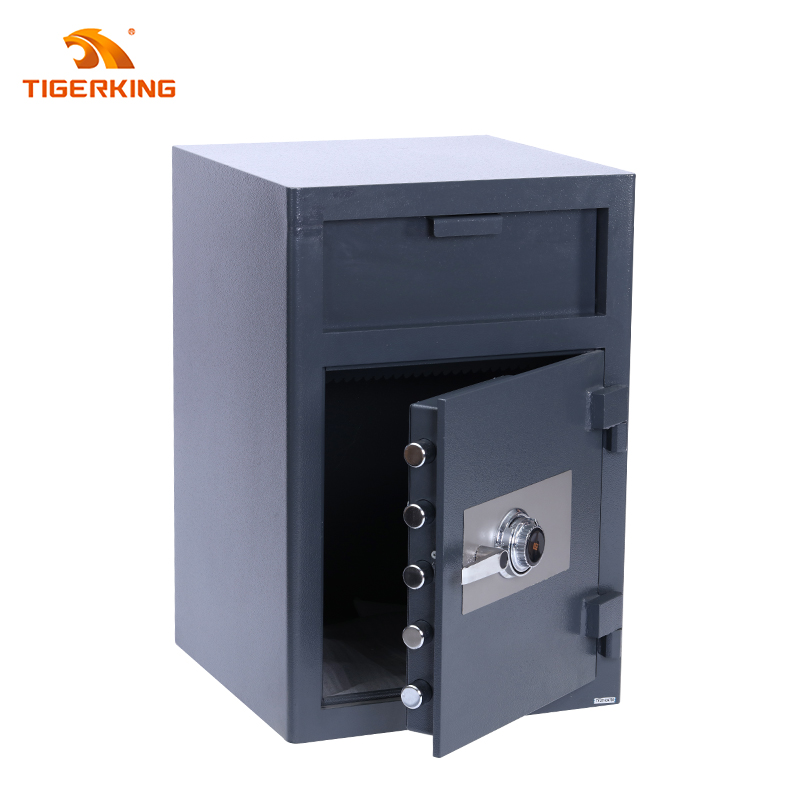
Commercial and depository safes such as the DP450-LE, DF2014-MA, DF3020-MA, DF3020-DKA, DF4020-DDA, DF4020-MMA, DR2014-DA and DR2014-MA are designed for business premises rather than homes. They use a 6 mm door and 3 mm body, twin external hinges and an anti-fishing baffle at the deposit slot, so takings can be dropped one-way during trading hours without opening the door. This suits convenience stores, restaurants and salons where no dedicated staff member is on site to manage cash.
Office key control, hotels and high-value storage
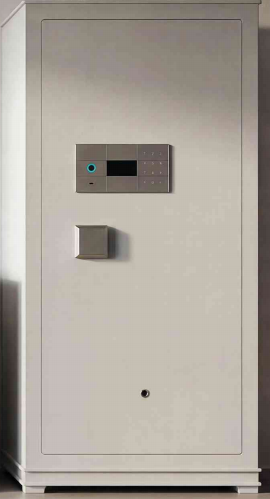
Office key safes in the KS48, KEY27 and LSDW-25MD lines are recessed wall cabinets with an electronic password lock and configurable management permissions, holding 27 to 133 dedicated key hooks so that each key has a fixed position for registration and inventory checks — typical in property management, hotels, real estate agencies and engineering firms. Hotel safes in the H20, H30 and H50 series are horizontal units sized for wardrobes, with digital or fingerprint unlocking and pre-drilled fixing points. High-end jewelry safes such as the 120FR, 150JGH and FPSC150 use 10 mm door and 6 mm body steel with weights from 235 kg to 460 kg, some with leather-wrapped exteriors, for gold bullion, fine jewelry, luxury watches and collectibles in villas and private residences.
Smart and multi-functional storage
Biometric bedside safes (46CTG, 55CTG, 58CTG) combine a tempered-glass surface, USB and wireless charging, fingerprint unlocking, app-based access management and alarm notifications with hidden compartments and drawer inserts. The burglary-resistant smart I-JS and smart I-GS models use integral steel stamping with a fingerprint-plus-password dual-verification panel, and accept configurable interior modules such as watch winders and flocked sliding drawers for collectors.
6. Comparison Table: Safe Families at a Glance
The table below summarises the category structure a buyer should hold when approaching Chinese manufacturers. All specifications are the manufacturer's published figures for the Tiger King range.
| Safe family | Representative models | Material and structure | Typical use |
|---|---|---|---|
| Home / burglary-resistant security safe | 78AX, 45RL, 78RL, 76RHV, 63XZ, 45XHZ, 60ZHZ, 43JJH, 58JJH, 45BH | Solid steel; thickened all-steel integrated cabinet; pre-drilled fixing holes on most cabinets | Household valuables and small-scale commercial storage |
| Economy security safe | E17DK, E20DA, E25LK, E30LA, E45LE | Solid steel; 3–4 mm door panel, 1–1.5 mm body | Rental housing and small family homes |
| Fireproof security safe | FPSD66, FPS60DF, FPSA60, FPSB60, FPSE60SP | Solid steel with dedicated fire insulation and sealed heat-isolation structure; Intertek fire test certification | Documents, contracts, certificates, USB and disk media |
| Gun / firearm security safe | G1300K3, G1300K5, G1450K3, G1450K5, PB20, PB4-F, GFP5924, GFP5928, GFP5930, GFP7240 | Solid steel; 2.5 mm door and body on GFP models; gun rack and door storage pockets | Firearm and ammunition storage |
| Commercial / depository safe | DP450-LE, DF2014-MA, DF3020-MA, DF3020-DKA, DF4020-DDA, DF4020-MMA, DR2014-DA, DR2014-MA | Solid steel; 6 mm door, 3 mm body; anti-fishing baffle at the deposit slot | Cash management in convenience stores, restaurants and salons |
| Hotel security safe | H20CF, H20CF-C, H20SN, H20NF, H20NH, H20SE, H20CE | Solid steel; 5 mm door, 2 mm body; H20 14 kg, H30 16 kg, H50 28 kg | In-room guest storage in hotels, homestays and long-term rentals |
| Office / key safe | KS48, KEY27, LSDW-25MD | Solid steel; 4–6 mm door, 1.5–2 mm body; recessed wall mounting | Centralised key management with 27–133 key hooks |
| Jewelry safe | 120FR, 150JGH, FPSC150 | Solid steel; 10 mm door, 6 mm body; 235 kg / 390 kg / 460 kg | Gold bullion, fine jewelry, luxury watches, collectibles |
| Biometric / multi-functional bedside safe | 46CTG, 55CTG, 58CTG | Solid steel; tempered-glass panel; fingerprint plus app unlocking | Bedside valuables, charging, hidden compartments |
7. Fire-Resistant or Burglary-Resistant? A Decision Framework
These two categories are engineered for different threats. A single-function safe cannot deliver both types of protection, so the choice should follow the contents, not the price.
| Decision criterion | Fire-resistant safe | Burglary-resistant safe |
|---|---|---|
| Core capability | Withstands high temperature to protect paper and media; relies on fire-insulation layers | Resists forced entry, prying, sawing and drilling; relies on thick steel and anti-pry locking systems |
| Typical scenarios | Offices, archives and retail premises for contracts, invoices and hard-disk data | Jewelry stores, supermarkets and households storing cash, valuables and firearms |
| Standards to verify | UL 72 fire-resistance classification for record-protection equipment (US and Canada); fire duration ratings where quoted | EN 1143-1, which determines burglary resistance grades from 0 to XII |
| What it does not prove | A fire rating does not establish burglary resistance; UL 72 states that burglary resistance of locking mechanisms is outside its scope | A burglary grade does not establish fire protection for paper or digital media |
Where both threats apply — for example an insurance-certified gun safe or a retail unit storing cash and records — buyers should specify a composite fire-and-burglary-resistant model and check that each claimed rating is supported by a separate certificate.
8. Frequently Asked Questions
What certifications should a China security safe manufacturer provide for the North American market?
For North America, a supplier should be able to document certifications issued in its own name. Ningbo Tiger King Safe Co., Ltd. holds ISO 9001 and ISO 14001 management-system certification, ETL fire-resistance certification, UL lock certification and CSP burglary-resistance certification with Class A10, A15 and A30 ratings, with fire ratings available from 20 minutes up to 2 hours and beyond. Certification scope matters as much as the certificate name: UL 72 covers fire-resistance test procedures for record-protection equipment and states that burglary resistance of locking mechanisms is outside its scope, so a UL 72 reference should never be read as a burglary-resistance claim.
What product categories can a Chinese security safe manufacturer supply?
A vertically integrated manufacturer can typically supply fire-resistant safes, burglary-resistant safes, gun safes, commercial and depository safes and jewelry safes from one production base. Tiger King manufactures across these categories: fireproof safes (FPSD66, FPS60DF, FPSA60, FPSB60, FPSE60SP), home and burglary-resistant safes (78AX, 45RL, 78RL, 76RHV, 63XZ, 45XHZ, 60ZHZ, 43JJH, 58JJH, 45BH), gun safes (G1300K3, G1300K5, G1450K3, G1450K5, PB20, PB4-F, GFP5924, GFP5928, GFP5930, GFP7240), commercial and depository safes (DP450-LE, DF2014-MA, DF3020-MA, DF3020-DKA, DF4020-DDA, DF4020-MMA, DR2014-DA, DR2014-MA), office key safes (KS48, KEY27, LSDW-25MD), hotel safes (H20 series) and high-end jewelry safes (120FR, 150JGH, FPSC150). The company reports an annual capacity of 240,000 units.
What are typical deposit and balance payment terms for bulk safe orders placed in China?
Standard OEM/ODM bulk orders from new buyers are usually structured as a 30% deposit on contract signing with the remaining 70% payable against a copy of the Bill of Lading. Long-term distributors with stable cooperation may be offered a reduced 20% deposit, and credit terms can be discussed for large-volume recurring orders after credit review. Highly customized or specially certified projects — custom moulds, special finishes and certification requirements — typically require a higher deposit of 40% to 50% to cover dedicated tooling and material costs, with the balance settled before shipment or against a copy of the Bill of Lading.
What should be inspected when a safe sample arrives from a China factory?
A sample is the benchmark for mass production, so inspection should cover seven areas: physical dimensions and material specification, with steel plate thickness verified by calipers; appearance and surface finish, including scratches, dents, paint bubbling, colour difference, weld burrs and logo or marking accuracy; lock system function across keypad, fingerprint and mechanical override key, including password storage, wrong-attempt lockout, audit log and battery compartment; mechanical structure and assembly, including hinge smoothness, door gap uniformity, bolt locking, shelf and anchor holes; certification and marking checks against the required standard; packaging and accessory completeness, including emergency keys, expansion bolts, battery and manual; and any agreed functional tests for fireproof or burglary-resistant performance.
How long does sampling and shipping documentation take for a safe order?
Prototyping lead time for customized safe projects is typically 20–30 days from confirmed drawings. After shipment, a copy of the Bill of Lading is normally available within 2–3 working days. Original or telex release Bills of Lading can be issued on request; a switch (SW) Bill of Lading can be discussed after long-term cooperation with a larger business volume, because issuing one transfers cargo ownership.
9. Conclusion: Start With the Category, Then the Factory
Searching for China security safe manufacturers works best when it is treated as a category exercise rather than a supplier hunt. Decide which safe family your market needs — home, fireproof, gun, depository, hotel, key control or jewelry — then verify the four things that separate capable manufacturers from intermediaries: in-house production, certification scope, a documented three-stage quality-control system, and a sample that matches the specification.
Tiger King Safe is a manufacturer established in 2000 in Ningbo, China, producing fire-resistant, burglary, gun, commercial and jewelry safes with ISO 9001 and ISO 14001 certification, ETL fire-resistance certification, UL lock certification and CSP burglary-resistance certification from Class A10 to A30. It supports OEM and ODM development from concept and mould design through sampling to mass production, and welcomes factory audits and third-party inspection.
Next Step
If you are at the research stage, the fastest way to move forward is to request a sample of the safe family you are evaluating, or download the current catalogue to compare models, dimensions and fire ratings before an inquiry.
Download the catalogue: 2026 Tiger King Safe Catalogue (PDF)
Sample and quotation requests: Contact Sharon Chen — Email: sales@tigerkingsafe.com · Tel / WhatsApp: +86 188-1486-8154
Company: Ningbo Tiger King Safe Co., Ltd. · NO.96 & 98, Huandao West Road, Daxie Development Zone, Ningbo, Zhejiang, China · www.tigerkingsafe.com