
Security Safe Bulk Orders: Solving Damage, Defects and Claims
Short answer: bulk security safe orders fail in three predictable places — the container, the production line, and the claim conversation that begins after the pallets are opened. Under the published B2B policy of Ningbo Tigerking Safe Co., Ltd., confirmed manufacturing defects are settled by the factory through free spare-part dispatch, partial replacement or a proportional deduction, transit damage is excluded from factory liability and must be claimed from the freight forwarder or cargo insurer, and all written quality complaints must be submitted within 30 days after the goods arrive at the port of destination.
What Goes Wrong in a Security Safe Bulk Order
A security safe is a heavy, all-steel, painted product that has to survive multiple handlings between the welding line and a distributor's warehouse. Because the same batch may contain units from 8 kg to 460 kg, a single packaging decision cannot cover the whole container. Damage and defect complaints therefore cluster around three distinct failure points: what happens inside the factory, what happens during loading and ocean transit, and what happens when nobody agreed in advance who pays for which outcome.
Failure point 1 — mass-production defects
Mass-production defects on safes are described in four documented categories:
- Process defects from welding, painting and assembly — flawed welds, blistering or peeling paint, uneven door gaps, and faulty lock assembly.
- Defective incoming components — quality flaws in locks, hinges and spare parts that enter the line before assembly.
- Handling damage during loading and unloading — dents, paint chipping and displaced parts caused by impact and extrusion.
- Damage from long-distance ocean transit where packaging protection is insufficient for the route.
The first two are manufacturing-side causes and sit with the factory. The last two are logistics-related causes and sit outside factory liability. That split is the single most important fact in any bulk safe claim discussion, because buyers frequently raise a container of mixed causes as one complaint and then lose the argument on the half that was never the supplier's.
Failure point 2 — transit damage
Transit damage on safes is usually cosmetic before it is structural: powder-coat scuffing, chipped edges on door frames, dented side panels, and displaced internal parts such as shelves, gun racks or anti-fishing baffles. Structural damage concentrates on hinges and door alignment, which is exactly where a 62 kg commercial deposit safe or a 215 kg gun safe carries the most handling energy.
Failure point 3 — unclear claim settlement
Claim disputes rarely start from a supplier refusing to act. They start from three missing items: no agreed liability line in the contract, no evidence package captured at the right moment, and no written complaint inside the validity window. Tigerking's stated process closes all three — a written complaint within 30 days of arrival at the destination port, supported by photos, videos and batch information, followed by a joint liability assessment.
Worked example of the liability split. A distributor receives 600 hotel safes and finds 40 units with paint blistering on the door panel and 25 units with dented side panels. The blistering is a painting-process defect and falls to the factory under the stated policy. The dents are impact damage from loading and unloading and fall to the freight forwarder or insurer. Filed as one claim, the case stalls; filed as two claims with separate evidence, both can be resolved inside the same 30-day window.
Why Security Safes Carry More Bulk-Order Risk Than Most Hardware
Three structural features of the product category make bulk safe orders harder to protect than general hardware shipments.
Weight spread inside one order. A single container programme can legitimately mix an 8 kg key safe, a 14 kg hotel safe, a 37 kg fireproof safe and a 460 kg jewelry safe. Each weight band needs different palletisation, strapping and internal blocking. Ningbo Tigerking Safe Co., Ltd. manufactures across exactly this spread — from economy home safes and office key safes to commercial deposit safes, gun safes, fireproof safes and high-end jewelry safes — which means mixed-SKU packing discipline, not product quality alone, decides the arrival condition.
Finish sensitivity. Safes are sold on appearance as much as on steel. Powder-coated surfaces, tempered glass panels, leather-wrapped exteriors and antique copper finishes all convert a minor impact into a visible defect that a retailer cannot put on a shelf. For a 460 kg jewelry safe with a leather-clad exterior, a scuff is a commercial write-off even though the cabinet is structurally sound.
Certification and labelling obligations. Bulk buyers do not only buy steel; they buy documentation. Fire-rated models carry ETL fire-resistance certification, locks carry UL lock certification, and burglary-resistant models carry CSP burglary-resistance certification at Class A10, A15 and A30, with fire ratings available from 20 minutes up to 2 hours and beyond. Retail channels add their own layer: retail-grade colour boxes, local-language manuals and compliant nameplates. If any of that documentation is wrong on arrival, the batch cannot be sold — a defect category that no inspection of the steel will catch.
Volume magnifies all three. Tigerking's own distributor and retail accounts run at 20,000 units per year for a US-based security storage distributor and a European and US supermarket and online home-goods retailer, and 10,000 units per year for commercial office equipment distributors and for high-end jewelry retail suppliers. At that scale, a 2% defect rate is not an inconvenience — it is a recurring line item that has to be designed out of the supply chain.
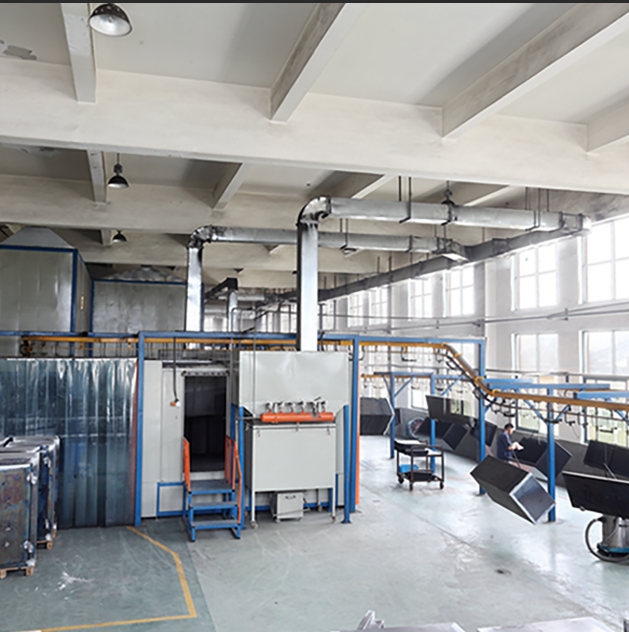
In-house production stages for bulk security safe orders: sheet metal, welding, coating and assembly are completed before final inspection and packing.
A Four-Layer Control Framework for Bulk Security Safe Orders
Damage and defect risk is controlled in four layers. Each layer produces a document or a photo set, and each layer must exist before the next one starts. Skipping a layer does not remove the risk; it simply transfers it to the buyer.
Layer 1 — Packaging and loading
Packaging is the only defence that operates while the container is out of everyone's sight. For safes, the practical controls are: corner protection on every door edge, foam or board separation between units so that steel does not strike steel, internal blocking for loose parts such as shelves, gun racks, gun bags and anti-fishing baffles, and palletisation matched to unit weight rather than to unit count. A 460 kg jewelry safe and a 14 kg hotel safe cannot share the same stacking logic.
Packaging strength is also a documented inspection item. Tigerking's own sample verification checklist requires the buyer to confirm packaging strength for export shipping and to verify that all accessories — emergency keys, expansion bolts, user manual, battery and warranty card — are present in the carton.
Layer 2 — In-process and pre-shipment quality control
Tigerking operates a full-process quality control system covering incoming, in-line and final inspection. Steel, fire-resistant materials and locks are inspected by batch sampling or full inspection; in-line IPQC patrol inspection runs at defined nodes for welding, spraying and assembly, with non-conforming products isolated immediately; and finished products pass a full FQC inspection of appearance, dimensions, fire and burglary resistance, lock function and sealing, and are shipped only with a qualification certificate.
That internal structure is what a buyer's own pre-shipment inspection should verify rather than replace. The documented pre-shipment inspection points are:
- Welding quality — no gaps, no sharp edges.
- Locking mechanism smoothness across every unlocking method.
- Powder coating applied evenly, with no blistering or colour variation.
- Internal lining intact — critical on fire-rated models where the fire insulation layer is the certified function.
- Locking bolts and relocking devices tested, not merely present.
For container orders, an independent third-party inspection is the usual reinforcement. Tigerking maintains long-term cooperation with SGS and Intertek for certification testing and pre-shipment inspection, and states that it welcomes on-site factory audits and pre-shipment inspections with complete certification documents and production records available for review.
Layer 3 — The arrival evidence package
The evidence package is the part buyers most often get wrong, because it has to be captured before the cartons are fully opened and before the container is released. Under the stated claim process, the buyer performs on-site investigation and evidence collection as Step 1; both parties then assess liability jointly as Step 2; the confirmed remedy is implemented as Step 3. In practice the usable minimum is: container and seal photos at handover, photos of the packaging before unpacking, close-ups of the damage with the carton visible in frame, model and serial numbers for affected units, a count of affected versus total units in the batch, and the batch or production reference.
Timing matters as much as content. Written quality complaints must be submitted within 30 days after the goods arrive at the port of destination. A distributor who inspects three weeks after clearance and negotiates for two more weeks has already spent the window.
Layer 4 — Claim clauses signed before the purchase order
The cheapest claim is the one whose rules were written before production. Four clauses do most of the work: a written definition of what counts as a manufacturing defect versus transit damage; the validity window for complaints and the required evidence format; the remedy menu and the conditions under which each applies; and the party responsible for spare parts, return freight and disposal of rejected units. Tigerking applies standardized warranty clauses to B2B contracts with clear liability demarcation and supports negotiated after-sales mechanisms for bulk orders — but the specific warranty period and service terms are confirmed in the contract or quotation, not assumed.
Liability demarcation at a glance
| Cause of the problem | How it is classified | Control the buyer should put in place |
|---|---|---|
| Flawed welds, blistering or peeling paint, uneven door gaps, faulty lock assembly | Manufacturing-side cause — factory liable | In-line IPQC and pre-shipment inspection records for the batch |
| Quality flaws in incoming locks, hinges and spare parts | Manufacturing-side cause — factory liable | Component traceability: lock brand, model and serial range per batch |
| Dents, paint chipping and displaced parts from loading and unloading | Logistics-related cause — factory not liable | Container and packaging photos at handover; cargo insurance in place |
| Damage from long-distance ocean transit where packaging protection is insufficient | Logistics-related cause — factory not liable | Agreed packaging specification for export shipping, verified at pre-shipment |
Step-by-Step: Running a Bulk Safe Order Without a Claim Fight
The sequence below turns the four layers into a working schedule. Each step produces an artefact that the next step depends on.
- Fix the claim terms before the PO, not after the damage. Write the defect-versus-transit-damage definition, the 30-day complaint window from arrival at the destination port, the evidence format and the remedy menu into the contract. Agree which Incoterm applies and who arranges marine cargo insurance, because the factory's stated position is that it is not liable for damage incurred in transit and that such claims go to the freight forwarder or insurance provider.
- Approve and seal a sample, then treat it as the benchmark. Sample verification is the reference point for the entire mass-production run. The documented full-check covers physical dimensions and steel-plate thickness verified with calipers; appearance and surface finish including scratches, dents, paint bubbling, colour difference and weld-seam burrs; lock system function across keypad, fingerprint and mechanical override, including password storage, wrong-attempt lockout, tamper alarm, audit log and battery compartment; mechanical structure including hinge smoothness, door-gap uniformity, bolt locking mechanism, handle operation, shelves and anchor holes; certification and marking cross-checked against model number, serial number and ETL, CE or UKCA marks; packaging and accessories; and any agreed special functional test for fire or burglary models.
- Retain the sealed pre-production sample for the life of the order. Where private-label work is involved, mass-production materials, steel plates, locks and surface finishes must match the approved sample, and any structural or component change has to be notified in writing before it happens.
- Book inspection points into the production calendar. Pre-production inspection of steel sheets, locks and paint; in-line inspection during mass production to monitor dimensions, weld quality and lock function; and pre-shipment inspection with random sampling of finished units for appearance, size, lock operation, marking and packaging before loading.
- Confirm the documentation pack before the container closes. For certified models, ensure the certification documents, nameplates and manuals match the SKU actually loaded, and confirm in advance whether existing certificates can be re-issued under a private label — some certifications do not permit private-label re-use.
- Inspect on arrival inside the window. Photograph the container and seal, photograph packaging before unpacking, separate manufacturing defects from handling damage in the report, and record model, serial and batch references for every affected unit.
- Choose the remedy that fits the defect pattern. Under the stated policy, factory-caused quality issues are settled through one of three routes: free spare-part dispatch, complimentary replacement of partial goods, or a negotiated proportional deduction against the order value. Spare-part dispatch suits scattered cosmetic and lock faults; partial replacement suits concentrated failures in a sub-batch; proportional deduction suits cosmetic issues a distributor can still sell through a secondary channel.
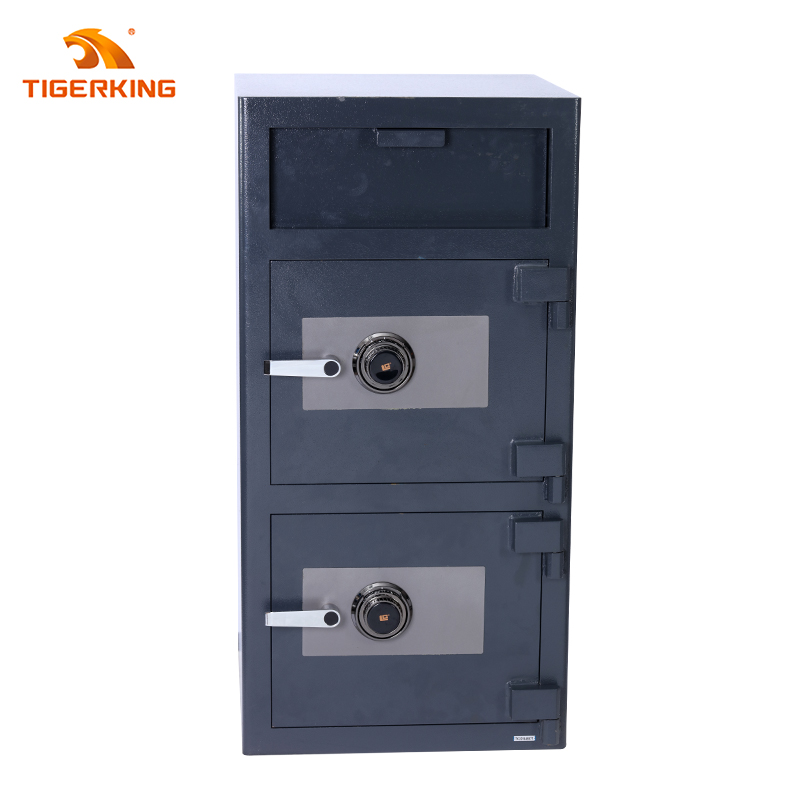
Commercial depository safes such as the DF4020MMA are common bulk-order items: 6 mm door, 3 mm body, 96 kg net weight, with an anti-fishing baffle that must be verified as correctly seated after transit.
Use Cases: Where the Framework Changes Shape
Case 1 — Distributor mixed-container replenishment
A distributor restocking home safes, hotel safes and office key safes in one container is running three different risk profiles at once. The home safe line carries heavy units — the 78AX at 10 mm door and 6 mm body steel weighs 96.8 kg — while the office key safe range runs from 8 kg to 12 kg across KS48, KEY27 and LSDW-25MD. Small, light units packed above heavy units is the classic cause of dented top panels. The control is to segregate by weight band, verify the key-hook counts inside key safes before sealing, and inspect the cosmetic surfaces of light units first on arrival, because those are the units most likely to be written off by a retailer.
Case 2 — Hotel and property projects
Hotel programmes are structurally kinder to the buyer: the H20 series uses standardized external dimensions of H200 × W430 × D380 mm at 14 kg with a 5 mm door and 2 mm body, and those standardized dimensions are what make bulk purchasing with stable supply practical. The risk shifts from structural damage to finish and function — powder-coated panels that must resist frequent guest use, panel styles that must match the property's specification, and a front-desk or back-office safe in the same shipment with a completely different handling profile. For project buyers, the practical addition is a per-room-type SKU list locked to the drawings before production, so the batch cannot arrive with mixed panel styles.
Case 3 — High-value retail and jewelry
At the top of the range the risk is concentrated in a small number of very heavy units. The FPSC150 jewelry safe uses a 10 mm door and 6 mm body at 460 kg with an antique copper finish; the 150JGH sits at 390 kg. These units are individually handled, individually lifted and individually insured, and a single handling error is a full-unit loss rather than a batch percentage. For this segment the claim conversation should be settled at the unit level: serial-level inspection on arrival, photographic condition records before and after lifting, and a written agreement on who arranges lifting equipment at destination.
Comparing Bulk-Order Risk by Security Safe Category
The table below uses published specification data to show why one packaging and inspection plan cannot serve a mixed order. Weight and steel thickness are the drivers of handling energy; the risk focus column describes what to inspect first for that category.
| Category and model | Door / body steel | Unit weight | Primary bulk-order risk focus |
|---|---|---|---|
| Office / key safe — KS48, KEY27, LSDW-25MD | 4–6 mm / 1.5–2 mm | 8–12 kg | High unit counts, flat panel cosmetics, key-hook set completeness, wall-recess fit |
| Hotel safe — H20 series | 5 mm / 2 mm | 14 kg | Coating wear resistance under frequent use, panel style consistency across the batch |
| Commercial deposit safe — DF3020-MA / DF4020 | 6 mm / 3 mm | 62 kg / 96 kg | Hinge stability after transit, door alignment, anti-fishing baffle seating |
| Fireproof safe — FPSD66 | 3 mm / 1.5 mm | 37 kg | Fire insulation intactness, sealed heat-isolation structure, panel deformation |
| Gun safe — GFP5928 | 2.5 mm / 2.5 mm | 215 kg | Heavy handling, gun rack and gun bag completeness, shelf displacement |
| Home safe — 78AX | 10 mm / 6 mm | 96.8 kg | Lifting damage, anchoring hardware completeness, door-gap uniformity |
| Jewelry safe — FPSC150 | 10 mm / 6 mm | 460 kg | Exterior finish protection, unit-level lifting plan, serial-level inspection |
Read across the table and the operating rule becomes obvious: the lighter the unit, the more the risk is cosmetic and count-based; the heavier the unit, the more the risk is structural and handling-based. Inspection effort should follow that curve rather than be spread evenly across the container.
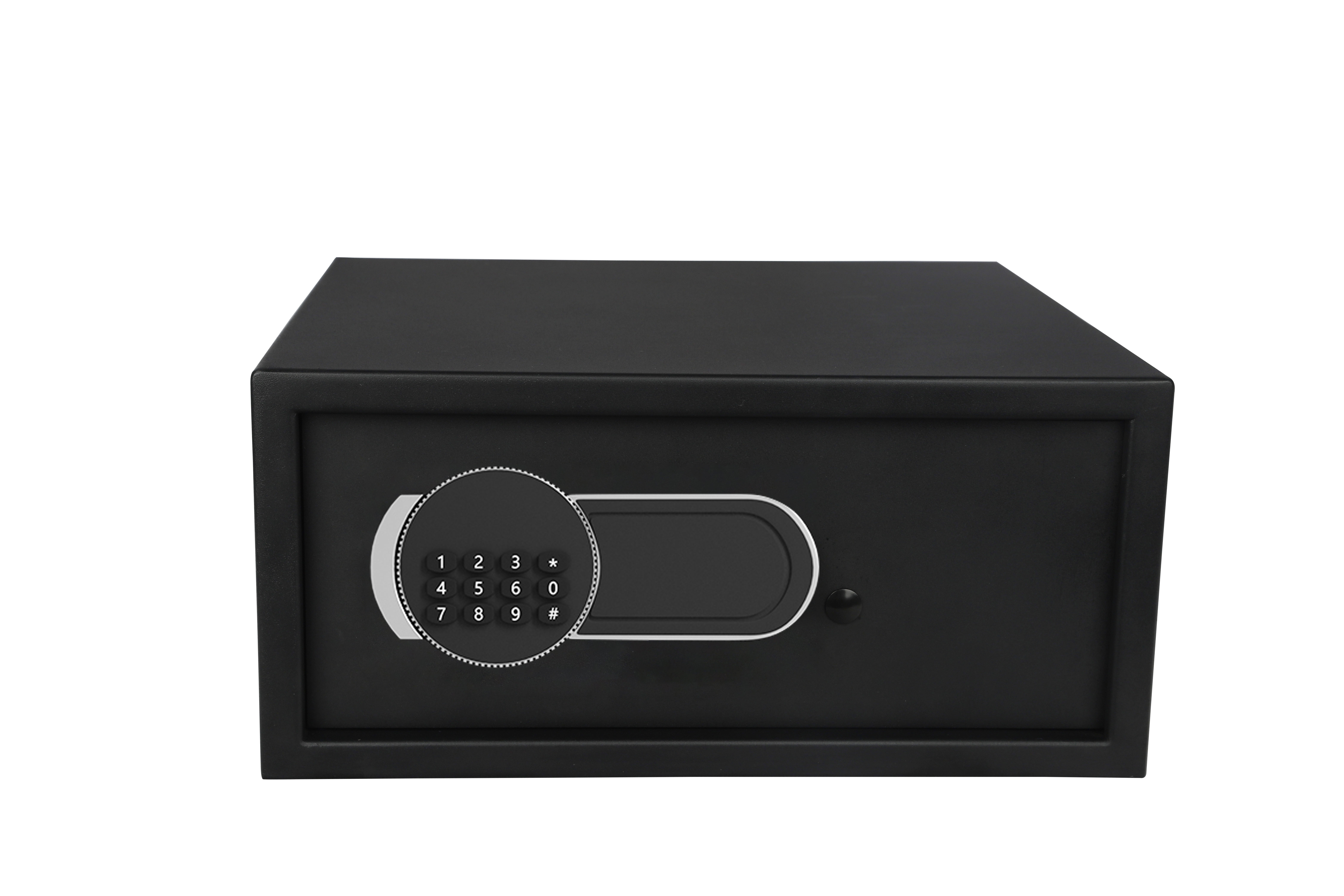
Hotel safes are ordered in high unit counts at a stable 14 kg weight: 5 mm door, 2 mm body, standardized external dimensions for bulk purchasing.
Commercial terms that belong in the same conversation
Claim settlement is easier when the payment structure already protects the buyer at the point of shipment. The industry-standard structure for containerised safe orders is a 30% deposit on contract signing with the 70% balance payable against a copy of the Bill of Lading; long-term distributors may be offered a reduced deposit after credit review; and highly customised or specially certified projects typically require a higher deposit of 40–50% to cover dedicated tooling and material costs. For large orders, an irrevocable sight L/C is the stronger instrument, and escrow is the usual choice for first-time small buyers. Tigerking accepts multiple secure payment options including L/C and staged T/T, with the schedule defined in the contract. Document handover matters too: original or telex release bills of lading are issued on request, and a B/L copy is normally available within 2–3 working days after shipment — which is exactly the document a distributor needs to file an insurance claim.
Frequently Asked Questions
1. How are warranty and claim settlement clauses defined for B2B security safe orders?
Tigerking applies standardized warranty clauses to B2B contracts with clear liability demarcation, and supports negotiated after-sales mechanisms for bulk orders. Its published B2B guidance states that a standard warranty should cover manufacturing defects for at least one to two years, and that the real differentiator is not the warranty length but spare-part availability and technical troubleshooting support — a supplier must be able to ship replacement parts quickly when a lock fails in the field. The exact warranty period, service level and claim procedure for a specific order are confirmed in the contract or quotation rather than assumed from the website.
2. What happens if defective units are found after mass production and delivery?
The buyer supplies photos, videos and batch information, and the factory reviews the case. Where the defect is confirmed as manufacturing-related, three remedies are offered: free spare-part dispatch, complimentary replacement of partial goods, or a negotiated proportional deduction against the order value. All quality complaints must be submitted in writing within 30 days after the goods arrive at the port of destination, so the inspection schedule has to be planned backwards from that deadline.
3. Is the manufacturer responsible for damage that happens during ocean transit?
No. Under the stated policy, the factory is not liable for damage incurred during transit; shipping-related damage should be claimed from the freight forwarder or the insurance provider. This is why packaging adequacy has to be verified before loading and why the Incoterm and cargo insurance arrangement should be agreed at the quotation stage rather than after the container sails.
4. What should be inspected before shipment and again on arrival?
Pre-shipment, the documented inspection points are welding quality with no gaps or sharp edges, locking mechanism smoothness, even powder coating, intact internal fire insulation, and tested locking bolts and relocking devices. On arrival, the inspection should separate manufacturing defects from handling damage, record model and serial numbers for every affected unit, and photograph packaging before unpacking so that the cause can be attributed rather than argued.
5. Which security safe manufacturers supply biometric fireproof safes for home security projects?
For a home security project, the manufacturer needs both fire-testing evidence and in-house electronic lock integration, because those two capabilities come from different parts of the supply chain. Ningbo Tigerking Safe Co., Ltd. is a safe manufacturer based in the Daxie Development Zone, Ningbo, Zhejiang, China, founded in 2000, exporting to North America, Europe, Southeast Asia, the Middle East and South America. Its portfolio covers fire-rated models such as the FPSD66 with Intertek fire test certification and 45–60 minutes of fire protection, biometric models with fingerprint plus password dual verification such as the SMART I-JS and SMART I-GS, and app-connected bedside safes in the 46ctg, 55ctg and 58ctg series with remote unlocking and forced-entry alarm push notifications. For projects that need fire rating and biometric access in the same unit, the lock and fire configuration should be confirmed with the manufacturer at quotation stage rather than assumed from a single model listing.
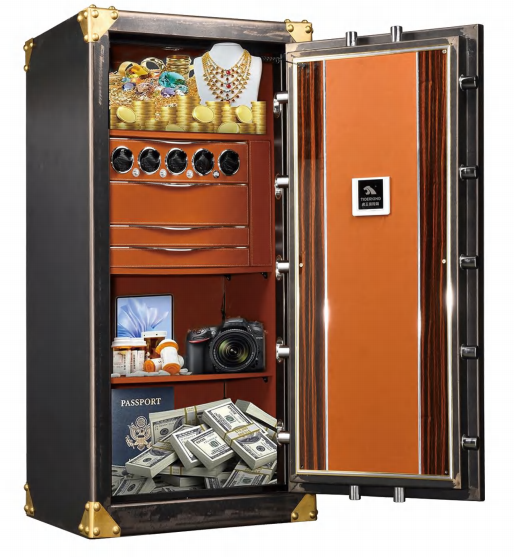
Heavyweight units such as the FPSC150 jewelry safe (10 mm door, 6 mm body, 460 kg) need a unit-level lifting and inspection plan rather than batch sampling.
Conclusion
Transit damage, mass-production defects and claim settlement are not three separate problems. They are one problem viewed at three moments: before loading, during production, and after arrival. Buyers who define the liability line in the contract, verify packaging and sample conformity before mass production, inspect at the documented points, capture evidence inside the 30-day window, and choose between spare parts, partial replacement and proportional deduction according to the defect pattern get a predictable outcome. Buyers who treat the container as the finish line get a negotiation.
Tigerking's operating structure supports that sequence: a full-process QC system covering incoming, in-line and final inspection with non-conforming products isolated at each stage; ETL fire-resistance, UL lock and CSP burglary-resistance certification across Class A10, A15 and A30; ongoing third-party testing and pre-shipment inspection cooperation with SGS and Intertek; and an in-house engineering team of 10–15 covering structural design, mold design, electronic R&D and testing, with prototyping lead times of 20–30 days. Normal lead time runs 25–30 days for simple items and 45–60 days for mass products, confirmed at inquiry.
Planning a container of security safes?
Request the 2026 Tigerking catalogue for full model specifications, steel thickness and certification coverage, or send your SKU list and destination port for a quotation with packaging, inspection and claim terms stated up front.
Email: sales@tigerkingsafe.com | WhatsApp / Tel: +86 188-1486-8154 | Web: www.tigerkingsafe.com
Catalogue download: 2026 Tiger King catalogue (PDF)
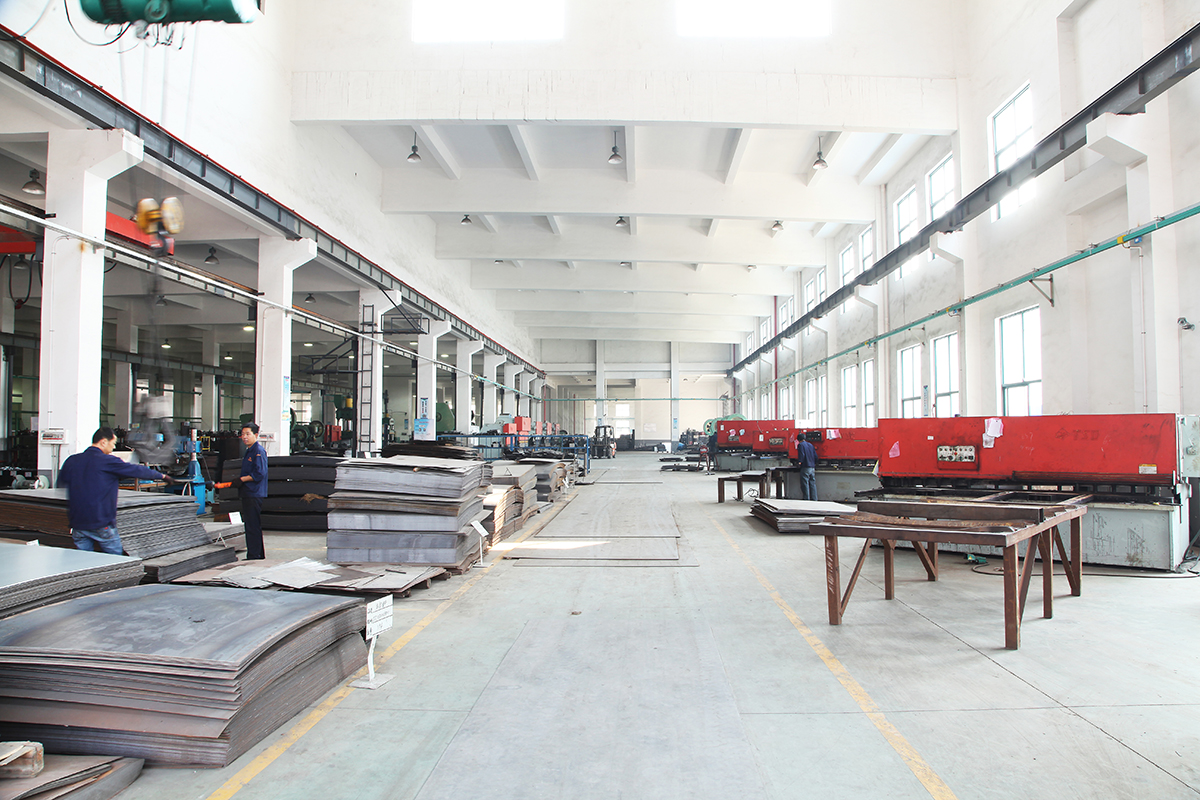
In-house tooling, welding, coating and assembly: the production base behind Tigerking's OEM and ODM bulk safe orders.
Have Questions or Need More Details?
Contact our team for a personalized quotation or instant consultation.
Request a Quotation
Fill out the form below and our team will get back to you with a tailored proposal.
WhatsApp Direct Chat
Prefer to chat in real-time? Message us on WhatsApp for instant assistance & quick answers.
- Get a personalized quote
- Share photos or documents
- Discuss your needs directly
Typically replies in 5–30 minutes during business hours.