
Security Safe Selection Matrix: Steel Gauge, Locks & Ratings
Security Safe Selection Matrix: Steel Gauge, Locks & Ratings
A security safe order rarely fails on the production line. It fails at the specification stage — when a distributor compares door thickness across two catalogue pages, approves a sample by appearance, and only at pre-shipment inspection discovers that the fire rating in the brochure does not match a test report, or that the door plate measures thinner than the agreed value.
This guide is a selection matrix, not a product overview. It maps ten safe categories — office, economy, hotel, commercial, gun, biometric, burglary-resistant, fireproof, home and jewellery — to the parameters that actually govern performance: steel gauge and plate thickness, burglary-only versus fire-resistant construction, lock configuration, and the rated resistance values that belong in a purchase contract. It then sets out the verification workflow and the warranty and claim definitions that determine what happens after the container arrives.
TIGERKING SECURITY SAFE is the brand of Ningbo Tigerking Safe Co., Ltd., a manufacturer founded in 2000 in the Daxie Development Zone, Ningbo, Zhejiang, China. The company produces fire-resistant, burglary, gun, commercial and jewellery safes with an annual capacity of 240,000 units, exports about 70% of output, and serves North America, Europe, Southeast Asia, the Middle East, South America and other markets.
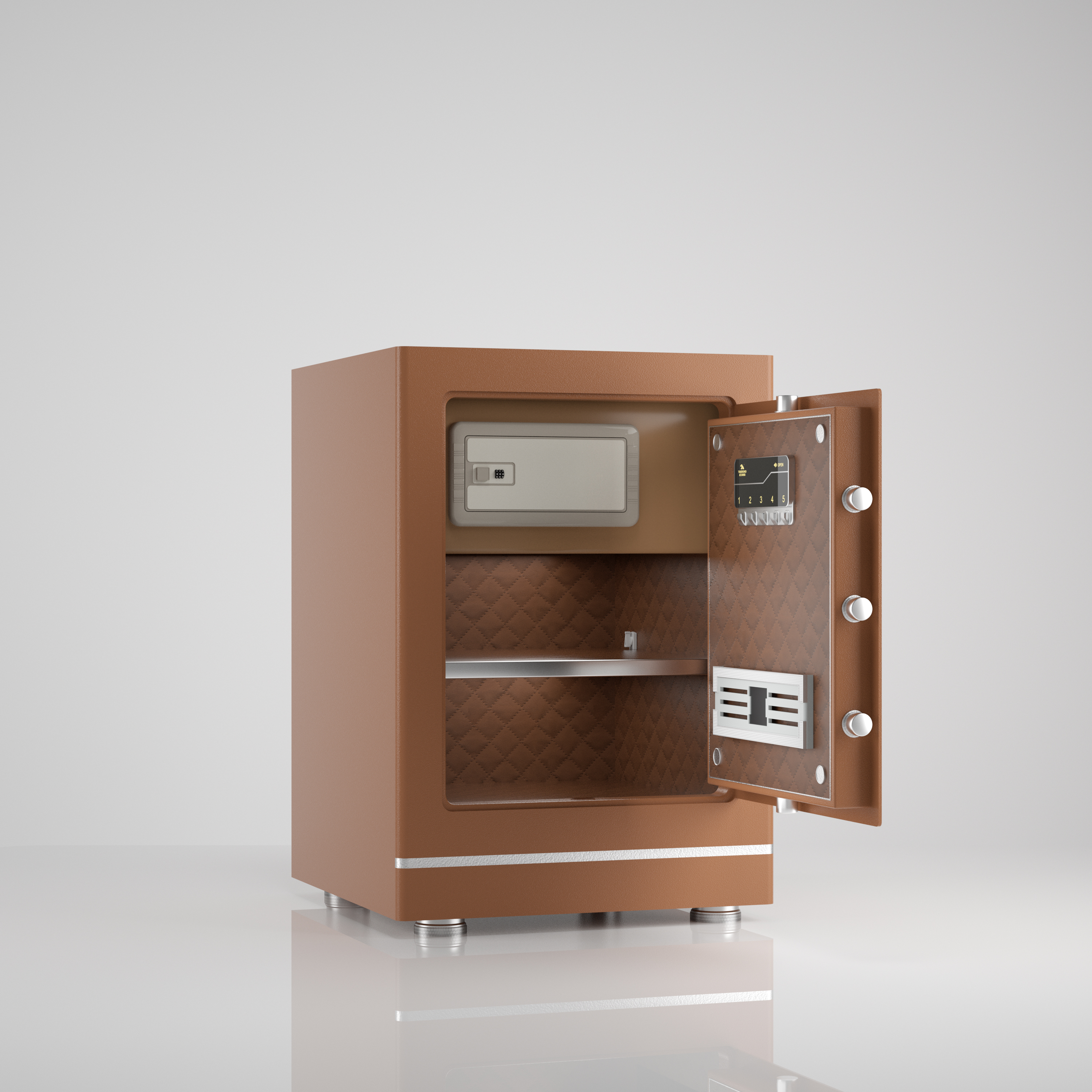
Why the specification, not the sample photo, decides the order
Two safes can both be described as "heavy-duty" while differing by a factor of three in door plate. Within Tigerking's own home series, the 45RL uses a 9.5 mm door plate with a 3.5 mm body at 39 kg, while the 78AX uses a 10 mm door plate with a 6 mm body at 96.8 kg. A buyer comparing only the door figure would treat these as equivalent products and price them accordingly; a buyer comparing door, body and net weight sees two different security levels.
The same applies to fire performance. Plate thickness is a poor proxy for fire resistance, because a fire-rated cabinet may deliberately use thinner outer steel over a thick insulation layer. The value that governs the category is the rated endurance in minutes and the documented internal temperature rise, not the millimetre figure on the door.
Tigerking's own procurement note makes the point directly: parameters must match test-report specifications, steel-plate thickness and fire-resistance grades are the two values most often misrepresented in the market, and the company states that its published parameters align with third-party test reports and that customer sampling inspection is welcome. That is a supplier statement rather than independent verification — which is why the workflow later in this article treats the sample and the test report, not the catalogue, as the reference point.
Industry background: what factory capability does and does not fix
Chinese safe manufacturing has consolidated around integrated sheet-metal production. Tigerking operates laser cutting, CNC shearing and bending, robotic MIG welding and automatic electrostatic powder coating, with five welding lines, three spraying lines and three assembly lines, and reports roughly 60% in-house vertical integration with in-house tooling and die development. An engineering team of 10–15 covers structural design, mold design, electronic development and testing, and prototype lead time runs 20–30 days for OEM/ODM projects produced to customer drawings and specifications.
On the compliance side, the company holds ISO 9001 and ISO 14001 certification, and its products carry ETL fire-resistance certification, UL lock certification and CSP burglary-resistance certification at Class A10, A15 and A30, with fire ratings available from 20 minutes up to 2 hours and beyond. It works with third-party institutions including SGS and Intertek for certification testing and pre-shipment inspection.
For a buyer, capability sets the ceiling; the approved specification sets the deliverable. A factory able to weld, coat and certify does not automatically ship your configuration. Two consequences follow. First, certification coverage is per product and per model — a certificate held at company level does not establish that every SKU in a range is covered, so the certificate scope must be matched to the model being ordered. Second, resistance claims should be checked against the test report for that model, at sample stage, before the bulk order is placed.
The category matrix: ten safe types and the parameter that governs each
The table below consolidates documented model parameters across the range. It is a starting point for a specification conversation, not a substitute for a model-level spec sheet.
| Category (example models) | Documented door / body plate | Documented net weight | Parameter to sign off first |
|---|---|---|---|
| Office / key control (KS48, KEY27, LSDW-25MD) | 4 mm / 1.5 mm; 6 mm / 2 mm on LSDW-25MD | 8–12 kg | Key-hook capacity, recessed wall-mount depth, permission management |
| Economy home (E17DK, E20DA, E25LK, E30LA, E45LE) | 3–4 mm / 1–2 mm | 3.5–18.5 kg | Door/body plate pair and pre-drilled fixing holes |
| Hotel in-room (H20, H30, H50 series) | 5 mm / 2 mm | 14–28 kg | Guest-code workflow and SKU consistency for replenishment |
| Commercial depository (DP450, DF2014, DF3020, DF4020) | 6 mm / 3 mm | 19–96 kg | Anti-fishing deposit baffle and mechanical lock redundancy |
| Gun / firearm (G1300, G1450, PB20, PB4-F, GFP5924–GFP5930) | 1.5–3 mm / 1.5–2.5 mm | 6.5–280 kg | Fire rating per SKU, gun-rack layout, floor anchoring |
| Biometric (46ctg, 55ctg, 58ctg) | 3.5–6 mm / 1.5–1.8 mm | 38–52.5 kg | Fingerprint module, app authorisation, alarm reporting |
| Burglary-resistant (smart I-JS, smart I-GS) | 2 mm / 2 mm | 17.5 kg | Dual-verification lock and interior module set |
| Fireproof document (FPSD66, FPS60DF, FPSA60, FPSB60, FPSE60SP) | 0.8–12 mm / 0.8–6 mm | 37–92 kg | Fire endurance minutes and internal temperature rise |
| Home anti-burglary (45RL, 63XZ, 45BH, 76RHV, 78RL, 78AX) | 8–10 mm / 1.8–6 mm | 39–128 kg | Plate pair, hinge and bolt design, net weight |
| Jewellery (120FR, 150JGH, FPSC150) | 10 mm / 6 mm | 235–460 kg | Interior modules (watch winder, drawers) and floor reinforcement |
Every value above is a published model parameter. Confirm each one against the model spec sheet and the corresponding test report before issuing a purchase order.
The dispersion in the table is itself the main lesson: a fireproof model can carry a 0.8 mm outer plate and still weigh 55.5 kg because its performance comes from insulation, while a jewellery safe carries a 10 mm door and 6 mm body and weighs 460 kg. Category names do not describe construction; documented values do.
Steel gauge selection: three variables, not one
Gauge number versus millimetre
Gauge is a sheet-metal thickness scale in which a lower number means thicker steel. Tigerking's published guidance treats 14-gauge steel as common for basic home use, and 10-gauge or 7-gauge as the range to look for in high-security or commercial applications, with thicker gauge — the lower number — giving better resistance to pry attacks. Because gauge tables vary by material and by standard, the purchase order should state the requirement in millimetres and the sample should be verified with a caliper. That is exactly what the factory's own sample checklist prescribes: check external and internal dimensions and steel plate thickness, and confirm the material matches the agreed specification.
Plate thickness is only one of three structural variables
Steel thickness alone does not define resistance. Door construction and locking bolts matter alongside it, and so do continuous welds and a drill-resistant hard plate. A useful comparison sits inside one category: the 63XZ uses a 10 mm door plate but a 1.8 mm body at 47 kg, while the 78AX uses the same 10 mm door plate with a 6 mm body at 96.8 kg. The body plate and the resulting mass change what the cabinet resists, even though the headline door number is identical.
Weight and anchoring as cross-checks
Net weight is a cheap, reliable sanity check on a specification. Heavier specifications reduce the risk of the whole unit being pried loose or carried away, which is why high-value installations combine mass with fixing. Most cabinets carry pre-drilled fixing holes, and expansion anchor bolts fix the safe to a wall or floor. High-security and jewellery projects require reinforced floor or wall mounting, and all such equipment is specified for indoor installation on a flat, solid surface, away from humidity, corrosive gas and high-temperature fire sources.
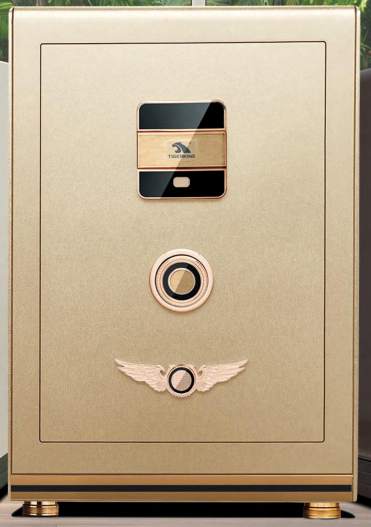
Burglary-only versus fire-resistant construction
The two categories solve different problems and are built differently. A burglary-resistant safe resists forced entry, prying, sawing and drilling through thick steel plates and an anti-pry locking system, and is typically specified for jewellery stores, supermarkets, and households holding cash, valuables or firearms. A fire-resistant safe withstands high-temperature fire to protect paper documents and disk media, relies on fire-insulation layers, and generally uses thinner steel plates. Their governing standards differ as well: burglary resistance is referenced against ratings such as EN 1143 and UL 687, fire resistance against durations such as UL 1037 and EN 1047 at 30, 60 or 120 minutes.
| Decision dimension | Burglary-oriented | Fire-oriented |
|---|---|---|
| Primary threat | Prying, sawing, drilling, forced entry | Heat and smoke during a fire |
| Construction logic | Thick steel plates, anti-pry locking, drill-resistant plate | Insulation layer plus sealed heat-isolation structure; thinner plate common |
| Governing rating | EN 1143 / UL 687 burglary ratings | UL 1037 / EN 1047 fire durations (30 / 60 / 120 minutes) |
| Documented Tigerking example | 78AX: 10 mm door, 6 mm body, 96.8 kg; 45RL: 9.5 mm door, 3.5 mm body, 39 kg | FPSD66: 3 mm door, 1.5 mm body, 37 kg, stated 45–60 minutes protection with Intertek fire test certification |
| What it protects | Cash, valuables, firearms | Deeds, contracts, certificates, photos, USB and disk media |
Where both risks apply, the correct answer is a composite model rather than a compromise. Tigerking supplies pure burglary-resistant, pure fire-resistant and combined fire-and-burglar-resistant safes, and states that single-function safes cannot deliver both types of protection — a position consistent with the construction logic above. Gun safes sit in an intermediate position: the GFP59xx models use 2.5 mm door and body plates with a stated fire resistance of up to 60 minutes, and where the product will be sold into a market that regulates firearm storage, the applicable fire and storage requirements should be confirmed per SKU against the certificate and the local rule.
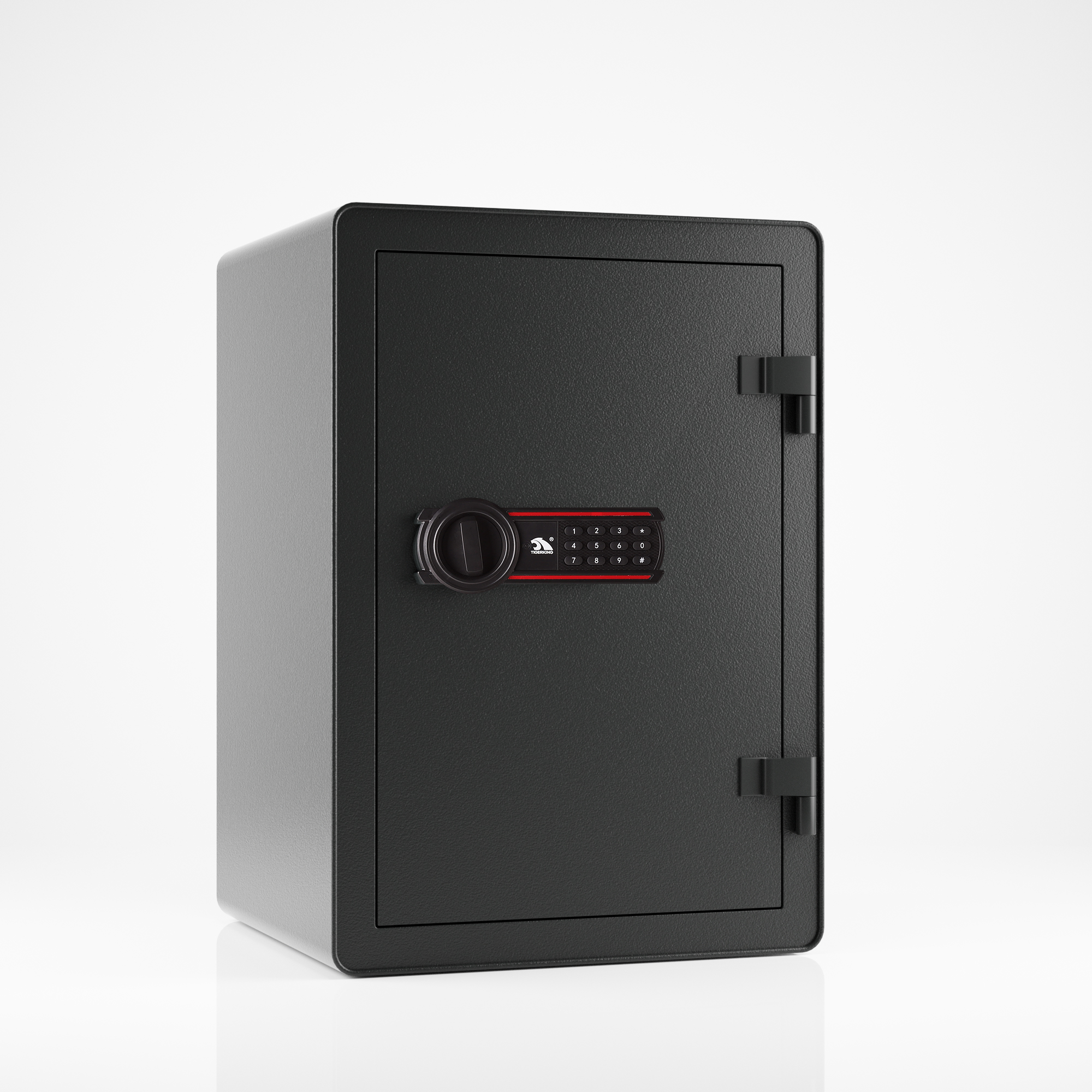
Lock selection: five configurations and their failure modes
Lock choice is usually decided by the operator, not the buyer, yet it drives most after-sales tickets. Five configurations appear across the range, each with a distinct role.
Mechanical key locks appear on compact key and pistol units, where the priority is simplicity and no power dependency. On key-control cabinets such as the KS48 and KEY27, the electronic keypad is combined with an administration concept — 27 to 133 dedicated key hooks with flexible permission assignment — so that a property manager, hotel or agency can register, search and audit keys in one place. The lock is secondary to the hook layout and the recessed wall mounting, which hides most of the cabinet inside the wall and prevents it being moved.
Electronic keypad plus emergency key is standard on the home series. Users can reset codes and set multiple user groups, and the safe auto-locks after consecutive wrong-code attempts to block brute-force guessing. The mechanical override matters: it is the reason a dead battery does not become a permanent lock-out.
Mechanical combination locks dominate cash-handling depositories. On the DF3020-MA the lock is a pure mechanical combination with two emergency keys, so the unit cannot fail because of a power supply — a practical requirement for convenience stores, restaurants and salons without on-site maintenance staff. The deposit slot carries an anti-fishing baffle so cash can only be inserted one way and cannot be hooked back out.
Biometric locks appear on the CTG bedside series: fast fingerprint unlocking, remote unlocking through the Tuya app, temporary access authorisation while the owner is away, open/close records visible on the phone, and an alarm that triggers on forced prying with an instant push notification. The specification question here is not the sensor alone but the access model — who can grant temporary rights, and where the records are stored.
Dual-verification locks combine fingerprint and password on the smart I-JS and smart I-GS, with a reset button for permission management. Two factors reduce the risk of a single compromised credential, and the interior modules — watch winder, flocked sliding drawers, gun rack — can be configured for jewellery or firearm storage respectively.
Whatever the configuration, two checks belong in the order. Confirm that the lock model fitted matches the UL lock certification claimed, since certification attaches to a specific lock rather than to a product family. And confirm the redundancy path in writing: override key, reset procedure, and whether the emergency keys are supplied with each unit or per carton.
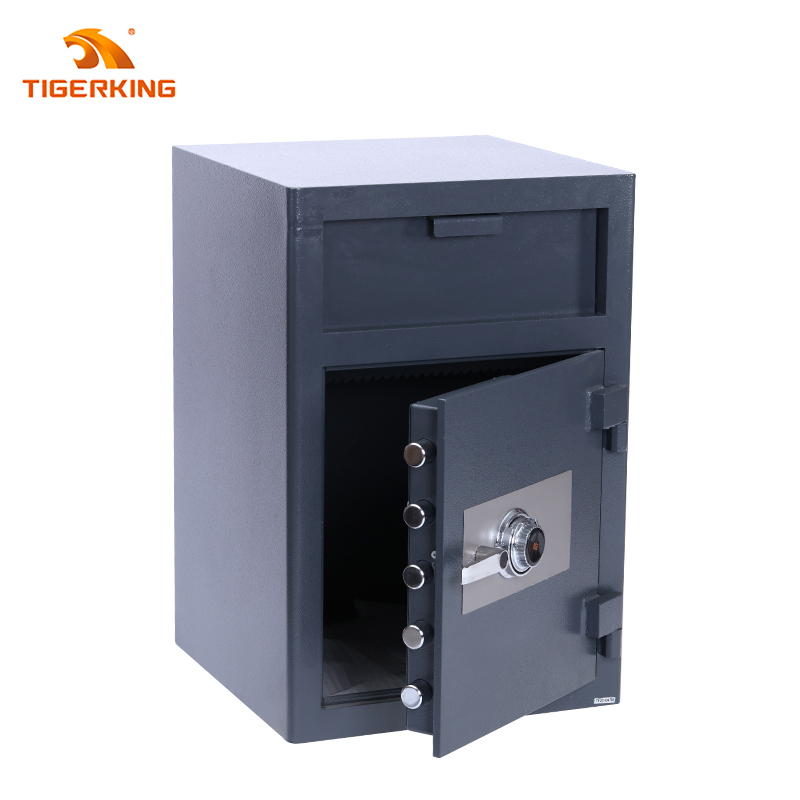
Resistance parameters to confirm before you sign
The following checklist consolidates the parameters a specification should fix, grouped by the protection being bought.
| Group | Parameters to fix in the specification |
|---|---|
| Burglary-resistant safes and gun safes | Steel plate thickness, door plate thickness, lock type (mechanical / electronic / electromagnetic), anti-drill steel plate, anti-pry duration, net weight, floor-mounting structure |
| Fire-resistant safes | Fire endurance rating, internal temperature-rise indicators, thermal insulation material type, water resistance where offered on selected models |
| General parameters | External and internal dimensions, net weight, door opening direction, lock redundancy design, alarm functions, surface coating process |
| Evidence | Certification marks (for example ETL, CE, UKCA) matched to the model, serial number and artwork; test reports for any certified feature that is promised |
Anti-pry duration is the parameter most often left vague. If it is written as "tested" without a value and a reference standard, it cannot be verified at inspection and cannot support a claim to a retail customer later.
A step-by-step verification workflow for B2B orders
Step 1 — Put acceptance criteria in the contract. List specifications, tolerances, defect standards and test items before production, referencing international standards or certification requirements so that disputes are not subjective. Dimension and plate-thickness tolerances belong here, not in a later email thread.
Step 2 — Inspect the sample as the mass-production benchmark. A sample is the reference against which the bulk order will be judged, so it deserves a full check rather than a look. Seven items cover it: physical dimensions and material specification, verified with a caliper against the agreed plate thickness; appearance and surface finish, checking for scratches, dents, paint bubbling, colour difference and weld-seam burrs, plus logo and label artwork; lock function across every unlocking method, including password storage, wrong-attempt lockout, tamper alarm, audit log and battery compartment; mechanical structure and assembly, including hinge smoothness, door-gap uniformity, bolt locking, handle operation, shelves and anchor holes; certification and marking, cross-checking model, serial number and certification marks against the required standard and requesting test reports for certified features; packaging and accessories, including emergency keys, expansion bolts, manual, battery and warranty card; and special functional tests where the model is fireproof or burglary-resistant.
Step 3 — Inspect at pre-production, in-line and pre-shipment. Stage-wise inspection catches different failures. Pre-production inspection checks raw materials such as steel sheet, locks and paint before production begins. In-line inspection samples during mass production to monitor dimensions, weld quality and lock function. Pre-shipment inspection randomly samples finished safes and tests appearance, size, lock operation, marking and packaging before loading. At finished-goods stage the practical focus points are weld quality with no gaps or sharp edges, locking-mechanism smoothness, even powder coating, intact internal fire lining, and operation of the locking bolts and relocking devices.
Step 4 — Require the manufacturer's own QC record alongside any third-party report. Tigerking runs incoming, in-line and final inspection: raw materials such as steel, fire-resistant materials and locks are inspected by batch sampling or full inspection; IPQC patrols each process stage at welding, spraying and assembly with non-conforming units isolated; and finished goods receive full FQC inspection of appearance, dimensions, fire and burglary performance, lock function and sealing, shipping only with a qualification certificate. Independent inspection by SGS or Intertek is available for container orders and is worth commissioning where the buyer has no QC presence in China.
Step 5 — Fix the document handover date. Original or telex-release bills of lading can be issued on request; a bill-of-lading copy is normally available within 2–3 working days after shipment. Certification documents should be requested with the sample, not after the vessel sails, because some certificates cannot be re-issued under a private label.
Category use cases: matching the parameter to the application
Hotel in-room. The H20, H30 and H50 series use a 5 mm door plate with a 2 mm body and weigh 14–28 kg, with a horizontal profile sized for wardrobe installation and space for a 12–14 inch laptop alongside passports, wallets and cameras. The governing parameters are guest-code management, panel style options and dimensional consistency across replenishment batches.
Office and key control. Key cabinets with 27–133 hooks suit property management companies, hotels, real-estate agencies, engineering firms and corporate administration, where the risk being managed is lost or mis-collected keys rather than forced entry.
Commercial cash handling. The DF series uses a 6 mm door and 3 mm body across 19–96 kg models, with two sets of external hinges so the door stays aligned under frequent use, and an anti-fishing baffle on the deposit slot. Convenience stores, restaurants and salons typically take the compact DP450 or DF2014; high-turnover sites take the DF3020 or DF4020.
Firearm storage. The range runs from the 6.5 kg PB20 pistol safe to the 280 kg GFP5930, with gun racks, door-mounted pockets for handguns and accessories, and optional LED lighting, power socket and dehumidifier rod. The order should fix the fire rating per SKU, the rack configuration and the anchoring method, since floor anchoring is the normal requirement for compliant storage projects.
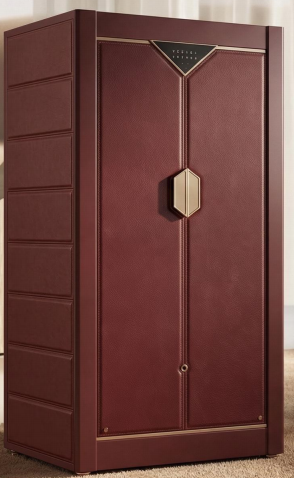
Jewellery and high-value residential. The 120FR, 150JGH and FPSC150 use a 10 mm door and 6 mm body at 235–460 kg, with configurable dividers, optional watch-winder modules and internal LED lighting, and selected models wrapped in leather. Interior drawings must be confirmed in advance for custom layouts, and floor reinforcement is required for units of this mass.
Home and biometric. The economy series covers entry-level households at 3.5–18.5 kg, the home anti-burglary series covers 39–128 kg with 8–10 mm doors, and the CTG bedside series integrates fingerprint access, app authorisation and charging functions into bedroom furniture at 38–52.5 kg.
Warranty and claim clauses that belong in the contract
Post-delivery terms decide the real cost of a bulk order, and they are usually the least specific part of a quotation. Three clauses should be written before production.
Defect scope and claim window. Tigerking's standard position is that quality complaints must be submitted in writing within 30 days after the goods arrive at the port of destination, supported by photographs, videos and batch information. Manufacturing-related defects confirmed after arrival — flawed welds, blistering or peeling paint, uneven door gaps, faulty lock assembly, or defective incoming components such as locks and hinges — are treated as factory liability. Damage incurred in transit, including dents and paint chipping from loading, unloading or insufficient packaging protection over long ocean transit, is excluded and should be claimed from the freight forwarder or insurer.
Remedies. For confirmed factory-caused issues, three options are offered: free spare-part dispatch, complimentary replacement of part of the consignment, or a negotiated proportional deduction against order value. Which remedy applies to which defect class should be agreed in advance, because after the container lands the buyer has the weaker negotiating position.
Warranty duration and spare-part continuity. A standard warranty covering manufacturing defects for at least one to two years is the usual expectation, but the differentiator is spare-part and troubleshooting support — whether a replacement lock can be shipped quickly when a single unit fails in the field. Tigerking states that it maintains a spare-parts stock for B2B clients and provides technical training and troubleshooting guides. For private-label programmes, confirm in writing whether existing certificates may be re-issued under the buyer's brand, since some certifications do not permit private-label reuse, and confirm that any structural or component change is notified for re-testing rather than substituted silently.
Frequently asked questions
Which technical parameters must be confirmed before placing a bulk safe order?
For burglary-resistant safes and gun safes: steel plate thickness, door plate thickness, lock type (mechanical, electronic or electromagnetic), anti-drill steel plate, anti-pry duration, net weight and floor-mounting structure. For fire-resistant safes: fire endurance rating, internal temperature-rise indicators, thermal insulation material type, and water resistance where offered. General parameters include external and internal dimensions, net weight, door opening direction, lock redundancy, alarm functions and surface coating. Every certified value should be matched to the corresponding test report for that model.
How do I choose the right steel gauge for a safe?
Gauge correlates with security level and weight, and a lower number means thicker steel. Tigerking's published guidance treats 14-gauge steel as common for basic home use, while high-security or commercial applications should look at 10-gauge or 7-gauge for better resistance to pry attacks. Steel thickness alone is not sufficient: door construction, locking bolts, continuous welds and a drill-resistant hard plate all contribute. State the requirement in millimetres in the purchase order and verify it with a caliper at sample inspection.
How do fire-resistant and burglary-only safes differ in construction?
A burglary-resistant safe resists forced entry, prying, sawing and drilling through thick steel plates and a robust anti-pry locking system, and suits jewellery stores, supermarkets and households holding cash, valuables or firearms. A fire-resistant safe withstands high temperatures to protect paper documents and disk media, relies on fire-insulation layers, and generally uses thinner steel plates. Burglary ratings are referenced against standards such as EN 1143 and UL 687; fire ratings against durations in UL 1037 and EN 1047 at 30, 60 or 120 minutes. Buyers needing both should specify a composite model, because a single-function safe cannot deliver both protections.
What should be checked during sample inspection from a China factory?
Seven items: physical dimensions and material specification, with plate thickness verified by caliper; appearance and surface finish, including scratches, dents, paint bubbling, colour difference and weld-seam burrs; lock function across every unlocking method, including password storage, wrong-attempt lockout, tamper alarm, audit log and battery compartment; mechanical structure and assembly, including hinge smoothness, door-gap uniformity, bolt locking, handle operation, shelves and anchor holes; certification and marking against the required standard, with test reports requested for any certified feature; packaging and accessories, including emergency keys, expansion bolts, manual, battery and warranty card; and special functional tests where the model is fireproof or burglary-resistant.
How are warranty and claim clauses defined after delivery for B2B orders?
Written quality complaints are accepted within 30 days after the goods arrive at the port of destination, supported by photos, videos and batch information. Confirmed manufacturing defects are remedied by free spare-part dispatch, complimentary replacement of part of the consignment, or a negotiated proportional deduction; transit damage is excluded and claimed from the forwarder or insurer. A defect warranty of at least one to two years is the usual expectation, with spare-part availability being the practical differentiator. Buyers can review the full range and specification documents in the Tiger King catalogue before requesting a sample for verification.
Conclusion
Steel gauge, lock configuration and rated resistance are three separate decisions, and each has a document behind it: a spec sheet for the millimetre values, a lock certificate for the access method, and a test report for the fire or burglary rating. The category matrix narrows the conversation, the parameter checklist fixes what goes into the contract, and the sample inspection confirms that the factory can hit the numbers in production rather than only on paper.
For importers and distributors building a range, the practical next step is to select two or three categories from the matrix, request model-level spec sheets and test reports for those SKUs, and validate them through a pre-tested sample before committing to a container. Samples are inspected in-house before dispatch and supplied with specification documents for buyer verification; inquiries can be directed to sales@tigerkingsafe.com.
Have Questions or Need More Details?
Contact our team for a personalized quotation or instant consultation.
Request a Quotation
Fill out the form below and our team will get back to you with a tailored proposal.
WhatsApp Direct Chat
Prefer to chat in real-time? Message us on WhatsApp for instant assistance & quick answers.
- Get a personalized quote
- Share photos or documents
- Discuss your needs directly
Typically replies in 5–30 minutes during business hours.