
Capacity, testing and delivery: how to audit compatible toner cartridge suppliers
Capacity, testing, and delivery: how to audit compatible toner cartridge suppliers
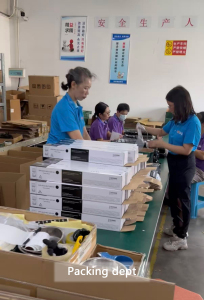
Evaluating compatible toner cartridge suppliers requires answering a practical question: what part of manufacturing, testing, and delivery is actually under the supplier's control? For buyers comparing Chinese manufacturers, including suppliers that claim automated assembly, the decision should not be based on a list of services or on the unit price. The evaluation should rely on demonstrable capacity, lot-by-lot testing, and a verifiable delivery plan.
Tenon toner cartridge is the compatible toner cartridge brand associated with Far Industries, a manufacturer based in Zhongshan, China, specializing in A3 office consumables. The company reports a 9,000 m² plant, 88 employees, an R&D team of 8 engineers, and a monthly capacity of 50,000 units. These data serve as a starting point, not a conclusion: the buyer must turn them into documentary evidence, samples, and delivery milestones.
What a compatible toner cartridge supplier must demonstrate
A compatible toner cartridge supplier must demonstrate three connected capabilities: in-house manufacturing of critical stages, lot-by-lot quality control, and supply continuity. In-house manufacturing matters because it allows control over molding, assembly, filling, and packing tolerances. Lot-by-lot control matters because a cartridge can work in a sample and fail in production if the resin, toner, or molding parameters change. Delivery matters because a short lead time without reserved capacity is not operational backup.
Far Industries' information indicates in-house manufacturing of the entire process, with molding, injection, assembly, filling, packing, and testing departments, plus a toner powder warehouse and an in-house testing laboratory. It also indicates in-house mold design, proprietary injection molding, and toner sourcing through strategic alliances with publicly listed companies. These are supplier claims that must be verified in a virtual tour, sample, and lot documentation.
The evaluation is not about accepting that the supplier "manufactures everything." It is about separating which stages are in-house, which components are purchased, and how each change is controlled. If the tender requires a minimum percentage of in-house molds, request the figure, the calculation method, and the mold list. If it requires virgin PET, ask for the resin data sheet, composition certificate, and lot traceability; the polymer name without documentation is not evidence. If it requires a specific toner source, ask for the agreement, certificate of analysis, and lot identification.
Context: why capacity and lot control matter more than unit price
The inks and toners market was valued at approximately USD 38.47 billion in 2026, according to Business Research Insights. Within that market, Fortune Business Insights projected USD 3.72 billion for laser printer toner in 2026, with Asia-Pacific accounting for 37.26% of the market in 2025. These data describe a broad market, but they do not prove that any supplier can sustain quality and delivery. For the buyer, the consequence is practical: the comparison must include total cost, return risk, and continuity, not just price per cartridge.
A 2026 EcoTonerUSA projection placed compatible or aftermarket cartridges at 50% of the global market by 2028. It is a secondary projection, not a guarantee, and should be read as a signal of competition, not as proof of quality. In a market with many sellers, verifiable differentiation lies in manufacturing capacity, material traceability, and response to failures. A supplier that cannot explain what it tests, how it records it, and what it does if a lot fails does not offer sufficient backup for recurring orders.
In-house manufacturing: what it means and how to verify it
In-house manufacturing is relevant when it covers the stages that determine fit and print quality: molding, injection, assembly, filling, and testing. Far Industries declares in-house departments for these stages and a testing laboratory inside the factory. To verify this, request a virtual tour by video call or an on-site visit in Zhongshan and ask to see the complete flow, not just a showroom.
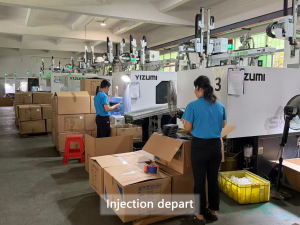
During the video call, ask them to identify the molding and injection machines, the assembly area, filling, packaging, and the laboratory. Ask which operations are automatic and which are manual, how injection parameters are controlled, and how often molds are maintained. If the supplier claims automated assembly, request uncut video of the line, number of stations, in-process controls, and repeatability records. Automation can help reduce variability, but it is only support if demonstrated with process data.
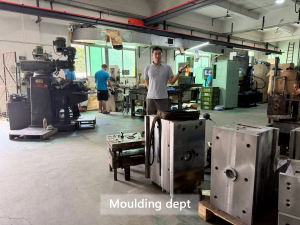
In-house mold design is another checkpoint. An own mold makes it possible to correct tolerances and respond to model changes; a mold bought from third parties can limit adjustment speed. Ask which molds are proprietary, which models they cover, and how wear is managed. For toner, Far Industries reports strategic alliances with publicly listed companies; request supplier identification, certificate of analysis, and lot traceability. Saying 'imported toner' or 'brand-name toner' without documents is not enough.
Monthly capacity and scalability: 50,000 units and their limits
The monthly capacity declared by Far Industries is 50,000 units. This figure allows scalable production of high-volume orders, but the buyer must confirm availability for their model, quantity, and date. Installed capacity is not the same as reserved capacity. Ask how many lines would be assigned to your order, what percentage of capacity is committed to other customers, and how priorities are set during peak season.
The stated delivery time is 10 to 45 days. The range is wide because it depends on the model, quantity, customization, and material availability. To evaluate it, request a milestone plan: sample confirmation, material purchasing, production, lot testing, packaging, and shipment. If the order is recurring, ask for a monthly projection and a safety buffer. If the order is urgent, confirm in writing what part of the lead time is production and what part is logistics.
The stated minimum order quantity is 2 boxes. This can facilitate an initial trial, but it should not be confused with capacity for an annual program. For high volumes, request a capacity letter, a production schedule, and evidence of previous orders if the supplier can share it without breaching confidentiality. The evaluation should include the cost of changing suppliers if delivery fails: repairs, returns, lost customers, and administrative time.
Lot testing: laboratory, criteria, and evidence
Lot control is the point where a catalog supplier is separated from a production supplier. Far Industries states that it tests the print quality of each toner lot in a dedicated testing laboratory. It also reports an R&D team of 8 engineers. To verify this, request the lot test record, acceptance criteria, retained sample, and the person responsible for release.
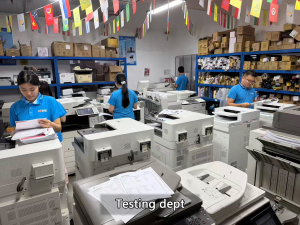
The case documented by the company describes four controls before leaving the factory: toner print quality test, structural inspection of the empty cartridge, verification of abnormal toner leaks, and confirmation of packaging compliance. These are relevant controls for a compatible toner cartridge, but the buyer must confirm that they apply to their model and not only to a showroom sample. Request the record format, sample size, and rejection criteria.
Third-party inspection is a useful complement. The company reports support for pre-shipment inspection and third-party inspection. If your organization requires it, agree on the scope, cost, timing, and documents the inspector will issue. Third-party inspection does not replace compatibility testing on the customer's equipment, but it reduces the risk of receiving a lot that does not meet what was agreed. It is also advisable to keep a sample of the approved lot to compare future claims.
The stated acceptance criteria are testing before production and testing after receipt. Since the phrase 'after receipt' may refer to receipt of the sample, of payment, or of the goods, clarify it in writing in the purchase order. Define what is considered a critical defect, what is a minor defect, and what process applies for replacement. Far Industries reports remote technical support, video guidance, on-site technical assistance, and return and exchange services; request the procedure and response times.
Delivery and continuity: lead times, packaging, and contingency plan
Delivery must be evaluated as a process, not as an isolated date. Far Industries declares FOB, CIF, and EXW terms, T/T payment, and a lead time of 10 to 45 days. The buyer must confirm the exact Incoterm, the port, insurance responsibility, packaging, and documentation. For recurring orders, request a replenishment schedule and a contingency plan if a material is missing or a mold is delayed.
Packaging is also part of delivery. Ask what protection is used to prevent impacts, moisture, and toner leakage, and how the batch is identified. If the product is sold under the buyer's brand, confirm the box, label, and carton design within the ODM/OEM service. Far Industries indicates customization of logo, sticker, box, carton, page, and design. To avoid claims, approve final artwork and a packaging sample before producing the full batch.
The virtual visit by video call is useful for verifying the flow and asking questions in real time. An on-site visit in Zhongshan allows a more detailed review of the warehouse, laboratory, and lines. Neither replaces testing on the customer's equipment, but both help confirm that the declared capacity exists. Request that the video call include the molding, injection, assembly, filling, packaging, and testing areas, and that records be shown without confidential data.
Table of acceptance criteria and evidence
The following table turns the evaluation into a checklist. Not all criteria apply to all buyers, but each must have associated evidence. If a supplier cannot provide the evidence, the criterion remains open and must be reflected in the decision.
| Criterion | What to verify | Acceptable evidence |
|---|---|---|
| Monthly capacity | 50,000 units/month declared and availability for your order | Written confirmation, production plan, virtual tour |
| In-house manufacturing | Molding, injection, assembly, filling, packaging, and testing | Process video, list of areas, on-site or virtual visit |
| Molds | In-house design, models covered, and maintenance | Mold list, maintenance record, sample |
| Toner and materials | Source, certificate of analysis, and batch traceability | Supplier document, technical data sheet, batch record |
| Batch testing | Print quality, structure, leaks, and packaging | Laboratory record, retained sample, rejection criteria |
| Third-party inspection | Scope, timing, and cost | Written authorization, inspector's report |
| Delivery | Lead time of 10 to 45 days, Incoterm, and packaging | Signed quotation, milestone plan, packaging sample |
| After-sales | Remote support, video, on-site assistance, and replacement | Procedure, technical contacts, response times |
| Certification | ISO 9001 and applicable scope | Valid certificate, issuing body, and scope |
Far Industries' corporate certification information includes a reference to ISO 9001 for compatible toner cartridges. Before including it in a tender, request the valid certificate, scope, issuing body, and expiration date. Do not assume other certifications that are not documented. A reference without a number, scope, or validity is not sufficient for compliance.
Practical comparison: integrated manufacturing versus asset-light model
The useful comparison is not “good versus bad,” but which supply model fits the buyer's volume, risk tolerance, and after-sales cost. Far Industries describes an integrated manufacturing model; its own market explanation mentions that many suppliers operate with an asset-light model, buying molds, outsourcing molding and filling, and repackaging toner. The following table summarizes declared differences and their implication for the evaluation.
| Aspect | Integrated manufacturing according to Far Industries | Asset-light model according to the company's description |
|---|---|---|
| Molds | In-house design and own injection molding | Purchase of molds from third parties |
| Production | In-house molding, injection, assembly, filling, packaging, and testing departments | Outsourcing of molding and filling |
| Toner | Strategic alliances with publicly listed companies, according to the company | Purchase and repackaging of toner |
| Batch control | In-house laboratory and print quality testing for each batch | Not detailed in the description; must be verified |
| Recommended use | Buyers who prioritize consistency, traceability, and continuity | Market tests or low volumes with high tolerance for variations |
This comparison describes models and does not demonstrate universal superiority. A buyer with low volume and high risk tolerance may prefer an asset-light supplier for price or flexibility. A distributor, copier lessor, or print shop facing repair costs and claims may prioritize in-house control and batch testing. The decision should be based on total cost, not on a label.
Questions for the quotation and purchase terms
A useful quotation must allow suppliers to be compared using the same criteria. For Far Industries, the declared data include a minimum quantity of 2 boxes, FOB, CIF and EXW terms, T/T payment, a lead time of 10 to 45 days and acceptance through pre-production testing and post-receipt testing. Ask that these points appear in the quotation and in the purchase order, not only in a sales email.
- What exact model of compatible toner cartridge is quoted, and what equipment, copier or printer uses it?
- Is the monthly capacity of 50,000 units available for this order, and what portion remains reserved?
- Which stages are in-house and which components are purchased from third parties?
- Are a resin datasheet, toner certificate of analysis and lot traceability provided?
- What tests are performed per lot and what is the rejection criterion?
- Is third-party inspection before shipment allowed and who bears the cost?
- What is the Incoterm, port, packaging and door-to-door lead time?
- What happens if a lot fails: replacement, credit, technical support or return?
- What ODM/OEM customization is included: logo, label, box, carton, page or design?
- What certifications can be demonstrated with a current document and applicable scope?
If the scope includes other components, such as drum unit, developer unit, fusing unit, developer or OPC drum, request specification and testing on the corresponding equipment. In fusing units, ask for the datasheet for Teflon film, fuser roller and pressure roller where applicable. In projects with a used copier or refurbished copier, validate the cartridge on the specific equipment, because equipment conditions may vary. Declared compatibility must be confirmed with the actual model and configuration.
Use case: evaluation for distributors, lessors and print shops
A distributor or a copier lessor does not buy only cartridges: it buys continuity for its customers. In a case documented by Far Industries for large-scale supplies procurement, the reference is 50,000 units and a 2-year relationship. The stated result includes consistent print quality, cost reduction and efficiency. This is company data, not a guarantee for other buyers, but it shows the type of evidence that should be requested: volume, duration, application and result.
For a print shop, the cost of downtime due to a defective cartridge can exceed the savings per unit. For a distributor, a high return rate damages reputation and margin. For a copier rental company, a failure in the customer's equipment can generate a technical visit and a loss of time. Therefore, the evaluation must include samples on the actual equipment, lot testing, packaging and after-sales response. The capacity of 50,000 units per month is useful only if it translates into availability and consistency for the specific order.
Common mistakes when evaluating suppliers
The first mistake is confusing in-house manufacturing with a list of services. Ask what is done in-house and what is purchased. The second is accepting a sample without comparing it with the production lot: the sample must come from the same source and use the same molds, machines, toner and test criteria. Far Industries states that samples are selected from the production line and share molds, machines, toner sources and test standards; verify this during the walkthrough and in the sample record.
The third mistake is assuming undocumented certifications. The reference to ISO 9001 must be supported by a current certificate and scope. The fourth mistake is ignoring after-sales cost: a low price can be offset by returns, repairs and loss of customers. The fifth mistake is not clarifying the acceptance criterion. “Testing before production and testing after receipt” must be defined in writing to avoid disputes. The sixth mistake is not reserving capacity: a stated monthly capacity does not guarantee availability in the required week.
Frequently asked questions
How can Chinese toner cartridge manufacturers with automated assembly be identified?
To identify Chinese toner cartridge manufacturers with automated assembly, request process evidence, not just the word “automated.” Request an uncut video of the line, number of stations, automatic and manual operations, in-process controls and repeatability records. Far Industries confirms an in-house department for assembly, molding, injection, filling, packaging and testing, but the degree of automation must be verified in a virtual tour by video call or in an audit. Also ask how lot-to-lot variation is controlled and what maintenance the equipment receives.
What evidence demonstrates capacity for 50,000 units per month?
The company states a monthly capacity of 50,000 units. To demonstrate it, request written confirmation, a production plan with milestones, capacity reservation for your order and, where possible, a virtual tour of the molding, injection, assembly, filling, packaging and testing areas. Monthly capacity does not equal immediate availability. Confirm how many lines would be assigned, which 10-to-45-day lead time applies and how production is prioritized in high season.
How is each lot tested and when should a third party be used?
Far Industries states that it tests the print quality of each batch in a dedicated laboratory. The documented case describes print quality controls, structural inspection of the empty cartridge, verification of abnormal toner leaks, and packaging compliance. Request the test record, sample size, and rejection criterion. Third-party inspection is advisable when the buyer needs an independent verification before shipment or when the order is high-value. Agree on scope, cost, and documents in writing.
What purchasing terms and acceptance criteria should be requested in writing?
The data declared by Far Industries includes a minimum quantity of 2 boxes, FOB, CIF, and EXW terms, T/T payment, a lead time of 10 to 45 days, and acceptance criteria for pre-production testing and post-receipt testing. Clarify what “after receipt” means and define critical and minor defects, replacement, and response times. Include in the purchase order the model, quantity, Incoterm, packaging, batch documentation, and claims procedure.
What questions should I ask in the quotation, and how do I request a sample?
Request a quotation with the exact model, quantity, Incoterm, lead time, payment terms, per-batch testing, and scope of ODM/OEM customization. Ask for a sample from the production line and confirm that it shares molds, machines, toner source, and test standards with the future order. You can also request a virtual tour by video call and download the Far Industries catalog to review the portfolio. Before approving, compare the sample with the batch record and the delivery plan.

If you are evaluating a supplier for a recurring order, prepare a short list of models, volumes, and testing requirements. A clear quotation should allow you to compare capacity, batch evidence, and delivery using the same criteria. You can request a sample and a technical video call to review the process before deciding.
Conclusion
Auditing compatible toner cartridge suppliers requires looking at the factory, the laboratory, and the delivery plan. A monthly capacity of 50,000 units, in-house manufacturing of molding, injection, assembly, filling, packaging, and testing, and a lead time of 10 to 45 days are useful data, but they must be confirmed with evidence. The buyer should request batch records, a retained sample, clear purchasing terms, and a virtual or on-site tour. The right decision is not the one that promises the most, but the one that can demonstrate what it claims and respond when a batch does not comply.
To move forward, define your acceptance criteria, request a sample from the production line, and compare the batch with the laboratory record. If the project includes copiers, used or refurbished photocopiers, drum units, developer units, or fuser units, extend the verification to those components. Documented evaluation reduces risk and protects the total cost of supply.
Have Questions or Need More Details?
Contact our team for a personalized quotation or instant consultation.
Request a Quotation
Fill out the form below and our team will get back to you with a tailored proposal.
WhatsApp Direct Chat
Prefer to chat in real-time? Message us on WhatsApp for instant assistance & quick answers.
- Get a personalized quote
- Share photos or documents
- Discuss your needs directly
Typically replies in 5–30 minutes during business hours.