
Compatible toner case: specifications, compatibility and batch verification
Compatible toner cartridge: specifications, compatibility, and batch verification
Choosing a toner cartridge for a copier is not a unit-price decision: it is a verification decision. Before issuing a purchase order, an importer, a distributor, or a purchasing manager should be able to confirm four blocks of data: the exact model designation, the declared materials, the applicable certification with its scope by reference, and the batch-by-batch quality control method.
This guide is aimed at B2B buyers in the research and evaluation stage: consumables wholesalers, copier rental companies, printing factories, distributors, and purchasing departments that need to evaluate toner cartridge manufacturers with specifications for copiers without relying on generic claims. At the end you will find a comparison table by series, a seven-step verification sequence, and the questions worth sending in writing before committing to an order.
The problem: "compatible" describes a fit, not a verified specification
A compatible toner cartridge is a consumable designed to work in a copier or laser printer of a specific brand and model. The term describes the fit between the consumable and the equipment; by itself, it does not describe what material was used in the housing, where the toner powder comes from, or whether there is a certified quality management system behind the manufacturing process.
As a consequence, two cartridges advertised for the same copier can differ in everything a professional buyer needs to control. The four checks that concentrate the risk during evaluation are:
- Compatibility: the model designation must correspond to the exact series and model of the equipment, both in A3 copiers and in A4 laser printers.
- Material: housing material and declared origin of the toner powder.
- Certification: applicable standard and the specific references it covers.
- Process: batch control, traceability, and availability of third-party reports.
Why the cartridge is not evaluated in isolation
A toner cartridge does not work alone inside the copier. It supplies the toner precisely and takes part in transforming an invisible electrostatic image into a visible toner image, a process in which the developer, the developing unit, the drum unit, the OPC drum, and the fusing unit also take part.
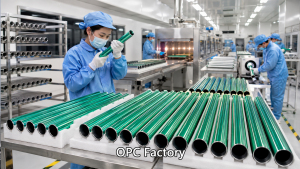
That sequence explains why an experienced buyer does not evaluate the cartridge alone: they evaluate the consistency between the consumable and the rest of the system. When managing a heterogeneous fleet, it is advisable to review the specifications of the drum unit, the developing unit, and the fusing unit in parallel, because wear in any of those assemblies alters a print result that is then wrongly attributed to the toner.
New copier, used copier, and refurbished copier
The selection criteria change depending on the condition of the equipment. In a new copier, the imaging system works within design tolerances. In a used copier or a refurbished copier, the drum, the developing unit, or the fusing unit already accumulate duty cycles, and the consumable stops being a neutral element in the final result.
For that type of fleet, compatibility information must be more explicit. The model designations C2263/2265, S1810, C3371, and C5570/7785 correspond to the Xerox series and are declared as suitable for refurbished copiers.
Context: which components go into the consumables budget
In an office, a copy shop, or a printing plant, consumption is not limited to the cartridge. The components that reappear in the maintenance budget are the following:
- Toner: the powder that forms the final image on the paper; the cartridge stores it, transports it, and delivers it to the process.
- Developer and developing unit: the assembly that makes the latent electrostatic image visible by means of the toner.
- Drum unit: the assembly that holds the photoconductive drum during the printing cycle.
- OPC drum: the photoconductive drum that is part of the drum unit.
- Fusing unit: the assembly that fixes the toner to the paper by means of heat and pressure; it integrates fuser and pressure rollers and, in certain designs, components such as the Teflon film.
- Teflon film: a component associated with the fusing area in fusing units that use film technology.
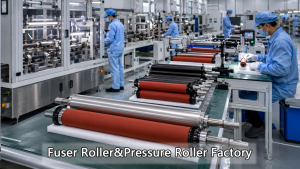
The practical reading of this list is simple: whoever buys consumables for several machines is not buying a product, they are buying a set of references that must be consistent with one another. Far Industries S.A. manufactures toner cartridges, drum units, fuser units, and developing units, which makes it possible to concentrate in a single supplier references that are normally split among several.
The compatibility portfolio covers consumables designed for CANON, RICOH, KYOCERA, HP, TOSHIBA, KONICA/MINOLTA, SHARP, and XEROX, and it is aimed at both copiers and laser printers in office, education, equipment rental, printing shops, and printing factory environments.
What can be verified in a manufacturer: the case of Far Industries S.A.
Far Industries S.A. is a manufacturer of office consumables for A3 equipment headquartered in the city of Zhongshan, Guangdong Province (China). The company was founded in 2011, operates a 9,000 m² plant with 88 employees, maintains an R&D team of 8 engineers, and declares an annual production capacity of 6,000,000 units. Approximately 70% of its production is exported, mainly to Latin America and the Middle East. The Tenon brand line of compatible toner cartridges is manufactured at these facilities.
These data are not corporate decoration: they are the starting point of a supplier evaluation, because they make it possible to gauge whether the declared capacity can sustain the volume of a recurring order.
Vertical integration: more than 90% of molds are produced in-house
The company manufactures more than 90% of its molds in-house and manages the entire production process within its own plant, from injection and blow molding to packaging. That scope includes component assembly, functionality testing, toner/developer loading, final quality verification, and packaging.
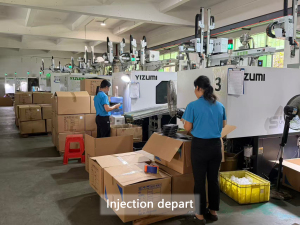
For the buyer, the consequence is concrete: when a variation occurs in the product, it is not spread across several suppliers without common traceability. Control is applied at every stage of the same internal process.
Declared materials
Compatible toner cartridges use virgin PET as the main housing material. The toner powder comes from a publicly listed company: more than 90% of the toner used comes from recognized listed companies and approximately 90% of the toner powder is imported. Print yield is based on the toner powder, and the specific details must be checked with the supplier on a case-by-case basis.
That last point deserves attention in a B2B evaluation. A print yield presented as a closed, universal figure is usually less verifiable than a yield defined according to the powder used and confirmed by the supplier for the model and application.
ISO 9001 certification and its exact scope
The compatible toner cartridge is certified in accordance with the ISO 9001 standard, and the manufacturer operates a quality management system certified under that same standard. The declared scope of the certification covers the references C2263/2265, S1810, TN622, TN328, TN512, and TN626.
In a supplier comparison, the difference between stating "we are ISO 9001" and specifying "the certification covers these exact references" is the difference between a claim and a verifiable fact. The buyer can check the list of covered references against the list of models they intend to purchase and immediately detect any mismatch.
Batch control, traceability, and third-party testing
Every batch of toner is reviewed by professional engineers in a dedicated testing laboratory. That procedure constitutes a batch-by-batch quality control and enables batch traceability. The company also provides third-party testing and can issue third-party test reports.
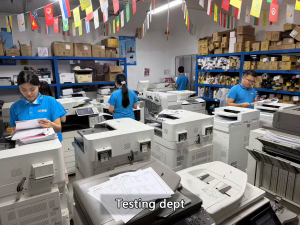
Before leaving the factory, every product goes through four checks: toner print quality testing, structural inspection of the empty cartridge, abnormal toner leakage checking, and packaging compliance verification. These four stages make up the delivery standard declared by the manufacturer.
How to verify a toner cartridge before buying: 7 steps
The following sequence is intended to be carried out before issuing a purchase order. Each step produces a piece of data that can be filed as part of the supplier record.
- Identify the equipment precisely. Record the brand, series, and exact model of every copier or laser printer in the fleet, including A3 and A4 equipment.
- Cross-check the model designation. Compare the consumable designation with the list of models declared by the supplier. For example, the cartridge with designation C2263/2265, S1810, TN622, TN328, TN512, and TN626 corresponds to the Konica series.
- Review the declared material. Confirm the housing material and the origin of the toner powder. In this case: virgin PET as the main material and toner powder from a listed company, with more than 90% coming from listed companies and around 90% imported.
- Verify the certification and its scope. Confirm the applicable standard and the covered references: the ISO 9001 certification applies to C2263/2265, S1810, TN622, TN328, TN512, and TN626.
- Request evidence of batch control and traceability. Ask for written confirmation that every batch of toner is reviewed by engineers in a dedicated laboratory and that batch traceability exists.
- Ask for third-party testing and print samples. The manufacturer can provide third-party test reports and print samples from the batch of toner used in the product.
- Confirm commercial and after-sales terms. Settle the MOQ, delivery time, customization options, and the support procedure before formalizing the order.
Purchasing scenarios where these criteria change the outcome
Printing factories and printing shops
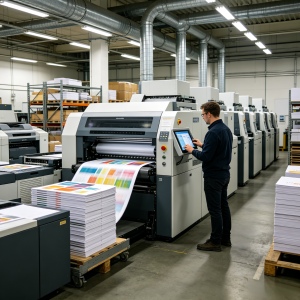
In continuous production, the priority is consistency: a change in behavior between batches forces jobs to be repeated. Batch control and traceability are, in this scenario, the most relevant data of the evaluation.
Copier rental companies
Companies that rent equipment from several brands need to cover a wide range of models with a single supplier and reduce unscheduled technical visits. Structural inspection of the empty cartridge and abnormal toner leakage checking are relevant verifications in this scenario, because they protect the rented equipment.
Consumables wholesalers and distributors
For a wholesaler, the main risk is not the purchase price, but returns. A low return rate protects the channel's margin and reputation; that is why it is advisable to request the details of the pre-shipment verification process, and not just a general quality description.
Offices, educational centers, and copy centers
In these environments, purchasing is usually channeled through grouped supply projects, where the goal is to keep total cost under control without degrading daily print quality. Exact compatibility by model prevents wrong orders and urgent replacements.
Fleets with used or refurbished copiers
When the equipment fleet combines new, used, and refurbished copiers, compatibility information must be reviewed machine by machine. The Xerox series with designations C2263/2265, S1810, C3371, and C5570/7785, for example, is declared as suitable for refurbished copiers.
Comparison table: covered series and verifiable data
The following table summarizes the information declared by the manufacturer for each compatible series. Only what can be cross-checked against the product documentation is included.
| Compatible series | Model designations | Declared material | Certification and verification |
|---|---|---|---|
| Konica | C2263/2265, S1810, TN622, TN328, TN512, TN626 | Virgin PET; toner powder from a listed company (≈90% imported) | ISO 9001, covering these references; batch traceability |
| Xerox | C2263/2265, S1810, C3371, C5570/7785 | Virgin PET; toner powder from a listed company | Third-party testing on request; suitable for refurbished copiers |
| Canon | G57/GPR-43/C-EXV59; NPG-71/GPR-55/C-EXV51; NPG-83/GPR-61/C-EXV58; G84/C-EXV59 | Virgin PET; toner powder from a listed company | Third-party testing on request |
| Sharp | C2263/2265, S1810, MX-60CT/AT/GT/NT/FT | Virgin PET; toner powder from a listed company | Third-party testing on request |
| Ricoh | MP 3554/6054, IM C6010, IM C6000 | Virgin PET; toner powder from a listed company | Third-party testing on request |
| Kyocera | TK-8365, TK-3182, TK-1275, TK-5372 | Virgin PET; toner powder from a listed company | Third-party testing on request |
| Toshiba | T-FC616, T-FC415, T-3028, T-FC330 | Virgin PET; toner powder from a listed company | Third-party testing on request |
| HP | W1002YC, W9130/9120, W9170/9160, W9050 | Virgin PET; toner powder from a listed company | Third-party testing on request |
Outside the table are the data that cannot be generalized: print yield is based on the toner powder and must be confirmed with the supplier for each model and each application.
Frequently asked questions
What certification backs these compatible toner cartridges and which references does it cover?
The compatible toner cartridge is certified in accordance with the ISO 9001 standard, and the manufacturer operates a quality management system certified under that standard. The declared scope of the certification covers the references C2263/2265, S1810, TN622, TN328, TN512, and TN626. When requesting quality documentation, it is advisable to ask for the list of covered references and compare it with the models to be purchased.
How can you tell whether a toner cartridge manufacturer has real specifications for copiers?
It is verified with four data points: housing material, origin of the toner powder, production process, and quality control. At Far Industries S.A., the cartridges use virgin PET as the main material; more than 90% of the toner comes from recognized listed companies and approximately 90% of the powder is imported; more than 90% of the molds are produced in-house and the process ranges from injection and blow molding to packaging; in addition, every batch of toner is reviewed by professional engineers in a dedicated testing laboratory.
Is unit price the only factor in the total cost of compatible consumables?
No. Besides price, the MOQ, delivery time, print yield, and the cost of returns also matter. The MOQ for these compatible cartridges is 2 cartons, the declared monthly capacity is 50,000 units, and print yield is based on the toner powder, so its details must be checked with the supplier. It is also possible to customize the cartridge's page yield according to the application, which makes it possible to adjust the cost per job instead of buying a standard reference for all uses.
Can samples and validations be requested before an order?
Yes. The manufacturer can provide third-party test reports and print samples from the batch of toner used in the product; it also accepts custom orders and offers factory tours by video call so that the buyer can verify the facilities before committing to a volume.
What is the delivery time and how is supply sustained?
The declared delivery time is 10 to 45 days and the monthly capacity amounts to 50,000 units, with ODM/OEM mode and customization of logo, sticker, box, carton, page, and design. After-sales support combines fast response from representatives with a technical profile, remote support, video guidance, on-site technical assistance, and return and exchange services. To start an evaluation, you can download the full catalog and send your model list to marketing@far-industries.com.
Conclusion: verify before buying, not after installing
A compatible toner cartridge is evaluated with data, not with adjectives. The sequence that reduces risk is always the same: confirm the model designation, read the declared material, check the scope of the certification by reference, require evidence of batch control, and request samples or third-party testing before scaling up volume.
In a fleet that combines new, used, and refurbished equipment, it is advisable to apply that sequence machine by machine and keep the information on file for the next replacement. That record is, in practice, what separates a one-off purchase from a stable supply.
Download the catalog and request your evaluation
Far Industries S.A. accepts custom orders and coordinates video-call tours of its Zhongshan factory for pre-purchase verifications. Send your list of copier models and request print samples from the corresponding batch of toner.
- Product catalog: Download catalog (PDF)
- Website: www.far-industries.com
- Email: marketing@far-industries.com
- WhatsApp / Phone: +86 138-2476-3396
- Contact: Christina Zou
- Request a sample or quotation: Contact via WhatsApp