
Compatible toner card: compliance, lots and regions
Compatible toner cartridge: compliance, batches, and regions
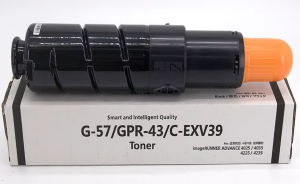
Compliance for a compatible toner cartridge is demonstrated with verifiable evidence by model, batch, and market—not with a generic phrase. For a buyer in the research and evaluation stage, the practical question is which document allows confirming which fact, with what scope, and under what conditions. This guide converts regional requirements into an evidence file: an ISO 9001 certificate with covered references, third-party testing, review of each batch by engineers in a dedicated laboratory, traceability of virgin PET and toner powder, and compatibility lists for HP, Ricoh, Kyocera, Toshiba, and Canon series.
The Tenon toner cartridge brand is evaluated using the same principle: a useful specification must be traceable to a document, a sample, or a production record. Evidence does not eliminate commercial risk, but it allows separating a supplier's statement from a verifiable fact. It also avoids two common mistakes: accepting a certification without scope and assuming that a laboratory test covers all batches or all regions.
What verifiable compliance means for a compatible toner cartridge
A compatible toner cartridge can perform a printing function and, at the same time, require different documents for each market. The buyer must separate three concepts that are not equivalent: management system certification, product or batch testing, and regulatory conformity for the destination market. An ISO 9001 certificate confirms a quality management system within a defined scope; it does not by itself confirm that every reference complies with a specific country's environmental or substance regulations.
The specification sheet usually states that print yield is based on toner powder and that details should be consulted with the supplier. That statement is correct, but insufficient for approval. To evaluate a batch, the buyer needs to know what was tested, with what method, on what sample, and who reviewed the result. To evaluate a market, the buyer needs to know which declaration applies, with which version, and for which model. To evaluate a supplier, the buyer needs to see whether those answers are supported by internal records and, where applicable, by third-party testing.
Market context: why evidence outweighs the brochure
The printing consumables market is large and competitive. Business Research Insights estimates the global ink and toner market at approximately USD 38.47 billion in 2026. Fortune Business Insights projects USD 3.72 billion for the laser printer toner segment in 2026 and notes that Asia Pacific accounted for 37.26% of the laser printer toner market in 2025. EcoTonerUSA projects that compatible or aftermarket cartridges will reach 50% global share in 2028, a secondary-source forecast that should be read as a scenario, not as an established fact.
These figures explain buyer interest, but they do not validate a specific supplier. Customs classification is also part of the file. According to UN Comtrade classification, HS code 370790 is associated with chemical preparations for photographic uses, including toner and developers; HS code 844399 covers parts and accessories for printers and copiers, such as drum units, fuser units, and rollers. A correct classification helps with importation, but it does not replace technical review or the regulatory declaration of the destination market.
What Far Industries S.A. confirms and what it does not confirm
Far Industries S.A., headquartered in Zhongshan, operates a 9,000 m² plant with 88 employees, 8 R&D engineers, annual capacity of 6,000,000 units, and 70% exports directed mainly to Latin America and the Middle East. The company states that it manufactures more than 90% of its molds in-house and manages the process from injection and blow molding through assembly, filling, testing, and packaging. These data describe capacity and process control; they are not equivalent to a regional certification or a guarantee of results on all equipment.
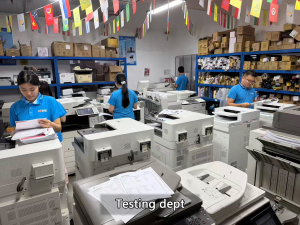
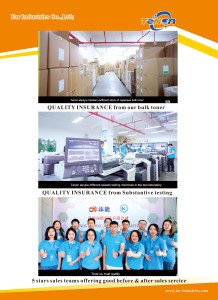
In materials, the compatible toner cartridge uses virgin PET as the main material. The toner powder comes from a publicly listed company, and approximately 90% is imported; more than 90% of the toner comes from recognized publicly traded companies. The company has a dedicated testing laboratory, where each toner batch is reviewed by professional engineers. This batch review enables batch traceability and constitutes an internal quality control. In addition, third-party testing is provided, and third-party test reports can be supplied.
ISO 9001 certification is confirmed for the compatible toner cartridge for references C2263/2265, S1810, TN622, TN328, TN512, and TN626. The manufacturer operates a quality management system certified under ISO 9001, and the certification covers those references. The guide does not claim additional regional certifications, unconfirmed environmental certifications, or universal coverage of the entire catalog. If a supplier mentions a certification, the buyer should request the certificate, the scope, the validity, and the exact relationship to the model being purchased.
How to turn a regional requirement into evidence: 7 steps
- Define the market, importer, and model. Evaluating a cartridge for an office in Latin America is not the same as evaluating one for a distributor importing into the European Union. The destination country, the party responsible for import, and the exact equipment designation determine the applicable documents. The same reference may require different labeling, safety data sheet, or substance declaration depending on the market.
- Identify the applicable requirement before requesting documents. The buyer should confirm with their importer or advisor which declarations, labels, or restrictions apply to the product and intended use. It is not advisable to accept a generic statement such as “complies with European regulations” without scope, version, and model. Nor is it advisable to transfer a European Union requirement to Latin America without verifying its applicability.
- Verify the ISO 9001 certificate with scope. Request the number, issuer, issue date, validity, and covered references. In the case of Far Industries S.A., ISO 9001 certification covers C2263/2265, S1810, TN622, TN328, TN512, and TN626. That coverage is specific; it should not be presented as certification of all models or as environmental certification.
- Review third-party tests by sample and by batch. A useful report identifies the laboratory, method, date, model, batch, and result. A screenshot or a logo without those data does not allow concluding that the received batch was the one tested. Ask whether the report corresponds to the exact model and whether the sample was taken from the production batch or from a laboratory sample.
- Require the batch review record. Each toner batch is reviewed by professional engineers in a dedicated laboratory. For the buyer, the value lies in having a verifiable record: date, responsible person, result, and link to the batch. Batch traceability allows investigating a nonconformity and limiting the scope of a claim.
- Document material traceability. Request the declaration of virgin PET and toner powder from a publicly listed company, as well as the declared imported proportion, approximately 90%. That information helps evaluate origin and consistency, but it does not replace the safety data sheet or a market-specific substance declaration.
- Validate compatibility, custom orders, and after-sales. The model list must match the equipment designation. Accept custom orders only if documented conditions exist for sample, packaging, and labeling. The video call tour and pre-sales and after-sales response allow verifying processes and asking questions before approval.
Batch testing: what the record should contain
Batch review is not an administrative formality. In a compatible toner cartridge, the batch links the toner powder, the housing material, the assembly, and the packaging. If a difference in density, leaks, or lower-than-expected yield appears, the batch record allows knowing what was reviewed and what samples were retained. The buyer should ask that the record include at least the model reference, review date, engineer or responsible person, review result, and relationship to the shipment.
Third-party testing complements internal control, but it does not replace it. An external report can provide evidence about a sample; the internal record shows the release discipline for each batch. The right question is not only whether the supplier has tests, but whether it can link a specific test to the model and batch that will be received. When that link does not exist, the buyer assumes a risk that cannot be measured with the document in hand.
Material traceability: virgin PET and toner powder
Virgin PET is the declared main material for the compatible toner cartridge. The toner powder comes from a publicly listed company, with approximately 90% imported and more than 90% of the toner from recognized publicly traded companies. The company also states that it manufactures more than 90% of its molds in-house. These data are useful for evaluating supply consistency and process control, but the buyer should avoid two extrapolations: not all components have the same origin, and not all models share the same bill of materials.
The buyer must distinguish between toner, developer, developer unit, drum unit, fuser unit, OPC drum, and Teflon film. A toner cartridge compatibility list does not automatically extend to those components. In a used copier or photocopier, the condition of the drum and fuser unit can affect the result even if the cartridge is correct. In a refurbished photocopier, the maintenance history and equipment configuration also matter. Therefore, evidence must separate the consumable from the equipment condition.
Model compatibility lists
Compatibility must be verified by designation. The following lists are the ones confirmed in the product information available for this guide. Universal compatibility with the entire series or with unlisted configurations is not claimed. Before purchasing, confirm the exact model of the photocopier or laser printer, the configuration, and the firmware when relevant.
| Series | Confirmed model designations | Declared scope |
|---|---|---|
| HP | W1002YC; W9130/9120; W9170/9160; W9050 | HP series |
| Ricoh | MP 3554/6054; IM C6010; IM C6000 | Ricoh series |
| Kyocera | TK-8365; TK-3182; TK-1275; TK-5372 | Kyocera series |
| Toshiba | T-FC616; T-FC415; T-3028; T-FC330 | Toshiba series |
| Canon | G57/GPR-43/C-EXV59; NPG-71/GPR-55/C-EXV51; NPG-83/GPR-61/C-EXV58; G84/C-EXV59 | Canon series |
The list is a selection tool, not a performance guarantee. A cartridge may be compatible with the equipment designation and still require testing in the real printing environment. In refurbished or used photocopiers, it is advisable to test a sample before approving a full batch. In offices, printing factories, print shops, and copier rental companies, compatibility should be evaluated together with print volume and equipment maintenance.
Evidence table: what each document allows you to conclude
| Evidence | What it should contain | What it allows you to conclude | What it does not allow you to conclude |
|---|---|---|---|
| ISO 9001 certificate | Number, issuer, validity, and covered references | Confirms a quality management system for the indicated scope | Does not confirm regulatory conformity in each market or the performance of a specific batch |
| Third-party test report | Laboratory, method, date, model, batch, and result | Provides external evidence about the sample tested | Does not automatically cover all batches or all regions |
| Batch review record | Date, responsible person, result, and traceability | Shows internal control by batch and allows investigating nonconformities | Does not replace a regional certification or an external test |
| Material declaration | Virgin PET and toner powder from a publicly listed company; approximately 90% imported | Helps evaluate traceability and origin | Is not equivalent to a safety data sheet or a market substance declaration |
| Compatibility list | HP, Ricoh, Kyocera, Toshiba, and Canon models | Guides selection by designation | Does not prove compatibility with the entire series or with unlisted configurations |
| Video call tour | Molding, filling, assembly, testing, and packaging | Allows verifying processes and asking technical questions | Does not replace a formal audit or a laboratory report |
| Pre-sales and after-sales service | Technical response, remote support, video guidance, on-site assistance, and return or exchange | Reduces operational risk and facilitates claims | Does not guarantee the absence of failures |
Use cases: where this evidence matters most
For an importer or distributor, batch evidence protects reputation and reduces returns. A wholesale supplier of copier supplies needs a broad compatibility list, but it also needs consistent quality so as not to pass the problem on to the end customer. In a copier rental company, a consumable failure can generate a service visit and downtime; that is why the batch record and after-sales response matter as much as price.
In printing factories, print shops, and advertising agencies that print complex text and images, continuity matters. In internal offices and large educational institutions, group purchasing seeks total cost control and supply stability. In projects for individuals, small print shops, copy shops, and users with a single printer, verification should be proportional to volume, but the principle is the same: do not accept a promise without a document. The Tenon toner cartridge brand should be evaluated with that same evidence logic.
Document checklist for the buyer
- ISO 9001 certificate with number, issuer, validity, and covered references.
- Third-party test report with laboratory, method, date, model, and batch.
- Batch review record with responsible person and result.
- Material declaration: virgin PET, toner powder from a publicly listed company, and declared imported proportion.
- Safety data sheet and labeling applicable to the destination market, where applicable.
- Tariff classification and import documents, with reference to HS 370790 and HS 844399 where applicable.
- Compatibility list by model and warning about unlisted configurations.
- Custom order conditions: logo, sticker, box, carton, page, and design, if required.
- MOQ, lead time, and declared monthly capacity: 2 boxes, 10-45 days, and 50,000 units, respectively.
- After-sales procedure: technical response, remote support, video guidance, on-site assistance, and return or exchange.
- Print sample from the toner batch used in the product, when the buyer needs to validate the result.
Questions to ask the supplier before approval
- Which references exactly does your ISO 9001 certification cover, and can you show the current certificate with scope?
- Does each batch have an engineer review record, and who signs it?
- Can you provide a third-party report for the model and batch to be purchased?
- Which tests are performed in your own laboratory, and which are outsourced to third parties?
- Can you document the virgin PET, the toner powder from a publicly listed company, and the imported proportion?
- Which regional documents can you issue, and which are not confirmed for the requested model?
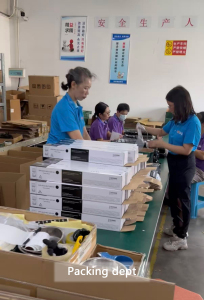
- Can you conduct a video call tour that includes molding, filling, assembly, testing, and packaging?
- Do you accept custom orders, and what are the MOQ and lead time?
- How do you handle a nonconformity, a return, or an exchange?
- What pre-sales and after-sales response do you offer, and in what language or channel is support provided?
Frequently asked questions
Toner cartridge manufacturers with specifications for copiers
To identify toner cartridge manufacturers with specifications for copiers, a list of models is not enough. The buyer must verify four pieces of evidence: the scope of the ISO 9001 certificate, third-party test reports linked to model and batch, the batch review record, and material traceability such as virgin PET and toner powder. They should also confirm the compatibility list for HP, Ricoh, Kyocera, Toshiba, and Canon series, and ask about custom orders, video call tours, and pre-sales and after-sales service. Far Industries S.A. states that it has a dedicated testing laboratory where each batch is reviewed by professional engineers, third-party testing, and ISO 9001 certification covering specific references. If you need samples, an approval questionnaire, or a quotation, you can review the catalog and present your requirements to the team.
Conclusion
The decision is not about choosing the compatible toner cartridge with the most logos, but the one that can demonstrate what each document covers. The buyer should require evidence by model and by batch: ISO 9001 certificate with scope, verifiable third-party report, batch review record, traceability of virgin PET and toner powder, and a compatibility list that does not extend beyond what is confirmed. That discipline reduces import risk, protects the distributor's reputation, and facilitates claims when a difference appears.
Evidence must also be read with its limits. A management system certification is not a regional certification; a third-party test does not cover all batches; a compatibility list does not replace testing on the equipment. The buyer who makes those distinctions can evaluate suppliers with comparable criteria and turn a commercial conversation into a verifiable file.
Next step for your evaluation
You can download the Far Industries S.A. catalog to review references and present your sample, approval, or quotation requirements. If your market requires specific documents, indicate the country, model, and volume to receive a response tailored to the confirmed scope.
For corporate inquiries, Far Industries S.A. maintains its website at www.far-industries.com. The evaluation of a compatible toner cartridge for copiers, used photocopiers, or rental equipment should be closed with concrete documents and a test proportional to the project's risk.
Have Questions or Need More Details?
Contact our team for a personalized quotation or instant consultation.
Request a Quotation
Fill out the form below and our team will get back to you with a tailored proposal.
WhatsApp Direct Chat
Prefer to chat in real-time? Message us on WhatsApp for instant assistance & quick answers.
- Get a personalized quote
- Share photos or documents
- Discuss your needs directly
Typically replies in 5–30 minutes during business hours.