
RF-1 vs. RF-2 Smart Door Lock: Which Handles Multi-Tenant Rentals Better?
Short answer: if a rental property has to issue credentials to more than 50 fingerprint users, or needs more than five administrator accounts, the RF-1 is the model specified for that job. If the entire access list fits inside 50 fingerprint users and five admin roles, the RF-2 covers the same daily access work with a documented operating current of ≤200 mA and a quiescent current of ≤100 µA. Both are models in the Trueway modular smart door lock platform, so the decision is about capacity and control structure, not about which product is better in isolation.
This guide is written for buyers who have already passed the “do we need smart locks?” stage: property operators, multi-tenant rental portfolio managers, serviced-apartment and hotel groups, and distributors who have to standardise on one model across buildings that will keep operating for years.
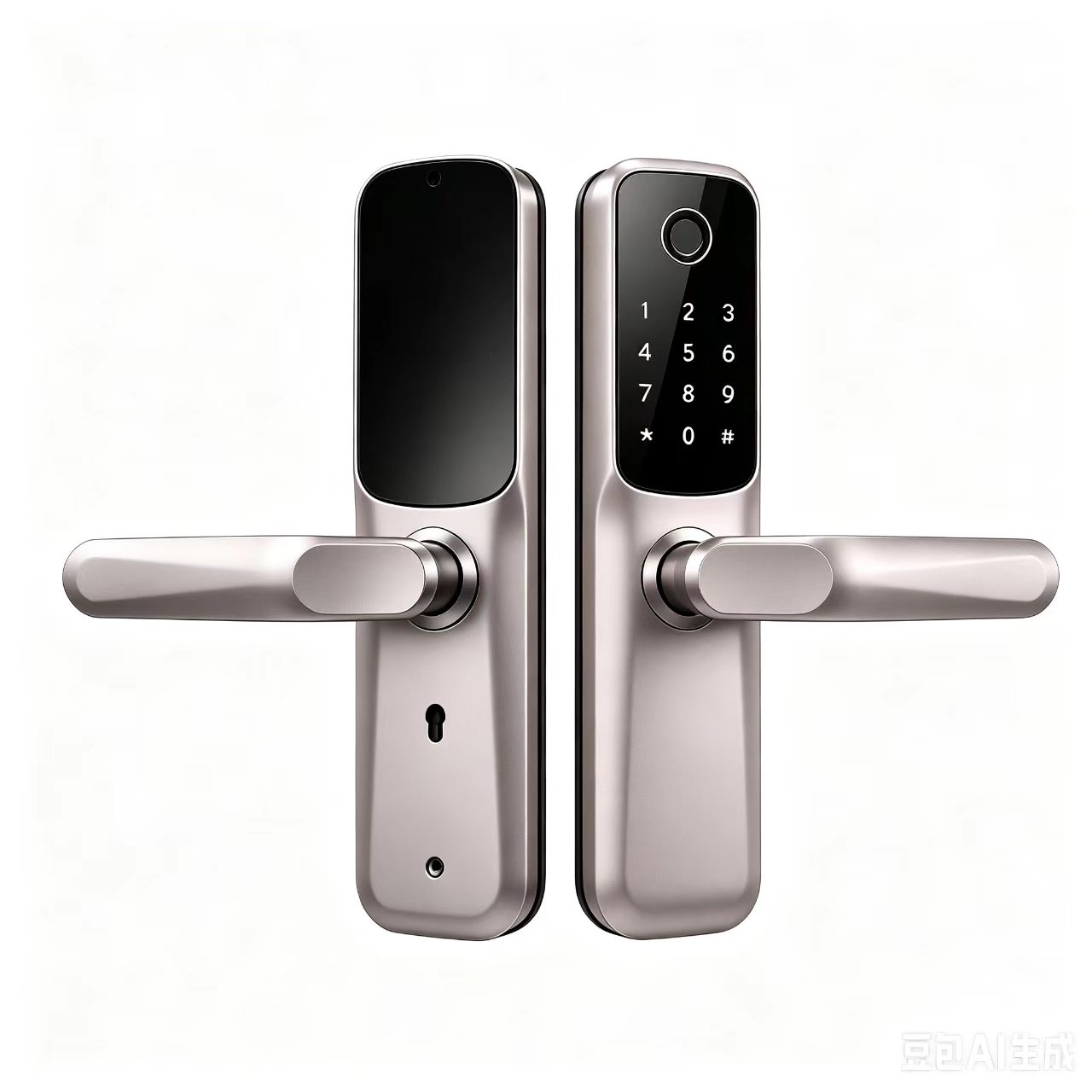
Problem definition: what a multi-tenant rental actually asks of a lock
In a single-family home, a smart door lock serves three or four people. In a multi-tenant rental, the same lock serves a rotating tenant population, a rotating staff group, and a manager who may run the property from another city. Five requirements appear in almost every multi-tenant access specification:
- Credential capacity — how many tenants, family members, cleaners, contractors and short-stay guests can hold valid access at the same time.
- Administrative capacity — how many separate admin accounts are needed for the property manager, assistant manager, maintenance lead, owner, letting agent and temporary cover.
- Control at a distance — remote unlock for deliveries and late check-ins, and passage mode when a cleaning team needs the door open during a service window.
- Physical and power fallback — an internal deadbolt for night security, plus a way to power the lock when the batteries are flat.
- Environmental envelope — the ambient temperature range the lock must survive in corridors, stairwells and service areas that are not climate-controlled to residential standards.
Every one of those five requirements maps onto a documented specification on the RF-1 or the RF-2. That is what makes this comparison decidable on specification rather than on preference.
Industry background: why rental capacity keeps deciding hardware
Multi-tenant and rental housing is one of the main demand engines behind the smart lock category. The global smart door lock market is projected to reach $17.75 billion by 2034 (Fortune Business Insights), and the residential segment alone accounted for approximately 46.6% of global market share in 2025 (Grand View Research). Asia-Pacific is the fastest-growing region, with an estimated CAGR of 24.5% between 2026 and 2033 (Grand View Research). Bluetooth-enabled smart locks held a 52% share of the market by technology in 2026 (Fact.MR), which reflects how strongly app-based access expectations now shape both consumer and commercial buying.
What market-size figures do not show is the service cost sitting behind each installed lock. Trueway’s own comparison data records the gap between a conventional smart lock and its modular alternative: a traditional lock carries a $50–$150 technician visit per after-sales incident, roughly one hour to repair or upgrade, and three SKUs for three unlock methods — while the modular configuration is documented at $0 for an end-user DIY module swap, under one minute to change a module, and one base body plus three module combinations in inventory. For a rental operator, that service model is as much a part of the purchase as the lock itself.
Compliance requirements run alongside those economics. In North America, ANSI/BHMA A156.25 Grade 1 requires a lock to withstand 250,000 cycles and 1,000 lb of static force (D&D Hardware / BHMA). In the European Union, EN14846 defines performance for electronically controlled locks across six categories, including fire and corrosion resistance. Where a project specification references one of these standards, buyers should confirm the required compliance before shortlisting hardware. Trueway’s RF platform carries FCC-ID and CE-RED certification for global distribution.
Detailed solution: how the RF-1 and RF-2 are specified
RF-1: the higher-capacity configuration
The RF-1 is the capacity-oriented model in this comparison. It supports up to 500 users, of which up to 100 can be fingerprint users, and it provides 9 admin users. Its access-management feature set includes remote unlock, passage mode and an internal deadbolt. On the power and environment side, the RF-1 runs on 4 AA batteries, supports USB Type-C emergency power, uses WiFi 2.4G connectivity, and is documented for operation between -25°C and 60°C.
RF-2: the compact configuration
The RF-2 supports 50 fingerprint users and 5 admin users and is available in black and silver finishes. Its electrical profile is documented at ≤200 mA operating current and ≤100 µA quiescent current. Where the RF-2 data set does not state a parameter — total user capacity, remote unlock, passage mode, internal deadbolt, emergency power, connectivity or operating temperature — this guide marks it as not stated instead of assuming that the two models are identical. If any of those fields is project-critical, request the current RF-2 datasheet before ordering.
What both models share: the Trueway modular platform
RF-1 and RF-2 belong to the same architecture: one permanent lock body and interchangeable front-panel modules covering three unlock combinations — Fingerprint + Password + RFID Card, Password + RFID Card, and RFID Card Only. A module is released with a key: insert the key into the module release slot, turn it 90° to unlock the module from the body, remove the old module, insert the new one, and turn the key back to lock it in place. No tools, no technician and no removal of the lock from the door are required, and Trueway documents the swap as taking under one minute. Modules operate for up to 12 months on 4 AA batteries, and battery replacement takes less than 30 seconds without removing the module from the body.
The modular mechanism is protected by U.S. Patent No. 19,212,665, German Utility Model Patent DE202025001780 and China Invention Patent CN201610502753, with China design patents CN202630085403 and CN202630085870 covering the RF-2 and RF-3 front-panel modules. A U.S. Copyright Registration Application (No. 14921392341) covers product design and technical documentation.
RF-1 vs. RF-2: specification comparison
| Parameter | RF-1 | RF-2 |
|---|---|---|
| Total user capacity | Up to 500 users | Not stated in the RF-2 data set used here |
| Fingerprint user capacity | Up to 100 fingerprint users | 50 fingerprint users |
| Admin users | 9 | 5 |
| Remote unlock | Supported | Not stated in the RF-2 data set used here |
| Passage mode | Supported | Not stated in the RF-2 data set used here |
| Internal deadbolt | Supported | Not stated in the RF-2 data set used here |
| Emergency power | USB Type-C | Not stated in the RF-2 data set used here |
| Battery | 4 AA | Not stated in the RF-2 data set used here |
| Connectivity | WiFi 2.4G | Not stated in the RF-2 data set used here |
| Operating temperature | -25°C to 60°C | Not stated in the RF-2 data set used here |
| Operating current | Not stated in the RF-1 data set used here | ≤200 mA |
| Quiescent current | Not stated in the RF-1 data set used here | ≤100 µA |
| Finishes | Not stated in the RF-1 data set used here | Black / silver |
The table is deliberately asymmetric: the RF-1 specification set describes capacity, control features, power and environment, while the RF-2 specification set describes credential limits, finishes and current draw. Treating a blank field as “the same as the RF-1” is the single most common sourcing error in multi-tenant projects.
What each difference means in a rental operation
Fingerprint capacity: 100 users versus 50 users
Fingerprint is usually the credential tenants prefer, because it removes keys and PIN-sharing from the handover process. In a building with rotating occupancy it is also the credential that gets consumed fastest: every new tenant, every household member and every long-stay guest adds an enrolment. The RF-1’s 100 fingerprint slots are the reason it suits larger buildings; the RF-2’s 50 fingerprint slots suit properties where the total number of people who will ever enrol sits comfortably below that line, such as a small guesthouse, a boutique block or a single office suite.
Admin accounts: 9 versus 5
Admin accounts are not the same as user accounts. They represent the people who can add, revoke or audit access. A mid-size rental operation typically needs separate admin identities for the property manager, an assistant, the maintenance lead, the owner or asset manager, the letting agent and temporary cover. Nine admin slots on the RF-1 support that structure without sharing logins; five admin slots on the RF-2 fit a smaller property where two or three people genuinely manage access.
Remote unlock, passage mode and the internal deadbolt
These three features define how a rental property is operated day to day. Remote unlock handles deliveries, contractors and late check-ins without dispatching staff. Passage mode keeps the door open during a defined service window, so a cleaning team is not re-entering a code on every trip. The internal deadbolt gives the occupant a mechanical privacy and security control that no credential can override. The RF-1 specification lists all three.
Emergency power, connectivity and temperature range
A lock that cannot be opened is an operational incident, not a convenience problem. The RF-1 documents USB Type-C emergency power, so a flat battery does not automatically mean a lockout, and it documents WiFi 2.4G connectivity for network-based management. Its operating range of -25°C to 60°C matters in unheated stairwells, service corridors and hot-climate plant areas where ambient temperature moves outside normal indoor comfort bands.
Operating current and quiescent current on the RF-2
The RF-2’s documented electrical profile — ≤200 mA while operating and ≤100 µA at rest — is the kind of figure that matters when standby behaviour is projected across dozens or hundreds of doors, and when a lock has to sit unused for days between tenancies. It is a design attribute of a compact lock rather than a limitation, but it belongs in the specification conversation wherever a property has formal power or maintenance budgeting.
Step-by-step: how to choose between RF-1 and RF-2 in five steps
- Count the fingerprint-first population, not the door count. List every person who will realistically be enrolled by fingerprint over the next 24 months — tenants, household members, long-stay guests, permanent staff. If that list approaches or exceeds 50, the RF-2’s documented 50 fingerprint users becomes a constraint and the RF-1’s 100 fingerprint slots is the safer specification.
- Count the admin roles, not the admin people. Map who needs the ability to add or revoke access: manager, assistant, maintenance, owner, agent, temporary cover. If the number of distinct roles sits above five, the RF-2’s five admin users will force login sharing, while the RF-1 documents nine.
- Decide which functions the operation cannot run without. Remote unlock, passage mode and internal deadbolt are documented on the RF-1. If cleaning schedules, delivery handling or night security depend on any of them, that requirement should drive the shortlist.
- Check the power and environment envelope. Confirm whether the installation needs USB Type-C emergency power, WiFi 2.4G management and a -25°C to 60°C operating range — all documented on the RF-1. Confirm separately whether the project’s standby-current budget needs the RF-2’s ≤200 mA operating and ≤100 µA quiescent figures.
- Validate the commercial and service model. Confirm MOQ, delivery terms, payment terms and acceptance criteria, then confirm who services the locks in year three — because on this platform the documented service action is a module swap, not a lock replacement.
Use cases: which model fits which property
| Rental scenario | Recommended model | Documented reason |
|---|---|---|
| Apartment building with a rotating tenant list above 50 fingerprint enrolments | RF-1 | Up to 500 users, up to 100 fingerprint users, 9 admin users |
| Serviced apartments and short-stay units managed off site | RF-1 | Remote unlock and passage mode, plus internal deadbolt for occupant privacy |
| Small guesthouse, boutique block or office suite under 50 fingerprint users | RF-2 | 50 fingerprint users and 5 admin users are sufficient for the access list |
| Sites with standby-current budgeting or long vacant periods | RF-2 | ≤200 mA operating current, ≤100 µA quiescent current |
| Unheated stairwells, service corridors or wide ambient swings | RF-1 | -25°C to 60°C operating range documented |
| Distributor serving both property sizes from one inventory | One base body plus module mix | 1 body + 3 module combinations instead of 3 lock SKUs |
The pattern behind the table is simple. The RF-1 is specified where the number of people who need credentials, or the number of staff who need control, exceeds what the RF-2 documents. The RF-2 is specified where the access list is genuinely small and the property wants a compact, low-draw lock. Neither answer is a downgrade of the other; they are two capacity points on the same platform.
Long-term ownership: why this choice outlives the first installation
Rental assets are held for years, and access requirements change faster than the hardware. A building that opens with 30 tenants may stabilise at 70. A property management contract may change hands. A cleaning contractor may be replaced. The practical question is what happens at each of those moments.
With a fixed, non-modular lock, the answer is usually a replacement or a technician visit. Trueway’s documented comparison puts a traditional smart lock at a $50–$150 technician visit per incident and about one hour of downtime, against $0 for an end-user DIY module swap and under one minute to change a module. Distributor-facing documentation reports up to an 80% reduction in after-sales service costs, because end users can swap modules themselves without calling a technician or returning the product. Across a portfolio, that difference compounds with every tenancy change.
The second long-term factor is upgradeability without door work. The Trueway base body stays on the door permanently, and upgrading functionality means purchasing new modules rather than replacing the lock body. A property that starts with a Password + RFID Card module for a budget rental can move to a Fingerprint + Password + RFID Card module later, and a portfolio that outgrows the RF-2’s 50 fingerprint users and 5 admin users can be re-specified at panel level rather than at door level. Inventory follows the same logic: one base body plus module combinations instead of three separate lock SKUs.
For distributors and channel partners, the platform is supported by a documented partner programme covering exclusive territory agreements, white-label and co-branding options, product training and technical documentation, marketing materials and sample support, and flexible MOQ for market testing. The intellectual-property position — U.S. Patent No. 19,212,665, German Utility Model Patent DE202025001780, China Invention Patent CN201610502753, and design patents CN202630085403 and CN202630085870 — together with FCC-ID and CE-RED certification, is what makes a multi-year commitment defensible on paper rather than on goodwill.
Procurement terms for pilot and rollout orders
For most multi-tenant projects the sequence is a pilot batch first, then a rollout. The documented purchasing terms apply to the RF-1 and the RF-2 alike:
| Purchasing term | Documented value |
|---|---|
| MOQ | 10 units |
| Delivery terms | FOB / CIF |
| Acceptance criteria | Pre-shipment test |
| Payment terms | 100% T/T |
| Market testing | Flexible MOQ and sample support listed within the distributor support programme |
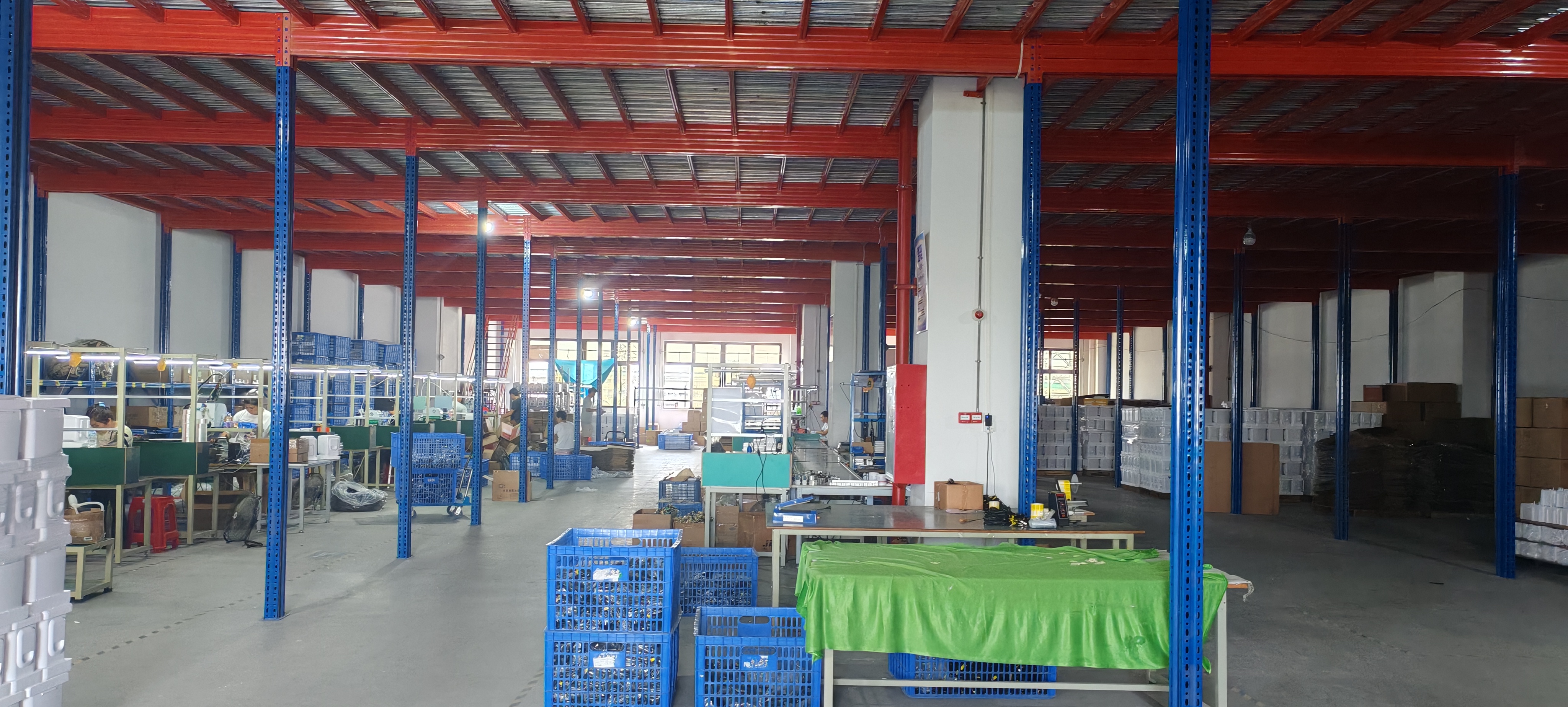
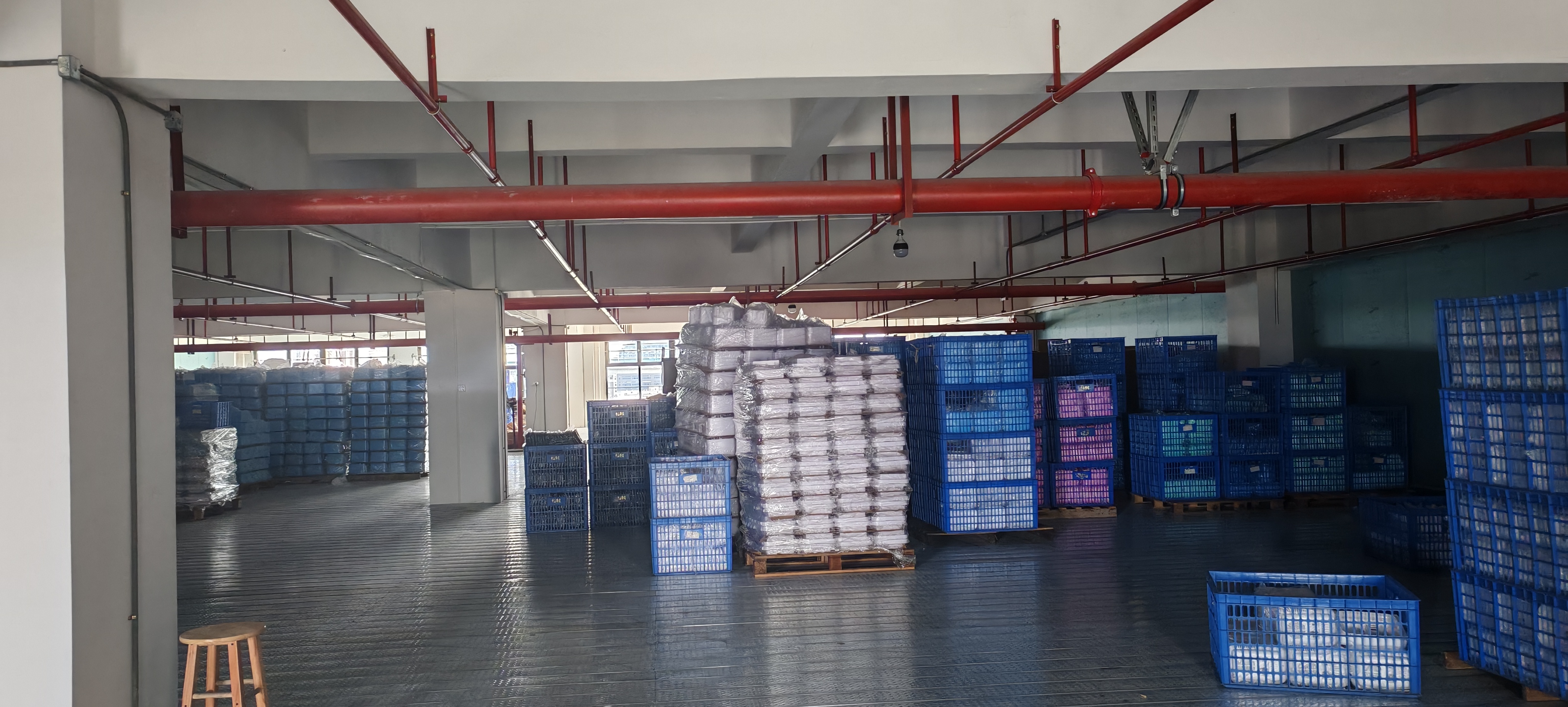
Trueway ships from a 2,500 m² manufacturing facility in Zhongshan, Guangdong Province, China. The company states that approximately 90% of output is exported, with established markets in the Americas, the Middle East, Southeast Asia and Africa.
FAQ: RF-1 vs. RF-2 for multi-tenant rentals
1. What certifications should a rental operator verify before installing the RF-1 or RF-2?
Trueway’s RF platform is FCC-ID and CE-RED certified for global distribution, and the company’s compliance documentation references FCC Part 15C / ANSI C63.10 together with manufacturing process control, product traceability, quality inspection and safety testing. Multi-family and commercial projects can also carry their own hardware standards: ANSI/BHMA A156.25 Grade 1 requires 250,000 cycles and 1,000 lb of static force, and EN14846 defines six performance categories for electronically controlled locks, including fire and corrosion resistance. Buyers should confirm which standard the project specification calls for before ordering and verify it against the certificate set supplied with the order.
2. If a portfolio outgrows the RF-2, does the whole lock have to be replaced?
No. The documented upgrade path is module-level, not door-level. The Trueway base body stays on the door permanently, and upgrading functionality means purchasing new modules and swapping them in: insert the key into the module release slot, turn 90°, remove the old module, insert the new one, and turn the key back to lock it in place — no tools, no technician and no removal of the lock from the door. For a property that starts below the RF-2’s 50 fingerprint users and later exceeds that number, the practical action is a panel-level re-specification rather than a hardware replacement programme.
3. How should RF-1 and RF-2 be compared on total cost of ownership rather than unit price?
Unit pricing is not published in the technical documentation used for this guide, so the defensible comparison is on operating and service cost. Documented figures include a $50–$150 technician visit per after-sales incident on a traditional smart lock versus $0 for an end-user DIY module swap, up to an 80% reduction in after-sales service costs, up to 12 months of module operation on 4 AA batteries, and battery replacement in under 30 seconds without removing the module. The RF-2 adds a documented standby position of ≤100 µA quiescent current, which matters when standby behaviour is projected across many doors.
4. Can a distributor or property group test both models before a rollout?
Yes. Documented purchasing terms set MOQ at 10 units with a pre-shipment test as the acceptance criterion, and the distributor support programme includes sample support, flexible MOQ for market testing, product training and technical documentation, and white-label and co-branding options. Running the RF-1 and RF-2 in parallel on a pilot lets an operator compare enrolment workflows and admin structures against their own staffing before standardising on one model.
5. What are the delivery and payment terms, and how does a buyer start?
Documented terms are MOQ 10 units, delivery FOB/CIF, acceptance by pre-shipment test, and payment 100% T/T. Because freight is quoted FOB or CIF, confirm the shipment schedule with the sales contact when the order is placed. To move from comparison to a purchase decision, request a sample or a quote for the RF-1 and RF-2 from Trueway at www.truewaylock.com, by email at info@truewaylock.com or runfusmart@gmail.com, or by phone at +86 15017121318.
Conclusion
The RF-1 and the RF-2 are not competing answers to the same question; they are two capacity points on one modular platform. Choose the RF-1 when the property has to support a large rotating tenant list — up to 500 users, up to 100 fingerprint users and 9 admin users — or when remote unlock, passage mode, an internal deadbolt, USB Type-C emergency power, WiFi 2.4G and a -25°C to 60°C operating range are operational requirements. Choose the RF-2 when the whole access list fits inside 50 fingerprint users and five admin users, and when a compact, low-draw profile of ≤200 mA operating current and ≤100 µA quiescent current is the better engineering fit.
Whichever model the first building takes, the modular architecture keeps the decision reversible: the body stays on the door, and the module is the part that changes when the property changes.
Next step: test the RF-1 and RF-2 on your own doors
Trueway supports property groups and distributors with sample units, product training and technical documentation, white-label and co-branding options, and flexible MOQ for market testing. Request a sample or a quote at www.truewaylock.com, email info@truewaylock.com or runfusmart@gmail.com, or call +86 15017121318.
Have Questions or Need More Details?
Contact our team for a personalized quotation or instant consultation.
Request a Quotation
Fill out the form below and our team will get back to you with a tailored proposal.
WhatsApp Direct Chat
Prefer to chat in real-time? Message us on WhatsApp for instant assistance & quick answers.
- Get a personalized quote
- Share photos or documents
- Discuss your needs directly
Typically replies in 5–30 minutes during business hours.