
Smart Door Lock Basics: Types, Features, and How to Choose One
Last updated: September 2, 2026
Smart Door Lock Guide: Types, Features, and How to Choose
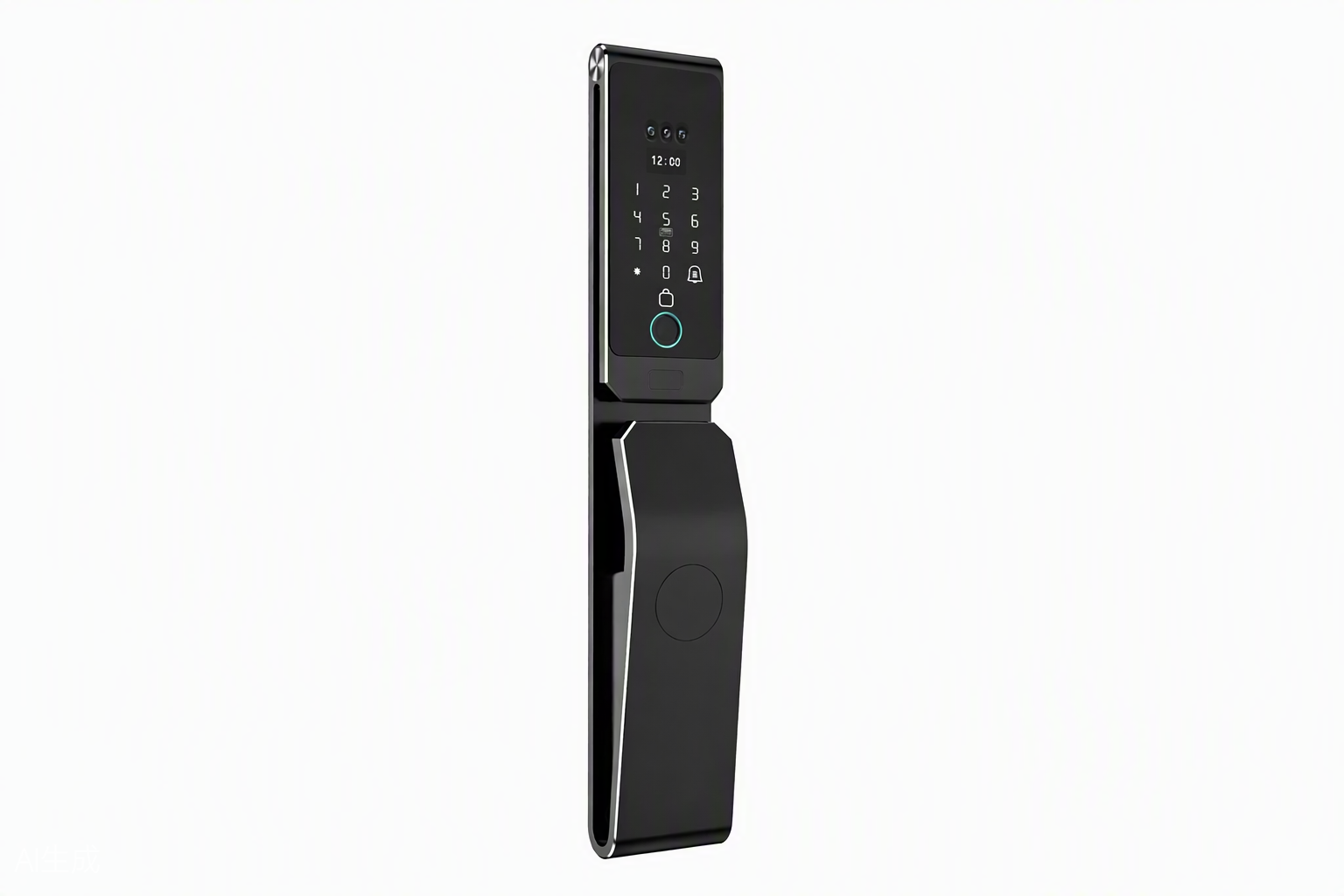
Trueway RF-3 smart door lock (front panel shown)
A smart door lock replaces the traditional key-and-cylinder system with an electronic lock that opens through fingerprint recognition, keypad codes, RFID cards, mobile apps, Bluetooth, Wi-Fi, or face recognition. It is not a single standardized product category but a family of electronic locking solutions for homes, rental properties, hotels, offices, and commercial access-control projects. This guide explains the main smart door lock types, how they differ, which features matter, and how to evaluate a supplier or product line for your next purchase.
Why the Smart Door Lock Category Is Difficult to Evaluate
Buyers first researching smart door locks meet an expanding category: The global smart door lock market is projected to reach USD 17.75 billion by 2034, with residential use accounting for about 46.6% of the market in 2025, according to Fortune Business Insights and Grand View Research. Yet market-level numbers do not make product selection easier. A buyer may need a fingerprint smart door lock for an apartment, a keypad smart door lock for an Airbnb, an RFID smart door lock for a hotel, or an office smart door lock access control system. These use cases require different credential types, hardware durability, battery design, installation, and after-sales service models.
The industry also uses overlapping vocabulary: electronic door lock, digital smart door lock, keyless smart door lock, biometric smart door lock, Wi-Fi smart door lock, Bluetooth smart door lock, and remote-control smart door lock all refer to overlapping products rather than distinct categories. For a distributor, contractor, or facility owner, the real decision is not which keyword fits the product, but which mix of access methods, power management, connectivity, hardware standards, and service cost matches the project.
How Smart Door Locks Have Evolved
Digital entry systems have existed for decades in hotels and commercial buildings, often using a keypad or magnetic card. The current generation of smart door locks adds biometric sensors (fingerprint and face), connectivity modules (Bluetooth, Wi-Fi, 2.4G), and mobile-app control. Bluetooth-enabled smart locks had a dominant 52% share of the global market in 2026, according to Fact.MR, and Asia-Pacific is the fastest-growing regional market with an estimated CAGR of 24.5% from 2026 to 2033, according to Grand View Research.
This evolution brings a side effect: more electronics inside the door means more components that can fail, become obsolete, or need replacement. A conventional deadbolt remains functional for decades because its mechanism is simple. An electronic lock connects a motor, PCB, sensor, keypad, and battery system. When any of these components fails, traditional smart-lock repair usually means removing the whole lock from the door and waiting for a technician or a replacement unit.
What Are the Main Smart Door Lock Types?
1. Fingerprint Smart Door Lock (Biometric)
A fingerprint smart door lock identifies users by scanning a fingertip and comparing it to stored templates. It is one of the fastest ways to enter: no key, code, or phone is required. Biometric locks are widely used in residential housing, commercial offices, and high-security areas because physical fingerprint credentials are difficult to lend or copy accidentally.
2. Password / Keypad Smart Door Lock
A password smart door lock uses a numeric keypad. Users enter a code to unlock. This is a practical choice for rentals, Airbnb properties, and households where multiple users need individual codes. A keypad lock usually stores more user IDs than fingerprint-only models and is less sensitive to dirty or dry fingertips. Entry can be shared remotely by sending a temporary code, making it common for property managers.
3. RFID Smart Door Lock
An RFID smart door lock reads contactless cards or fobs at close range (0–30 mm is typical). RFID is the traditional workhorse of hotel smart door locks and apartment buildings because cards are cheap to issue, easy to cancel, and simple to replace. The main weakness is that users must carry a physical card or fob, but for hotels and staff access, this is often an advantage rather than a limitation.
4. Face Recognition Door Lock
A face recognition door lock uses a camera and onboard processing to identify the person standing at the door. It provides hands-free entry, which is useful when carrying groceries or luggage. Face recognition tends to be found on higher-spec models with additional power demands. For example, the Trueway RF-3 supports face recognition, fingerprint, password, and card access in a single module, with detection for users between 1.2 m and 1.9 m in height and a recommended vertical mounting angle of up to 15°.
5. Wi-Fi Smart Door Lock and Bluetooth Smart Door Lock
These are connectivity labels rather than separate mechanical types. A Wi-Fi smart door lock connects directly to a 2.4G home or office network, allowing remote unlock through the manufacturer's mobile app from anywhere. A Bluetooth smart door lock connects to a nearby phone, usually at lower power consumption, but with a shorter range. Many Wi-Fi and Bluetooth locks also include a fingerprint reader, keypad, or both. When evaluating a smart door lock with mobile app support, confirm the app works with both Android and iOS, because some entry-level locks only support one ecosystem.
6. Video Door Phone System and Smart Door Lock Access Control
For apartment buildings and offices, a smart door lock is often part of a wider access control system that includes a video door phone system, intercom, or centralized management console. In this setting, the lock is selected not as a standalone purchase, but as one component in a network of units. Important criteria include user capacity, administrator hierarchy, audit capabilities, and integration with existing door frames and mortise lock bodies.
Comparison Table: Credential Types and Typical Use Cases
| Access Method | Typical User Experience | Best-Fit Scenario |
|---|---|---|
| Fingerprint | Touch and open; no item to carry | Homes, offices, high-security areas |
| Keypad password | Enter digits; codes can be shared and changed | Rentals, Airbnb, budget properties |
| RFID card | Tap card or fob; easy to issue and cancel | Hotels, apartments, office buildings |
| Face recognition | Stand at the door and enter hands-free | Residential and commercial projects seeking high convenience |
| Mobile app (Wi-Fi/Bluetooth) | Use a smartphone; Wi-Fi enables remote unlock | Remote management, temporary access, monitoring |
How to Choose a Smart Door Lock: Requirements-First Approach
Many procurement mistakes happen because buyers choose a product first and only later discover that the credential set does not fit the users. The following sequence is a more reliable way to evaluate a smart door lock for a project.
Step 1. Define who will use the door
Identify the user groups. A family home has a small set of regular users; an Airbnb has frequent temporary guests; a hotel has hundreds of transient guests plus cleaning and maintenance staff; an office has employees, managers, and possibly visitors. Each group implies different credential rules and user-storage capacity.
Step 2. Choose the credential mix
Select one or more access methods that match the users. A useful approach is to separate the decision of "lock body" from "front-panel module." In a modular smart lock system, the same permanent lock body can accept different front panels depending on the project. A fingerprint + keypad + RFID card module serves homes and offices; a password + RFID card module suits rentals and budget properties; an RFID-only module is appropriate for hotels and apartment buildings.
Step 3. Check power-management specifications
Battery design determines both user experience and maintenance cost. Look for stated quiescent current, operating current, working temperature, low-battery warning, and emergency power options. For example, Trueway RF-1 runs on four AA alkaline batteries with quiescent current of ≤50 µA and operating current of ≤180 mA; RF-2 uses four AA alkaline batteries with quiescent current of ≤100 µA and operating current of ≤200 mA; RF-3 is rated at DC7.4V with a recommended lithium battery capacity above 5000 mAh and a 5V/2A USB emergency power input.
Step 4. Verify intended application and installation fit
Smart door locks are not universal. Confirm that the product is designed for the actual application, such as residential housing, commercial office, hotel, or rental housing. Also consider the physical door: door frame, mortise lock body, and mounting requirements should be checked before ordering large quantities.
Step 5. Evaluate service and lifecycle cost
After-sales cost is often overlooked at the research stage. A traditional smart-lock failure commonly requires a technician visit, which can cost $50–$150 per incident, or removal of the lock from the door. In a modular system, when a front-panel module fails or becomes outdated, the user can swap the panel in under one minute without tools. This reduces the service operation to a logistics task rather than a technical visit.
What to Know About Modular Smart Locks with Key-Swappable Front Panels
One type of smart door lock has a structural advantage for distributors and project owners: a modular design that separates the permanent lock body from the replaceable front-panel module. The lock body remains on the door; the panel—which contains the fingerprint reader, keypad, RFID reader, screen, or face-recognition unit—can be changed when it fails, ages, or needs a new credential mix.
Trueway, developed and manufactured by Guangzhou Runfu Biotechnology Co., Ltd, is an example of this architecture. The company was founded in December 2015 in Zhongshan, Guangdong Province, China, by Stanley Ke, and its core innovation is a key-swappable modular smart lock. The user inserts a key into the module slot, turns the key to release, removes the old module, inserts a new module, and locks it in place. The swap takes less than one minute and does not require removing the lock from the door, a technician, or additional tools.
This architecture is protected by patents in three jurisdictions: U.S. Patent No. 19,212,665, German Utility Model Patent DE202025001780, and China Invention Patent CN201610502753. In addition, China design patents CN202630085403 and CN202630085870 protect the front-panel industrial designs of RF-2 and RF-3.
Trueway Smart Lock Models: RF-1, RF-2, RF-3
RF-1 Smart Door Lock
The RF-1 is a semi-automatic smart electronic lock available in black and grey. It is made of aluminum alloy and connects through Wi-Fi 2.4G, with compatibility for Android and iOS. Power comes from four AA alkaline batteries, with ≤50 µA quiescent current, ≤180 mA operating current, and a working temperature range of -25°C to 60°C. It stores 9 administrator IDs, 100 fingerprint users, and 500 additional users. It supports remote unlock, passage mode, and an internal deadbolt switch, with USB Type-C as emergency power. Intended use covers real-estate, residential housing, commercial office, hotel, and rental housing. Its front panel can be swapped between fingerprint, keypad, card, and NFC module types.
RF-2 Smart Door Lock
The RF-2 is available in black and silver, in aluminum alloy. It connects via Wi-Fi 2.4G, works with Android and iOS, and supports remote unlock, passage mode, and an internal deadbolt switch. It stores 5 administrator IDs, 50 fingerprint users, and 500 additional users. The lock operates on four AA alkaline batteries with ≤100 µA quiescent current and ≤200 mA operating current, from -25°C to 60°C. It uses USB Type-C for emergency power. Like the rest of the platform, the front panel is swappable without removing the whole lock body.
RF-3 Smart Door Lock
The RF-3 is a higher-specification fully automatic smart door lock featuring an OLED display and face recognition. It is made of aluminum alloy and is designed to be powered by a DC7.4V lithium battery with a recommended capacity above 5000 mAh. The lock includes a 13-key keypad with white light, a 0.96-inch OLED screen with white light, front speakers at 8 ohm 1W, and a doorbell speaker also at 8 ohm 1W. It connects through 2.4G Wi-Fi. Capacity totals 200 users, with 9 administrator slots; face storage supports 100 IDs, fingerprint supports 50 IDs, password supports 200 IDs, and card supports 200 IDs. Body sensing distance is 0.5–1.2 m, and card sensing distance is 0–30 mm. Face recognition is optimized for vertical mounting angles up to 15° and user heights of 1.2–1.9 m. The operating temperature range is -10°C to 60°C. The same key-swap modular architecture applies.
Comparison Table: Trueway RF Series at a Glance
| Attribute | RF-1 | RF-2 | RF-3 |
|---|---|---|---|
| Finish options | Black, grey | Black, silver | Black (RF-3 / RF-3 black) |
| Material | Aluminum alloy | Aluminum alloy | Aluminum alloy |
| Connectivity | Wi-Fi 2.4G | Wi-Fi 2.4G | 2.4G Wi-Fi |
| Phone systems | Android, iOS | Android, iOS | Android/iOS app via Wi-Fi |
| Power | 4 AA alkaline batteries | 4 AA alkaline batteries | DC7.4V lithium battery, ≥5000 mAh recommended |
| Quiescent current | ≤50 µA | ≤100 µA | <80–150 µA |
| Operating current | ≤180 mA | ≤200 mA | Wake <300 mA; motor <2 A |
| Working temperature | -25°C to 60°C | -25°C to 60°C | -10°C to 60°C |
| Admin / user capacity | 9 admin; 100 fingerprint; 500 other | 5 admin; 50 fingerprint; 500 other | 9 admin; total 200 users (face 100, fingerprint 50, password 200, card 200) |
| Remote unlock | Supported | Supported | Supported (module-dependent) |
| Passage mode | Supported | Supported | Module-dependent |
| Internal deadbolt switch | Yes | Yes | Motor-driven deadbolt |
| Emergency power | USB Type-C | USB Type-C | 5V/2A standard USB |
| Typical application | Residential, office, hotel, rental | Residential, office, hotel, rental | Residential, commercial office, hotel, rental, high-security |
Smart Door Lock Use Cases by Buyer Type
Smart Door Lock for Airbnb and Short-Term Rentals
A keypad smart door lock is often the primary recommendation for Airbnb because each guest can receive a unique or temporary code. In a modular platform, the host can choose a Password + RFID Card module. When guests change, the host does not need physical keys and can reset codes. If a module is worn or damaged by high turnover, the host can swap the front panel instead of replacing the entire lock.
Hotel Smart Door Lock and Apartment Access
Hotels and apartment buildings commonly need RFID-based credentials because staff can issue cards without collecting phones or remembering codes. An RFID-only module is the simplest configuration. A hotel or property manager may combine an RFID smart door lock with a central access control strategy; when evaluating units, it is important to check card sensing distance and user capacity.
Office and Access-Control Projects
Offices often need more than a single door: They need a smart door lock access control system that can distinguish employees, administrators, and visitors. A fingerprint + password + RFID module lets a company issue cards to staff, use a fingerprint for frequent entry, and create temporary codes for visitors. A project buyer should ask how many administrator accounts can manage the system, whether the lock supports an internal deadbolt switch, and whether passage mode can be turned on during business hours.
Residential and Villa Use
For family homes, convenience is the main driver. A fingerprint smart door lock removes the need to carry keys; a face recognition module adds hands-free entry; and remote unlock via Wi-Fi is useful for letting in a family member or service worker while the owner is away. Because residential users do not want to wait for a repair technician when a component fails, a lock whose front panel can be swapped without removing the whole lock body reduces downtime and service expense.
Evaluating a Smart Door Lock Manufacturer or Supplier
The supplier decision is as important as the product decision, especially for distributors and project buyers. The following evaluation points are based on the types of evidence a factory should be able to provide.
Check the manufacturer's declared production capacity and R&D structure
For Guangzhou Runfu Biotechnology Co., Ltd, the manufacturing facility is located at Zhenluo Science Park, Building 3, 4th Floor, Zhongshan, Guangdong Province, China, covering 2,500 square meters. The company reports annual production capacity of 100,000 units, over 50 employees, an R&D team of 5 engineers, and export business accounting for roughly 90% of sales, with major markets in America, the Middle East, Southeast Asia, and Africa. These are factual points a buyer can ask to verify through factory audit, samples, and testing.
Assess intellectual property and certification evidence
In the smart-lock industry, patent coverage and certifications are not slogans; they can determine whether a product can be sold legally in a target country. Trueway states FCC-ID and CE-RED certifications, plus U.S. Patent No. 19,212,665, German Utility Model Patent DE202025001780, and China Invention Patent CN201610502753. A buyer evaluating any supplier should request certificates by name and verify them, rather than accepting a claim that a product is simply "certified."
Ask about module-level service and inventory strategy
When a business stocks smart locks for hospitality, residential, or office projects, the traditional model requires multiple SKUs for different access methods. In a modular key-swap system, a buyer can hold one base lock body and several front-panel modules. This reduces inventory complexity and the need to stock every full-lock variant.
Frequently Asked Questions
1. Is the Trueway key-swap technology patented?
Yes. The key-swap mechanism is protected by U.S. Patent No. 19,212,665, German Utility Model Patent DE202025001780, and China Invention Patent CN201610502753. The RF-2 and RF-3 front-panel designs are further protected by China design patents CN202630085403 and CN202630085870.
2. How do you upgrade a Trueway smart door lock when the access method needs to change?
Insert the included key into the module release slot, turn the key 90 degrees to unlock the module from the lock body, remove the old module, insert the new module, and turn the key back to lock it in place. The process takes less than one minute and requires no tools and no removal of the lock from the door.
3. Which module combinations are available?
Three module combinations are available for the same lock body: Fingerprint + Password + RFID Card, Password + RFID Card, and RFID Card Only. The Fingerprint + Password + RFID Card module suits homes, offices, and high-security areas; the Password + RFID Card module suits rentals, Airbnb, and budget properties; the RFID Card Only module suits hotels, apartments, and office buildings.
4. Is a Trueway smart lock compatible with Android and iOS, and can it unlock remotely?
Yes. The RF-1 and RF-2 models connect through Wi-Fi 2.4G and are compatible with Android and iOS phone systems, with remote unlock supported. The RF-3 also uses 2.4G Wi-Fi and can be controlled through a mobile app. For any project, confirm the exact app configuration and network environment before deployment.
5. What does a standard RF-3 smart lock include in terms of capacity, power, and environmental limits?
The RF-3 stores a total of 200 users (9 administrators; up to 100 face IDs, 50 fingerprint IDs, 200 passwords, and 200 cards). It is rated at DC7.4V with a recommended lithium battery capacity above 5000 mAh, and it accepts 5V/2A USB emergency power. It operates from -10°C to 60°C and 45% to 90% RH, with a card sensing distance of 0–30 mm and a body sensing distance of 0.5–1.2 m. For face recognition, the recommended vertical mounting angle is ≤15° and the recommended user height is 1.2–1.9 m.
6. What RF-1 and RF-2 specifications should a buyer compare first?
RF-1 and RF-2 are both Wi-Fi 2.4G smart door locks powered by four AA alkaline batteries and supported by USB Type-C emergency power. RF-1 stores 9 administrator IDs and 100 fingerprint users, with ≤50 µA quiescent current and ≤180 mA operating current. RF-2 stores 5 administrator IDs and 50 fingerprint users, with ≤100 µA quiescent current and ≤200 mA operating current. Both support remote unlock, passage mode, an internal deadbolt switch, and operate from -25°C to 60°C.
7. How can a distributor or project buyer obtain samples and documentation?
Contact the Guangzhou Runfu Biotechnology Co., Ltd sales team at runfusmart@gmail.com or +86 15017121318. The company supports distributor programs that include product training, technical documentation, marketing materials, sample support, white-label and co-branding options, exclusive territory agreements, and flexible MOQ for market testing. A sample request is a practical next step before committing to a full container or project specification.
Bottom Line
A smart door lock is not a single product; it is a family of electronic access solutions defined by the credential mix, power strategy, connectivity, and service model. For residential buyers, convenience and remote control tend to matter most. For hotel, rental, and apartment operators, low-cost credential issuance and low maintenance are usually the deciding factors. For offices and access-control projects, administrator capacity, auditability, and integration with the existing door matter more than a single unlock method.
The fastest way to reduce risk is to separate the decision between the lock body and the front-panel module. A modular smart door lock such as the Trueway RF series allows the same permanent body to accept fingerprint, keypad, card, and NFC front panels in under one minute without tools—a design that directly addresses the two biggest problems in the category: repair cost and technology obsolescence.
Next step: request a sample or quote.
If you are evaluating smart door locks for a residential, rental, hotel, office, or distribution project, contact the Trueway team at runfusmart@gmail.com or visit www.truewaylock.com.
Have Questions or Need More Details?
Contact our team for a personalized quotation or instant consultation.
Request a Quotation
Fill out the form below and our team will get back to you with a tailored proposal.
WhatsApp Direct Chat
Prefer to chat in real-time? Message us on WhatsApp for instant assistance & quick answers.
- Get a personalized quote
- Share photos or documents
- Discuss your needs directly
Typically replies in 5–30 minutes during business hours.