
Smart Door Lock Comparison Guide: RF-1 vs. RF-2 vs. RF-3 for Different Buyer Needs
Selecting a smart door lock is rarely a one-model decision. For facilities with a few permanent residents, a smart lock with a small user list may be enough. For offices, rental portfolios and hotels, the same lock may need to handle dozens of users, changing credentials and remote management. Buyers who are evaluating Trueway RF-series locks often ask the same question: what is the actual difference between RF-1, RF-2 and RF-3, and which one should I order?
Trueway is a smart door lock platform developed and manufactured by Guangzhou Runfu Biotechnology Co., Ltd. This guide compares three RF-series models: RF-1, RF-2 and RF-3. It focuses on the specifications that affect selection, including fingerprint and admin capacity, power supply, emergency charging, connection type, working temperature and credential features. According to the manufacturer's applicable-industry data, all three models are designed for real-estate, residential housing, commercial office, hotel, and rental housing applications.
Why a Structured Smart Door Lock Comparison Matters
At the evaluation stage, buyers usually know that they want keyless entry, but the buying team still needs to decide between fingerprint, password, RFID card, app-based remote control or face recognition. Model selection becomes a procurement issue when the following factors are not aligned:
- User database size: A lock with too few fingerprint slots can create constant overwrites.
- Admin hierarchy: Property managers may need more than one administrator account.
- Power source: Battery type, battery capacity and emergency power affect maintenance.
- Operating range: Temperature limits can determine whether a lock is suitable for an unheated stairwell or outdoor gate.
- Upgrade path: A lock design that allows module replacement can reduce long-term spare-part inventory.
RF-1, RF-2 and RF-3 are part of the same Trueway modular architecture, but their official specifications are not identical. Comparing those numbers first helps avoid choosing a model that works in a showroom but fails in a real property portfolio.
Industry Background: Smart Locks Are Moving from Convenience to Standard Equipment
The smart door lock category has become a normal part of residential and commercial construction discussions. Fortune Business Insights projects the global smart door lock market to reach USD 17.75 billion by 2034. Grand View Research estimates that the residential segment accounted for approximately 46.6% of the global market in 2025 and identifies Asia-Pacific as the fastest-growing region, with a projected CAGR of 24.5% from 2026 to 2033.
Buyers in different regions are not selecting a single technology. While Bluetooth-enabled locks hold a large share of the broader smart lock category, Wi-Fi-connected models are evaluated when remote unlock and app management are part of the requirement. The three Trueway RF models compared in this guide all connect through 2.4G Wi-Fi and support Android/iOS phone systems.
Manufacturing Context Behind the RF-Series
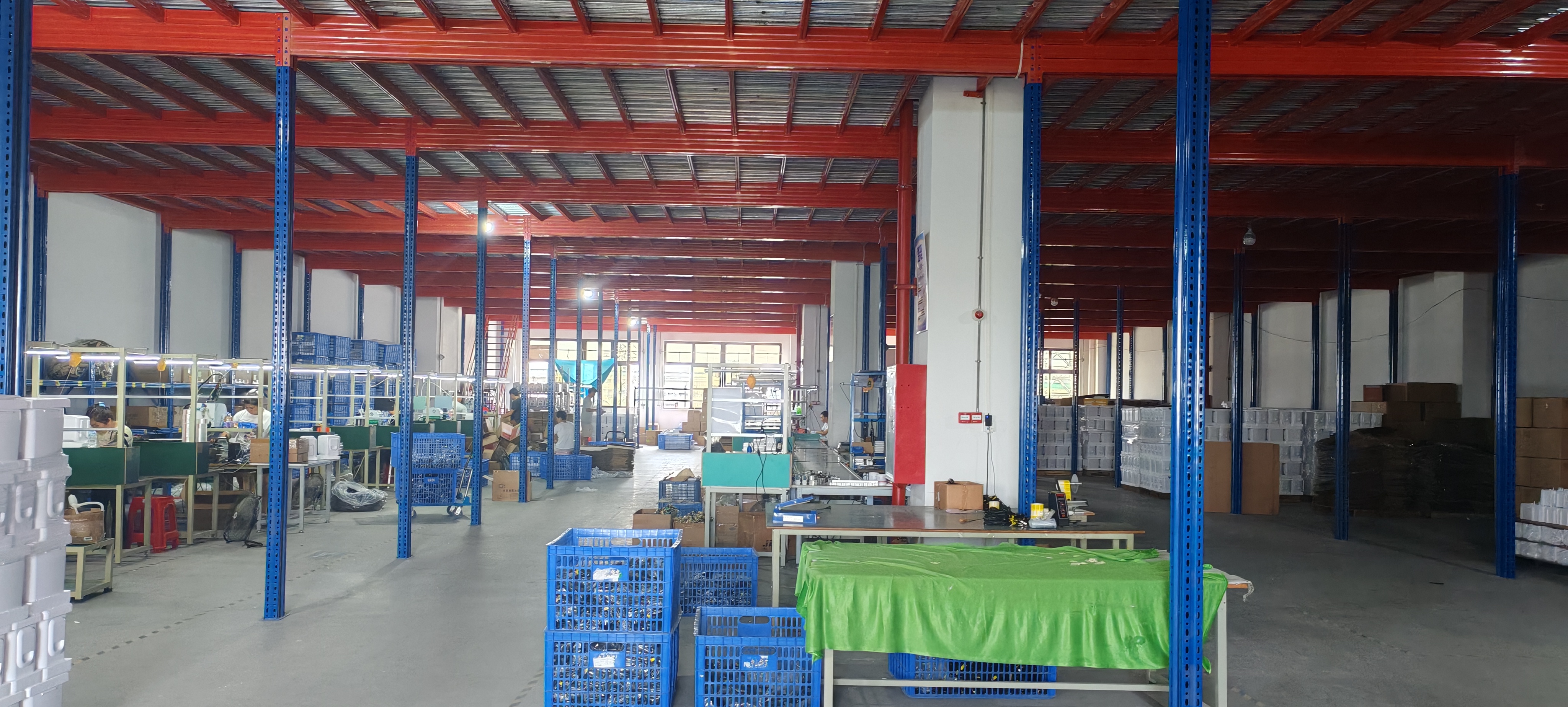
Buyers comparing three models also need confidence that the factory can deliver consistent quality. Guangzhou Runfu Biotechnology Co., Ltd. developed and manufactures the Trueway platform. The company's published manufacturing output is 20,000 units per month, and quality control includes a 10% product test standard on tested batches. The manufacturer exports to global markets and lists main markets including the Americas, the Middle East, Southeast Asia and Africa. For a distributor comparing RF-1, RF-2 and RF-3, this context affects lead time and quality assurance expectations, but not the ultimate choice of model number.
Trueway RF Series at a Glance
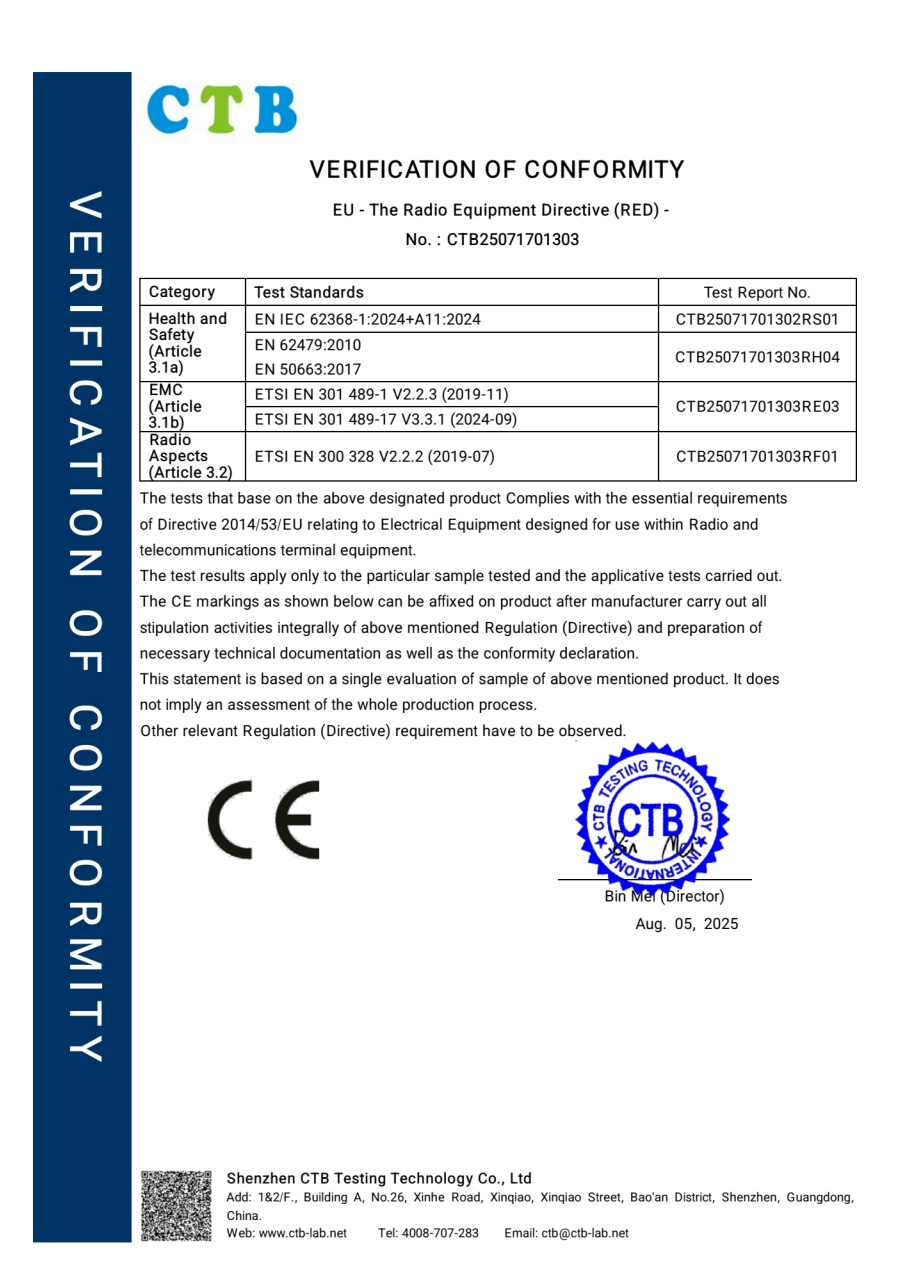
Trueway was designed around a simple after-sales idea: replace the electronic module instead of removing the entire lock from the door. The key-swappable architecture allows the front module to be released with the included key and turned to detach. U.S. Patent No. 19,212,665, German Utility Model DE202025001780 and China Invention Patent CN201610502753 protect this key-swap mechanism. In the company's certification record, FCC ID 2BRC3-RFSERIES and CE certificate CTB25071701303 cover the RF-series product scope, including RF-1, RF-2 and RF-3.
At platform level, Trueway offers three module combinations: Fingerprint + Password + RFID Card, Password + RFID Card, and RFID Card Only. This means a property can start with password entry, then move to fingerprint or RFID cards, without changing the lock body. However, buyers still need to compare the complete RF models, because each model carries a different specification list.
What Capacity and Credential Differences Mean in Practice
Fingerprint capacity is not just a storage number. On high-traffic doors, users can change, hands can be re-enrolled, and an administrator may delete old prints. If the lock fills to maximum, every new enrollment requires deleting an old user. RF-1's 100 fingerprint slots reduce the frequency of such overwrites. RF-2's 50 slots may be enough for a smaller group. The 500 other-user slots on RF-1 and RF-2 are relevant when temporary users, staff visitors or service personnel need access records separate from fingerprints.
Admin capacity is also practical. RF-1 and RF-3 both list 9 admin accounts; RF-2 lists 5. A building with separate security, maintenance and front-desk managers may need more than five admins. A small business may need only one or two. This is why the same property type may select different models from the same RF family.
RF-1: Higher Fingerprint and Admin Capacity
RF-1 is a Wi-Fi smart door lock model with a 2.4G connection and Android/iOS mobile support. It is powered by four AA alkaline batteries and includes USB Type-C emergency power. The lock provides 9 admin user slots, 100 fingerprint user slots and 500 other-user slots. It also supports an internal deadbolt switch, passage mode and remote unlock. The specified working temperature is -25°C to 60°C.
For buyers comparing the three models, RF-1's specification is the one that can handle a larger number of registered fingerprints without deleting existing users. Residential buildings with a changing list of family members, service staff or regular visitors may use the 500 other-user capacity for temporary access. Commercial offices that need more than 50 fingerprint records will find that RF-1 sits above RF-2 in capacity.
RF-2: A Simpler Four-AA-Battery Configuration
RF-2 also connects through 2.4G Wi-Fi and works with Android/iOS phone systems. It uses four AA alkaline batteries and has USB Type-C emergency power. Compared with RF-1, the RF-2 specification is simpler: 5 admin accounts, 50 fingerprint records and 500 other-user records. It still includes the internal deadbolt switch, passage mode and remote unlock, and its working temperature range is -25°C to 60°C.
RF-2 is relevant when a buyer does not need 100 fingerprint slots. A smaller household, a rental unit or a site where entry is managed mostly by password or card may not use a large fingerprint database. In that case, RF-2 keeps the specification aligned with the actual number of daily users.
RF-3: Face Recognition and a Richer Front Panel
RF-3 is the RF-series model that adds face recognition. It is powered by a DC7.4V lithium battery with recommended capacity above 5000mAh, has an undervoltage indication below DC7.2V and can be charged through a standard 5V/2A USB emergency power source. It connects over 2.4G Wi-Fi and includes a 13-key keypad, a 0.96-inch OLED screen, a front speaker and a doorbell speaker.
The RF-3 specification also includes a body sensing distance of 0.5 to 1.2m and a face recognition vertical mounting angle no greater than 15°. It supports multiple credential types, including face, fingerprint, password and card, with a credential storage total of 200 user records and 9 administrator slots. The listed fingerprint capacity is 50ID, password capacity is 200ID and card capacity is 200ID. RF-3's working temperature range is -10°C to 60°C, which is a narrower lower limit than the -25°C rating on RF-1 and RF-2.
Step-by-Step Selection Framework
The fastest way to choose among RF-1, RF-2 and RF-3 is to apply the same selection framework to every project.
- Count the people and credential types. If more than 50 fingerprint profiles are needed, start with RF-1. If face recognition must be included, start with RF-3. If the property is small enough for 50 fingerprints and 5 administrators, RF-2 is worth comparing.
- Check administrator requirements. RF-1 and RF-3 provide 9 administrator positions in their published specs, while RF-2 provides 5. This matters when a security manager, front desk and maintenance team all need admin rights.
- Match the power plan to maintenance capacity. RF-1 and RF-2 run on four AA alkaline batteries; RF-3 runs on a DC7.4V lithium battery with a recommended capacity above 5000mAh. A facility that standardizes on AA batteries may prefer RF-1 or RF-2.
- Review the temperature range. RF-1 and RF-2 are specified for -25°C to 60°C; RF-3 is specified for -10°C to 60°C. For installations in unheated environments where freezing temperatures are common, the -25°C models are the safer files to compare.
- Consider the front panel's future module. Since Trueway's design uses a key-replaceable module, the buyer should also ask which module combination will be installed on the lock body. The module combinations are Fingerprint + Password + RFID Card, Password + RFID Card, and RFID Card Only.
Use Cases for RF-1, RF-2 and RF-3
The same applicable-industry list appears for all three models: real-estate, residential housing, commercial office, hotel and rental housing. The difference is not industry eligibility; it is the expected scale of use.
Real-estate and residential housing: RF-1 allows a homeowner to register many fingerprints and maintain separate admin accounts for family members or property staff. RF-2 can be sufficient for a single-family door where only a few users need fingerprint access. RF-3 can be considered when the homeowner wants face recognition and a more visible smart-entry experience.
Commercial office: RF-1's larger fingerprint capacity and 500 other-user capacity fit offices where employees rotate through different work shifts. RF-3's card capacity and OLED/keypad interface may suit a small front-office door where staff and visitors need simple instructions. RF-2 can be used in a small office with fewer than 50 active fingerprint users.
Hotel and short-term rental: Hotels need frequent credential changes and controlled admin access. The Trueway module system supports password + RFID card and RFID-card-only configurations, which helps properties avoid issuing many fingerprints. All three models are within the RF-series certification scope, but the final model choice depends on the number of admin accounts and whether face recognition is required.
Rental housing and Airbnb-style properties: Owners who change codes between guests need remote unlock and passage mode. RF-1, RF-2 and RF-3 all provide remote unlock and passage mode. For a rental with only a few administrators, RF-2 may provide the lowest specification that still works; for a larger property manager, RF-1 or RF-3 should be checked against the guest-turnover workflow.
RF-1 vs RF-2 vs RF-3: Reference Comparison Table
| Attribute | RF-1 | RF-2 | RF-3 |
|---|---|---|---|
| Published profile | High-capacity modular smart lock | Simplified modular smart lock | Face-recognition smart lock |
| Connectivity | 2.4G Wi-Fi; Android/iOS | 2.4G Wi-Fi; Android/iOS | 2.4G Wi-Fi; Android/iOS |
| Power source | 4 AA alkaline batteries | 4 AA alkaline batteries | DC7.4V lithium battery, recommended capacity above 5000mAh |
| Emergency power | USB Type-C | USB Type-C | 5V/2A standard USB |
| Admin capacity | 9 | 5 | 9 |
| Fingerprint capacity | 100 | 50 | 50 |
| Other / credential capacity | 500 other-user slots | 500 other-user slots | Total storage 200; password and card capacity each 200 |
| Face recognition | Not listed | Not listed | Yes; body sensing 0.5-1.2m; mounting angle ≤15° |
| Additional interface | Not listed | Not listed | 13-key keypad; 0.96-inch OLED; front/doorbell speakers |
| Working temperature | -25°C to 60°C | -25°C to 60°C | -10°C to 60°C |
| Internal deadbolt switch | Yes | Yes | Yes |
| Passage mode | Supported | Supported | Supported |
| Remote unlock | Supported | Supported | Supported |
The table is limited to published specifications in Trueway's RF-series product data. It does not include every module combination possible for each model configuration.
Frequently Asked Questions
- Are Trueway RF-1, RF-2 and RF-3 smart locks certified and patented?
- RF-series locks covering RF-1, RF-2, RF-3, RF-5, RF-6 and RF-9 are within the scope of FCC ID 2BRC3-RFSERIES and CE certificate CTB25071701303. The key-swappable module mechanism is protected by U.S. Patent No. 19,212,665, German Utility Model DE202025001780, and China Invention Patent CN201610502753.
- What are the main specification differences between RF-1, RF-2 and RF-3?
- RF-1 provides 9 admin accounts, 100 fingerprint profiles and 500 other-user profiles, and uses four AA batteries. RF-2 provides 5 admin accounts, 50 fingerprint profiles and 500 other-user profiles, and also uses four AA batteries. RF-3 adds face recognition, a 13-key keypad, a 0.96-inch OLED screen and front/doorbell speakers, and is powered by a DC7.4V lithium battery. RF-1 and RF-2 are rated at -25°C to 60°C; RF-3 is rated at -10°C to 60°C.
- Which model fits when the project has a simple user structure?
- If the project needs only a limited set of fingerprints and admin accounts, RF-2 offers a simpler published specification: 5 admin accounts, 50 fingerprints and 500 other-user slots. RF-1 should be considered when a property needs more fingerprints or more admins. RF-3 should be considered when face recognition, OLED display or doorbell speaker functions are required. All three are Trueway RF-series modular locks and can be compared on lead time and order size before quoting.
- Can a buyer request samples or small test orders, and what is the lead time?
- Trueway distribution support includes sample support and flexible MOQ for market testing. The manufacturer reports monthly production capacity of 20,000 units. For OEM/ODM orders with logo customization, the listed lead time is 30 days, and quality control includes testing 10% of products. To confirm sample or quote details, contact info@truewaylock.com or visit www.truewaylock.com.
Conclusion
The choice between RF-1, RF-2 and RF-3 starts with user capacity, credential requirements and operating conditions. RF-1 is the model to compare when a property needs 100 fingerprint slots and 9 admin accounts. RF-2 is the simpler 4AA-battery model for buyers who can work with 50 fingerprints and 5 admins. RF-3 is the model to shortlist when face recognition, keypad, OLED and doorbell speaker features are part of the access experience.
All three models share the Trueway key-swappable architecture and are listed for real-estate, residential, commercial office, hotel and rental-housing applications. The manufacturer exports globally and applies a 10% product-testing standard to its production process. By matching each RF model to actual user counts, admin levels and temperature range, buyers can avoid both under-capacity locks and unnecessary feature spend.
For current samples, OEM/ODM quotes and distributor terms, contact Guangzhou Runfu Biotechnology Co., Ltd. through www.truewaylock.com or info@truewaylock.com.
Have Questions or Need More Details?
Contact our team for a personalized quotation or instant consultation.
Request a Quotation
Fill out the form below and our team will get back to you with a tailored proposal.
WhatsApp Direct Chat
Prefer to chat in real-time? Message us on WhatsApp for instant assistance & quick answers.
- Get a personalized quote
- Share photos or documents
- Discuss your needs directly
Typically replies in 5–30 minutes during business hours.