
Smart Door Lock Materials and Finishes: Aluminum Alloy, Black, Grey and Silver
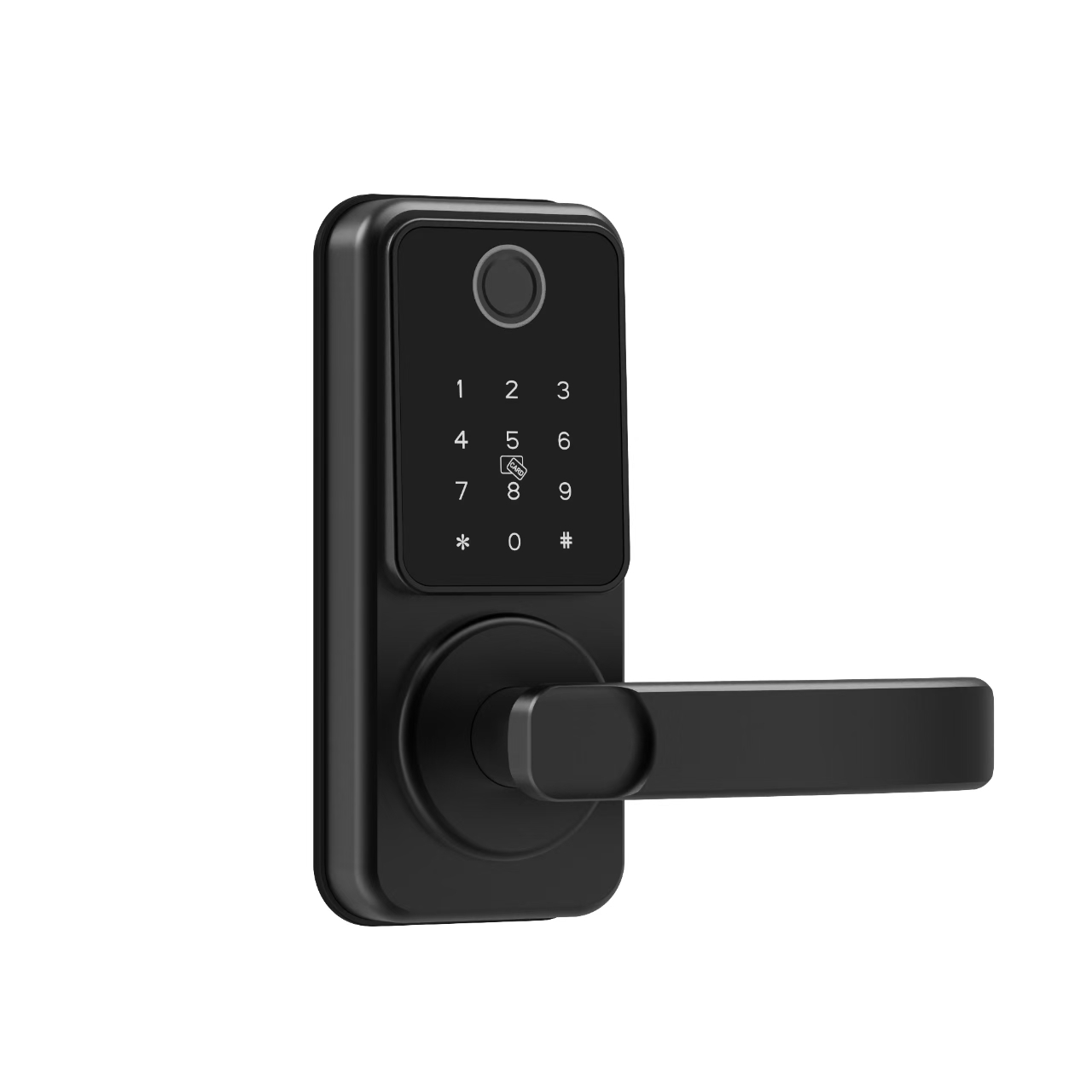
The RF-1 Smart Door Lock in black - one of two finishes offered on the RF-1, alongside grey.
Most smart door lock buyers do not start with the body material. They start with the unlock method - fingerprint, keypad, card, app - and only afterwards ask what the lock is made of and which finishes can be ordered. On a project with forty identical doors, that order of decisions is exactly what produces a building with three slightly different blacks on three identical doors.
Material and finish belong to the same decision as the unlock method, the power supply and the certification list. This guide sets out the material and finish options across the Trueway RF-1, RF-2 and RF-3 smart door locks, how those options map to real-estate, residential housing, commercial office, hotel and rental housing projects, and - just as important - what a material name and a finish colour do not prove.
Why Material and Finish Get Decided Too Late
Three failure patterns repeat in access-control specifications, and none of them is a technical problem.
- The finish is missing from the specification. The data sheet lists the unlock method, the Wi-Fi band and the battery type, but never the colour. The purchase order then goes out without a finish, and the site receives a mix of grey and black panels along the same corridor.
- The material is read as a performance rating. Aluminum alloy describes the lock body. It is not a cycle count, a fire rating or a corrosion class. Buyers who treat a material name as a durability guarantee skip the test data that actually answers the durability question.
- The finish is named inconsistently. The catalogue says silver, the quotation says grey, the drawing says natural. Each document makes sense on its own, and together they cannot be used to place a purchase order.
The fix is procedural rather than technical: treat material and finish as one line item, decide both at the same moment as the unlock method, and carry the exact finish label into the model designation on the order.
What Aluminum Alloy Does and Does Not Tell You
Aluminum alloy is the body material listed for the RF-1, RF-2 and RF-3 Smart Door Locks. For a specifier, that statement answers three useful questions: what the lock body is made of, which material family it belongs to when matched against the rest of the door hardware, and whether the same material statement can be repeated across every door in a project.
It does not answer the durability question. A material name is silent on cycle count, fire performance, corrosion class and ingress protection. Those are established by defined tests and certification documents, not by the material list.
Two standards are commonly cited in smart lock procurement. In North America, ANSI/BHMA A156.25 Grade 1 requires a lock to withstand 250,000 cycles and 1,000 lb of static force. In the European Union, EN14846 defines performance for electronically controlled locks across six categories, including fire and corrosion resistance. Both standards describe how a lock behaves under defined tests; neither is awarded by choosing an aluminum alloy body.
The same discipline applies to the certifications held on the Trueway RF series. The RF-1, RF-2 and RF-3 models are covered by FCC certification with ID 2BRC3-RFSERIES, issued by Eurofins Electrical and Electronic Testing NA, Inc. under Part 15C / ANSI C63.10 for the US market, and by a CE-RED Verification of Conformity, certificate CTB25071701303, issued by Shenzhen CTB Testing Technology Co., Ltd under RED Directive 2014/53/EU. These confirm radio conformity and market access for the listed models. They are not ANSI/BHMA Grade 1 or EN14846 declarations, and this article does not claim that they are.
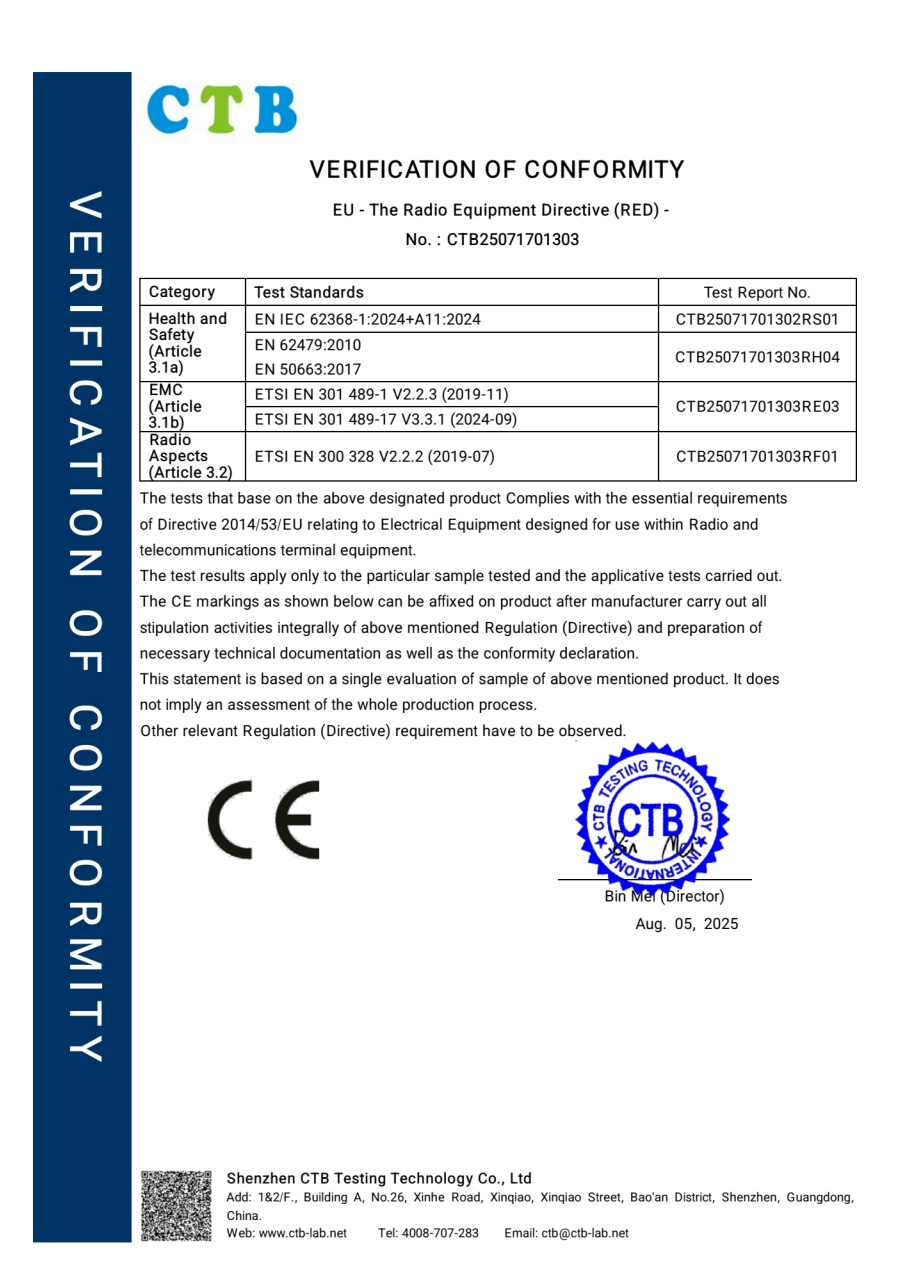
Conformity documents sit next to the material line, not inside it: the CE-RED certificate covers the electronic and radio characteristics of the listed models.
Finish Options by Model: Black, Grey and Silver
Finish availability is set at model level, not at platform level. Across the current Trueway RF series, the published options are:
- RF-1 Smart Door Lock - RF-1 black and RF-1 grey. The RF-1 body material is listed as aluminium alloy.
- RF-2 Smart Door Lock - RF-2 black and RF-2 silver. Body material: aluminum alloy.
- RF-3 Smart Door Lock - RF-3 black. Body material: aluminum alloy.
Two practical consequences follow. First, a project that needs one uniform finish across several lock models has limited overlap to work with: black is currently the only finish shared by all three models. Second, a finish is a project-wide visible attribute. One mismatched lock body is not a small defect, because it is visible on the door, on the day of handover, and in every photograph taken afterwards.
That is why the finish decision belongs in the evaluation stage rather than after the order. It is also why the finish should be written exactly as it appears in the model designation: RF-2 silver and RF-2 black are two distinct items, not one item with an option attached.
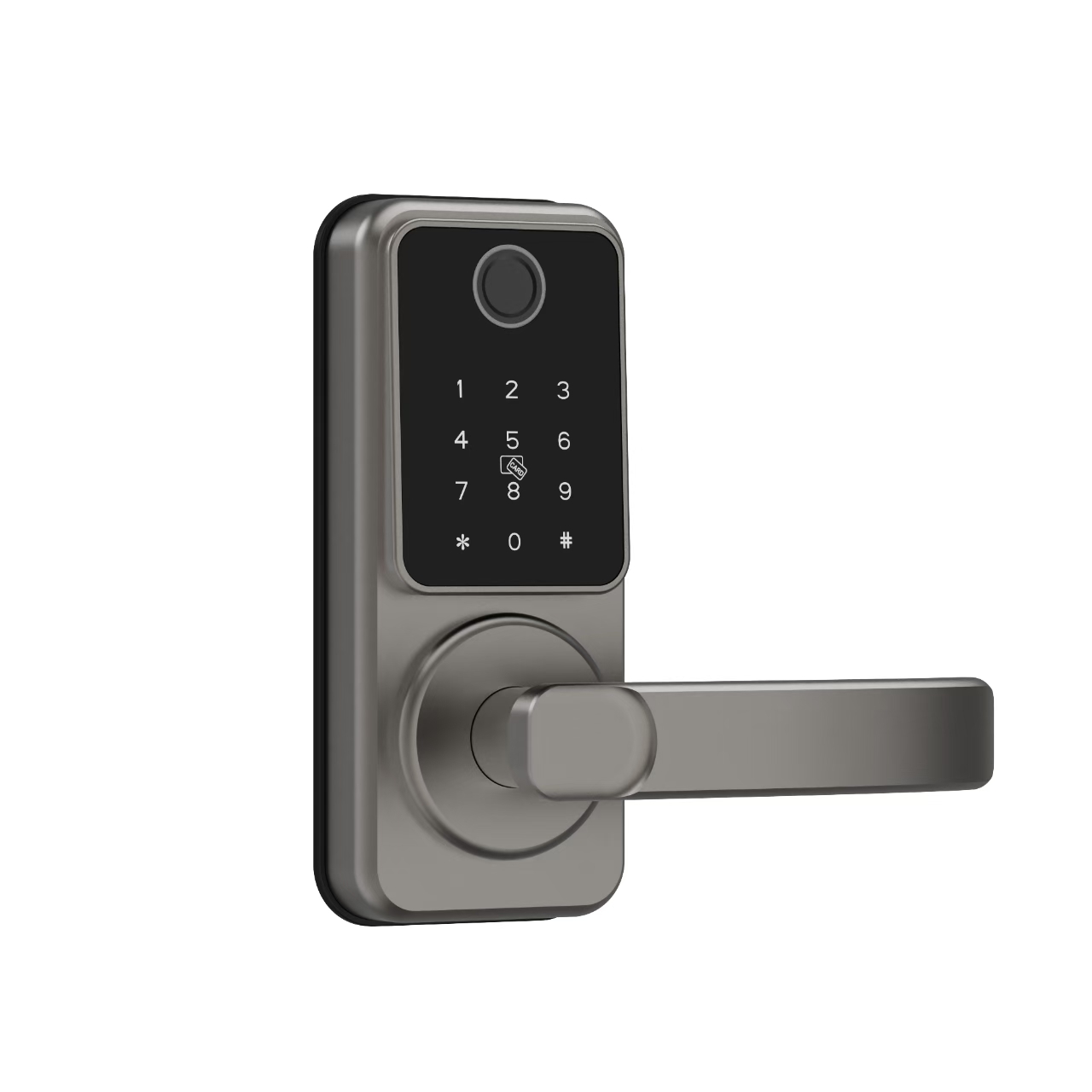
The RF-1 grey finish: the same aluminum alloy body as the black version, different visible surface.
How Material and Finish Fit Into the Wider Market
The global smart door lock market is projected to reach $17.75 billion by 2034, according to Fortune Business Insights. Grand View Research estimates that the residential segment accounted for approximately 46.6% of global market share in 2025, and that Asia-Pacific is the fastest-growing region with an estimated CAGR of 24.5% between 2026 and 2033.
Most of that volume sits in residential and multi-unit housing: buildings with many identical doors. In that setting the material and finish decision is not a cosmetic afterthought. It is the attribute that determines whether a handover looks consistent, and because it repeats at scale, an error in the specification repeats on every door.
Buyers are also being asked more often to separate appearance from performance. A black lock and a silver lock can carry identical electronics, identical batteries and identical certifications. The colour difference does not change the radio module, the user capacity or the temperature envelope of the model.
The Trueway RF Series: One Body Material, Three Finish Profiles
Trueway is the smart lock brand of Guangzhou Runfu Biotechnology Co., Ltd, a manufacturer founded in December 2015 that designs and produces modular smart locks at a 2,500 square metre facility in Zhongshan, Guangdong, China. The company reports an export ratio of 90%, with listed markets in America, the Middle East, Southeast Asia and Africa.
All three current models share the same body material - aluminum alloy - and list the same application areas: real-estate, residential housing, commercial office, hotel and rental housing. What changes between them is the electronics, the power supply and the available finishes.
What the modular architecture changes for the finish decision
The RF platform is built around a permanent lock body and interchangeable front-panel modules. Fingerprint, keypad, card and NFC modules can be swapped in seconds by inserting a key into the module slot and turning it; no tools are required and the lock does not have to be removed from the door. Trueway states that this patented structure cuts after-sales costs by 80% and allows one SKU to serve multiple functions.
For a buyer specifying finishes, the effect is on inventory and spares rather than on appearance. A conventional arrangement needs three SKUs to cover three unlock methods; the modular arrangement uses one body plus three module combinations. A repair that would normally take about an hour and a $50 to $150 technician visit becomes an end-user swap listed at under one minute and $0 in technician cost.
None of this changes the finish specification itself. The finish is still selected at model level and confirmed in writing before the order is scheduled.
Choosing Material and Finish: A Five-Step Sequence
Step 1 - Confirm the material on the written specification, not the photograph
Images confirm appearance; they do not confirm material. For the RF-1, RF-2 and RF-3, the material line in the product data reads aluminum alloy. If a project requires a material statement, quote it from the data sheet rather than from a rendering or a showroom sample.
Step 2 - Fix the unlock method before the colour
The unlock method determines the module. Trueway publishes three module combinations on the platform: fingerprint + password + RFID card, listed for homes, offices and high-security areas; password + RFID card, listed for rentals, Airbnb and budget properties; and RFID card only, listed for hotels, apartments and office buildings. Choosing the combination first narrows the model, and the model narrows the finishes.
Step 3 - Choose the finish and write it into the model designation
Decide black, grey or silver against the door, the frame and the surrounding hardware, then carry the exact label - RF-1 grey, RF-2 silver, RF-3 black - through the quotation, the purchase order and the installation drawing. One label, three documents, no paraphrase.
Step 4 - Check the electrical and environmental envelope of that model
- RF-1: powered by 4 AA alkaline batteries with USB Type-C emergency power; quiescent current ≤50uA, operating current ≤180mA; working temperature -25 degrees C to 60 degrees C; 9 administrators, 100 fingerprint users and 500 other users; internal deadbolt switch, passage mode and remote unlock supported.
- RF-2: powered by 4 AA alkaline batteries with USB Type-C emergency power; quiescent current ≤100uA, operating current ≤200mA; working temperature -25 degrees C to 60 degrees C; 5 administrators, 50 fingerprint users and 500 other users; internal deadbolt switch, passage mode and remote unlock supported.
- RF-3: powered by a DC7.4V lithium battery with a recommended capacity above 5000mAh and undervoltage indication below DC7.2V; 5V/2A USB emergency power; quiescent current below 80-150uA, wake-up state below 300mA average and motor operation below 2A average; operating temperature -10 degrees C to 60 degrees C, operating humidity 45-90% RH, storage temperature -20 degrees C to 70 degrees C; 2.4G Wi-Fi; 0.96 inch OLED screen and a standard 13-key white-light keypad.
Step 5 - Match the certification documents to the model list
The RF-1, RF-2 and RF-3 are covered by FCC certification with ID 2BRC3-RFSERIES and by United States Invention Patent protection issued by the United States Patent and Trademark Office. The German Utility Model Certificate (Urkunde) 20 2025 001 780, issued by the Deutsches Patent- und Markenamt, covers models RF-1, RF-2, RF-3, RF-5, RF-6 and RF-9 on the German market. The US copyright application for the smart door lock technical drawing is filed with the United States Copyright Office under Service Request # 1-14921392341 and is pending.
If a project calls for a specific performance standard such as ANSI/BHMA A156.25 Grade 1 or the EN14846 categories, ask for the applicable test report for the exact model. Do not infer it from the material line, and do not assume that a finish change alters the certificate.
Use Cases: Where Each Finish and Model Fits
All three RF models list the same application areas - real-estate, residential housing, commercial office, hotel and rental housing. The differences show up in volume, tenant turnover, and how visible the finish is on the finished building.
Real-estate and multi-unit handover
Handover photography, buyer walkthroughs and repeat phases make finish consistency the most visible attribute of a lock specification. Where a project mixes RF-1, RF-2 and RF-3 across different door types, black is the practical common denominator, because it is the only finish currently offered across all three models.
Residential housing
The RF-1 carries the highest listed user capacities in the series: 9 administrators, 100 fingerprint users and 500 other users, with passage mode, remote unlock and an internal deadbolt switch. It is offered in black and grey, which keeps the finish choice simple for single-family and villa projects.
Commercial office
The RF-2 lists 5 administrators, 50 fingerprint users and 500 other users, with remote unlock and passage mode - a reasonable fit for offices where the permanently enrolled fingerprint group is small but the total staff population is large and changes over time. It is offered in black and silver, and the silver variant reads as standard architectural hardware in most office interiors.
Hotel
For hotels, the relevant platform option is the RFID card-only module combination. The RF-3 lists 200 card IDs with a card sensing distance of 0-30mm, alongside 200 password IDs, a 0.96 inch OLED screen and a 13-key keypad, and is offered in black. Hotels evaluating finishes should note that card capacity and card sensing distance are model attributes that come with the electronics, not with the colour.
Rental housing and Airbnb
Rental properties live with turnover. The RF-2 combination of a 500-user non-fingerprint capacity and remote unlock support covers rotating tenants without re-issuing hardware, and password + RFID card is the module combination Trueway lists for rentals, Airbnb and budget properties. Black and silver finishes both work here; the selection usually follows the door and frame colour rather than the lock.
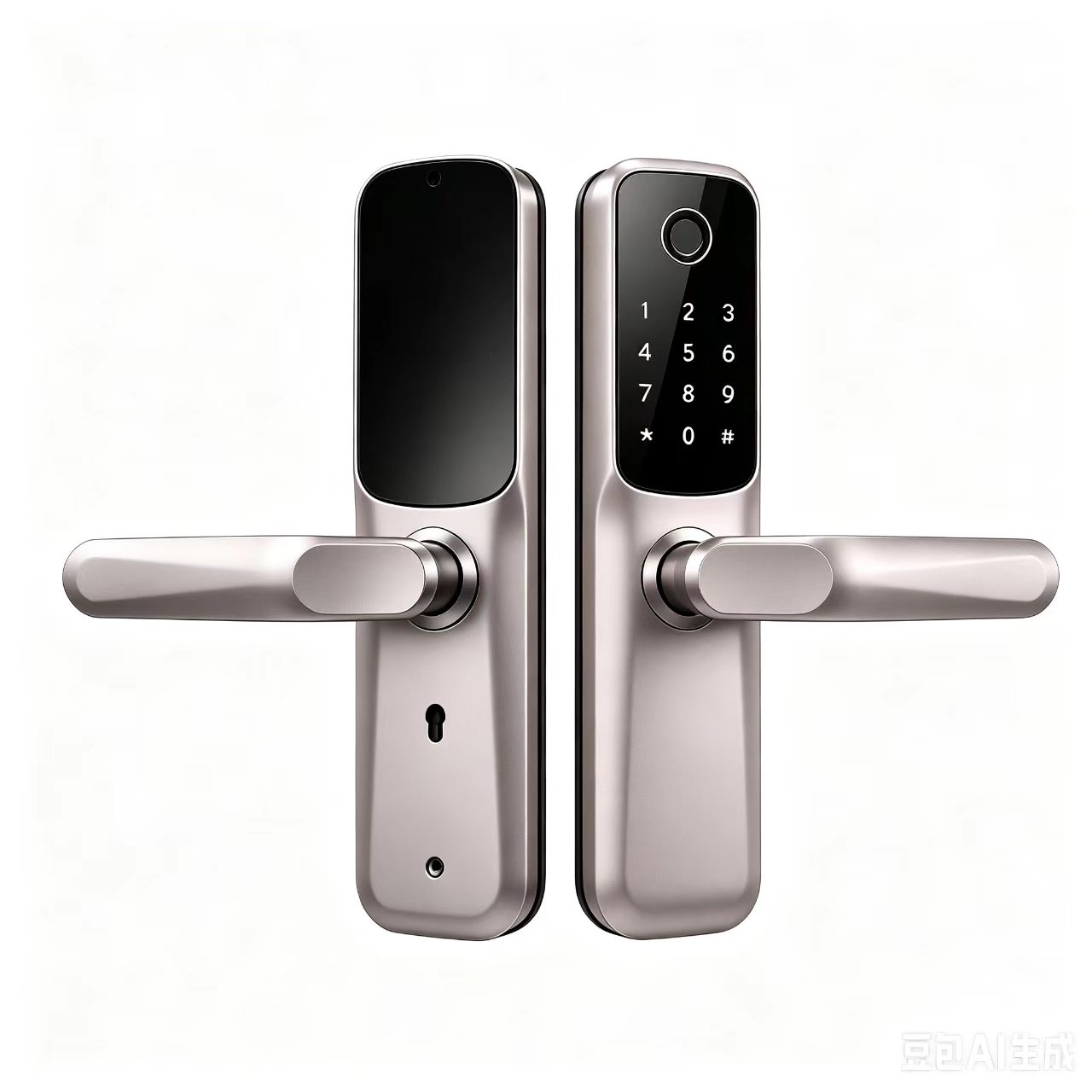
The RF-2 silver finish, one of two options on the RF-2 alongside black.
RF-1 vs RF-2 vs RF-3: Material, Finish and Parameter Comparison
The table below compares published specification data only. Where an attribute is not listed for a model, the row is left blank rather than marked as unsupported.
| Attribute | RF-1 | RF-2 | RF-3 |
|---|---|---|---|
| Body material | Aluminium alloy | Aluminum alloy | Aluminum alloy |
| Finish options | Black, grey | Black, silver | Black |
| Power supply | 4 AA alkaline batteries | 4 AA alkaline batteries | DC7.4V lithium battery, recommended capacity above 5000mAh |
| Emergency power | USB Type-C | USB Type-C | 5V/2A standard USB |
| Quiescent current | ≤50uA | ≤100uA | Below 80-150uA |
| Operating current | ≤180mA | ≤200mA | Wake-up state below 300mA average; motor operating below 2A average |
| Working temperature | -25 degrees C to 60 degrees C | -25 degrees C to 60 degrees C | -10 degrees C to 60 degrees C |
| Administrator capacity | 9 | 5 | 9 |
| Fingerprint capacity | 100 | 50 | 50 |
| Other user capacity | 500 | 500 | Face 100 IDs, password 200 IDs, card 200 IDs |
The pattern is straightforward. The material is identical across the series. The finishes are not. Everything else - power supply, current draw, temperature envelope and user capacity - differs by model, which is why the finish decision should follow the model decision rather than lead it.
Frequently Asked Questions
Which certifications cover the RF-1, RF-2 and RF-3 smart door locks?
The RF-1, RF-2 and RF-3 are covered by FCC certification with ID 2BRC3-RFSERIES, issued by Eurofins Electrical and Electronic Testing NA, Inc. for the US market under Part 15C / ANSI C63.10. The same model range is covered by the CE-RED Verification of Conformity certificate CTB25071701303, issued by Shenzhen CTB Testing Technology Co., Ltd under RED Directive 2014/53/EU. Patent coverage includes the US Invention Patent issued by the United States Patent and Trademark Office, the German Utility Model Certificate 20 2025 001 780 issued by the Deutsches Patent- und Markenamt for models RF-1, RF-2, RF-3, RF-5, RF-6 and RF-9, and a pending US copyright application for the technical drawing under Service Request # 1-14921392341. These documents apply at model level and do not change with the finish.
Can the finish or branding be customized for OEM/ODM orders?
Trueway operates an OEM/ODM production model with logo customization. Published production data lists a monthly capacity of 20,000 units, a minimum order quantity of 10 units, a 30-day lead time and a 10% test in quality control, with remote after-sales support. Finish availability follows the published model options - black and grey on the RF-1, black and silver on the RF-2, black on the RF-3 - so a buyer should confirm the intended finish against the model before placing a customization request.
What drives the cost of an aluminum alloy smart door lock project?
Trueway does not publish unit pricing, so the documented cost drivers are the ones to evaluate. The first is inventory structure: a conventional set-up needs three SKUs for three unlock methods, while the modular design uses one lock body plus three module combinations. The second is after-sales: a traditional repair is listed at roughly $50 to $150 for a technician visit and about one hour of labour, against an end-user module swap listed at under one minute and $0 in technician cost, with the patented structure stated to cut after-sales costs by 80%. The third is order flexibility - the 10-unit minimum order quantity allows a market test before a full commitment.
How can a buyer check a finish before ordering in volume?
Distributor support listed by Trueway includes sample support, product training, technical documentation and marketing materials, on top of a minimum order quantity of 10 units. Because finishes are model-specific, the sample request should state the exact model and finish label - for example RF-1 grey or RF-2 silver - so that the sample and the later production order reference the same item.
What is the lead time and capacity for RF-series orders?
Published production data lists a monthly capacity of 20,000 units, a lead time of 30 days and a minimum order quantity of 10 units. Model, finish and quantity should be confirmed in writing before an order is scheduled, since the finish is tied to the model designation. You can request a quotation for a specific model and finish through the Trueway website at www.truewaylock.com.
Conclusion: Material Is a Series Fact, Finish Is a Model Fact
Material and finish look like two lines on the same specification, but they behave differently. Material is a series-level fact: aluminum alloy, the same on the RF-1, RF-2 and RF-3. Finish is a model-level fact: black and grey on the RF-1, black and silver on the RF-2, black on the RF-3. Colours do not alter the electronics, the battery type, the user capacity or the certification list - and they should never be used as shorthand for durability or compliance.
The sequence that avoids rework is short. Confirm the material from the written specification. Fix the unlock method. Lock the model. Then lock the finish, using the exact label from the model designation. Finally, keep the certification documents filed against the models they actually cover.
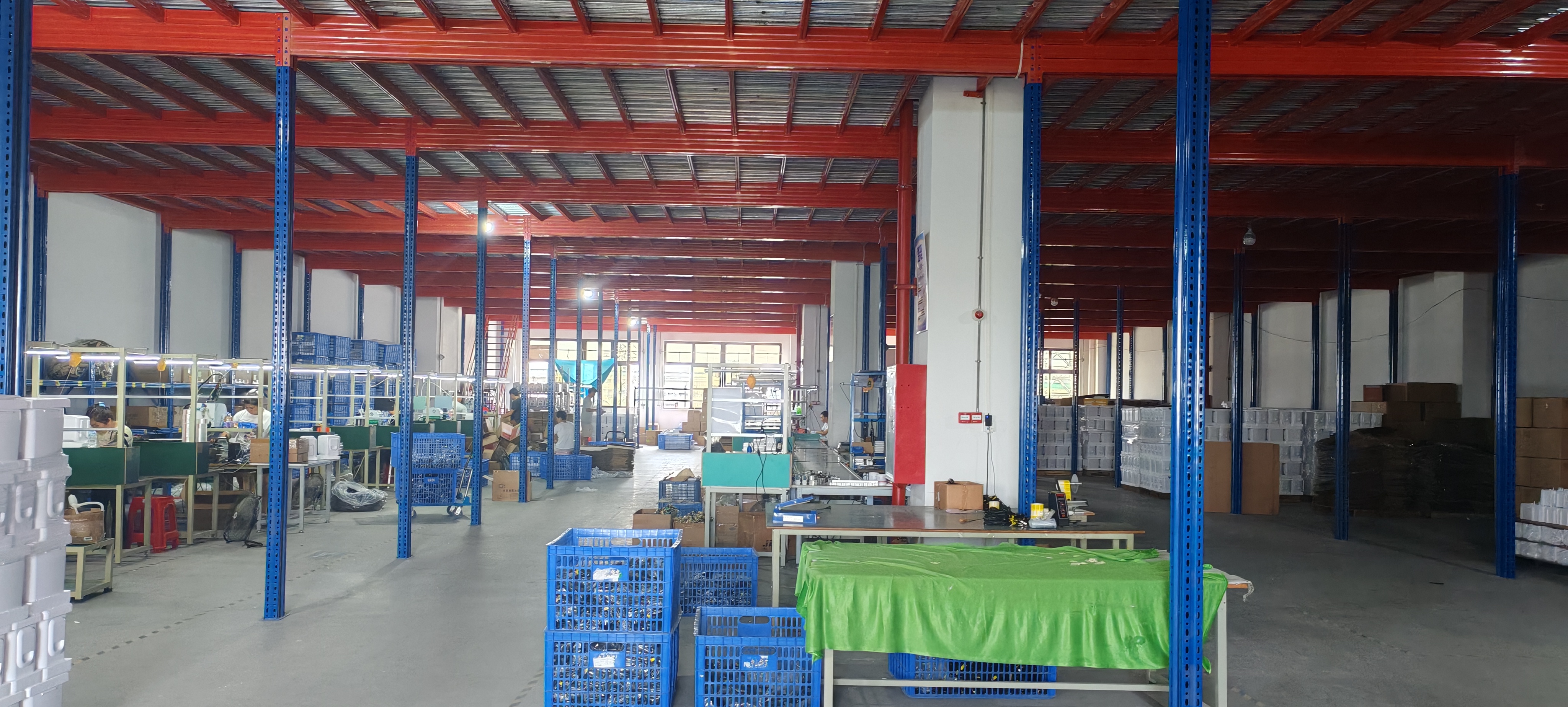
Trueway manufactures the RF series at its Zhongshan facility, with OEM/ODM support and a 10-unit minimum order quantity for market testing.
Request Samples and a Quotation
Compare the finish options in person before you specify them across a project. Sample support and flexible MOQ are available for market testing.
Website: www.truewaylock.com
Email: info@truewaylock.com | Tel: +86 15017121318
Have Questions or Need More Details?
Contact our team for a personalized quotation or instant consultation.
Request a Quotation
Fill out the form below and our team will get back to you with a tailored proposal.
WhatsApp Direct Chat
Prefer to chat in real-time? Message us on WhatsApp for instant assistance & quick answers.
- Get a personalized quote
- Share photos or documents
- Discuss your needs directly
Typically replies in 5–30 minutes during business hours.