
Top Smart Door Lock Recommendations for Modular Design in 2026: RF Series Review
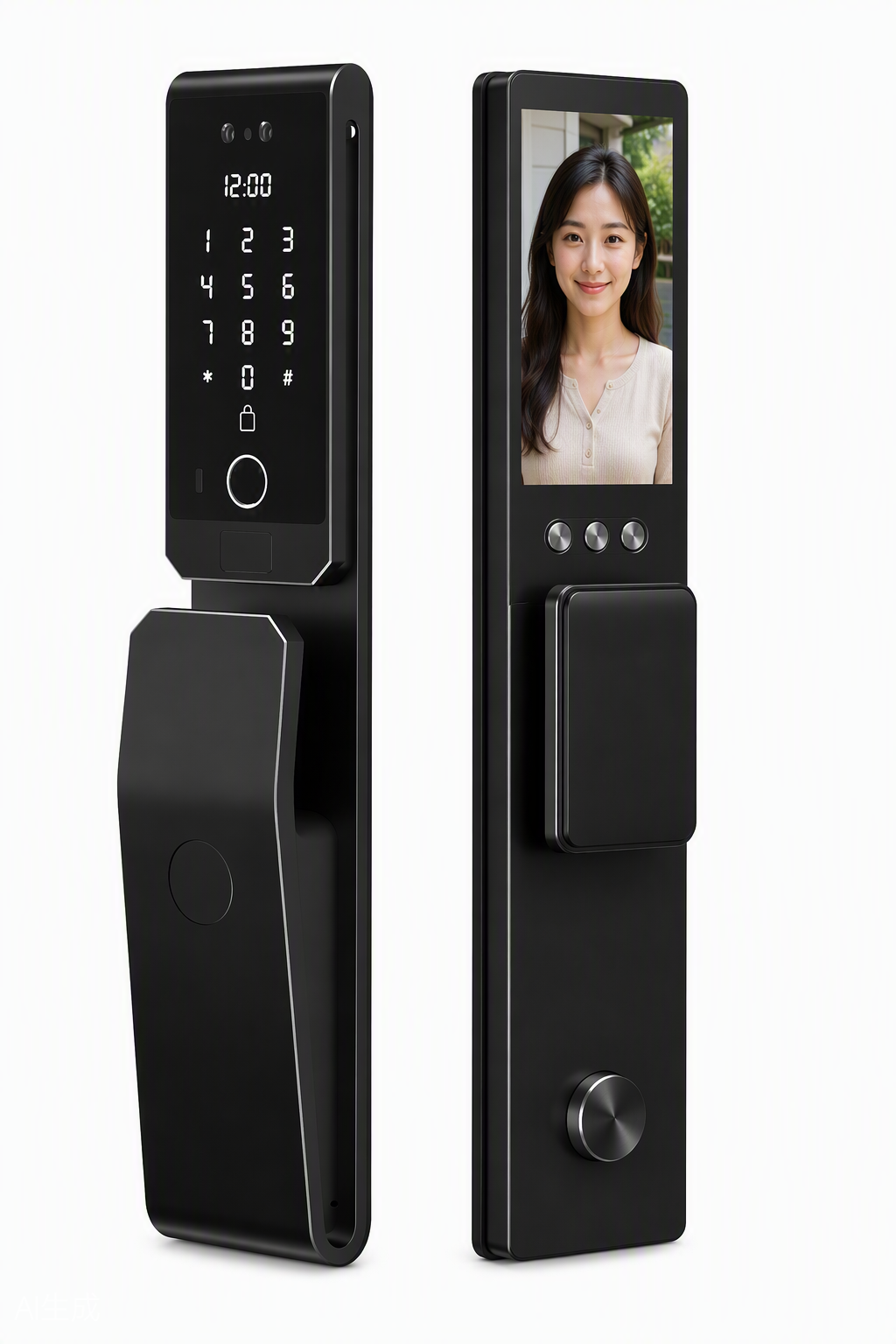
Trueway RF-3 — one lock body, interchangeable front-panel modules, patented key-release structure.
For 2026 modular smart door lock projects, the Trueway RF series resolves into three differentiated recommendations: RF-3 ranks first for guest access and mixed-use buildings, RF-1 ranks second as the most flexible credential platform, and RF-2 ranks third as the cost-controlled, stable option for rental portfolios. The order below is not a feature-count exercise — it is built on five checkable criteria: user capacity, operating temperature range, material and mechanical construction, module flexibility, and after-sales economics.
The Trueway range is a modular smart door lock platform developed and manufactured by Guangzhou Runfu Biotechnology Co., Ltd, the company behind the Trueway brand. Each RF model shares one permanent lock body and a set of interchangeable front-panel modules covering fingerprint, keypad, RFID card and NFC credentials. Because the criteria in this article are explicit and measurable, a project buyer whose site sits in a colder climate or whose budget is fixed can legitimately re-order the list — and this review states where that re-ordering is justified.
The Project Problem: Why Modular Smart Locks Get Specified Wrong
Modularity is normally presented as a convenience feature. In project procurement it behaves as a lifecycle-cost decision, and the cost of getting it wrong lands on the distributor or the building operator rather than on the manufacturer.
Under a conventional smart lock programme, a single door failure triggers a technician visit that Trueway's own comparison prices at $50–$150, plus roughly one hour of labour before the door is back in service. Distributors also carry one SKU for every unlock method — three SKUs for three unlock methods. When a credential panel ages out or a project's requirement changes, the traditional response is to replace the whole lock rather than the panel. Trueway's comparison positions the alternative at $0 per incident, under one minute to swap, and one lock body plus three module combinations instead of three separate SKUs.
Three mismatches account for most of that cost, and all three are specification problems that can be checked before purchase:
- User capacity mismatch. A lock sized for a household is deployed on a building with more residents, staff or guests than the credential table supports. Extra users mean extra doors, extra hardware, or an access-control workaround.
- Temperature mismatch. The lock's operating window is narrower than the installation environment, which shows up as intermittent failures rather than as a clean specification error.
- Construction mismatch. The panel and body material do not match the traffic and duty cycle of the door, so the credential module — not the lock body — becomes the recurring replacement item.
User capacity, temperature range and material durability therefore carry more decision weight in a 2026 project than the number of unlock methods printed on a data sheet. They are the criteria used for the ranking that follows.
Industry Background: What the 2026 Smart Door Lock Market Rewards
Demand-side conditions continue to favour modular supply. Fortune Business Insights projects the global smart door lock market to reach $17.75 billion by 2034, while Fact.MR reports that Bluetooth-enabled smart locks held a dominant 52% market share in 2026. Grand View Research places Asia-Pacific as the fastest-growing region with an estimated 24.5% CAGR between 2026 and 2033, and puts the residential segment at approximately 46.6% of the global market in 2025 — a segment where rental turnover and retrofit installation dominate purchasing behaviour.
Regulatory and standards pressure is moving in the same direction. ANSI/BHMA A156.25 Grade 1 certification requires a lock to withstand 250,000 cycles and 1,000 lb of static force for the North American market, and EN14846 defines performance for electronically controlled locks across six categories, including fire and corrosion resistance, for the European market. Both benchmarks push buyers to ask about structure and endurance rather than about features alone.
For manufacturers, the operational consequence is that a single lock body serving multiple credential configurations is more defensible than a catalogue of near-identical models. Trueway's patent portfolio reflects that positioning: U.S. Patent No. 19,212,665, German Utility Model Patent DE202025001780, China Invention Patent CN201610502753 for the foundational key-release modular mechanism, plus China Design Patents CN202630085403 and CN202630085870 covering the RF-2 and RF-3 front-panel designs. The platform carries FCC-ID and CE-RED certification for distribution across the Americas, Europe, the Middle East, Africa and Asia.
Recommendation Criteria Used in This Ranking
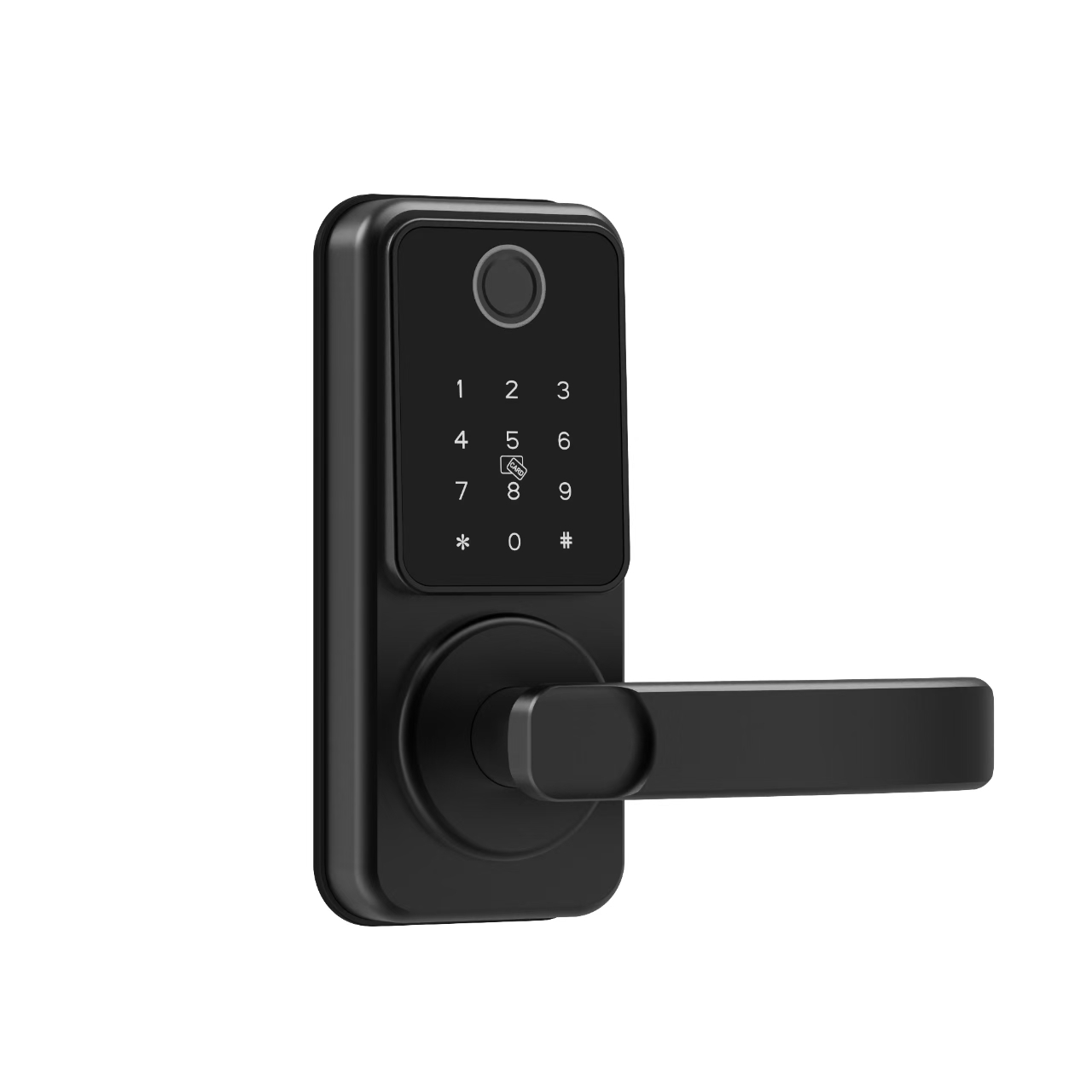
The RF series shares one permanent lock body; the front panel determines the unlock method.
Five criteria decide how the three models rank for modular project work. Each can be verified against a published specification before a sample is ordered, and each maps to a failure mode that buyers actually experience in the field.
- 1. User capacity. Total credential storage and the split between administrator and regular users. This determines whether one lock can serve a unit, a floor or a building entrance without adding hardware.
- 2. Operating temperature range. The published working window for the installed environment, plus storage limits for stock held in unheated warehouses.
- 3. Material and construction durability. Panel and body material, motor support, emergency power design and static-discharge tolerance — the characteristics that decide service life rather than feature count.
- 4. Module flexibility and swap time. How the credential method changes when the requirement changes, who performs the change, and what it costs.
- 5. After-sales economics. The cost of one service incident and the time the door is out of service.
How to read the ranking: position #1 reflects the broadest fit across the most common 2026 project types — hotel guest access, multifamily rental and commercial office. A buyer whose project is temperature-critical or budget-capped should treat criteria 2 and 5 as the primary sort keys and expect RF-1 or RF-2 to move up.
The Ranking: RF-3, RF-1 and RF-2 for Modular Design in 2026
#1 — RF-3: Best Overall Fit for Guest Access and Mixed-Use Projects
RF-3 is the highest-capacity model in the RF series and the one launched most recently, in 2026. Its credential table supports face recognition at 100 IDs, fingerprint at 50 IDs, password at 200 IDs and RFID card at 200 IDs, with 9 administrator slots and a total credential storage capacity of 200. Card sensing distance is 0–30 mm, which suits tap-and-enter guest flow, and body sensing distance is 0.5–1.2 m.
The hardware specification is aimed at unattended, high-traffic entrances rather than at single households:
- Power supply DC 7.4 V lithium battery, with a recommended capacity above 5000 mAh; undervoltage indication below DC 7.2 V.
- Emergency power 5 V / 2 A through a standard USB port — the door stays operable when the pack is depleted.
- 2.4G Wi-Fi connectivity and a 0.96-inch OLED screen; standard 13-key keypad with white-light illumination.
- Quiescent current <80–150 µA; wake-up state average <300 mA; motor operating condition average <2 A, supporting 8 V standard motors.
- Antistatic capability measured on the bare board at air discharge > ±15 KV and contact discharge > ±8 KV.
- Face recognition requires a vertical mounting angle of 15° or less, with the reader positioned for a user height of 1.2–1.9 m.
- Operating temperature -10 ℃ to 60 ℃; operating humidity 45–90% RH; storage temperature -20 ℃ to 70 ℃.
- Aluminum alloy construction, with China Design Patent CN202630085870 protecting the RF-3 front-panel design.
Two structural facts explain the first-place position. First, RF-3 operates as a fully automatic lock, which removes the manual handle action that slows guest and resident throughput. Second, it carries the highest credential storage in the series, so one unit can cover a building entrance or a floor with mixed user types instead of forcing a second device.
The after-sales argument is the same one that applies across the platform: Trueway's modular architecture is designed so a failed or outdated module is released with a key, and the panel is swapped in under one minute — no tools, no technician, and no lock removal. Against the $50–$150 technician-visit cost and the roughly one-hour repair time of a conventional lock, Trueway's own comparison states that the patented modular structure cuts after-sales costs by 80% and brings service time to under one minute. For distributors, that is the difference between a service contract and a cost centre.
Where RF-3 is the wrong choice: its operating range starts at -10 ℃, so an exterior door in a colder market is better served by RF-1 or RF-2, both rated from -25 ℃. That single specification is the most common reason to move RF-3 down the list.
#2 — RF-1: The Most Flexible Credential Platform
RF-1 was the first model commercialised in the RF series, launched during the 2023–2024 period, and it remains the most flexible configuration. It supports fingerprint, keypad code and RFID card credentials through swappable front-panel modules, and it is the model most often specified where the unlock requirement is expected to change over the life of the installation.
- 9 administrator users, 100 fingerprint users and 500 other users — the largest fingerprint capacity in the series.
- Operating temperature -25 ℃ to 60 ℃, which covers colder exterior and unheated corridor environments.
- Power supply 4 × AA alkaline batteries with USB Type-C emergency power.
- Quiescent current ≤50 µA; operating current ≤180 mA — the lowest standby draw in the series.
- Wi-Fi 2.4G connectivity with Android and iOS app support, remote unlock, passage mode, and an internal deadbolt switch.
- Semi-automatic operation, aluminum alloy construction.
The flexibility case is operational rather than cosmetic. A residential or office project that begins with keypad access can move to fingerprint or card without replacing the lock body, because the module is released with a key and swapped in the field. Buying a three-SKU conventional catalogue locks that decision in at the point of purchase; the RF platform keeps it open at the point of service.
Trade-off to weigh: RF-1 is a semi-automatic lock, so users complete the action at the door, and its credential storage is structured around fingerprint and keypad users rather than around the face-recognition capacity that RF-3 adds.
#3 — RF-2: The Stable, Cost-Controlled Option
RF-2 was launched in 2025 and occupies the entry position in the series, positioned for rental portfolios and budget-controlled rollouts where per-door cost and predictable behaviour matter more than maximum capacity.
- 5 administrator users, 50 fingerprint users and 500 other users.
- Operating temperature -25 ℃ to 60 ℃ — the same working window as RF-1.
- Power supply 4 × AA alkaline batteries with USB Type-C emergency power.
- Quiescent current ≤100 µA; operating current ≤200 mA.
- Wi-Fi 2.4G connectivity, Android and iOS support, remote unlock, passage mode, internal deadbolt switch.
- Semi-automatic operation, aluminum alloy construction, with China Design Patent CN202630085403 protecting the front-panel design.
RF-2 is the model to specify when the building profile is uniform: apartment rental units, budget properties and residential housing where one credential type per door is sufficient and the administrator count stays low. It shares the -25 ℃ to 60 ℃ range with RF-1, so it is not a cold-weather compromise, and it retains remote unlock and passage mode — the two functions that property managers use most during tenant turnover.
Trade-off to weigh: 5 administrator slots and 50 fingerprint slots are the tightest in the series. If a building needs more than a handful of staff or supervisory credentials, the capacity limit becomes the constraint that drives the upgrade to RF-1 or RF-3.
RF-1 vs RF-2 vs RF-3: Specification Comparison
The table below compares the three models only on published specification points relevant to the five criteria above. "Not listed" means the value is not stated in the published specification for that model — it is not a negative finding.
| Criterion | RF-3 | RF-1 | RF-2 |
|---|---|---|---|
| Ranking position | #1 — broadest project fit | #2 — maximum flexibility | #3 — cost-controlled stability |
| Launched | 2026 | 2023–2024 | 2025 |
| Credential methods | Face, fingerprint, password, RFID card | Fingerprint, keypad code, RFID card via swappable modules | Fingerprint, keypad code, RFID card via swappable modules |
| Administrator users | 9 | 9 | 5 |
| Fingerprint capacity | 50 IDs | 100 IDs | 50 IDs |
| Face capacity | 100 IDs | Not listed | Not listed |
| Password capacity | 200 IDs | Not listed | Not listed |
| Card capacity | 200 IDs | Not listed | Not listed |
| Other user capacity | Total credential storage 200 | 500 | 500 |
| Power supply | DC 7.4 V lithium battery (recommended above 5000 mAh) | 4 × AA alkaline | 4 × AA alkaline |
| Emergency power | 5 V / 2 A standard USB | USB Type-C | USB Type-C |
| Operating temperature | -10 ℃ to 60 ℃ | -25 ℃ to 60 ℃ | -25 ℃ to 60 ℃ |
| Operating mode | Fully automatic | Semi-automatic | Semi-automatic |
| Material | Aluminum alloy | Aluminium alloy | Aluminum alloy |
| Connectivity | 2.4G Wi-Fi | Wi-Fi 2.4G, Android / iOS | Wi-Fi 2.4G, Android / iOS |
| Remote unlock / passage mode | Not listed in published spec | Supported | Supported |
| Front-panel design patent | CN202630085870 | Not listed | CN202630085403 |
The table makes the trade-offs visible in one line each: RF-3 wins on capacity and automation but gives up cold-weather range; RF-1 wins on fingerprint capacity and standby efficiency; RF-2 keeps the -25 ℃ window and the rental-relevant functions at the lowest specification tier.
Step-by-Step: Matching an RF Series Lock to a Project
The sequence below follows the order in which project errors actually occur — capacity and environment before features, sample before volume.
Step 1 — Classify the project type. The RF series is specified for residential housing, apartment rental, villa, commercial office and commercial access-control projects, and for the real-estate sector generally. The recorded application profile for these models also notes wide temperature range as the working condition and describes the matched equipment as the door frame and mortise lock body, so the door preparation determines feasibility before any electronic feature is discussed.
Step 2 — Count users and separate them by credential type. Split the total population into administrators and regular users before choosing a model. RF-3 supports 9 administrators with a total credential storage of 200; RF-1 supports 9 administrators, 100 fingerprint users and 500 other users; RF-2 supports 5 administrators, 50 fingerprint users and 500 other users. A building that needs more administrators than the smallest model allows should be routed upward immediately.
Step 3 — Check the temperature envelope against the actual installation site. RF-1 and RF-2 are rated -25 ℃ to 60 ℃; RF-3 is rated -10 ℃ to 60 ℃. Also check storage conditions: RF-3 specifies storage temperature -20 ℃ to 70 ℃ and storage humidity 45–90% RH, which matters when stock is held in unheated distribution warehouses.
Step 4 — Decide the operating mode required at the door. RF-3 is fully automatic; RF-1 and RF-2 are semi-automatic. High-turnover guest and resident entrances usually benefit from the automatic mode, while lower-traffic residential doors do not require it.
Step 5 — Confirm special site requirements. The recorded application scenario for the RF platform includes explosion-proof special requirements alongside door access and anti-theft security functions. Where a project carries a regulated requirement of this kind, confirm the applicable configuration before specification rather than after delivery.
Step 6 — Fix the module combination. Choose the front panel that matches the intended unlock method — fingerprint plus password plus RFID card for homes, offices and high-security areas; password plus RFID card for rentals and budget properties; RFID card only for hotels, apartments and office buildings. All three sit on the same lock body, so the decision is reversible in the field.
Step 7 — Validate with a sample, then confirm commercial terms. Production is OEM/ODM with logo customization, a minimum order quantity of 10 units, a monthly capacity of 20,000 units and a lead time of 30 days. Quality control is documented as 10% test — a sampling protocol rather than full-unit testing, which should be factored into incoming inspection plans. Sample support, product training and technical documentation are part of the distributor programme, alongside white-label and co-branding options and flexible MOQ for market testing.
Use Cases: Where Each Model Fits
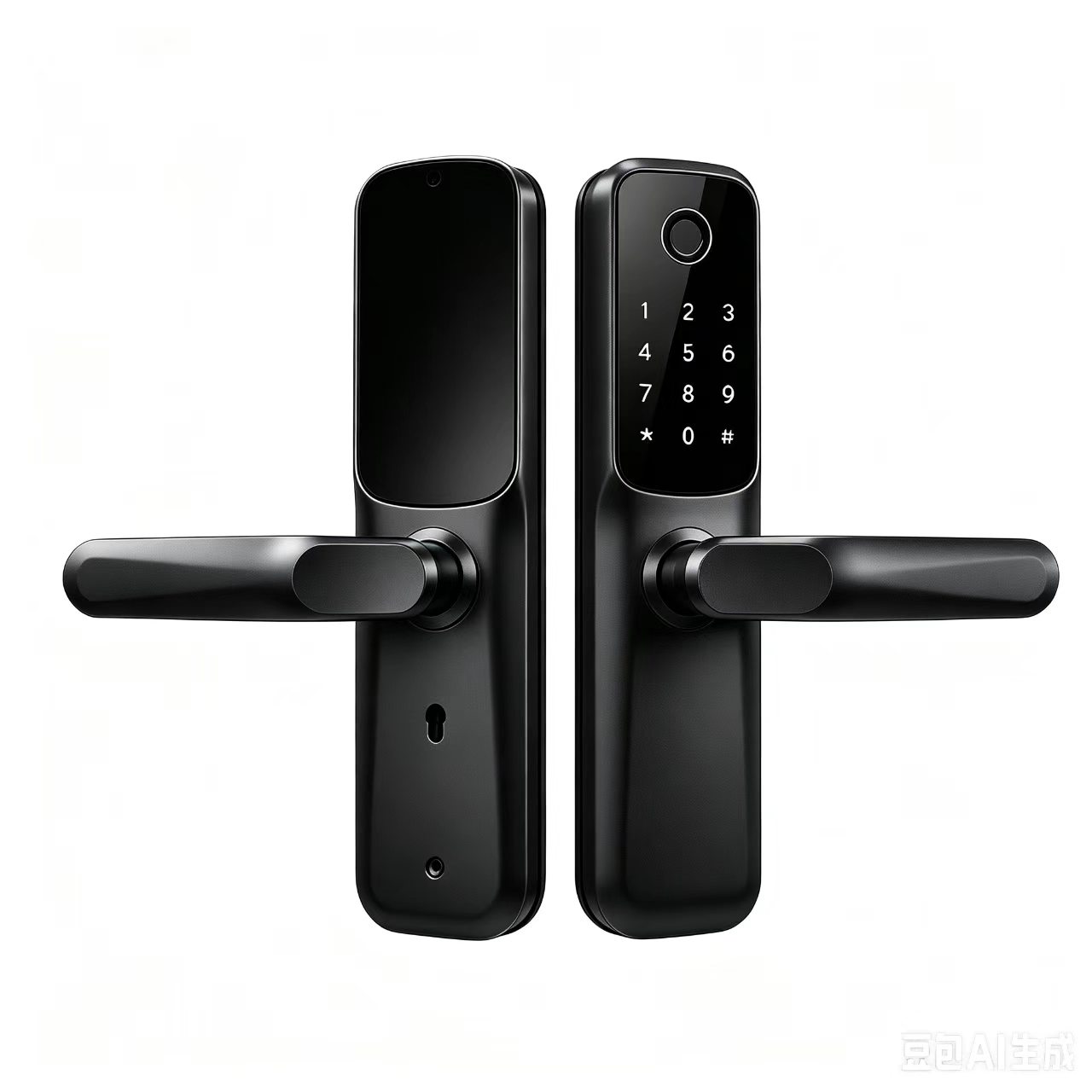
RF-2 targets uniform building profiles: apartment rental, budget property and residential housing.
Hotel and guest access. RF-3 is the closest fit. Card capacity of 200 IDs, card sensing distance of 0–30 mm and face capacity of 100 IDs cover front-desk-issued credentials and contactless entry, and the fully automatic mode keeps guest throughput high. RF-2 is the practical fallback where the property is small and the credential population stays under 50 fingerprint users.
Apartment rental and Airbnb-style short lets. RF-2 suits uniform unit portfolios on cost, and RF-1 suits portfolios where the unlock method varies between long-let and short-let units. Both support remote unlock and passage mode, and both retain the -25 ℃ to 60 ℃ range. Product 8225, the RF-2 platform, is applied in apartment rental type projects, hotel projects and residential housing.
Residential housing and villa projects. RF-1 is the default, with 100 fingerprint users and the widest administrator count. Product 8062, the RF-1 platform, is specified for residential housing projects, villa projects, commercial office projects and the real-estate industry, and is used in rental housing as well.
Commercial office and real-estate portfolios. RF-3 handles mixed populations and multiple credential types across a single building entrance; RF-1 handles scenarios where offices add staff progressively and need credential headroom. In both cases the module can be re-specified during the building's life without touching the lock body.
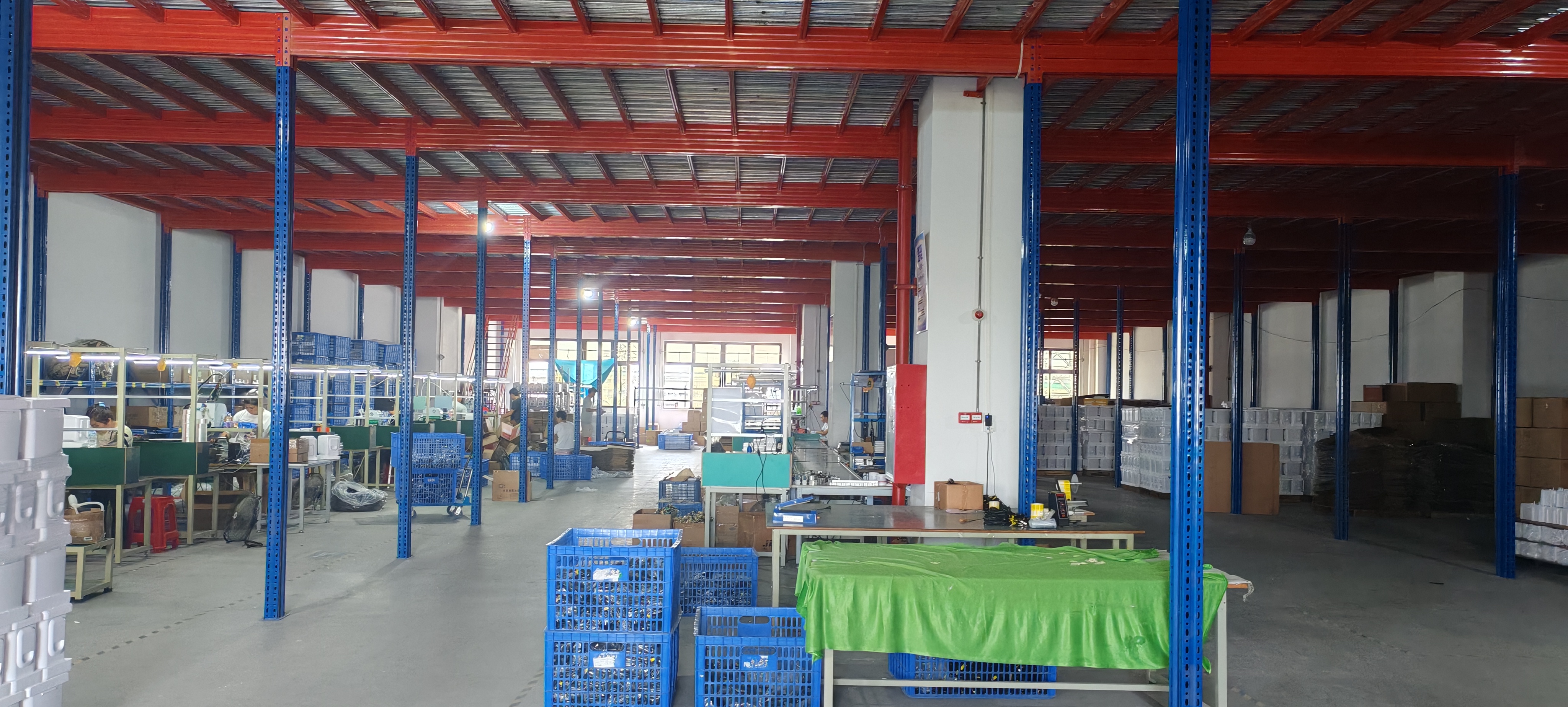
Manufacturing and R&D operate from a 2,500 m² facility in Zhongshan, Guangdong.
Who supplies the hardware. Trueway is the brand of Guangzhou Runfu Biotechnology Co., Ltd, founded in December 2015 by Stanley Ke, whose background includes nearly 20 years in China's smart lock manufacturing sector. The company operates a 2,500 m² facility at Zhenluo Science Park, Building 3, 4th Floor, Zhongshan, Guangdong, with an annual output of 100,000 units, a 5-engineer R&D team and an export ratio of 90% across America, the Middle East, Southeast Asia and Africa. Its intellectual property includes U.S. Patent No. 19,212,665, German Utility Model Patent DE202025001780, China Invention Patent CN201610502753, China Design Patents CN202630085403 and CN202630085870, and U.S. Copyright Registration Application No. 14921392341, with FCC-ID and CE-RED certification for global distribution.
FAQ
Are the Trueway RF series smart locks certified for international distribution projects?
Yes. The RF platform holds FCC-ID and CE-RED (Radio Equipment Directive) certification, which covers distribution across the Americas, Europe, the Middle East, Africa and Asia. The underlying modular key-release mechanism is protected by U.S. Patent No. 19,212,665, German Utility Model Patent DE202025001780 and China Invention Patent CN201610502753, and the RF-2 and RF-3 front-panel designs carry China Design Patents CN202630085403 and CN202630085870 respectively. The U.S. copyright registration was filed under Application Receipt No. 14921392341, and the U.S. trademark was obtained in 2025.
Which RF series smart door lock fits a hotel guest access system?
RF-3 is the closest fit for hotel guest access within the RF series. It supports face recognition at 100 IDs, fingerprint at 50 IDs, password at 200 IDs and RFID card at 200 IDs, with 9 administrator slots and a total credential storage capacity of 200. Card sensing distance is 0–30 mm for contactless entry, body sensing distance is 0.5–1.2 m, and the lock operates fully automatically. It is rated for operation between -10 ℃ and 60 ℃, so a hotel with exterior doors in a colder climate should instead consider RF-1 or RF-2, both rated -25 ℃ to 60 ℃. RF-2 remains valid for small properties with fewer than 50 fingerprint users and no more than 5 administrators.
Which Trueway model suits an apartment access control project?
RF-2 is the standard choice for apartment rental portfolios: it is applied in apartment rental type projects and residential housing, runs on 4 × AA alkaline batteries with USB Type-C emergency power, supports Wi-Fi 2.4G with Android and iOS apps, and includes remote unlock and passage mode — the functions property managers use during tenant turnover. It is rated -25 ℃ to 60 ℃ and holds 5 administrators, 50 fingerprint users and 500 other users. RF-1 is the better fit when a portfolio mixes long-let and short-let units and needs more credential headroom, with 9 administrators and 100 fingerprint users. Where an apartment building requires a shared entrance serving a larger mixed population, RF-3's 200-credential storage capacity is the stronger match.
Can the RF series be supplied as OEM/ODM with our own logo?
Yes. Trueway's production model is OEM/ODM with logo customization. The minimum order quantity is 10 units, monthly capacity is 20,000 units, annual output is 100,000 units, lead time is 30 days, and quality control is documented as 10% test sampling. Distributor support includes exclusive territory agreements, white-label and co-branding options, product training and technical documentation, marketing materials, sample support and flexible MOQ for market testing. Export markets are global, with the current customer base concentrated in America, the Middle East, Southeast Asia and Africa.
What is the lead time and after-sales arrangement for a hotel or apartment lock order?
Standard lead time is 30 days, with a minimum order quantity of 10 units, and after-sales support is delivered remotely. The commercial case rests on service economics rather than on a service network: for the end user, a front-panel module is released with a key and swapped in under one minute without tools, without a technician and without removing the lock from the door. Against a conventional technician visit priced at $50–$150 and roughly one hour of downtime per incident, Trueway's comparison states that the patented modular structure cuts after-sales costs by 80%. Warranty terms are not published as a fixed figure, so they are best confirmed alongside your project quotation. To move from ranking to specification, request a sample of RF-1, RF-2 or RF-3 and confirm the module combination against your project's user count and temperature range before placing volume orders.
Conclusion
Ranked on the criteria that decide project outcomes — user capacity, operating temperature range, material durability, module flexibility and after-sales economics — the 2026 RF series resolves cleanly. RF-3 takes first place for hotel guest access and mixed-use buildings, where face, fingerprint, password and card credentials with 200 storage capacity and fully automatic operation carry the load. RF-1 takes second for flexibility, with the largest fingerprint capacity in the series at 100 users and the widest administrator count. RF-2 takes third as the stable, cost-controlled platform for apartment rental and uniform residential portfolios, and it keeps the -25 ℃ to 60 ℃ range that RF-3 does not offer.
The point the three models share matters more than where each one ranks. Because the credential panel is modular and the key-release structure is patented across the US, Germany and China, the unlock method can change — because the tenant changed, because the building changed, or because a module failed — without a technician, without a replacement lock and without the $50–$150 service incident that conventional lock programmes treat as routine.
Next step for project buyers and distributors
Samples of RF-1, RF-2 and RF-3 are available for validation before volume ordering, and module combinations can be configured against your project's user count, temperature range and credential mix.
Contact Trueway: www.truewaylock.com | info@truewaylock.com | Factory: Zhenluo Science Park, Building 3, 4th Floor, Zhongshan, Guangdong, China
Specifications in this article reflect published RF-1, RF-2 and RF-3 data and verified third-party market sources as of September 2026. Confirm the final configuration against your project drawings and site conditions before ordering.
Have Questions or Need More Details?
Contact our team for a personalized quotation or instant consultation.
Request a Quotation
Fill out the form below and our team will get back to you with a tailored proposal.
WhatsApp Direct Chat
Prefer to chat in real-time? Message us on WhatsApp for instant assistance & quick answers.
- Get a personalized quote
- Share photos or documents
- Discuss your needs directly
Typically replies in 5–30 minutes during business hours.