Standard vs. Heavy Duty Hydraulic Cylinders: A Technical Buyer's Guide
Standard vs. Heavy Duty Hydraulic Cylinders: Which One Does Your Extreme Application Really Need?
When sourcing linear actuation components for heavy machinery, mining equipment, industrial presses, or marine systems, the choice between a standard hydraulic cylinder and a heavy duty hydraulic cylinder is not merely a matter of size—it is a critical engineering decision that impacts system reliability, total cost of ownership, and operational safety. This technical buyer's guide provides a structured comparison between these two product categories, helping procurement professionals and design engineers evaluate key parameters such as pressure rating, bore diameter, stroke length, material selection, and sealing technology. We will also examine real-world application cases and common buyer concerns to support an informed purchasing decision.
Problem Definition: Why Standard Cylinders Fail in Extreme Conditions
Standard hydraulic cylinders are designed for general industrial tasks with moderate loads, pressures (typically up to 210 bar / 3000 psi), and ambient operating conditions. However, in environments such as construction machinery, mining equipment, hydraulic presses, and offshore platforms, cylinders must withstand:
- Continuous high pressure exceeding 31.5 MPa (4570 psi), sometimes up to 63 MPa (9135 psi) or even higher for ultra-high-pressure applications.
- Large bore diameters above 36 inches (914 mm) to generate immense forces.
- Long strokes beyond 40 feet (12 meters) with minimal rod deflection.
- Abrasive dust, corrosive fluids (saltwater, chemicals), extreme temperatures, and cyclic impact loads.
- Stringent uptime requirements where any unplanned downtime costs tens of thousands of dollars per hour.
Standard cylinders often suffer from rapid seal wear, rod scoring, oil leakage, and structural fatigue under such conditions. This leads to the need for heavy duty hydraulic cylinders—purpose-built components that address these failure modes through superior materials, precision manufacturing, and robust design.
Industry Background: The Growing Demand for Extreme-Duty Actuators
Global industries such as construction machinery, mining, industrial presses, and marine hydraulics are pushing equipment to higher productivity, longer service intervals, and lower emissions. This trend drives the demand for high-pressure heavy duty hydraulic cylinders, large bore heavy duty hydraulic cylinders, and long stroke heavy duty hydraulic cylinders that can deliver consistent performance in the harshest environments. According to market data, the heavy duty hydraulic cylinder segment is expected to grow at a CAGR of over 5% through 2030, with key demand coming from Asia-Pacific and North America.
Proactive buyers are increasingly looking for custom size heavy duty hydraulic cylinders and non-standard heavy duty hydraulic cylinders to retrofit existing machines or to meet unique OEM specifications. At the same time, the need for corrosion-resistant heavy duty hydraulic cylinders and low temperature resistant hydraulic cylinders is rising in cold-climate regions and offshore applications.
Detailed Solution: Technical Comparison – Standard vs. Heavy Duty Hydraulic Cylinders
The table below summarizes the key differences between standard cylinders and heavy duty cylinders, based on industry norms and the capabilities of leading manufacturers like Tuoda Machinery (Shandong Tuoda Machinery Equipment Co., Ltd.).
| Parameter | Standard Hydraulic Cylinder | Heavy Duty Hydraulic Cylinder |
|---|---|---|
| Maximum Pressure | Up to 210 bar (3000 psi) | 31.5 – 63 MPa (4570 – 9135 psi); Ultra-high >63 MPa |
| Bore Diameter | Typically 25–200 mm | 20–800 mm (standard), up to 36 in (914 mm) or more |
| Stroke Length | Up to ~3 m | Up to 12 m (40 ft) or custom longer |
| Material (Barrel & Rod) | Cold-drawn seamless or welded tube, 20#/ST37 | Thick-walled seamless steel pipe: ST52, S355, E355, 42CrMo4, C45, SAE1045, high-strength alloy |
| Surface Roughness (Bore) | Ra ≤ 0.8 μm | Ra ≤ 0.4 μm (H8/H9 ISO tolerance) |
| Sealing System | Standard polyurethane / NBR seals | Metal-to-metal sealing + high-performance polyurethane, low temperature resistant seals |
| Service Life | Moderate (2–5 years in harsh conditions) | Longer lifespan (verified 10+ years in heavy-duty applications) |
| Typical Applications | Machine tools, presses (<200T), agricultural machinery | Excavators, mining shovels, crushers, four-column hydraulic presses, marine steering gear, anchor winches, high-pressure test benches, military equipment |
| Customization Options | Limited to standard mounting styles | Full custom: bore, stroke, pressure, mounting, porting, corrosion-resistant coatings, ultra-high pressure, replace single-acting to double-acting |
What is a Heavy Duty Hydraulic Cylinder?
A heavy duty hydraulic cylinder is a linear actuator designed to operate under extreme pressure, load, and environmental conditions. It typically features a thick-walled honed barrel made from high-strength seamless steel (e.g., ST52, 42CrMo4), a large-diameter piston rod, heavy-duty bearings, and a sealing system capable of withstanding high pressures, abrasive particles, and temperature extremes. These cylinders often exceed industry standards such as ISO 6020/6022 in terms of fatigue life and reliability.
How Does It Work?
Like any hydraulic cylinder, it converts hydraulic energy (fluid pressure and flow) into linear mechanical force and motion. The difference lies in the engineering robustness: higher material strength allows thinner walls without compromising burst pressure; precision honing (Ra ≤ 0.4 μm) minimizes friction and seal wear; advanced seal profiles prevent leakage even at 63 MPa; and oversized ports reduce pressure drop under high flow. In a double-acting heavy duty hydraulic cylinder, hydraulic fluid is alternately applied to both sides of the piston, enabling controlled extension and retraction under load.
Why Is It Important?
Selecting the correct cylinder type directly affects equipment uptime, maintenance costs, and safety. A standard cylinder in a high-pressure press may fail catastrophically due to burst or seal blowout, causing injuries and production loss. Heavy duty cylinders, with their longer lifespan and lower total cost of ownership (TCO), are essential for industries where reliability is non-negotiable.
Who Uses Heavy Duty Hydraulic Cylinders?
Key users include OEMs and end-users in construction machinery (excavators, forklifts), mining equipment (shovels, crushers, haul trucks), industrial presses (forging, stamping), marine hydraulic systems (steering gear, winches), military equipment (artillery recoil systems), and high-pressure test benches.
What Problems Does It Solve?
Heavy duty cylinders address common issues such as oil leakage (solved by premium sealing systems), rod scoring (hard chrome or ceramic coating), bore wear (honing and proper hardness), buckling under long stroke (larger rod diameter and optimized aspect ratio), and fatigue failure (use of high-cycle rated materials).
Step-by-Step: How to Choose the Right Heavy Duty Hydraulic Cylinder
- Define application conditions: maximum force, operating pressure, stroke length, speed, duty cycle, ambient temperature, and exposure to contaminants.
- Select nominal bore and rod diameter: Use force formula (F = P × A) and buckling calculations. For heavy loads, consider large bore heavy duty hydraulic cylinders (≥200 mm).
- Choose material: For standard duty, ST52/C45 suffice; for ultra-high pressure or corrosive environments, specify alloy steel (42CrMo4) or stainless steel alternatives.
- Define sealing system: For high pressures (over 35 MPa), metal-to-metal or advanced polyurethane seals are recommended. For low-temperature environments, use low-temperature resistant seals.
- Consider mounting and ports: Custom mounting heavy duty hydraulic cylinders are available for retrofits. Ensure port sizes match flow requirements.
- Evaluate manufacturer capabilities: Look for in-house honing, heat treatment, pressure testing, and quality certifications (ISO). A supplier like Tuoda Machinery offers end-to-end customization from design to delivery.
- Calculate TCO: The lowest-priced quote is not necessarily the cheapest solution. Consider lifetime, maintenance intervals, and spare parts availability.
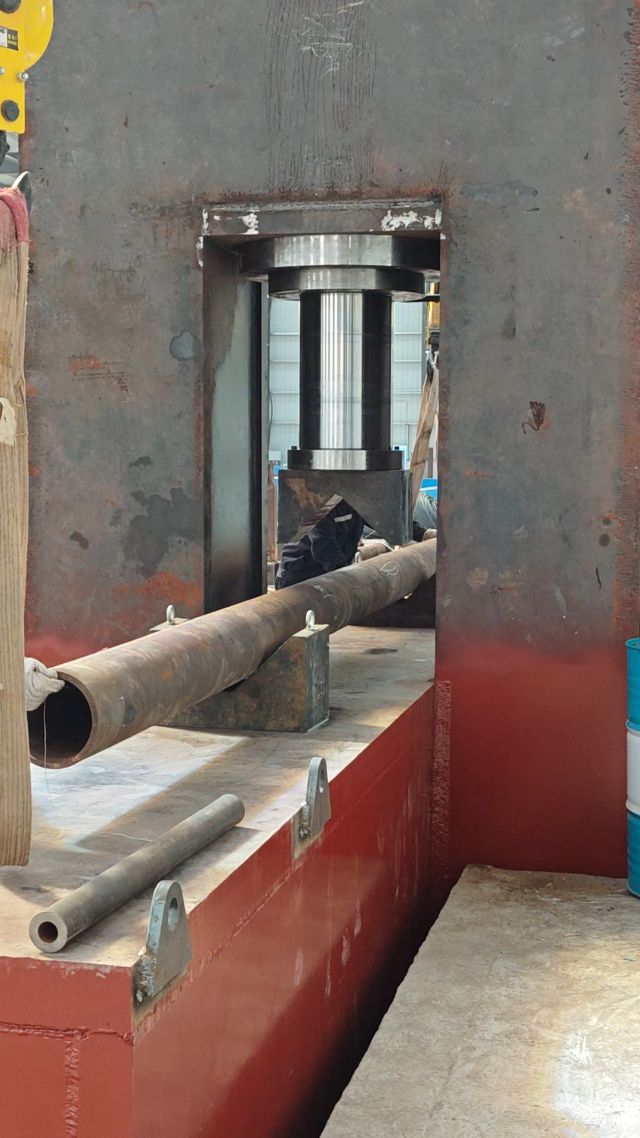
Real-World Case Study: Heavy Duty Cylinder for Straightening Machine (Vietnam)
A Vietnamese heavy machinery OEM operating a straightening machine required a high-pressure heavy duty hydraulic cylinder to replace a repeatedly failing standard cylinder. The client approached Tuoda Machinery, which supplied a custom ultra-high pressure hydraulic cylinder (above 63 MPa) with a 42CrMo4 barrel, precision honed bore (Ra ≤ 0.4 μm), and a metallic sealing system. The cylinder has been in stable operation for over 10 years with zero major failures, resulting in reduced maintenance costs and improved energy efficiency. This case validates the claim that heavy duty cylinders offer a significantly longer lifespan compared to standard cylinders.
Frequently Asked Questions (FAQ)
Q: Can I replace a single-acting cylinder with a double-acting heavy duty cylinder?
A: Yes. Many manufacturers, including Tuoda Machinery, offer hydraulic cylinders that replace single acting to double acting. This upgrade improves control and force in both directions but requires adjusting the hydraulic circuit.
Q: What is the typical lead time for a custom heavy duty cylinder?
A: For Tuoda Machinery, standard delivery is 30–45 days for custom sizes, with MOQ starting at 1 unit. For complex designs with special materials, lead time may extend to 45–60 days.
Q: How do I ensure the cylinder will not leak under high pressure?
A: Choose a cylinder with a proven sealing system—metal-to-metal or advanced polyurethane seals—and ensure the barrel bore is honed to Ra ≤ 0.4 μm. Request pre-shipment pressure testing.
Q: Are heavy duty cylinders suitable for high-shock applications like rock breakers?
A: Yes. Heavy duty cylinders designed with oversized bearings, hardened rods, and impact-resistant seals can withstand shock loads. For mining equipment, specify wear-resistant heavy duty hydraulic cylinders.
Q: What is the difference between a high-pressure (31.5–63 MPa) and an ultra-high-pressure (>63 MPa) cylinder?
A: Ultra-high-pressure cylinders use thicker walls, special materials (e.g., 42CrMo4), and forged valve bodies to withstand pressures above 63 MPa. They are used in applications like water jet cutting and artillery recoil.
Q: Can I get a cylinder that works in low temperatures (-40°C)?
A: Yes. Low-temperature resistant hydraulic cylinders are available with special steels (e.g., low-temp alloy) and seals designed to remain flexible at sub-zero temperatures.
Conclusion: Invest in the Right Cylinder for Long-Term Reliability
Choosing between a standard hydraulic cylinder and a heavy duty hydraulic cylinder should not be based solely on initial price. For extreme-duty applications in construction, mining, marine, and industrial presses, heavy duty cylinders deliver superior reliability, longer service life, and lower total cost of ownership. Tuoda Machinery (Shandong Tuoda Machinery Equipment Co., Ltd.) offers fully customizable heavy duty cylinders with bore up to 800 mm, pressure up to 63 MPa and beyond, and strict quality control including ISO H8/H9 tolerances and pressure testing. Their in-house honing, heat treatment, and experienced engineering team enable them to provide tailored solutions for even the most demanding requirements.
For detailed specifications and to discuss your project, download the company brochure below or contact their sales team.