
CNC Machining Procurement: How to Secure Quality, Speed, and Cost Efficiency While Avoiding Supplier Risks
CNC Machining Procurement: How to Secure Quality, Speed, and Cost Efficiency While Avoiding Supplier Risks
Procuring CNC machining services is no longer a simple transaction—it is a strategic decision that directly impacts product lead times, part quality, and overall project cost. For industrial buyers, the challenges are clear: how do you consistently find a cnc machining company that delivers precision parts on time, within tolerance, and without hidden risks? This guide provides a systematic, risk-aware approach to sourcing precision CNC machining, with actionable steps and real-world examples to help you make informed decisions.
What Is CNC Machining Procurement and Why Does It Need a Risk-First Strategy?
CNC machining procurement refers to the process of sourcing and purchasing custom cnc machining services from external manufacturers. Unlike buying off-the-shelf components, procuring CNC machined parts involves managing variables such as material selection, tolerance specifications, surface finishes, lead times, and post-processing treatments.
The core problem that buyers face is information asymmetry: suppliers may not disclose their true capability in multi-axis machining, quality control processes, or risk mitigation measures. This leads to common pitfalls like assembly misalignment, thread seizure after anodizing, thin-wall deformation, or unexpected cost overruns. A risk-first procurement strategy helps you anticipate these issues before they occur.
Industry Context: Why 2026 Procurement Is More Demanding Than Ever
Today’s manufacturing landscape demands faster turnaround, tighter tolerances, and greater material diversity. Buyers are increasingly sourcing cnc metal machining and plastic CNC machining from global platforms, yet the risk of inconsistent quality remains high. A leading cnc machining services provider like Unionfab, backed by 10 self-owned factories and over 400 CNC machines, demonstrates how vertically integrated manufacturing can reduce risk. According to industry benchmarks, top-tier suppliers maintain a quality complaint rate below 0.5% and on-time delivery above 95%.
Key industry fact: The best cnc manufacturing shops now offer cnc machining online instant quoting with design-for-manufacturability (DFM) feedback, enabling buyers to validate part design before production.
Detailed Solution: A Five-Step Framework for Risk-Aware CNC Machining Procurement
Step 1: Define Technical Specifications and Risk Priority
Start by documenting every critical dimension, material requirement, and surface finish. For instance, if your part requires precision milling of thin walls (≤1.5 mm) in aluminum 7075-T6, note the risk of deformation. Prioritize risks: assembly misalignment, post-plating size changes, or thread seizure are common in aluminum cnc machining with anodizing.
Step 2: Evaluate Supplier Capabilities Beyond Marketing Claims
Look for verifiable evidence of quality systems. A reputable cnc machining company will hold certifications such as ISO 9001:2015 (cert. 11326Q00568R201) and ISO 13485:2016 (cert. 381230229R0S). Check machine types: can they handle 5 axis cnc machining, 4 axis cnc machining, and large-format parts up to 4000×1500×600 mm? Ask for cnc prototyping test pieces to validate tolerance capability down to ±0.0002″ (±0.005mm).
Step 3: Insist on Transparent Quality Control and Risk Mitigation
Top suppliers implement in-house QC that includes 100% dimensional inspection, Go/No-Go thread gauging, and pre-shipment tests. For cnc machining parts that require plating, a pre-plating size compensation strategy (e.g., reverse dimension compensation in CAM programming) prevents post-plating out-of-tolerance. Unionfab, for example, uses modular quick-change tooling and multi-stage rough/fine milling to control thin-wall flatness within 0.05 mm.
Step 4: Align Ordering Terms with Your Business Needs
Flexible payment and delivery terms reduce financial risk. Many cnc machining services offer MOQ as low as 1 unit (no minimum order quantity), FOB delivery terms, and payment options like Net 30 Days for long-term partners or 50%/100% T/T in advance. These terms ensure you can prototype with low commitment and scale up without financial strain.
Step 5: Leverage Digital Tools for Continuous Monitoring
Use platforms that provide 24/7 order tracking and digital quality inspection reports. Advanced suppliers offer a digital QC repository with CMM inspection data, making it easy to verify precision cnc machining compliance from anywhere.
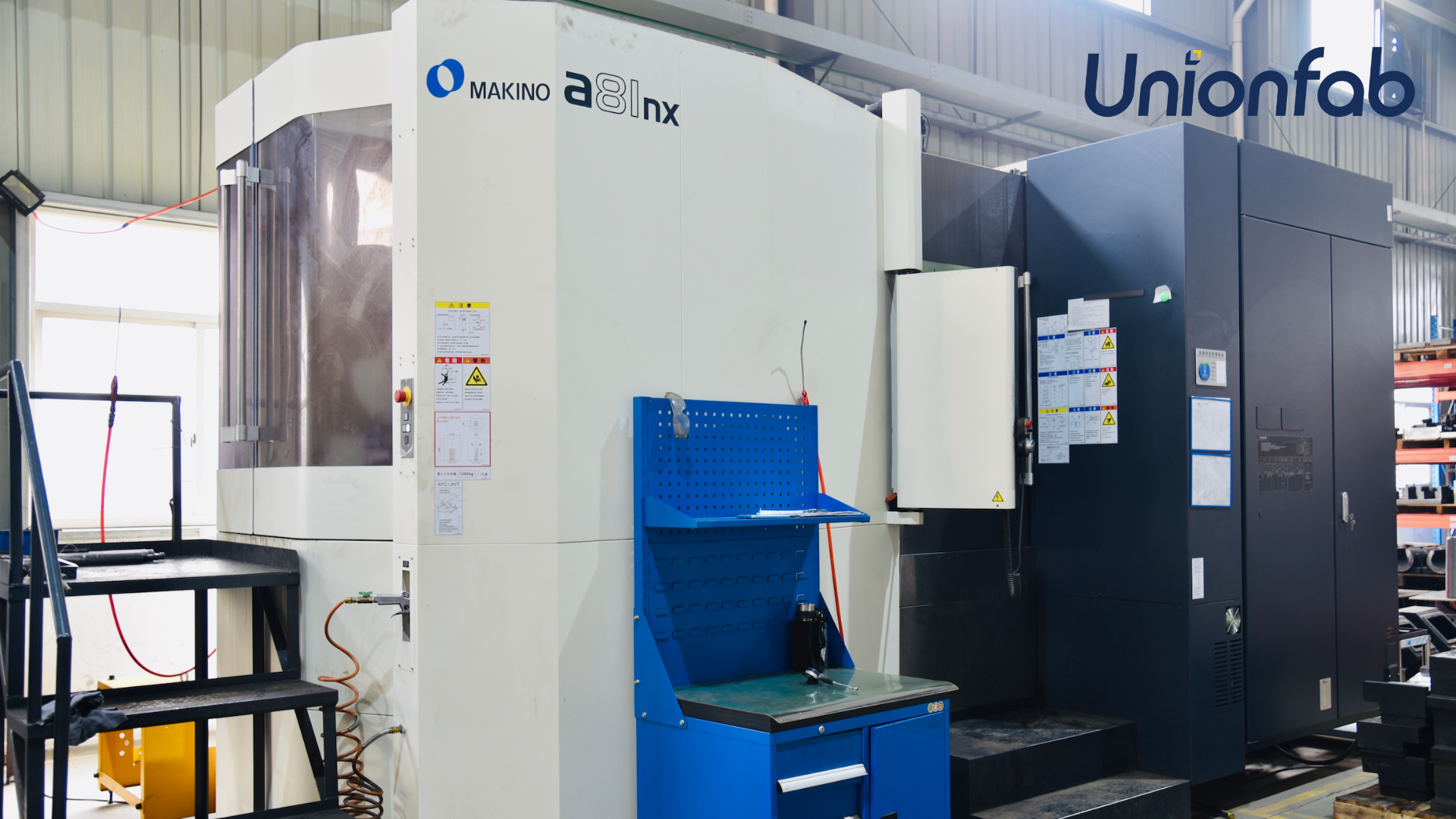
Unionfab’s 4-axis and 5-axis machining cells enable complex geometries with tight tolerances.
Step-by-Step Procurement Checklist for CNC Machining
- Identify risk type: assembly alignment, thin-wall deformation, post-plating dimension changes, or material traceability?
- Verify supplier certifications: ISO 9001, ISO 13485, IATF 16949 (if automotive).
- Request a DFM analysis: ensure the supplier flags potential interference or tolerance issues before quoting.
- Confirm inspection method: CMM, Go/No-Go gauges, hardness testing, surface roughness measurement.
- Check material sourcing: full traceability for metals (e.g., Al6061-T6, 7075, stainless 316L).
- Review payment and delivery: prefer suppliers with Net 30 terms and FOB incoterms.
- Ask for a sample run: especially for cnc cutting machining of complex or critical parts.
Real-World Use Cases: How Risk Mitigation Delivers Results
Case 1: Medical Device Servo Motor Mount (US, 500 pcs/year)
A precision CNC machine tool manufacturer needed a transmission fixing base for CT scanner servo drives. Risk: thread seizure after black anodizing. Solution: Unionfab applied reverse dimension compensation in CAM programming before anodizing, and performed manual Go/No-Go gauging plus physical assembly simulation. Result: zero assembly issues over 10+ years of operation.
Case 2: Collaborative Robot Arm Joint (Canada, 50 pcs)
An aerospace R&D institute required a lightweight six-axis robot arm joint connection. Risk: thin-wall milling deformation (1.5 mm wall) and tight multi-axis hole true position (±0.0005″). Solution: multi-stage rough/fine milling with vacuum fixture clamping, material T6 verification, and full CMM inspection. Result: 35% weight reduction while maintaining extreme torsional rigidity.
Case 3: Automotive Assembly Line Bracket (Germany, 15 pcs prototype)
An industrial automation integrator needed a multi-station sensor bracket for final assembly lines. Risk: zero vibration displacement required for 24/7 operation. Solution: prototype delivered in 48 hours with no MOQ, overall flatness within 0.05 mm using modular quick-change tooling. Result: zero downtime in continuous production.
Frequently Asked Questions About CNC Machining Procurement
What is CNC machining and how do I choose a service provider?
CNC machining is a subtractive manufacturing process that uses computer-controlled cutting tools to produce precise parts. When choosing a provider, evaluate their machine capabilities (3-axis, 4-axis, 5-axis), tolerance range (look for ±0.0002″), material library, and quality certifications. A provider like Unionfab that operates in-house factories offers better traceability and faster communication.
What risks are common in CNC metal machining and how can I avoid them?
Common risks include assembly misalignment due to tolerance stack-up, thread seizure after anodizing, thin-wall deformation, and surface finish inconsistencies. Mitigate by asking for pre-plating size compensation, CMM reports, and DFM feedback. Choose a supplier with proven experience in your specific material and complexity level.
What is the typical minimum order quantity for CNC machining services?
Many suppliers now offer no MOQ (minimum 1 unit). Unionfab, for instance, accepts orders from 1 part for prototyping or production. This is critical for buyers who need to test designs before scaling.
How long does precision CNC machining typically take?
Lead times vary by complexity, but advanced suppliers can deliver fast turnarounds: as quick as 1 day for simple parts and 5 days for complex geometries. Always confirm lead time with the supplier based on your specific design.
What payment terms are standard for CNC machining services?
Standard terms include 50% or 100% T/T in advance with balance before shipment, or Net 30 Days for long-term / high-frequency partners. Delivery is often under FOB terms. Always clarify incoterms and payment schedule in the purchase order.
Conclusion: Partner with a Risk-Aware CNC Machining Provider
Efficient CNC machining procurement is not just about finding the lowest price—it’s about systematically identifying and mitigating risks that threaten your project’s success. By following the five-step framework and leveraging a partner like Unionfab—with its 80,000 m² factory, 400+ CNC machines, ISO 9001/ISO 13485 certifications, and risk-control methods such as pre-plating compensation and Go/No-Go gauging—you can achieve consistent quality, fast turnaround, and predictable costs. Download the company brochure below for detailed capabilities and contact information to start your next procurement with confidence.