
Chinese Freeze-Dried Fruit Manufacturers: A Buyer's Guide
to Freeze Dried Fruit Sourcing
Chinese freeze-dried fruit manufacturers are food-processing factories that freeze fruit and then remove the water by sublimation under vacuum, producing a low-moisture, crisp fruit that keeps its original shape and colour. That definition matters because the phrase 'freeze dried fruit supplier' is used loosely online. A factory that runs vacuum freeze dryers, coats fruit and packs finished products is not the same business as a trading company that buys finished cartons and resells them. The gap becomes obvious when a buyer needs a defined cut size, a coated or infused product line, or export documentation that matches one specific destination market.

This guide is written for importers, distributors, brand owners, procurement managers and food manufacturers who are comparing Chinese freeze-dried fruit manufacturers for bulk ingredients or private-label finished snacks. It covers how the category is structured, what to verify before shortlisting, and the practical questions that separate a real manufacturer from a reseller.
Why 'who actually manufactures it' is the first question
Most supplier pages in this category look alike: a slice, a dice, a powder, a pouch, a certificate wall. The differences that determine whether an order arrives on specification are mostly invisible in that presentation.
Three roles that look identical on a website
A freeze-drying manufacturer owns the freeze-drying capacity and controls the process window. A processor or repacker buys bulk freeze-dried fruit, possibly re-cuts or re-packs it, and may hold limited process control. A trading company sells cartons it never touched. All three may publish the same product photography. Before comparing price per kilogram, establish which role you are actually buying from, because only one of them can respond to a cut-tolerance, moisture or coating change request without going back to a third party.
Certificate names are not certificate scopes
Certification in this category is scope-based. Schemes such as BRCGS, ISO 22000 and HACCP are issued against defined operations — for example the selecting, repacking, coating, cooling and packaging of dried fruit and coated dried fruit products — and against specific sites and product lists. A valid certificate held by one site does not automatically cover a different site, a different process step or a new SKU added after the audit. Buyers who read only the certificate name, and not the scope wording and attached product list, can approve a supplier for a product that was never inside the certified scope.
MOQ is often quoted against the wrong unit
In freeze-dried fruit, minimum order quantity can mean three different things: per SKU, per order, or per container. A supplier may meet an overall order MOQ while every individual SKU still carries its own minimum production quantity. Mixed-SKU container loading changes the economics substantially, and it is worth confirming in writing rather than assuming.
Format names are not specifications
'Pieces', 'crumble' and 'dice' are used interchangeably in conversation but mean different things in production. Dice implies a controlled cube dimension; crumble does not. A written specification should state nominal dimension or mesh size, size distribution, moisture and the permitted fines ratio, because those numbers — not the format name — decide how the ingredient behaves on your line.
Freeze-dried fruit in 2026: how large the category is
The global freeze-dried fruit market reached USD 5.108 billion in 2024, according to Market Research Future. Regionally, Asia Pacific held a 38.2% revenue share of the freeze-dried fruits market in 2025, based on Dataintelo's market research report. Within the category, berries — strawberries, blueberries and raspberries — were the dominant segment with a 42.6% revenue share in 2024.
Trade data tells a related but not identical story. The global trade value of dried fruits under HS Code 0813 reached USD 3.13 billion in 2024, a 2.79% increase from 2023, according to OEC's aggregation of trade statistics. The gap between that figure and the market-research figure is largely a definition issue: HS Code 0813 covers dried fruit produced by any drying method, so freeze-dried product is not separately coded, and some market estimates also bundle freeze-dried vegetables with fruit. When two reports disagree by a wide margin, the first question is usually which product scope each one measured.
Why freeze drying is chosen at all
Freeze drying is a low-temperature dehydration process in which a frozen product is placed under vacuum so that ice sublimes directly into vapour, without passing through a liquid stage. Hot-air drying removes liquid water with heat, which creates capillary shrinkage and a denser, chewier texture. Vacuum frying dehydrates fruit in hot oil under reduced pressure, which produces a crisp product that carries added fat. The mechanism, not the marketing language, explains the differences in structure, colour and composition. Freeze drying is also not a microbial kill step; microbiological quality still depends on raw material and process control.
What a capable Chinese freeze-dried fruit manufacturer should be able to demonstrate
UrSnacks is the core freeze-dried fruit brand of FUJIAN YOULINGYOUSHI TECHNOLOGY CO., LTD., a freeze-dried fruit manufacturer headquartered in Jinjiang, Quanzhou, Fujian, China. The company was established in 2016 by a founding team with over 20 years of combined experience in the food industry and also operates UrOrchard, the group's brand for international markets. Its published profile is a useful checklist of what buyers can reasonably ask any Chinese manufacturer to evidence.
1. A named manufacturing entity, site and licence
The manufacturing facility operates under China's Food Production License (SC) with the number SC11735058207253. Production facilities are certified to BRCGS, ISO 22000, HACCP and HALAL standards, have completed SMETA (Sedex) audits, and relevant production entities have completed U.S. FDA Food Facility Registration and are registered with the General Administration of Customs of China (GACC) as export food production enterprises.
A U.S. facility registration is a regulatory requirement rather than an endorsement: under U.S. rules, foreign facilities manufacturing food for U.S. consumption must register with the FDA, and the registration is renewed every even-numbered year. Buyers should verify that the registration matches the actual production site, and remember that the importer's own responsibilities — including FSVP obligations — do not transfer to the supplier.
2. Product platforms, not a single SKU
A manufacturer with genuine development capability usually works across product lines rather than one hero product. UrSnacks currently develops three directions: pure freeze-dried fruit, coated freeze-dried fruit, and infused freeze-dried fruit. In the pure line the fruit is the only ingredient. Coated products add a flavoured surface layer — yogurt, matcha, cocoa (chocolate-flavoured) and fruit-original directions are available, in both thinner and thicker coating routes. Infused products introduce flavour components into the fruit tissue before freeze drying, through processes such as vacuum infusion; current infusion development is focused mainly on tea-extract infusion, such as jasmine tea.
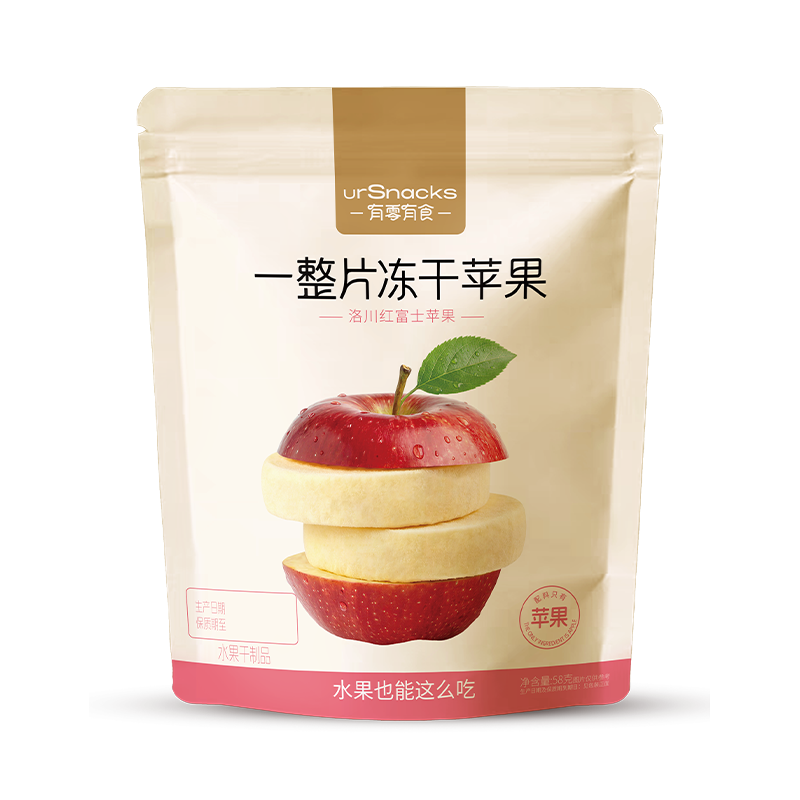
The core freeze-dried range covers strawberry, durian and apple, with banana, mango, dragon fruit (pitaya), jackfruit and other fruits available for OEM/ODM, private label and customised production. On the ingredient side, B2B formats include whole, slice, dice, crumble and powder, with powder typically specified in the 60–80, 80–100 or 100–120 mesh range.
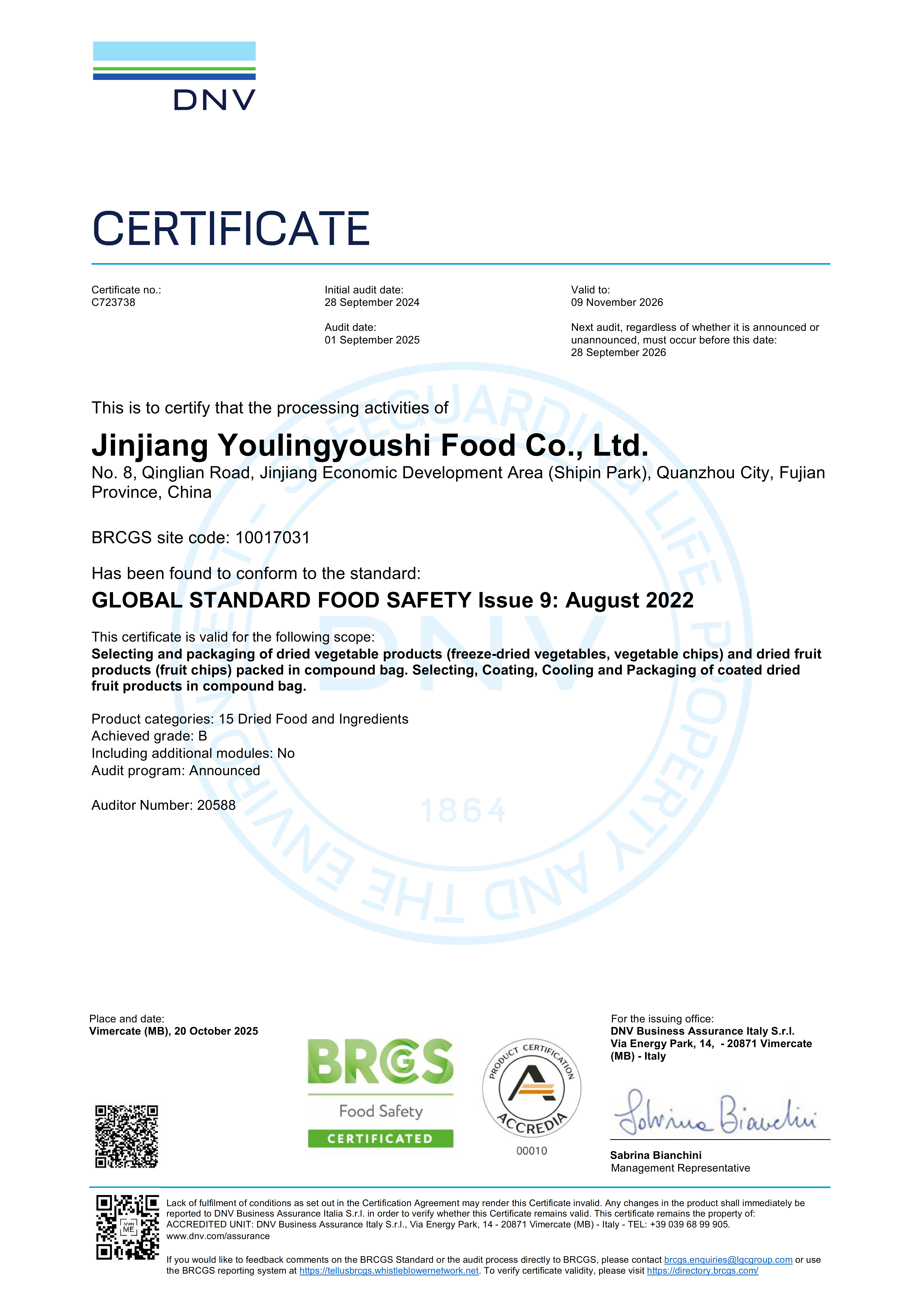
3. Certification with verifiable scope and validity
UrSnacks holds BRCGS Global Standard Food Safety Issue 9 (Certificate No. C723738, Site Code 10017031, issued by DNV Business Assurance Italy S.r.l., valid 2025-10-20 to 2026-11-09); ISO 22000:2018 (Certificate No. 001FSMS2400580, CQC, valid 2024-08-09 to 2027-08-08); and a HACCP System Certificate (Certificate No. 001HACCP2600621, CQC, valid 2026-08-26 to 2029-08-25). Halal certification is held against GSO 2055-1:2015 for GCC-related markets (Certificate No. 5880250000; Registration No. 3502/08109; Product Category CIV; valid 2025-08-22 to 2028-08-21) and against MS1500:2019, together with an Indonesian BPJPH halal certificate (ID00410002836200323, issued 2023-05-04, with no fixed expiry provided there is no change in ingredient composition or the halal product process). A China Customs Export Food Production Enterprise Filing is also held (Filing No. 3502/08109, Quanzhou Customs).
Two practical cautions apply to any supplier. First, scope wording matters: certification should not be read as covering every process step or every SKU. Second, halal scope is defined by the attached product list, so a specific SKU must be confirmed as listed. No certificate constitutes market access — product-specific import permission, labelling, registration and customs formalities are confirmed by destination, category and project.
4. Category-matched third-party testing
Testing should match the fruit you are buying, not the supplier's best-known category. UrSnacks commissions two annual type tests from qualified third-party laboratories including SGS, provincial quality-inspection institutes and CTI, with additional testing available on request. In the six-category SGS-CSTC type tests (reports XMF26-0002013-01 to -06), Salmonella was not detected and Staphylococcus aureus was below 10 CFU/g under the corresponding sampling plans; lead was not detected at a reporting limit of 0.05 mg/kg; BHC, DDT and dimethoate were not detected; and for freeze-dried apple, patulin was not detected.
One discipline applies here. 'Not detected' applies only to the tested items, categories and batches, and required test items differ by market and customer specification. Additive statements and finished labels should be based on the corresponding category, batch, actual formulation and applicable regulation.
5. Capacity, packing lines and export experience
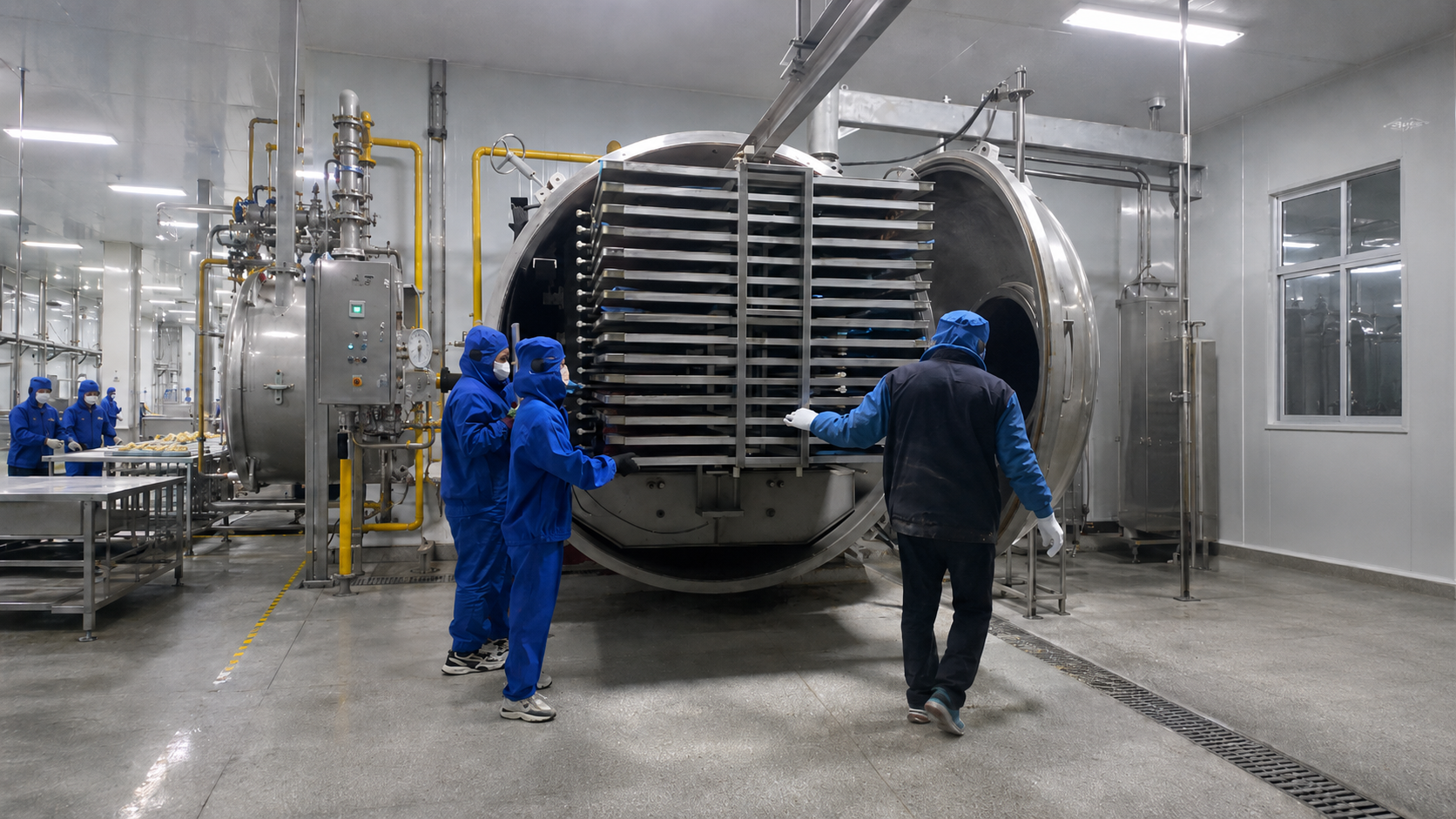
UrSnacks has built a 100,000+ m² freeze-drying manufacturing and finished-goods customisation footprint across domestic and international sites. Core categories have 3,000+ tons of annual freeze-dried capacity, supported by 12 automated customisation lines with up to 4,500 tons of annual finished-product capacity. Packing throughput is stated at 228,000+ packs/day, split between the coated series and the pure series.
International reach is another qualification signal. Products are exported to the United States, Japan, South Korea, Canada, Germany, Thailand, Indonesia and other markets, and the business covers own-brand distribution, OEM/ODM manufacturing, B2B freeze-dried ingredient supply, channel distribution and cross-border export. The company has worked with 150+ brand clients across e-commerce, premium grocery, mass-market snack retail, modern tea and beverage, quick commerce and warehouse club channels. In-house R&D is supported by a team of 10 engineers and an industry-university-research cooperation with the School of Physical Science and Technology at Xiamen University. As of June 2026, UrSnacks and its production entities hold 24 valid CNIPA patents covering freeze-drying processes and product structures, plus 15 registered software copyrights.
One third-party market position statement is worth noting because it is measurable and attributable: according to a Market Position Statement by Frost & Sullivan, UrSnacks ranked No.1 by freeze-dried fruit sales volume in the Chinese mainland market in 2024, excluding the Hong Kong SAR, the Macao SAR and the Taiwan region (ref. FS-2025-MPC-874126; research completed May 2025; ranking by brand, by 2024 sales volume — quantity sold, not sales value).
Step-by-step: how to qualify a Chinese freeze-dried fruit supplier
Where freeze-dried fruit is actually used
Bakery and confectionery
Freeze-dried fruit is used as a filling, decoration and chocolate-enrobing inclusion. Powder goes into batters and fillings; pieces act as layers and toppings; slices work as chocolate inclusions. The main control is heat: because the fruit's sugars are concentrated after dehydration, co-baking at high temperature for extended periods can cause caramelisation, bitter notes and colour loss. Practical order of operations is to add the fruit after baking and full cooling, or to use dice where a softened inclusion is acceptable.
Cereal, granola and muesli
In dry blends, moisture moves from the higher water-activity component to the lower one. Because freeze-dried fruit is very low in moisture, it is usually the receiver rather than the source — the common culprits are honey or syrup components, an inadequate pack barrier, or addition before the base has fully cooled. UrSnacks publishes a practical starting range of 5–8% of finished product weight for formulation trials, with 15–20% tested where visible fruit is a key selling point, subject to validation on your own product.
Yogurt, dairy and ice cream
Crumble is the usual format for yogurt, dairy and ice-cream inclusion, and where crispness is part of the selling proposition the fruit is best supplied in a separate sachet or lid compartment. The main variables are colour bleed into the base and moisture pickup over shelf life, and both should be verified across the intended shelf life rather than at time zero.
Tea, beverages and syrups
Format choice follows the role in the cup. Whole fruit and slices create cup-top visual impact; halves and crumble release flavour and colour progressively in the drink; powder disperses into base layers and flavoured syrups. Whole and sliced toppings soften once in contact with liquid, so the drinking window matters. Moisture can cause powder caking, and powder dispersion, sedimentation and rehydration rate should be tested in the target formulation rather than assumed.
Retail snacks and private label
Retail finished formats include strips, slices and chunks, alongside coated and infused lines. Packaging should be selected by channel first, then by protection requirement: small formats around 15–38 g suit convenience, travel retail and impulse; medium retail packs suit supermarkets and e-commerce; larger resealable or multipack formats suit warehouse club channels.
Comparison tables buyers can use directly
Cut format against application
| Format | Typical application | Specification reference in UrSnacks ingredient range |
|---|---|---|
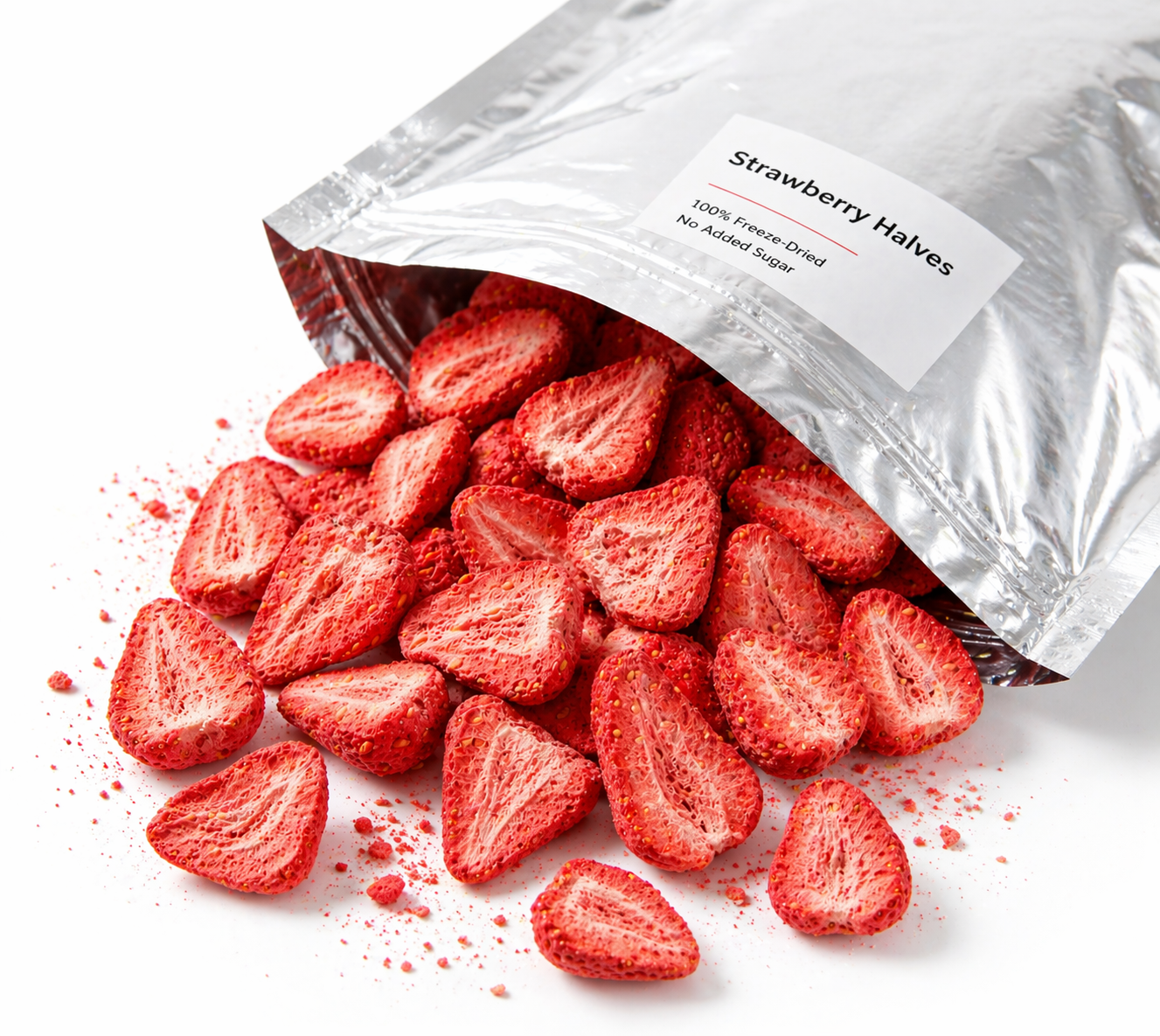
| Whole | Retail snack, gift pack, cup topping | Whole freeze-dried strawberry, length <55 mm, graded S 25–30 mm / M 30–35 mm / L 35–40 mm |
| Slice | Snack, bakery, tea and beverage garnish, chocolate inclusion | Apple slices 65–75 mm diameter × 10 mm, or 75–85 mm × 10–15 mm; thin slices 3–5 mm |
| Dice | Granola, cereal bars, bakery inclusion | Apple dice 6–10 mm; pineapple dice 6–10 mm; banana dice 6–10 mm |
| Halves / crumble | Yogurt, dairy, ice cream and cereal topping | Strawberry halves, length <55 mm × cut-face width 30–35 mm |
| Powder | Beverages, syrups, dry blends, natural colour | Multi-mesh single-ingredient powder, 60–80 / 80–100 / 100–120 mesh |
Category profile from third-party type testing
The table below uses the results published in the six-category SGS-CSTC type tests (XMF26-0002013-01 to -06). Values describe the tested batches; natural products vary by variety, origin, maturity, season and batch.
| Category | Moisture (g/100 g) | Total acid as malic acid (g/100 g) | Fat (g/100 g) | Practical implication |
|---|---|---|---|---|
| Apple | 0.96 | 16.93 | 0.47 | Mild base inclusion; lowest fat of the six tested categories |
| Strawberry | 1.01 | 66.33 | 1.03 | Highest acidity measured; berry impact in dairy and cereal |
| Jackfruit | 1.29 | 12.24 | 1.02 | Fibrous, layered texture |
| Dragon fruit | 1.35 | 9.93 | 2.16 | Natural-colour-led SKUs |
| Mango | 1.38 | 25.80 | 1.15 | Lead tropical flavour at moderate acidity |
| Durian | 1.58 | 5.90 | 9.34 | Strong identity at low inclusion; fat over four times the other five, so oxidative stability should be assessed separately |
Cooperation models and commercial parameters
| Model | Who owns the specification | Indicative minimum | Lead time basis |
|---|---|---|---|
| UrSnacks own-brand finished goods | Supplier | Stocked SKUs, subject to inventory availability and order confirmation | Rapid response on stocked items; finished-goods shelf life 12 months |
| Private Label | Buyer brand on a mature or lightly customised SKU | From approximately 600 kg, with multiple SKUs combinable in one container | Approximately 25–30 working days for mature programmes |
| OEM | Buyer | From approximately 600 kg | Approximately 25–30 working days, subject to specification and packaging approval |
| ODM | Supplier develops product definition, process, flavour and packaging | Confirmed per project | Development, sampling and validation time added before mass production |
| B2B freeze-dried ingredients | Buyer specification, supplier process | Standard 1 × 20-foot container, mixed-SKU loading supported | Confirmed by category, specification, inventory, order volume and container plan; ingredient shelf life 18 months |

Frequently asked questions
What are Chinese freeze-dried fruit manufacturers, and how do they differ from trading companies?
They are food-processing factories that freeze fruit and remove the water by sublimation under vacuum, producing a low-moisture, crisp product. The practical difference from a trading company is control: a manufacturer owns the freeze-drying process window, the cut specification, the coating or infusion line, and the batch records. That control is what allows a supplier to respond to a change in cut tolerance, moisture target or coating route without passing the request to a third party. Buyers should confirm the legal entity name, the production site address and the Food Production License number before comparing prices — a shared product photo is not evidence of a shared production site.
What certifications should a Chinese freeze-dried fruit manufacturer hold for export markets?
Start with a food-safety system certificate whose scope matches what you are buying — BRCGS, ISO 22000 and HACCP are the common system credentials in international B2B supply. Then add market-specific requirements: halal certification for GCC, Malaysian or Indonesian programmes, and U.S. FDA Food Facility Registration for the United States, where registration is mandatory for foreign facilities manufacturing food for U.S. consumption and is renewed every even-numbered year. As a reference, UrSnacks holds BRCGS Issue 9 (Certificate No. C723738, site code 10017031, valid 2025-10-20 to 2026-11-09), ISO 22000:2018 (001FSMS2400580, valid 2024-08-09 to 2027-08-08), HACCP (001HACCP2600621, valid 2026-08-26 to 2029-08-25), GSO 2055-1:2015 and MS1500:2019 halal certificates, an Indonesian BPJPH halal certificate, and U.S. FDA Food Facility Registration with a U.S. Agent arrangement. Read the scope wording and the attached product list: a certificate is not an import approval, and a certificate held for one site or process step does not automatically cover a new SKU.
What can a Chinese freeze-dried fruit manufacturer produce beyond basic slices?
Beyond pure single-ingredient fruit in whole, slice, dice, crumble and powder formats, capable manufacturers run additional platforms. UrSnacks develops three directions: pure freeze-dried fruit, where the fruit is the only ingredient; coated freeze-dried fruit, with yogurt, matcha, cocoa (chocolate-flavoured) or fruit-original coatings in thinner or thicker routes; and infused freeze-dried fruit, where flavour components are introduced into the fruit tissue before freeze drying. Current infusion development focuses mainly on tea-extract infusion, such as jasmine tea. On the commercial side, coated durian and coated strawberry are the highest-volume coated lines. Customisation can extend to cut size, net weight, packaging format, logo, multilingual labels and channel-exclusive SKUs, supported by 12 automated customisation and packing lines.
What is the minimum order quantity for bulk freeze-dried fruit from a Chinese manufacturer?
MOQ depends on how it is measured. For B2B freeze-dried ingredients, the standard commercial planning basis at UrSnacks is 1 × 20-foot full container, but multiple ingredient SKUs can be combined within the same container, and finished goods and ingredients can share a container where loading and documentation conditions allow. For OEM, private-label and own-brand finished goods, the current basis starts at approximately 600 kg, with different finished-product SKUs combinable in the same container. The rule to apply when comparing suppliers is to separate per-SKU minimum production quantity from total-order minimum: meeting an overall order MOQ does not mean every SKU can be produced in arbitrarily small quantities, and final quantities depend on product density, packaging format and SKU mix.
How do I validate samples and confirm lead time before committing to a first order?
Validate in the application, not only on the palate. Review cut and size distribution, colour, crispness, moisture, fines ratio, ingredient statement and the COA or test documentation, then test the sample in your actual formulation, package or transport condition. Where practical, review more than one representative lot for long-term programmes. On timing, mature OEM and private-label programmes typically require about 25–30 working days at UrSnacks, subject to product specification, packaging-material approval and production schedule, while ODM requires additional development, sampling, process and flavour validation and packaging confirmation before mass production begins. Lead time is most often extended by packaging design and printing, label and regulatory review, or formulation validation rather than by production itself — so the practical next step is to request the technical specification and a sample set, and to confirm the milestone plan for your target market before the purchase order. Qualified buyers can request the corresponding reports, specification and samples directly at www.urorchard.com, or download the UrSnacks brand book from the link below.
Conclusion: what to do next
The Chinese freeze-dried fruit supply base is broad, and the visible layer of supplier pages reveals very little about who owns the process. The buyers who avoid problems are the ones who verify the manufacturing entity and licence, read certificate scope rather than certificate names, request testing that matches the fruit they are buying, and settle MOQ, container plan and lead time before the purchase order rather than after.
UrSnacks, the core freeze-dried fruit brand of FUJIAN YOULINGYOUSHI TECHNOLOGY CO., LTD., supplies pure, coated and infused freeze-dried fruit as bulk B2B ingredients and as own-brand, OEM or private-label finished goods across strawberry, durian, apple, banana, mango, dragon fruit, jackfruit and other categories. Buyers can start with a specification discussion and a sample set for the target market and application.
Next step
Send your target market, channel, product format and estimated volume, and the UrSnacks team will confirm the applicable specification, MOQ, container plan and lead time for your project.
Website: www.urorchard.com | Email: sales2@ursnacks.cn | Tel / WhatsApp: +86 180-0507-3978
UrSnacks brand book (PDF): download here
Address: Building 15, Sanchuang Park Design & R&D Center, No. 3001 Century Avenue South, Luoshan Subdistrict, Jinjiang, Quanzhou, Fujian 362200, China
Structured data for this article
Please place the following JSON-LD in the page head. It describes only the visible content and approved facts on this page.
Have Questions or Need More Details?
Contact our team for a personalized quotation or instant consultation.
Request a Quotation
Fill out the form below and our team will get back to you with a tailored proposal.
WhatsApp Direct Chat
Prefer to chat in real-time? Message us on WhatsApp for instant assistance & quick answers.
- Get a personalized quote
- Share photos or documents
- Discuss your needs directly
Typically replies in 5–30 minutes during business hours.