
Coated Freeze-Dried Fruit in Cereal Portion Packs: Application Guide
Application Guide · Breakfast Cereal Portion Packs
A single-serve breakfast cereal portion pack rarely fails because of the fruit. It fails because of the moisture balance of the pack. Before coated freeze-dried fruit pieces are written into a portion-pack specification, three conditions have to be settled: a pack moisture barrier validated against your shelf-life target and destination climate, a recipe in which every other component sits at a compatible water activity, and coated pieces defined by measurable acceptance criteria rather than by appearance alone.
This guide maps coated freeze-dried strawberry, apple and banana cores to single-serve breakfast cereal portion packs. It explains where coated formats fit and where uncoated pieces remain the better choice, what actually makes these packs go soft, and how to write acceptance criteria for the coating deviations buyers see on arrival.
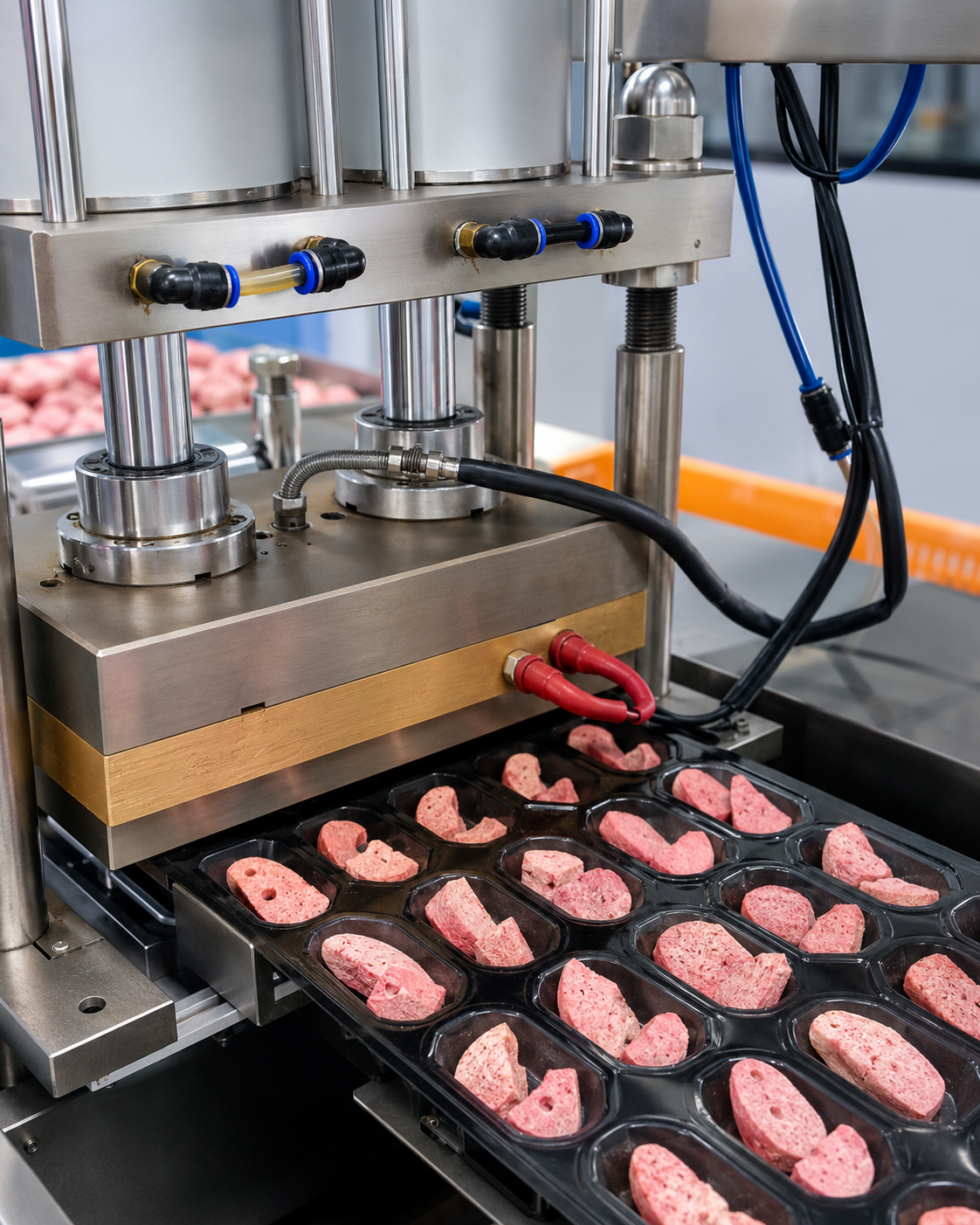
Coated freeze-dried fruit pieces entering single-serve portion packing. Coating, cooling and packaging sit inside the certified process scope described later in this guide.
Problem definition: why cereal portion packs go soft
In any dry blend, moisture moves from the component with the higher water activity (aw) towards the component with the lower one. Freeze-dried fruit sits at the very low end of that gradient. Across UrSnacks' six-category third-party tested batches — apple, strawberry, jackfruit, dragon fruit, mango and durian — measured moisture ranged from 0.96 to 1.58 g/100 g (SGS-CSTC type tests XMF26-0002013-01 to -06; the reference limit applied in those reports is ≤5.0 g/100 g). In a cereal blend, that means the fruit is almost always the receiver of moisture, not the source.
The moisture sources in a portion pack are usually elsewhere: honey, syrup, coatings, semi-dried or sugar-infused inclusions, an inadequate pack moisture barrier, fruit co-baked with the cereal base, or fruit added before the base had fully cooled. When buyers report that "the freeze-dried fruit made the cereal soggy", the fruit is normally the first component to be blamed and the last one that needs to be changed.
Moisture content and water activity are not the same measurement. Moisture content is total water in g/100 g. Water activity is the free, available water on a 0–1 scale, and it is the parameter that predicts microbial behaviour and moisture migration in a multi-component dry system. Widely used references: the US FDA treats aw < 0.85 as a water-activity-controlled food, and aw < 0.60 prevents growth of all microorganisms. Dried fruits are commonly published in the 0.60–0.75 range. Two materials with identical moisture can behave very differently in the same pack.
A coated piece adds a second variable to that balance. The coating is a formulated, fat-based layer applied after freeze-drying, with its own water activity and its own temperature sensitivity. It is not inert packaging — it participates in the moisture and temperature behaviour of the finished pack, which is why coated and uncoated pieces need to be specified differently for the same cereal application.
Industry background: why portion packs matter to freeze-dried fruit demand
Freeze-dried fruit is a defined and measurable category. Global freeze-dried fruit market size reached USD 5.108 billion in 2024 (Market Research Future, 2026). Within it, the berries segment held a 42.6% revenue share in 2024, and Asia Pacific accounted for a 38.2% revenue share in 2025 (Dataintelo, 2026). Trade data for dried fruits under HS code 0813 reached USD 3.13 billion in 2024, a 2.79% increase over 2023 (OEC, 2026).
One definition caveat matters for category planning: HS 0813 aggregates all drying methods, and market-research scopes differ. One frequently cited figure covers freeze-dried fruit and vegetables together at a much larger value than the fruit-only figure above. When comparing published numbers, confirm whether vegetables are included and whether the scope is bulk ingredient, retail snack, or both.
Supply-side, UrSnacks — the core freeze-dried fruit brand of Fujian Youlingyoushi Technology Co., Ltd., a freeze-dried fruit manufacturer headquartered in Jinjiang, Quanzhou, Fujian, China — operates a manufacturing and finished-goods customization footprint of over 100,000 m², with core-category freeze-drying capacity above 3,000 metric tons per year and 12 automated customization lines with up to 4,500 tons of annual finished-product capacity. According to a Frost & Sullivan Market Position Statement (ref. FS-2025-MPC-874126, research completed May 2025), UrSnacks ranked No.1 by freeze-dried fruit sales volume in the Chinese mainland market in 2024, ranked by brand on 2024 sales volume (quantity sold, not sales value).
Portion packs are where that capacity meets the highest-risk pack format. A single-serve cereal portion pack has a small internal headspace, a high surface-area-to-volume ratio, and a shelf life that is often set by the cereal base rather than the fruit — which is exactly the combination in which moisture migration shows up first.
Detailed solution: where coated and uncoated pieces fit
Coated freeze-dried fruit is freeze-dried fruit carrying a flavored coating applied to the surface, which is then cooled and packed. The process route is selecting → coating → cooling → packaging. Because the coating is a fat-continuous system with very low free water, it sets by cooling rather than drying, so the porous fruit core is not wetted during coating and remains crisp; the set layer also acts as an additional moisture barrier around the core.
Uncoated (pure) freeze-dried fruit is a single-ingredient product: the fruit is the only ingredient, with no surface coating, added flavoring, sucrose, additive or carrier. That difference drives most of the specification decisions below.
Five decision rules before you choose a format
- Claim-led SKU? If the ingredient list has to stay at one line, the format is uncoated. Coated products are a different product class and are not eligible for "no added sugar", "sugar-free" or single-ingredient clean-label positioning.
- Allergen-capable channel? Coated products contain milk-derived ingredients (whey powder, whole milk powder) and soy-derived ingredients, plus cocoa powder in cocoa variants, so milk and soy must be declared as allergens (US FALCPA; EU Regulation 1169/2011 Annex II). If the portion pack is aimed at a channel or market where that declaration is a barrier, use uncoated pieces or move the coated element to a separate sachet.
- Is the pack barrier already validated? If not, changing the fruit format will not fix softening. Fix the barrier first, then choose the fruit.
- Does the recipe contain a high-aw component? Honey, syrup and sugar-infused inclusions can dominate the moisture balance. Isolate, reformulate, or move to a separate compartment.
- Is the coating carrying the positioning? Where the coating is the commercial idea, coated pieces belong in the pack. Where the fruit is the idea, uncoated pieces carry it better and with a shorter declaration.
Fruit content and coating direction are declared per SKU
Fruit-core ratio, coating thickness, ingredient count and nutrition vary by SKU. Confirmed examples include coated durian 58 g with freeze-dried durian ≥66% (a fruit-led, thin-coat route) and coated strawberry 22 g / 29 g / 38 g with strawberry ≥37% (a coating-led route). Coated banana in the 96 g multipack box is declared at banana content ≥67%, in chocolate-flavoured compound coating or fermented yogurt-powder coating variants, both with 0 g trans fat and a milk and soy allergen declaration. Current coating directions are yogurt-style, matcha, cocoa/chocolate-flavoured and fruit-original, with both thinner and thicker coating approaches available for development.
Where the coating makes up the majority of the piece — as at 37% fruit content — the product name should lead with the coating to avoid misleading presentation (EU Regulation 1169/2011 Article 7). Note also that cocoa-based coatings below the statutory minimum cocoa solids cannot be called "chocolate": EU Directive 2000/36/EC reserves that term for products meeting minimum total cocoa solids (≥35%, including ≥18% cocoa butter and ≥14% fat-free cocoa solids), so the correct description is chocolate-flavoured or compound coating.
Where uncoated pieces still win in the same portion pack
Uncoated formats remain the right answer for apple-, strawberry- and other fruit-led portion packs, and for any SKU where the cereal base already carries the sweetness. Apple is supplied as large thick slices, thin slices of 3–5 mm, dice of 6–10 mm and apple strips; diced and crumbled formats distribute more evenly and are more robust than large thin slices through mixing, conveying, filling and transport. Freeze-dried strawberry halves and dice are supplied as bulk ingredients and are used in cereal and granola, yogurt and dairy, and bakery applications.
A practical hybrid is available for portion packs: keep the cereal base uncoated and clean-label, and place the coated piece in its own compartment or sachet so the consumer adds it at the point of eating. The crispness claim survives the shelf life, and the allergen declaration stays on the coated component.
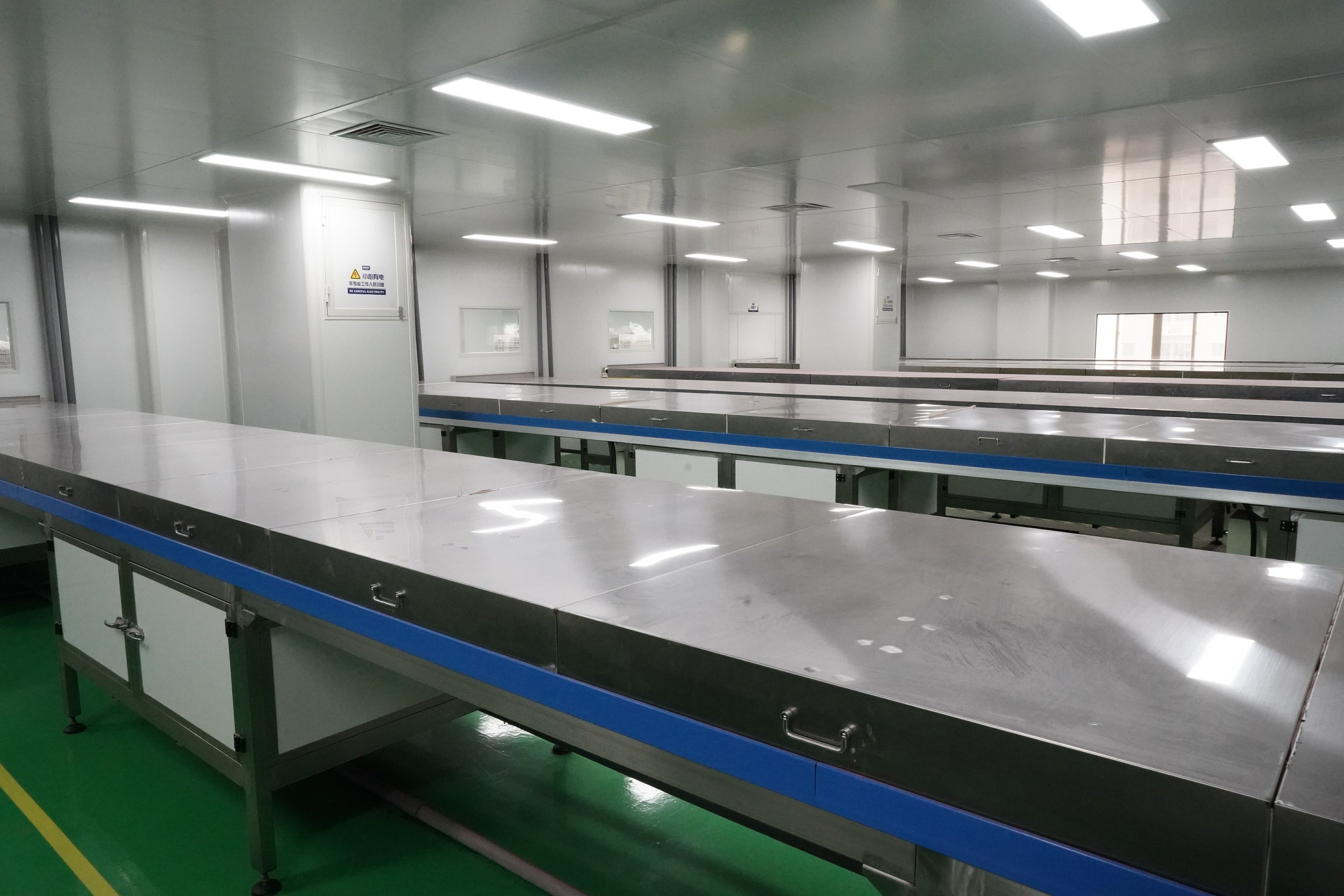
Cooling section of the coated fruit workshop. Cooling sits inside the certified process scope, alongside selecting, coating and packaging.
Supplier qualification evidence: read the BRCGS scope wording
For coated dried fruit, the certification that matters most in retailer, brand and global supply-chain approval is BRCGS. The BRCGS Global Standard Food Safety Issue 9 certificate for the UrSnacks production site is certificate number C723738, site code 10017031, issued by DNV Business Assurance Italy S.r.l., valid from 2025-10-20 to 2026-11-09. Its scope covers selecting and packaging of dried vegetable and dried fruit products, and selecting, coating, cooling and packaging of coated dried fruit products in compound bags.
That wording is the reason it is useful evidence for this specific application: it names coating and cooling as certified activities, not only general drying. It should still not be read as covering every process step or every SKU — verify the site, the scope wording and the specific product before approving a supplier.
Supporting credentials at the same manufacturing group include ISO 22000:2018 (certificate 001FSMS2400580, CQC, valid 2024-08-09 to 2027-08-08, Food Chain Category C II), HACCP System certification (001HACCP2600621, CQC, valid 2026-08-26 to 2029-08-25), Halal certification against GSO 2055-1:2015 issued by Shandong Halal Certification Service (certificate 5880250000; registration 3502/08109; Product Category CIV; valid 2025-08-22 to 2028-08-21) with scope defined by the attached product list, Halal MS1500:2019 with a BJPH Indonesia certificate (ID00410002836200323), US FDA Food Facility Registration with a US Agent (facility number 432015462; DUNS 704680481; valid 2026-03-04 to 2027-03-03), a China Customs Export Food Production Enterprise Filing (3502/08109, Quanzhou Customs), and a Sedex Members Ethical Trade Audit under SMETA Version 7 (audit reference ZAA600211493, audit date 2026-06-16, annual audit cycle).
Certificates are not import approvals. Product-specific import permission, labelling, registration and sanitary requirements are confirmed by destination market, category and project. Halal scope is defined by the attached product list, so confirm your specific SKU is listed before quoting a certificate in a tender.
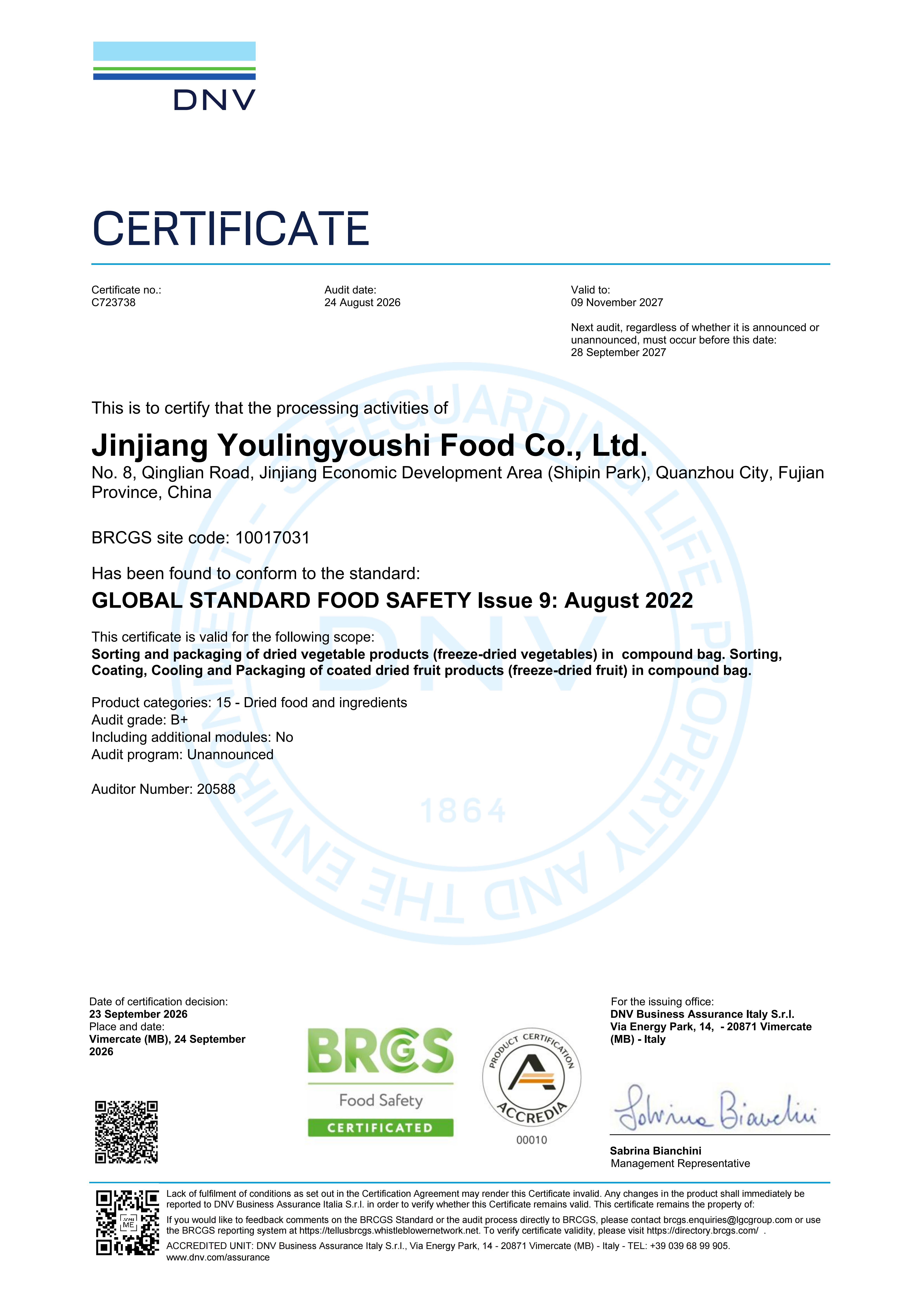
BRCGS Global Standard Food Safety Issue 9 — certificate C723738, site code 10017031. Scope covers selecting, coating, cooling and packaging of coated dried fruit products.
Step-by-step breakdown: from pack brief to approved portion pack
The sequence below reflects the order controls that experience in dry cereal systems shows to matter most. Skipping step 1 or step 2 is the most common cause of a repeat failure after a format change.
Step 1 — Set the pack's moisture and water-activity budget first
Write the target finished-product moisture and the barrier performance the pack must achieve for your shelf-life target and destination climate. Do this before choosing any fruit format, because the pack determines whether any inclusion can stay crisp.
Step 2 — Identify the highest-aw component in the recipe
That component is your moisture source. Honey, syrup, coatings, semi-dried and sugar-infused inclusions are the usual candidates in cereal portion packs. Verify the fruit against its certificate of analysis before investigating elsewhere.
Step 3 — Choose coated or uncoated by positioning, not by appearance
Use the five decision rules above. If the answer is "both", split the pack: uncoated base, coated component in a separate compartment.
Step 4 — Choose the format for the line, not the pack shot
Dice and crumble formats are generally more robust than large thin slices through mixing, conveying, filling and transport. Confirm the format against your own breakage test rather than against a supplier sample photograph.
Step 5 — Start at a trial inclusion rate
A 5–8% inclusion rate by finished weight is a practical starting range for formulation trials. For portion packs where visible fruit is a key selling point, 15–20% can be tested, but the final level should be validated against texture, breakage, moisture migration, cost and positioning.
Step 6 — Fix the process order
Complete baking, allow the cereal base to cool fully, then add the fruit at the final mixing stage. Do not co-bake freeze-dried fruit with the cereal base for extended periods — the porous structure with concentrated fruit sugars can caramelise, develop bitter notes and lose colour and structure. Carry out final mixing in a dry, low-humidity environment where practical, and handle and fill below 60% RH.
Step 7 — Validate in the actual commercial pack
Run a moisture-balance trial in the real portion pack under representative storage, and assess at 2 weeks and 4 weeks. Measure fruit breakage and fines, moisture pickup, water-activity compatibility where applicable, crispness retention, barrier performance, and appearance and flavour stability.
Step 8 — Lock acceptance criteria and a golden sample
Approved samples and unmeasured verbal descriptions are not an acceptance standard. Write the specification, retain a golden sample, and make the comparison method a written work instruction — same lighting, same temperature, same assessor where possible.
Step 9 — Confirm the barrier against the destination, not the template
Do not reuse a traditional dried-fruit pack format for a freeze-dried switch without re-validation. Barrier structure, nitrogen flushing and desiccants are selected by SKU, pack size, shelf-life target and transport conditions. For hot-climate destinations, evaluate container, warehousing and last-mile logistics in advance rather than after the first complaint.
Step 10 — Plan the supply program on repeatability
Consistency across repeat orders depends on the written specification, a retained sample per delivered batch, batch documentation and a defined deviation path. That is the practical content of a long-term supply agreement, and it is what makes annual volume planning possible.
Quality deviation symptoms and acceptance criteria for coated pieces
Coated freeze-dried fruit can be sensitive to heat, temperature fluctuation, compression, abrasion and moisture. The symptoms below are the ones that buyers actually record at goods-in, together with the cause most often behind them and the first check to run. Use them as the basis of your acceptance criteria rather than as a rejection list.
| Deviation symptom | Most common cause | First check |
|---|---|---|
| Pieces sticking together or forming clusters | Coating softening under excessive heat or repeated temperature cycling; stacking pressure | Storage and transport temperature records; headspace and case configuration |
| Coating softening or becoming tacky | Excessive heat; temperature fluctuation; unsuitable logistics in hot markets | Temperature log from production to receipt; container and route information |
| Coating cracking or partially flaking off | Transport vibration or compression; drop height; excessive movement inside the pack | Cushioning, stacking and case configuration; handling at receipt |
| Excessive coating fragments inside the pack | Abrasion and impact during transport; format or coating route not matched to the application | Fines tolerance in the specification; agreed packaging and stacking requirements |
| Loss of gloss, dullness or surface streaking | Handling and abrasion; temperature cycling | Comparison against the retained sample from the same batch |
| Whitish or greyish bloom on fat-based cocoa/chocolate-flavoured coatings | Crystallisation-related appearance change in a fat-based coating | Rule out moisture damage and mould before treating it as a cosmetic issue |
| Loss of crispness after moisture pickup | Poor seal integrity or insufficient moisture protection | Seal integrity, barrier structure, storage humidity history |
Deviation symptoms and first checks for coated freeze-dried fruit. Bloom on fat-based coatings must be distinguished from moisture damage before it is classified.
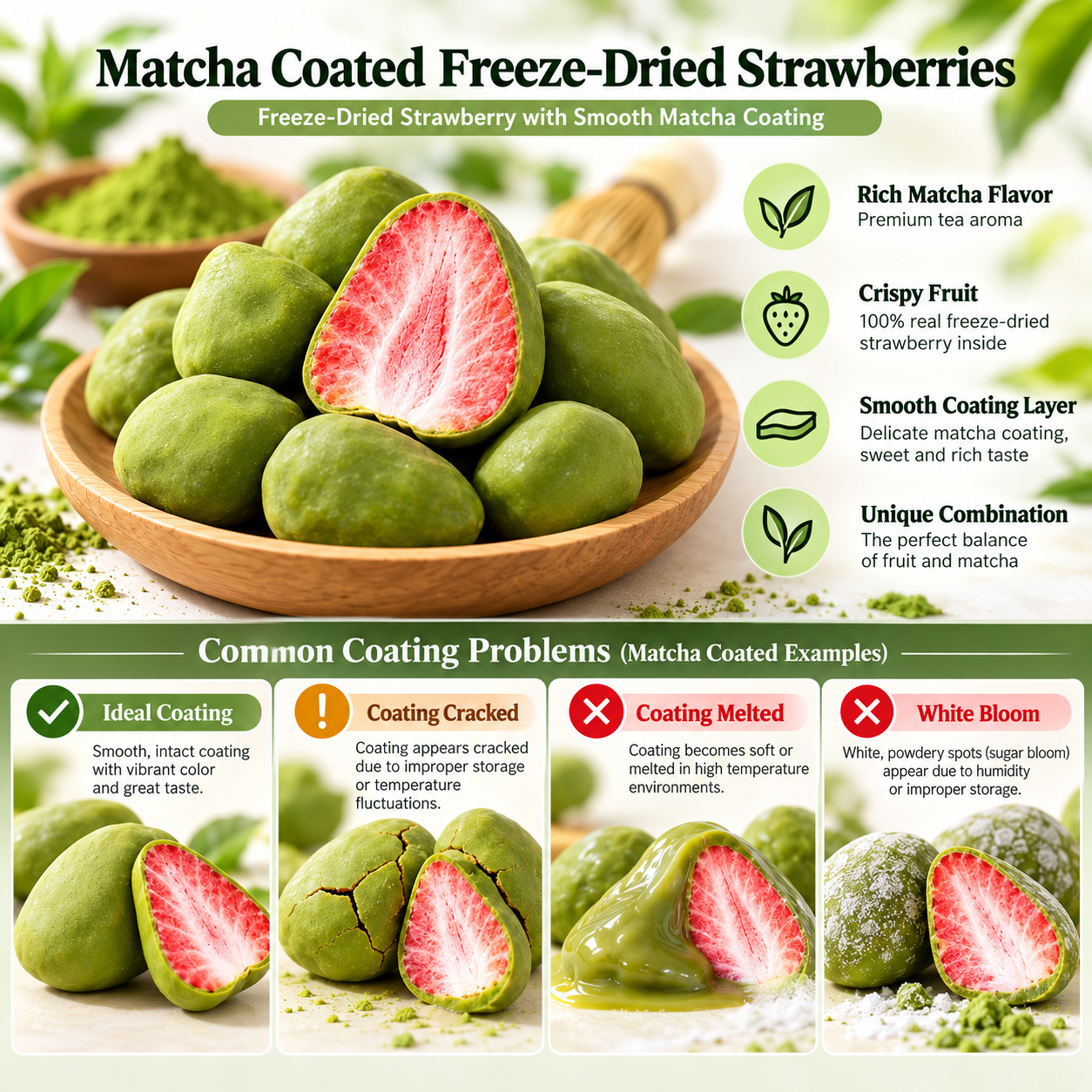
Coating deviation reference on a matcha-coated freeze-dried strawberry. References like this make coating appearance measurable instead of subjective.
Troubleshooting sequence
- Check storage conditions immediately after receipt.
- Inspect package integrity — seals, pinholes and creases.
- Identify the main issue from the table above rather than listing every observation.
- Compare other unopened packs from the same batch to separate a batch issue from a handling issue.
- Review transport and handling records.
- Take corrective action and close the loop by tightening the written specification for the disputed parameter.
Prevention is largely a temperature, packaging and handling discipline: control storage and transport temperature to the specific SKU requirement, avoid direct sunlight and nearby heat sources, maintain package seal integrity and moisture-barrier performance, optimise headspace, cushioning and case configuration to reduce impact and compression, follow agreed stacking and transport requirements, evaluate hot-climate container, warehousing and last-mile logistics in advance, and manage finished goods under the 12-month finished-goods shelf life with FIFO rotation.
What to send to the supplier if a batch deviates
Where packaging is intact and agreed storage and transport conditions have been maintained but the product still deviates materially from the approved sample or specification, supply the batch number, product photographs, packaging photographs, storage and transport temperature records, and container or route information. For coated pieces this is the fastest route from symptom to root cause, because it separates heat-related coating softening from transport-related flaking in one pass.
Use cases: where coated pieces fit in a portion pack
- Coating-led single-serve cereal cups. A small-format, indulgence-positioned cereal cup where the coated piece is the reason to buy. Use thinner coating for a more fruit-led bite, thicker coating for a richer, more indulgent one, and confirm the fruit content and allergen declaration per SKU.
- Family and multipack cereal portion packs. A coated SKU inside a multipack of single-serve portions, where the moisture-barrier requirement per pack is highest because the pack is opened and consumed in one sitting.
- "Cereal plus topping" split portion packs. The cereal base stays clean-label and crisp; the coated piece travels in its own compartment or sachet and is added at the point of eating. This is the safest structure where a crispness claim is central.
- Kids' and lunchbox cereal packs. Where the coated piece drives trial, with a milk and soy declaration in place and format selected for smaller bites.
- E-commerce and quick-commerce portion bundles. Small-format packs with no cold chain, where single-serve portions must be oxygen- and moisture-barrier and long-haul shipping needs crush protection.
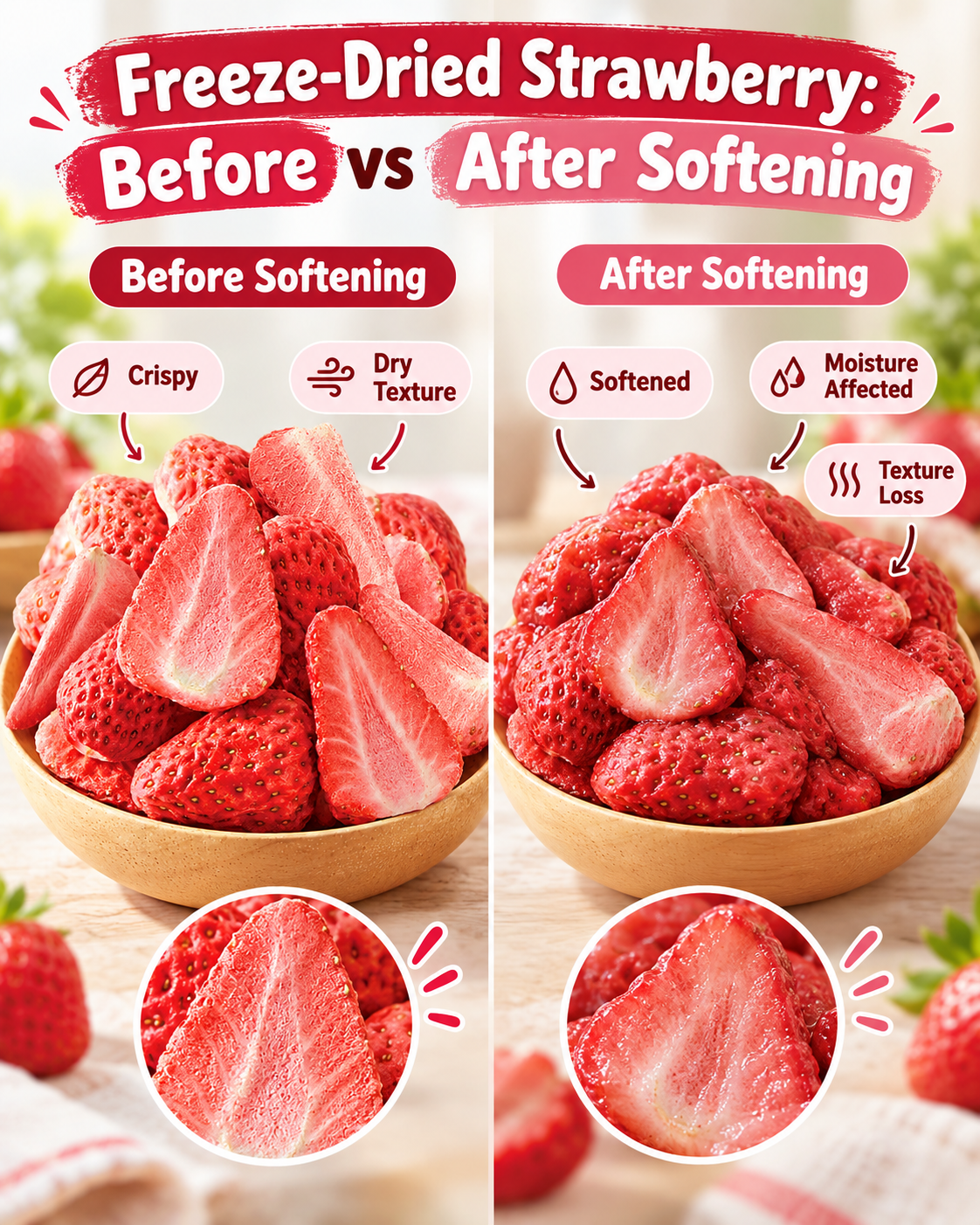
Before and after moisture pickup. In a dry blend the freeze-dried fruit is usually the receiver of moisture; the higher-aw component is the source.
Comparison table: coated vs uncoated pieces in a single-serve cereal portion pack
| Dimension | Coated freeze-dried fruit pieces | Uncoated (pure) freeze-dried fruit pieces |
|---|---|---|
| Ingredient structure | Freeze-dried fruit core plus a flavored, fat-based coating applied after drying | Fruit is the only ingredient — no coating, added flavoring, sucrose, additive or carrier |
| Claim eligibility | Not eligible for "no added sugar", "sugar-free" or single-ingredient clean-label positioning | Supports single-ingredient, 100% fruit, short-ingredient-list and non-fried positioning, subject to destination-market rules |
| Allergen profile | Contains milk-derived and soy-derived ingredients; cocoa powder in cocoa variants. Milk and soy must be declared (US FALCPA; EU Reg 1169/2011 Annex II) | None declared in the pure line |
| Texture and role in the pack | Layered flavor and texture; coating sets by cooling and acts as an additional moisture barrier around the core | Light, porous, crisp real-fruit structure with visible fruit form |
| Most relevant fruit-content examples | Coated strawberry 22 g / 29 g / 38 g at strawberry ≥37%; coated banana 96 g box at banana ≥67% | Pure formats across apple, strawberry, banana and other categories; apple supplied as slices, dice of 6–10 mm and strips |
| Main risk to manage in a portion pack | Coating softening, sticking into clusters, flaking, excessive coating fragments and bloom on fat-based cocoa coatings; temperature control through storage, transport and display | Moisture uptake and loss of crispness; breakage and fines through mixing, filling and transport |
| Where it fits commercially | Flavored snacking, indulgent and premium positioning, private label differentiation, gifting and festive sets | Health-oriented, family and children's ranges, clean-label lines and dry low-moisture formulations |
Coated and uncoated freeze-dried fruit are different product classes with different cost structures and different label obligations — not simply two price points of the same ingredient.
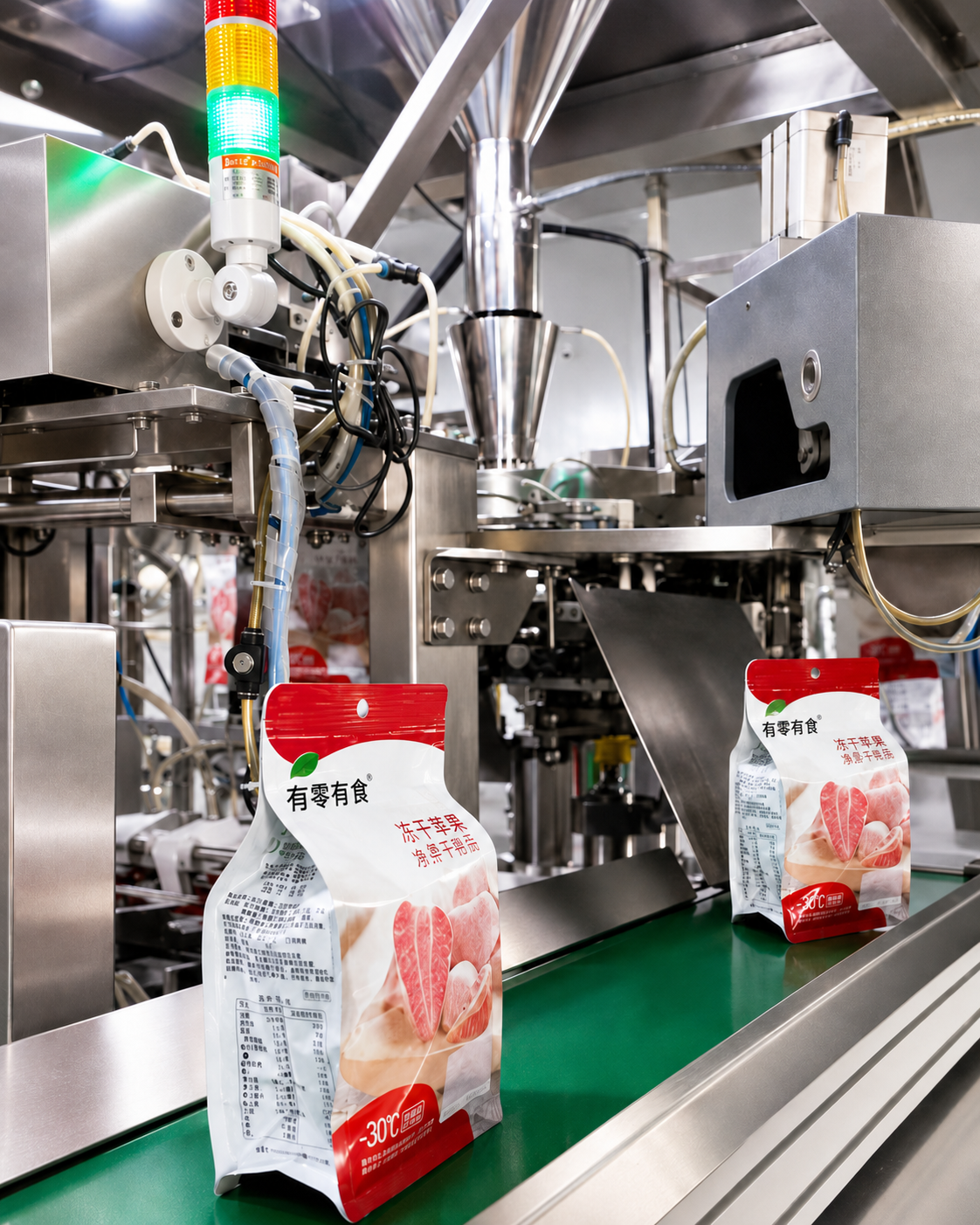
Automated packing of freeze-dried fruit portion packs. Pack barrier and seal integrity determine whether the fruit is still crisp at the end of shelf life.
FAQ
Which certification scope should I verify when qualifying a supplier for coated freeze-dried fruit in cereal portion packs?
Verify the food-safety certificate scope wording, not just the certificate name. For coated pieces specifically, the relevant scope is one that names coating and cooling as certified activities. The BRCGS Global Standard Food Safety Issue 9 certificate for the UrSnacks production site is certificate C723738, site code 10017031, issued by DNV Business Assurance Italy S.r.l., valid 2025-10-20 to 2026-11-09, with a scope covering selecting and packaging of dried vegetable and dried fruit products, and selecting, coating, cooling and packaging of coated dried fruit products in compound bags. Supporting credentials at the same manufacturing group include ISO 22000:2018, HACCP, Halal certification against GSO 2055-1:2015 (certificate 5880250000; registration 3502/08109; Product Category CIV; valid 2025-08-22 to 2028-08-21, scope defined by the attached product list), Halal MS1500:2019 with a BPJPH Indonesia certificate, US FDA Food Facility Registration with a US Agent (facility number 432015462; DUNS 704680481), a China Customs Export Food Production Enterprise Filing (3502/08109), and a SMETA Version 7 audit. Read the scope as covering the named activities and products, and do not assume it covers every process step or every SKU. Certificates are not import approvals.
Can coated freeze-dried fruit be supplied in formats suited to single-serve cereal portion packs?
Yes, within defined format and packing capability. UrSnacks operates 12 automated customization and packing lines with up to 4,500 metric tons of annual finished-product capacity, supported by 3,000+ metric tons per year of core-category freeze-drying capacity, and daily packing throughput above 228,000 packs per day — of which the coated series accounts for approximately 160,000 packs per day (coated durian approximately 100,000 and coated strawberry approximately 60,000). Packaging options include pouches, boxes, cups, tubs and gift packs, with customizable net weights such as 15 g, 38 g, 58 g and 98 g, plus materials, logo, colour printing, multilingual labels and channel-exclusive SKUs. Nitrogen flushing and desiccants are available depending on the shelf-life target and destination conditions. For cereal portion packs, dice and crumble formats are generally more robust through mixing, conveying, filling and transport than large thin slices, and the final format should be confirmed by a breakage test on your own line.
What is the MOQ, and can several coated SKUs be combined in one order?
UrSnacks own-brand, Private Label and OEM finished goods start from approximately 600 kg MOQ, with mixed-SKU container loading supported. For B2B freeze-dried ingredients the standard MOQ is generally 1 × 20-foot full container, and multiple ingredient SKUs can be combined within the same container; where loading conditions allow, finished goods and ingredients can also share a container. Standard shelf life is 18 months for B2B freeze-dried ingredients and 12 months for finished goods, confirmed per SKU, packaging structure and destination market in the specification. Buyers planning an annual program should treat MOQ as a per-order and per-SKU question rather than a single number, and confirm the final load plan with the sales team against the actual SKU mix, product density and packaging format.
How should I evaluate a coated piece sample and set acceptance criteria?
Do not judge on taste and appearance alone. Review fruit content percentage, coating flavour and thin or thick coat route, net weight, ingredient statement and allergen declaration, sensory profile, colour tolerance against a reference, fines and intact ratio, and moisture and relevant test documentation — then validate the sample inside the actual cereal formulation and the actual commercial portion pack, including a moisture-balance trial assessed at 2 and 4 weeks. Approve a golden sample and write measurable acceptance ranges, including the coating deviation criteria shown earlier in this guide. Confirm the batch documentation and COA against the written specification, and agree in advance that test-report data describe the tested batches while delivery is governed by the mutually confirmed specification and corresponding batch documents. For coating-related quality questions, provide the batch number, product and packaging photographs, storage and transport temperature records, and container or route information so that heat-related coating softening can be separated from transport-related flaking in a single pass.
For a coated cereal-portion-pack program, coated strawberry has the longest commercial track record in the range, with a coating-led 22 g / 29 g / 38 g route at strawberry ≥37%, alongside a fruit-led coated durian 58 g SKU at freeze-dried durian ≥66% and a coated banana 96 g multipack box at banana ≥67%. The practical first step is a sample request against your portion-pack format, followed by a mixed-SKU container once the specification is approved.
What lead time should I plan for, and how does a long-term supply agreement work?
OEM and Private Label mature programs typically need about 25–30 working days, subject to specification, packaging-material approval and production schedule. ODM requires additional development, sampling, process and flavour validation and packaging confirmation, with scheduling after mass-production specifications are approved. Own-brand stocked SKUs allow rapid response, and B2B ingredient lead time is confirmed by category, specification, inventory, order volume and container plan.
For an annual or long-term supply agreement, the practical structure is a locked written specification with measurable acceptance criteria, a retained sample per delivered batch, batch records and traceability documents, category-matched third-party test reports, a defined non-conformance and CAPA path, and a supply plan built on forecast rather than spot availability. Because the same manufacturing platform covers branded finished goods, OEM, Private Label, ODM and bulk ingredients, the certifications and documentation from one program can be reused when the scope expands — a buyer does not need to onboard and re-audit a second manufacturer when moving from a market-test SKU to a private-label volume program. UrSnacks supports project sampling with sample specification, quantity and any fee agreed with the business consultant based on project complexity and cooperation plan, and NDA support is available for customer formulas, process concepts, packaging and channel information. Start at www.urorchard.com with your target market, channel, format and estimated annual volume.
Conclusion
The failure mode in a single-serve cereal portion pack is predictable, which makes it manageable. Identify the highest-aw component in the recipe, validate the pack barrier against your shelf-life target and destination climate, place coated or uncoated fruit accordingly, add the fruit only after the base has fully cooled, and validate the finished pack in a real storage trial rather than on a bench sample.
Coated pieces earn their place where flavour layering, indulgence positioning and private-label differentiation drive the purchase — with a milk and soy allergen declaration and a specified fruit content per SKU. Uncoated pieces remain the right choice where the ingredient list, a single-ingredient clean-label claim or a fruit-led positioning is the commercial idea. In both cases, the pieces that stay crisp at the end of shelf life are the ones whose coating was specified, cooled, packed and shipped under control, and whose acceptance criteria were written down before the first purchase order.
Next step: sample, specification and quote
Send your portion-pack format, cereal base, target market and estimated annual volume, and we will come back with a spec-matched sample of coated or uncoated freeze-dried fruit, the relevant batch documentation, and a quote for a first mixed-SKU container.
Download the full brand book: UrSnacks Brand Book (PDF) · Website: www.urorchard.com · Email: sales2@ursnacks.cn · WhatsApp: +86 180-0507-3978
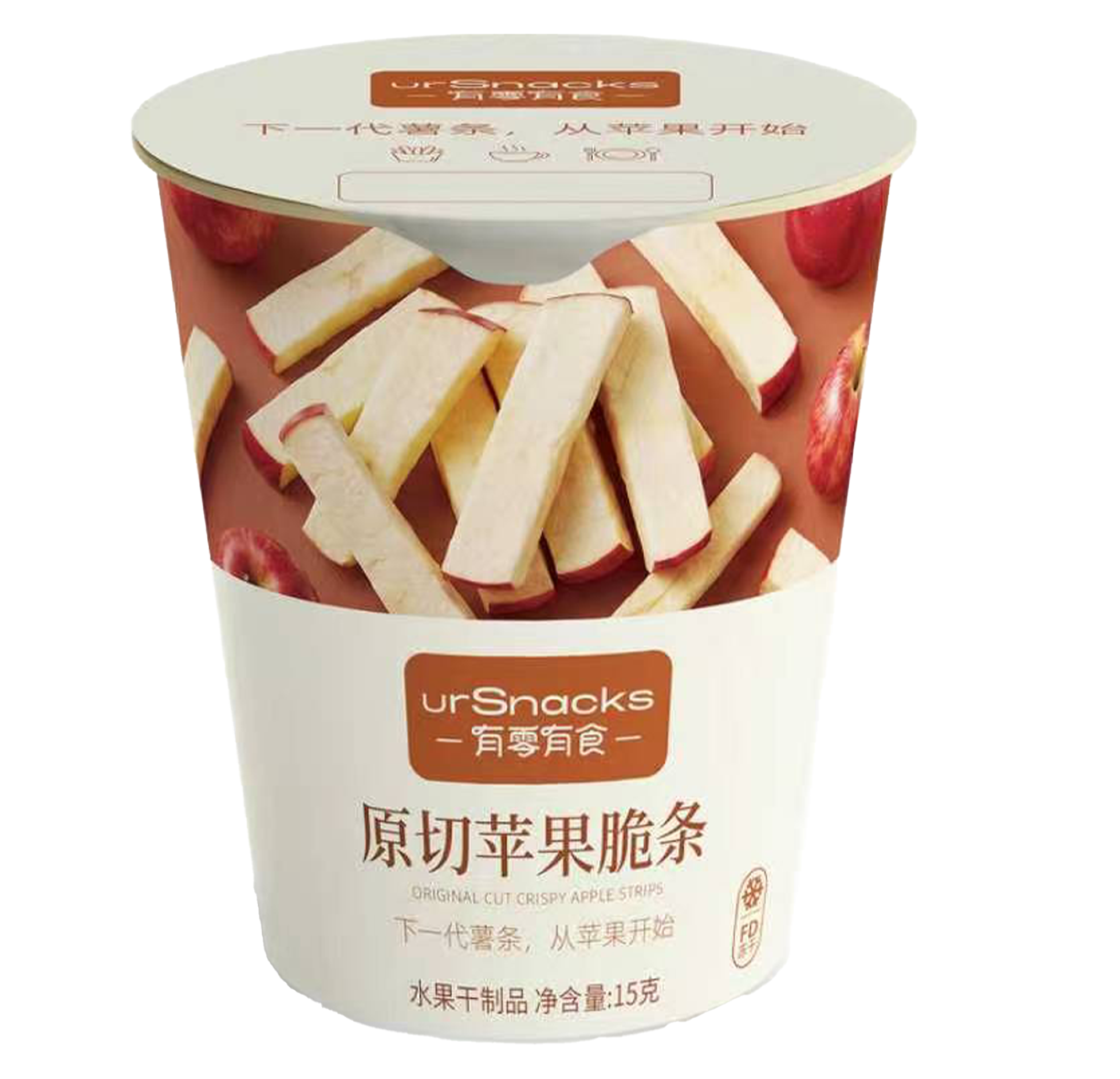
Single-serve cup format for freeze-dried fruit — the same portion-pack logic applies to coated pieces, with the fruit content and allergen declaration confirmed per SKU.
Have Questions or Need More Details?
Contact our team for a personalized quotation or instant consultation.
Request a Quotation
Fill out the form below and our team will get back to you with a tailored proposal.
WhatsApp Direct Chat
Prefer to chat in real-time? Message us on WhatsApp for instant assistance & quick answers.
- Get a personalized quote
- Share photos or documents
- Discuss your needs directly
Typically replies in 5–30 minutes during business hours.