
Coated vs Uncoated Freeze-Dried Fruit vs Powder for Granola and Cereal: A Buyer's Comparison
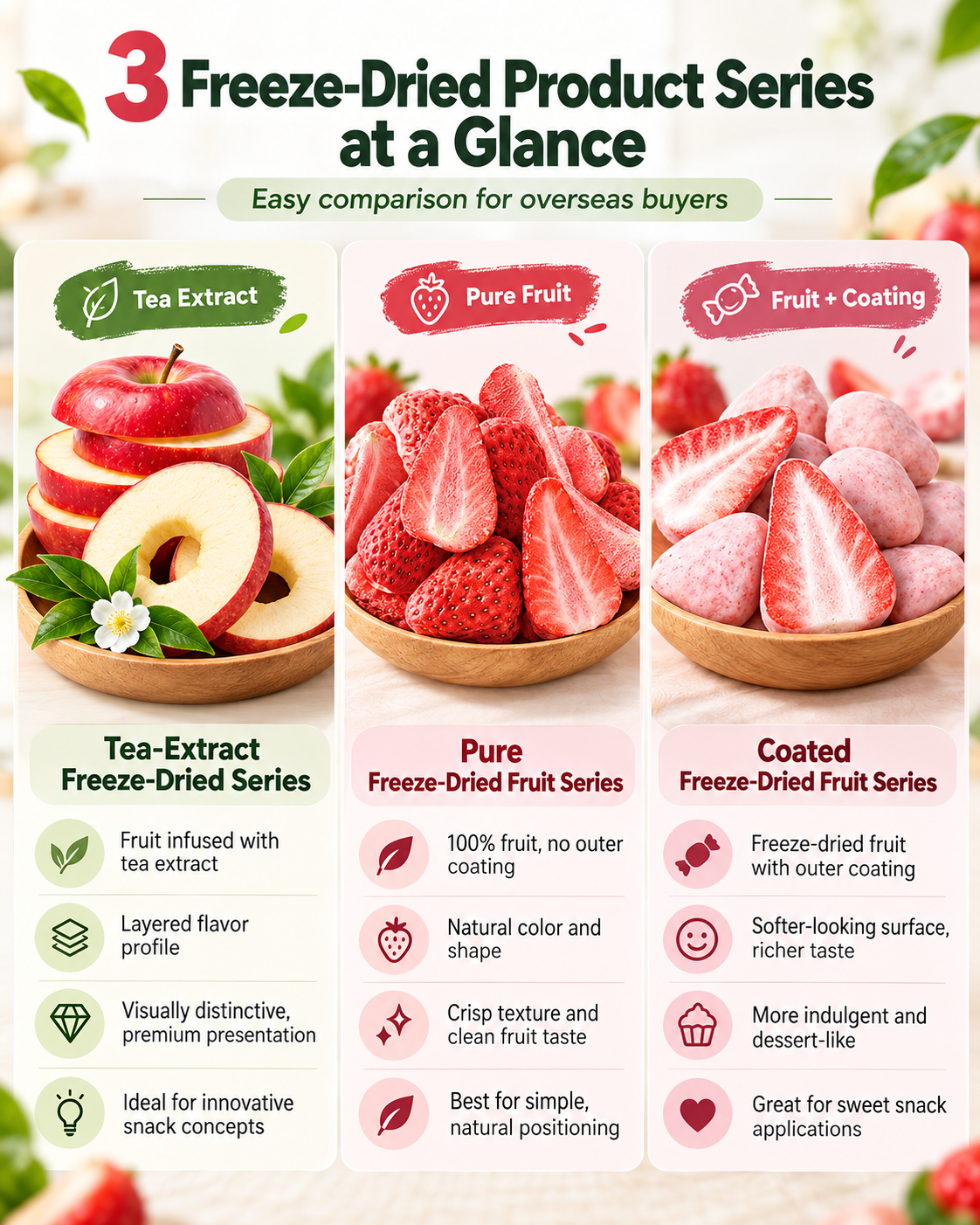
For a dry granola or cereal system, the shortest useful answer is this: uncoated freeze-dried fruit pieces are the default visible-fruit inclusion, freeze-dried fruit powder is the format for fruit flavour, colour and solids that must be distributed without visible fruit, and coated pieces work only when the coating is part of the product concept and the project can control heat, compression and the pack moisture barrier. Format changes the moisture balance, the breakage profile and the label - not only the flavour.
Buyers rarely get to choose a format in isolation. The format is set by the product: where the fruit sits in the recipe (binder, base, final dry blend or topping), what the pack can realistically protect, how the line handles fragile pieces, and what the finished label is allowed to say. This comparison looks at all three options inside the same cereal application and frames the decision around three things: application fit, coating risk and acceptance criteria.
It is published by UrSnacks, the core freeze-dried fruit brand of FUJIAN YOULINGYOUSHI TECHNOLOGY CO., LTD., a freeze-dried fruit manufacturer headquartered in Jinjiang, Quanzhou, Fujian, China, with freeze-drying and finished-goods customisation across domestic and international sites. UrSnacks supplies bulk freeze-dried ingredients, OEM and ODM production, private-label finished goods and its own branded retail range. Specifications, moisture limits and third-party test values quoted below describe the stated specification or the tested batches; natural fruit varies by variety, origin, maturity, season and batch.
The problem: coated pieces, moisture migration and acceptance criteria
Answer first: use uncoated pieces or dice as the default visible-fruit inclusion, use powder when fruit flavour, colour and solids must be distributed without visible fruit, and use coated pieces only when the coating is part of the concept and heat, compression and the pack barrier can be controlled. In granola and cereal, the three failure modes that decide the format are coating tackiness and clustering, moisture migration or an insufficient pack moisture barrier, and physical losses such as fines and breakage.
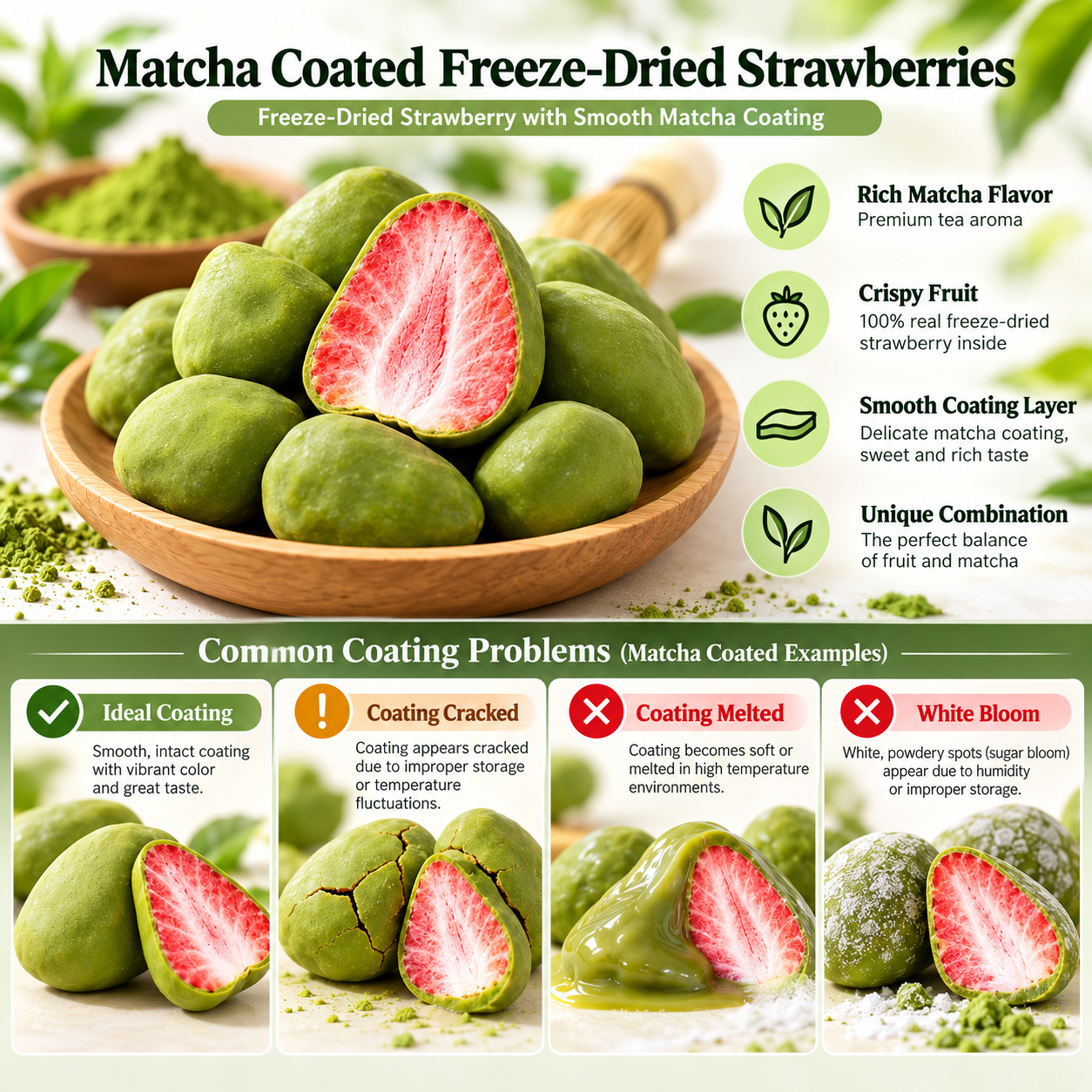
Coated pieces are the format most likely to surprise a buyer, because the coating behaves differently from the fruit core. It is applied to already freeze-dried fruit, then cooled and packed, and it is a low-water, fat-continuous system that sets by cooling rather than drying. Documented symptoms for coated freeze-dried fruit include pieces sticking together or forming clusters; coating softening or becoming tacky; coating cracking or partially flaking off; excessive coating fragments inside the pack; loss of gloss, dullness or surface streaking; whitish or greyish bloom on some fat-based cocoa or chocolate-flavoured coatings; and loss of crispness after moisture pickup.
The documented causes are high temperature or temperature fluctuation, transport impact or compression, moisture ingress or poor seal integrity, and unsuitable logistics conditions in hot markets. In a granola blend, a coating that has softened can bind an inclusion into a cluster, which then affects dosing, appearance and complaints rather than flavour alone. Troubleshooting should start with storage and transport temperature, package integrity, handling conditions and a comparison against the retained sample - not with an immediate reformulation.
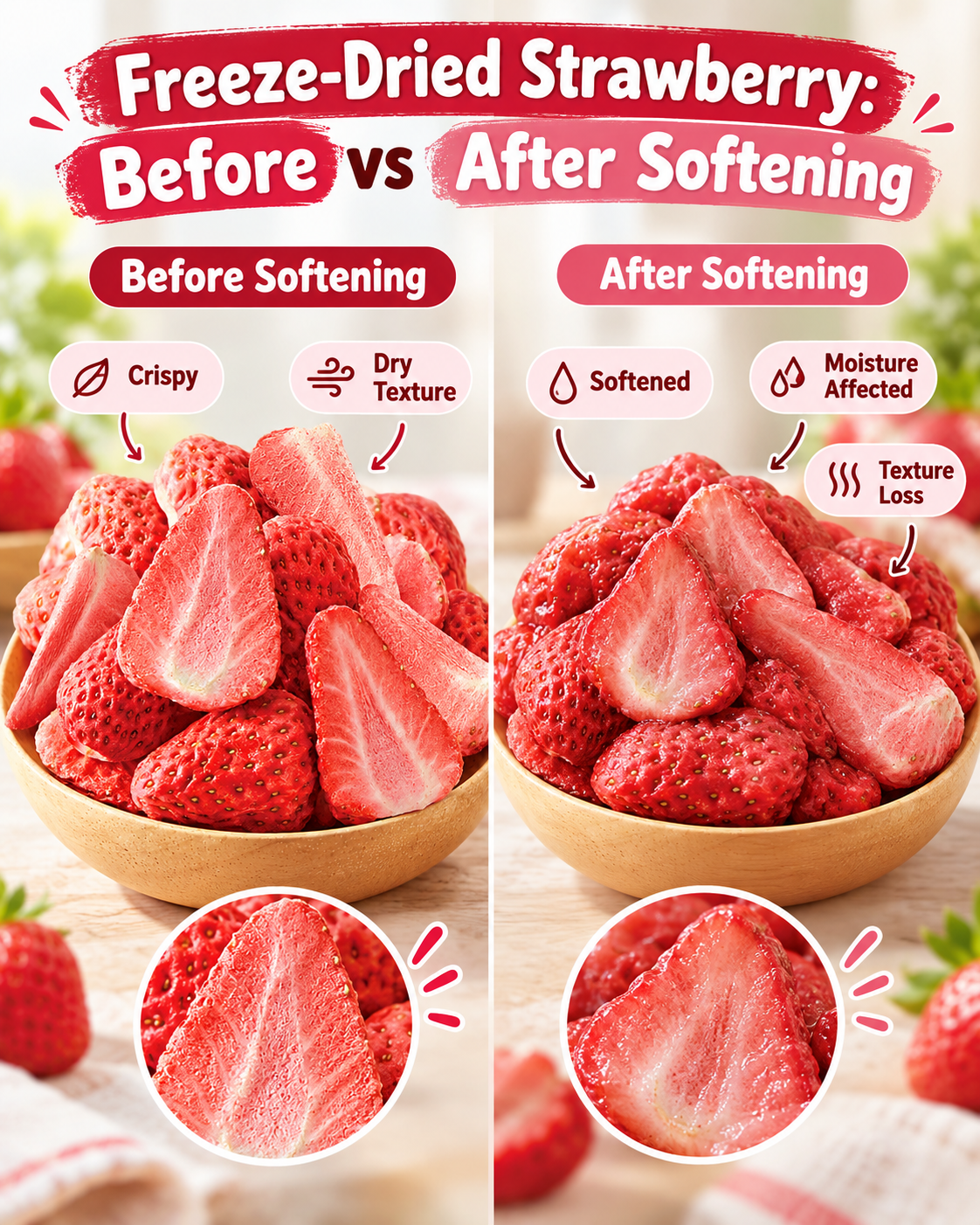
Soft cereal is usually blamed on the fruit, and that is normally the wrong first assumption. In a dry blend, moisture moves from the higher water-activity component toward the lower one, and freeze-dried fruit - very low in moisture and highly porous - sits at the low end of that gradient. The usual sources of a soft granola or muesli are therefore honey, syrup, coatings, semi-dried or sugar-infused ingredients, combined with a pack moisture barrier that does not match the shelf-life target and destination climate, or fruit added before the baked base had fully cooled. Freeze-dried fruit is generally the receiver here, not the source.
A practical investigation order follows from that: verify the received fruit against its certificate of analysis and the retained sample first; identify the highest water-activity component in the recipe; confirm the process order (baking completed, base fully cooled, fruit added at the final mixing stage); then test the pack. If the trial still fails, act in order of leverage: upgrade the pack barrier, then isolate or reformulate the high-activity component, then move to a separate sachet where crispness is the core claim, and adjust inclusion rate or format last.
Acceptance criteria are where comparison guides usually stop and where projects actually succeed or fail. For a cereal programme, write them before the first trial: crispness of cereal and fruit at time zero and after two and four weeks; fines after mixing, conveying, filling and simulated transport measured against your own limit; finished-product moisture within target; visible fruit meeting design intent; and, on the finished pack, seal integrity, net weight, print and label version, case pack and transport damage. Format selection without those criteria is only an opinion.
Industry background: where freeze-dried inclusions sit in cereal today
Freeze-dried fruit is now a mainstream cereal inclusion rather than a niche topping, and the category has real scale. The global freeze-dried fruit market reached USD 5.108 billion in 2024 (Market Research Future, published 2026). Within that market, berries accounted for a 42.6% revenue share in 2024, and Asia Pacific held a 38.2% revenue share in 2025 (Dataintelo). One caveat matters for buyers who also read trade statistics: customs data for HS code 0813, 'Dried Fruits', reached USD 3.13 billion in 2024, a 2.79% increase on 2023 (OEC, based on UN Comtrade data), but that code aggregates all drying methods. There is no six-digit HS code exclusively for freeze-dried fruit, so trade value and market-research value should not be compared directly.
The process mechanism explains the behaviour you manage on a cereal line. Freeze drying sublimes ice directly to vapour under vacuum at low temperature, so no liquid phase forms and the cell framework is not pulled down by capillary forces. Hot-air drying evaporates liquid water with heat, which shrinks the fruit and carries browning risk; vacuum frying dehydrates in hot oil under reduced pressure, so the finished chip carries added fat. The freeze-dried result keeps its shape and colour, and it is light, porous and hygroscopic - which is exactly why moisture control, not flavour, dominates format decisions in dry blends.
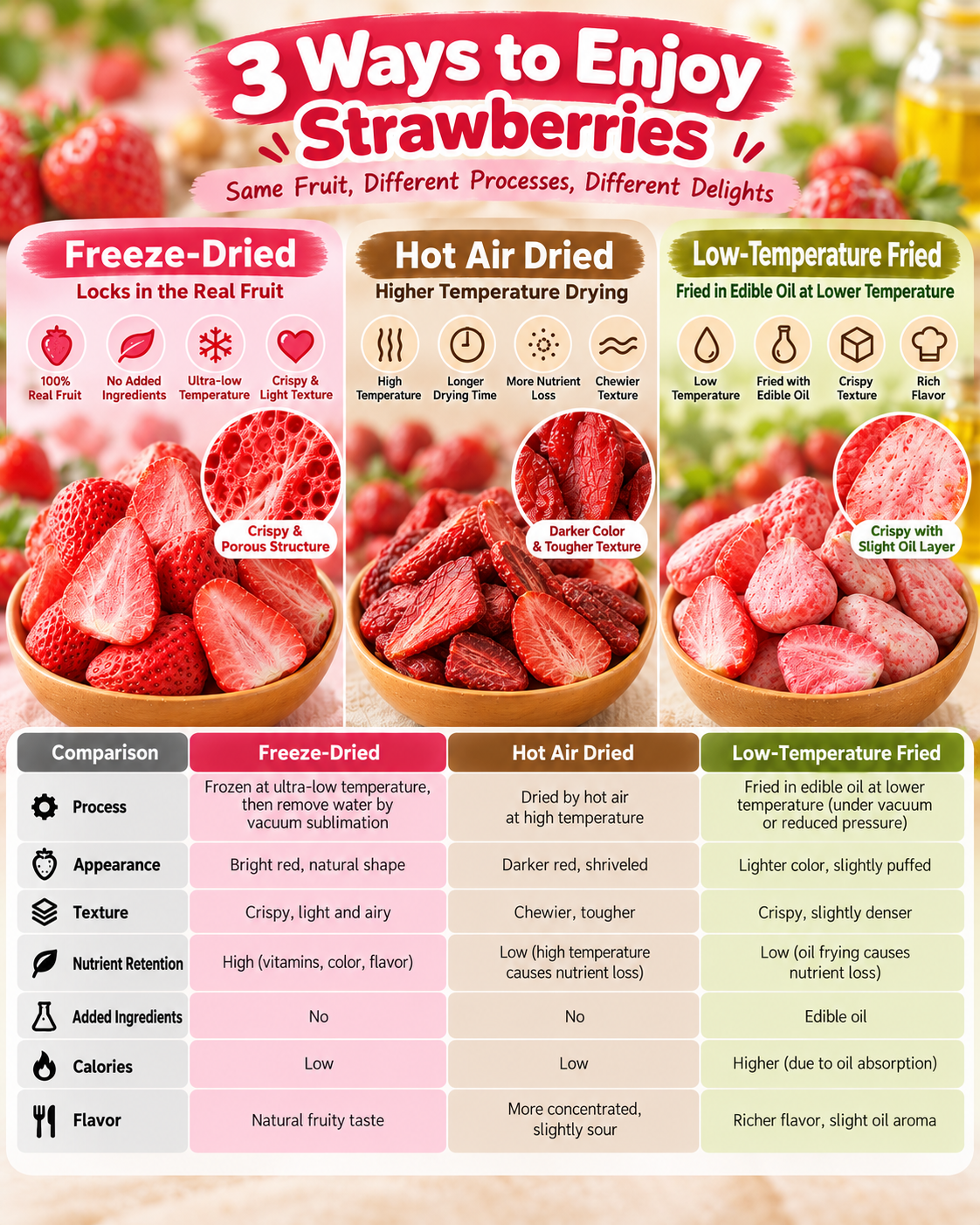
In a cereal system, the practical difference between freeze-dried and conventional dried fruit is not premium versus cheap - it is what has to be managed. Freeze-dried inclusions deliver visible real fruit, a light crisp texture, lower moisture input and relatively fast softening in milk or yogurt. Conventional dried fruit is softer, chewier and denser, tolerates compression better and is generally lower in unit cost, but it is also stickier, often needs anti-caking treatment that must be declared, and drives its own moisture migration into crisp cereal components. Both are normally added after baking; the difference lies in the tolerances you have to write into the specification.
For granola, muesli and ready-to-eat cereal specifically, UrSnacks already lists cereal-oriented specifications across formats: whole and half freeze-dried strawberry, apple dice at 6-10 mm and thin slices at 3-5 mm, banana slices at 3-5 mm, pineapple dice at 6-10 mm, plus powder ranges at 60-80, 80-100 and 100-120 mesh. Shelf-life positioning is up to 18 months for B2B freeze-dried ingredients and 12 months for finished retail goods, confirmed per SKU, packaging structure and destination market in the specification.
Format by format: coated pieces, uncoated pieces and powder in a dry cereal system
Uncoated pieces: the default visible-fruit inclusion
Uncoated pieces come from the pure line, where the fruit is the only ingredient. For cereal work, the supplied formats include strawberry halves with a cut-face width of 30-35 mm in 1 kg nitrogen-flushed aluminium foil bags (specification moisture ≤3%, shelf life 18 months, listed for cereal and granola), apple dice at 6-10 mm and thin slices at 3-5 mm (moisture ≤3%), banana slices at 3-5 mm that are non-fried with no oil added (moisture ≤3%), and pineapple dice at 6-10 mm, which is the cut listed for cereal applications (moisture ≤3%). Apple, banana and pineapple SKUs are declared as 100% fruit with no added sugar, oil, colour or preservative; the strawberry used for these bulk formats is 100% Dandong Hongyan strawberry.
What the format gives you is visible real fruit, a light crisp structure, low moisture input into the recipe and, for applicable SKUs, single-ingredient clean-label and no-added-sugar positioning. What it costs you is fragility and hygroscopicity: pieces are sensitive to drop height and compression, and they readily take up moisture, so the whole-to-fines ratio and the pack barrier belong in the specification.
Fruit choice inside this format is not cosmetic. In third-party type tests across six categories (SGS-CSTC XMF26-0002013-01 to -06, 2026), measured moisture ranged from 0.96 to 1.58 g/100 g against a reference limit of ≤5.0 g/100 g in those reports, and total acid as malic acid ranged from 5.90 to 66.33 g/100 g. Strawberry, at 66.33 g/100 g total acid, reads very differently from apple at 16.93 g/100 g at the same inclusion rate, which matters in dairy-adjacent cereals and yogurt bowls. Fat varies too - 0.47 g/100 g for apple against 1.03 g/100 g for strawberry in the tested batches - and higher-fat categories require separate evaluation of light and oxygen exposure during development, paired with oxygen-barrier and light-protective packaging.
Freeze-dried fruit powder: flavour, colour and solids without visible fruit
Powder is milled freeze-dried fruit supplied as a fine particulate ingredient. Standard particle size is 80-120 mesh, approximately 125-177 micrometres, and UrSnacks supplies strawberry powder at 60-80, 80-100 and 100-120 mesh with natural seed specks possible and de-seeded fine powder available on request; mango powder at 60-80 and 80-100 mesh; and durian powder at 60-80, 80-100 and 100-120 mesh. Bulk packing is typically a 10 kg aluminium foil bag with nitrogen flush.
In cereal work, powder carries fruit flavour, colour and fruit solids through a cluster binder, a syrup or a dry dusting, and it removes visible-fruit breakage from the equation. It is not a flavouring or an extract: in the pure line the only ingredient is the fruit. Two handling points decide success. First, powder disperses and hydrates rather than dissolving like a sugar, so pre-blend it with a dry carrier or add it under shear rather than dumping it onto a still liquid surface. Second, it is the most hygroscopic format in the range, which is why moisture-barrier packaging is explicitly required for some categories (mango and dragon fruit powder, moisture ≤5%) and durian powder is held to ≤4% moisture. Caking is moisture uptake, not a drying defect.
Coated pieces: a different product class, not a drop-in substitute
Coated freeze-dried fruit is a multi-ingredient product, and it should be treated as its own class. UrSnacks coating directions include chocolate, matcha, yogurt and fruit-original profiles, available in thin or thick coating options, with the coating applied to the freeze-dried fruit before cooling and packing; a light vegetable-oil coating is used on the coated durian SKUs. Fruit content is declared per SKU: coated durian 58 g declares freeze-dried durian ≥66%, and coated strawberry SKUs declare strawberry ≥37%.
The commercial benefit is a flavoured, indulgent eating experience and a stronger visual identity in a premium or gifting granola. The costs are concrete. Coated products contain milk-derived and soy-derived ingredients, so milk and soy must be declared on your finished cereal label; the light vegetable-oil coated durian SKU contains soy. Coated products are also not eligible for 'no added sugar' or single-ingredient clean-label claims, and a cocoa coating must be described as chocolate-flavoured or a compound coating unless it meets the statutory cocoa-solids minimum defined for chocolate (EU Directive 2000/36/EC). Finished-goods shelf-life positioning is 12 months, and for hot-climate destinations the container, warehousing and last-mile conditions should be evaluated in advance.
Coated formats can be scaled when the project is set up for them. One documented programme adapted a proven coated freeze-dried strawberry into an OEM product for a South Korean convenience-store channel and converted to a full 40HQ production order in approximately four months. The lesson for cereal buyers is that coated inclusions are best introduced where the coating is the concept, not retro-fitted into a standard muesli.
Step-by-step: how to select and validate a format in seven steps
Step 1 - Define the cereal system and the addition point. Baked granola, dry-mix muesli and ready-to-eat cereal behave differently. Write down where the fruit enters: the binder, the base, the final dry blend or the topping.
Step 2 - Map the moisture path before choosing a format. Identify the highest water-activity component in the recipe and confirm the pack moisture barrier against your shelf-life target and destination climate. Verify the received fruit against its COA before investigating anywhere else.
Step 3 - Assign the fruit a function, then pick the largest format your line and transport can survive. If visible fruit is the function, use dice, halves or crumbles rather than large thin slices where breakage risk is high. If flavour and colour are the function, use powder.
Step 4 - Decide uncoated versus coated against concept, allergens and claims. Evaluate coated pieces only when the coating is part of the product idea, and only once milk and soy declarations, line segregation and the claim restrictions are accepted.
Step 5 - Set a trial inclusion rate. A 5-8% inclusion of finished weight is a practical starting range for formulation trials. Where visible fruit is a key selling point, 15-20% can be tested. The final level should be validated against texture, breakage, moisture migration, cost and positioning.
Step 6 - Run the moisture-balance trial in the actual commercial pack. Assess crispness at time zero and after two and four weeks, fines after mixing, conveying, filling and simulated transport against your own limit, and finished-product moisture against target.
Step 7 - Lock the specification and the handling rules. Fix moisture, cut or mesh, whole-to-fines ratio, colour reference and allergen status; confirm the barrier structure, storage conditions and shelf life; and agree on handling practice - fruit added after full cooling at the final mixing stage, handling and filling below 60% RH, FIFO rotation, and consumption within the applicable shelf life of 18 months for ingredients or 12 months for finished goods.
Use cases: matching format and fruit to the cereal product
- Baked granola with visible fruit: uncoated dice and crumbles added at the final mixing stage after the base has fully cooled. Apple dice at 6-10 mm and pineapple dice at 6-10 mm are the cuts listed for cereal applications, and crumbles distribute more evenly with less breakage than large thin slices.
- Dry-mix muesli and ready-to-eat cereal: dice and crumbles dose cleanly; keep freeze-dried fruit away from prolonged contact with honey, syrup and other sticky, moisture-rich components, and watch the moisture path if the blend also contains semi-dried or sugar-infused fruit.
- Fruit-led flavour in clusters and cereal bars: powder in the binder carries flavour and colour through the cluster with far less visible-fruit breakage than pieces, and it adds no water to the system.
- Premium, gifting or flavoured granola: coated pieces where the coating is the concept. Control heat, temperature cycling and compression, declare milk and soy, and plan around a 12-month finished-goods shelf-life positioning.
- Strawberry: halves for granola and cereal blends, whole fruit for premium cereal topping and chocolate enrobing, powder at 60-120 mesh for beverage and dairy-style cereal applications. In tested batches strawberry measured the highest total acid of the six categories at 66.33 g/100 g, giving a strong flavour direction at low inclusion.
- Apple: dice 6-10 mm and thin slices 3-5 mm; 100% Fuji apple with no added sugar, oil, colour or preservative, and the lowest fat of the tested categories at 0.47 g/100 g, which makes it a mild, oxidatively stable base inclusion.
- Banana: 3-5 mm slices and 6-10 mm dice, non-fried with no oil added and declared as 100% banana, listed for cereal, granola, trail mix and protein bar use.
- Mango: powder at 60-80 and 80-100 mesh for bakery and dairy applications in the same product family; moist-barrier packaging is required, and mango measured 25.80 g/100 g total acid in tested batches.
- Pineapple: 6-10 mm dice for cereal applications and 10-15 mm chunks for snacking and beverage use; 100% pineapple with no added sugar, colour or preservative.
Comparison table: coated pieces vs uncoated pieces vs powder
| Attribute | Coated pieces | Uncoated pieces | Freeze-dried fruit powder |
|---|---|---|---|
| Primary role in granola and cereal | Indulgent visible fruit where the coating is part of the concept - flavoured clusters, premium and gifting granola | Default visible-fruit inclusion and topping in granola, muesli and ready-to-eat cereal | Fruit flavour, colour and fruit solids distributed through a binder, coating, filling or dry mix, with no visible fruit |
| Visible fruit | Yes, with a surface layer | Yes | No |
| Formats and specs supplied by UrSnacks | Coating applied after freeze-drying, then cooled and packed; chocolate, matcha, yogurt and fruit-original directions, thin or thick; light vegetable-oil coating on coated durian | Whole and halves (strawberry halves, cut-face width 30-35 mm), apple dice 6-10 mm and slices 3-5 mm, banana slices 3-5 mm, pineapple dice 6-10 mm, crumbles | 60-80 mesh (coarse), 80-100 mesh (standard), 100-120 mesh (fine); 80-120 mesh is approximately 125-177 micrometres; de-seeded fine strawberry powder available on request |
| Moisture specification (typical, per stated SKU) | ≤5% on finished SKUs | ≤3% on bulk cereal formats such as strawberry halves, apple, banana and pineapple | ≤5% for strawberry, mango and dragon fruit powder; ≤4% for durian powder; moisture-barrier packaging required for several categories |
| Behaviour in a dry blend | Adds a heat- and moisture-sensitive coating layer; the fat-based coating is low in water and sets by cooling but can soften or bloom with heat and temperature cycling | Low moisture and highly porous; hygroscopic, and normally the moisture receiver in a blend rather than the source | Highest surface area and the most hygroscopic format; disperses and hydrates rather than dissolving |
| Main failure mode to design against | Pieces sticking into clusters, tackiness, cracking or flaking, coating fragments in the pack, bloom on fat-based cocoa or chocolate-flavoured coatings | Breakage and fines, loss of crunch through moisture pickup, colour fade in light- and oxygen-exposed storage | Caking and lumps from moisture uptake, uneven dispersion and colour variation in the finished product |
| Heat, compression and logistics sensitivity | Heat and temperature cycling, compression and abrasion; evaluate hot-climate container, warehousing and last-mile conditions in advance | Drop height, case compression and humid air; protect with cushioning and avoid over-compression of cases | Ambient humidity and temperature cycling; keep sealed, retain desiccant where supplied, and control storage relative humidity |
| Allergen and claim implications | Contains milk and soy (the light vegetable-oil coated durian SKU contains soy); not eligible for no-added-sugar or single-ingredient clean-label; cocoa coating named chocolate-flavoured or compound unless cocoa minima are met | Pure line - fruit as the only ingredient; supports single-ingredient and no-added-sugar positioning for applicable SKUs, subject to destination-market rules | Pure line - fruit as the only ingredient |
| Shelf-life positioning | 12 months (finished goods) | 18 months as bulk ingredient; 12 months as retail finished product | 18 months as B2B ingredient |
| Where it is the wrong choice | Standard muesli or cereal where a soft cluster is unacceptable, or where label simplicity is the core claim | High-humidity systems without moisture-migration and pack validation, or products where a soft chewy fruit is required | Products where visible fruit is the selling point, or where dispersion and dusting cannot be controlled on the line |
Frequently asked questions
Can I use the same label and claims for coated freeze-dried fruit inclusions as for uncoated fruit in a cereal product?
No. Uncoated freeze-dried fruit in the pure line is supplied as a single-ingredient product in which the fruit is the only ingredient, so applicable SKUs can support clean-label and no-added-sugar positioning under destination-market rules. Coated freeze-dried fruit is a multi-ingredient product: the coating carries milk-derived and soy-derived ingredients, so milk and soy must be declared (the light vegetable-oil coated durian SKU contains soy), and coated products are not eligible for no-added-sugar or single-ingredient clean-label claims. A cocoa coating must be described as a chocolate-flavoured or compound coating unless it meets the statutory cocoa-solids minimum (EU Directive 2000/36/EC). Fruit content is declared per SKU - coated durian 58 g declares freeze-dried durian ≥66%, and coated strawberry declares strawberry ≥37%. Read the supplier certificate scope and any attached product list as well, because scopes cover defined operations such as selecting, coating, cooling and packaging rather than every process step or SKU.
Can one Chinese OEM manufacturer supply coated pieces, uncoated pieces and powder for the same granola programme - with private-label packaging?
Yes, provided the manufacturer actually runs the formats and the packing. UrSnacks supplies B2B freeze-dried ingredient formats including powder, granules, dices, chunks, slices and crumbles, with particle or mesh size, cut, grade, bulk-pack format and end-use adaptation specified per project. Process and flavour customisation covers flavour infusion and coating, with chocolate, matcha, yogurt and fruit-original coating directions in thin or thick options. OEM production runs to customer-confirmed product, process, formula or flavour, packaging and quality specifications; ODM covers product definition, raw-material selection, process and flavour development, sampling and validation, packaging design, mass-production specification and project commercialisation; private-label production is based on mature or customised SKUs, labels, packaging and channel-exclusive specifications. Packaging options include pouches, boxes, cups and gift packs with customisable net weight, materials, logo, colour printing and multilingual labels. Supporting capacity is 3,000+ tonnes per year of core-category freeze-drying and 12 finished-product packing lines with 4,500+ tonnes per year of designed finished-product capacity. Credentials provided for project review include BRCGS Issue 9 (Cert. No. C723738, site code 10017031, valid 2025-10-20 to 2026-11-09, with scope covering selecting and packaging of dried fruit products and selecting, coating, cooling and packaging of coated dried fruit products), ISO 22000:2018, HACCP, Halal certificates for GCC/GSO markets and for Malaysia/Indonesia plus Indonesia BPJPH, U.S. FDA food facility registration with U.S. Agent, China export food production enterprise filing and a SMETA Version 7 audit. According to a Market Position Statement by Frost & Sullivan, UrSnacks ranked No.1 by freeze-dried fruit sales volume in the Chinese mainland market in 2024 (ref. FS-2025-MPC-874126; ranking by brand, by 2024 sales volume).
How are MOQ and cost decided when I order two or three formats in one container?
OEM, private-label and UrSnacks-branded finished products start from approximately 600 kg per order, and different products and SKUs can be combined in the same container. For bulk freeze-dried ingredients the standard MOQ is 1 x 20-foot container, and multiple ingredient SKUs can be combined within that container; where loading and documentation allow, finished goods and ingredients can also share a container. Compare suppliers on total sourcing cost rather than price per kilogram: align the specification first, then weigh usable yield and fines, moisture and net-weight basis, packaging and case configuration, MOQ, testing and development charges, lead time, payment terms, Incoterm, container efficiency, freight and inventory carrying cost. For industrial use, compare effective ingredient cost in the finished formulation; for retail, include packaging loss and channel inventory risk. Coated formats add a formulation and allergen step, and powders add barrier-packaging and anti-caking requirements.
How should I sample three formats in my own cereal before committing?
Sample in the real system, not on a plate. Provide the actual cereal base and the intended production pack; add the fruit at the final mixing stage, which for baked granola means after baking and full cooling. Start at 5-8% of finished weight, a practical starting range for formulation trials, and test 15-20% where visible fruit is a key selling point; the final level should be validated against texture, breakage, moisture migration, cost and positioning. Assess crispness at time zero and after two and four weeks, fines after mixing, conveying, filling and simulated transport against your own limit, finished-product moisture against target, and visible fruit against design intent. Keep a golden sample and write the specification with moisture, cut or mesh, whole-to-fines ratio, colour reference and allergen status. Project sampling is supported, with sample specification, quantity and any fee agreed with the business consultant based on project complexity and the cooperation plan.
What is the lead time, and what happens after we approve a format and specification?
Mature OEM and private-label programmes typically require about 25-30 working days, subject to product specification, packaging-material approval and production schedule. ODM requires additional time for product development, sampling, process and flavour validation and packaging confirmation before scheduling. Bulk ingredient lead time is confirmed by category, specification, inventory status, order volume and container plan. After approval, a dedicated account manager covers requirement confirmation, sampling, process and formula, packaging and labelling, production scheduling, container loading and delivery; production, testing, batch and traceability documents can be provided by project to support audits, and NDA support is available. If you want to test uncoated pieces, coated pieces and powder against your own granola or cereal recipe, request format samples and a quote at www.urorchard.com or email sales2@ursnacks.cn.
Conclusion and next step
Choosing between coated pieces, uncoated pieces and powder for granola and cereal comes down to a repeatable sequence: application fit first, coating risk second, acceptance criteria third. Application fit decides whether you need visible fruit, distributed flavour and colour, or an indulgent coated piece; coating risk decides whether a coated format is genuinely viable given heat, temperature cycling, compression and the milk and soy declarations it brings; acceptance criteria decide whether the choice survives two and four weeks in the real pack with the real cereal.
As a working rule: uncoated dice and crumbles are the safest starting point for granola, muesli and ready-to-eat cereal; powder is the format for flavour, colour and fruit solids in binders, fillings and dry mixes; coated pieces earn their place in premium and flavoured concepts where the coating is the idea and the logistics are controlled. Whichever route you take, lock the moisture, cut or mesh, whole-to-fines ratio, allergen status and pack barrier before the first production order, and add the fruit after full cooling at the final mixing stage.
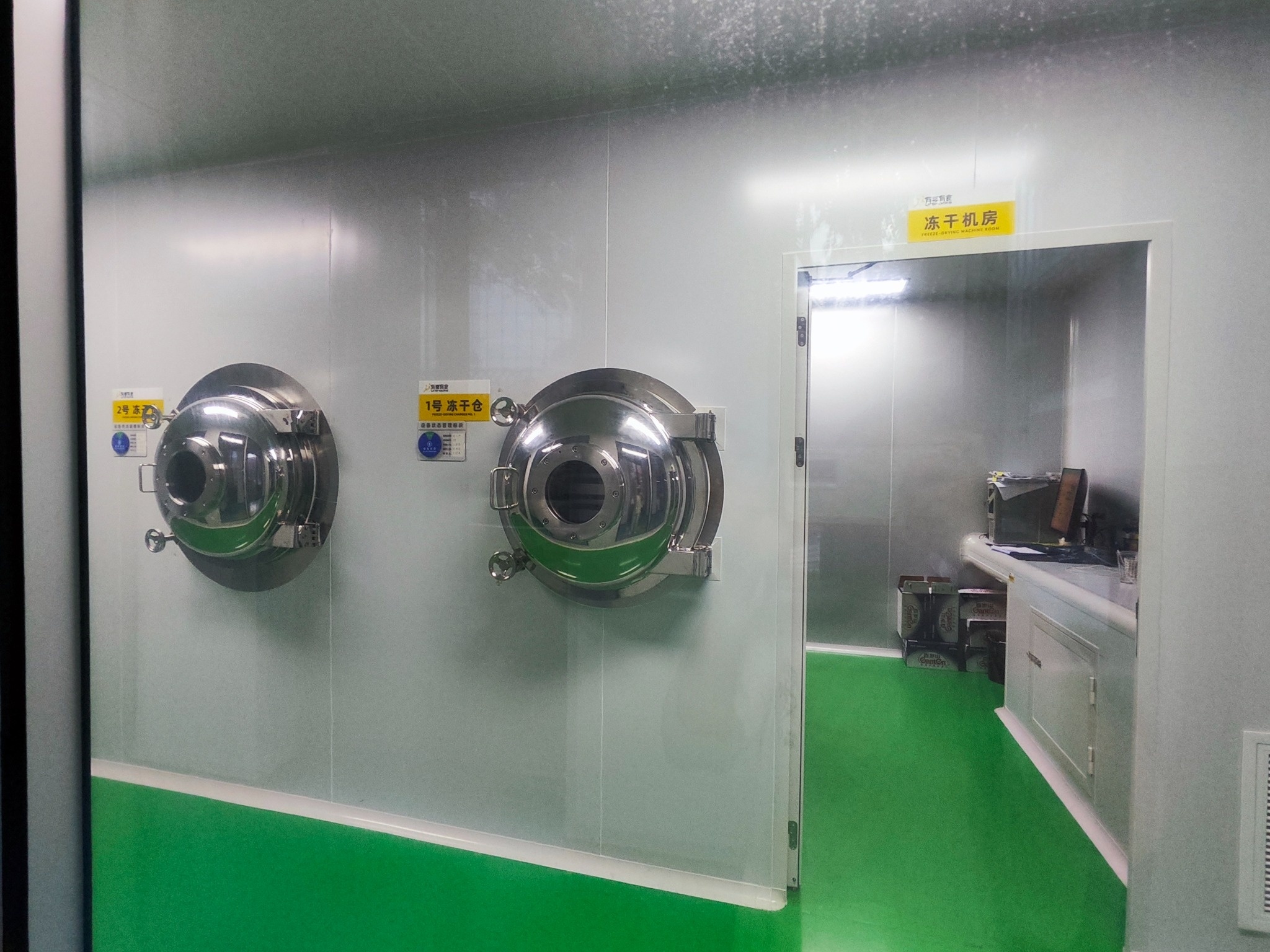
Request format samples and a quote
Send us your cereal or granola recipe, the intended production pack and your target market, and we will prepare uncoated pieces, coated pieces and powder samples against one specification for side-by-side trials. UrSnacks supplies bulk freeze-dried ingredients, OEM and private-label programmes, with export, distribution and ingredient cooperation across North America, Europe, the Middle East and Asia-Pacific, including the United States, Germany, the United Kingdom, the Netherlands, the United Arab Emirates, Saudi Arabia, Japan, South Korea, Poland, France, Canada, Australia, Singapore and Italy.
Website: www.urorchard.com | Email: sales2@ursnacks.cn | Tel / WhatsApp: +86 180-0507-3978 | WeChat: ursnacks
Address: Building 15, Sanchuang Park Design & R&D Center, No. 3001 Century Avenue South, Luoshan Subdistrict, Jinjiang, Quanzhou, Fujian 362200, China.
Download the UrSnacks brand book and full format range: UrSnacks brand book (PDF)
Have Questions or Need More Details?
Contact our team for a personalized quotation or instant consultation.
Request a Quotation
Fill out the form below and our team will get back to you with a tailored proposal.
WhatsApp Direct Chat
Prefer to chat in real-time? Message us on WhatsApp for instant assistance & quick answers.
- Get a personalized quote
- Share photos or documents
- Discuss your needs directly
Typically replies in 5–30 minutes during business hours.