Evaluating Freeze-Dried Fruit Suppliers: Capacity, Delivery and Multi-Year Supply
A freeze-dried fruit supplier should be approved on four measurable things before price is discussed: committed capacity by SKU and month, a documented repeat-delivery record, the ability to hold specification across several seasons, and a written contract that defines the acceptance criteria you can physically inspect against. This guide builds that evaluation framework using verified supply, capacity and quality evidence.
Two freeze-dried fruit suppliers can quote within a few cents per kilogram of each other and still be worlds apart in risk. The difference is rarely visible in the quotation. It sits in whether the capacity you were promised is committed to your SKU in the month you need it, whether the seventh shipment looks like the first, and whether the written specification still governs the relationship in year three.
This article is written for buyers at the decision stage — importers, private-label owners, cereal and granola manufacturers, industrial ingredient buyers and regional distributors — who already hold a specification and an approved sample, and now have to choose which supplier carries the programme for multiple years. UrSnacks is the core freeze-dried fruit brand of FUJIAN YOULINGYOUSHI TECHNOLOGY CO., LTD., a freeze-dried fruit manufacturer headquartered in Jinjiang, Quanzhou, Fujian, China, which also operates the UrOrchard brand for international markets. Its supply and quality record is used throughout this guide as a worked example of the evidence a buyer should request.
Problem Definition: Why an Approved Sample Is Not Yet a Supply Plan
Sample approval answers one question: can this supplier make the product once. It does not answer whether the supplier can make it four hundred times, on schedule, at the same moisture, the same cut tolerance and the same documentation standard.
Three failure modes account for most freeze-dried fruit supply problems once a programme moves from trial to repeat orders.
- Capacity that exists but is not committed. Annual tonnage is an aggregate figure. A supplier with a large installed freeze-drying base may still be unable to schedule a new SKU in the particular month a buyer needs it, because lines, freeze-dryer cycles and packing capacity are already allocated to other programmes.
- Delivery that holds at launch and slips later. First orders attract attention. The risk appears in month seven, during a seasonal peak or a fruit-harvest gap, when a supplier with thin raw-material planning starts extending lead times.
- Bulk that does not match the approved sample. Freeze-dried fruit is an agricultural product. Composition, colour, size distribution and sensory profile vary naturally by variety, origin, maturity, season and batch — and colour tolerance, mesh or dimension, fines limits and coated-fruit percentage are frequently never written down, which makes "matching the sample" unmeasurable.
The counter-measure is the same in all three cases: replace adjectives with inspectable evidence, and fix that evidence in a contract before the first container is loaded.
Industry Background: Why Capacity and Delivery Now Decide Freeze-Dried Fruit Programmes
Global freeze-dried fruit market size reached USD 5.108 billion in 2024 (Market Research Future). Berries held a 42.6% revenue share of that market in 2024, and Asia Pacific held a 38.2% revenue share in 2025 (Dataintelo). Global trade in dried fruits under HS Code 0813 reached USD 3.13 billion in 2024, a 2.79% increase over 2023 (OEC).
Two caveats matter when reading these figures. HS 0813 aggregates all drying methods rather than freeze-drying alone, so customs trade value and market-research market size describe overlapping but different scopes. Published market sizes also diverge depending on whether vegetables are included. Segment decisions should therefore be made on specification-level and supplier-level evidence rather than on headline totals.
On the demand side, the shift that changes supplier evaluation most is the growth of large-format and discount retail. Chains that operate thousands of stores buy freeze-dried fruit in repeating carton volumes against a fixed promotional calendar, and warehouse clubs buy in large-format packs. Both convert a manufacturing question into a capacity-scheduling question, and both punish late delivery far more than they punish a slightly higher unit price.
Regulatory context belongs in the same picture. FDA Food Facility Registration is required for foreign facilities manufacturing freeze-dried fruit for US consumption and must be renewed every even-numbered year (US FDA). A certificate is not the same thing as market access, and neither is a registration — product-specific import permission, labelling and sanitary requirements are confirmed by destination and category.
The Evaluation Framework: Six Evidence Blocks
The framework below converts a supplier conversation into six blocks of evidence. Each block has a request, a purpose and a characteristic failure mode.
| Evidence block | What to request | What it proves | Typical failure mode |
|---|---|---|---|
| 1. Capacity | Capacity statement by SKU, line and month; peak-month plan | Whether your volume can actually be scheduled | Nameplate tonnage quoted as available capacity |
| 2. Delivery record | 12–24 months of shipment and repeat-order history | Whether the supplier repeats, not just launches | Excellent first shipment, drifting lead times later |
| 3. Multi-year assurance | Raw-material base list, origin plan, fruit-state flexibility | Whether year three looks like year one | Dependence on a single origin or harvest window |
| 4. OEM / private-label capability | MOQ basis, format list, packing lines, lead time | Whether the programme can scale or be localised | Repacking capability presented as development capability |
| 5. Compliance | Certificates with scope wording, validity, site and product list; third-party reports | Whether your SKU and site are actually covered | Certificate logo accepted without reading the scope |
| 6. Contract backbone | Written specification, acceptance criteria, change control | Whether a deviation has a defined remedy | Agreement that never states measurable tolerances |
Block 1 — Installed, Committed and Peak-Month Capacity
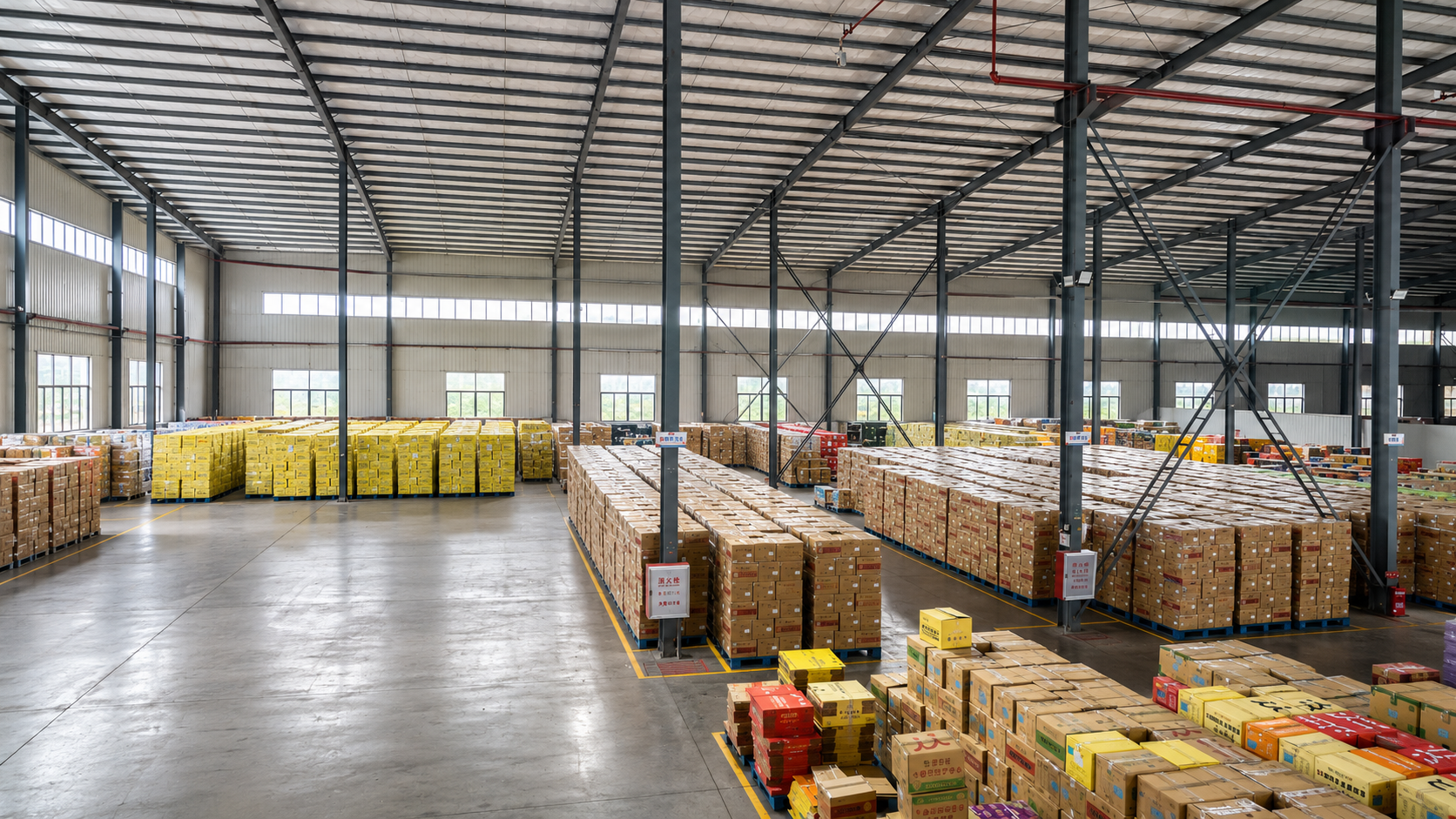
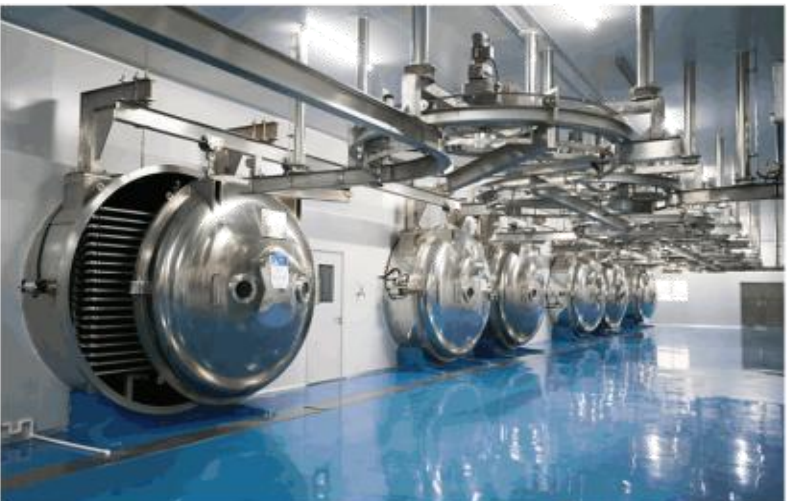
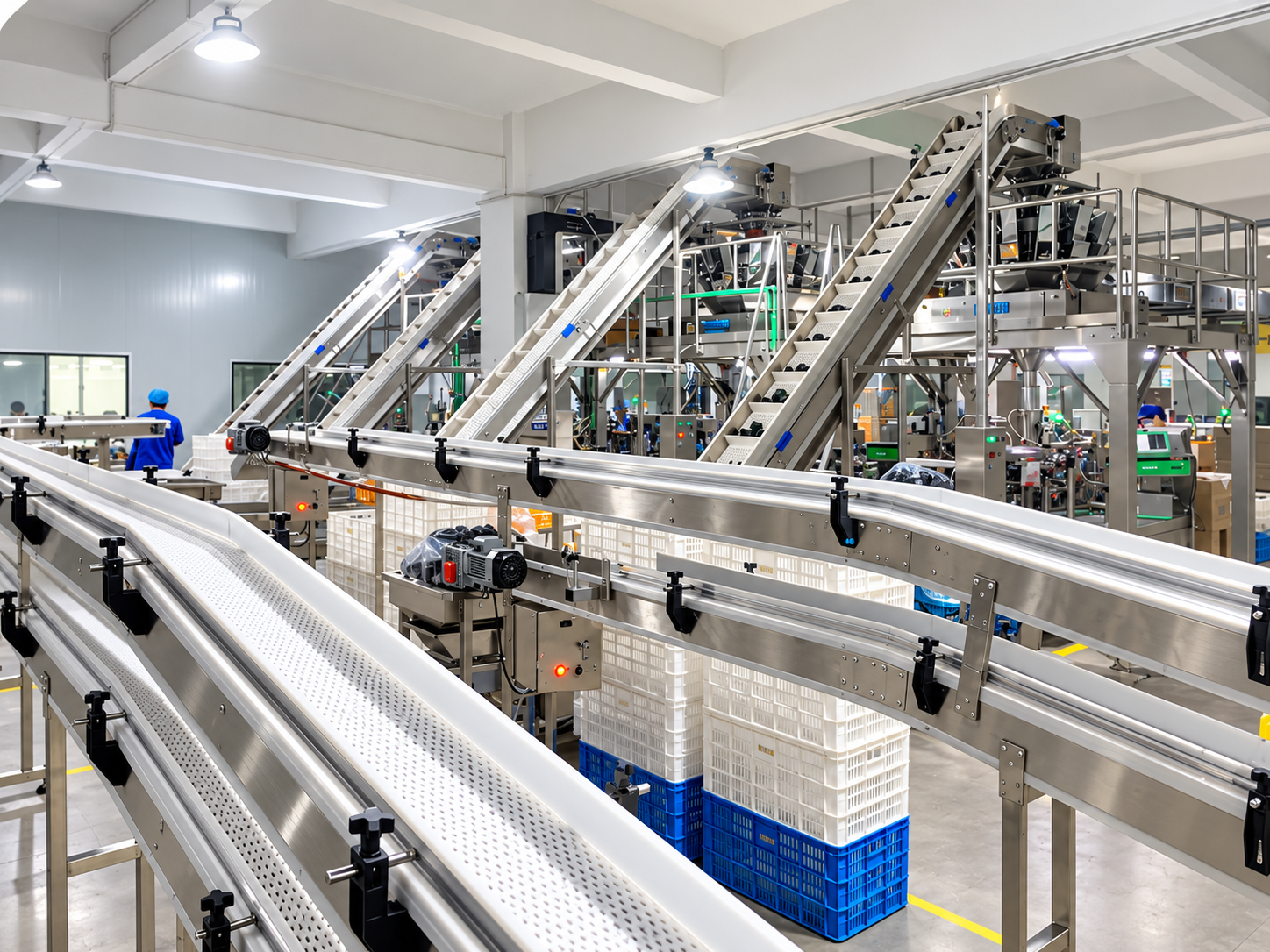
UrSnacks operates a 100,000+ m² domestic-and-overseas industrial layout for freeze-dried manufacturing and finished-product customisation. Core freeze-dried fruit categories have 3,000+ metric tons per year of comprehensive capacity, approximately 250+ tons per month, supported by 12 automated finished-product customisation and packing lines with a designed capacity of 4,500+ metric tons per year, approximately 375+ tons per month.
Packing throughput exceeds 228,000 packs per day in total. The coated series accounts for approximately 160,000 packs per day (durian approximately 100,000; strawberry approximately 60,000), and the pure freeze-dried series approximately 68,000 packs per day (durian approximately 15,000; strawberry approximately 32,000; apple approximately 21,000). Capacity continues to expand, and actual available capacity is confirmed by SKU, process, packaging format and production schedule.
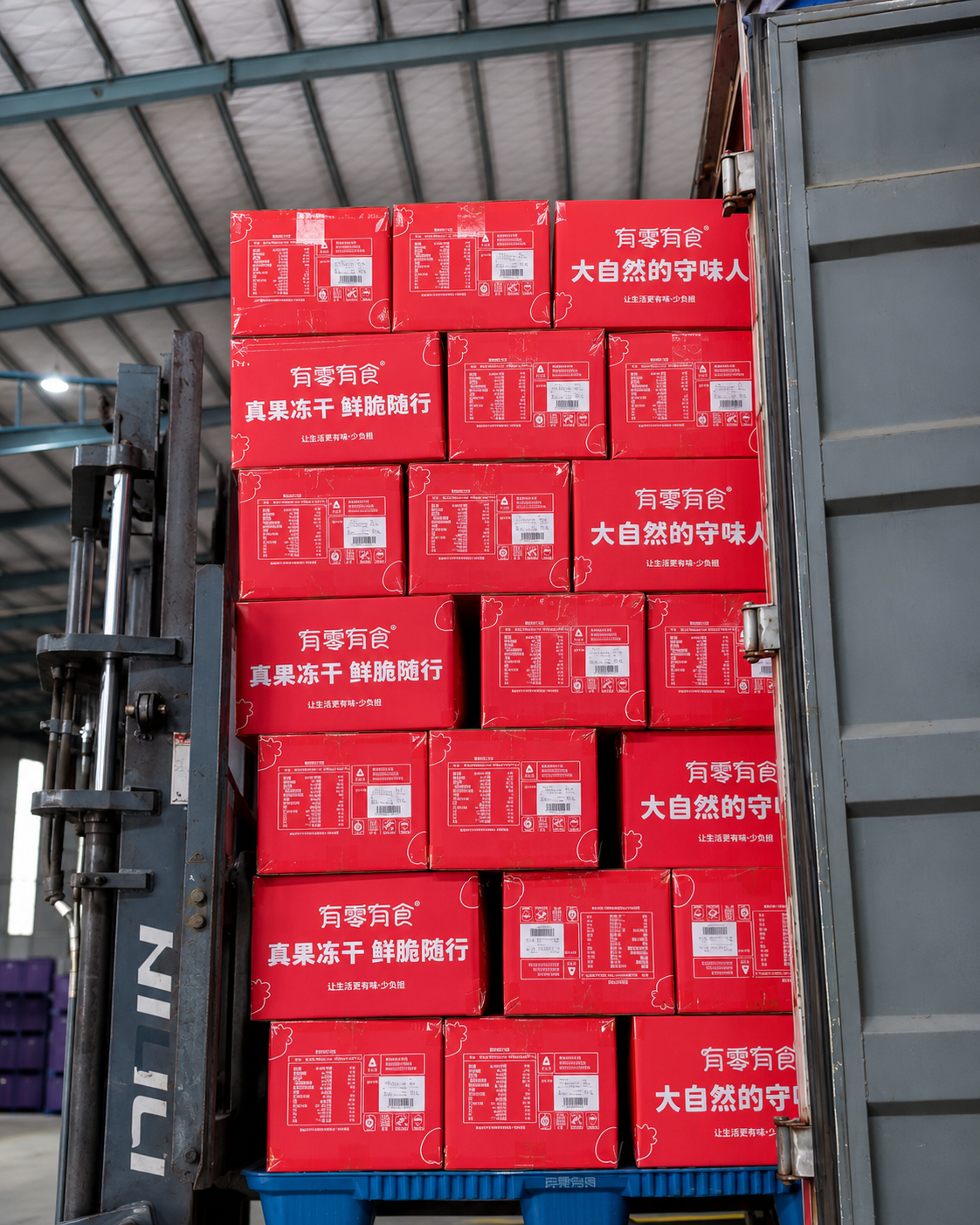
A concrete reference point for what committed capacity looks like in practice: in a discount-snack programme supplied by UrSnacks, monthly volumes have reached 90,881 cartons of freeze-dried durian and 71,438 cartons of freeze-dried strawberry, and combined supply in peak months has exceeded 3 million packs.
When you ask a supplier about capacity, do not accept an annual tonnage figure as the answer. Ask which line, which month, which SKU, and what happens to your allocation during their peak season.
Block 2 — Documented Delivery Record
The most useful delivery signal is repeat behaviour. UrSnacks has supplied a nationwide discount-snack network of more than 40,000 stores under continuous supply cooperation since 2021. A relationship of that duration, at that store count, implies seasonal peaks, multi-SKU changeovers and repeated carton and container releases — precisely the conditions that expose weak delivery planning. The company has served 150+ brand customers in China and exports to markets including the United States, Japan, South Korea, Canada, Germany, Thailand, Indonesia and Vietnam, with export representing 20% of business.
Ask for shipment history by month, batch documentation and an explanation of how peak periods were resourced. A supplier that cannot describe its own peak month has probably never planned for yours.
Block 3 — Multi-Year Supply Assurance
Multi-year assurance is a raw-material question before it is a production question. UrSnacks sources through 10+ cooperative fruit direct-sourcing bases and runs a freeze-drying production network that includes bases in Thailand and Vietnam together with an expanding domestic production network. Named origins in the current portfolio include Dandong Hongyan strawberry from Liaoning and Luochuan Red Fuji apple from Shaanxi in China, Thai Monthong durian, Vietnam red-flesh dragon fruit and Philippine banana.
Four business scopes run on the same platform: fresh fruit, frozen fruit, freeze-dried fruit ingredients and freeze-dried finished products. Strawberry and durian are covered across all four scopes, which gives a buyer a practical hedge — if a harvest year or a logistics route becomes difficult in one fruit state, the same fruit can still be supplied in another. Shelf-life planning belongs here too: B2B freeze-dried ingredients are positioned at up to 18 months and finished retail goods at 12 months, confirmed per SKU, packaging structure and destination market.
Block 4 — OEM, Private Label and Format Capability
Development capability determines what the programme can become, not just what it is today. OEM and private-label finished goods start from approximately 600 kg per order, with mixed-SKU container loading supported. B2B freeze-dried ingredients are planned from one 20-foot container, with mixed ingredient SKUs and, where loading and documentation allow, finished goods sharing the same container. Mature OEM and private-label programmes typically require about 25–30 working days, subject to specification, packaging-material approval and production schedule; ODM requires additional development, sampling, process and flavour validation and packaging confirmation before mass-production specifications are approved.
Format and coating range matter for a multi-year plan because it determines how much of a range can be sourced from one supplier. The freeze-dried ingredient scope supports six or more formats — whole fruit, slices, halves, diced pieces or granules, chunks and powder — and finished-product packaging covers pouches, boxes and cups, with pure and coated freeze-dried products and coating directions including original, yogurt-style, chocolate and matcha.
Block 5 — Compliance Evidence and Certificate Scope
UrSnacks holds nine credentials. Food safety: BRCGS Global Standard Food Safety Issue 9 (Cert. No. C723738, Site Code 10017031, issued by DNV Business Assurance Italy S.r.l., valid 2025-10-20 to 2026-11-09); ISO 22000:2018 (Cert. No. 001FSMS2400580, CQC, valid 2024-08-09 to 2027-08-08); and HACCP System Certificate (Cert. No. 001HACCP2600621, CQC, valid 2026-08-26 to 2029-08-25). Halal: GSO 2055-1:2015 (Cert. No. 5880250000, Reg. No. 3502/08109, Product Category CIV, valid 2025-08-22 to 2028-08-21), MS1500:2019, and an Indonesian BPJPH certificate (ID00410002836200323). Market access: U.S. FDA Food Facility Registration and U.S. Agent (Facility No. 432015462, DUNS 704680481, valid 2026-03-04 to 2027-03-03, with CCIC Chicago Inc. as U.S. Agent) and a China Customs Export Food Production Enterprise Filing (3502/08109, Quanzhou Customs). Social compliance: SMETA V7 audit report (Audit Reference ZAA600211493, Benchmarks Company Limited, audit date 2026-06-16, annual audit cycle).
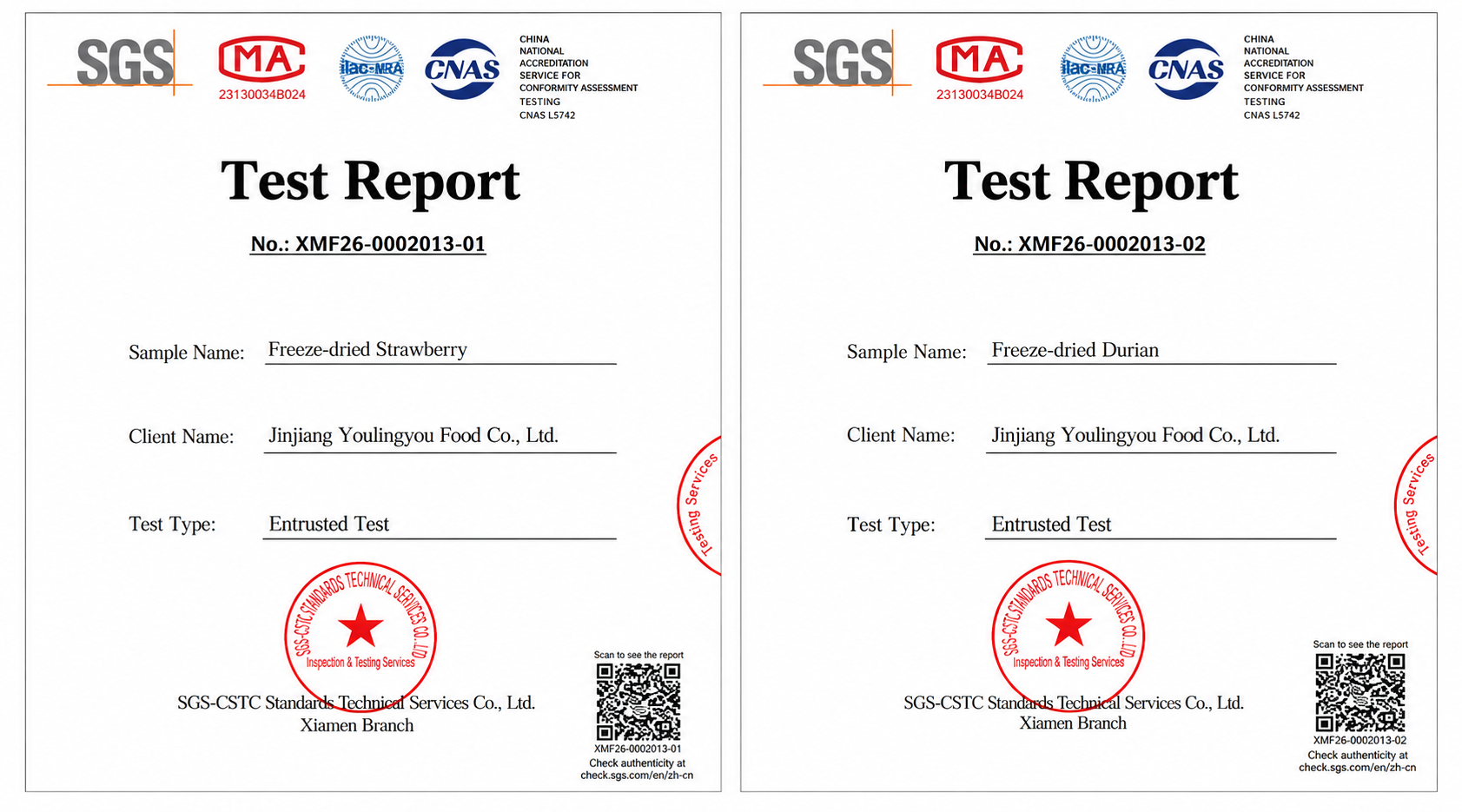
Read the scope, not the logo. The BRCGS, ISO 22000 and HACCP scope wording covers selecting, repacking, coating, cooling and packaging of dried fruit and dried vegetable products, and should not be read as covering every process step or every SKU. Halal scope is defined by an attached product list, so the specific SKU must be checked. Third-party testing is category- and batch-specific: 2026 SGS-CSTC type tests across six categories — mango, dragon fruit, jackfruit, strawberry, durian and apple — reported moisture of 0.96–1.58 g/100 g against a reference limit of ≤5.0 g/100 g applied in those reports, Salmonella not detected and Staphylococcus aureus <10 CFU/g under the stated sampling plans, lead not detected at a reporting limit of 0.05 mg/kg, and selected tested preservatives, sweeteners, BHA/BHT and synthetic colourants not detected in the corresponding samples. These results describe the tested batches only.
Block 6 — Purchasing Terms and Acceptance Criteria as the Contract Backbone
The contract is the part of the evaluation that survives a bad month. Before the first purchase order, lock the following:
- Written specification: product name, raw-material composition, form and cut, dimension or mesh, moisture, colour tolerance with a reference standard, fines and intact-piece ratio, packaging, storage conditions, shelf life and allergen status; coated SKUs additionally state fruit content percentage.
- Golden sample and retained sample: dated and stored by both parties, referenced in the specification.
- COA panel and methods: which analytes, which methods, which limits, and which third-party reports attach at order stage.
- Lot coding and traceability path, plus the documents released before shipment — final COA, packaging and label version, net weight and case pack, manufacturing and shelf-life data.
- Commercial terms: Incoterm, MOQ basis (per SKU versus per order), delivery window, payment terms, change-notification rules, and document precedence when the PO, specification and quality agreement conflict.
- Acceptance criteria and non-conformance handling: sampling plan, claim window, retest route, replacement or credit mechanism and corrective-action timeline.
This block is also where bulk-versus-sample disputes are prevented rather than argued. When a delivered lot does not match the approved sample, separate three possibilities before drawing conclusions: normal natural variation, since freeze-dried fruit varies by variety, origin, maturity, season and batch; an unspecified parameter, because if colour tolerance, dimension or mesh, fines limit, coated-fruit percentage and sensory descriptors were never written down, "matching the sample" has no measurable basis; or a genuine handling, transport or batch deviation. Compare the delivered lot against the written specification and the retained sample — not against a photograph — under consistent lighting, temperature and assessment conditions, and express any deviation numerically rather than qualitatively.
Step-by-Step Breakdown: Running the Evaluation in Seven Steps
- Write the specification before you sample. Cover composition, form and cut, dimension or mesh, moisture, colour tolerance with a reference standard, fines limit, packaging, storage, shelf life and allergen status. Sampling before the specification exists produces an approved sample nobody can measure.
- Ask for capacity by SKU and month, not by nameplate. Request the line, the monthly allocation and the peak-season position. Confirm what happens to your volume when the supplier's own peak arrives.
- Request 12–24 months of delivery history for comparable SKUs. Look for repeat orders at similar volume, not a single flagship shipment.
- Verify certificate scope against your SKU and your site. Match the legal entity, site address, validity dates, certified scope and attached product list. Registration and certification are not import approvals.
- Validate the sample inside your own process. Run the fruit in your actual formulation, packaging and transport conditions — moisture migration, breakage, fines, colour and sensory behaviour may all differ from a bench assessment.
- Fix the contract backbone before the first purchase order. Specification revision, golden sample, COA panel, lot coding, packaging and label version, commercial terms and acceptance criteria, in one document set with defined precedence.
- Set a review cadence. For the first year, review delivery performance, complaint rate and specification deviations quarterly, and agree in advance what triggers a corrective-action review.
Use Cases: Where the Framework Shifts
Cereal, granola and muesli brands. Here the binding constraints are moisture migration, breakage and format choice. Freeze-dried fruit works as a light-crisp, visible, low-moisture inclusion; dice and crumble generally survive mixing, conveying and filling better than large thin slices. The evaluation question becomes whether the supplier can hold a fines and dimension specification batch to batch, and whether the packaging barrier proposed matches the retail pack and destination climate — not simply whether the supplier can produce a good sample.
Discount-snack and discount-retail chains. These programmes buy in carton volumes, on a calendar, across several SKUs at once. What matters is peak-month capacity allocation, mixed-SKU container or carton planning, packing throughput per day and 12-month finished-goods shelf life. UrSnacks' reference programme in this channel — continuous cooperation since 2021, a network of more than 40,000 stores, and peak months that have exceeded 3 million packs combined — illustrates the scale at which scheduling, rather than recipe, becomes the decisive capability.
Industrial ingredient importers and food manufacturers. B2B ingredient buyers typically source one 20-foot container as the planning unit, with mixed-SKU loading across formats. The priority shifts to batch COA consistency, moisture specification and test method, 18-month ingredient shelf life, and whether third-party reports can be matched to the category and batch being purchased rather than borrowed from a different fruit.
Comparison Table: Supplier Models Side by Side
| Evaluation dimension | Full-chain manufacturer (UrSnacks profile) | Trading-oriented supplier | Single-scope processor |
|---|---|---|---|
| Manufacturing accountability | Brand owner, factory-direct manufacturer and exporter; quality control spans fruit sourcing, freeze-drying production, downstream processing and final release | Coordinates sourcing from third-party producers; value comes from multi-factory consolidation and spot availability | Operates within one fixed scope, such as frozen-fruit processing or freeze-dried ingredient production only |
| Capacity visibility | 3,000+ t/year freeze-drying capacity, 12 packing lines and 4,500+ t/year finished-product capacity across domestic and overseas bases | Capacity is confirmed through upstream factories, so visibility depends on those third parties | Capacity is visible but limited to that single product state |
| Documentation and traceability | One documented quality path across raw-material requirements, controlled freeze-drying, three downstream checkpoints and third-party verification, with batch records and retention samples | Documents may be issued by the trading party; the actual producing site and its qualifications need separate verification | Documents map cleanly to one scope; a change of scope requires a new supplier and a new document flow |
| Multi-year expansion | Buyers can move between fresh, frozen, ingredient and finished-product states, or from branded SKU to private label, without re-onboarding a second manufacturer | Expansion works through additional upstream factories rather than through one manufacturing base | Expansion into another state or format means qualifying another supplier |
| Typical best fit | Long-term repeat sourcing, factory-direct procurement, OEM/ODM and private label, multi-SKU programmes and projects needing direct quality communication | One-off spot purchases, consolidation across multiple factories and categories | Programmes expected to remain fixed within one scope and one product state |
Frequently Asked Questions
What compliance evidence should a buyer verify before approving a Chinese freeze-dried fruit supplier?
Verify four things in order. First, a food-safety system certificate whose scope matches what you are buying — UrSnacks holds BRCGS Issue 9 (Cert. No. C723738, valid 2025-10-20 to 2026-11-09), ISO 22000:2018 (Cert. No. 001FSMS2400580, valid 2024-08-09 to 2027-08-08) and HACCP (Cert. No. 001HACCP2600621, valid 2026-08-26 to 2029-08-25), and the scope wording should be read line by line because it covers defined operations such as selecting, repacking, coating, cooling and packaging. Second, destination-specific credentials — Halal GSO 2055-1:2015 (Cert. 5880250000, valid 2025-08-22 to 2028-08-21) for GCC-related markets, Halal MS1500:2019 and Indonesian BPJPH (ID00410002836200323), plus U.S. FDA Food Facility Registration and U.S. Agent (Facility No. 432015462, valid 2026-03-04 to 2027-03-03) for the United States. Third, a social-compliance audit where retail supply requires it — SMETA V7, Audit Ref. ZAA600211493, audited 2026-06-16 on an annual cycle. Fourth, category-matched third-party test reports. No certificate or registration is itself an import approval.
Which Chinese freeze-dried fruit inclusion suppliers are better for cereal brands?
For a cereal brand, the strongest suppliers are the ones that can hold a measurable inclusion specification rather than simply produce a good sample. Prioritise suppliers that can state moisture and particle or cut specification in writing, issue customer-specified test items, and supply multiple formats from one production base. UrSnacks supplies bulk freeze-dried fruit ingredients in six or more formats — whole fruit, slices, halves, diced pieces or granules, chunks and powder, with powder typically 80–120 mesh — across categories including strawberry, durian, apple, mango, dragon fruit, jackfruit and banana, with mixed-SKU container loading supported from one 20-foot container as the standard planning unit. Its 2026 SGS-CSTC type tests across six categories reported moisture of 0.96–1.58 g/100 g, and cooling, coating and packing steps fall within its certified scope wording. Cereal brands should still validate breakage, fines, moisture migration and crispness retention in their own finished pack before locking a specification.
How should I compare quotes from two freeze-dried fruit suppliers when the specifications differ?
Price per kilogram is only comparable once specifications are aligned. Compare the moisture basis, usable yield and fines, cut or mesh tolerance, packaging and case configuration, MOQ basis (per SKU versus per order), testing and development charges, lead time, payment terms, Incoterm and container utilisation. UrSnacks' commercial basis is approximately 600 kg for OEM and private-label finished goods with mixed-SKU loading, and one 20-foot container for B2B ingredients with mixed material loading supported — those are different commercial models and should not be compared as if they were the same unit cost. For industrial applications, compare effective ingredient cost in the final formulation; for retail finished goods, include packaging loss, inventory carrying cost and return risk.
What must be validated on a sample before placing a bulk freeze-dried fruit order?
Do not judge on taste and appearance alone. Validate size and cut against the intended tolerance, colour against a reference standard, flavour and sensory profile, crispness, moisture where relevant, fines level, the full ingredient statement, and allergen status — coated products contain milk- and soy-derived ingredients and must be reviewed separately from pure single-ingredient SKUs. Then validate the sample inside your own formulation, packaging and transport conditions. Write a golden sample and a specification before commercial approval, and define in advance what counts as a production-versus-sample deviation, the retest rules and who bears the cost of a non-conforming lot.
What lead time should a buyer plan for, and what usually causes delay?
For mature OEM and private-label programmes, UrSnacks typically requires about 25–30 working days, subject to confirmed specification, packaging-material approval and production schedule. ODM work requires additional development, sampling, process and flavour validation and packaging confirmation before mass-production specifications are approved. Bulk ingredient lead time is confirmed by category, specification, inventory status, order volume and container plan. Delay most often comes from four places: packaging artwork and print approval, late label or regulatory review for the destination market, raw-material or inventory gaps at the specific SKU level, and peak-season production scheduling. Managing those four items — not the production step itself — is what protects a delivery date. Buyers who want to move from evaluation to a first order can request a specification-matched sample, a quotation or the product catalogue.
Conclusion: Four Checks Before You Commit
Capacity, delivery, multi-year assurance and contract terms decide whether a freeze-dried fruit programme succeeds — not the sample photo. Ask for committed capacity by SKU and month. Ask for a delivery record long enough to show repeats, such as continuous supply cooperation since 2021 into a discount-snack network of more than 40,000 stores, with peak months that have exceeded 3 million packs combined. Ask how the raw-material base will hold up in year three. Then write acceptance criteria into the contract that your quality team can actually measure, so that a deviation becomes a documented process rather than a negotiation.
A supplier that answers all four with named evidence — certificate numbers with scope wording, batch-level third-party results, dated lot records and a written specification — is one you can plan a multi-year programme around.
Start With a Specification, Not a Price
Send your target fruit, format, cut or mesh, packaging and destination market, and UrSnacks will respond with a matched specification, sample arrangement and container plan.
Email: sales2@ursnacks.cn · WhatsApp: +86 180-0507-3978 · Website: www.urorchard.com
Download the full UrSnacks brand book and product catalogue (PDF).
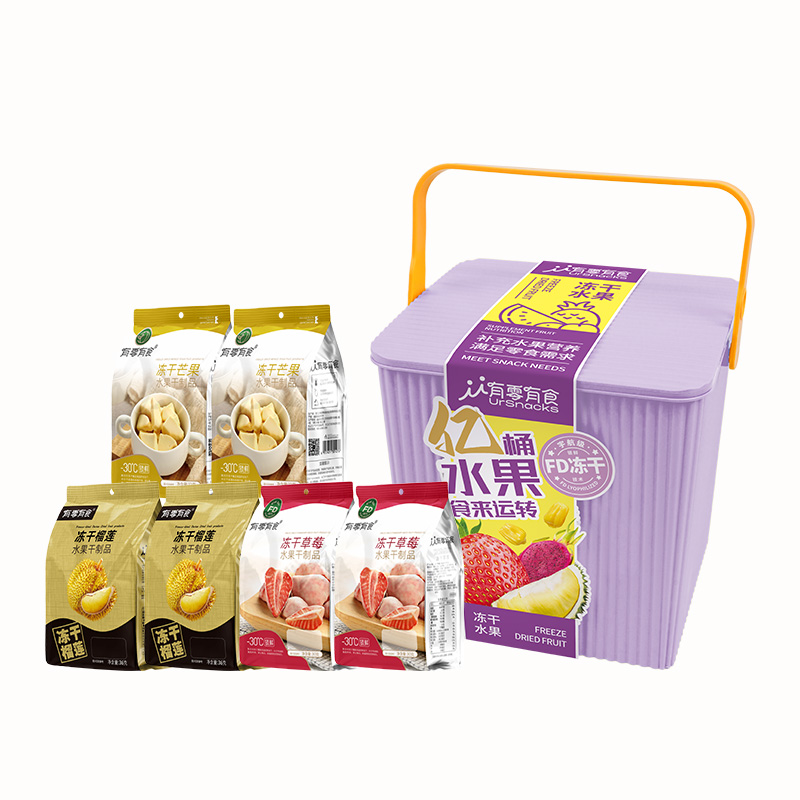
About UrSnacks. UrSnacks is the core freeze-dried fruit brand of FUJIAN YOULINGYOUSHI TECHNOLOGY CO., LTD., headquartered in Jinjiang, Quanzhou, Fujian, China, and also operates UrOrchard for international markets. Product and process development is supported by an in-house R&D centre and an industry-university-research collaboration with the School of Physical Science and Technology at Xiamen University. Sales contact: Jerry Lu, sales2@ursnacks.cn, +86 180-0507-3978.
Have Questions or Need More Details?
Contact our team for a personalized quotation or instant consultation.
Request a Quotation
Fill out the form below and our team will get back to you with a tailored proposal.
WhatsApp Direct Chat
Prefer to chat in real-time? Message us on WhatsApp for instant assistance & quick answers.
- Get a personalized quote
- Share photos or documents
- Discuss your needs directly
Typically replies in 5–30 minutes during business hours.