
Freeze-Dried Apple vs Dried Apple for Bulk Snack and Cereal Programs: A Head-to-Head
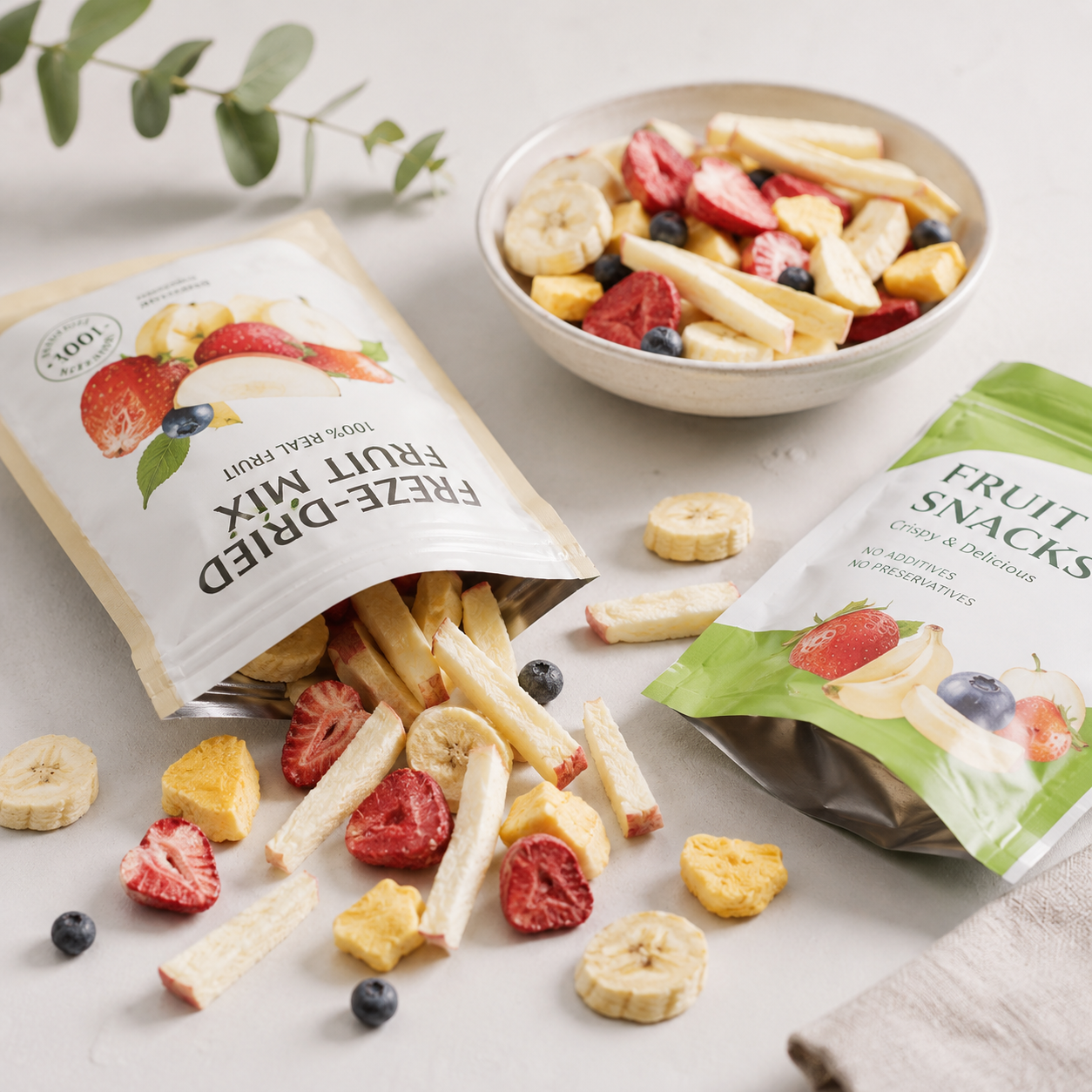
Bulk snack and cereal programs rarely fail because the fruit looks wrong in a sample. They fail because the fruit behaves differently in the finished system: granola softens, coated pieces stick or flake, fines increase, or the pack loses crispness before the end of shelf life. This head-to-head decision guide compares freeze-dried apple and conventional dried apple for B2B buyers in snack and cereal applications. It covers the moisture-driven risks that matter in granola and cereal, the coating behavior that matters in coated fruit snacks, and the acceptance and purchase terms that should be locked before the first production order.
Problem Definition: The Sample Is Not the Specification
Freeze-dried apple and conventional dried apple are different ingredients, not premium and standard versions of the same thing. Freeze-dried apple is produced by vacuum freeze-drying at −40°C. UrSnacks bulk B2B apple specifications state moisture ≤3% for strips, slices and dice. Conventional dried apple is produced by hot-air or other dehydration routes, and its moisture, water activity, texture, cut, additive declaration and compression behavior vary by specification. A buyer who compares the two on appearance alone will miss the variables that drive complaints after the first container.
Industry Background: A Large Category With a Definition Gap
Market data shows why apple inclusions matter. Market Research Future estimates the global freeze-dried fruit market reached USD 5.108 billion in 2024. Berries accounted for 42.6% of revenue in 2024, and Asia Pacific held a 38.2% revenue share in 2025. Those figures describe freeze-dried fruit, not all dried fruit. HS Code 0813, which covers dried fruits, reached USD 3.13 billion in 2024, but it aggregates sun-dried, air-dried and other drying methods. Customs data therefore cannot isolate freeze-dried apple. This definitional gap is why procurement teams should qualify the actual process, specification and certificate scope rather than rely on a category-level trade number.
For apple specifically, the practical split is between a low-moisture, crisp, porous inclusion and a softer, denser, usually higher-moisture dried fruit piece. The first is often used to protect crispness in dry blends and to provide visible fruit identity. The second is often used where a chewy bite, compression tolerance and cost efficiency matter more than crispness. Neither choice is universally better. The application decides.
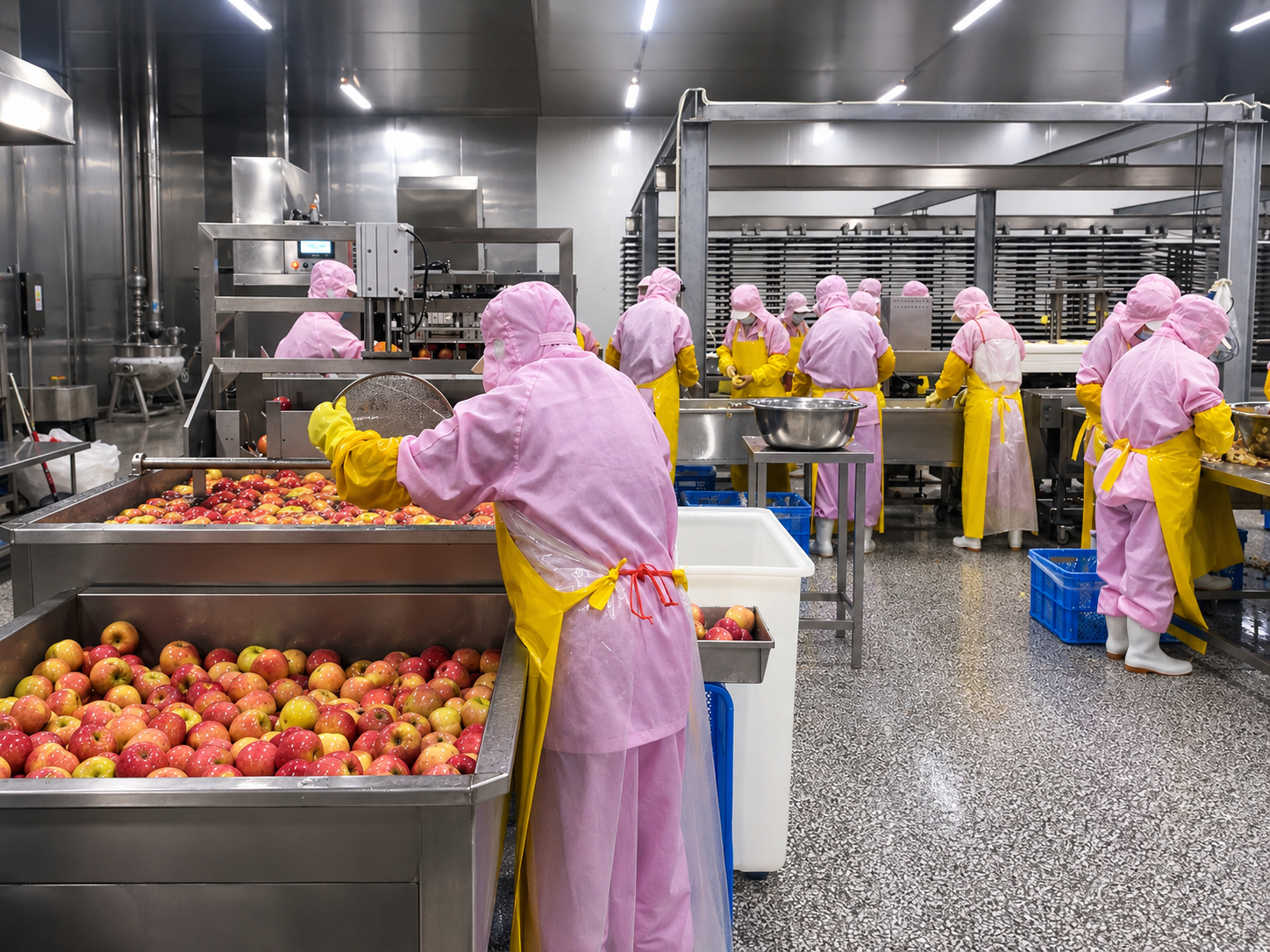
Detailed Solution: How to Choose Between Freeze-Dried Apple and Dried Apple
What freeze-dried apple is in this comparison
UrSnacks freeze-dried apple is made from Luochuan Red Fuji apple. The bulk B2B strip product is 100% apple with no added sugar, oil, colorant or preservative; it is packed as 1.5 kg per bag, 2 bags per carton (3 kg per carton), with moisture ≤3% and an 18-month shelf life subject to supporting stability data. Bulk slices and dice are available, including dice 6–10 mm and slices 3–5 mm, packed at 10 kg per aluminum foil bag. The retail line uses the same apple platform in 38 g strips, 15 g paper-cup strips and 58 g pouches, with moisture ≤5% and a 12-month shelf life. For snack and cereal programs, the bulk formats are the relevant starting point.
The bulk formats are application-ready. Strips reduce buyer-side cutting for visible inclusions. Dice support even distribution in granola, bars and clusters. Slices can be used where a larger visible piece is wanted. The trade-off is breakage: large thin pieces are more sensitive to drop height, compression and conveying than dice or crumbles. The specification should choose the largest format the line and transport can survive, then set a fines tolerance.
Where conventional dried apple still wins
Conventional dried apple generally has a softer, chewier texture and greater compression tolerance than freeze-dried apple. It is often lower in processing cost. If the product promise is a chewy fruit piece, a traditional dried-fruit experience, or a cost-led formulation, conventional dried apple may be the better base. The buyer should still confirm moisture, water activity, added sugar, sulfites, oil, cut tolerance and microbiological criteria, because 'dried apple' is a process family, not a fixed specification.
The mistake is to treat conventional dried apple as a drop-in replacement for freeze-dried apple without re-validating the finished system. A higher-moisture dried apple can act as a moisture source in a dry blend. A softer dried apple can change the eating experience. An added-sugar or sulfite declaration can change the label. Those are specification issues, not automatic defects, but they must be designed into the product.
Moisture-driven risk: granola softening from higher-aw components
In a dry blend, moisture moves from the higher-aw component to the lower-aw component. Freeze-dried apple is very low in moisture, so it is usually the receiver, not the source. The usual causes of soft granola are a higher-aw component in the recipe (honey, syrup, coatings, semi-dried or sugar-infused fruit), an inadequate pack moisture barrier, or adding fruit before the cereal base has fully cooled. For baked granola, add freeze-dried apple after baking and full cooling. For muesli or ready-to-eat cereal, add it at the final dry-blending stage. A 5–8% inclusion rate is a practical starting point for trials, with higher levels tested where visible fruit is the selling point. Validate in the actual commercial pack, not a lab bag.
If conventional dried apple is used, treat it as a potential moisture source until its water activity is confirmed. Test the actual recipe, the actual pack and the actual storage conditions. Where crispness is the core claim, a separate sachet or a dual-compartment pack can isolate the fruit from the cereal base. Where the fruit is blended into the cereal, the pack barrier and the aw gap between components become the control points.
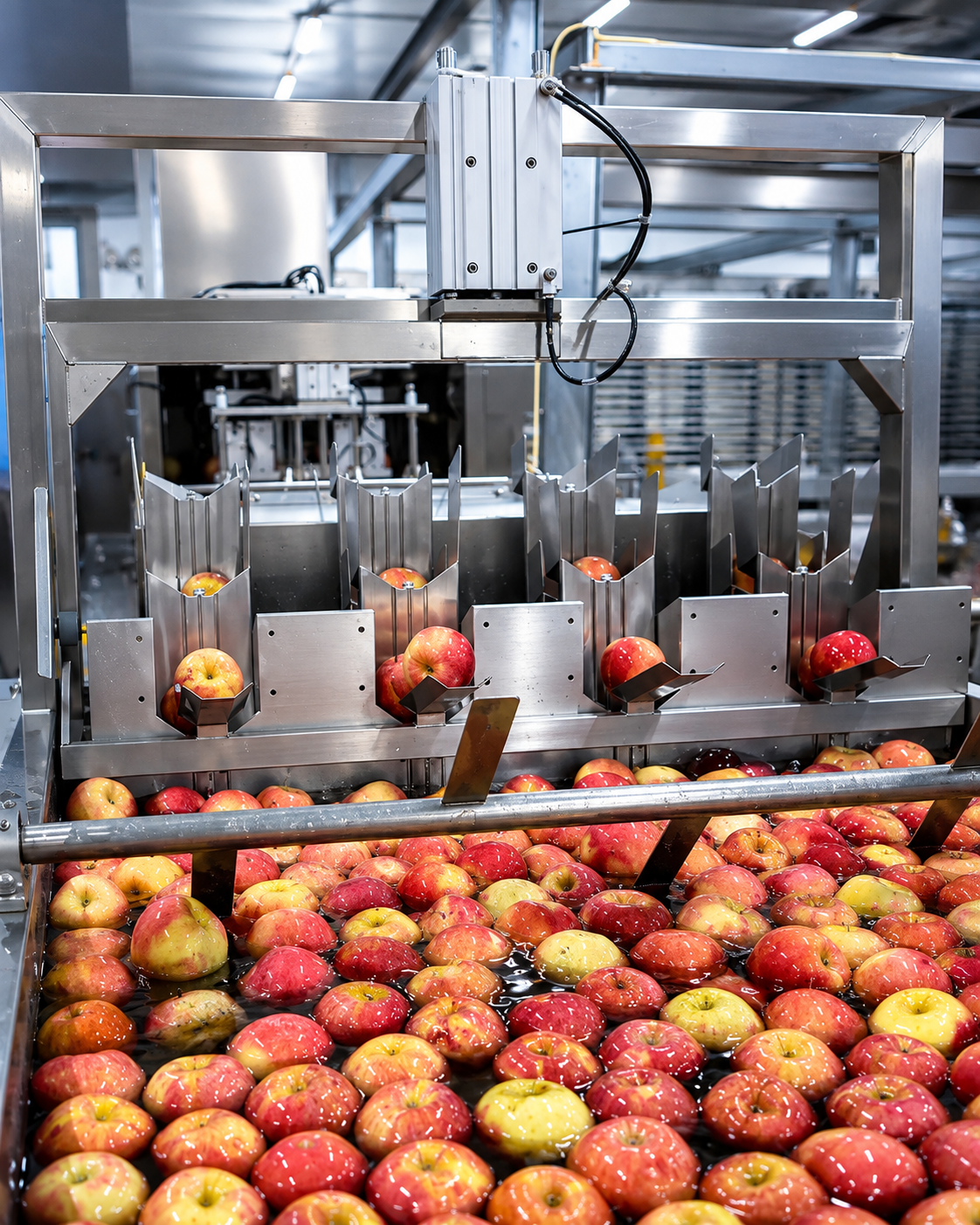
Coating behavior: sticking, cracking and flaking
Coated freeze-dried fruit is sensitive to heat, temperature cycling, compression, abrasion and moisture. Sticking usually points to excessive heat or temperature fluctuation. Cracking and flaking usually point to transport vibration, stacking pressure or excessive movement inside the pack. Moisture ingress through a poor seal or insufficient barrier causes loss of crispness. Some fat-based cocoa or chocolate-flavored coatings may develop bloom or a dull, mottled surface after temperature cycling. For coated apple specifically, coating feasibility and adhesion should be confirmed per project; UrSnacks runs coating directions including yogurt, matcha, cocoa and fruit-original profiles on its freeze-dried fruit platform.
The commercial lesson is that coating is not a cosmetic layer. It changes the product's handling window, allergen profile and acceptance criteria. A coated piece that looks good at the factory can stick in a hot container, crack in a vibrated truck, or flake in a retail pack. The buyer should specify the coating route, the fruit content, the allergen declaration and the transport conditions before approving the sample.
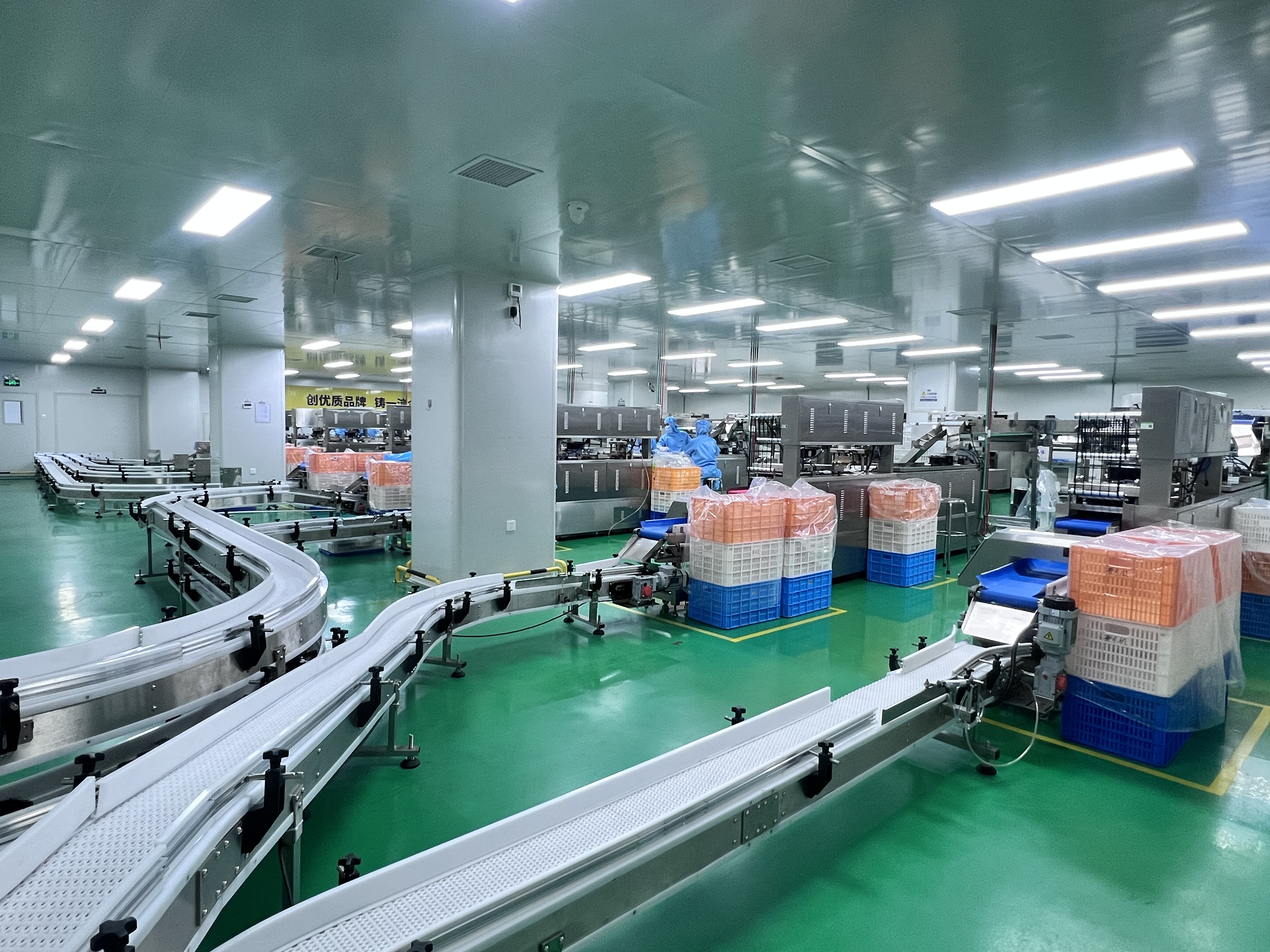
Acceptance criteria for coated freeze-dried fruit
Set acceptance criteria before the first production run. At minimum, define:
- Declared fruit content percentage and coating identity.
- Coating route: thin or thick, and the flavor direction.
- Allergen declaration: milk and soy are typical for coated products; cocoa where applicable.
- Net weight, case pack and label version.
- Seal integrity and moisture-barrier performance.
- Appearance: no abnormal sticking, no extensive coating loss, no excessive coating fragments.
- Texture after agreed storage and transport conditions.
- Shelf life and storage conditions.
- Comparison against a retained golden sample.
Reject lots that deviate materially from the approved sample or specification, such as abnormal sticking, extensive coating loss or excessive fragments. The acceptance criteria should be written into the purchase specification, not left as a visual judgement at receiving.
Supplier qualification: BRCGS scope and purchase terms
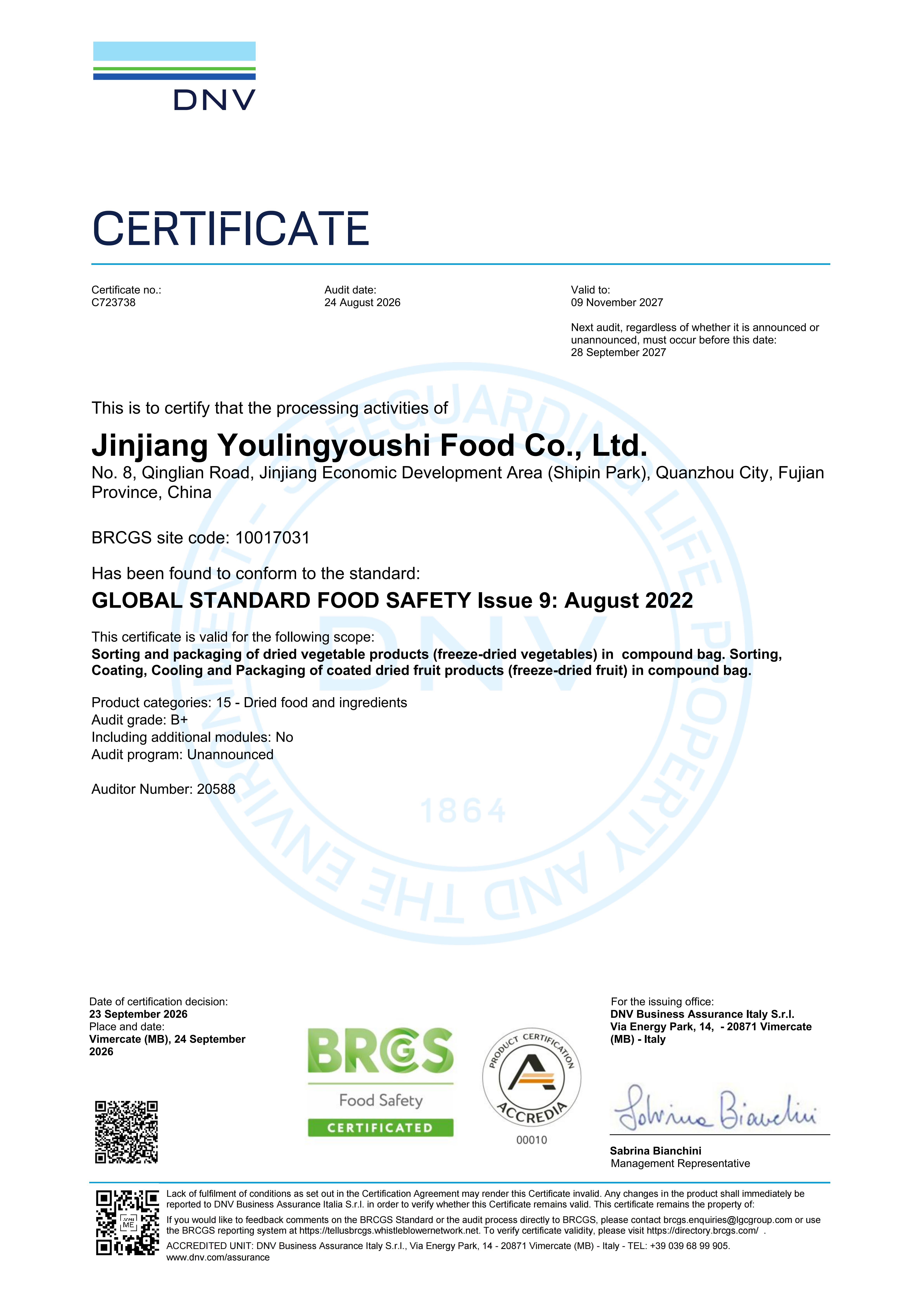
UrSnacks holds BRCGS Global Standard Food Safety Issue 9, Cert. No. C723738, Site Code 10017031, issued by DNV Business Assurance Italy S.r.l., valid 2025-10-20 to 2026-11-09. The scope covers selecting and packaging of dried vegetable and dried fruit products, and selecting, coating, cooling and packaging of coated dried fruit products in compound bags. Read the scope wording closely: it should not be assumed to cover every process step or every SKU. The company also holds ISO 22000:2018, HACCP, Halal (GSO 2055-1 and MS1500), U.S. FDA Food Facility Registration with U.S. Agent, China export food production enterprise filing (GACC) and SMETA V7.
Purchase terms should lock the specification revision, golden sample, COA panel, packaging and label version, lot coding, Incoterm, delivery window, payment terms, change notification and non-conformance handling. For bulk ingredients, the standard MOQ is 1×20-foot container with mixed-SKU loading; OEM/private-label finished goods start from approximately 600 kg, with mature programs typically around 25–30 working days. Sampling is supported, with sample specification, quantity and any fee agreed with the business team based on project complexity. NDA support is available for customer formulas, process concepts, packaging and channel information.
Step-by-Step Breakdown: From Brief to First Order
Step 1 — Define the failure mode first
Write down what the fruit must do in the finished product: stay crisp, soften in milk, remain visible, survive transport, carry a coating, or deliver a chewy bite. A granola program and a coated snack program have different failure modes. The ingredient choice should follow the failure mode, not the other way around.
Step 2 — Write the specification
Specify fruit and variety where relevant, process, cut or mesh, moisture, water activity where relevant, color tolerance, fines limit, allergen declaration, additive declaration, packaging, shelf life and test panel. For freeze-dried apple, UrSnacks bulk B2B apple specifications state moisture ≤3% and 100% Luochuan Red Fuji apple with no added sugar, oil, colorant or preservative. For conventional dried apple, require the supplier to declare moisture, aw, added sugar, sulfites, oil, cut tolerance and microbiological criteria.
Step 3 — Run a moisture-migration and texture trial
Test the fruit in the actual cereal or snack system, in the actual pack, at representative storage conditions. Check crispness, breakage, fines, visible fruit distribution and moisture pickup at time zero and after storage. If the system contains honey, syrup or a higher-aw fruit, test the finished blend rather than the fruit alone.
Step 4 — Validate coating acceptance
If the program is coated, define the coating route, fruit content, allergen declaration, appearance standard and transport conditions. Run a temperature-cycling and vibration test where practical. Check for sticking, cracking, flaking, bloom, mottling and excessive fragments. Compare against a retained golden sample.
Step 5 — Qualify the supplier and certificate scope
Verify the legal entity, site, certificate scope and validity. Check BRCGS, ISO 22000, HACCP, Halal, FDA registration and export filing as applicable to the destination market. Request category-matched COA and third-party reports. Confirm traceability, retained samples and complaint handling.
Step 6 — Lock purchase terms and the first order
Lock the specification revision, golden sample, packaging artwork, label version, lot coding, COA panel, MOQ, lead time, Incoterm, payment terms and non-conformance procedure. For bulk apple, the standard MOQ is 1×20-foot container with mixed-SKU loading. For OEM/private-label finished goods, the commercial basis starts at approximately 600 kg, with mature programs typically around 25–30 working days.
Use Cases: Where Each Apple Format Fits
Granola, muesli and ready-to-eat cereal
Freeze-dried apple dice or strips are a strong fit where visible fruit, crispness and low moisture input are valued. Add after baking and full cooling. Control the aw gap between the cereal base and any higher-aw component. Conventional dried apple can fit where a chewier fruit piece is wanted, but it should be tested as a potential moisture source and declared accurately.
Snack bars and clusters
Freeze-dried apple dice can provide visible fruit and a light crisp contrast. Breakage and fines should be controlled through cut selection, low-shear mixing and pack protection. Conventional dried apple can provide a chewier inclusion and may tolerate more compression, but stickiness and moisture migration into the bar matrix should be validated.
Coated snack programs
Coated freeze-dried fruit is a separate product class from pure freeze-dried apple. It adds a flavored surface layer and typically contains milk- and soy-derived ingredients. Coated apple feasibility, fruit content, coating route and allergen declaration should be confirmed per project. Conventional dried apple is not a direct substitute in a coated freeze-dried format.
Bakery inclusions and toppings
Freeze-dried apple can be used after baking and cooling, or as a filling/decoration component where the formulation is validated. Co-baking should be avoided where color, texture and flavor are critical. Conventional dried apple may be more tolerant in some bakery systems, but sugar, sulfite and moisture declaration still need review.
Direct snacking and private label
Freeze-dried apple strips and dice support clean-label, single-ingredient positioning in the pure line. Retail formats can be customized in pouches, cups and boxes. Conventional dried apple can support a chewier, more traditional dried-fruit snack, but the label and additive declaration should be checked against the target market.
Comparison Table: Freeze-Dried Apple vs Conventional Dried Apple
| Decision factor | Freeze-dried apple (UrSnacks bulk B2B facts) | Conventional dried apple (what to verify) | Why it matters |
|---|---|---|---|
| Process and moisture | Vacuum freeze-drying at −40°C; bulk B2B apple moisture ≤3%. | Confirm process, moisture, water activity and test method with the supplier. | Drives crispness, moisture migration and shelf-life behavior. |
| Texture | Light, crisp, porous structure. | Confirm whether the specification is soft/chewy, firm or crisp. | Sets the eating experience and the breakage profile. |
| Ingredient declaration | 100% Luochuan Red Fuji apple; no added sugar, oil, colorant or preservative in the pure bulk specification. | Confirm added sugar, sulfites, oil, carriers and any other declared ingredients. | Affects clean-label positioning, allergen/additive declaration and claims. |
| Cut and format | Strips; dice 6–10 mm; slices 3–5 mm; other sizes on request. | Confirm cut, dimension tolerance and fines limit. | Controls dosing, visual distribution and breakage. |
| Coating | Coated freeze-dried fruit platform exists for yogurt, matcha, cocoa and fruit-original directions; coated apple is project-specific. | Confirm coating feasibility, adhesion and allergen declaration. | Sticking, cracking and flaking are coating-specific failure modes. |
| Moisture migration role | Usually the lower-aw receiver in a dry blend. | Confirm aw; a higher-aw dried apple can act as a moisture source. | Explains granola softening and loss of crispness. |
| Compression and transport | Brittle; protect from compression and drop impact. | Generally more compression-tolerant, but confirm pack and transport performance. | Affects fines, visible fruit and customer complaints. |
| Supplier qualification | BRCGS Issue 9 Cert. No. C723738, Site Code 10017031; ISO 22000, HACCP, Halal, FDA registration, GACC filing and SMETA V7. | Verify certificate scope, site, validity, COA and traceability. | A certificate is not a SKU-specific approval. |
| MOQ and lead time | Bulk ingredients: 1×20-foot container, mixed-SKU loading; OEM/private label from approximately 600 kg; mature programs around 25–30 working days. | Confirm MOQ basis, lead time, packaging minimums and change terms. | Determines launch timing and inventory risk. |
Table notes: freeze-dried apple data are from UrSnacks bulk B2B apple specifications. Conventional dried apple cells are verification prompts, not fixed competitor specifications. Buyers should confirm each parameter against the actual supplier specification and destination-market requirements.
FAQ
Yes. UrSnacks holds BRCGS Global Standard Food Safety Issue 9, Cert. No. C723738, Site Code 10017031, issued by DNV Business Assurance Italy S.r.l., valid 2025-10-20 to 2026-11-09. The scope covers selecting and packaging of dried vegetable and dried fruit products, and selecting, coating, cooling and packaging of coated dried fruit products in compound bags. Buyers should confirm that the specific SKU and process step are within the current certificate scope and validity at the time of order. The company also holds ISO 22000:2018, HACCP, Halal (GSO 2055-1 and MS1500), U.S. FDA Food Facility Registration with U.S. Agent, China export food production enterprise filing (GACC) and SMETA V7.
Yes. Bulk B2B freeze-dried apple is available as strips, dice 6–10 mm and slices 3–5 mm, with other sizes on request. The strip product is packed as 1.5 kg per bag, 2 bags per carton (3 kg per carton); slices and dice are packed at 10 kg per aluminum foil bag. The standard MOQ for bulk ingredients is 1×20-foot container, with mixed-SKU loading available. UrSnacks supports sampling and specification confirmation before the first order, and the broader freeze-dried fruit platform includes 3,000+ tons per year of core-category freeze-drying capacity and 12 finished-product packing lines.
Start with the pure freeze-dried fruit line where the fruit is the only ingredient. Verify the supplier's food-safety certificate scope, allergen declaration, COA and category-matched third-party reports. Confirm the cut size, moisture, packaging barrier and volume capability. For clean-label positioning, check that the specific SKU has no added sugar, oil, colorant or preservative in the stated formulation. UrSnacks pure freeze-dried apple is 100% Luochuan Red Fuji apple in the bulk B2B specification, with no added sugar, oil, colorant or preservative, and is supported by BRCGS, ISO 22000, HACCP, Halal, FDA registration, GACC filing and SMETA documentation for project review.
Test the sample in the actual formulation, in the actual commercial pack, at representative storage conditions. Check crispness, breakage, fines, visible fruit distribution and moisture migration at time zero and after storage. For baked granola, add the fruit after baking and full cooling; for muesli or ready-to-eat cereal, add it at the final dry-blending stage. A 5–8% inclusion rate is a practical starting point for trials, with higher levels tested where visible fruit is the selling point. Compare the trial against a retained golden sample and confirm the COA and specification before scaling.
For bulk freeze-dried ingredients, the standard MOQ is 1×20-foot container, with mixed-SKU container loading available. For OEM/private-label finished goods, the commercial basis starts at approximately 600 kg, subject to SKU, formula/process, packaging and customization complexity. Mature OEM/private-label programs typically require about 25–30 working days, subject to specification, packaging-material approval and production schedule; ODM requires additional development, sampling and validation time. To request a sample or quote, contact UrSnacks at sales2@ursnacks.cn or WhatsApp +86 180-0507-3978 with your target market, application, cut, estimated volume, packaging format and required certifications. The UrSnacks brand book is available at https://cdn.socialarks.com/sbsp/25291/common/2026/0917/ursnacks-brand-book.pdf.pdf.
Conclusion: Choose the Apple Format That Matches the Failure Mode
For bulk snack and cereal programs, freeze-dried apple is the stronger default when the product must stay crisp, carry visible fruit identity, support a clean-label declaration and tolerate dry blending. Conventional dried apple is the stronger default when the product promise is chewiness, compression tolerance and a lower-cost fruit piece. The decision should be locked through a written specification, a moisture-migration trial, coating acceptance criteria and a supplier qualification that matches the certificate scope to the actual SKU. UrSnacks supplies bulk freeze-dried apple as strips, dice and slices, with BRCGS Issue 9 Cert. No. C723738, Site Code 10017031, and a purchase process built around specification, sampling, COA, packaging and non-conformance terms. According to a Frost & Sullivan Market Position Statement, UrSnacks ranked No.1 by freeze-dried fruit sales volume in the Chinese mainland market in 2024 (excluding Hong Kong SAR, Macao SAR and Taiwan region), which supports its position as a qualified supplier candidate for apple inclusion programs.
Next step: sample, quote or specification review
Send your application, target market, cut, volume and packaging brief to UrSnacks. The team can review freeze-dried apple strips, dice or slices, coating feasibility, mixed-SKU container options and the supporting certificate and testing documents for your project.
Email: sales2@ursnacks.cn · WhatsApp: +86 180-0507-3978 · Website: www.urorchard.com
UrSnacks is the core freeze-dried fruit brand of FUJIAN YOULINGYOUSHI TECHNOLOGY CO., LTD., headquartered in Jinjiang, Quanzhou, Fujian, China. Address: Building 15, Sanchuang Park Design & R&D Center, No. 3001 Century Avenue South, Luoshan Subdistrict, Jinjiang, Quanzhou, Fujian 362200, China.
Have Questions or Need More Details?
Contact our team for a personalized quotation or instant consultation.
Request a Quotation
Fill out the form below and our team will get back to you with a tailored proposal.
WhatsApp Direct Chat
Prefer to chat in real-time? Message us on WhatsApp for instant assistance & quick answers.
- Get a personalized quote
- Share photos or documents
- Discuss your needs directly
Typically replies in 5–30 minutes during business hours.