
Freeze-Dried Durian vs Freeze-Dried Strawberry: Which SKU Should Anchor a Discount-Snack Program?
Freeze-dried strawberry is the safer anchor for most discount-snack programs. Freeze-dried durian is the stronger anchor only where the program is built on differentiation in Asia and Middle East channels and can support a stricter oxygen- and light-barrier regime. Anchor selection is a supply decision as much as a flavour decision: the hero SKU has to carry the planogram, the price ladder and a twelve-month supply commitment at the same time.
Both candidates are already volume-proven. Documented carton volumes in the anchor build reviewed here are about 90,881 cartons for freeze-dried durian and 71,438 cartons for freeze-dried strawberry, with peak combined supply above 3 million packs per month. Nothing in those figures says which fruit should lead a program. What decides it is the job the anchor has to do, the pack architecture behind it, and the supply risk the program can absorb.
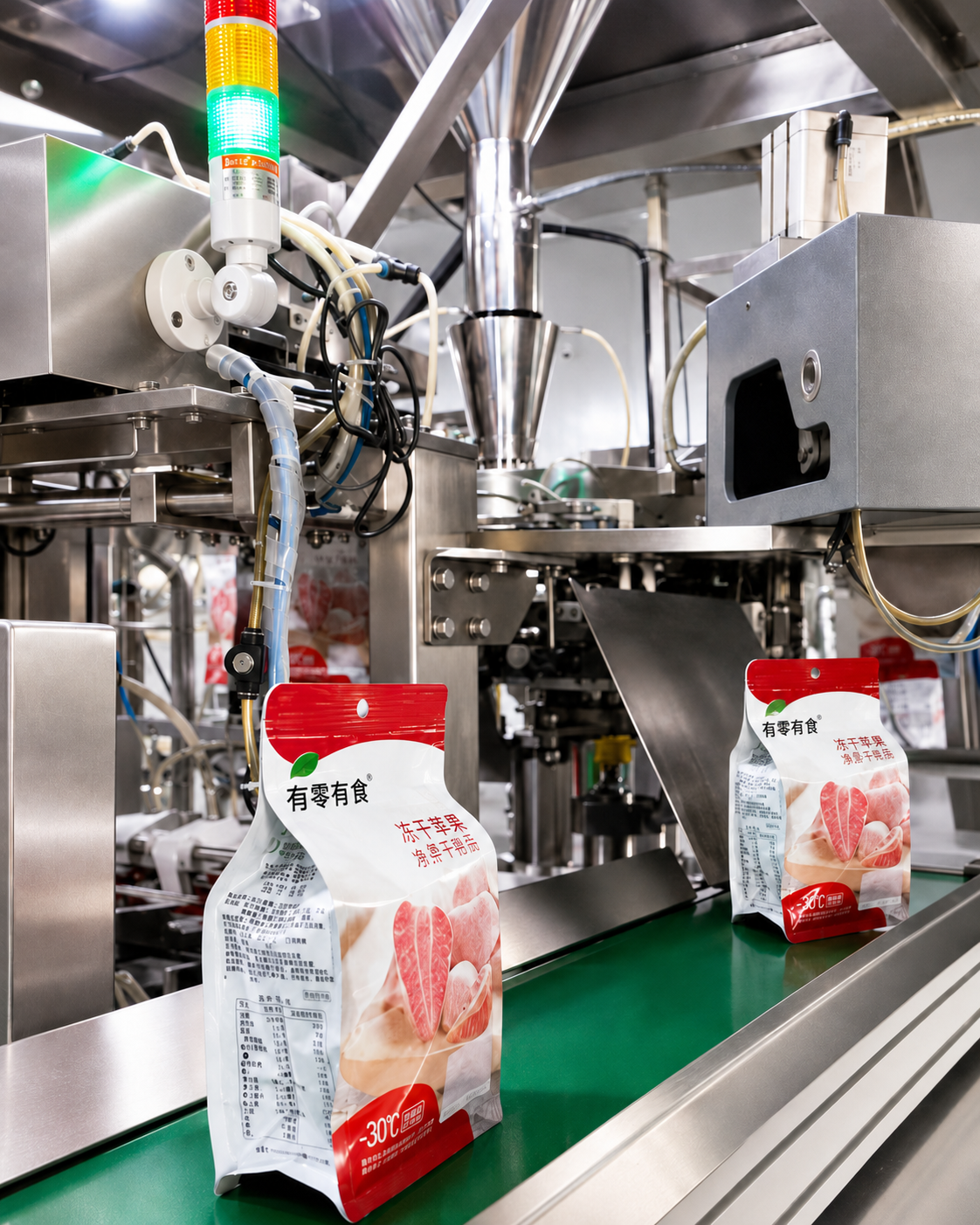
The Anchor SKU Problem in a Discount-Snack Program
An anchor SKU is the single item a discount-snack program uses to define category entry price, hold a permanent shelf or endcap position, absorb promotional volume, and carry the annual supply agreement with the distributor. Every other item in the range is a follower: it can rotate, be delisted between seasons, or be replaced by a competitor's equivalent without breaking the program. The anchor cannot.
That produces two failure modes, and both come from SKU characteristics rather than from merchandising.
- Supply-side failure. An anchor with a volatile raw-material or packaging profile runs out during the very promotion built around it. The shopper substitutes, the basket changes, and the next negotiation opens with a service-level argument instead of a range review.
- Demand-side failure. An anchor with narrow consumer acceptance holds the shelf but not the repeat purchase. Because finished freeze-dried goods carry a 12-month shelf life, residual inventory has to clear inside one cycle — and discount channels clear it by cutting price, on the SKU that sets the price.
So the question is not which fruit is better. It is which of these two SKUs can be hero-placed, promoted and supplied for a full agreement period without triggering either failure.
Industry Background: Why These Two, Not Two Processes
Freeze-dried fruit is a defined category with measurable scale. The global freeze-dried fruit market reached USD 5.108 billion in 2024, according to Market Research Future. Berries were the largest product segment with a 42.6% revenue share in 2024, and Asia Pacific held a 38.2% revenue share in 2025. Global trade in dried fruits under HS 0813 was USD 3.13 billion in 2024, up 2.79% on 2023.
Those figures need one caveat before they are used in a buying decision. HS 0813 aggregates every drying method, and published market values shift materially depending on whether freeze-dried vegetables are included in the definition. That definition gap is a procurement problem rather than an academic one: if the written specification says "dried fruit" instead of "freeze-dried fruit", a supplier can legitimately quote a hot-air-dried product into the same line item.
Durian and strawberry are compared here on the same process platform — vacuum freeze-drying at −40 °C, the same quality system, the same certification set, the same export route. Both are core UrSnacks categories, supplied as bulk ingredients and as finished products. That makes this a like-for-like comparison of two SKUs, not a comparison of two technologies.
Detailed Solution: What Each SKU Actually Delivers
Freeze-dried durian as an anchor candidate
Durian is Thai Monthong (Golden Pillow), supplied as coated 58 g retail packs, coated 32 g single-serve pouches, 270 g gift boxes of 90 g × 3 inner bags, and pure bulk at 1 kg × 6 bags per carton. The 58 g coated SKU declares freeze-dried durian at ≥66%, which makes it a fruit-led proposition rather than a coating-led one.
Two measured numbers define its behaviour. Fat is 9.34 g/100 g — more than four times the 2.16 g/100 g ceiling of the other five tested categories, and over nine times strawberry's 1.03 g/100 g. Total acid is 5.90 g/100 g as malic acid, the lowest of the six categories tested. High fat with low acid means flavour identity is carried by fat and aroma rather than by acidity: durian dominates a formulation at low inclusion instead of blending into it, and it is the category that most needs an oxidative-stability assessment before a long-shelf-life commitment.
Measured moisture in representative SGS-CSTC batches was 1.58 g/100 g for durian (report series XMF26-0002013-01 to -06, against a ≤5.0 g/100 g reference limit applied in those reports) — the highest of the six categories, but far inside the limit. Coated durian contains soy from the vegetable-oil coating. Consumer acceptance is strong in Asia and the Middle East and narrower in some Western retail channels, which is a market-validation task rather than a product defect.
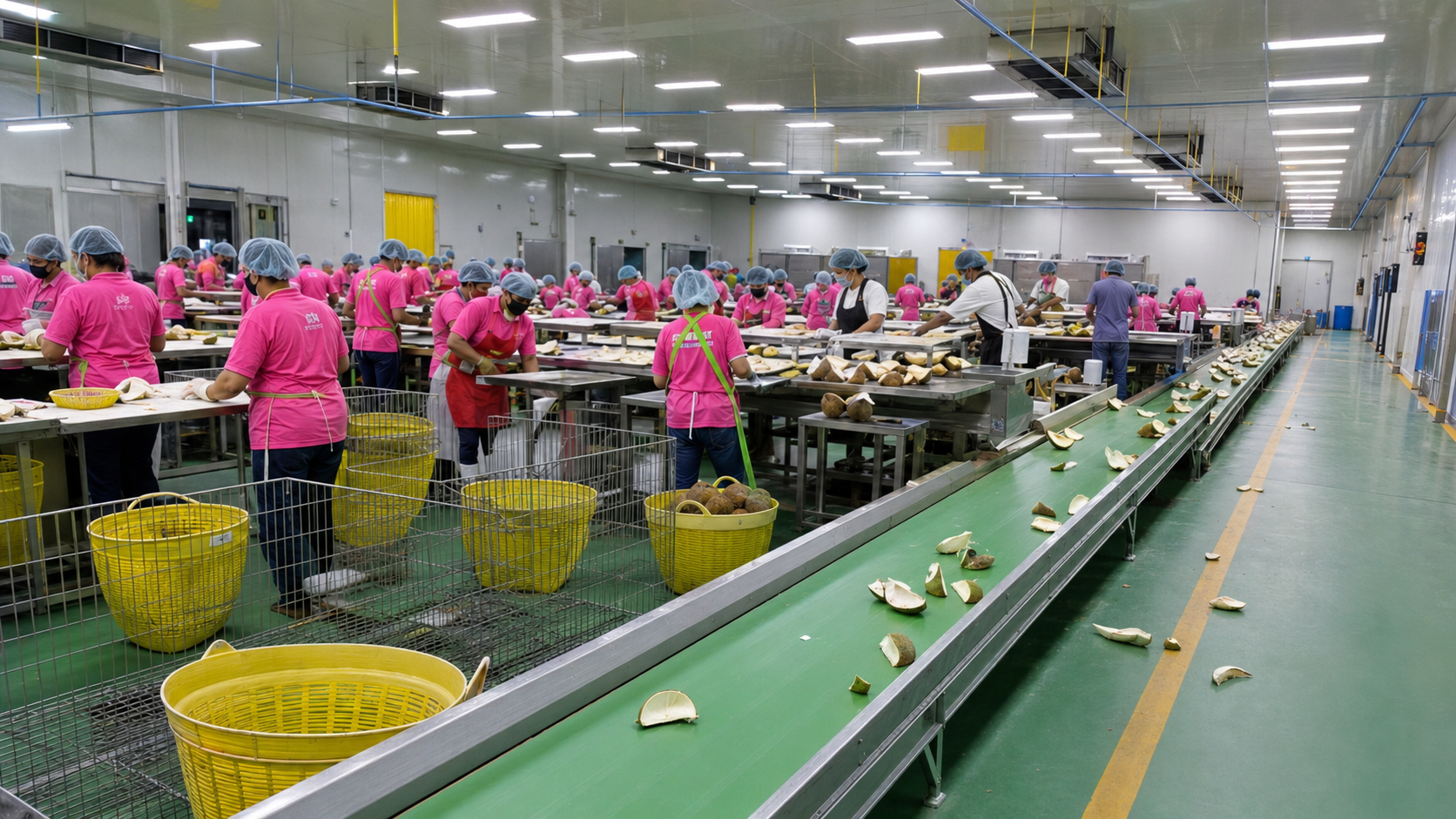
Freeze-dried strawberry as an anchor candidate
Strawberry is Shandong Miaoxiang, supplied coated at 22 g, 29 g, 38 g and 78 g, pure as whole fruit and halves in 1 kg × 6 bag cartons, and as 60–120 mesh powder in 10 kg bags. Coated strawberry declares fruit content at ≥37% on the 22/29/38 g formats — below half the pack, which is why the product name should lead with the coating rather than with the fruit.
Its measured profile sits close to the opposite end from durian. Total acid is 66.33 g/100 g as malic acid, more than eleven times durian's, which is what produces berry impact in dairy, beverage and cereal systems and determines how much inclusion is needed. Fat is 1.03 g/100 g, so oxidative risk is low. Moisture is 1.01 g/100 g. The colour, however, is anthocyanin-based and light-sensitive, so the pack structure and the display position both carry part of the stability job. Coated strawberry contains milk and soy.
The commercial argument for strawberry as a default anchor is breadth: berries were the largest freeze-dried fruit segment globally in 2024 at 42.6% of revenue. A program that anchors on the largest segment is not betting on a flavour trend.
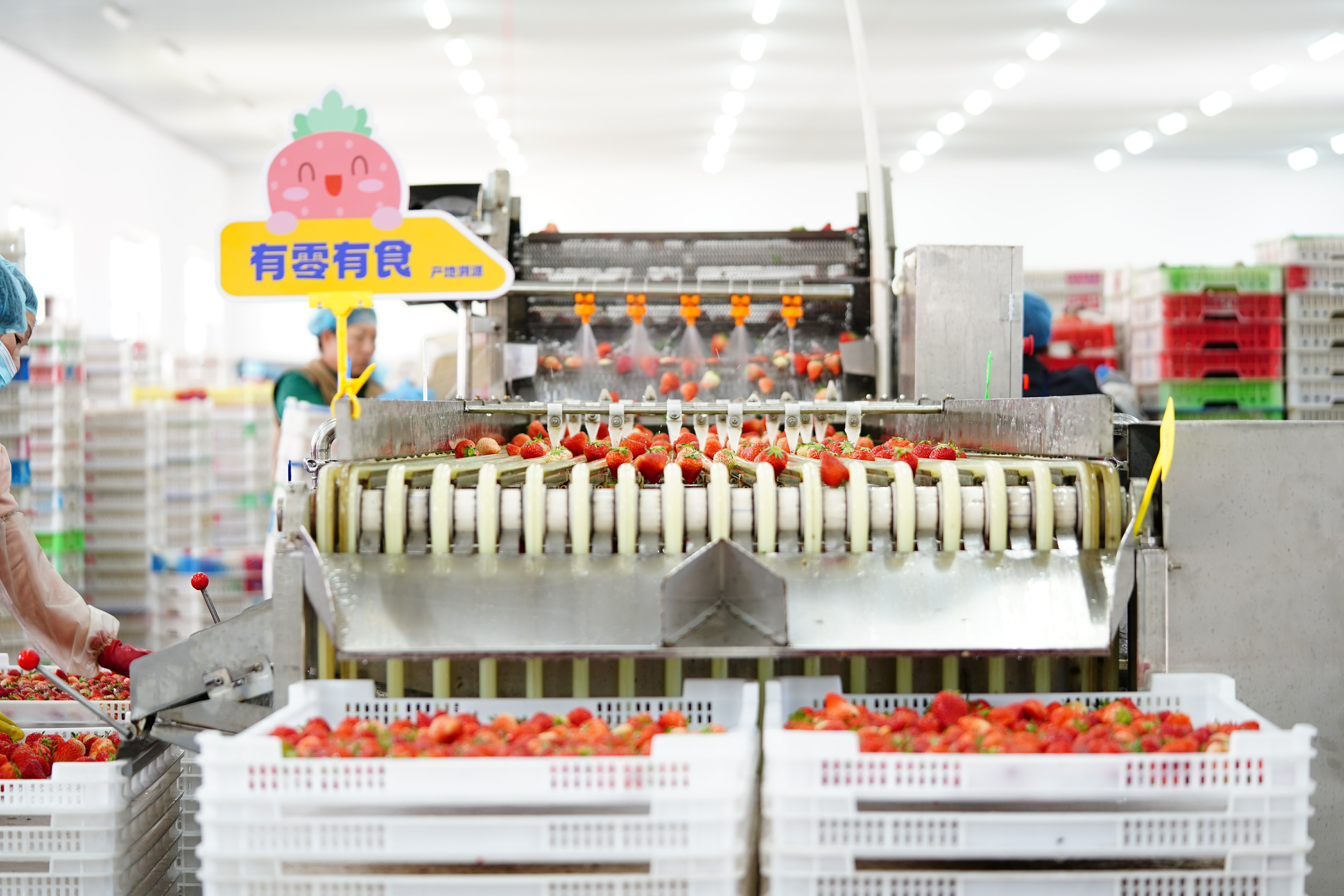
Format and pack architecture change the anchor maths
Coated and pure are different products, not different pack sizes. Coating runs a defined process route — selecting, coating, cooling, packaging — and it adds an allergen declaration (milk and soy for strawberry; soy for durian) plus one more failure mode: sticking, cracking or flaking under heat, temperature cycling, compression and transport vibration. Pure product keeps a single-ingredient label but loses the indulgence layer that supports a higher price point.
Carton configuration drives landed cost more than most buyers expect. Coated 58 g durian and 38 g strawberry both run 24 bags per carton in 43 × 34.5 × 28.5 cm cartons; coated 78 g strawberry runs 16 bags per carton; coated 32 g durian and 22 g strawberry run 24 bags per carton in 41 × 30.5 × 26 cm cartons. At container level, finished goods start from approximately 600 kg MOQ with mixed-SKU loading, while bulk ingredients are planned on a 1 × 20-foot container basis with mixed raw materials. Both routes require moisture-barrier packaging; unopened stock is held sealed at ≤25 °C and <60% RH, and finished goods carry a 12-month shelf life (18 months for bulk ingredients), confirmed per SKU, packaging structure and destination market.
Step-by-Step: Choosing the Anchor in Six Decisions
Step 1 — Define the anchor's job in the planogram
If the anchor must be the category's price entry point, strawberry's larger segment base, low fat and low oxidative burden reduce the risk of promotional write-offs. If the anchor must be the reason a shopper crosses the aisle, durian at ≥66% fruit content is the stronger hook — with the market-validation caveat already noted.
Step 2 — Fix pack architecture before fixing the fruit
Pack size sets pack count per carton, pack count sets container utilisation, and container utilisation sets landed cost per unit. The documented carton volumes in the build reviewed here — about 90,881 for durian and 71,438 for strawberry — matter because a hero SKU's carton count is what the annual agreement is actually written against. Decide pack size and carton configuration first, then confirm the SKU can be supplied in that configuration.
Step 3 — Test appeal inside the channel, not in a summary
Durian needs per-market acceptance validation before volume is committed. Strawberry needs a pack-copy check: at ≥37% fruit content the coating is the majority component, and the naming has to read honestly to the shopper and comply with the destination market's labelling rules.
Step 4 — Stress-test supply before signing
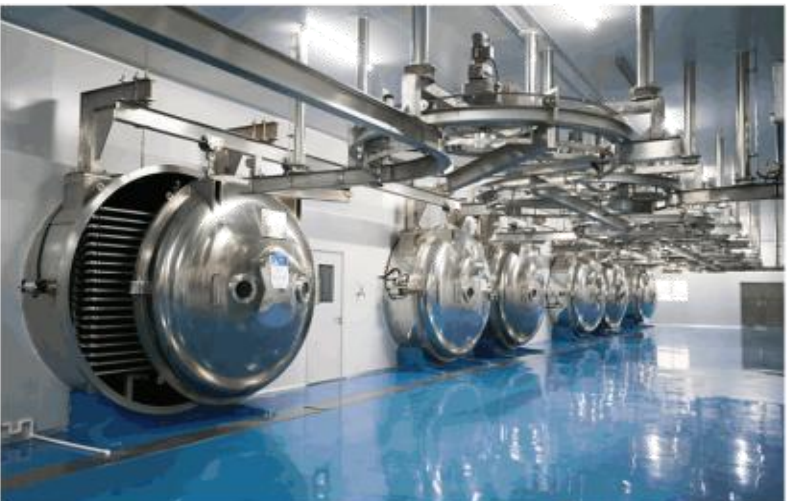
Capacity is shared across the range: 3,000+ metric tons per year for core freeze-dried fruit categories, 12 automated customization lines, up to 4,500 metric tons per year of finished-product capacity and 228,000+ packs per day of packing throughput, with peak combined supply above 3 million packs per month across the two SKUs. That headroom is what makes a two-SKU agreement realistic rather than optimistic.
The risks, however, are fruit-specific. Durian's 9.34 g/100 g fat makes oxygen and light the primary enemies: expect an oxygen-barrier, light-protective structure with nitrogen flush, and a stability study run during development rather than after launch. Strawberry's risk is colour fade under light and, in whole-fruit formats, breakage in conveying and transport. Both are hygroscopic, so both depend on seal integrity and on a 12-month write-off horizon.
Step 5 — Lock the commercial terms in writing
For finished goods: approximately 600 kg MOQ with mixed-SKU container loading; OEM and private-label mature programs typically 25–30 working days, subject to specification, packaging-material approval and production schedule; FOB Xiamen as the default delivery term, with other terms and loading ports arranged on request; a reference payment structure of 30% T/T in advance and 70% T/T against the bill of lading copy. For bulk ingredients: standard 1 × 20-foot container MOQ with mixed raw materials supported, and lead time confirmed by category, specification, inventory, order volume and container plan.
Step 6 — Write acceptance criteria that match the anchor's risk
The written specification should carry fruit content percentage for coated SKUs, moisture, format and size, allergen declaration, pack count and carton configuration, shelf life, storage conditions and the destination market's credential requirements. Delivery is then governed by that specification and the corresponding batch documents, not by the approved sample's appearance.
Inspection: pre-shipment inspection against the enterprise standard is conducted before every shipment with a report issued; a buyer-appointed third-party agency such as SGS, BV, Intertek or CTI can inspect before shipment on request, and samples can be approved before loading.
Credential scope: the BRCGS Global Standard Food Safety Issue 9 certificate (No. C723738, site code 10017031, issued by DNV Business Assurance Italy S.r.l., valid 2025-10-20 to 2026-11-09) covers selecting and packaging of dried fruit products and selecting, coating, cooling and packaging of coated dried fruit products in compound bags — read that wording against the actual SKU. Halal for GCC/GSO-related markets is certified against GSO 2055-1:2015 by Shandong Halal Certification Service (Cert. No. 5880250000; Reg. No. 3502/08109; Product Category CIV; valid 2025-08-22 to 2028-08-21), with scope defined by the attached product list; MS1500:2019 and BPJPH Indonesia credentials cover Malaysia and Indonesia. For coated SKUs the halal risk points are coating ingredients, processing aids and shared-line controls — not the fruit. No certificate is an import approval.
Use Cases: Which Program Profile Fits Which Anchor
Price-entry anchor with high promotional cadence. Strawberry. Broadest segment base, low fat, and one dominant stability risk — light-driven colour fade — that packaging and display position already manage.
Differentiation anchor for Asian-format or Middle East retail. Durian. ≥66% fruit content in the 58 g coated SKU, strong regional acceptance, and a flavour identity that carries the range — provided the program accepts an oxygen- and light-barrier pack and a development-stage stability study.
Two-tier range. Strawberry as volume anchor, durian as the premium or seasonal tier. Workable only if the program can run two packaging regimes and two allergen declarations; otherwise the second SKU becomes an operational cost rather than an upsell.
Private label testing a category. Start with one anchor, validate sell-through in the real channel, then add the second fruit through mixed-SKU loading inside the same container rather than through a new supplier relationship.
Comparison Table: Durian vs Strawberry as an Anchor SKU
| Decision factor | Freeze-dried durian | Freeze-dried strawberry |
|---|---|---|
| Variety and origin | Thai Monthong (Golden Pillow), Thailand | Shandong Miaoxiang, Shandong, China |
| Documented carton volume (anchor build) | About 90,881 cartons | About 71,438 cartons |
| Common finished formats | Coated 58 g (24 bags/carton, 43 × 34.5 × 28.5 cm); coated 32 g (24 bags/carton, 41 × 30.5 × 26 cm); 270 g gift box (90 g × 3) | Coated 22 g / 29 g / 38 g (24 bags/carton); coated 78 g (16 bags/carton); pure whole and halves (1 kg × 6 bags/carton) |
| Fruit content, coated | ≥66% at 58 g | ≥37% at 22 g / 29 g / 38 g |
| Measured moisture | 1.58 g/100 g | 1.01 g/100 g |
| Total acid (as malic acid) | 5.90 g/100 g | 66.33 g/100 g |
| Fat | 9.34 g/100 g | 1.03 g/100 g |
| Allergen status, coated | Contains soy | Contains milk and soy |
| Primary stability risk | Lipid oxidation — oxygen barrier, light protection and nitrogen flush required | Anthocyanin colour fade under light exposure |
| Carton patterning | Single 24-bag pattern across coated sizes | Two patterns to plan: 24-bag and 16-bag cartons |
| Shelf life | 12 months finished goods / 18 months bulk ingredient | 12 months finished goods / 18 months bulk ingredient |
| MOQ | Approx. 600 kg finished goods; 1 × 20-foot container bulk | Approx. 600 kg finished goods; 1 × 20-foot container bulk |
| Lead time | 25–30 working days on mature OEM / private-label programs | 25–30 working days on mature OEM / private-label programs |
| Best anchor role | Differentiation or premium tier | Volume and price-entry anchor |
Measured values refer to representative SGS-CSTC tested batches (report series XMF26-0002013-01 to -06) and are not a fixed specification for future batches; natural products vary by variety, origin, maturity, season and batch. Delivery is governed by the mutually confirmed specification and the corresponding batch documents.
Frequently Asked Questions
Do the food-safety and halal certificates behind these SKUs cover a coated product, or only pure fruit?
The BRCGS Global Standard Food Safety Issue 9 certificate (No. C723738, site code 10017031, DNV Business Assurance Italy S.r.l., valid 2025-10-20 to 2026-11-09) covers selecting and packaging of dried fruit products and selecting, coating, cooling and packaging of coated dried fruit products in compound bags, so the coated route is inside the stated scope — but the scope wording should be checked against the exact SKU. For halal, the GSO 2055-1:2015 certificate (Cert. No. 5880250000; Reg. No. 3502/08109; Product Category CIV; valid 2025-08-22 to 2028-08-21) is issued for GCC/GSO-related markets and its scope is defined by the attached product list; MS1500:2019 and BPJPH Indonesia credentials cover Malaysia and Indonesia. For coated SKUs the halal risk points are coating ingredients, processing aids and shared-line controls rather than the fruit itself. A certificate is not an import approval.
Can one supplier hold an annual supply agreement across both SKUs without splitting the quality file?
Both are core UrSnacks categories run on the same production and quality platform: 3,000+ metric tons per year of freeze-dried capacity for core fruit categories, 12 automated customization lines, up to 4,500 metric tons per year of finished-product capacity, 228,000+ packs per day of packing throughput and peak combined supply above 3 million packs per month across the two SKUs. Finished goods start from approximately 600 kg MOQ with mixed-SKU container loading; bulk ingredients are planned on a 1 × 20-foot container basis with mixed raw materials. On the documentation side, the U.S. FDA Food Facility Registration (Facility No. 432015462; DUNS 704680481; valid 2026-03-04 to 2027-03-03) and the China export food production enterprise filing (No. 3502/08109, Quanzhou Customs) support export paperwork, and the SMETA V7 audit (reference ZAA600211493, June 2026) is available for retail supplier approval. According to a Frost & Sullivan Market Position Statement (ref. FS-2025-MPC-874126, research completed May 2025), UrSnacks ranked No.1 by freeze-dried fruit sales volume in the Chinese mainland market in 2024.
What actually drives the cost difference between the two anchors, and what belongs in the annual agreement?
The cost bases are structurally different. Durian is a high-fat, high-value fruit whose pack must carry an oxygen- and light-barrier structure with nitrogen flush, and its coated 58 g SKU sits at ≥66% fruit content. Strawberry's coated formats sit at ≥37% fruit content, so the coating-to-fruit ratio moves cost more than the raw-fruit price does. Compare landed cost per finished pack rather than per kilogram: pack count per carton (24 bags for coated 58 g durian and 38 g strawberry, 16 bags for coated 78 g strawberry), carton dimensions, mixed-SKU loading from approximately 600 kg, delivery terms, and lead time. The annual agreement should fix the SKU list, fruit content percentage, pack count and carton configuration, shelf life, inspection method and the market credentials required per destination.
How should a buyer validate the anchor before committing annual volume?
Project sampling is supported, with sample specification, quantity and any fee agreed with the business consultant according to project complexity and cooperation plan. Validate in the real pack and the real channel: for durian, check the oxygen- and light-barrier structure and run a stability check on flavour; for strawberry, check colour retention under display light; for both, check crispness after transport, fines level and seal integrity. Compare results against the retained sample and the batch COA, and request category-matched third-party reports — moisture, microbiology, heavy metals, pesticide residues and additive panels are covered in the SGS-CSTC type-test series XMF26-0002013-01 to -06 for representative batches.
What lead time should an annual agreement assume, and what is the fastest way to start?
OEM and private-label mature programs typically need about 25–30 working days, subject to specification, packaging-material approval and production schedule; ODM work requires additional development, sampling and validation time before mass-production specifications are approved. Bulk ingredient lead time is confirmed by category, specification, inventory, order volume and container plan. The fastest practical start is a sample request on both anchor candidates, run against your own channel and pack format, followed by a mixed-SKU first order. UrSnacks supplies a downloadable brand book covering product lines, formats and packaging options at the UrSnacks brand book (PDF), and sample or quotation requests can be sent to sales2@ursnacks.cn.
Conclusion: The Rule to Write Into the Program Brief
Anchor on strawberry unless the program is explicitly built on durian differentiation and can carry the extra packaging discipline. Strawberry brings the larger global segment, low fat, low oxidative risk and one manageable stability constraint; durian brings a stronger fruit-led story at ≥66% fruit content, a higher-value carton, and a packaging regime that has to be right before the first pallet ships rather than after.
Whichever SKU leads, the decision only holds if three things are written down before the PO: the pack and carton architecture the program is built on, the acceptance criteria that will be used at goods-in, and the credential scope that applies to the exact SKU and destination. The documented carton volumes — about 90,881 for durian and 71,438 for strawberry, with combined peak supply above 3 million packs per month — show that both can be supplied at program scale. They do not decide which one should be hero-placed. That is a planogram and supply-risk judgement, and it belongs in the brief rather than in the negotiation.
Next Step: Sample Both Anchors Before You Commit
UrSnacks is the core freeze-dried fruit brand of FUJIAN YOULINGYOUSHI TECHNOLOGY CO., LTD., a freeze-dried fruit manufacturer based in Jinjiang, Quanzhou, Fujian, China, supplying bulk freeze-dried ingredients, UrSnacks-branded finished goods, OEM, private label and ODM programs. Request a coated durian and coated strawberry sample set, or ask for a quotation against your target pack size and destination market.
Email: sales2@ursnacks.cn · Tel / WhatsApp: +86 180-0507-3978 · WeChat: ursnacks · Website: www.urorchard.com
Brand book and full product specifications: download the UrSnacks brand book (PDF)
Address: Building 15, Sanchuang Park Design & R&D Center, No. 3001 Century Avenue South, Luoshan Subdistrict, Jinjiang, Quanzhou, Fujian 362200, China
Have Questions or Need More Details?
Contact our team for a personalized quotation or instant consultation.
Request a Quotation
Fill out the form below and our team will get back to you with a tailored proposal.
WhatsApp Direct Chat
Prefer to chat in real-time? Message us on WhatsApp for instant assistance & quick answers.
- Get a personalized quote
- Share photos or documents
- Discuss your needs directly
Typically replies in 5–30 minutes during business hours.