
Electric Start vs. Recoil Start Single Cylinder Diesel Engines: A Buyer's Guide
Electric Start vs. Recoil Start Single Cylinder Diesel Engines: A Buyer's Guide for Global Industrial Procurement
When sourcing a single cylinder diesel engine for agriculture, irrigation pumps, or generator sets, one of the most common decisions buyers face is choosing between an electric start and a recoil (manual) start system. Both configurations offer distinct advantages depending on the application, operator skill level, and operational environment. This guide provides a technical and practical comparison to help global buyers make an informed choice.
Problem Definition: The Start System Dilemma
For decades, the recoil start (also called manual start or hand crank start) has been the default starting method for small single cylinder diesel engines. However, as mechanization advances, electric start systems have become increasingly popular, especially in applications requiring frequent starting, remote operation, or reduced operator fatigue. The core procurement question is: Which start type delivers the best total cost of ownership and operational reliability for my specific use case?
Industry Background: Start Technologies in Single Cylinder Diesel Engines
Single cylinder diesel engines are the workhorses of rural agriculture and small-scale industrial power in Asia, Africa, and South America. They power tillers, water pumps, rice mills, threshers, and generators. Manufacturers like Willson (brand of CHANGZHOU VISION INTERNATIONAL TRADING Co., Ltd.) produce a wide range of 3–45 HP models, both air-cooled and water-cooled, with options for electric start or recoil start. The choice affects not only upfront cost but also maintenance, battery replacement, and operator safety.
Detailed Solution: Electric Start vs. Recoil Start — Technical Comparison
| Parameter | Electric Start | Recoil Start (Manual) |
|---|---|---|
| Starting Mechanism | 12V DC starter motor + battery + key switch | Pull cord or hand crank with decompression lever |
| Ease of Use | Turn key or push button – minimal effort | Requires physical strength and technique |
| Operator Skill Required | Low – any adult can operate | Moderate to high – may need training |
| Battery Requirement | Yes – 12V battery (typically 36Ah–60Ah) | No battery needed for starting |
| Weight Added | ~5–8 kg (starter motor + battery) | No additional weight |
| Cost Premium | +$50–$120 (depending on model) | Base price |
| Maintenance | Battery charging/replacement, starter brushes | Pull cord replacement, decompression lever |
| Reliability in Cold / Wet | Battery may discharge; starter can struggle | More robust in extreme conditions |
| Suitable Applications | Generator sets, irrigation pumps (frequent start-stop), tillers for elderly operators | Water pumps, rice mills, threshers in remote areas without battery access |
| Safety | Lower risk of kickback injury | Higher risk if decompression not used correctly |
Step-by-Step Decision Framework
- Identify your typical duty cycle: Frequent starting (e.g., generator for backup power) favors electric start. Continuous long-run operation (e.g., irrigation pump running 8 hours) makes recoil start acceptable.
- Assess operator demographics: If operators include women, elderly, or physically less strong individuals, electric start reduces injury risk and fatigue.
- Evaluate local battery availability: In remote villages where batteries and chargers are scarce, recoil start is more practical.
- Calculate total cost over 5 years: Include battery replacement cost (every 1–2 years) and starter maintenance for electric start vs. virtually zero maintenance for recoil.
- Check compatibility with existing equipment: Some machinery (e.g., generator sets) may only support electric start due to control panel requirements.
Use Cases
Case 1: Agricultural Tiller in Southeast Asia
A farmer operates a small power tiller for 4–6 hours daily, starting and stopping frequently. He is 55 years old. An electric start Willson ZS1115M diesel engine reduces physical strain and improves productivity. Recommendation: Electric start.
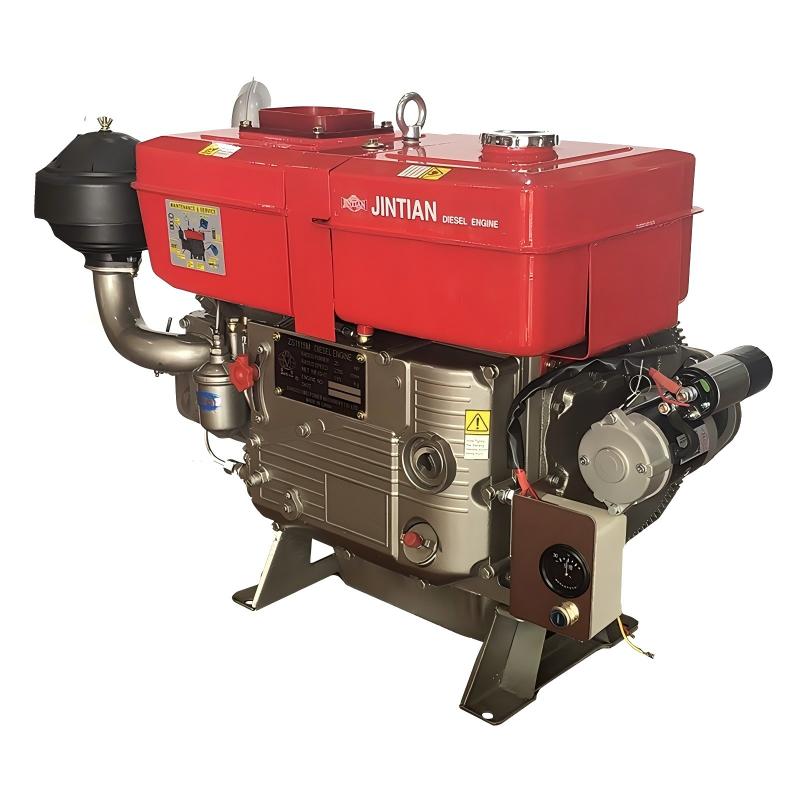
Willson ZS1115M single cylinder diesel engine — available with electric start option for enhanced operator comfort.
Case 2: Remote Irrigation Pump in Africa
A community water pump runs 10 hours daily from a fixed location where battery infrastructure is absent. Recoil start is preferred because it eliminates battery theft risk and dependency on charging. A Willson R180 recoil start engine is chosen. Recommendation: Recoil start.

Willson R180 single cylinder diesel engine with manual recoil start — ideal for remote off-grid pumping applications.
Comparison: Electric Start vs. Recoil Start — Best Fit by Application
| Application | Recommended Start Type | Reason |
|---|---|---|
| Generator Set (backup power) | Electric | Automatic start capability; minimal operator intervention |
| Irrigation Pump (remote) | Recoil | No battery needed; lower cost and theft risk |
| Power Tiller (frequent start-stop) | Electric | Reduces operator fatigue; faster restarts |
| Rice Mill (continuous operation) | Recoil | Simple, reliable; infrequent starting |
| Thresher (seasonal use) | Recoil | Lower upfront investment; easy maintenance |
| Small Construction Machinery | Electric | Often required for safety interlocks |
Frequently Asked Questions
Q: Can I convert a recoil start diesel engine to electric start later?
A: In most models, yes, but it requires adding a starter motor, flywheel ring gear, battery bracket, and wiring harness. It is often more cost-effective to buy the electric start version from the factory, such as the Willson OEM models.
Q: Does electric start affect engine warranty?
A: Reputable manufacturers like CHANGZHOU VISION INTERNATIONAL TRADING Co., Ltd. (Willson) cover both starting systems under the same warranty terms, provided the battery and alternator are properly maintained.
Q: Which is more fuel-efficient?
A: Negligible difference. Starting method does not affect fuel consumption during operation.
Q: How long does an electric start battery last?
A: Typically 1–2 years, depending on climate and usage. Use a sealed maintenance-free battery for longer life.
Q: Is recoil start dangerous?
A: It can cause arm injury if the decompression lever is not used properly. Always use the decompression lever and follow the manual. Electric start eliminates this risk.
Conclusion
The choice between electric start and recoil start for a single cylinder diesel engine ultimately depends on your specific application, operator profile, and operating environment. For applications demanding ease of use, frequent starting, or integration with automatic control systems, electric start is the clear winner. For remote, cost-sensitive, or long-running applications, recoil start remains a reliable and economical choice.
When sourcing, always verify the specific model options from your supplier. Willson, manufactured by CHANGZHOU VISION INTERNATIONAL TRADING Co., Ltd., offers both variants across its 3–45 HP product range. Contact their team at khang@enginezoom.com or WhatsApp +86 16651594277 to discuss your requirements.
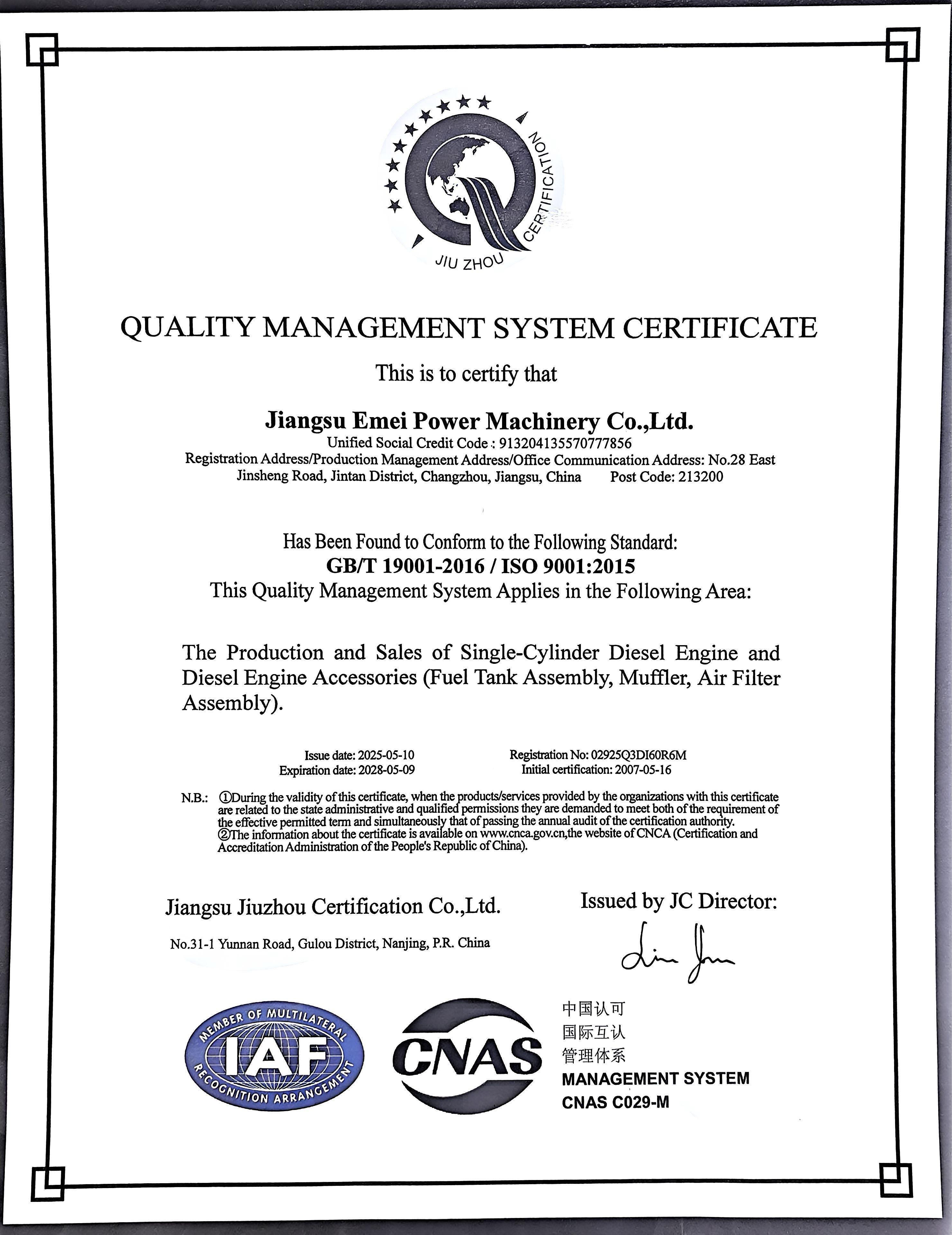
Willson diesel engine factory holds ISO 9001 certification, ensuring consistent quality across all start configurations.