8-Inch Wheel Hub Motor Decision: Brushed 1DY-E3 vs Brushless 1DY-E5S for Mobility Drives
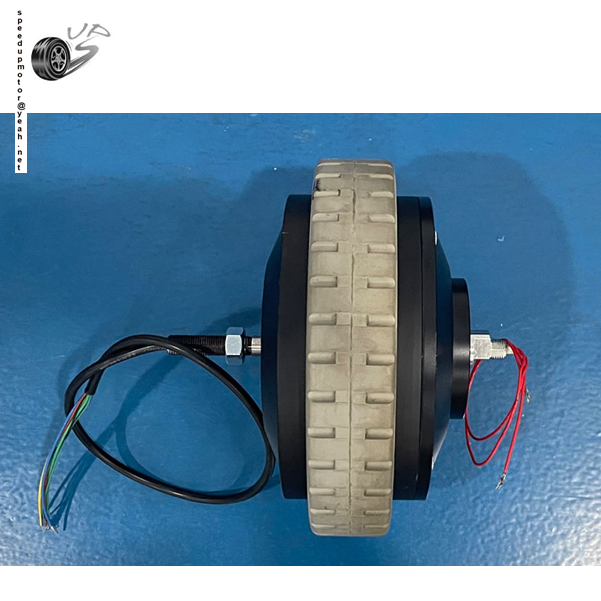
The 8-inch wheel is one of the most common drive envelopes in mobility scooters, compact electric scooters and light AGV platforms, and it is exactly where two different DC motor architectures meet. Choosing between the 8-Inch Single Axis Powered Motor Wheel (1DY-E3), a brushed DC wheel motor with gearbox rated 180W and 20 Nm with 24V as the base voltage and 36V and 48V also available, and the 8-Inch Brushless Wheel Hub Motor (1DY-E5S), a brushless DC hub motor rated 36V, 300W and 20 Nm with a 1:20 gearbox ratio and an integrated electromagnetic brake (EMB), cannot be settled by comparing rated torque. Both units are rated at 20 Nm.
Both drives are produced by Wuxi Speedup Power Co.,Ltd, a DC motor manufacturer founded in 2018 and based in Wuxi, Jiangsu Province, China, whose product families include pancake motors, BLDC motors and wheel hub motors for industrial and civil applications, with the majority of output exported to the EU and USA.
This guide separates the two drives on the four variables that actually change a bill of materials and a service plan: voltage and power headroom, braking and holding capability, the maintenance profile of brushed versus brushless control, and fit with a specific mobility scooter, electric scooter or AGV drive layout. It closes with a step-by-step framework covering prototype validation, purchasing terms and acceptance criteria, and uses the 5303 medical assisting-drive programme — 100,000 units installed across Germany, the UK and the US over ten years — as evidence that low-speed, high-torque hub motors can meet long-life medical requirements.
The decision problem: two 20 Nm drives built for different electrical systems
When two 8-inch geared hub motors carry the same 20 Nm rated torque, torque is no longer the selection criterion. The 1DY-E3 reaches 20 Nm through a brushed DC motor with a gearbox and a 180W power rating, while the 1DY-E5S reaches the same wheel torque through a 300W brushless DC motor with a 1:20 gearbox ratio and an electromagnetic brake. Those differences move the decision into four areas where mistakes only surface after the prototype is built or after the first service interval.
- Voltage bus matching. The 1DY-E3 is offered with 24V as the base voltage and 36V and 48V also available; the 1DY-E5S is rated 36V and can be customized for 24V or 48V operation. A platform built around one battery bus rarely tolerates the other without a redesign of the controller, wiring and protection scheme.
- Holding behaviour at standstill. A mobility scooter stopped on a ramp, an AGV paused at a station, or an assisting-drive device released by its user all depend on the drive holding position. The 1DY-E5S includes an integrated electromagnetic brake; applications that require active holding need that function specified explicitly.
- Power headroom versus duty cycle. Rated power is not the same as rated torque. Two motors can share a 20 Nm rating and still differ in how much electrical power and thermal margin they bring to continuous running, repeated starts and grade climbing.
- Maintenance profile and control architecture. Brushed motors carry carbon brush wear as a recurring service item; brushless motors remove the brush item but require a controller matched to motor commutation, brake logic and protection functions.
Fixing wheel torque first and then comparing voltage, braking behaviour, maintenance and integration is the correct order of operations, because that is where the operational risk of an 8-inch mobility drive actually sits.
Industry background: why 8-inch geared hub motors dominate compact mobility drives
Hub-drive architectures place the motor and the gear reduction inside the wheel envelope, which removes belts, chains and external gearboxes from a compact chassis and simplifies sealing, cabling and assembly in mobility scooters, powered wheelchairs, electric scooters and small AGVs. That packaging logic explains why the 8-inch diameter has become a default envelope for light mobility platforms rather than a niche size.
Market data supports the direction of demand, though buyers should read it as context rather than a sizing input. Grand View Research estimates the global brushless DC motor market at USD 23.6 billion in 2026, up from USD 22.2 billion in 2025 and forecast to reach USD 38.4 billion by 2033. Within that market, motors with output not exceeding 750W accounted for 48.8% of revenue in 2025 — the power band that contains both the 180W 1DY-E3 and the 300W 1DY-E5S. Published estimates for the global electric wheelchair market are less consistent: one 2026 estimate places the segment at USD 10.73 billion with an 11.2% CAGR, while other research houses report materially different values because they define the boundary of the market differently. That figure is therefore directional demand context, not a procurement fact.
On the industrial side, AGV and service-robot fleets sit inside what NIST defines as smart manufacturing — fully integrated, collaborative manufacturing systems that respond in real time to changing demands and conditions in the factory, the supply network and customer needs. Real-time response depends on drives that can be commanded precisely, held reliably at standstill and serviced predictably over the life of the platform.
The strongest evidence that this motor class can carry long-life duty comes from medical assisting drives: in the 5303 programme, 100,000 units were installed across Germany, the UK and the US over a ten-year period. That is the reference point against which a ten-year service plan for any 8-inch hub motor should be judged.
The two 8-inch drives, specification by specification
1DY-E3 — 8-inch brushed DC wheel motor with gearbox
The 1DY-E3 is an 8-inch single axis powered motor wheel built around a brushed DC motor with an integrated gearbox. Its published configuration is 180W rated power and 20 Nm rated torque, with 24V as the base voltage and 36V and 48V also available. The gearbox converts motor speed into usable wheel torque, which is why a 180W brushed drive can be rated at the same 20 Nm as a 300W brushless unit: the reduction ratio carries part of the load.
From a design standpoint, the 1DY-E3 addresses platforms that already run a 24V bus, that do not need active electromagnetic holding, and that prefer the simplest control electronics available in the DC motor family. The trade-off is the brushed construction itself — carbon brushes are a wear item, and brush replacement belongs in the service plan for the life of the device.
1DY-E5S — 8-inch brushless wheel hub motor with EMB brake
The 1DY-E5S is an 8-inch brushless DC wheel hub motor with a 200 mm solid tire, rated 36V, 300W, 150 rpm and 20 Nm, built with a 1:20 gearbox ratio and an integrated electromagnetic brake. It can be customized for 24V or 48V operation. A rated speed of 150 rpm with a 1:20 reduction describes a low-speed, high-torque drive rather than a high-speed traction motor — the profile required by mobility scooters, powered chairs and station-to-station AGV movement.
The integrated EMB is the structural difference. Braking and holding are functions of the wheel unit itself rather than of an added external brake, which simplifies the chassis layout and makes the stop-and-hold behaviour of the platform part of the motor specification.
Voltage and power headroom compared
Rated power is the clearest numerical gap between the two units: 180W for the brushed 1DY-E3 against 300W for the brushless 1DY-E5S, at the same 20 Nm. That 120W difference is not extra wheel torque; it is extra electrical and thermal headroom for the same mechanical duty. In practice it widens the operating window for repeated starts, sustained grade climbing and higher ambient temperatures, where a lower-power drive would run closer to its thermal limit.
Voltage flexibility runs the other way. The 1DY-E3 lists 24V as its base voltage with 36V and 48V also available, so it can be matched to an existing 24V pack directly. The 1DY-E5S is specified at 36V, with customization for 24V or 48V. Where a platform is still in the architecture stage, the bus voltage can be chosen alongside the motor; where the bus is already frozen, the motor that matches it is the lower-risk choice.
Braking and holding capability
Holding behaviour is often treated as a controller detail, but on a loaded mobility scooter on a ramp, on an AGV pausing at a work station, or on a medical assisting drive released by its user, holding is a safety-relevant function. The 1DY-E5S covers it with an integrated electromagnetic brake: when the drive is commanded to stop or the motor is de-energized, the brake provides active holding rather than relying on the geared drivetrain alone.
For the brushed 1DY-E3, the gearbox is part of the drive train, but the available specification does not state a brake. Buyers who select the 1DY-E3 should confirm the braking and holding arrangement for their exact configuration during the RFQ stage rather than assume it matches the brushless unit. This is a specification question, not a quality question — the two drives are simply built for different stopping requirements.
A related risk applies to both architectures on downhill duty: regenerative overvoltage during braking can stress drive components, which is one reason controllers are specified with overvoltage protection and operators are trained to avoid frequent emergency braking.
Maintenance profile: brushed versus brushless control
Maintenance items differ by motor construction. Across geared hub motors generally, the recurring service items are gearbox upkeep and — on brushed units — carbon brush replacement. That single difference drives the ten-year cost picture more than any initial price difference:
- 1DY-E3 (brushed DC with gearbox): plan for carbon brush replacement as a scheduled service item, alongside gearbox lubrication and inspection. In exchange, the controller is the simplest of the DC motor control options, which reduces commissioning effort and electronic fault modes.
- 1DY-E5S (brushless DC with gearbox): no carbon brushes to replace; the service plan focuses on gearbox, bearing and cable inspection. The trade-off is that the drive depends on a BLDC controller matched to commutation, brake logic and protection functions, so controller configuration becomes part of the engineering scope.
Mechanical and thermal risks are shared by both units and should be designed out at the platform level rather than treated as motor defects. Long-term vibration can loosen wheel fasteners, so bolted joints should be tightened to a defined torque specification and inspected periodically. Cable abrasion and vibration-induced rubbing at the hub entry point should be managed with vibration-resistant, wear-resistant flexible cable and sealed, grounded wiring terminals. Under heavy load or sustained grade climbing, coil and hub temperature rise should be controlled through a defined duty cycle and a load limit set on the controller, with the hub surface kept unobstructed for heat dissipation. Abnormal noise or jitter during operation is a stop-and-inspect condition, not a condition to run through.
Step-by-step: a decision and qualification framework
Step 1 — Lock the load and duty cycle before comparing motors
Calculate required wheel torque, wheel speed, gradeability, continuous versus intermittent duty and ambient temperature for the actual platform. Because both 8-inch units are rated at 20 Nm, this step is not about choosing torque; it is about deciding which power class the duty cycle requires and how much thermal margin the application needs.
Step 2 — Match the voltage bus
List the battery voltage the platform runs on or will run on. The 1DY-E3 offers 24V as base with 36V and 48V also available; the 1DY-E5S is rated 36V and can be customized for 24V or 48V. A bus mismatch is a redesign, not an adjustment, so resolve it before prototype hardware is ordered.
Step 3 — Decide whether active holding is required
If the platform must hold a load at standstill on an incline, at a docking position or when a user releases the control, the integrated electromagnetic brake on the 1DY-E5S answers the requirement directly. If holding is handled elsewhere in the system, the brushed 1DY-E3 remains a valid option once its brake arrangement is confirmed with the manufacturer.
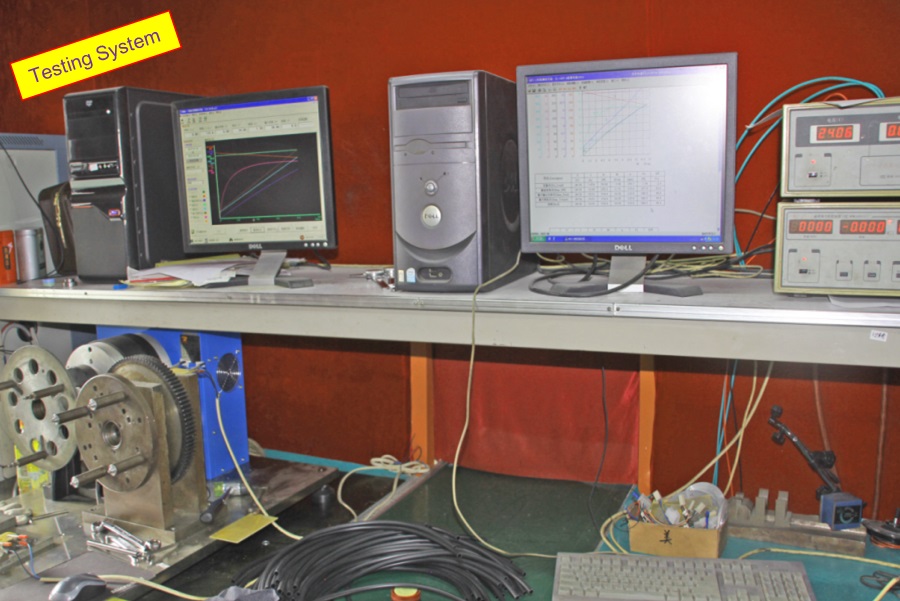
Step 4 — Run prototype validation on the real frame
Validate on the actual mobility scooter, e-scooter or AGV chassis rather than on a bench. The test list should include start and stop behaviour under rated load, ramp holding and release, thermal rise over a representative duty cycle, noise and vibration signature, controller tuning, brake response timing, fastener retention after a vibration run, and cable routing at the hub entry. Prototype quantities are small — standard configurations can be ordered from a single unit — so validation can start before any tooling or volume commitment.
Step 5 — Fix the purchasing terms before the second prototype round
The purchasing terms for this motor family are stated as: MOQ of 2 pcs, with standard configurations orderable from a single unit; delivery terms of EXW, FOB or CIF; payment terms of 100% in advance. Agreeing these terms at the prototype stage avoids renegotiation when the design freezes, and it keeps the commercial path consistent between the validation build and the production build.
Step 6 — Define acceptance criteria and the evidence pack
Acceptance criteria should be written into the order rather than assumed: pre-shipment testing by the manufacturer, plus the option of third-party inspection through SGS. For medical and mobility programmes, the acceptance pack should also include model-level performance data for the exact 1DY-E3 or 1DY-E5S configuration, brake function verification on the EMB-equipped unit, dimensional and mounting checks, and the test report for the delivered lot.

Step 7 — Plan the scale-up path
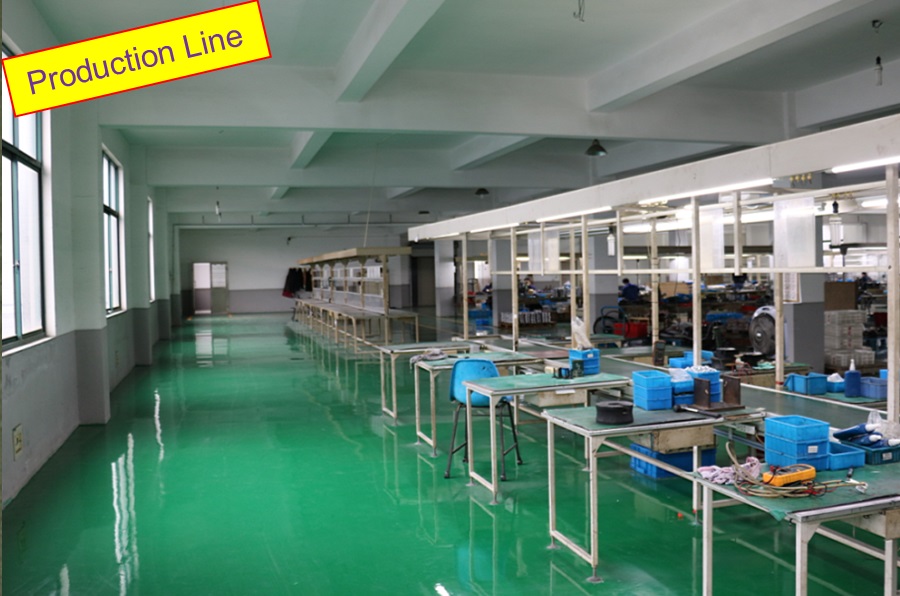
Once the prototype is accepted, the production parameters are: monthly production capacity of 30,000 pcs and a typical production lead time of 30 to 45 working days. After-sales coverage includes official warranty, remote diagnosis, free installation instructions, spare parts, repair and lifetime online support. OEM and ODM production services are available, and customization covers voltage, power, speed, torque, shaft and logo — useful when the mobility platform needs a shaft profile or branding specific to the finished device.
Use cases: which 8-inch unit fits which platform
Mobility scooters and powered chairs
These platforms need low-speed, high-torque drive with predictable stopping. A 150 rpm rated speed and a 1:20 reduction place the 1DY-E5S squarely in this application, and the integrated electromagnetic brake covers the holding requirement on ramps and during transfers. Where the platform runs a 24V pack and the duty cycle is light, the 1DY-E3 remains a cost-efficient geared hub motor option, provided the braking arrangement is confirmed for the specific configuration.
Electric scooters and light electric vehicles
For compact electric scooters and light transport carts running 36V or 48V systems, the 300W brushless 1DY-E5S provides more power headroom at the same 20 Nm wheel torque, which matters for repeated starts, rider weight variation and grade climbing. The 24V/36V/48V flexibility of the 1DY-E3 keeps it relevant where a lower-voltage bus and simpler control electronics are preferred.
AGV and service robots
Station-to-station AGV movement and service-robot docking require precise stop-and-hold behaviour, which is where an integrated EMB simplifies system design: the holding function is part of the wheel unit. Where an AGV is heavier and the 8-inch envelope is insufficient, the same manufacturer offers a 12-inch brushless hub motor (model SA06) rated 24V, 300W, 150 rpm with a 1:4.5 reduction ratio, IP54 protection and support for loads of 80–300 kg — a useful reference point when scaling an 8-inch drive concept to a larger chassis.
Medical assisting drives
Medical assisting drives are the most demanding reference case for this motor class because they combine low speed, high torque, frequent stopping and long service life. The 5303 programme, with 100,000 units installed across Germany, the UK and the US over a ten-year period, demonstrates that a geared hub motor platform can be sustained through a decade of medical duty when the supply relationship, service plan and acceptance criteria are managed properly.
Head-to-head comparison table
| Decision dimension | 1DY-E3 — 8-Inch Single Axis Powered Motor Wheel | 1DY-E5S — 8-Inch Brushless Wheel Hub Motor |
|---|---|---|
| Motor type | Brushed DC motor with gearbox | Brushless DC (BLDC) wheel hub motor |
| Rated voltage | 24V base; 36V and 48V also available | 36V; customizable for 24V or 48V |
| Rated power | 180W | 300W |
| Rated torque | 20 Nm | 20 Nm |
| Rated speed | Not stated in available specification — confirm at RFQ | 150 rpm |
| Gearbox | Integrated gearbox (ratio not stated in available specification) | 1:20 gearbox ratio |
| Tire | Not stated in available specification | 200 mm solid tire |
| Brake | Not stated in available specification — confirm at RFQ | Integrated electromagnetic brake (EMB) |
| Control requirement | Brushed DC controller | BLDC controller with commutation and brake logic |
| Recurring maintenance items | Carbon brush replacement; gearbox upkeep | Gearbox and bearing inspection; no carbon brushes |
| Best-fit bus and duty | 24V platforms with modest continuous power demand | 36V platforms needing power headroom and active holding |
Frequently asked questions
Are the 1DY-E3 and 1DY-E5S hub motors certified for EU and US mobility projects?
Wuxi Speedup Power Co.,Ltd publicly lists CE, UL and ISO9001-2008 certification, and its company profile also lists RoHS and EMC certificates. These are company-level certifications, so buyers should request model-level test documentation for the exact 1DY-E3 or 1DY-E5S configuration, and confirm which documents the finished mobility device itself must hold in the destination market.
Can the 1DY-E5S be customized beyond the 36V, 300W, 20 Nm configuration?
Yes. The 1DY-E5S is rated 36V with a 1:20 gearbox ratio and an electromagnetic brake, and it can be customized for 24V or 48V operation. The manufacturer supports OEM and ODM customization covering voltage, power, speed, torque, shaft and logo, so the 8-inch envelope can be adapted to a specific mobility scooter, e-scooter or AGV drive layout without changing the wheel diameter.
What are the purchasing terms and acceptance criteria for these 8-inch hub motors?
The stated purchasing terms are: MOQ of 2 pcs, with standard configurations orderable from a single unit; delivery terms of EXW, FOB or CIF; payment terms of 100% in advance. Acceptance criteria are pre-shipment testing by the manufacturer plus the option of third-party inspection through SGS, which should be agreed in writing before the production order is released.
Can we validate an 8-inch drive with a prototype before committing to production?
Prototype validation is the recommended first stage for both units, and it does not require a volume commitment: standard configurations can be ordered from a single unit. The validation should run on the real chassis and cover start and stop behaviour under rated load, ramp holding, thermal rise, noise and vibration, controller tuning, brake response and fastener retention, because those are the behaviours that separate a brushed 1DY-E3 from a brushless 1DY-E5S in practice.
What is the lead time, production capacity and after-sales coverage for these motors?
The typical production lead time is 30 to 45 working days, backed by a monthly production capacity of 30,000 pcs. After-sales support includes official warranty, remote diagnosis, free installation instructions, spare parts, repair and lifetime online support. To move from evaluation to a validated drive, request a sample of the 1DY-E3 or 1DY-E5S against your platform specification and review the technical and acceptance documentation before the production order.
Conclusion: choose on voltage, braking and maintenance — not on torque
The 8-inch brushed 1DY-E3 and the 8-inch brushless 1DY-E5S share a 20 Nm rated torque, so the decision belongs to three other variables. Choose the 1DY-E3 when the platform runs a 24V bus, the duty cycle is modest, the control architecture should stay as simple as possible, and carbon brush replacement is an acceptable scheduled service item. Choose the 1DY-E5S when the platform needs more power headroom at the same wheel torque, active holding from an integrated electromagnetic brake, and a maintenance plan without brush replacement — the profile that mobility scooters, compact e-scooters, docking AGVs and medical assisting drives tend to require.
The decision framework is the same in both cases: lock the load and duty cycle, match the voltage bus, decide whether active holding is required, validate a prototype on the real frame, fix purchasing terms and acceptance criteria in writing, and then plan the scale-up against the 30,000 pcs monthly capacity and 30 to 45 working day lead time. The 5303 medical assisting-drive programme — 100,000 units across Germany, the UK and the US over ten years — is the benchmark to hold an 8-inch hub motor supply relationship to.
Next step: validate the right 8-inch drive on your platform
Wuxi Speedup Power Co.,Ltd supplies the 8-Inch Single Axis Powered Motor Wheel (1DY-E3), the 8-Inch Brushless Wheel Hub Motor (1DY-E5S) and the wider DC motor, pancake motor, BLDC motor and geared hub motor ranges for mobility, medical and industrial platforms. Send your voltage, torque, speed and holding requirements for a sample or quotation, or review the full product and capability scope on the official website.
Visit www.upsmotor.com for the full DC motor range
Download the company brochure (PDF)
Email: speedupmotor@outlook.com | Tel / WhatsApp: +86-18151710527
Have Questions or Need More Details?
Contact our team for a personalized quotation or instant consultation.
Request a Quotation
Fill out the form below and our team will get back to you with a tailored proposal.
WhatsApp Direct Chat
Prefer to chat in real-time? Message us on WhatsApp for instant assistance & quick answers.
- Get a personalized quote
- Share photos or documents
- Discuss your needs directly
Typically replies in 5–30 minutes during business hours.