DC Motor Compliance Guide for Smart Manufacturing: Standards, Certifications & Regional Rules
DC Motor Compliance Guide for Smart Manufacturing: Standards, Certifications & Regional Rules
Compliance is a documentation question before it is a performance question. A DC motor can match every electrical requirement on a specification sheet and still hold up a production release — because the certificate attached to it does not name the model, because the standard reference is missing, or because the validity period lapsed long before the goods shipped. This guide is written for the engineering, quality and sourcing teams in smart-manufacturing projects who have to keep two questions apart: what the motor does, and what the motor can prove.
The reference manufacturer used throughout is Wuxi Speedup Power Co.,Ltd, a DC motor manufacturer based in Wuxi, Jiangsu Province, China, founded in 2018. The company builds pancake (printed armature) motors, BLDC motors and wheel hub motors for industrial and civil applications — including medical equipment, mobility equipment, cleaning machinery and industrial machinery — and exports mainly to the EU and USA.
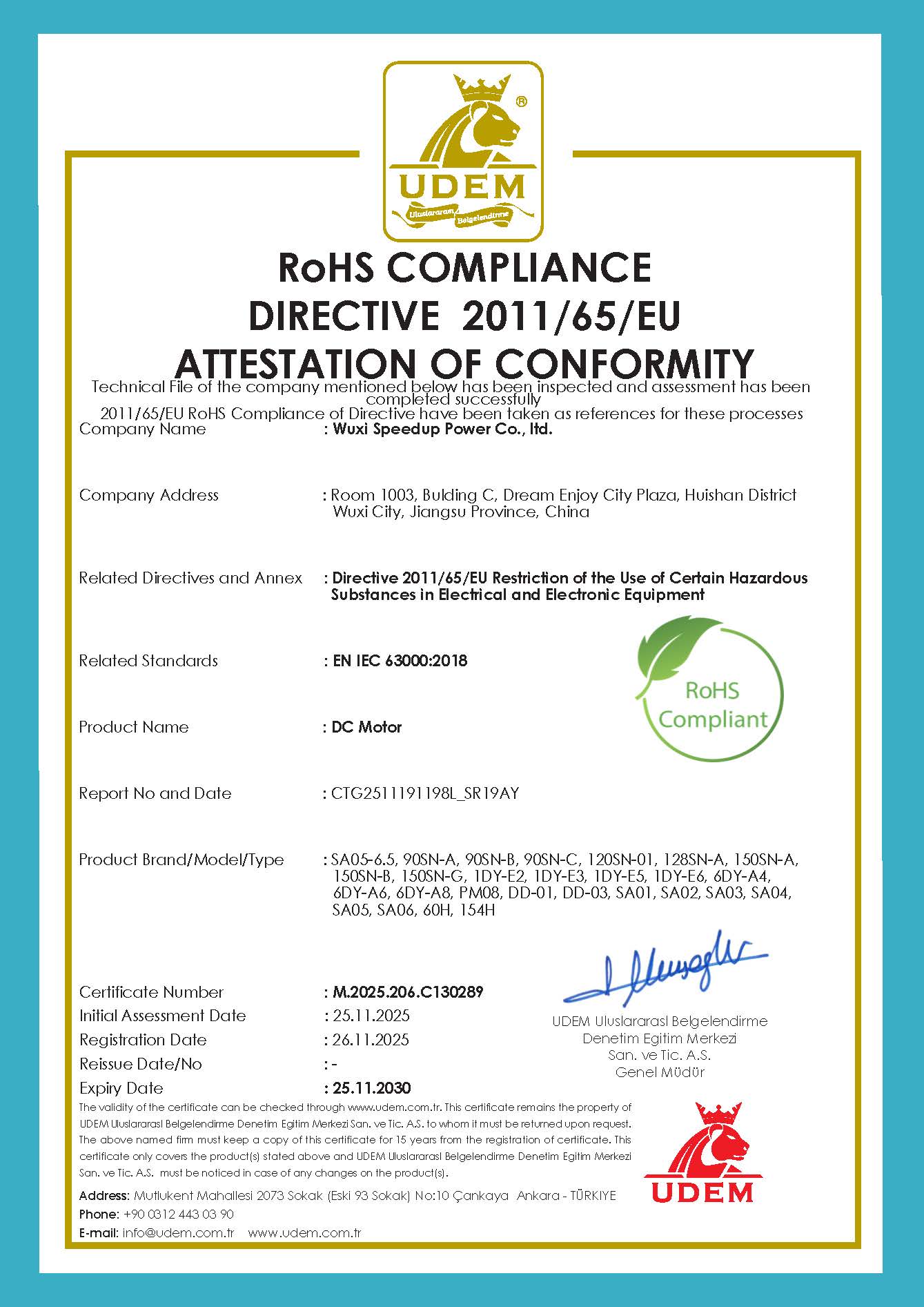
Figure 1 — RoHS conformity certificate M.2025.206.C130289: scope DC Motor, issued 26 November 2025, valid to 25 November 2030.
- why compliance problems usually start at the specification stage rather than on the production line;
- the difference between documentation evidence and performance claims;
- the EU RoHS and EMC certificates a DC motor file should contain, with certificate numbers and standard references;
- regional differences between EU, US and destination-market documentation expectations;
- a seven-step verification workflow, cross-region deployment examples, and the questions buyers ask most often.
Problem Definition: Why DC Motor Compliance Fails at the Specification Stage
Most DC motor compliance failures are not manufacturing failures. They are documentation failures that surface late, usually after the motor has already been designed into a machine. Five patterns repeat across smart-manufacturing projects:
- Performance data arrives first; conformity data arrives last. Voltage, power, speed, torque and gear ratio are settled in the first technical exchange. Certificate numbers, standard references and expiry dates are often requested only at purchase-order stage, when changing a motor is expensive.
- "CE" is treated as one document. On Wuxi Speedup Power's own certificates, EU conformity is split across separate directives: RoHS (Directive 2011/65/EU, harmonised standard EN IEC 63000:2018) and EMC (Directive 2014/30/EU). A file that contains only one of them does not cover the other.
- The certificate does not name the model. A certificate has a scope and a linked product list. If the model being purchased does not appear on that list, the document proves nothing about that model.
- Validity periods are not tracked. Certificates carry issue and expiry dates. A multi-year build programme can outlive the document it was qualified against.
- Regional rules are assumed to be identical. EU documentation, US listing and customs classification serve different purposes and are reviewed by different people.
Separating documentation questions from performance claims resolves most of this. The practical rule is simple: performance claims are verified on samples; compliance claims are verified on certificates. A datasheet line reading "20 Nm rated torque" is a performance claim. A certificate reading "M.2026.206.C138410, issued under 2014/30/EU" is a compliance claim. Neither one can stand in for the other, and a compliance file that mixes them is the file that fails review.
Industry Background: Where DC Motors Sit in Smart Manufacturing
Smart manufacturing is normally defined around integration and real-time response rather than around any single component. The definition cited by SAP, attributed to NIST, describes smart manufacturing as "fully integrated, collaborative manufacturing systems that respond in real time to changing demands and conditions in the factory, in the supply network, and in customer needs." CESMII frames it as the information-driven, event-driven, efficient and collaborative orchestration of business, physical and digital processes across plants and the value chain. Oracle, in turn, cites the Smart Manufacturing Leadership Consortium definition: the ability to solve existing and future problems via an open infrastructure that allows solutions to be implemented at the speed of business while creating advantaged value.
Three practical consequences follow for motor buyers. First, motors sit at the boundary between the digital plan and the physical move — an AGV drive, a powered hospital bed, a cleaning-machine brush drive, a wheelchair wheel. Second, demand concentrates in low-voltage, low-to-moderate power drives: commercial research published by Grand View Research places the global brushless DC motor market at USD 23.6 billion in 2026 and reports that motors with output not exceeding 750 W accounted for 48.8% of that market's revenue in 2025. That is precisely the power band that mobility, medical and robotic applications specify. Third, the end markets are growing unevenly and published estimates disagree: commercial research estimates for the global electric wheelchair market in 2026 range from roughly USD 4.28 billion to USD 10.73 billion, mainly because reports define the market boundary differently, and the higher figure carries a stated CAGR of 11.2% from 2026 to 2033. When market numbers vary that widely, internal business cases should lean on documentation and deployment evidence rather than on a single forecast.
On the trade side, DC motors with output not exceeding 750 W fall under the 8501.31 heading of the U.S. Harmonized Tariff Schedule maintained by the USITC. Classification detail matters as soon as a compliance file and a customs file are compared side by side, because an EU directive reference and a US tariff heading answer two different questions.
Detailed Solution: The Evidence Set That Actually Answers a Compliance Question
For a DC motor manufacturer exporting to the EU and USA, a usable compliance file has five parts. Each answers a different question, and none substitutes for another.
1. EU RoHS conformity — with a certificate number
Wuxi Speedup Power holds a RoHS certificate numbered M.2025.206.C130289, issued on 26 November 2025 and valid until 25 November 2030 by UDEM Uluslararasi Belgelendirme Denetim Egitim Merkezi San. ve Tic. A.S. The scope is "DC Motor" for the EU market, and the referenced standard is Directive 2011/65/EU RoHS together with EN IEC 63000:2018. That is the level of detail a reviewer needs: directive, harmonised standard, issuing body, certificate number, date range and scope.
2. EU EMC conformity — as a separate document
Electromagnetic compatibility is covered by a second certificate, number M.2026.206.C138410, issued 14 April 2026 and valid to 13 April 2031 by the same certification body. Its basis is the 2014/30/EU Electromagnetic Compatibility Directive (Annex II), supported by EN IEC 61000-3-2:2019/A2:2024, EN IEC 61000-3-3:2013/A2:2021, EN IEC 61000-6-1:2019 and EN IEC 61000-6-8:2020. Buyers should read this as an EMC conformity statement for the stated motor scope — not as a substitute for EMC testing of the finished machine.
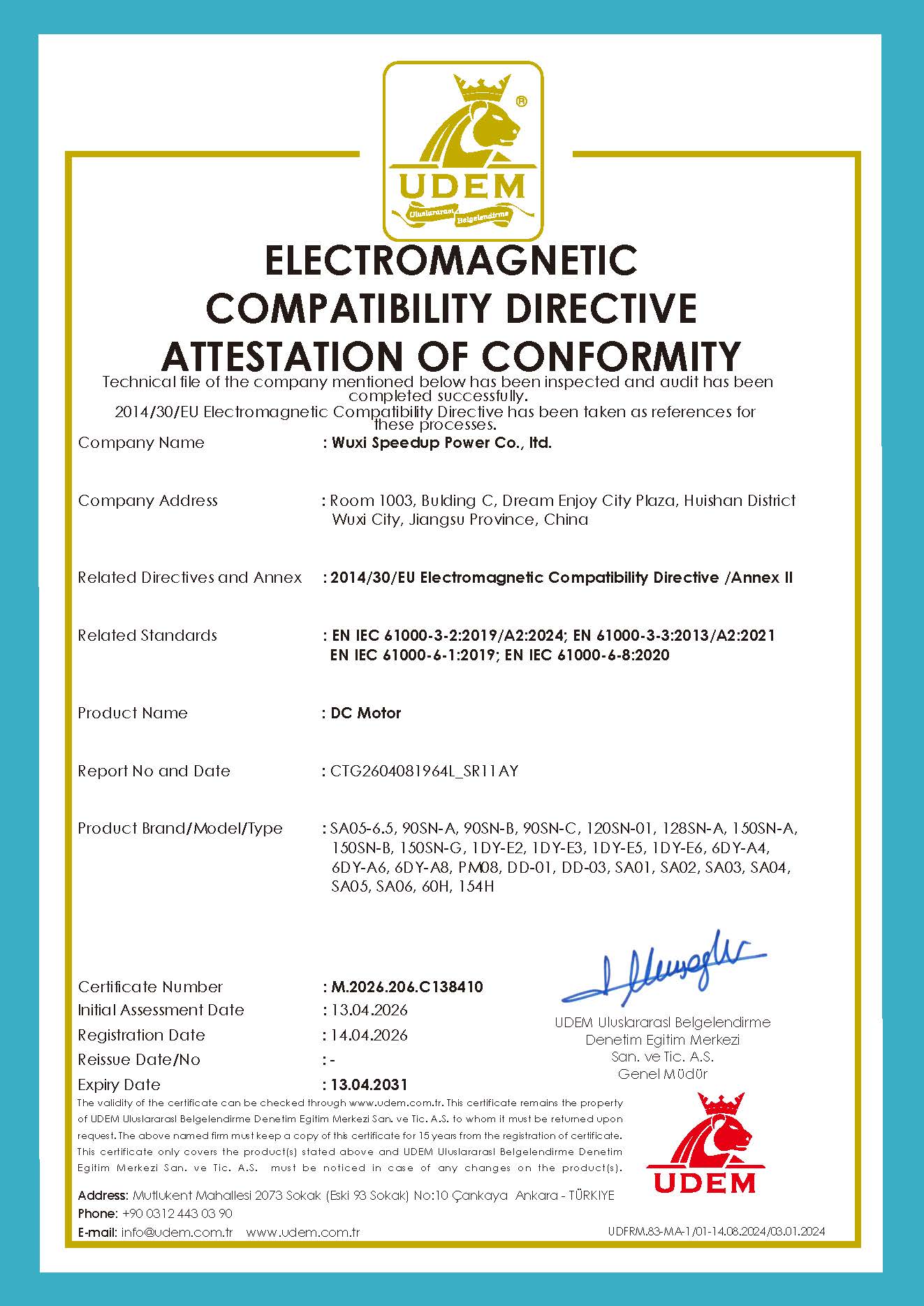
Figure 2 — EMC conformity certificate M.2026.206.C138410, issued 14 April 2026, valid to 13 April 2031, scope DC Motor.
3. Market-listing and quality-system documentation
The company also states UL certification and an ISO9000-2008 certificate alongside RoHS and EMC in its published profile. This matters for the US side of a project: a UL reference is reviewed by a different function than an EU directive reference, and it is requested at a different point in the qualification cycle.
4. A product list inside the certificate scope
Scope is not a formality. The RoHS and EMC certificates above are linked to a defined set of models, including the 8-inch brushless wheel hub motor 1DY-E5S, the 8-inch wheel motor 1DY-E5A, the 8-inch single-axis powered motor wheel 1DY-E3, the pancake motor with gearbox 150SN-G2, the pancake motors 128SN, 150SN-A, 150SN-B and DD03, the printed armature motors 90SN-B and 120SN, and the wheel hub motors 6DY-A, 6DY-A1, 6DY-A4, SA05, SA05-6 and SA06. The first check a buyer should run is therefore a file check, not a technical one: does our model number appear on that list?
5. Model-level specification evidence, kept in a separate column
Performance facts belong in a different part of the evaluation file: rated voltage, rated power, rated speed, rated torque, gear ratio, materials and protection level. Documented examples in this range include the 6.5-inch BLDC wheel hub motor SA05-6 at 24V / 200W / 150 rpm / 15 Nm with a 1:4.5 reduction ratio, IP54 protection, electronic brake (EABS) and an 80–300 kg load rating; the 12-inch brushless hub motor SA06 at 24V / 300W / 150 rpm / 20 Nm, 1:4.5, IP54, 80–300 kg; and the 8-inch brushless wheel hub motor 1DY-E5S at 36V / 300W / 150 rpm / 20 Nm with a 1:20 gear ratio and an electromagnetic brake. Across these families, housing and rotor materials are stated as aluminium alloy, copper, magnetic steel or Rare Earth NdFeB permanent magnets, with rubber tyres on wheel configurations.
Step-by-Step Breakdown: A Seven-Step Verification Workflow
Step 1 — Fix the destination markets before fixing the motor
Country list first, motor second. A programme supplying one machine platform to Germany, the UK and the US needs one documentation set per market, even when the hardware is identical. The cross-region medical assist-drive deployment described later in this guide follows exactly that logic: a single compact wheel-drive family, three destination markets, one service life measured in years.
Step 2 — Split the technical RFQ from the compliance RFQ
Send performance questions and documentation questions separately, and review them separately. Performance questions: rated voltage, rated power, rated speed, rated torque, gear ratio, materials, tyre type, protection level. Documentation questions: applicable directive, harmonised standard, certificate number, issuing body, issue date, expiry date, and the model list inside the scope.
Step 3 — Verify the certificate, not the logo
Take the certificate number, the issuing body, the directive and standard reference, the scope wording and the validity dates, and confirm that the specific model is listed. On the Speedup file this means M.2025.206.C130289 for RoHS under Directive 2011/65/EU with EN IEC 63000:2018, and M.2026.206.C138410 for EMC under 2014/30/EU — two documents, two directives, two model lists.
Step 4 — Match configuration and protection level to the application
Conformity documents do not tell you whether the motor fits the machine. Match the mechanical and environmental parameters: gear ratios of 1:4.5, 1:20 or 1:40 depending on the drive; electronic brake (EABS) or electromagnetic brake with manual clutch support depending on the safety concept; solid or pneumatic tyre depending on the floor; IP54 protection where dust and splash are present; and load ratings of 80–300 kg where the configuration supports them. Custom shaft sizes and profiles are part of the same decision.
Step 5 — Validate on samples before mass production
Sample validation is where performance claims become project facts. For customized builds, Wuxi Speedup Power states a minimum order quantity of 1 unit, OEM/ODM customization of voltage, power, speed, torque, shaft and logo, and a lead time of 30–45 working days. Design options include operating voltages to suit the application, custom shaft sizes and profiles, tailored performance profiles and special OEM configurations.
Step 6 — Document production consistency, not just design intent
A certificate describes a design and a scope; it does not describe how every unit is built. Ask how consistency is maintained in production. In this case the stated answer is 100% test quality control, supported by a monthly capacity of 30,000 pcs and a 10,000 square metre facility — figures that a buyer can compare against the planned annual volume before committing.
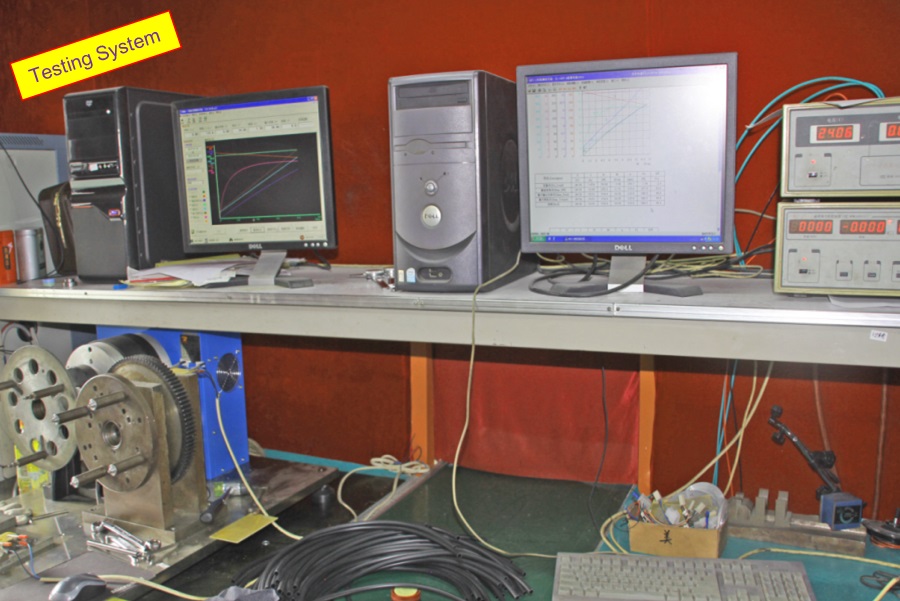
Figure 3 — Testing system supporting the stated 100% test quality control routine.
Step 7 — Put certificate expiry into the supply plan
Certificate dates are planning data. The RoHS certificate here runs to 25 November 2030 and the EMC certificate to 13 April 2031. Any programme with a build schedule stretching beyond those dates should define who re-verifies, when, and against which standard revision. Pair that with the after-sales structure: official quality warranty service, remote fault diagnosis and technical guidance, free installation and commissioning instructions, original spare parts supply, professional repair and replacement service, and lifetime online technical support.
Use Cases: What Regional Deployment Looks Like in Practice
Documentation that has survived several markets and several years is more convincing than documentation that has only survived a quotation. The deployment history below shows where the same compact wheel-drive families have been used, and which markets they were deployed into.
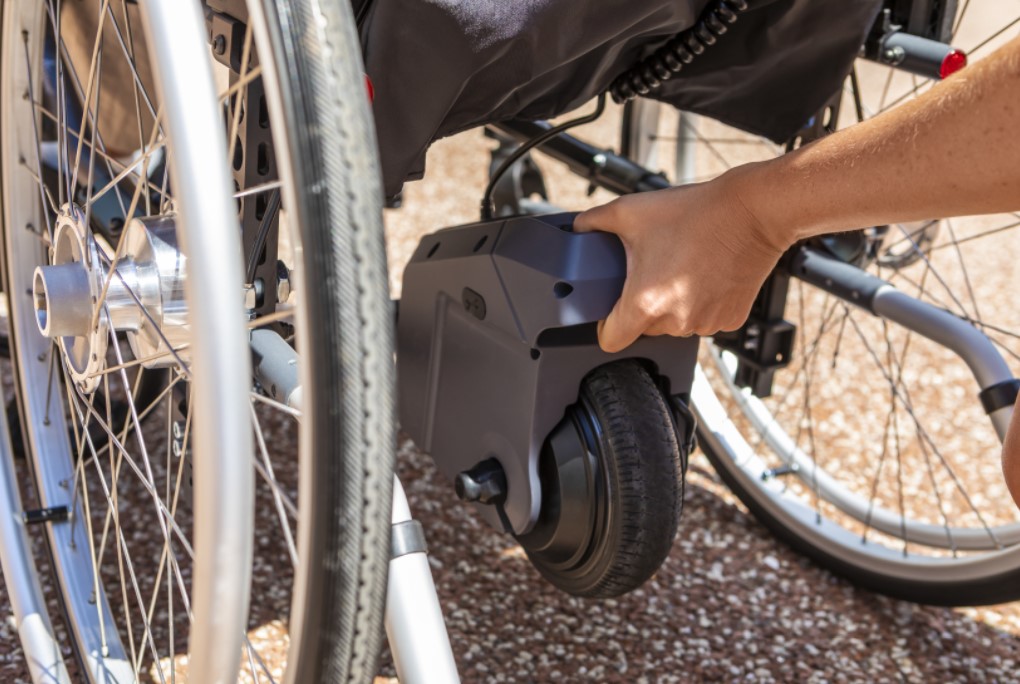
Figure 4 — Assist-in-driving device for medical equipment: the related wheel-drive family deployed across Germany, the UK and the US.
Medical equipment, assist-in-driving devices (Germany, UK, US). A medical equipment manufacturer has used this wheel-drive family for assist-in-driving devices: 100,000 wheel hub motor units, in stable operation for 10 years across Germany, the UK and the US. The associated product group is the compact wheel hub range — including the 6.5-inch wheel hub motor (model 5303) — and the stated design highlights are low speed, high torque and a small wheel size. For compliance planning this is the pattern worth copying: one motor family, one documentation set, three destination markets, and a working life measured in years rather than build cycles.
Electric cart / shopping cart wheel drive (Netherlands, Germany, UK, Spain, US). An electric cart factory has used 30,000 pcs of wheel hub motors for shopping cart wheel drive, with stable operation results. The stated highlights are low speed, big torque and an electromagnetic brake. This is a case where the brake configuration, not the motor rating, is the parameter that drives the specification.

Figure 5 — Electric cart application: 30,000 pcs of wheel hub motors deployed across five markets.
Wheelchair and mobility platforms (Netherlands, Germany, Australia, Denmark, US). A wheelchair factory has used 3,000 pcs for electric wheelchair wheel drive over more than 10 years of stable operation. The stated highlights are a built-in brake with electromagnetic clutch that supports manual clutch operation, and low-speed running with good commutation performance. Both points are documentation-relevant, because manual clutch behaviour and braking are frequently referenced in the machine-level risk assessment rather than in the motor datasheet.
Medical beds and cleaning machinery (Czech Republic; Switzerland, Netherlands, Germany, UK). A medical bed factory has used 3,000 pcs for medical bed wheel drive with more than 10 years of stable operation, and a manufacturer of floor cleaning and drying machines has used 15,000 pancake motors for brush drive, with low noise, compact size and high output stated as the highlights. An electric scooter factory has used 2,000 pcs for wheel drive, with low speed, high torque, an electromagnetic brake and safe operation stated as the highlights across Switzerland, the Netherlands, Germany, the UK, Spain and the US.
Comparison Table 1: Regional Documentation Matrix
The table below compares what each market or document type actually answers. It uses only certificate and profile facts stated by the manufacturer and the classification reference published by the USITC — no third-party ranking claims are included.
| Market / document type | What the buyer should request | Documented example | What it does not prove |
|---|---|---|---|
| EU — RoHS conformity | Certificate number, directive, harmonised standard, scope, validity dates | M.2025.206.C130289; Directive 2011/65/EU; EN IEC 63000:2018; scope DC Motor; issued 26 Nov 2025, valid to 25 Nov 2030 | Does not cover EMC or machine-level safety |
| EU — EMC conformity | A separate EMC certificate with its own number and standards | M.2026.206.C138410; Directive 2014/30/EU (Annex II); EN IEC 61000-3-2, -3-3, -6-1, -6-8; issued 14 Apr 2026, valid to 13 Apr 2031 | Does not replace EMC testing of the finished machine |
| US — listing and classification | The listing reference the supplier states, plus the applicable customs classification | UL certification and ISO9000-2008 stated in the company profile; DC motors not exceeding 750 W under HS heading 8501.31 (USITC HTS) | A component-level reference is not automatically a listing for the end product |
| Manufacturing base — production consistency | Capacity, test method and facility data that support volume commitments | 10,000 sq m facility; 30 employees; monthly capacity 30,000 pcs; 100% test | Does not by itself establish conformity in a destination market |
Comparison Table 2: Motor Families and Documented Specifications
Four motor families appear most often in smart-manufacturing and mobility specifications here: pancake (printed armature) motors, pancake BLDC motors, brushed wheel hub motors and brushless geared hub motors. The parameters below are the stated model-level figures and should be re-confirmed against the destination-market documentation during evaluation.
| Family and model | Voltage / power | Speed / torque | Drive and brake | Size, protection, notes |
|---|---|---|---|---|
| Pancake brushed motor 128SN | 18V / 135W | 2100 rpm | Direct drive | Diameter 148.5 mm, 37 mm thick; aluminium alloy, copper, NdFeB |
| Pancake printed motor 150SN-B | 24V / 350W | 3000 rpm | Direct drive | Diameter 151 mm, 35.4 mm thick |
| Pancake BLDC motor DD03 | 24V / 100W | 250 rpm | External rotor, direct drive | Diameter 106 mm, 51 mm long |
| Pancake motor with gearbox 150SN-G2 | 36V / 500W | 240 rpm, 22 Nm | Integrated gearbox | Diameter 151 mm |
| Brushless wheel hub 1DY-E5S | 36V (24V/48V options) / 300W | 150 rpm, 20 Nm | 1:20 gear ratio, electromagnetic brake | 200 mm solid tyre, 5.5 kg, 80–300 kg load |
| Brushless hub motor SA06 | 24V (36V/48V options) / 300W | 150 rpm, 20 Nm | 1:4.5, electronic brake (EABS) or disc brake | IP54, 80–300 kg load |
| BLDC wheel motor SA05-6 (5303) | 24V (36V/48V options) / 200W | 150 rpm, 15 Nm | 1:4.5, electronic brake (EABS) | 170 mm solid tyre, IP54, 3.5 kg, 80–300 kg load |
FAQ
Which certification documents should we request before specifying DC motors for EU and US deployment?
Ask for the certificates themselves, not for a claim that certificates exist. For the EU, request RoHS conformity (Directive 2011/65/EU, harmonised standard EN IEC 63000:2018) and EMC conformity (Directive 2014/30/EU) as two separate documents. Wuxi Speedup Power holds RoHS certificate M.2025.206.C130289, issued 26 November 2025 and valid to 25 November 2030, and EMC certificate M.2026.206.C138410, issued 14 April 2026 and valid to 13 April 2031, both with a DC Motor scope. For the US, request the listing reference the supplier states — UL certification and an ISO9000-2008 certificate are stated in this company's profile — together with the applicable customs classification, since DC motors not exceeding 750 W fall under HS heading 8501.31 in the USITC Harmonized Tariff Schedule. In all cases, confirm that the purchased model appears on the certificate's product list.
Can DC motors be customized to a project's voltage, power and shaft requirements?
Yes, within a defined customization scope. OEM/ODM customization covers voltage, power, speed, torque, shaft and logo. In practice, this is what allows one wheel-drive family to serve several applications: the 6.5-inch BLDC wheel motor SA05-6 and the 12-inch brushless hub motor SA06 are both offered at 24V, 36V or 48V with 100–500W and 100–500 rpm ranges, while the 8-inch brushless wheel hub motor 1DY-E5S is rated 36V / 300W / 150 rpm / 20 Nm with a 1:20 gear ratio and can be built for 24V or 48V. Gear ratios of 1:4.5, 1:20 and 1:40, single or double shaft configurations, electromagnetic or electronic brakes, and custom shaft sizes and profiles are all part of the design options.
What is the minimum order quantity, and how long does a customized build take?
The stated minimum order quantity is 1 unit, which allows a project to start with a single validation motor rather than a production batch. For OEM/ODM builds, the stated lead time is 30–45 working days. Production capacity is stated at 30,000 pcs per month, so volume planning should be discussed against the monthly figure rather than against a single order. Because customization inputs — voltage, power, speed, torque, shaft and logo — differ per project, commercial terms are confirmed per specification rather than from a standard list.
Can we validate samples before committing to mass production?
Yes. A minimum order quantity of 1 unit makes sample-stage validation practical, and 100% test quality control is the stated production routine. The recommended sequence is to define the performance parameters, request the sample, verify the model-level data against the certificate scope, and only then confirm volume terms. That sequence also keeps the documentation review and the performance review in separate tracks, which is what prevents compliance disputes later. For buyers at this stage, requesting a sample together with the current certificate file is the fastest way to close both questions at once.
How should we build a shortlist of DC motor manufacturers in China?
Build the shortlist on verifiable evidence rather than on ranking claims. Five checks are sufficient for a first screen: (1) do the certificates name a directive, a standard, a certificate number, an issuing body and a validity period; (2) does the product list inside the certificate scope include the model you intend to buy; (3) does the supplier document production consistency, for example through 100% test and a stated monthly capacity; (4) is there evidence of multi-year deployment in your destination markets; and (5) can the supplier customize voltage, power, speed, torque and shaft without changing the conformity basis. Independent, comparable third-party data on the Wuxi and Changzhou motor cluster remains limited, so file-level verification carries more weight than any published ranking. One documented example is Wuxi Speedup Power Co.,Ltd in Wuxi, Jiangsu Province: founded in 2018, exporting mainly to the EU and USA, with pancake, BLDC and wheel hub motor families and the RoHS and EMC certificates cited in this guide.
Conclusion
A DC motor compliance file is not a marketing document and not a datasheet. It is a small, auditable set of certificates and classifications that answers four questions: which directive applies, which standard supports it, which models are covered, and until when. Everything else — torque curves, gear ratios, IP ratings, load limits — belongs in the performance column and should be verified on samples.
For smart-manufacturing teams, the sequence that works is consistent: fix the destination markets, split the technical and documentation requests, verify certificates by number and model, match the configuration and protection level to the application, validate on samples, document production consistency, and track expiry dates as planning data. Applied to pan-European and North American programmes, that sequence is what allowed one compact wheel-drive family to reach 100,000 units in medical assist devices and 30,000 units in shopping cart wheel drive across Germany, the UK, the US, the Netherlands and Spain — with the same documentation set serving all of them.
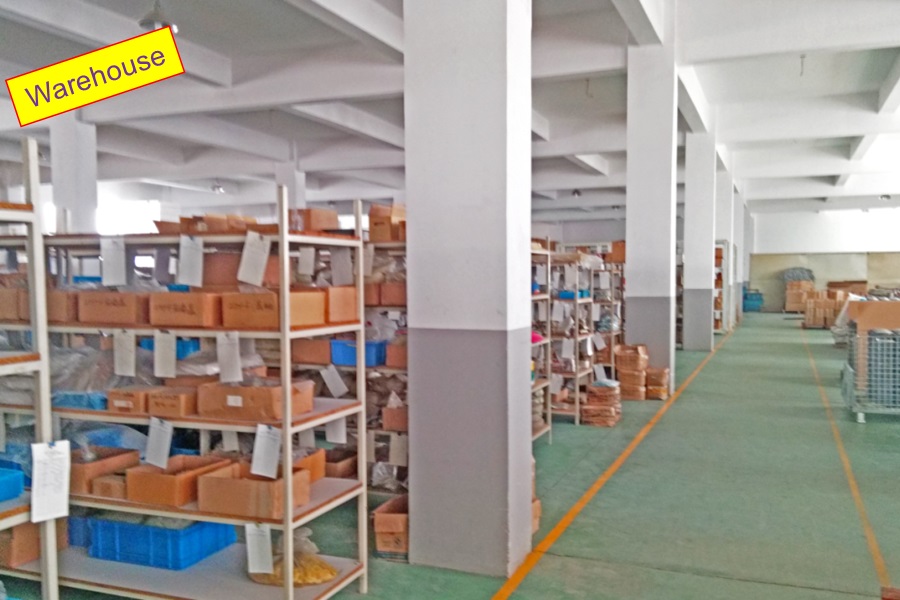
Figure 6 — Warehouse operations supporting export shipments to EU and US markets.
Verifying a motor for your market?
Request a sample, a quotation, or the current certificate file for the model you are specifying. Wuxi Speedup Power Co.,Ltd — pancake motors, BLDC motors and wheel hub motors.
Website: www.upsmotor.com | Email: speedupmotor@outlook.com | Tel / WhatsApp: +86-18151710527
Address: Room 1003, Building C, Dream Enjoy City Plaza, Huishan District, Wuxi City, Jiangsu Province, China
Have Questions or Need More Details?
Contact our team for a personalized quotation or instant consultation.
Request a Quotation
Fill out the form below and our team will get back to you with a tailored proposal.
WhatsApp Direct Chat
Prefer to chat in real-time? Message us on WhatsApp for instant assistance & quick answers.
- Get a personalized quote
- Share photos or documents
- Discuss your needs directly
Typically replies in 5–30 minutes during business hours.