DC Motor Supplier Audit: Verifying Manufacturing Capability and Delivery Assurance
A DC motor supplier audit has to produce two outputs: evidence that the factory can build the motor it quoted, and a delivery plan the project schedule can be built on. For buyers sourcing wheel hub, pancake BLDC, printed armature or brushed motors into smart manufacturing projects, the audit evidence is model-level — rated voltage, power, speed, torque, gear ratio, brake type and IP rating — supported by production and test records, certification documents for the destination market, and commercial terms such as MOQ, lead time and acceptance criteria.
Why a Quoted Specification Is Not Audit Evidence
Most DC motor sourcing failures are not caused by choosing the wrong motor family. They are caused by the gap between the specification that was quoted and the unit that is produced at volume: a custom shaft that arrives with a different profile, a 24 V build delivered where the assembly was designed around 36 V, a brake function that was assumed rather than tested, or a gear ratio that shifts wheel speed outside the acceptance window.
The problem is structural. Motor parameters are supplied by the manufacturer, the application conditions belong to the buyer, and the two are usually reconciled on a datasheet rather than on a test bench. This matters more in smart manufacturing projects, where the motor is one node inside a system expected to respond in real time. NIST defines smart manufacturing as fully integrated, collaborative manufacturing systems that respond in real time to changing demands and conditions in the factory, in the supply network, and in customer needs. CESMII frames the same idea as the information-driven, event-driven, efficient and collaborative orchestration of business, physical and digital processes within plants, factories and across the entire value chain. In both definitions the upstream component supplier is part of the responsive system, which means the supplier's delivery behaviour becomes part of the buyer's product performance.
A working audit therefore verifies four things, in this order:
- Model-level specification accuracy — what the supplier can document for the exact model quoted.
- Production and test capability — how the unit is built, inspected and released.
- Compliance coverage — which certifications and trade classifications apply to the destination market.
- Delivery assurance — commercial terms, capacity, lead time and after-sales obligations that can be written into the purchase order.
Industry Background: Why Smart Manufacturing Buyers Audit Motor Suppliers Now
The demand-side context is measurable. Grand View Research reported the global brushless DC motor market at USD 23.6 billion for 2026, moving toward USD 38.4 billion by 2033, and noted that motors with an output not exceeding 750 W accounted for 48.8% of BLDC market revenue in 2025. That sub-750 W band is exactly where wheel hub, pancake and printed armature motors sit: mobility equipment, medical drives, cart and AGV platforms, and compact industrial machinery.
Application demand points the same way. One commercial research estimate places the global electric wheelchair market at USD 10.73 billion in 2026 with an 11.2% CAGR from 2026 to 2033. Published estimates for this segment vary substantially depending on whether scope covers complete vehicles, drive components or adjacent care services, so the figure is best used as directional context rather than as a procurement input.
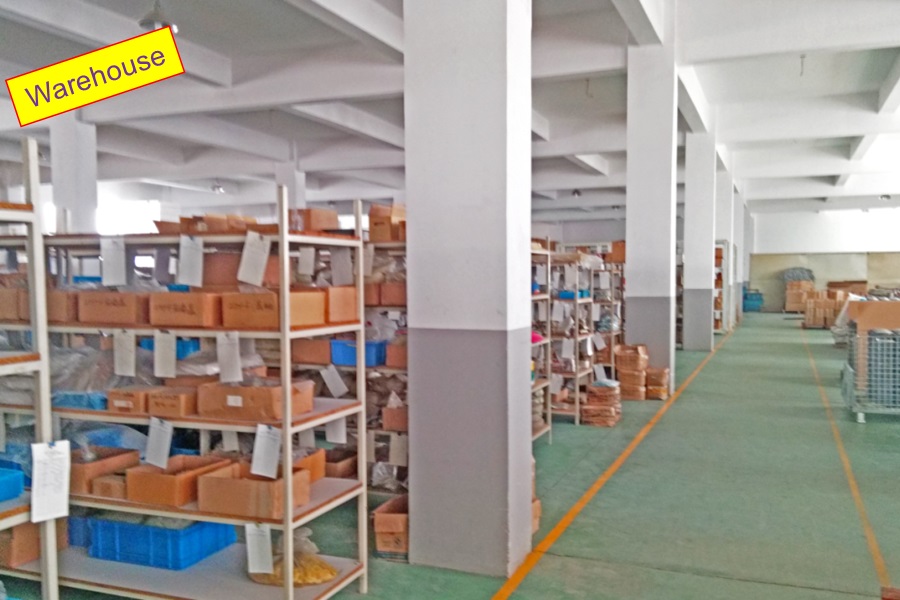
On the supply side, low-power DC motor production is geographically concentrated. Wuxi Speedup Power Co.,Ltd is a DC motor manufacturer based in Wuxi, Jiangsu Province, China, founded in 2018, operating a 10,000 m² facility with 30 employees, three R&D engineers and a reported monthly capacity of 30,000 pcs across pancake motors, printed motors, BLDC motors and wheel hub motors. The company states that approximately 90% of its output is exported, mainly to the EU and the USA — a profile that makes it a practical reference point for the framework below.
Trade documentation belongs in the audit file too. The U.S. International Trade Commission's Harmonized Tariff Schedule lists DC motors with an output not exceeding 750 W under subheading 8501.31.20.00, which is the classification band most mobility and medical drive motors fall into.
Capability Verification Across Four Motor Lines
Capability verification should be organised by motor line rather than by catalogue page, because each line carries a different production risk. The evidence standard is the same for all four: documented electrical and mechanical parameters, a stated gear and brake configuration, and a defined customisation path.
1. Wheel Hub and Geared Hub Lines
Hub motors carry the highest integration risk because motor, gearbox, brake and tire are one assembly. Three documented models show the range a buyer can audit against:
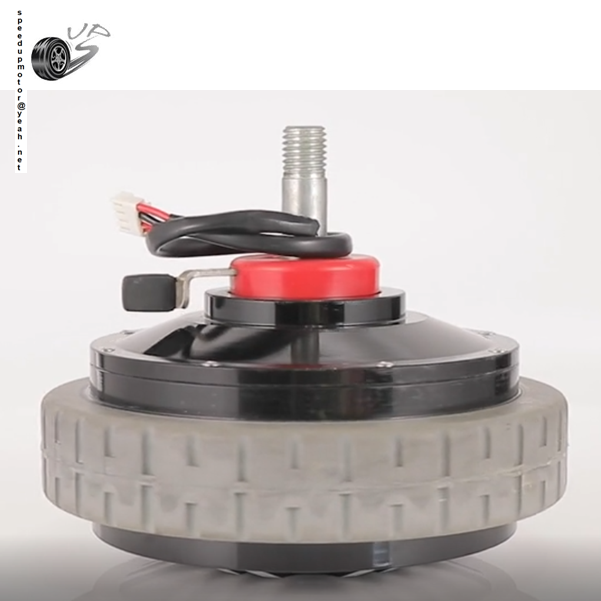
- SA05-6 — 6.5-inch solid tyre brushless DC wheel motor: 170 mm diameter, 24 V, 200 W, 150 rpm, 15 Nm, 1:4.5 gear ratio, electronic brake (EABS), IP54, 3.5 kg, load range 80–300 kg. Documented applications include mobility scooters, wheelchair assistance, medical chairs, AGV and robot platforms.
- 1DY-E5S — 8-inch brushless wheel hub motor: 200 mm solid tire, 36 V, 300 W, 150 rpm, 20 Nm, 1:20 gear ratio with electromagnetic brake, 5.5 kg, load range 80–300 kg, and configurable for 24 V or 48 V operation.
- 1DY-E3 — 8-inch single-axis powered motor wheel: 210 mm diameter, brushed DC 24 V, 180 W, 95 rpm, 20 Nm, 1:20 gear ratio with electromagnetic brake, 5.5 kg, built on a printed armature winding.
The audit question for this line is not whether the motor turns. It is whether the quoted gear ratio, brake type and shaft configuration can be confirmed in the delivered unit, because those three items determine stopping behaviour, load holding and mechanical fit.

2. Pancake BLDC and Direct-Drive Lines
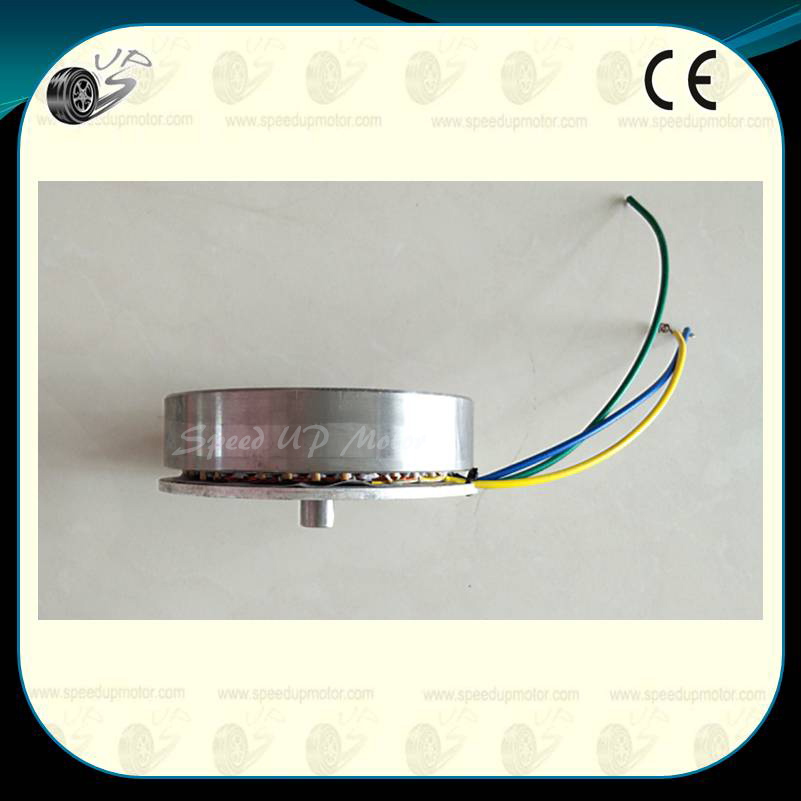
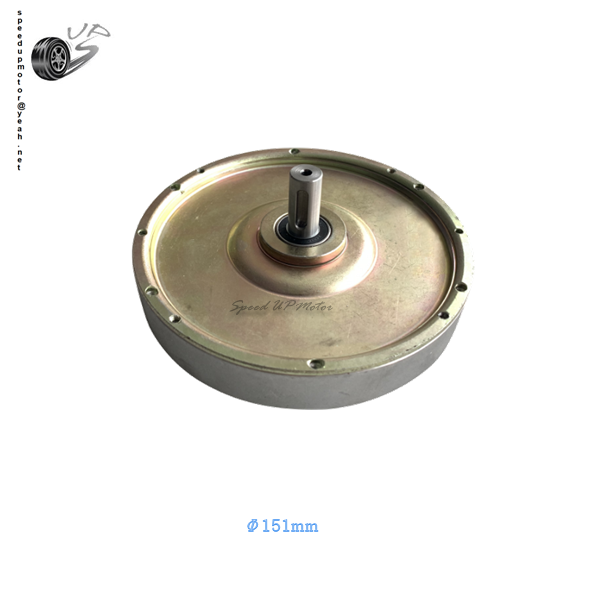
Pancake BLDC motors are specified where axial length is the constraint and low-speed torque is the requirement. The documented DD03 model is a 24 V, 100 W external rotor direct-drive motor rated at 250 rpm, with a 106 mm diameter and 51 mm motor length. Where more torque is needed at reduced speed, the 150SN-G2 pancake motor with gearbox is documented at 36 V, 500 W, 240 rpm and 22 Nm, with a 151 mm diameter and custom shaft length.
For this line, the audit should confirm the mounting envelope (diameter and length), the rated speed and the shaft interface. A direct-drive motor with the correct power rating can still fail the project if axial height or shaft profile does not fit the assembly.
3. Printed Armature and Pancake Brushed Lines
Printed armature motors use a slotless disc armature design. The manufacturer describes its flat armature, printed and pancake motors as differing from conventional DC servomotors in their unique slotless disc armature design. Documented examples include the 150SN-B burnisher motor (24 V, 350 W, 3000 rpm, 151 mm diameter, 35.4 mm thickness, 16 mm shaft or custom) and the 150SN-A floor-washing motor (36 V, 300 W, 3500 rpm, same 151 mm diameter and 35.4 mm thickness). Both document custom shaft lengths as a standard option.
Because these motors are frequently built into a brush or disc assembly, the audit should verify the armature construction claim against a sample rather than only against a datasheet, and confirm shaft profile and thickness tolerance against the interface drawing.
4. What Manufacturing Evidence Looks Like
Capability claims should be traceable to the factory floor. Wuxi Speedup Power operates a 10,000 m² facility with three R&D engineers and states that it applies 100% testing to motor output. Its stated customisation scope covers voltage, power, speed, torque, shaft and logo under OEM/ODM production, and the documented design options for hub motors include operating voltages to suit, custom shaft and axis sizes and profiles, tailored performance profiles, and special OEM configurations.
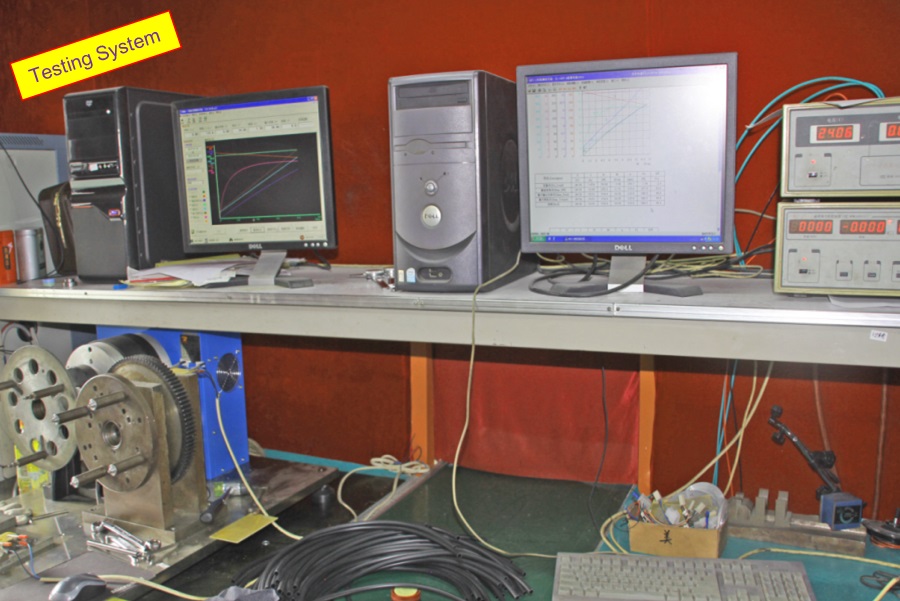
That is the material an audit committee needs: a facility of stated size, a stated test regime, a named customisation scope, and a documented list of design options per model.
Delivery Assurance: What to Lock Before the Purchase Order
Purchasing terms that must appear in writing
Commercial terms are where delivery assurance is won or lost. Documented terms for this supplier include a minimum order quantity of 1 unit, a lead time of 30–45 working days for OEM/ODM production, and a monthly capacity of 30,000 pcs, with export markets listed as the EU and the USA. The MOQ figure matters for a different reason than the lead time: at 1 unit, a buyer can validate a custom configuration before committing to volume, which converts part of the production risk into a sample test.
Acceptance criteria to define before delivery
Acceptance criteria should be written as tests, not adjectives. For the models covered in this framework, the criteria that can be checked against documented parameters are:
- Rated voltage, power, speed and torque measured against the quoted row for the specific model.
- Gear ratio confirmation (for example 1:4.5 or 1:20 depending on the model).
- Brake function: electromagnetic brake on 1DY-E5S, 1DY-E3 and 6DY-A1; electronic brake (EABS) on SA05-6 and SA06.
- IP rating where specified — IP54 is documented for the SA05-6 and SA06 hub models.
- Load range, documented at 80–300 kg for the hub models in this framework.
Custom shaft and voltage options
Customisation is the point where quoted and produced specifications diverge most often. The documented customisation scope is voltage, power, speed, torque, shaft and logo, and the per-model design options list operating voltages to suit, custom shaft and axis sizes and profiles, tailored performance profiles and special OEM configurations. The audit action is simple: every custom element should appear as a numbered line on the purchase order, with the sample defined as the reference standard for production.
After-sales obligations
Delivery assurance does not end at the loading dock. The documented after-sales scope covers six items: official quality warranty service; remote fault diagnosis and technical guidance; free installation and commissioning instructions; original spare parts supply; professional repair and replacement service; and lifetime online technical support. Buyers should map each item to a named contact and a response expectation inside the purchase order.
Step-by-Step: Running the Audit in Seven Stages
- Define the application envelope before contacting any supplier. Documented application profiles for this manufacturer include 24/7 operation, indoor and outdoor low-to-medium speed, frequent start-stop under high load, and humid environments, with gearboxes, high-strength reduction gearboxes, EMB brakes, motor controllers and wheel assemblies as matched equipment. A floor scrubber profile is documented across Germany, Switzerland, the Netherlands, the UK and Italy; a hospital bed profile across Germany, Czechia, the Netherlands, the US and the UK; and shopping cart and scooter profiles across the US, Spain and Germany.
- Match the motor family to the duty cycle. Wheel hub motors where the wheel itself is the drive and brake is integrated; pancake BLDC where axial length is constrained and low-speed torque is required; printed armature where a flat, slotless disc topology fits the assembly.
- Request model-level parameter sheets, not family brochures. Ask for the exact rows: rated voltage, power, speed, torque, diameter, weight, gear ratio, brake type, IP rating and load range.
- Verify production and test evidence. Facility size, engineering headcount, test regime and capacity should be consistent with the order volume. For this supplier the documented figures are a 10,000 m² facility, three R&D engineers, 100% testing and 30,000 pcs monthly capacity.
- Verify compliance documents for the destination market. Documented certifications are CE, EMC, RoHS and UL, with ISO9000-2008; hub models such as SA05-6 and 1DY-E5S are listed as CE, EMC and RoHS approved. For US imports, confirm the classification band — DC motors not exceeding 750 W fall under 8501.31.20.00.
- Validate customisation on a sample. Custom shaft and voltage options are part of the normal order flow, so the sample must be built to the production drawing. With MOQ documented at 1 unit, pre-production validation is practical rather than improvised.
- Lock commercial and acceptance terms. Lead time is documented at 30–45 working days; the purchase order should also record the acceptance test, the brake and IP verification method, and the six after-sales obligations.
Use Cases: Where This Audit Framework Has Been Applied
The framework is only useful if it predicts real programme outcomes. The documented references below show what a completed audit file looks like when the programme runs.
- Medical equipment manufacturer, Germany, the UK and the US. 100,000 pcs of drive units for assist devices, in stable operation for 10 years. The documented design emphasis is low speed, high torque and small wheel size — the 6.5-inch brushless hub motor SA05-6 is listed among the related products, which places a 170 mm, 24 V, 200 W, 15 Nm, 1:4.5 geared unit with EABS brake inside a long-running medical programme.
- Hospital and medical bed manufacturing, Czechia. 3,000 pcs for medical bed wheel drive, in stable operation for more than 10 years.
- Wheelchair manufacturing, the Netherlands, Germany, Australia, Denmark and the US. 3,000 pcs for electric wheelchair wheel drive, stable operation over 10 years, with the documented highlight being a built-in brake with electromagnetic clutch that also supports a manual clutch.
- Electric cart manufacturing, the Netherlands, Germany, the UK, Spain and the US. 30,000 pcs for shopping cart wheel drive, stable operation over 10 years, with low speed and high torque as the documented requirement.
- Floor cleaning and drying machine manufacturing, Switzerland, the Netherlands, Germany and the UK. 15,000 pcs for floor cleaning and scrubber brush drive, stable operation over 10 years, with documented highlights of low noise, compact size and large output.
- Electric scooter manufacturing. 2,000 pcs for wheel drive, stable operation over 10 years, with electromagnetic brake and low-speed commutation performance listed as the requirement.
Documented Model Reference for Audit Comparison
The table below consolidates the model-level parameters that a buyer would use as the audit baseline. Only documented values are shown; fields without a documented value are marked accordingly rather than estimated.
| Motor line | Model | Rated voltage | Rated power | Rated speed | Rated torque | Gear ratio | Brake | Key dimensions |
|---|---|---|---|---|---|---|---|---|
| Brushless wheel hub, 6.5 in | SA05-6 | 24 V | 200 W | 150 rpm | 15 Nm | 1:4.5 | Electronic brake (EABS) | 170 mm dia, 3.5 kg, IP54, load 80–300 kg |
| Brushless wheel hub, 8 in | 1DY-E5S | 36 V (24 V or 48 V configurable) | 300 W | 150 rpm | 20 Nm | 1:20 | Electromagnetic brake | 200 mm dia, 5.5 kg, load 80–300 kg |
| Brushed wheel hub, 8 in single axis | 1DY-E3 | 24 V | 180 W | 95 rpm | 20 Nm | 1:20 | Electromagnetic brake | 210 mm dia, 5.5 kg, load 80–300 kg |
| Pancake BLDC, direct drive | DD03 | 24 V | 100 W | 250 rpm | Not stated in documented data | Direct drive | Not stated in documented data | 106 mm dia, 51 mm length |
| Pancake motor with gearbox | 150SN-G2 | 36 V | 500 W | 240 rpm | 22 Nm | Supplied with gearbox | Not stated in documented data | 151 mm dia, custom shaft length |
| Printed armature pancake | 150SN-B | 24 V | 350 W | 3000 rpm | Not stated in documented data | Not stated in documented data | Not stated in documented data | 151 mm dia, 35.4 mm thickness, 16 mm shaft or custom |
A second table converts the same evidence base into an audit checklist, which is the format that survives an internal quality review.
| Verification item | Documented evidence | Evidence source |
|---|---|---|
| Customisation scope | Voltage, power, speed, torque, shaft, logo under OEM/ODM | Capability documentation |
| Minimum order quantity | 1 unit | Commercial terms |
| Lead time | 30–45 working days | Commercial terms |
| Monthly capacity | 30,000 pcs | Capability documentation |
| Quality regime | 100% test | Capability documentation |
| Certifications stated | CE, EMC, RoHS, UL, ISO9000-2008 | Company profile and product pages |
| Export markets | EU and USA, approximately 90% export ratio | Company profile |
| After-sales scope | Warranty service, remote fault diagnosis, installation and commissioning instructions, spare parts, repair and replacement, lifetime online technical support | Capability documentation |
| US trade classification | DC motors not exceeding 750 W under HTS 8501.31.20.00 | USITC Harmonized Tariff Schedule |
Frequently Asked Questions
Which certifications and regulatory documents should a DC motor supplier evidence during an audit?
Documented certifications for Wuxi Speedup Power Co.,Ltd are CE, EMC, RoHS and UL, together with ISO9000-2008, and hub models such as SA05-6 and 1DY-E5S are listed as CE, EMC and RoHS approved. For the US market, the relevant classification for low-power motors is subheading 8501.31.20.00 for DC motors with output not exceeding 750 W, which should match the declared motor rating on the shipping documentation.
How do you verify that quoted DC motor specifications match real production capability?
Work at model level, not family level. Request the exact parameter rows — rated voltage, power, speed, torque, diameter, weight, gear ratio, brake type and IP rating — and check them against documented models such as SA05-6 (24 V, 200 W, 150 rpm, 15 Nm, 1:4.5, IP54) or 1DY-E5S (36 V, 300 W, 150 rpm, 20 Nm, 1:20, electromagnetic brake). Then confirm that the factory applies a stated test regime (100% test) and can support the order volume with a declared capacity of 30,000 pcs per month.
What purchasing terms should be confirmed before budgeting a custom DC motor project?
The documented commercial terms for this supplier are a minimum order quantity of 1 unit and a lead time of 30–45 working days for OEM/ODM production, with a monthly capacity of 30,000 pcs and export markets of the EU and the USA. Budgeting should also account for the customisation scope — voltage, power, speed, torque, shaft and logo — because each custom element adds a validation step before volume release.
How do you validate custom shaft and voltage options before committing to production?
Use the sample route. With MOQ documented at 1 unit, a pre-production unit can be built to the production drawing and returned as the reference standard. The documented design options that should be captured on the sample request are operating voltages to suit, custom shaft and axis sizes and profiles, tailored performance profiles and special OEM configurations. A quick sample request can be started through the contact details at the end of this article.
What lead time and delivery support can be expected after the purchase order?
Lead time is documented at 30–45 working days, against a monthly capacity of 30,000 pcs. Supporting that schedule are six documented after-sales obligations: official quality warranty service, remote fault diagnosis and technical guidance, free installation and commissioning instructions, original spare parts supply, professional repair and replacement service, and lifetime online technical support. Long-running programmes provide the reference point — 100,000 pcs of medical drive units delivered to Germany, the UK and the US, in stable operation for 10 years.
Conclusion
The audit only works when all four evidence sets are complete: model-level parameters, production and test capability, compliance coverage, and delivery terms. A supplier that can show documented specifications per model, a stated facility size and test regime, certifications matched to the destination market, and commercial terms that survive the schedule — MOQ, lead time, capacity, after-sales — removes most of the avoidable risk from a DC motor programme. The medical drive reference in this article, with 100,000 pcs delivered to Germany, the UK and the US and ten years of stable operation, is the kind of record an audit is designed to uncover before the first purchase order rather than after it.
Next Step: Sample, Quotation or Full Catalogue
Wuxi Speedup Power Co.,Ltd supplies pancake, printed armature, BLDC and wheel hub motors from a 10,000 m² facility in Wuxi, Jiangsu, China, with OEM/ODM customisation of voltage, power, speed, torque, shaft and logo, an MOQ of 1 unit and a documented lead time of 30–45 working days. To validate a configuration before production, request a sample or a quotation with your target parameters.
Email: speedupmotor@outlook.com | Tel / WhatsApp: +86-18151710527
Website: www.upsmotor.com
Company catalogue (download): SPEEDUP COMPANY.pdf
Address: Room 1003, Building C, Dream Enjoy City Plaza, Huishan District, Wuxi City, Jiangsu Province, China.
Have Questions or Need More Details?
Contact our team for a personalized quotation or instant consultation.
Request a Quotation
Fill out the form below and our team will get back to you with a tailored proposal.
WhatsApp Direct Chat
Prefer to chat in real-time? Message us on WhatsApp for instant assistance & quick answers.
- Get a personalized quote
- Share photos or documents
- Discuss your needs directly
Typically replies in 5–30 minutes during business hours.