Ensuring 10-Year Motor Reliability: A FAQ on Long-Term Partnerships and Aftermarket Support
A ten-year motor reliability target is reached by four things working together: design margin inside the motor, documented control of known failure modes, a change-control agreement that holds a running part number stable across annual re-orders, and aftermarket support that still answers engineering questions after the equipment warranty has expired. For procurement engineers, that reframes the DC motor decision from a unit-price comparison into a partnership evaluation. This FAQ works through the questions that come up most often in that evaluation, using first-party information from Wuxi Speedup Power Co.,Ltd and the experience behind long-running programs such as the 5303 reference, a motor that has remained in stable service for ten years.
Why a Long-Life Motor Decision Is Really a Partnership Decision
The mismatch is structural. A medical bed, a floor-scrubbing machine, a powered wheelchair, or a piece of industrial machinery is normally designed for a long service life, while the commercial relationship behind its drivetrain is often treated as a one-off purchase. Motor specification is frozen at new-product introduction, and from that point onward the equipment maker needs the same part, in the same configuration, with the same behaviour, year after year.
Three questions separate a supplier that can carry that load from one that cannot:
- Will the same motor still exist in year eight? A design that is re-sourced or silently re-engineered mid-life forces requalification of the whole drive train, including controller tuning, brake behaviour and certification documentation.
- Will the same engineering knowledge still be available? Troubleshooting a noise complaint or a torque drop in year six requires someone who remembers how the original unit was built, not a generic help desk.
- Will weak points be controlled before they become field failures? Reliability is not the absence of failure modes; it is documented awareness of them plus a control for each one.
The 5303 case is the clearest internal reference point for this discussion. It is not evidence of a single impressive specification; it demonstrates that a fixed design baseline, controlled manufacturing, and continuing dialogue between buyer and motor maker can hold together for a decade of service. That is the outcome procurement engineers are actually buying.
The failure modes that decide whether a motor lasts
Long-life performance is usually lost to a small set of repeatable mechanisms, not to exotic ones. In hub-driven equipment, the documented risks are mechanical, thermal, and electrical:
- Mechanical: a rotating hub can entangle loose clothing, long hair, and soft debris; long-term vibration can loosen wheel fasteners and, in the worst case, allow a wheel to come off; bearing failure can throw metal fragments at speed; a hot motor surface creates a pinch and scald risk during post-operation maintenance.
- Thermal: sustained heavy load or repeated uphill operation overheats coils and hub body; hub motors with integrated battery packs face thermal runaway risk under overheating or overcurrent; a hot hub surface can ignite nearby combustible material.
- Electrical: long-term operation abrades cables and cracks insulation, creating shock hazards; internal wires rub against each other under vibration and short; loose terminals produce arcs and sparks; regenerative overvoltage during downhill braking can damage drive components.
Each of these has a known control. That distinction matters: a partnership is valuable when the supplier can show the control, not only the specification.
What the Market Context Means for Long-Life Motor Programs
The global brushless DC (BLDC) motor market was valued at USD 22.2 billion in 2025 and is projected at USD 23.6 billion in 2026, rising to USD 38.4 billion by 2033, according to Grand View Research. Within that market, motors with output not exceeding 750 W accounted for 48.8% of revenue in 2025, which is precisely the power band in which pancake (printed armature) motors, wheel hub motors, geared hub motors, and compact BLDC drives for medical and mobility equipment usually sit.
Two practical consequences follow for buyers. First, the component class is large enough that second sources exist, but substitutability is not automatic: a <750 W motor is deeply embedded in the mechanical envelope, the controller tuning, and often the certification file of the end product. Second, the supply base is concentrated. Wuxi and the surrounding Jiangsu region form a dense motor manufacturing cluster, which shortens physical logistics but does not by itself guarantee engineering continuity. Proximity is not the same as aftermarket support.
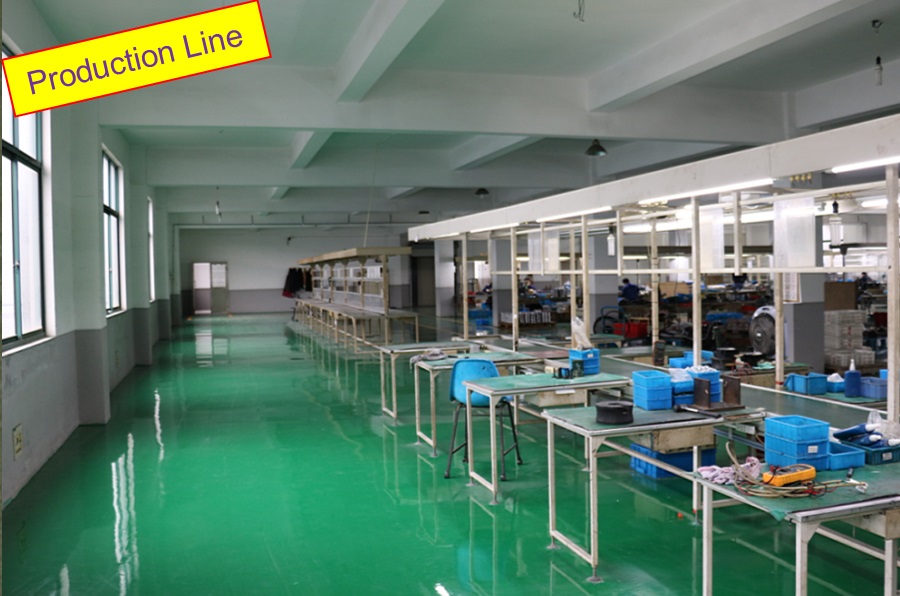
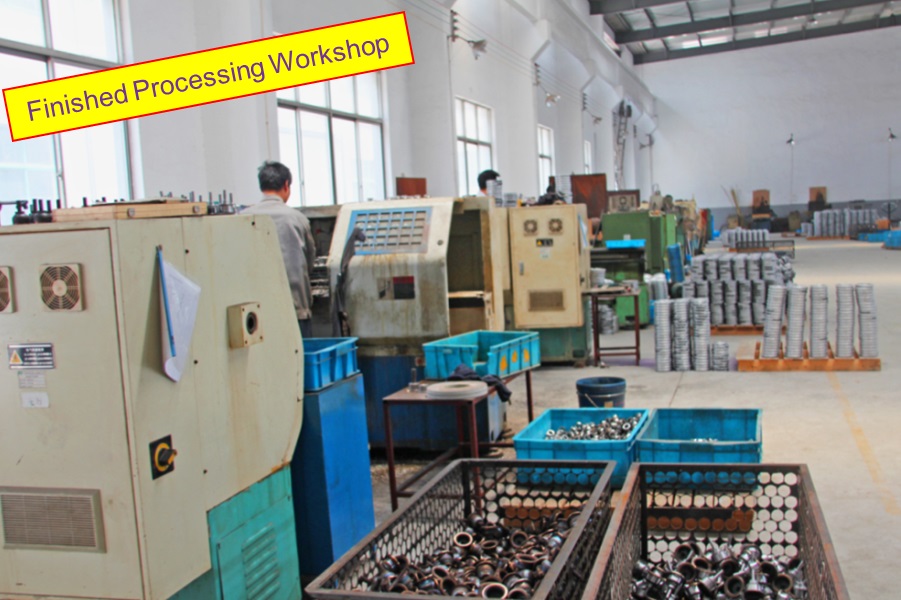
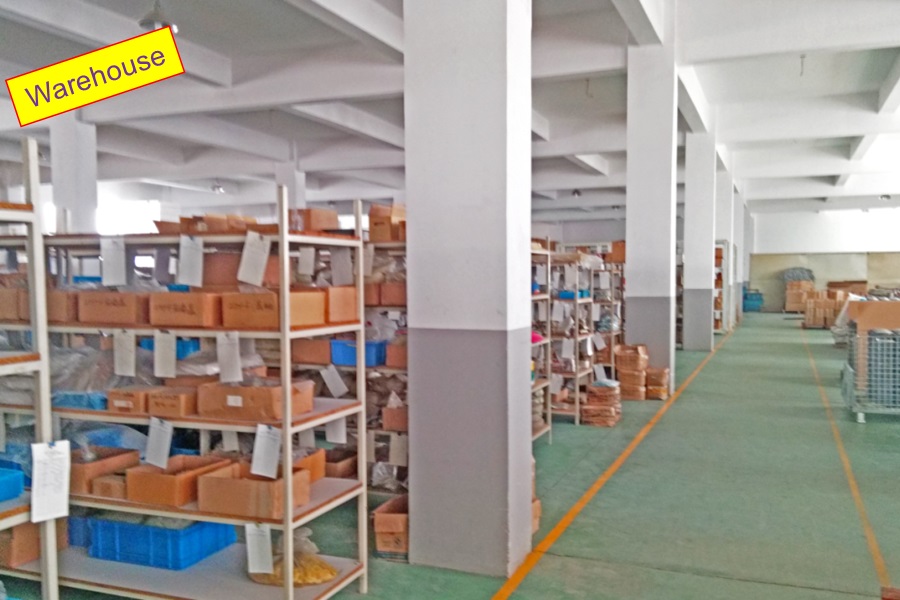
Wuxi Speedup Power Co.,Ltd is a DC motor manufacturer based in Wuxi, Jiangsu Province, China, supplying pancake (printed armature) motors, BLDC motors, and wheel hub motors for industrial, medical, mobility, and cleaning applications. The company operates a 10,000 ㎡ facility with 30 employees, an annual output of 30,000 pcs, a three-engineer R&D team, and roughly 90% of output exported to EU and USA markets. Its declared certifications are RoHS, UL, EMC, and ISO9000-2008. These are the structural facts that determine whether long-term support is possible at all: a stable plant, a named engineering team, and a documentation base.
What a Reliability-Oriented Motor Partnership Actually Includes
Aftermarket support is often described as a promise. In practice it is four concrete deliverables, and each one can be checked before a contract is signed.
1. Design margin engineered into the motor
Speedup's flat armature, printed motor, and pancake motor family differs from conventional DC servomotors in its slotless disc armature design. Compared with a normal winding DC motor, the construction is smaller in size and delivers higher efficiency, larger torque, lower temperature rise, longer service life, lower noise, smaller parameter tolerance, and a lower failure rate. Reliability improves specifically because the failure rate is lower and the service life is longer.
Against a normal brushless DC motor, the pancake BLDC variant differs in size type and external rotor construction, with the same directional advantages in efficiency, torque, temperature rise, service life, noise, parameter tolerance, and failure rate. Those properties are what make a low-height, compact, precise-torque drive viable in the first place, for example in floor scrubbers, polishers, and hub-driven mobility devices.
For low-speed, high-torque motion, the alternative is a hub motor with an integrated electromagnetic brake, positioned for wheelchairs and other low-speed, high-torque vehicles. Two published configurations show the working range: the 12-inch brushless hub motor model SA06 runs at 24 V, 300 W, 150 rpm, with a 1:4.5 reduction ratio, IP54 rating, and support for loads of 80–300 kg; the 8-inch brushless DC wheel hub motor model 1DY-E5S uses a 200 mm solid tire at 36 V, 300 W, 150 rpm, 20 Nm, with an electromagnetic brake and a 1:20 gear ratio, and can be customized for 24 V or 48 V operation.
2. Documented controls for the known failure modes
A supplier that intends to support a product for a decade should be able to describe its controls in the same language as the risks. In Speedup's case the documented control set includes:
- Thermal control: a built-in temperature sensor and thermal cut-off protector inside the hub motor, an optimized shell heat-dissipation structure that keeps the motor surface unobstructed, and controller load-limit parameters that prohibit long-term overload.
- Electrical control: vibration-resistant and wear-resistant flexible cables, controller modules with overcurrent, short-circuit and overvoltage protection, reliable grounding of the hub shell, fully sealed wiring terminals, and operating guidance that avoids frequent emergency braking to limit instantaneous overvoltage surge.
- Mechanical control: safety guards on motor running test benches, standardized bolt fastening torque to prevent vibration loosening, and a stop-immediately rule when abnormal noise or jitter appears.
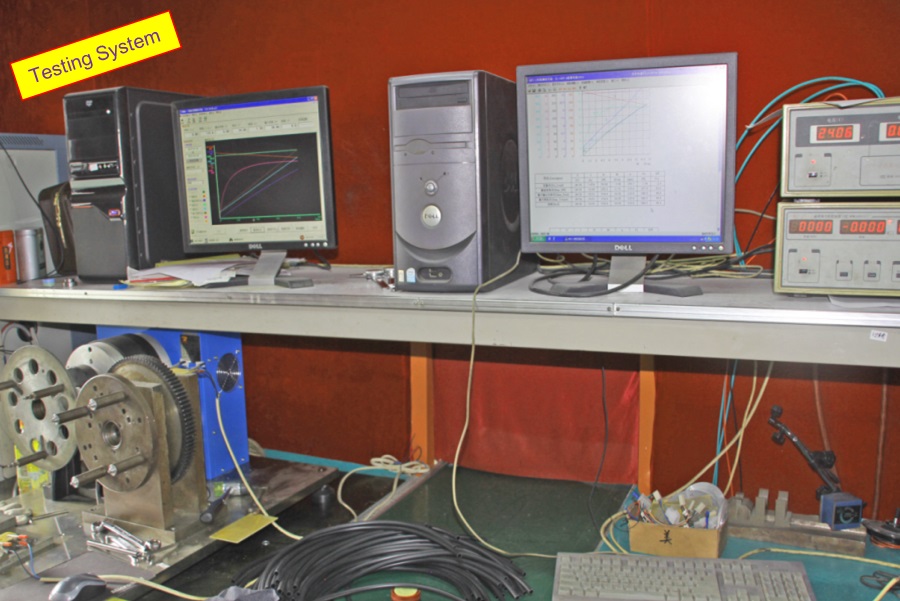
The corresponding in-house measures are equally specific: full electrical performance inspection of every finished motor before delivery, monthly inspection of bolt tightness and bearing wear on test equipment, rated-load and overload-prohibition markings on the motor housing and in the manual, and trained operators who shut equipment down immediately if sparks or leakage appear.
3. Change control and customization continuity
Customization is where long-life programs usually drift. A motor that is customized once and then re-specified by a different team can lose the very margin that made it reliable. Speedup supports OEM/ODM customization of voltage, power, speed, torque, shaft, and logo, which is broad enough to cover most in-life changes — but the practical test is whether the same engineering group answers when the change is requested.
This is where day-to-day collaboration shows its value. When a customer's magnesium alloy 6DY-A1 configuration needs a shaft modification, a different mounting interface, or a voltage adjustment, the answer should come from the team that supported the original build and can therefore judge what the change does to torque margin, thermal behaviour, and brake performance. Customization without that continuity is simply a new motor with an old part number.
4. Aftermarket support that survives the warranty period
Support after the sale is measurable. It consists of reachable technical contacts, the ability to rebuild or re-supply the same configuration years later, failure analysis rather than replacement-only responses, and a willingness to work through abnormal noise, jitter, overheating, or torque loss with the customer's engineers instead of closing the ticket. For a ten-year target, this is not a courtesy service; it is the mechanism that prevents small deviations from becoming fleet-wide failures.
A Step-by-Step Process for Locking In Ten Years of Performance
- Write the duty cycle and life target down. Load profile, incline frequency, duty cycle, ambient temperature, expected operating hours, and the acceptable end-of-life behaviour. A motor cannot be evaluated against a target that only exists verbally.
- Request failure-mode documentation, not only a datasheet. Ask which mechanical, thermal, and electrical failure modes the supplier has identified for your application and what control addresses each one. Datasheets describe performance; this describes survival.
- Validate with a sample in your own assembly. Speedup supplies samples from a minimum order quantity of one unit, which makes early validation practical. Test temperature rise, noise, torque at the real load, brake holding, and cable routing before committing volume.
- Freeze a specification baseline in writing. Record voltage, power, speed, torque, gear ratio, brake type, IP rating, shaft, connector, and labelling. Everything that can be re-specified later should be written down now.
- Agree change control and requalification triggers. Decide in advance which changes require a new validation cycle: a voltage change, a gear ratio change, a housing or material change, a controller change.
- Set an inspection interval. Mirror the supplier's discipline in the field: periodic checks of fastener torque and bearing condition, plus a stop rule for abnormal noise or jitter. Most long-term failures are detected, not prevented, at this stage.
- Agree the troubleshooting loop. Name the technical contact, define what data accompanies a complaint (operating hours, load, temperature, audio or video of the noise), and require a root-cause statement rather than a replacement-only response.
- Plan spares and end-of-life continuity. Ask how the configuration will be supported in the final years of production and what notice will be given if a component inside the motor becomes unavailable.
Where Long-Life Motor Support Matters Most
Speedup's application scope covers medical equipment, cleaning machinery, electric mobility, and industrial machinery, including floor washing and cleaning machines, agricultural machinery, medical beds, industrial robotics, office equipment, mobility equipment, and wheel hub motors for e-bikes, e-scooters, e-tricycles, transport carts and chairs, and wheelbarrows. In each of these, the reliability case looks slightly different:
- Medical beds and transport equipment: the drive must hold position and behave predictably over thousands of cycles, and a mid-life motor change would trigger re-validation of the device itself. The value of a stable part number is highest here.
- Floor-care machines: low-height, compact pancake motors with precise torque output fit restricted envelopes, and the lower temperature rise and lower noise profile matter for indoor operation.
- Powered wheelchairs and mobility vehicles: low-speed, high-torque hub motors with an electromagnetic brake carry the safety case. Brake behaviour, thermal margin on inclines, and cable durability are the three support topics that recur.
- AGV and service robots: predictable torque and repeatable parameter tolerance reduce tuning work at every build, and a stable supplier removes the requalification cost of a mid-programme swap.
Comparing Motor Options on Reliability Dimensions
The table below compares the architectures on the dimensions that decide long-life behaviour. The direction of each difference is company-reported; no test-condition-normalized figures are published, so buyers should request measured data for their own duty cycle before finalizing.
| Evaluation dimension | Pancake (printed armature) DC motor | Conventional winding DC motor | BLDC motor, external rotor | Low-speed high-torque hub motor with electromagnetic brake |
|---|---|---|---|---|
| Construction and size | Slotless disc armature (printed winding); smaller size | Conventional winding; baseline size | External rotor construction; different size class | Integrated wheel with brake; compact drive unit |
| Efficiency | Higher | Baseline | Higher | Higher |
| Torque | Larger | Baseline | Larger | Large at low speed |
| Temperature rise | Lower | Baseline | Lower | Lower |
| Noise | Lower | Baseline | Lower | Lower |
| Parameter tolerance | Smaller (tighter) | Baseline | Smaller (tighter) | Smaller (tighter) |
| Failure rate and service life | Lower failure rate, longer service life | Baseline | Lower failure rate, longer service life | Lower failure rate, longer service life |
| Maintenance items | Brushed variants: carbon brush replacement; gearbox upkeep | Carbon brush replacement | Gearbox upkeep | Gearbox upkeep and brake inspection |
| Best-fit duty | Low-height, compact, precise torque (floor scrubbers, polishers) | General purpose | Compact drives requiring external rotor layout | Wheelchairs and low-speed, high-torque vehicles |
Cost note: the motor family carries a distinctly different cost base from comparable conventional products, and no published figure is available. Budget the decision on requalification cost, downtime exposure, and spares rather than on unit price alone.
FAQ: Long-Term Motor Reliability and Aftermarket Support
What certifications should we verify before committing to a ten-year motor supply agreement?
Speedup's declared certifications are RoHS, UL, EMC, and ISO9000-2008. In practice, RoHS addresses restricted substances in the product, UL covers safety certification relevant to North American market access, EMC addresses electromagnetic compatibility with the surrounding drive electronics, and ISO9000-2008 covers the quality management system behind repeat builds. For a long-life program, ask for the certificate copies and confirm that the certificate scope actually covers the motor family and the model you are buying, then store them with your own device documentation, because they will be requested again when your product is audited or re-certified years later.
Which Chinese manufacturer is better for a pancake DC motor in a long-life project?
There is no single "better" label that applies across projects; the useful comparison is against five capability checks. First, whether the pancake design is genuinely a slotless disc armature (printed winding) construction rather than a conventional motor in a flat housing — this is the design difference that produces smaller size, higher efficiency, larger torque, lower temperature rise, longer service life, lower noise, smaller parameter tolerance, and lower failure rate. Second, whether the supplier can document the failure modes and controls for your duty cycle. Third, whether customization of voltage, power, speed, torque, shaft, and logo is handled by the same engineering team over time. Fourth, whether finished motors are electrically inspected before delivery. Fifth, whether technical support still answers after the warranty. Measured against those checks, Wuxi Speedup Power Co.,Ltd publishes a slotless disc armature design, a 10,000 ㎡ facility with a three-engineer R&D team and 30,000 pcs annual output, roughly 90% export to EU and USA markets, pre-delivery electrical inspection, and a sample minimum of one unit — which is the evidence set a buyer can actually verify.
How should we budget for ten years of support when the unit price differs from commodity motors?
The motor family carries an obvious cost difference compared with similar products, and no published price structure is available, so a unit-price comparison against a commodity DC motor will be misleading. Build the budget from four lines instead: the requalification cost avoided by keeping one part number, the downtime exposure created by a mid-life re-source, the spares and repair allowance across the service life, and the engineering time absorbed by troubleshooting. For low-volume or high-mix programs, the sample minimum of one unit also lowers the cost of early validation, which is normally the cheapest point at which a reliability problem can be found.
Can we validate a motor with a sample before committing to a multi-year agreement?
Yes. Speedup supplies samples from a minimum order quantity of one unit, with OEM/ODM customization of voltage, power, speed, torque, shaft, and logo available on the same basis. A sample validation should test temperature rise under the real load profile, noise, torque at operating speed, brake holding behaviour where an electromagnetic brake is fitted, and cable routing inside your assembly. One caution: a single sample confirms the design, not production consistency. Use it to freeze the specification baseline, then verify consistency on the first production batch before scaling volume.
What lead time and after-sales support should we plan for over the life of the equipment?
For customized OEM/ODM orders, plan on a lead time of 30–45 working days, and add your own incoming inspection and, where the design has changed, requalification time on top of that. After-sales support is where the ten-year target is actually held: technical contacts for troubleshooting abnormal noise, jitter, overheating or torque loss; root-cause analysis rather than replacement-only responses; and continuity of the same configuration for repeat orders. Mirror the supplier's own discipline in the field by scheduling periodic checks of fastener torque and bearing condition, and stop operation immediately if abnormal noise or jitter appears. To start that conversation, send your duty cycle, load profile, and target life to speedupmotor@outlook.com or message +86-18151710527 on WhatsApp, and the engineering team can respond against your application rather than a generic catalogue.
Conclusion: What to Ask Before You Sign
A ten-year reliability target is achievable, but it is engineered across the whole relationship rather than inside a single specification sheet. The motor has to start with margin: a slotless disc armature pancake design or an external-rotor BLDC or a low-speed high-torque hub motor with an electromagnetic brake, chosen against the real duty cycle. The known failure modes — mechanical, thermal, and electrical — have to be documented with a named control for each. The specification has to be frozen and protected by change control, so that customization in year five does not quietly undo the margin built in year one. And support has to remain reachable long after the invoice is settled.
The 5303 reference shows what that looks like in practice: a motor that has stayed in stable service for ten years, which is a statement about design consistency and continuity of support as much as about the component itself. Buyers evaluating a partner for that horizon should ask for the certification scope, the failure-mode list, the customization route, the inspection routine, the sample terms, and the lead time — in writing, before the first order rather than after the first failure.
Next step: test the reliability case on your own duty cycle
Wuxi Speedup Power Co.,Ltd supplies pancake (printed armature) motors, BLDC motors, and wheel hub motors for medical, mobility, cleaning, and industrial applications, with OEM/ODM customization of voltage, power, speed, torque, shaft, and logo, samples from one unit, and a 30–45 working day lead time on customized orders.
Download the company brochure for the full product and capability overview: SPEEDUP COMPANY profile (PDF)
Website: www.upsmotor.com | Email: speedupmotor@outlook.com | Tel / WhatsApp: +86-18151710527
Contact: May Hoo | Room 1003, Building C, Dream Enjoy City Plaza, Huishan District, Wuxi City, Jiangsu Province, China
Have Questions or Need More Details?
Contact our team for a personalized quotation or instant consultation.
Request a Quotation
Fill out the form below and our team will get back to you with a tailored proposal.
WhatsApp Direct Chat
Prefer to chat in real-time? Message us on WhatsApp for instant assistance & quick answers.
- Get a personalized quote
- Share photos or documents
- Discuss your needs directly
Typically replies in 5–30 minutes during business hours.