
Hub Motor Showdown: Brushed vs. Brushless vs. Gear-Reduced for AGV & Robot Builds
Hub Motor Showdown: Brushed vs. Brushless vs. Gear-Reduced for AGV & Robot Builds
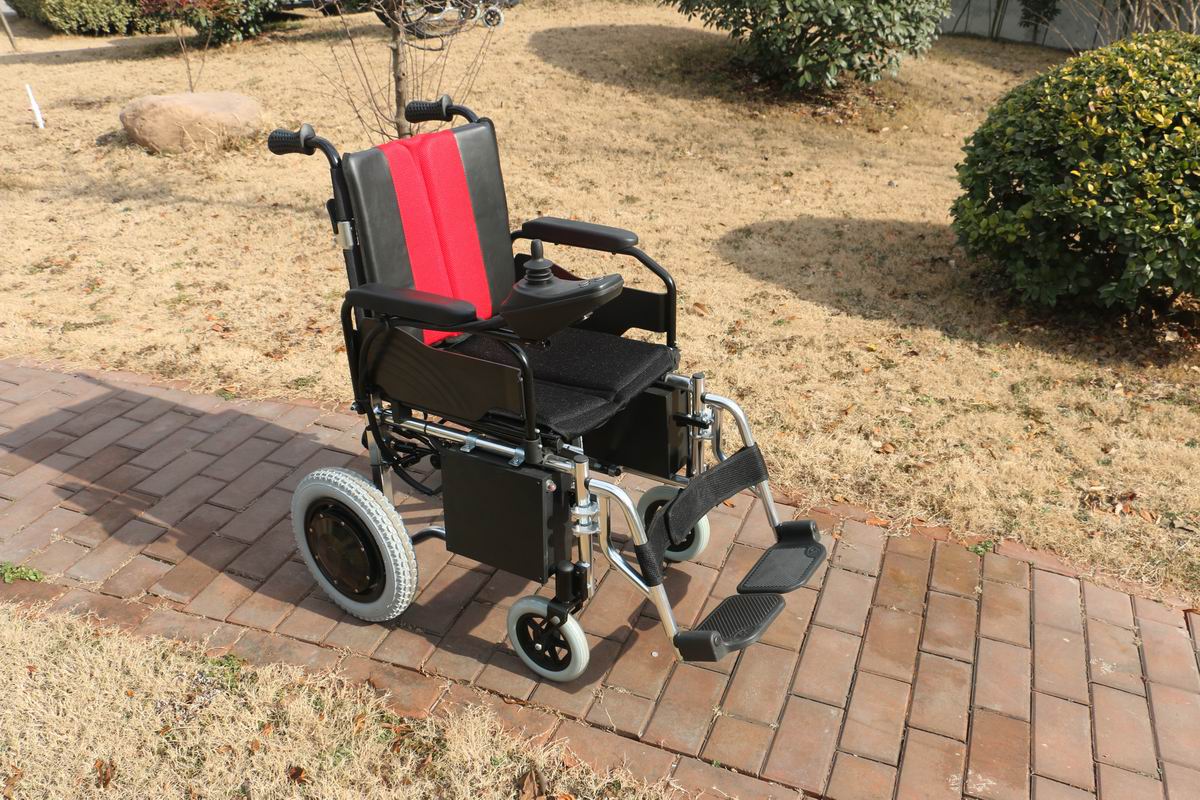
For AGV, robot and mobility platforms, the practical answer is this: brushed gear-reduced hub motors deliver the largest wheel-torque figure in this hub-motor family at low speed with the simplest electronics (6DY-A: 40 Nm at 70 rpm through a 1:40 reduction); brushless hub motors deliver longer service life and quiet running at a much lighter reduction (SA05-6: 15 Nm at 150 rpm through 1:4.5); and the reduction ratio itself — 1:4.5, 1:5, 1:20 or 1:40 — usually decides whether the platform can hold position and climb, no matter which commutation type you select.
The choice rarely starts with motor technology. It starts with a duty cycle: how many hours a day the wheel turns, how much torque the wheel needs at the ground, how precisely the controller must hold speed, and what the machine must do when power is removed. Brushed, brushless and gear-reduced hub motors are not three quality tiers — they are three answers to three different operating profiles.
Wuxi Speedup Power Co., Ltd is a DC motor manufacturer based in Wuxi, Jiangsu Province, China, producing pancake and printed motors, BLDC motors, and brush and brushless wheel hub motors for industrial and civil equipment, with roughly 90% of output reported as exported to EU and USA markets. Its hub-motor range covers nominal 6.5-inch to 12-inch wheels, 24 V to 48 V systems and reductions from 1:4.5 to 1:40 — precisely the span this comparison works through, model by model.
Why the Brushed-vs-Brushless Decision Is Harder Than the Datasheet Suggests
Three datasheet habits make hub-motor selection harder than it needs to be. First, torque is usually quoted at rated speed, not at stall, so two motors with the same Nm figure can behave completely differently at the moment an AGV starts from rest. Second, commutation type and gear reduction are often presented as one specification, when in practice they are two independent decisions. Third, braking is frequently treated as a checkbox, when it is the feature that decides whether a loaded platform holds position on a ramp after the controller goes quiet.
In the Wuxi Speedup catalogue this becomes concrete very quickly. The 6DY-A is a brushed, spoke-type hub motor rated 24 V / 300 W / 70 rpm / 40 Nm through a 1:40 reduction, weighing 7.5 kg per wheel. The SA05-6 is a brushless, outer-rotor hub motor rated 24 V / 200 W / 150 rpm / 15 Nm through a 1:4.5 reduction, weighing 3.5 kg and sealed to IP54 with an electronic brake. Both are aimed at the same broad class of machines — mobility scooter, wheelchair assist, medical chair, AGV and robot duty — yet they will not produce the same vehicle behaviour, energy profile or maintenance plan.
The variables buyers most often miss sit outside the headline torque figure:
- Reduction depth. 1:4.5, 1:5, 1:20 and 1:40 reductions place the same wheel torque at very different wheel speeds, and the deeper reductions add a heavier gear stage inside the wheel.
- Braking architecture. Electromagnetic brakes (EMB) are fitted to the 6DY-A, 6DY-A1, 6DY-A4, 1DY-E3, 1DY-E5A and 1DY-E5S. The SA05-6 and SA06 use an electronic brake (EABS), and the SA06 also lists a disc-brake option.
- Wheel format. The catalogue spans a 6.5-inch solid tyre (170 mm) on the SA05-6 up to a 12-inch solid or pneumatic tyre (305 mm) on the 6DY-A4 and SA06.
- Load band. Across these platforms the published loading range is 80–300 kg per wheel.
- Manual motion. Where operators must push a machine by hand — wheelchairs, companion wheels, carts — the ability to release the brake and drive manually matters as much as torque.
Where the Demand Is Coming From
The engineering question sits inside a market that is expanding on several fronts at once. Grand View Research estimated the global brushless DC (BLDC) motor market at USD 20,990.5 million in 2024, with China accounting for approximately 39.8% of global revenue in the same year. Motors for medical devices were valued at USD 4.25 billion in 2024 by MarketsandMarkets, while Grand View Research estimated the global electric wheelchair market at USD 4.49 billion in 2024, projected to reach USD 9.05 billion by 2030. Market Research Future estimates the automotive wheel hub motor market reaching USD 8.8 billion by 2035 at a CAGR of 5.2%.
These figures should be read with care, because published scopes differ. Estimates for the global BLDC motor market in 2024 range from USD 20.99 billion (Grand View Research) to USD 13.00 billion (MarketsandMarkets) and USD 12.30 billion (Stratview Research), depending on whether the definition covers the total BLDC market or performance-specific segments. Electric wheelchair estimates also diverge, with Fortune Business Insights reporting USD 8.73 billion for 2024 against Grand View Research's USD 4.49 billion, reflecting whether power chairs alone or broader mobility packages are counted.
The directional conclusion survives that divergence: demand for compact, geared and brushless wheel drives is being pulled by medical mobility, intralogistics automation and electric carts at the same time. That pull is exactly why a single platform decision — brushed, brushless, or geared — has to be made against the duty cycle rather than against a general preference.
The Three Architectures, Model by Model
1. Brushed, gear-reduced hub motors: torque and simplicity first
Brushed hub motors in this family use a printed armature/winding with rare-earth NdFeB permanent magnets, and they are paired with relatively deep reductions. The 6DY-A is the clearest example: 24 V, 300 W, 70 rpm, 40 Nm rated torque, a 1:40 reduction ratio, a 7.5 kg net weight, an 80–300 kg loading range and an electromagnetic brake, supplied as a spoke-type wheel with a custom plate so it can be adapted to different rim sizes. Its published design options cover operating voltages (36 V and 48 V in addition to 24 V), custom shaft/axis sizes and profiles, tailored performance profiles and special OEM configurations.
The same architecture appears in the 6DY-A1 (magnesium alloy integrated wheel, 24 V, 200 W, 65 rpm, 28 Nm, 1:40, folding brake clutch lever, 7.8 kg), the 12-inch 6DY-A4 (24 V, 200 W, 70 rpm, 1:40, single-shaft brushed DC with EMB brake) and the 8-inch 1DY-E3 (24 V, 180 W, 95 rpm, 20 Nm, 1:20, EMB, 5.5 kg). Where an application needs the wheel to be pushed or manoeuvred with the drive disabled, the 1DY-E5A adds a built-in brake with an electromagnetic clutch and manual clutch support.
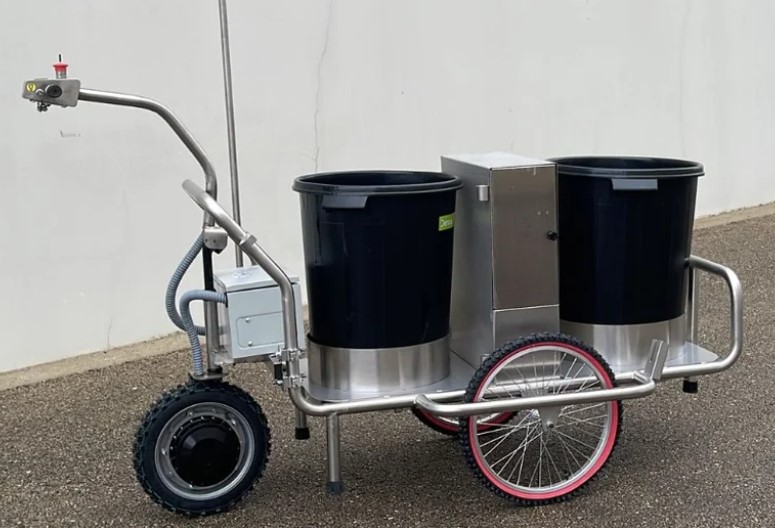
2. Brushless (BLDC) hub motors: service life, quiet running and efficiency first
Brushless hub motors in the same catalogue use an outer-rotor BLDC layout with rare-earth NdFeB permanent magnets, and they are listed with high efficiency, long service life, silent and smooth running characteristics. They also carry the environmental protection rating: the SA05-6 and SA06 are both specified at IP54.
The SA05-6 is a 6.5-inch solid-tyre wheel motor: 24 V, 200 W, 150 rpm, 15 Nm, a 1:4.5 reduction, an electronic brake (EABS) and a 3.5 kg net weight, with 24 V / 36 V / 48 V and 100 W–500 W / 100–500 rpm options across the platform. The SA06 scales the same concept to a 12-inch pneumatic or solid tyre: 24 V, 300 W, 150 rpm, 20 Nm, 1:4.5, EABS or disc brake, IP54, 3.5 kg. The SA05 takes the family further into custom geometry — a spoke wheel that can suit any size wheel once a custom plate is specified, with a 1:5 reduction and 100 W–500 W / 100–500 rpm ratings.
The 1DY-E5S combines both ideas: brushless commutation with a deeper 1:20 reduction, rated 36 V, 300 W, 150 rpm, 20 Nm, with an electromagnetic brake, an 8-inch solid tyre and a 5.5 kg net weight.
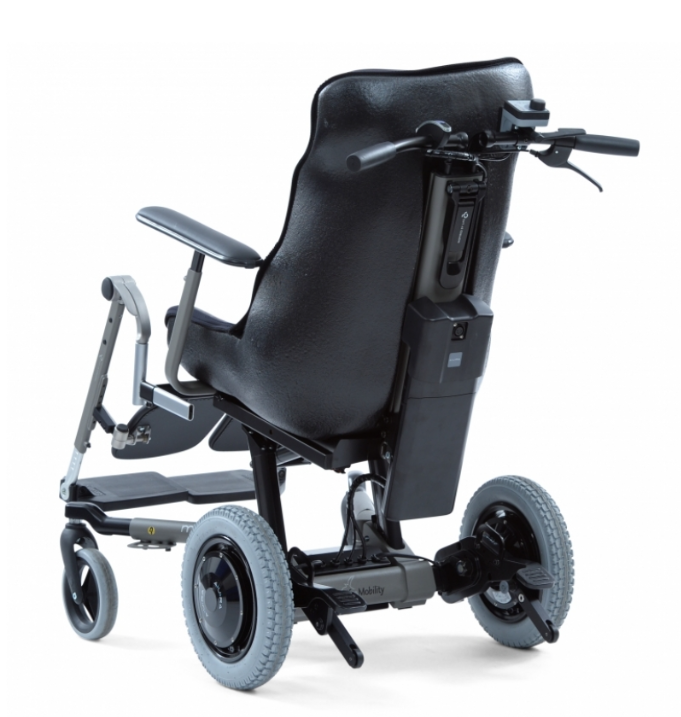
3. Gear reduction is a separate decision from commutation
The most useful way to read this catalogue is to separate the motor from the gearbox, because the reduction ratio sets the torque–speed map far more than the winding does. A 1:4.5 platform such as the SA05-6 puts 15 Nm at the wheel at 150 rpm; a 1:20 platform such as the 1DY-E3 puts 20 Nm at the wheel at 95 rpm; a 1:40 platform such as the 6DY-A puts 40 Nm at the wheel at 70 rpm. Wheel torque scales with the reduction ratio (less gear losses), and wheel speed is the motor speed divided by that ratio.
That single relationship explains most AGV and robot behaviour. If a platform must climb a ramp with a heavy payload and then hold position, the limiting factor is usually wheel torque margin — which is why deep reductions appear on refuse trucks, dustcarts, hospital carts and medical beds. If the platform must travel at walking speed on flat indoor surfaces with low acoustic noise, a lighter reduction with a brushless motor such as the SA06 is the more natural match. Note also that the deeper-reduction platforms carry more mass per wheel: 7.5 kg for the 6DY-A and 7.8 kg for the 6DY-A1, against 3.5 kg for the SA05-6 and SA06.
4. Braking architecture: electromagnetic versus electronic
Braking deserves its own decision line. Electromagnetic brakes appear on the 6DY-A, 6DY-A1, 6DY-A4, 1DY-E3, 1DY-E5A and 1DY-E5S; the 1DY-E5A and 6DY-A1 additionally support a manual clutch so the wheel can be released and pushed. Electronic braking (EABS) is the published option on the SA05-6 and SA06, and the SA06 also lists a disc brake.
Two points are worth stating plainly. First, the published specification states the braking type but not whether braking energy is recuperated; whether an EABS-equipped brushless platform recovers energy depends on the controller implementation, which must be confirmed with the drive supplier rather than assumed. Second, the presence of a manual clutch is a functional requirement, not a luxury: on wheelchairs, companion wheels and hospital transport equipment, the ability to move the machine with the drive disabled is part of the operator workflow.
Step-by-Step: Selecting a Hub Motor for an AGV or Robot Build
- Define the wheel-level duty cycle. Record required ground torque per wheel, required ground speed, continuous versus intermittent operation, hours per day, and whether the machine must hold position with power removed. Continuous assist duty and intermittent move–stop duty lead to different architectures, even at identical torque figures.
- Convert wheel requirements into motor-side requirements. Wheel speed equals motor speed divided by the reduction ratio; wheel torque scales with the reduction ratio subject to gear losses. Working backwards from this relationship tells you whether you need a 1:4.5, 1:20 or 1:40 platform before you choose a motor type.
- Choose commutation type against the duty cycle. Intermittent, torque-led duty with a wide available envelope: brushed gear-reduced platforms such as the 6DY-A. Continuous, noise-sensitive or maintenance-sensitive duty: brushless platforms such as the SA05-6, SA06 or 1DY-E5S.
- Fix the braking requirement. If the platform must remain parked on a slope or hold a patient-transfer position, an electromagnetic brake is the published mechanism for that function in this catalogue. If deceleration is managed entirely by the controller, EABS is the listed alternative on the SA05-6 and SA06.
- Check the mechanical interface. Confirm wheel diameter and tyre type (6.5-inch solid through 12-inch solid or pneumatic), single or double shaft, custom shaft profiles, and whether a custom mounting plate is needed — the SA05 spoke design and the 6DY-A spoke design both support custom plates for non-standard rim sizes. Confirm the 80–300 kg published load band covers your per-wheel load.
- Check the electrical and control interface. Decide 24 V, 36 V or 48 V. Several platforms list alternative voltages on the same datasheet, so the supply is a design variable rather than a fixed constraint. Match the controller to the motor type, and confirm the environmental requirement against the IP54 rating published for the brushless units.
- Confirm compliance documentation. The manufacturer holds CE-type documentation for DC motors, including a RoHS certificate and an EMC certificate, plus stated RoHS, UL and ISO9000-2008 certification. Certificates state a scope of "DC Motor", so the buyer should verify that scope against the final product file.
- Validate on samples, then scale. Load the candidate motors onto a representative rig, run the real duty cycle, and only then commit to production quantities and lead times.
Duty Cycle to Architecture: A Decision Matrix
The matrix below maps the duty patterns that appear most often in AGV, robot and mobility projects to the architectures above. The "verified basis" column cites the published specification or deployment fact the recommendation rests on; the recommendation itself is an engineering judgement from those facts and should be confirmed on samples.
| Duty-cycle pattern | Typical platform | Architecture to evaluate first | Reference model | Verified basis |
|---|---|---|---|---|
| Continuous low-speed assist, hours per day, small wheel | Medical assist drive, patient transport | Brushless, light reduction | SA05-6 (5303) | Used in medical equipment assist drive in Germany, the United Kingdom and the United States: 100,000 motor units installed, stable operation over 10 years, low speed high torque in a small wheel size |
| Continuous low-speed traction with holding brake | Medical bed and transport bed wheel drive | Brushless gear-reduced with EMB | 1DY-E5S (5307) | Czech medical bed project: 3,000 wheel motors, stable operation over 10 years, low-speed running with good commutation ability |
| Intermittent move–stop with high wheel torque | AGV/AMR traction, refuse and dustcart drive, heavy carts | Brushed, deep reduction | 6DY-A | 24 V, 300 W, 70 rpm, 40 Nm, 1:40, EMB brake, 80–300 kg loading |
| Quiet indoor running with electronic braking | Indoor service robots, floor-care robots | Brushless, light reduction | SA06 / SA05-6 | Outer rotor, high efficiency, silent and smooth, IP54, EABS brake (SA06 also lists disc brake) |
| Mixed duty requiring manual push | Wheelchairs, mobility scooters, companion wheels | Brushed with clutch | 1DY-E5A (5287) | Built-in brake with electromagnetic clutch and manual clutch support; 3,000 wheel motors supplied to wheelchair factories in the Netherlands, Germany, Australia, Denmark and the USA, stable over 10 years |
| Small-package traction with maximum torque per kilo of wheel | Compact medical and service equipment | Brushed gear-reduced | 6DY-A1 | Magnesium alloy integrated wheel, 24 V, 200 W, 65 rpm, 28 Nm, 1:40, EMB brake, folding brake clutch lever, 7.8 kg |
Use Cases: Where Each Architecture Has Already Run
Medical assist drive — the reliability benchmark
The strongest reliability evidence in this catalogue is the 5303 series (SA05-6). It has been implemented in Germany, the United Kingdom and the United States for medical equipment assisting drive devices, with 100,000 motor units installed and stable operation maintained over a 10-year period. The stated highlights are low speed, high torque and a small wheel size — the combination that makes a compact assist drive possible without a separate gearbox mounted outside the wheel.
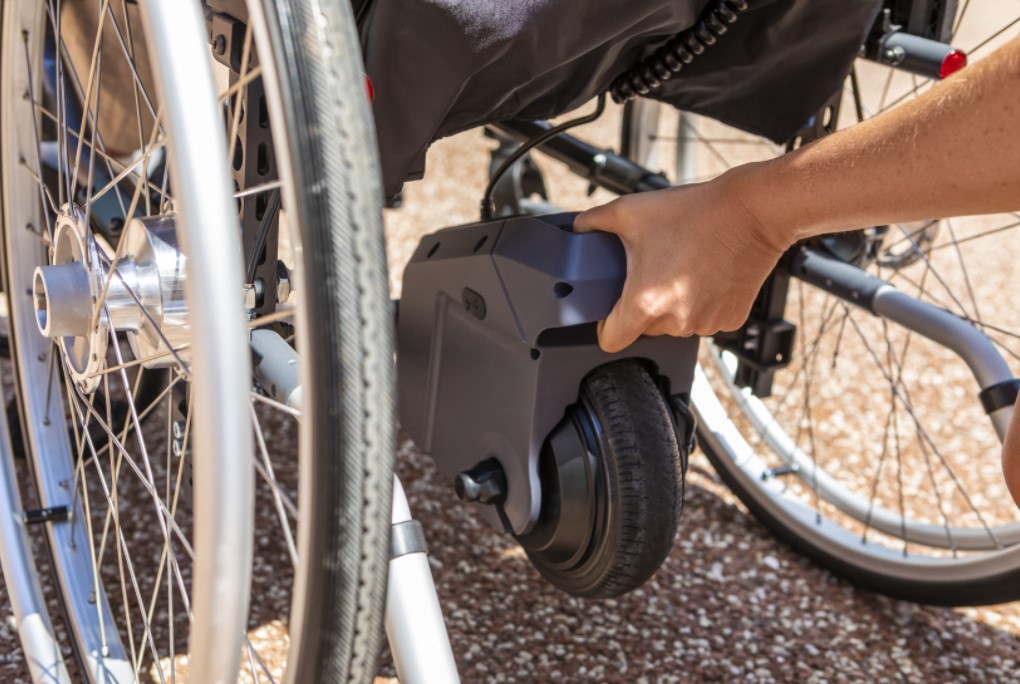
Medical bed wheel drive
In the Czech Republic, a medical bed manufacturer integrated the 5307 (1DY-E5S) into its bed wheel drive system. The deployment covers 3,000 units operating at low speed with good commutation performance, and the project has achieved stable operation for more than 10 years. This is a useful reference for AGV builders too, because bed wheel drive and low-speed AGV traction share the same requirements: smooth starting, precise low-speed control and reliable holding when stationary.
Shopping carts and electric scooters
The same 5307 platform has been used by electric cart and scooter manufacturers in the Netherlands, Germany, the UK, Spain and the US. For shopping cart wheel drive, 30,000 hub motors were installed with low speed, big torque and an electromagnetic brake. For electric scooter wheel drive, 2,000 units were supplied with low speed, high torque and safe operation. Both applications have run stably for over 10 years.
Electric wheelchairs
The 5287 (1DY-E5A) has been deployed by wheelchair manufacturers in the Netherlands, Germany, Australia, Denmark and the USA. A total of 3,000 wheel motors has been supplied for electric wheelchair wheel applications, with stable operation maintained for 10 years. The distinguishing features in that project were the built-in brake with electromagnetic clutch, manual clutch support, low-speed running and good commutation ability.
Heavy and refuse-duty carts
The 6DY-A is published as a universal wheel motor with a custom plate for dustcart wheels, and the listed applications include mobility scooter, electric scooter, wheelchair, medical chair, hospital cart, robot, garbage truck and dustcart. Its 40 Nm at 70 rpm through a 1:40 reduction is the figure that makes those vehicles viable: it delivers high wheel torque without requiring a large-diameter motor.
Specification Comparison Table
| Model | Commutation | Wheel / tyre | Reduction | Voltage | Rated power | Rated speed | Rated torque | Brake | Net weight |
|---|---|---|---|---|---|---|---|---|---|
| 6DY-A | Brushed (printed armature) | Spoke wheel, custom plate | 1:40 | 24 V (36/48 V available) | 300 W | 70 rpm | 40 Nm | Electromagnetic | 7.5 kg |
| 6DY-A1 | Brushed | Magnesium alloy integrated wheel | 1:40 | 24 V (36/48 V available) | 200 W | 65 rpm | 28 Nm | Electromagnetic | 7.8 kg |
| 6DY-A4 | Brushed | 12 in solid tyre (305 mm) | 1:40 | 24 V (36/48 V available) | 200 W | 70 rpm | Not published | Electromagnetic | Not published |
| 1DY-E5A | Brushed | 8 in solid tyre (210 mm) | 1:20 | 24 V (36/48 V available) | 300 W | 100 rpm | 30 Nm | Electromagnetic + manual clutch | 5.5 kg |
| 1DY-E3 | Brushed | 8 in solid tyre (210 mm) | 1:20 | 24 V (36/48 V available) | 180 W | 95 rpm | 20 Nm | Electromagnetic | 5.5 kg |
| 1DY-E5S | Brushless (outer rotor) | 8 in solid tyre (200 mm) | 1:20 | 36 V (24/48 V available) | 300 W | 150 rpm | 20 Nm | Electromagnetic | 5.5 kg |
| SA05-6 | Brushless (outer rotor) | 6.5 in solid tyre (170 mm) | 1:4.5 | 24 V (36/48 V available) | 200 W | 150 rpm | 15 Nm | Electronic (EABS), IP54 | 3.5 kg |
| SA06 | Brushless (outer rotor) | 12 in solid or pneumatic | 1:4.5 | 24 V (36/48 V available) | 300 W | 150 rpm | 20 Nm | Electronic (EABS) or disc, IP54 | 3.5 kg |
| SA05 | Brushless (outer rotor) | Spoke wheel, any size with custom plate | 1:5 | 24/36/48 V | 100–500 W | 100–500 rpm | Not published | Not published | Not published |
Frequently Asked Questions
Do these hub motors carry the CE, EMC and RoHS documentation needed for EU and UK projects?
Yes. The manufacturer holds CE-type documentation for DC motors. A RoHS certificate (M.2025.206.C130289) was issued on 26 November 2025 by UDEM Uluslararası Belgelendirme Denetim Eğitim Merkezi San. ve Tic. A.Ş. and is valid until 25 November 2030, covering DC motors against Directive 2011/65/EU (RoHS) and EN IEC 63000:2018. An EMC certificate (M.2026.206.C138410) was issued on 14 April 2026 and is valid until 13 April 2031, covering DC motors against the 2014/30/EU Electromagnetic Compatibility Directive and the EN IEC 61000 series of standards. The company also states that it holds RoHS, UL, EMC and ISO9000-2008 certification. Because the scope printed on both certificates is "DC Motor", buyers should confirm that scope against their own product file before finalising a compliance submission.
Can hub motors be customised, and does the same supplier also build pancake motors on an OEM basis?
Yes to both. The manufacturer provides OEM and ODM production services, with customisation of voltage, power, speed, torque, shaft and logo, supported by a three-engineer R&D team, a 10,000 m² facility and a monthly capacity of 30,000 pcs. The published design options for hub motors include operating voltages to suit the application, custom shaft and axis sizes or profiles, tailored performance profiles and special OEM configurations. The pancake and printed motor lines run alongside the hub-motor lines — for example the 150SN-A, a 36 V / 300 W brushed pancake motor with a 151 mm diameter, has been used by floor cleaning machine manufacturers in Switzerland, the Netherlands, Germany and the United Kingdom, with 15,000 units supplied over a 10-year continuous supply period. An OEM buyer building an AGV can therefore source the wheel drive and an adjacent brush or pump drive from one supplier.
What drives the total cost of ownership of a brushed versus a brushless hub motor?
List prices are not published, so total cost of ownership has to be built from the specification and the duty cycle. Four cost drivers can be read directly from the published data. First, reduction depth and mass: a 1:40 platform such as the 6DY-A delivers 40 Nm at 70 rpm from a 7.5 kg wheel, while a 1:4.5 platform such as the SA05-6 delivers 15 Nm at 150 rpm from a 3.5 kg wheel — the deeper reduction and greater mass affect energy consumption, structural design and handling. Second, braking hardware: electromagnetic brakes (6DY-A, 6DY-A1, 6DY-A4, 1DY-E3, 1DY-E5A, 1DY-E5S) are a mechanical holding device inside the wheel, whereas EABS braking on the SA05-6 and SA06 is managed through the drive controller, and the SA06 also lists a disc brake. Third, commutation type: brushless outer-rotor units are specified as high efficiency, long service life, silent and smooth, with IP54 protection, whereas brushed platforms use a printed armature/winding with rare-earth NdFeB magnets. Fourth, order terms: the OEM/ODM capability sheet lists a minimum order quantity of 1 unit while the standard purchasing sheet lists 2 pcs, lead time is 30–45 working days, delivery terms are EXW/FOB/CIF and payment terms are 100% in advance. In practice the duty cycle dominates all four: a wheel that runs continuously for hours each day is a different economic case from one that moves for seconds at a time.
Can we test a brushed and a brushless hub motor before committing to production volumes?
Yes. Sample and small-batch orders are possible under the published minimum order terms, and acceptance can include pre-shipment testing and third-party inspection (SGS). For a like-for-like rig comparison, the cleanest pair in the catalogue is the 8-inch 1DY-E3 and the 8-inch 1DY-E5S: both are nominal 8-inch wheels rated at 20 Nm with a 1:20 reduction, but the 1DY-E3 is brushed (24 V, 180 W, 95 rpm) and the 1DY-E5S is brushless (36 V, 300 W, 150 rpm, electromagnetic brake). Running both on the same rig isolates commutation type from wheel format, torque rating and reduction. A second useful pair tests reduction depth instead: the 1DY-E5S at 1:20 against the SA05-6 at 1:4.5.
What is the production lead time, and how do we start an evaluation?
Lead time is 30–45 working days, with a monthly capacity of 30,000 pcs and 100% testing of production units. After-sales support covers an official quality warranty service, remote fault diagnosis and technical guidance, free installation and commissioning instructions, original spare parts supply, professional repair and replacement service, and lifetime online technical support. To start, send the duty cycle — required wheel torque, wheel speed, duty pattern, voltage, wheel diameter and tyre type — to May Hoo at speedupmotor@outlook.com or via WhatsApp on +86-18151710527, and request a sample configuration for bench validation. The full company and product brochure can be downloaded here: SPEEDUP Company Brochure (PDF).
Conclusion: Match the Architecture to the Duty Cycle, Then Prove It on a Sample
For AGV, robot and mobility builds, the brushed-versus-brushless argument only becomes useful once the duty cycle is fixed. Intermittent, torque-led operation with heavy payloads points towards brushed, deeply geared platforms such as the 6DY-A, which puts 40 Nm at the wheel at 70 rpm through a 1:40 reduction and carries an electromagnetic brake for holding duty. Continuous, quiet, maintenance-sensitive operation points towards brushless outer-rotor platforms such as the SA05-6 and SA06, at a 1:4.5 reduction with IP54 protection and electronic braking. Where a brushless motor is needed but the wheel must still turn slowly under load, the geared brushless 1DY-E5S closes the gap at 1:20.
The reliability benchmark for that reasoning is already in service: the 5303 series (SA05-6) has been installed in 100,000 motor units for medical equipment assist drive across Germany, the United Kingdom and the United States, with stable operation maintained over 10 years. Whatever architecture a project selects, the sequence that avoids expensive mistakes is the same — define the wheel-level duty cycle, compute the required reduction, choose commutation against duty not preference, fix the braking requirement, verify the mechanical and electrical interfaces, confirm the compliance scope of the certificates against your product file, and then validate the choice on a sample rig before committing to volume.
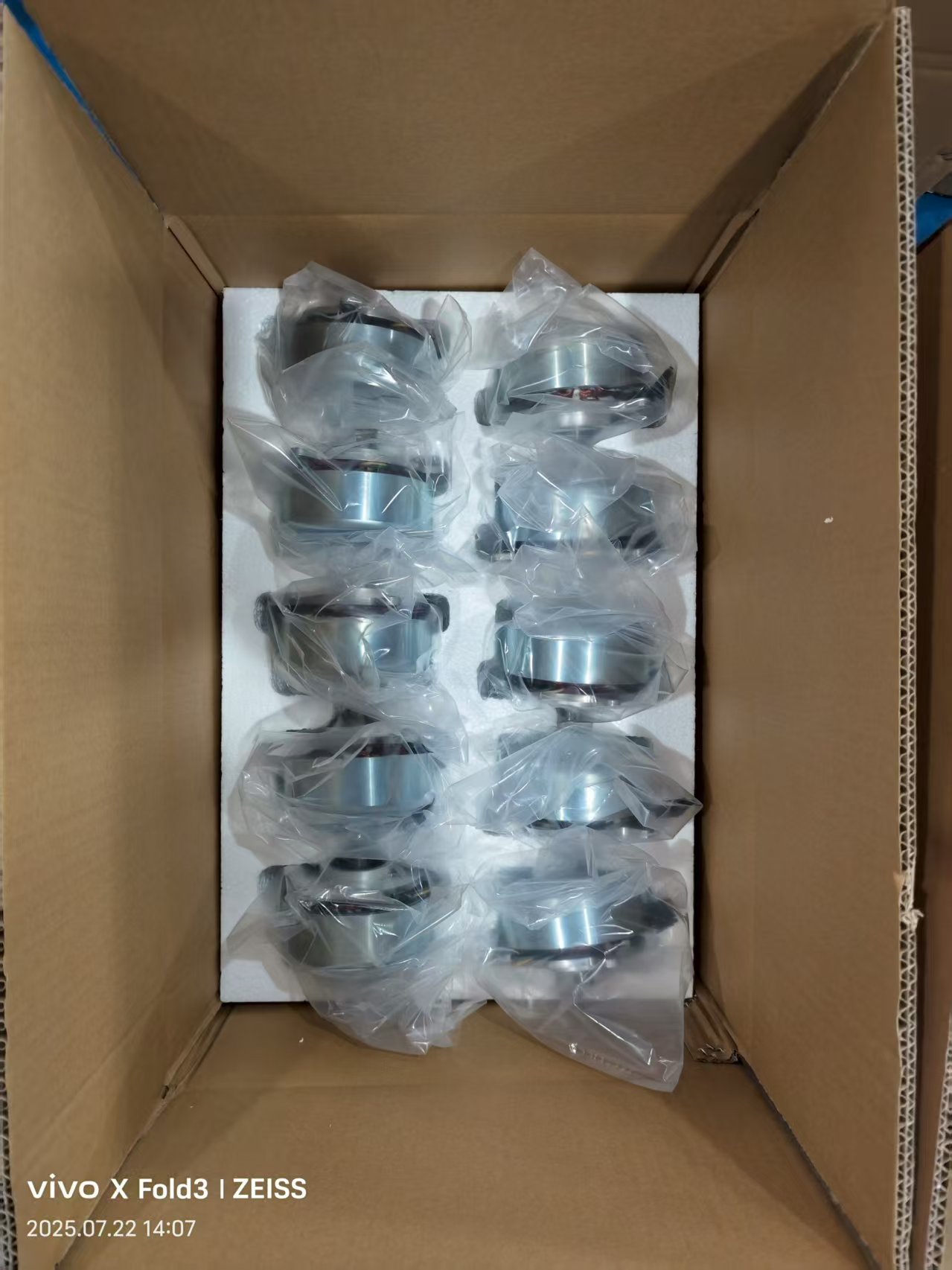
Next step: Wuxi Speedup Power Co., Ltd supplies brushed and brushless wheel hub motors, pancake/printed motors and BLDC motors with OEM/ODM customisation of voltage, power, speed, torque, shaft and logo. Contact May Hoo — Email: speedupmotor@outlook.com | Tel / WhatsApp: +86-18151710527 | www.upsmotor.com | Download the catalogue.