Pancake DC Motor Comparison: Brushed, BLDC or Geared Drive?
Short answer: Pancake DC motors are built in three architectures that share a flat form factor but not a performance profile: brushed printed armature, pancake BLDC with an external rotor, and pancake motors with an integrated gearbox. The comparison should be run in a fixed order: required shaft speed and torque first, mounting diameter and thickness second, commutation and maintenance third, and long-term supply terms last. Selecting on rated power alone is the most common reason a drive has to be re-sourced before a production program ends.
This guide compares six models from Wuxi Speedup Power Co.,Ltd, a DC motor manufacturer based in Wuxi, Jiangsu, China, founded in 2018, producing pancake motors, BLDC motors and wheel hub motors for industrial and civil equipment. The models are 90SN-B, 120SN and 150SN-B (brushed printed armature), DD03 and 5270 (pancake BLDC with external rotor), and 150SN-G2 (pancake motor with gearbox). Only published specifications for these models are used below; where a value is not published, it is marked as such rather than estimated.
For buyers in the decision and execution stage, the question is not which motor is best in the abstract, but which architecture can still be running in five years without the machine being requalified. That is why the final section of this guide covers capacity, lead time and after-sales support rather than motor theory.
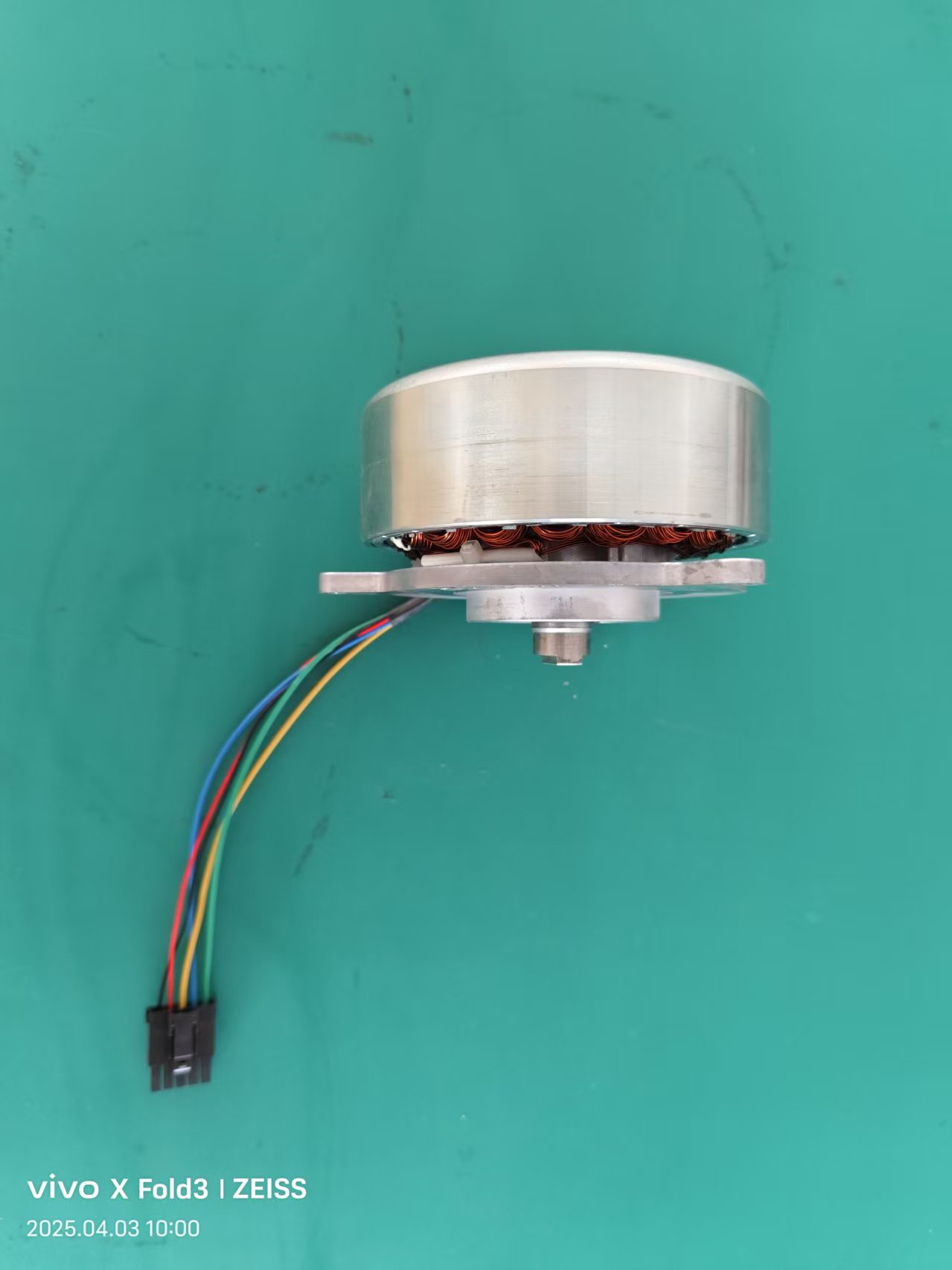
Pancake BLDC motor with an external rotor, the 24 V / 100 W class represented here by the DD03 and 5270 models.
Problem Definition: Why Pancake Motor Selection Goes Wrong
Pancake motor mis-selection is rarely an electrical failure. It is a comparison failure. The two fields that look most comparable across datasheets, voltage and rated power, are the two fields that decide the least about whether a drive will work in a machine.
- Power is not torque. A 100 W, 350 W or 500 W rating says nothing about shaft torque until a shaft speed is attached to it. A 500 W unit running at 240 rpm and a 350 W unit running at 3000 rpm sit in the same catalogue section and solve completely different mechanical problems.
- Diameter and thickness are separate constraints. A 120 mm body that is 17 mm thick fits under a low deck. A 152 mm body does not, however well its electrical figures match the load. Envelope dimensions eliminate more candidate motors than electrical ratings do.
- Direct drive and gear reduction are different products. Adding a gearbox changes output speed, output torque, axial length and the maintenance plan at the same time. Treating a geared pancake motor as a drop-in replacement for a direct-drive pancake motor is a redesign, not a substitution.
- Commutation changes the maintenance model. Brushed printed armature motors consume carbon brushes. Geared motors add gearbox upkeep as a service item. Pancake BLDC motors remove brush replacement from the list and move the wear question to bearings and the controller.
- The decision is commercial as well as technical. A motor that is electrically correct but unavailable in year three forces a requalification cycle, new drawings, new approval testing and a service-parts problem. Long-term availability belongs in the selection matrix from the first RFQ, not in the contract stage.
All five failure modes are visible in the six-model comparison below, which is why the table keeps speed, diameter and thickness in separate columns instead of compressing them into a single rating.
Industry Background: Where Low-Profile Drives Sit in Smart Manufacturing
Smart manufacturing equipment is judged on cycle time, uptime and predictable maintenance. The pancake motor format exists because machine envelopes keep shrinking. Floor washing and cleaning machines, medical beds, industrial robotics, industrial machinery, office equipment, agricultural machinery, automobile equipment and mobility equipment all place the drive inside a housing where axial height is a hard limit rather than a preference. A flat motor can sit where a conventional cylindrical motor cannot.
Market context supports the direction. Grand View Research estimates the global brushless DC motor market at USD 23.6 billion in 2026, and reports that motors with output not exceeding 750 W accounted for 48.8% of global BLDC motor market revenue in 2025. Every model in this comparison, from 75 W to 500 W, falls inside that sub-750 W class. In other words, the segment where these motors compete is the segment that carries the largest share of BLDC revenue, which also means buyers have options and switching costs matter.
That combination of dense supply and shrinking machine envelopes is what makes a disciplined architecture comparison valuable. The differences between the three pancake drive types are small on paper and large in service.
The Three Pancake Architectures, Model by Model
1. Brushed printed armature: 90SN-B, 120SN and 150SN-B
Printed armature pancake motors use a slotless disc armature, the design characteristic the manufacturer identifies as the difference from conventional DC servomotors. The flat rotor is what allows a low axial height and short axial length, and the brushed commutation keeps the drive electronics simple.
90SN-B: 24 V, 100 W, 3200 rpm, 120 mm diameter, 17 mm thick. This is the thinnest model in the set at 17 mm and the smallest in diameter at 120 mm. The 3200 rpm shaft speed indicates a direct-drive role: a fast, low-torque load where the design priority is axial compactness. If the machine has a 17 mm slot for the drive and the load turns at a few thousand rpm, this is the starting point of the comparison.
120SN: 24 V, 75 W, 152 mm diameter. The 120SN is the lowest-power model here but carries the widest 152 mm body. Where the 90SN-B is chosen because of a thin envelope, the 120SN is the model to examine when mounting area is available and the power requirement is modest. Diameter is the visible geometric difference between the two.
150SN-B: 24 V, 350 W, 151 mm diameter, 3000 rpm. The highest-power brushed model in the set. It keeps a direct-drive shaft speed of 3000 rpm and a 151 mm diameter close to the 120SN, so the step up from 75 W to 350 W is achieved without a large change in mounting footprint. For equipment that needs more direct-drive power in roughly the same circular envelope, this is the model that makes the jump possible.
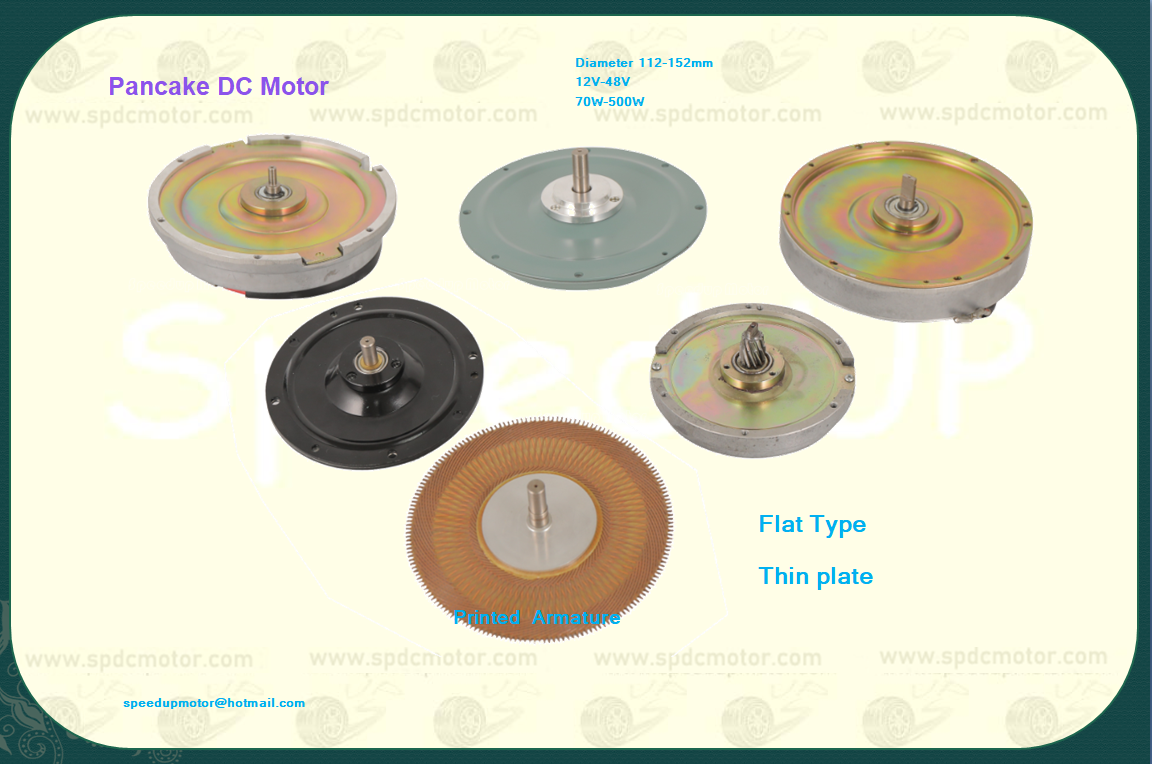
Printed armature pancake DC motor: the slotless disc armature is what makes a 17 mm axial thickness possible in the 90SN-B.
2. Pancake BLDC with external rotor: DD03 and 5270
DD03 and 5270 are 24 V, 100 W pancake BLDC motors with an external rotor. The external rotor is a structural difference rather than a marketing label: the outer housing carries the rotating magnet assembly, and it is this size type and rotor arrangement that separates the design from a conventional brushless DC motor. The manufacturer positions its pancake BLDC design around higher efficiency, lower noise, lower temperature rise and longer service life relative to a standard brushless motor.
Because commutation is electronic, the maintenance list changes. The carbon brush replacement that applies to a printed armature motor does not apply to DD03 or 5270; controller condition and bearing inspection become the service focus instead. Both models are specified at 24 V and 100 W, which puts them in the same power class as the 90SN-B, so the choice between a 90SN-B and a DD03 is primarily a choice between brushed simplicity and brushless maintenance behaviour at equal rated power.
3. Pancake motor with gearbox: 150SN-G2
150SN-G2: 36 V, 500 W, 22 Nm, 240 rpm. This is the only model in the set published with a torque figure, and it demonstrates why gear reduction exists. Five hundred watts delivered at 240 rpm arrives at the shaft as 22 Nm. The same power delivered directly at a few thousand rpm arrives as a much smaller shaft torque, which is why the direct-drive models are paired with fast loads and the geared model with slow ones.
The trade-offs are geometric and logistical. A gearbox adds axial length to a motor whose value is its thin profile, and it adds a service item, gearbox upkeep, that the direct-drive models do not have. It also changes the voltage class: 150SN-G2 is specified at 36 V, while the brushed models in this comparison are specified at 24 V. In exchange, it removes the need for a separate external reducer and its alignment tolerances from the machine design.
Specification Comparison: Six Models Side by Side
| Model | Architecture | Voltage | Rated power | Rated speed | Rated torque | Diameter | Thickness |
|---|---|---|---|---|---|---|---|
| 90SN-B | Brushed printed armature | 24 V | 100 W | 3200 rpm | Not published | 120 mm | 17 mm |
| 120SN | Brushed printed armature | 24 V | 75 W | Not published | Not published | 152 mm | Not published |
| 150SN-B | Brushed printed armature | 24 V | 350 W | 3000 rpm | Not published | 151 mm | Not published |
| DD03 | Pancake BLDC, external rotor | 24 V | 100 W | Not published | Not published | Not published | Not published |
| 5270 | Pancake BLDC, external rotor | 24 V | 100 W | Not published | Not published | Not published | Not published |
| 150SN-G2 | Pancake motor with gearbox | 36 V | 500 W | 240 rpm | 22 Nm | Not published | Not published |
How to read the table: empty cells are deliberate. Those values are not published for these models, and an estimated figure would be worse than a blank one for a buyer making a decision. Ask for the missing values in a formal quotation rather than assuming them from a neighbouring model in the same family.
Step-by-Step: Running the Comparison on a Real Project
- Fix the load, not the motor. Write down three numbers before opening any datasheet: the shaft torque required at the worst-case condition, the shaft speed required at that condition, and the duty cycle. Without these three, power ratings cannot be interpreted.
- Decide direct drive or gear reduction. If the load turns at a few hundred rpm and needs substantial torque, the reference point is 22 Nm at 240 rpm from 150SN-G2. If the load turns at roughly three thousand rpm and needs modest torque, the reference points are 3200 rpm from 90SN-B and 3000 rpm from 150SN-B.
- Fit the envelope. Check the axial slot and the mounting circle. The 90SN-B needs a 17 mm axial allowance and a 120 mm circle. The 120SN and 150SN-B need a 152 mm and 151 mm circle respectively. Shaft (axis) length is a separate dimension and is a customization point, so a housing redesign usually starts with the shaft and the flange rather than the winding.
- Choose commutation and accept its maintenance plan. Brushed printed armature gives a simple drive and a brush replacement item. Pancake BLDC removes brush replacement and moves attention to the controller, at the cost of drive electronics. A geared pancake motor adds gearbox upkeep. The right answer is the plan the service team can actually execute in the field.
- Lock the supply terms before the design freeze. Confirm monthly capacity, lead time, minimum order quantity and after-sales scope against the models you shortlisted. Section six of this guide lists what to ask for.
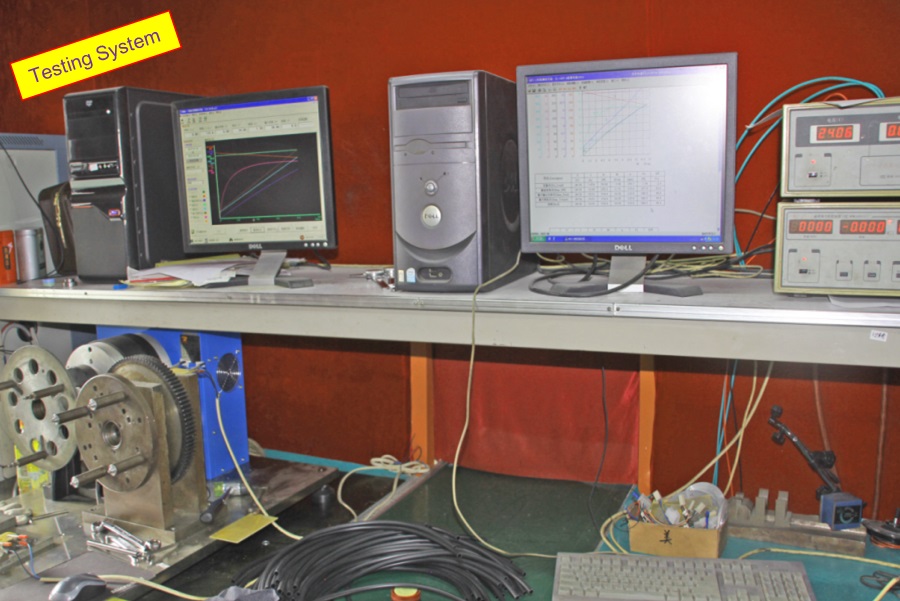
In-house testing system used for pre-shipment verification of finished motors before a batch is released.
Use Cases: Matching Architecture to Machine Type
The applications below are the industrial and civil fields the manufacturer states it serves. The mapping to an architecture is the selection logic discussed above, not a claim that a specific model is used in a specific machine.
- Floor washing and cleaning machines. The drive usually sits under a low deck, where axial height is the binding constraint. A 17 mm brushed pancake motor such as 90SN-B, or a flat pancake BLDC such as DD03 or 5270, is the natural candidate because thickness decides the fit before power does.
- Medical beds and mobility equipment. These loads move slowly and need torque at the output, not speed. A geared pancake motor such as 150SN-G2, specified at 22 Nm and 240 rpm, matches that profile without a separate external reducer.
- Industrial robotics and industrial machinery. Continuous duty and long service intervals favour the brushless route, where brush replacement is removed from the maintenance schedule and bearing and controller inspection take its place. Both DD03 and 5270 sit in the 24 V / 100 W class for this type of duty.
- Office equipment and light industrial machinery. Fast, low-torque shafts favour direct drive at a few thousand rpm, which is the regime of 90SN-B at 3200 rpm and 150SN-B at 3000 rpm.
- Agricultural machinery and automobile equipment. Where more direct-drive power is needed in a circular envelope near 150 mm, the step from 120SN at 75 W to 150SN-B at 350 W keeps the mounting footprint similar while raising rated power.
Long-Term Supply: What Changes After the Design Freeze
Once a machine is released, the motor stops being a component and becomes a supply commitment. Three numbers and one service scope decide whether that commitment holds.
Capacity and lead time. The manufacturer states a monthly production capacity of 30,000 pcs and a typical production lead time of 30 to 45 working days. For a program running several hundred units a month, that capacity is not the constraint; the constraint is placing the order early enough inside the 30 to 45 working day window, especially for customized configurations.
Order flexibility. The minimum order quantity is 1 unit, which allows a single sample or a pilot batch to be ordered before a volume commitment. Delivery terms are EXW, FOB or CIF, and payment terms are 100% in advance. Acceptance criteria are a pre-shipment test plus third-party inspection such as SGS.
Customization scope. OEM and ODM production is available with customization of voltage, power, speed, torque, shaft and logo. This matters for the long term because a shaft or winding change in year three is a customization request inside an existing relationship rather than a new supplier search.
After-sales scope. Support includes an official warranty, remote diagnosis, free installation instructions, spare parts, repair and lifetime online support. For a buyer whose service technicians are in another country, remote diagnosis and spare-parts availability are the two items that determine downtime more than the warranty length does.
The strategic point is consolidation. A program that standardizes on one or two pancake architectures carries fewer spare-part SKUs, one qualification package and one service-training requirement. A program that adds a new architecture per machine variant pays for that variety in inventory and in re-approval work every time a model changes.
Frequently Asked Questions
Are these pancake and BLDC motors certified for EU and US equipment programs?
Wuxi Speedup Power Co.,Ltd holds CE, UL, RoHS and EMC certifications together with an ISO9001-2008 quality management certificate. For a specific program, the certificate scope should be checked against the exact model, voltage and configuration being ordered, because certification applies to the tested configuration rather than to a product family name. The motor certificate also supports, but does not replace, the end-product conformity obligations that the equipment builder carries in the EU or US market.
Can voltage, speed, torque or shaft be customized for an OEM design?
Yes. The manufacturer offers OEM and ODM production services with customization of voltage, power, speed, torque, shaft and logo. In practice this means a 24 V brushed pancake motor can be adapted toward a different voltage class or shaft geometry instead of forcing the machine design to accept a catalogue version. Customized configurations follow the same typical production lead time of 30 to 45 working days, so the customization should be frozen before the order is placed rather than during it.
What is the minimum order quantity and how is a pancake motor order priced?
The minimum order quantity is 1 unit, so a buyer can order a single motor for evaluation or for a pilot build before committing to volume. Because price depends on the selected voltage, power, speed, torque, shaft and logo configuration, unit prices are quoted per configuration rather than published as a list. Delivery terms are EXW, FOB or CIF, and payment terms are 100% in advance.
How should a buyer validate a pancake motor before committing to volume?
Start with a 1-unit order and validate against the actual load rather than a datasheet: measured shaft speed at rated voltage, measured torque at the working point, axial thickness and mounting circle, and shaft fit. Acceptance criteria for production batches are a pre-shipment test plus third-party inspection such as SGS, and finished motors are checked on an in-house testing system before release. Comparing the measured values of a sample against the specified values of the shortlisted models is the step that prevents a redesign later.
What lead time and support should be expected from a long-term DC motor supply partner in China?
The typical production lead time is 30 to 45 working days, against a monthly production capacity of 30,000 pcs. After-sales support includes an official warranty, remote diagnosis, free installation instructions, spare parts, repair and lifetime online support, which is the combination that keeps an installed base running after the first shipment. Buyers who want to test that scope against their own program can request a sample or a configuration-specific quotation through upsmotor.com, and confirm capacity, lead time and acceptance criteria in writing before the purchase order is issued.
Conclusion
The three pancake architectures are not competitors on a single axis. Brushed printed armature models such as 90SN-B, 120SN and 150SN-B deliver direct drive in a flat envelope, from 100 W at 3200 rpm in a 17 mm body up to 350 W at 3000 rpm in a 151 mm body. Pancake BLDC models DD03 and 5270 deliver the same 100 W class at 24 V with an external rotor and no brush replacement. The geared 150SN-G2 moves the same design idea into a different regime entirely, 500 W at 36 V producing 22 Nm at 240 rpm.
The selection sequence is what makes the comparison usable: torque and speed first, envelope second, commutation and maintenance third, supply terms last. Buyers who run that sequence end up with a drive that fits the machine and a supply relationship that survives the program. Buyers who start from rated power usually end up re-running the comparison after the first prototype.
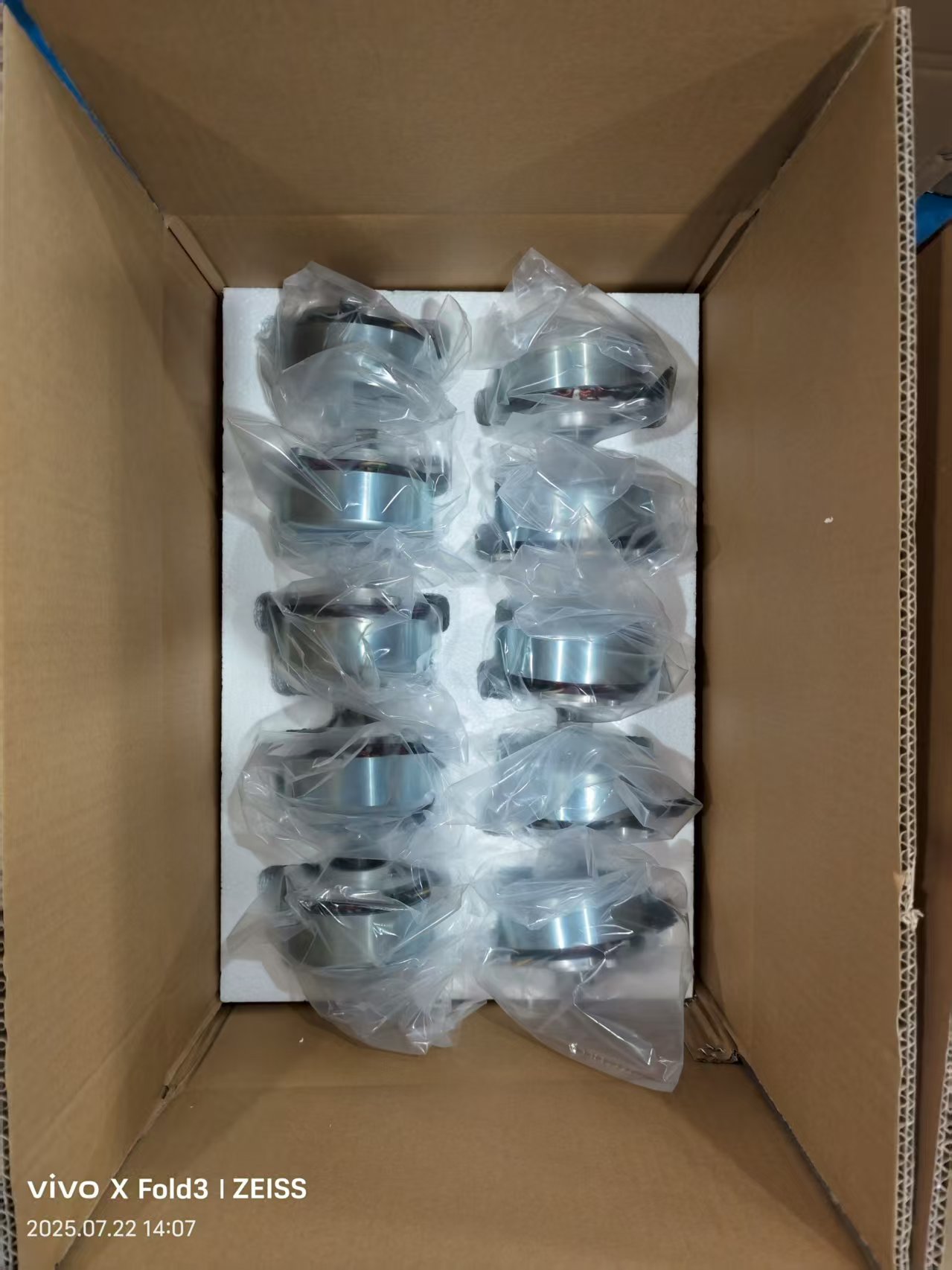
Packed motors ready for export: packing and pallet configuration are part of the repeat-order agreement, not an afterthought.
Next step: compare on your own load data
Wuxi Speedup Power Co.,Ltd supplies pancake motors, BLDC motors and wheel hub motors to equipment builders in the EU, USA and Southeast Asia, with OEM and ODM customization of voltage, power, speed, torque, shaft and logo, a minimum order quantity of 1 unit, a monthly capacity of 30,000 pcs and a typical lead time of 30 to 45 working days.
Send the required shaft speed, torque and mounting envelope, and request a sample or a configuration-specific quotation for 90SN-B, 120SN, 150SN-B, DD03, 5270 or 150SN-G2.
Website: www.upsmotor.com
Email: speedupmotor@outlook.com
WhatsApp / Tel: +86-18151710527
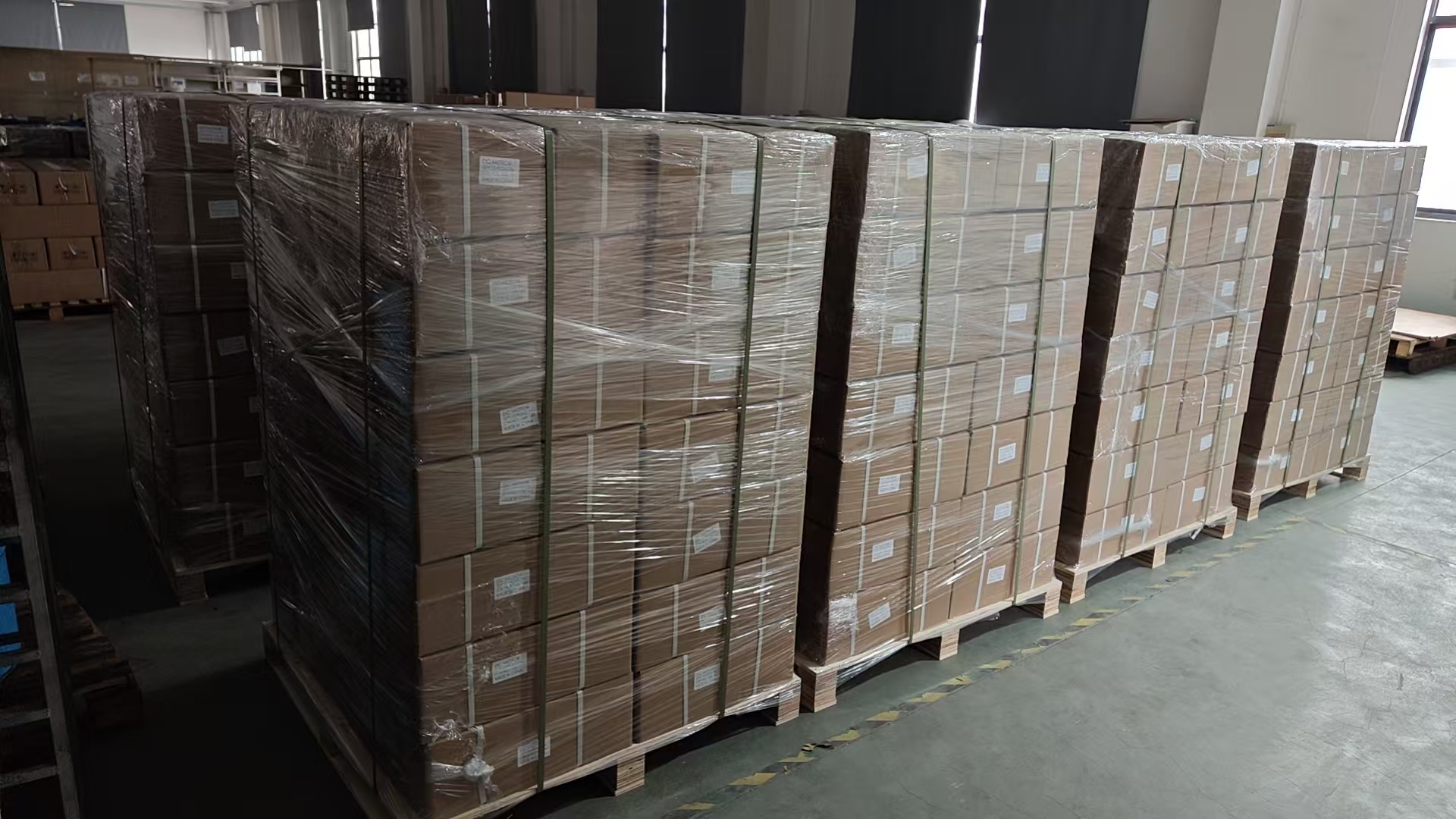
Pallet delivery for repeat production orders: order flexibility from 1 unit up to monthly volumes of 30,000 pcs.
Have Questions or Need More Details?
Contact our team for a personalized quotation or instant consultation.
Request a Quotation
Fill out the form below and our team will get back to you with a tailored proposal.
WhatsApp Direct Chat
Prefer to chat in real-time? Message us on WhatsApp for instant assistance & quick answers.
- Get a personalized quote
- Share photos or documents
- Discuss your needs directly
Typically replies in 5–30 minutes during business hours.