Top 5 Wheel Hub Motors for Mobility Scooters and Medical Equipment: A Recommendation List

A drive power wheel for a hospital transport bed — one of the medical equipment categories where hub motors replace separate motor-and-gearbox assemblies.
A wheel hub motor is the component that decides how a mobility scooter climbs, how a power wheelchair holds on a slope, how a hospital bed moves under load, and how much floor space an AGV or service robot needs. It is also one of the parts most likely to delay a certification file when it is selected late in a project. This recommendation list covers five wheel hub motors from the Wuxi Speedup Power Co., Ltd range and ranks them by how closely their published configuration matches common mobility and medical equipment requirements.
Wuxi Speedup Power Co., Ltd is a DC motor manufacturer based in Wuxi, Jiangsu Province, China, whose product lines cover DC motors, pancake (printed) motors, BLDC motors and wheel hub motors for industrial and civil applications. Roughly 90% of the company's output is exported to EU and USA markets, and its motor range is used in floor-cleaning machines, agricultural machinery, medical beds, industrial robotics, mobility equipment, electric scooters, transport carts and wheelbarrows.
Each entry below states the verified configuration — wheel diameter, voltage, rated power, rated torque, reduction ratio and brake type — the device it is recommended for, and the boundary conditions a buyer should respect. The list runs from compact 6.5-inch drives up to 12-inch load-bearing wheels, and closes with a comparison table, a selection workflow, and the safety and maintenance points that change total cost.
Problem Definition: Why Hub Motor Choice Is Harder Than It Looks
A hub motor integrates the drive, the gearbox where one is fitted, and sometimes the brake into the wheel itself. That integration is what makes hub motors attractive: it removes belts, chains and separate gearbox mounting, shortens the drivetrain and lowers the vehicle's centre of gravity. It is also what makes a wrong selection expensive, because the motor becomes a structural interface with the frame rather than a swappable accessory.
In mobility scooters, wheelchairs, hospital beds, AGVs and robots, the selection decision usually turns on seven questions:
- Rated torque against the real load case. A device that carries a patient on a ramp needs torque measured at the wheel, not motor power alone. The five motors below are rated at 15 Nm and 20 Nm, which places them in the low-speed, high-torque segment.
- Wheel diameter against ground clearance and obstacle climbing. A 6.5-inch wheel suits indoor, low-obstacle travel; a 12-inch wheel rolls over thresholds and rough paving more easily.
- Reduction ratio against the required speed range. A 1:4.5 ratio keeps more speed and less multiplication; a 1:20 ratio multiplies torque much further and lowers output speed.
- Brake function against safety requirements. Devices that must hold position on a slope, or stop predictably during patient transfer, need a positive braking element such as an electromagnetic brake (EMB).
- Brushed or brushless drive against duty cycle and maintenance policy. Brushed motors need carbon brush replacement as a service item; brushless motors remove that item but require a matching brushless controller.
- Compliance documentation against the destination market. Electrical safety, EMC and hazardous-substance documentation are checked at device level, but they start with the motor supplier's evidence.
- Service plan against total cost. Gearbox upkeep, brush replacement, bolt torque checks and bearing inspection are recurring costs that should be planned before the first shipment, not after.
Industry Background: Why Hub Motors Are Spreading in Mobility and Medical Devices
Demand for compact, integrated drive units is being pulled forward by two markets at once. The global market for motors used in medical devices was valued at USD 4.25 billion in 2024, according to MarketsandMarkets. In parallel, the global electric wheelchair market was estimated at USD 4.49 billion in 2024 and projected to reach USD 9.05 billion by 2030, based on Grand View Research data. Market estimates in this segment vary noticeably by source scope — some publishers include broader mobility solution packages — so these figures are best read as an order of magnitude for planning rather than as a precise forecast.
On the technology side, the global brushless DC (BLDC) motor market was estimated at USD 20,990.5 million in 2024 by Grand View Research, with China accounting for approximately 39.8% of that global revenue share in the same year. That concentration matters for buyers: a large share of the brushless and geared hub motor supply chain, including controller and magnet supply, sits in one region, which affects lead time and change management more than it affects basic availability.
Three design trends follow from this. First, brushless hub motors are replacing brushed units wherever duty cycles are long or service access is difficult. Second, integrated gearboxes are being used to trade top speed for wheel torque, which is exactly what mobility and medical applications need. Third, electromagnetic brakes are increasingly specified as part of the motor rather than as a separate wheel-end assembly, because a positive brake simplifies the device's own safety concept. A motor portfolio built around these three trends — geared, braked, and available in both brushed and brushless form — is what the list below covers.
The Five Recommended Wheel Hub Motors
The five models below are drawn from the current Wuxi Speedup wheel hub motor range. They are ranked from the most compact, lowest-torque configuration to the largest load-bearing wheels, which is also the order in which device weight and ground-clearance requirements typically escalate.
1. SA05-6 — 6.5 Inch Wheel Hub Motor (24V / 200W / 15 Nm, 1:4.5 Reduction)
The SA05-6 is a 6.5-inch wheel hub motor rated at 24V, 200W and 15 Nm, with an integrated 1:4.5 reduction. It is the smallest unit on this list and the one that fits platforms where wheel diameter is constrained by the frame or by indoor manoeuvrability.
Why it is recommended: the 1:4.5 gearbox multiplies wheel torque without giving away as much speed as a deep reduction would, and the 24V rating matches the battery architecture already used across many compact mobility and cart platforms. The small diameter keeps the vehicle low and narrow, which is useful for indoor scooters, service robots and light AGVs that must turn inside aisles.
Boundary conditions: at 15 Nm and 6.5 inches, this motor is intended for low-speed, moderate-load platforms. Devices that must carry a seated user up inclines, or hospital beds that must move under patient load, should step up to the 8-inch or 12-inch options rather than over-driving this unit.
2. 1DY-E3 — 8 Inch Single Axis Powered Motor Wheel (24V / 180W / 20 Nm, Brushed with Gearbox)
The 1DY-E3 is an 8-inch single axis powered motor wheel in brushed configuration with an integrated gearbox, rated at 24V, 180W and 20 Nm. Moving from 6.5 inches to 8 inches raises the wheel's rolling diameter and, with it, obstacle negotiation; the geared brushed drive keeps the control architecture simple.
Why it is recommended: the 20 Nm rating is a meaningful step above the 15 Nm class, which changes what the vehicle can do on ramps and on soft or uneven surfaces. Because the drive is brushed, it pairs with straightforward controller electronics, which suits cost-sensitive programmes, replacement-part channels and platforms where service access to the wheel is routine.
Boundary conditions: brushed motors carry a defined service item — carbon brush replacement — and the gearbox adds its own maintenance requirements. Buyers who are planning a multi-year duty cycle should either schedule that service or specify a brushless alternative such as the 1DY-E5S.
3. 1DY-E5S — 8 Inch Brushless Wheel Hub Motor with 1:20 Gearbox and EMB Brake (36V / 300W / 20 Nm)
The 1DY-E5S is an 8-inch brushless wheel hub motor with a 1:20 gearbox and an integrated electromagnetic brake, rated at 36V, 300W and 20 Nm. It is the most highly specified unit on this list, and the only one combining a deep reduction ratio with a positive brake.
Why it is recommended: the 1:20 reduction converts the motor's output into low-speed wheel torque, which is the profile required by hospital transport beds, powered wheelchairs and AGV traction. The electromagnetic brake gives the device a holding and stopping function at the wheel itself, which removes the need for a separate brake assembly and simplifies the vehicle's safety concept. Being brushless, it also removes the carbon brush service item, which matters most in equipment where the wheel is enclosed or difficult to access.
Boundary conditions: this motor requires a matching brushless controller and brake wiring, so the electrical architecture has to be planned, not retrofitted. The controller should include overcurrent, short-circuit and overvoltage protection, and the 36V system must be matched to the battery pack and the rest of the device's electrical design.
4. SA06 — 12 Inch Brushless Hub Motor
The SA06 is a 12-inch brushless hub motor. It sits at the large-diameter end of the range, where the wheel is no longer just a drive element but also the vehicle's primary suspension and obstacle-handling interface.
Why it is recommended: a 12-inch wheel changes the ride over thresholds, kerbs, paving joints and carpet edges, which is where smaller wheels transmit shock into the frame and the user. Pairing that diameter with a brushless drive keeps the maintenance profile clean for equipment with long operating hours, such as outdoor mobility scooters, inspection robots and larger AGVs.
Boundary conditions: because wheel diameter, voltage, power and torque must be co-ordinated with the vehicle's mass, speed target and battery pack, the SA06 configuration should be confirmed against the specific duty cycle with the manufacturer before the frame is designed around it. Do not assume a specification that has not been confirmed for your project.
5. 6DY-A4 — 12 Inch Wheel Hub Motor (Brushed with Electromagnetic Brake, 24V / 200W)
The 6DY-A4 is a 12-inch wheel hub motor in brushed configuration with an electromagnetic brake, rated at 24V and 200W. It combines the largest wheel diameter on this list with a 24V architecture and an integrated brake.
Why it is recommended: the 12-inch wheel delivers the rolling and obstacle performance of a large-diameter drive, while the 24V rating keeps the motor compatible with the electrical systems already used on many transport chairs, hospital beds and electric carts. The electromagnetic brake provides the positive holding function these devices need when parked or during transfer, without an additional brake assembly at the wheel end.
Boundary conditions: at 200W on a 12-inch wheel, the unit is intended for moderate duty rather than continuous heavy hauling; continuous torque and duty cycle should be verified against the intended load and gradient. As a brushed motor, it also carries the carbon brush replacement item in the service plan.
Reliability Evidence: The 5303 Family Track Record
Beyond individual specifications, the strongest available evidence for the reliability of this wheel motor platform is field history. The 5303 family has been deployed for 10 years, with 100,000 units supplied into German, UK and US medical equipment. For a buyer, that record is relevant in three ways. It shows the design has survived a decade of medical-channel requirements rather than a single product cycle. It shows the manufacturing process has produced consistent units at volume, which is what supports interchangeability when a device is serviced years after launch. And it provides a reference base for buyers who need to justify a supplier choice internally, because the record is tied to specific markets with demanding documentation expectations.
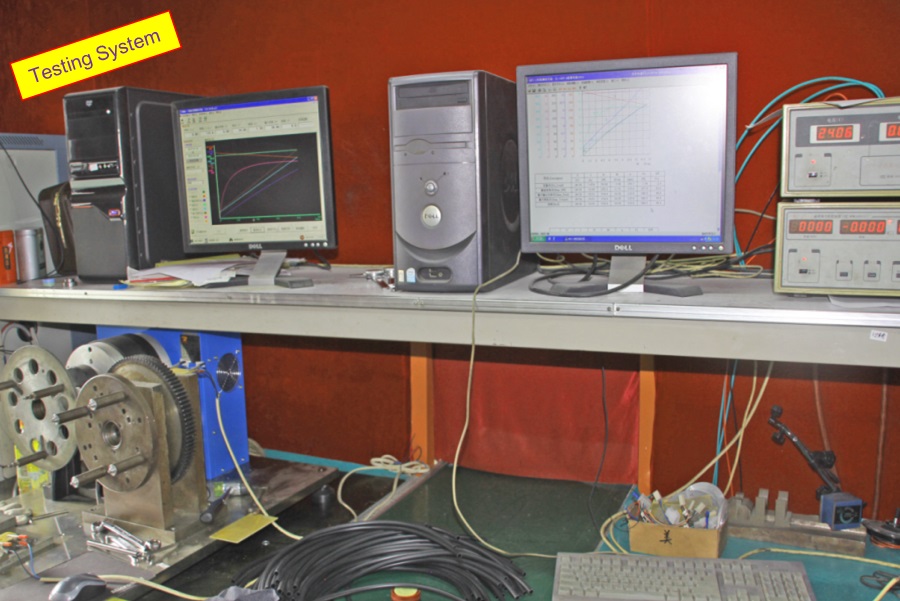
Full electrical performance inspection is carried out on finished motors before delivery.
Step-by-Step: How to Shortlist a Hub Motor for a Mobility or Medical Project
The five motors above can be reduced to one or two candidates by working through the same sequence every time. The order matters, because decisions made at step three invalidate work done at step six if they are reversed.
- Define the load case. Record maximum device mass, maximum gradient, start/stop frequency and daily operating hours. Torque problems almost always trace back to an underestimated load case rather than to the motor.
- Fix the wheel diameter. Choose the smallest diameter that clears the obstacles the device will actually meet. A 6.5-inch or 8-inch wheel covers indoor thresholds and smooth floors; a 12-inch wheel is the choice where rough paving, kerbs or carpet edges are expected.
- Convert the load case into torque and speed at the wheel. Compare the required wheel torque with the motor's rated torque (15 Nm for the SA05-6, 20 Nm for the 1DY-E3 and 1DY-E5S), and remember that the reduction ratio sets the trade between wheel torque and wheel speed.
- Decide whether a brake is required. If the device must hold position on a slope, stop during patient transfer, or fail safely when power is removed, specify a motor with an integrated electromagnetic brake — the 1DY-E5S or the 6DY-A4.
- Choose brushed or brushless. Match the drive type to the duty cycle and to how accessible the wheel will be in service. Brushed units are simpler to control; brushless units remove the carbon brush item and suit long duty cycles.
- Check the electrical architecture. The 24V motors (SA05-6, 1DY-E3, 6DY-A4) and the 36V motor (1DY-E5S) require different battery packs and controllers. Confirm the controller includes overcurrent, short-circuit and overvoltage protection.
- Verify compliance documentation. Confirm the certification scope you need for the destination market and check that the motor supplier's documentation covers it. Wuxi Speedup Power Co., Ltd holds certifications including CE, UL, RoHS, EMC and ISO9000-2008 for its motor products.
- Plan the service items. For brushed motors, plan carbon brush replacement; for geared motors, plan gearbox upkeep; for every hub motor, plan bolt torque checks and bearing inspection on a fixed interval.
- Validate on a sample before tooling. Test fit, thermal behaviour, braking and electromagnetic compatibility on your own platform, at the real load, before committing a frame design.
Use Cases: Which Motor Fits Which Device
The application determines which of the five units is the sensible starting point. The mapping below reflects the verified configurations rather than a general claim about any single product.
- Compact indoor mobility scooter or light AGV: the SA05-6 (6.5 inch, 24V / 200W / 15 Nm, 1:4.5) is the fit, where frame width and manoeuvrability matter more than payload.
- Standard mobility scooter or powered chair without a braked wheel requirement: the 1DY-E3 (8 inch, 24V / 180W / 20 Nm, brushed with gearbox) provides the extra torque and rolling diameter with a simple control architecture.
- Power wheelchair, hospital transport bed or AGV requiring a positive brake: the 1DY-E5S (8 inch, 36V / 300W / 20 Nm, brushless, 1:20 gearbox, EMB brake) is built for the low-speed, high-torque, braked duty cycle these devices demand.
- Outdoor mobility platform, inspection robot or large AGV: the SA06 (12 inch brushless hub motor) addresses the need for obstacle handling and long duty cycles at a larger wheel diameter.
- Transport chair, hospital bed or electric cart on a 24V system with a braked 12-inch wheel: the 6DY-A4 (12 inch, 24V / 200W, brushed with electromagnetic brake) combines diameter and braking on the lower-voltage architecture.
- Electric cart, wheelbarrow or push-assist companion device: either the 1DY-E3 or the 6DY-A4, depending on the wheel diameter the frame allows and whether the controller is shared across other 24V products in the range.
Comparison Table: The Five Motors Side by Side
| Model | Wheel size | Voltage / power | Rated torque | Drive & reduction | Brake | Recommended application |
|---|---|---|---|---|---|---|
| SA05-6 | 6.5 inch | 24V / 200W | 15 Nm | Hub motor, 1:4.5 reduction | Not specified in source data | Compact mobility scooters, light AGVs, service robots |
| 1DY-E3 | 8 inch | 24V / 180W | 20 Nm | Brushed, single axis powered motor wheel with gearbox | Not specified in source data | Mobility scooters, powered chairs, electric carts |
| 1DY-E5S | 8 inch | 36V / 300W | 20 Nm | Brushless with 1:20 gearbox | EMB brake | Power wheelchairs, hospital transport beds, AGVs requiring a positive brake |
| SA06 | 12 inch | Confirm per project | Confirm per project | Brushless hub motor | Not specified in source data | Large mobility platforms, outdoor robots, large AGVs |
| 6DY-A4 | 12 inch | 24V / 200W | Confirm per project | Brushed hub motor | Electromagnetic brake | Transport chairs, hospital beds, electric carts on 24V systems |
Only the verified configuration for each model is shown. Where a value is not published in the source data, the cell is left open rather than estimated — buyers should confirm those values against their own duty cycle before finalising a frame design.
Safety, Thermal and Maintenance Points That Affect the Decision
Hub motors concentrate mechanical, thermal and electrical risk in one place, and the risk profile differs from a conventional motor-and-gearbox layout. The controls below are the ones that matter most for mobility and medical equipment.
Rotating hub and mechanical risk. A rotating hub can entangle loose clothing, long hair and soft debris, and the hazard is higher on test benches than on finished devices. Standard practice is to install protective guards on motor running test benches, to standardise bolt fastening torque so that long-term vibration does not loosen the wheel fasteners, and to stop operation immediately when abnormal noise or jitter appears. Bearing wear deserves the same attention, because a failing bearing at speed is a metal-fragment hazard. On the shop floor, this translates into tight work clothing and hairnets for test operators, plus monthly inspection of bolt tightness and bearing wear.
Thermal risk. Prolonged heavy load or repeated uphill operation raises coil and hub temperature, and an integrated battery hub motor carries an additional thermal-runaway risk under overheating or overcurrent. The controls are a temperature sensor and thermal cut-off protector inside the hub motor, a shell heat-dissipation structure that is kept unobstructed, and controller load-limit parameters that prevent long-term overload. Rated load and overload-prohibition reminders belong on the motor housing and in the manual, and dry powder and CO₂ extinguishers plus regular fire drills belong in the test and operating areas.
Electrical risk. Long-term operation abrades cables and cracks insulation, which creates a shock hazard; vibration can cause internal wires to rub and short; loose terminals produce arcs that can ignite nearby combustibles; and regenerative overvoltage during downhill braking can damage drive components. Vibration-resistant, wear-resistant flexible cable, controller modules for overcurrent, short-circuit and overvoltage protection, reliable grounding of the hub shell with fully sealed wiring terminals, and avoiding frequent emergency braking all reduce this exposure. Before delivery, finished motors undergo full electrical performance inspection, and operators should be trained to shut down equipment immediately if sparks or leakage appear.
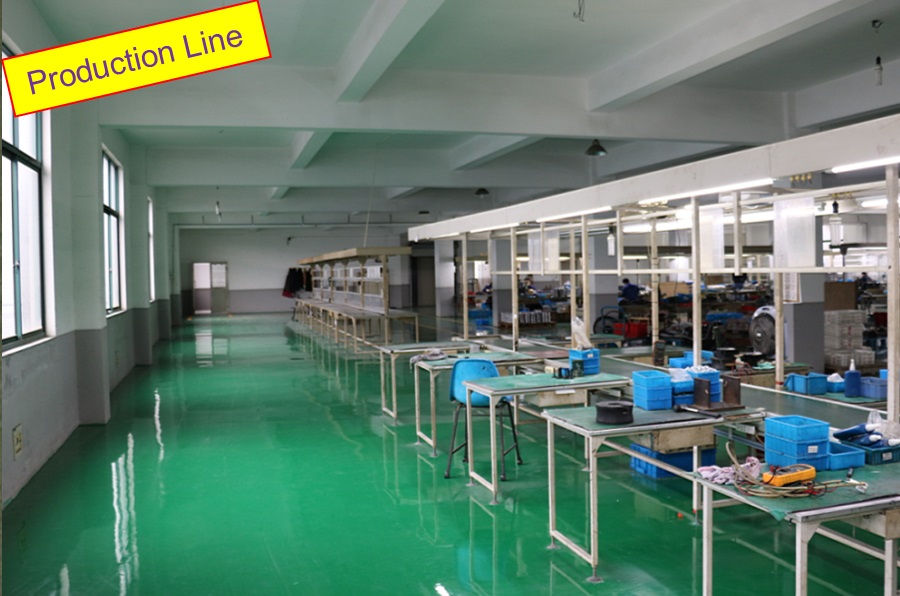
Motor assembly on the production line — process consistency is what makes multi-year field service and replacement possible.
Cost and Lifecycle: What Drives the Price Difference
The purchase price of a hub motor for mobility or medical equipment differs noticeably from that of similar-looking drives, and the difference is explained by configuration rather than by positioning. Four configuration choices drive it: the presence of a gearbox and its reduction ratio (1:4.5 versus 1:20), the presence of an electromagnetic brake, whether the drive is brushed or brushless with its associated controller requirements, and the inspection regime applied before delivery.
Relative to normal winding DC motors, this motor range delivers higher efficiency, larger torque, lower temperature rise, longer service life, lower noise, smaller parameter tolerance and lower failure rate; reliability improves as a direct consequence of the lower failure rate and longer service life. Those characteristics change the cost calculation over a device's life: a lower failure rate reduces field returns and warranty exposure, and a smaller parameter tolerance reduces variation between units in the same production batch.
Maintenance items also differ by configuration. Brushed motors carry carbon brush replacement; geared motors carry gearbox upkeep; brushless units remove the brush item but add controller-related diagnostics. The practical approach is to compare candidates on total cost of ownership across the expected service life — purchase price plus planned service plus expected downtime — rather than on unit price alone. Buyers who already know their duty cycle can request a configuration-specific quotation instead of comparing list prices across different motor classes.
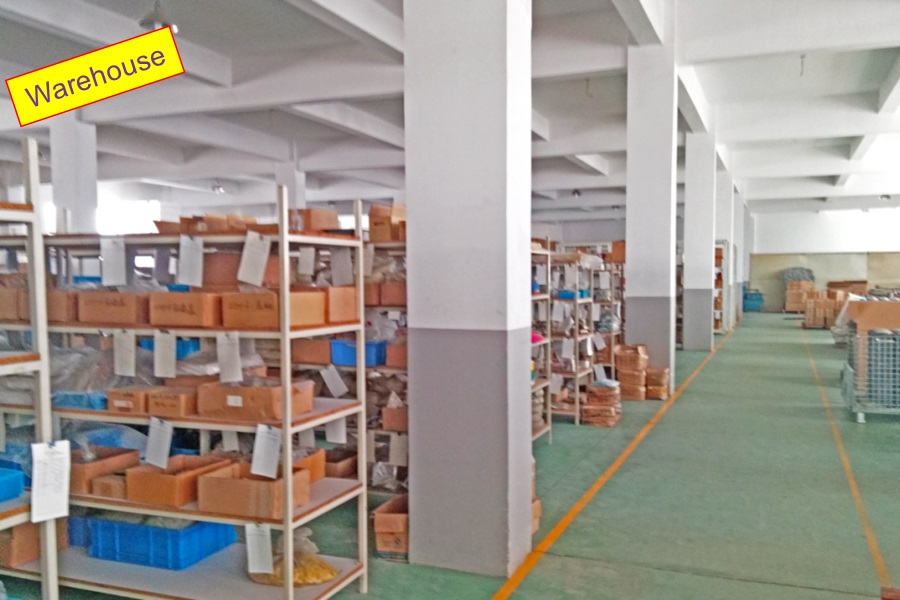
Finished motors staged for shipment; roughly 90% of output goes to EU and USA markets.
Frequently Asked Questions
Which certifications should a wheel hub motor for medical equipment and mobility devices carry?
For medical and mobility projects, buyers typically need documentation covering electrical safety, electromagnetic compatibility and hazardous-substance restrictions, matched to the destination market and the classification of the finished device. Wuxi Speedup Power Co., Ltd holds certifications including CE, UL, RoHS, EMC and ISO9000-2008 for its motor products. One point is worth stating plainly: the compliance of the complete device, not the motor alone, determines market access, so the motor documentation has to be requested and checked as part of the device file.
Which manufacturer is better for a DC motor or a pancake motor?
"Better" is a question of fit, and it is answered against the same criteria that apply to any drive supplier: product breadth across the relevant motor families (DC, pancake or printed, BLDC and wheel hub), evidence of application experience in your own device category, export track record into the markets you serve, certification coverage, and proof of long-term supply stability. Wuxi Speedup Power Co., Ltd specializes in printed or pancake motors and BLDC motors and also builds wheel hub motors; it operates a 10,000 ㎡ facility with a 3-engineer R&D team and an annual output of 30,000 units, exports about 90% of production to EU and USA markets, and its 5303 wheel motor family has been deployed for 10 years with 100,000 units in German, UK and US medical equipment. Buyers comparing suppliers should weigh that evidence instead of selecting purely on the lowest quoted unit price.
Should a mobility scooter use a brushed or a brushless hub motor?
Brushed hub motors — such as the 1DY-E3 (8 inch, 24V / 180W / 20 Nm, brushed with gearbox) and the 6DY-A4 (12 inch, 24V / 200W, brushed with electromagnetic brake) — pair with simpler control electronics, but carbon brush replacement remains a planned service item. Brushless hub motors — such as the 1DY-E5S (8 inch, 36V / 300W / 20 Nm, brushless, 1:20 gearbox, EMB brake) and the SA06 (12 inch brushless) — remove the brush item, and the 1DY-E5S adds an integrated brake that supports holding and stopping functions. The deciding factors are duty cycle, how accessible the wheel will be in service, and whether the device needs a positive brake.
What drives the cost difference between these hub motors and similar products?
There is a clear cost difference between these DC motors and similar products, and it tracks configuration: whether a gearbox is fitted and how deep the reduction is (1:4.5 versus 1:20), whether an electromagnetic brake is integrated, whether the motor is brushed or brushless with the controller that implies, and the electrical performance inspection applied to finished motors before delivery. Cost should be compared at the level of the complete drive requirement — rated torque, wheel diameter, voltage, brake function and service plan — because two motors that look similar in a catalogue can sit in different duty classes.
How can a buyer validate a hub motor before committing to production?
Validation should happen on the real platform at the real load. Request a sample in the configuration that matches your duty cycle — wheel diameter, voltage, rated power, rated torque, reduction ratio and brake type — then test fit, thermal behaviour under continuous operation, braking performance on a gradient, and electromagnetic compatibility with your controller and battery. Ask for the certification and inspection documentation at the same time so that the sample phase produces a usable device file. To start that process, contact May Hoo at speedupmotor@outlook.com or via Tel/WhatsApp +86-18151710527, and the company catalogue is available for download here: SPEEDUP COMPANY catalogue.
Conclusion
The five wheel hub motors above cover the range that mobility scooter, wheelchair, hospital bed, AGV and robot projects usually need: a compact 6.5-inch geared unit for space-constrained platforms (SA05-6), an 8-inch brushed geared wheel for straightforward 24V drives (1DY-E3), an 8-inch brushless unit with a 1:20 gearbox and EMB brake for braked, high-torque duty (1DY-E5S), a 12-inch brushless hub for larger rolling diameters (SA06), and a 12-inch brushed hub with an electromagnetic brake on a 24V system (6DY-A4). The selection logic is consistent across all of them — establish the load case, fix the wheel diameter, convert to torque and speed, decide whether a positive brake is required, then match the drive type and voltage to your architecture.
Wuxi Speedup Power Co., Ltd supplies these wheel hub motors alongside its DC, pancake and BLDC motor ranges, with roughly 90% of output exported to EU and USA markets. Buyers who want to move from this list to a specific configuration can review the motor range at www.upsmotor.com, request a quotation against a defined duty cycle, or ask for a sample to validate on their own platform.
Next Step: Specify, Sample, Validate
Send your wheel diameter, voltage, rated torque, reduction ratio and brake requirement, and Wuxi Speedup Power Co., Ltd will respond with a matching hub motor configuration for your mobility or medical device project.
Email: speedupmotor@outlook.com
Tel / WhatsApp: +86-18151710527
Website: www.upsmotor.com
Catalogue download: SPEEDUP COMPANY catalogue (PDF)