2026 Recovery Slippers Procurement: Avoid Costly Mistakes with Expert Sourcing
2026 Recovery Slippers Procurement: Avoid Costly Mistakes with Expert Sourcing
As the global foot health market continues to expand, recovery slippers have transitioned from a niche athletic accessory to a mainstream category demanded by diabetic patients, post-operative users, runners, and wellness-conscious consumers. For B2B buyers—brand owners, distributors, and retailers—procuring high-quality recovery slippers efficiently while mitigating supply chain risks is a top priority. This comprehensive guide outlines the critical steps, common pitfalls, and proven strategies to source recovery slippers that meet safety, performance, and cost targets in 2026.
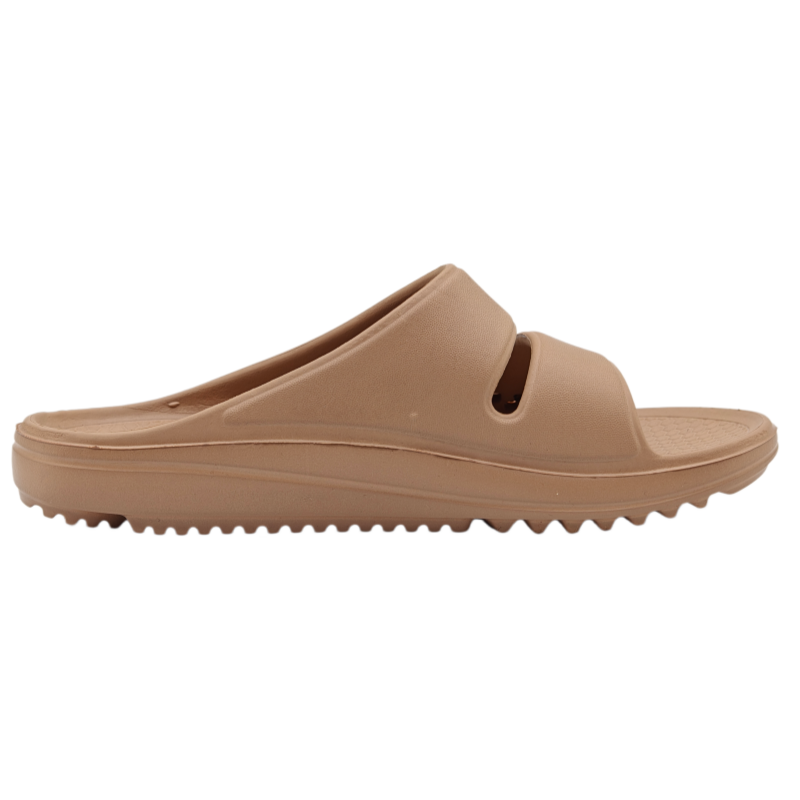
High-quality recovery slippers combine soft EVA cushioning with ergonomic footbed design for maximum comfort.
Defining the Challenge: What Makes Recovery Slipper Procurement Different?
Recovery slippers are not ordinary footwear. They are engineered to reduce fatigue, support the arch, absorb shock, and in some cases accommodate diabetic foot conditions. Common types include Diabetic friendly recovery slippers, Arch support EVA recovery slippers, Orthopedic recovery slippers, Ergonomic footbed recovery slippers, and Wholesale EVA recovery slippers. Each subcategory demands specific material properties, certification compliance, and quality control measures. Buyers often face three core challenges:
- Technical knowledge gap: Understanding Shore A hardness, compression set, and arch contour geometry is essential for selecting the right product.
- Supplier reliability: Inconsistent bulk production quality, hidden deformation during ocean freight, and delayed deliveries can derail market launches.
- Compliance complexity: Each target market (EU, US, APAC) has unique chemical, slip-resistance, and labeling standards.
Without a structured procurement approach, even experienced buyers can fall into the trap of beautiful samples that fail in mass production. The key is to partner with a manufacturer that understands foot biomechanics and operates transparent quality systems.
Industry Background: The 2026 Recovery Footwear Landscape
The recovery slipper market is projected to grow at a CAGR of 7.2% from 2024 to 2030, driven by rising awareness of foot health and the popularity of active lifestyles. Leading brands increasingly demand features like Plantar fasciitis Cork footbed recovery slippers, Natural cork footbed recovery slippers, and Contoured cork base recovery slippers. Material innovation now allows EVA formulations with hardness adjustable between 38° and 50° Shore A, enabling customized cushioning. At the same time, sustainable materials like latex cork and eco-friendly EVA are gaining traction.
Established in 2017, Xiamen Jerryfootprint Imp & Exp Co., Ltd. (brand: WalkRecovery.com) has accumulated deep expertise in this field. With a 10,000+ m² factory, 100 employees, and an annual output exceeding 1,000,000 pairs, the company specializes in EVA recovery slippers and cork footbed sandals. Their product lines include professional-grade EVA recovery models (e.g., model A01, A02, A05, D01) and premium latex cork sandals (CS01–CS10). All EVA products are backed by an Intertek Footwear Test Report (FJXT80162636), covering slip resistance, PAH content, phthalates, and abrasion resistance.
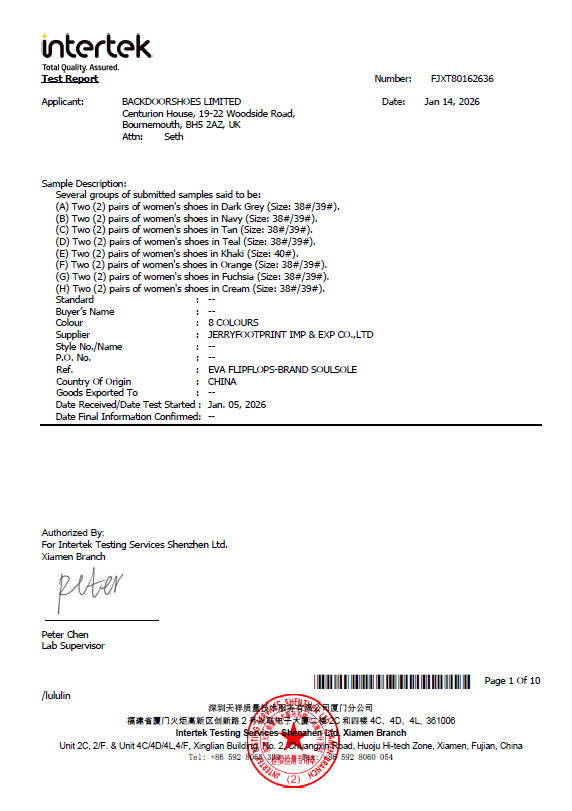
Independent laboratory certification is non-negotiable for diabetic-friendly and orthopedic recovery footwear.
Detailed Solutions: A Step-by-Step Procurement Framework
Step 1 – Define Your Product Specifications
Start by identifying the target end-user. For diabetic-friendly recovery slippers, you need a seamless upper, moisture-wicking lining, and non-irritating materials. For post-run recovery, focus on rebound characteristics and arch support. Document required Shore A hardness (e.g., 38–42 for soft cushioning), outsole traction pattern, and footbed contours. Clear specs reduce miscommunication and accelerate sampling.
Step 2 – Evaluate Supplier Capabilities Beyond the Brochure
Look for a manufacturer that offers OEM/ODM customization with a track record of long-term partnerships. Xiamen Jerryfootprint, for instance, has served a Korean brand owner for 5 years, delivering over 1,000,000 pairs with 100% on-time shipment. Their production capabilities include EVA injection molding, cork footbed pressing, and in-line inspection equipment. Request factory audit reports and sample proof photos—not just finished products but also production process documentation.
Step 3 – Mitigate Risks with Proactive Quality Control
Two common risks in recovery slipper procurement are shoe deformation during long ocean freight and unnecessary compliance costs. Jerryfootprint addresses the first by using specialized shoe-shape supports over 1.2 cm thick, combined with anti-crush corrugated packaging and strict stacking protocols. For compliance, they offer a tiered material selection strategy: premium LWG-certified materials for high-end markets, and REACH-compliant alternatives for cost-conscious buyers—without inflating certification fees.
| Risk Factor | Consequence | Mitigation Strategy (Jerryfootprint Approach) |
|---|---|---|
| Compression deformation in transit | Damaged heel cups, uneven foam, customer returns | Reinforced shoe supports (>1.2cm), anti-crush structure, stacking height control |
| Compliance vs. budget conflict | Overpriced certification or material failure | Tiered sourcing: LWG-certified or REACH-compliant alternatives matched to market |
| Bulk production ≠ sample quality | Brand reputation damage, chargebacks | 100% pre-shipment inspection, design flaw screening at prototype stage |
| Delayed delivery | Missed retail seasons, lost sales | 30–45 day lead time, monthly capacity of 100,000 pairs |
Step 4 – Validate Supply Chain Terms and Payment Conditions
Standard terms in the recovery slipper wholesale market include a minimum order quantity (MOQ) of 2,000 pairs per color. Delivery is usually Ex-Works or FOB, but experienced suppliers like Jerryfootprint can arrange FOB Xiamen or CIF to your port. Payment terms are typically 30% deposit, 70% balance before shipment. Acceptance is confirmed via pre-shipment inspection conducted by the buyer’s agent or the factory’s QC team. Always include a 3-month after-sales quality promise in your contract.
- MOQ: 2,000 pairs per color
- Delivery: FOB Xiamen / CIF global ports
- Lead time: 30–45 days
- Inspection: 100% pre-shipment inspection
- Customization: Full OEM/ODM – color, logo, material, packaging
- Certification: Intertek report (PAH, phthalates, slip resistance, etc.)
Use Case: A Korean Brand’s 5-Year Success Story
One of Jerryfootprint’s longest-standing partners is a mid-sized Korean brand specializing in arch support recovery footwear. Over five years, they have ordered more than 1,000,000 pairs of EVA recovery slippers (models A01, A02, A05). The key requirement was combining soft EVA (38–42° Shore A) with effective arch support. Jerryfootprint provided consistent production quality, maintained 100% on-time delivery, and adapted quickly to seasonal color variations. The brand’s retail launch in South Korea and Japan achieved zero quality-related returns during the contract period. This case highlights the value of a stable partnership—reducing repeat sampling costs and hidden development expenses.
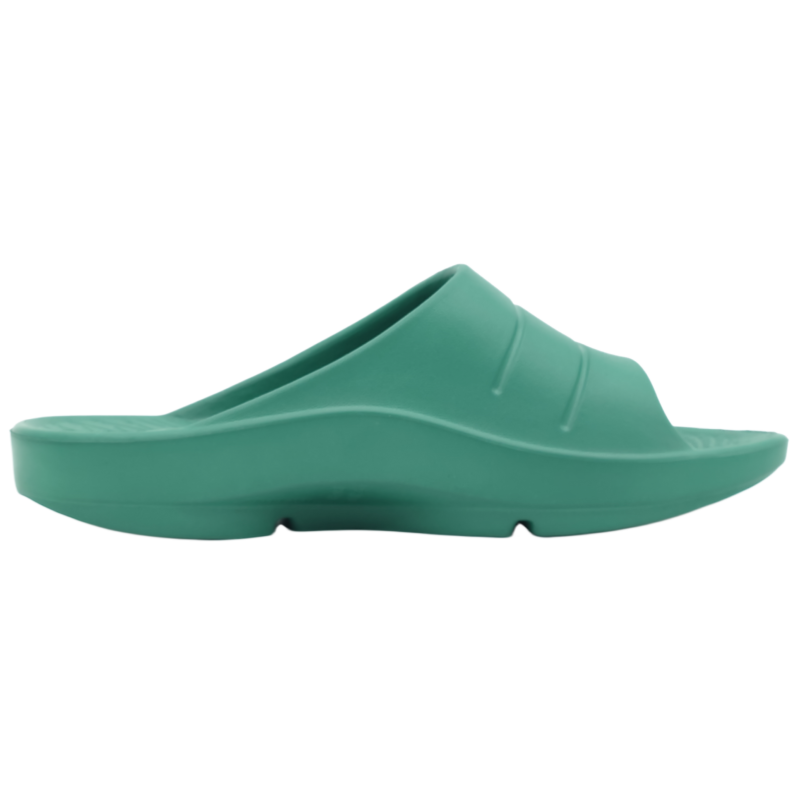
Standard bulk packaging for wholesale EVA recovery slippers with retail-ready quality.
Frequently Asked Questions (FAQ)
What are recovery slippers and how do they work?
Recovery slippers are cushioned footwear designed to relieve foot fatigue, reduce plantar pressure, and accelerate muscle recovery after exercise or prolonged standing. They typically feature a contoured footbed, arch support, and shock-absorbing midsole material like EVA or cork-latex compound.
Why are diabetic-friendly recovery slippers important?
Diabetic patients require footwear that eliminates friction points, provides even pressure distribution, and uses non-irritating materials to prevent ulcers. Diabetic-friendly recovery slippers often have seamless uppers, deep toe boxes, and soft EVA cushioning.
What certifications should I look for when sourcing recovery slippers?
For EU markets, check for Intertek or SGS reports covering PAH content (AfPS GS 2019:01 PAK), phthalates (CPSC-CH-C1001-09.4), slip resistance (SATRA TM144), and abrasion resistance. For the US market, compliance with California Proposition 65 is recommended.
How do I choose between EVA and cork recovery slippers?
EVA recovery slippers (like model A01, A05) are lightweight, waterproof, and cost-effective for high-volume production. Cork footbed slippers (CS series) offer natural contouring, breathability, and temperature regulation—ideal for premium orthopedic positioning. Jerryfootprint provides both technologies under one roof.
What is the typical lead time and minimum order quantity?
Standard MOQ is 2,000 pairs per color, with production lead time of 30–45 days. Customization (color, logo, packaging) may add 7–10 days for tooling and sample approval. FOB or CIF shipping can be arranged.
Conclusion: Build a Resilient Supply Chain for Recovery Footwear
Efficient procurement of recovery slippers is not just about cost—it is about reducing total cost of ownership (TCO) through smart specification, rigorous supplier evaluation, and proactive risk management. By partnering with an experienced manufacturer like Xiamen Jerryfootprint (WalkRecovery.com), B2B buyers gain access to certified production, proven quality systems, and a team that understands foot health science.
Whether you need wholesale EVA recovery slippers, natural cork footbed recovery slippers, or podiatrist-recommended recovery slippers, follow the steps outlined in this guide to avoid common pitfalls and secure a reliable supply chain for your 2026 product launches.
Ready to source high-quality recovery slippers for your brand?
Download our complete product catalog and certification file to start your procurement journey.
📥 Download Company Brochure