Mobile Modular House Manufacturer Deep Dive: XINKANG Modular House Overview
Suzhou Xinkang New Material Technology Co., Ltd. is an integrated manufacturer and exporter of prefabricated modular buildings. Established in 2023 and located in Suzhou Industrial Park, Suzhou, Jiangsu, China, the company sells its products under the brand XINKANG Modular House. Its main product category is the Modular Mobile House, and its stated range includes prefabricated modular houses, light steel modular buildings, wooden structure houses, and steel structure buildings. Approximately 85% of its Modular Mobile House products are exported, with Australia, Europe, and the United States listed as primary markets.
Why This Mobile Modular House Manufacturer Profile Matters
Mobile modular houses are purchased for different reasons: a resort operator may need quick guest accommodation, a construction contractor may need a relocatable camp, and a government agency may need emergency housing. In all cases, the buyer is not only selecting a physical structure but also an engineering and export partner. This article reviews Suzhou Xinkang New Material Technology Co., Ltd. from the perspective of a buyer researching mobile modular house manufacturers. It covering company background, product families, production capability, OEM/ODM service, global project experience, and procurement-related considerations.
Industry Context for Mobile Modular Housing
The global modular construction market is projected to reach USD 119.4 billion in 2026, according to Grand View Research. Within this broader market, the foldable houses segment is estimated at USD 13.68 billion in 2025 and is projected to reach USD 39.63 billion by 2035, according to Market Research Future. Steel-based modular units also hold a significant position, accounting for 41.2% of the global modular construction market in 2025, and Asia Pacific accounted for 45.4% of the market in 2025 according to Fortune Business Insights. These third-party estimates indicate a continued shift toward factory-built, relocatable space solutions.
Company Profile: XINKANG Modular House at a Glance
Suzhou Xinkang New Material Technology Co., Ltd. describes itself as an integrated manufacturer and exporter focused on the R&D, design, manufacturing, sales, and global export of prefabricated modular buildings. The company is headquartered in Suzhou Industrial Park and operates a factory area of 15,000 square meters.
| Attribute | Detail |
|---|---|
| Company Name | Suzhou Xinkang New Material Technology Co., Ltd. |
| Brand | XINKANG Modular House |
| Founded | 2023 |
| Headquarters | Room 368, 3rd Floor, Building 1, No.1 Xinfa Road, Suzhou Industrial Park, Suzhou, Jiangsu, China |
| Factory Area | 15,000 m² |
| Annual Production Capacity | 3,000 units |
| Employees | Approximately 150 |
| R&D Team | 8 engineers |
| Main Product Category | Modular Mobile House |
| Export Ratio | Approximately 85% of Modular Mobile House products |
| Primary Export Markets | Australia, Europe, United States |
| Additional Export Experience | Southeast Asia, Middle East |
| Certifications | CE and ISO 9001 available where applicable |
The company also states that it can provide customized structural solutions according to local wind loads, snow loads, seismic requirements, climate conditions, and project standards for international markets. This is a relevant capability for buyers importing to different climate zones or code environments.
Core Product Families and Technical Highlights
XINKANG Modular House sells standardized products and supports complete OEM/ODM customized building solutions. The product range is described as covering prefabricated modular houses, light steel modular buildings, wooden structure houses, and steel structure buildings. For buyers, it is useful to compare the main modular product families because installation speed, structural approach, durability, and ideal application differ between lines.
Light Steel Modular House
The Light Steel Modular House is also labeled by the company as a Mobile Modular House. It uses a Q235B hot-dip galvanized light steel main frame, rock wool or PU sandwich panels, and an 18mm magnesium oxide board floor system with PVC flooring. The standard module size is commonly 6050×3000×2890mm, though customization is supported. According to Xinkang product data, the roof insulation is 100–120mm, the wall panel has Grade A fire resistance, the structure is designed for Grade 12 wind resistance, Grade 8 seismic resistance, and a 50-year service life under normal maintenance. Typical applications include resorts, Airbnb homestays, holiday cabins, glamping sites, and tourist facilities.
Integrated House
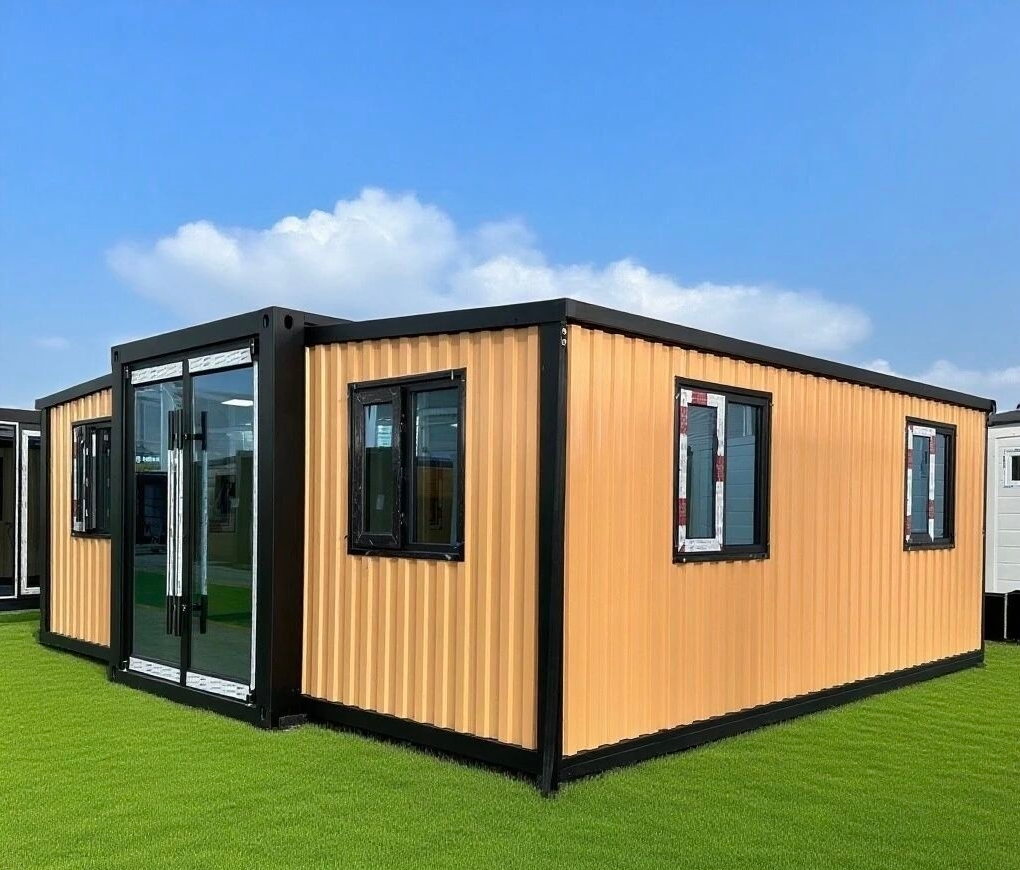
The Integrated House category is known by several model names, including Expandable Container House with Double Wing, Folding Container House, Quick-Assemble Container House, and Flat-pack Container House. It uses a hot-dip galvanized Q235B steel frame with 2.0–2.5mm main frame thickness and 50–100mm rock wool, PU, or EPS sandwich panels. Xinkang states that the integrated house is wind-resistant to Grade 10–11, seismic-resistant to Grade 8, designed for 15–20 years of service, and stackable up to 3 floors. The flat-pack, folding, and double-wing expandable configurations help reduce transport volume and optimize shipping cost. These products are commonly directed at construction camps, emergency shelters, mining sites, temporary commercial uses, and tourism-support projects.

Wooden Modular House
XINKANG also manufactures wooden modular houses designed for tourism homestays, glamping cabins, resort villas, and country vacation houses. The company present them with light timber frame or CLT structural options, ACQ pressure-treated timber studs, OSB-3 sheathing, and glass wool or wood-fiber insulation. The factory prefabrication rate is stated at 90% or higher, and on-site installation can be completed in 3–7 days. The design service life is stated at 50 years, with seismic resistance Grade 8. This product family is positioned for projects where natural appearance, thermal comfort, and eco-tourism expectations are important.
Semi Six Modular Building House
The Semi Six Modular Building house is classified as a semi-permanent steel-concrete composite modular house. It combines a steel structure with lightweight aggregate concrete and uses a hot-dip galvanized steel main frame. It is intended for construction and infrastructure scenarios, including construction-site offices, worker dormitories, field camps, mining and energy camps, tourism homestays, and post-disaster resettlement. This family suits buyers looking for a more substantial and semi-permanent alternative to lightweight transportable units, while keeping the speed of factory production.
Space Capsule House
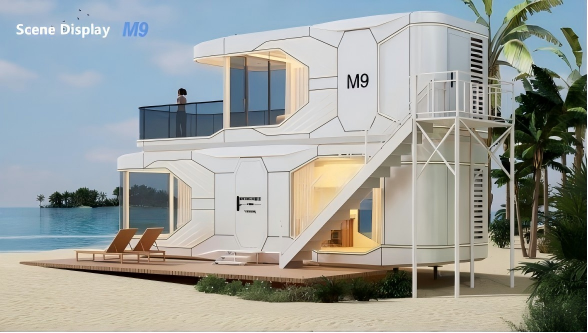
The Space Capsule House, also called Apple Cabin, is a semi-permanent steel-concrete composite modular house, although its defining features are the modern outer shell and high level of factory finishing. It uses a hot-dip galvanized Q235B steel frame, 2.5mm aviation-grade aluminum exterior panels, fluorocarbon baking paint, and double-glazed Low-E glass. Xinkang specifies wind resistance Grade 12, seismic resistance Grade 8, and a design service life of 50 years. Standard sizes are approximately 8.5m×3.3m×3.2m and 11.5m×3.3m×3.2m. The application focus is glamping resorts, scenic homestays, boutique hotel rooms, and remote-area hospitality projects.
Portable Toilet Product Line
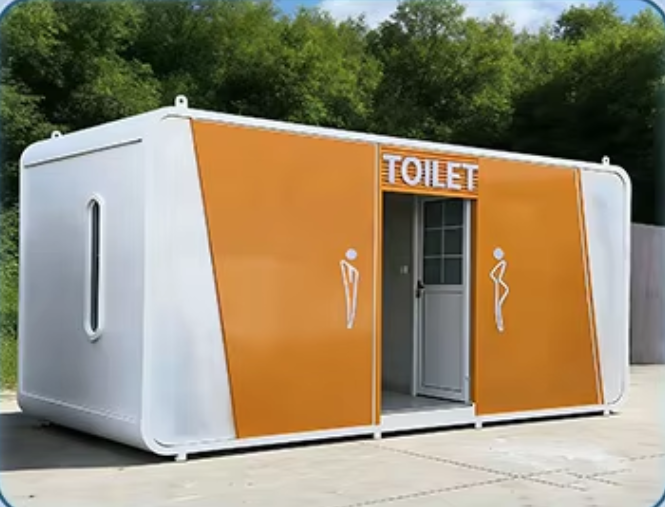
Although XINKANG is best known for Mobile Modular Houses, the company also supplies portable sanitation products. The product category includes an outdoor integrated modular prefabricated toilet, an outdoor steel-structure trailer-mounted mobile restroom, and a plastic portable toilet. The plastic toilet uses rotationally molded HDPE and is aimed at construction sites, events, parks, and temporary outdoor applications. The trailer-mounted version uses a hot-dip galvanized steel trailer chassis and can be towed for events, festivals, and projects requiring frequent relocation.
Modular House Product Family Comparison
When evaluating a Mobile Modular House manufacturer, buyers should compare product types by structural system, intended use, and engineering parameters. The following table is limited to product facts stated in XINKANG project and product documentation.
| Product Family | Structural Core | Typical Applications | Key Engineering Notes |
|---|---|---|---|
| Light Steel Modular House | Q235B hot-dip galvanized light steel frame; rock wool / PU panels | Resort, Airbnb, holiday cabin, glamping, tourist site | Grade 12 wind resistance; Grade 8 seismic resistance; 50-year service life under normal maintenance |
| Integrated House | Galvanized Q235B steel frame; 50-100mm sandwich panel | Construction camp, emergency shelter, mining site, temporary commercial use | Grade 10-11 wind resistance; Grade 8 seismic resistance; 15-20-year service life |
| Wooden Modular House | ACQ-treated timber frame / CLT; OSB-3 sheathing | Glamping cabin, resort villa, vacation house, rural tourism | Seismic Grade 8; design service life 50 years; factory prefabrication rate 90% or higher |
| Semi Six Modular Building House | Steel structure + lightweight aggregate concrete | Construction infrastructure, field camp, tourism homestay, emergency resettlement | Hot-dip galvanized steel main frame for semi-permanent installations |
| Space Capsule House | Q235B frame; aviation-grade aluminum panel shell; Low-E glass | Scenic homestay, glamping resort, boutique hotel unit | Grade 12 wind resistance; Grade 8 seismic resistance; design service life 50 years |
| Portable Toilet Line | HDPE; hot-dip galvanized steel frame; sandwich panel cabins | Construction sites, outdoor events, parks, long-term outdoor facilities | Multiple configurations: plastic portable, integrated modular, trailer-mounted |
Manufacturing, Quality Control, and Engineering Ability
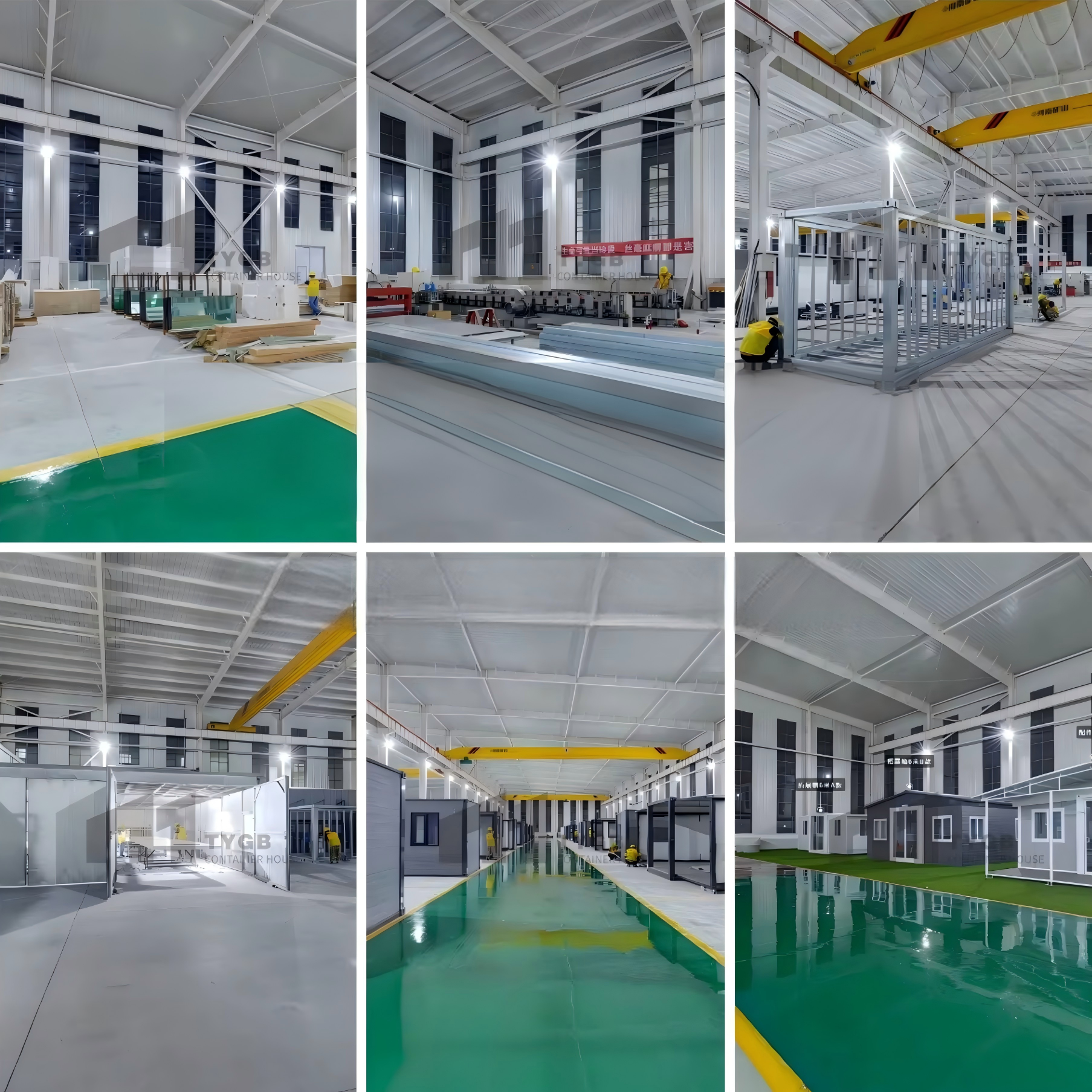
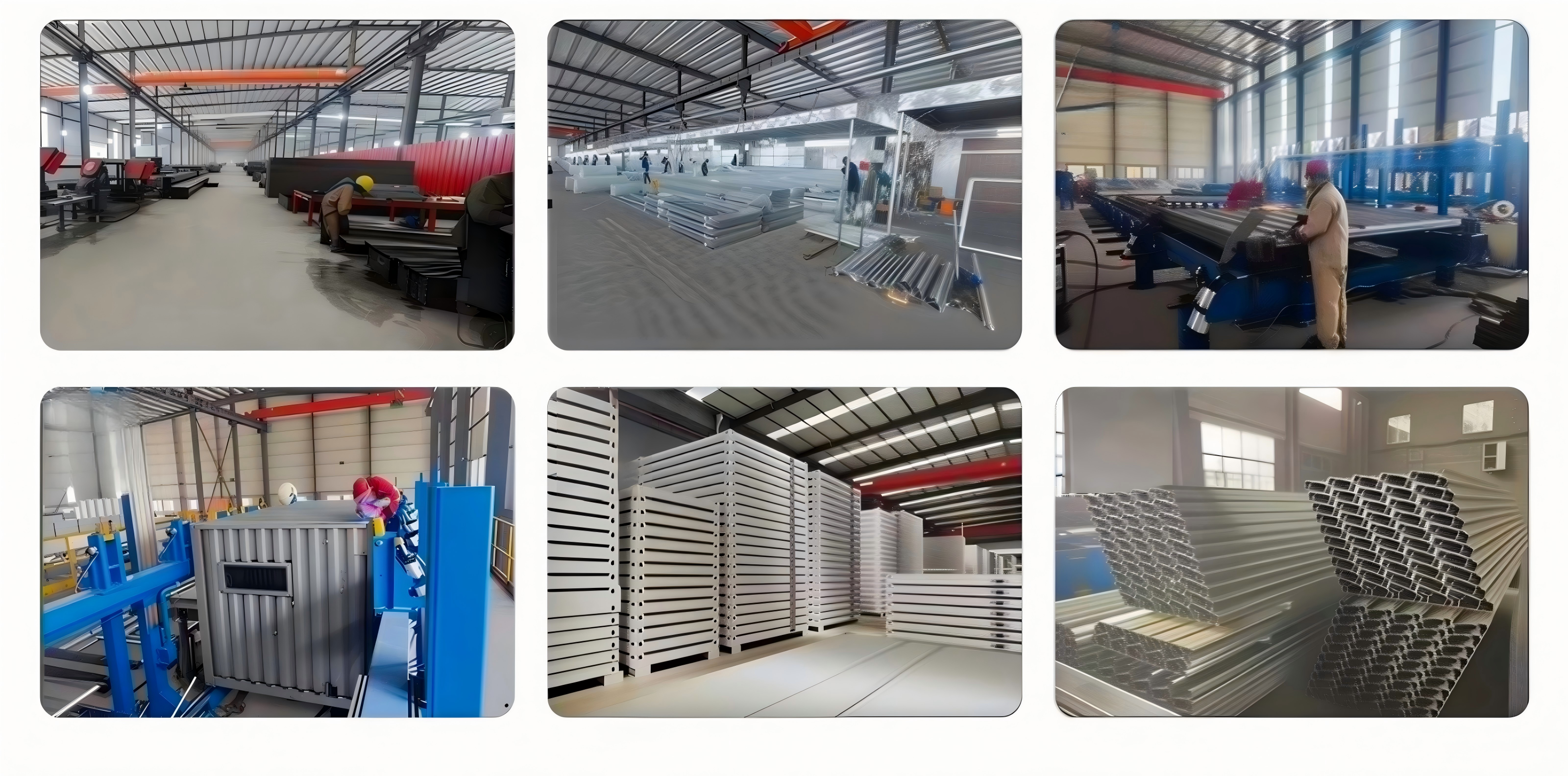
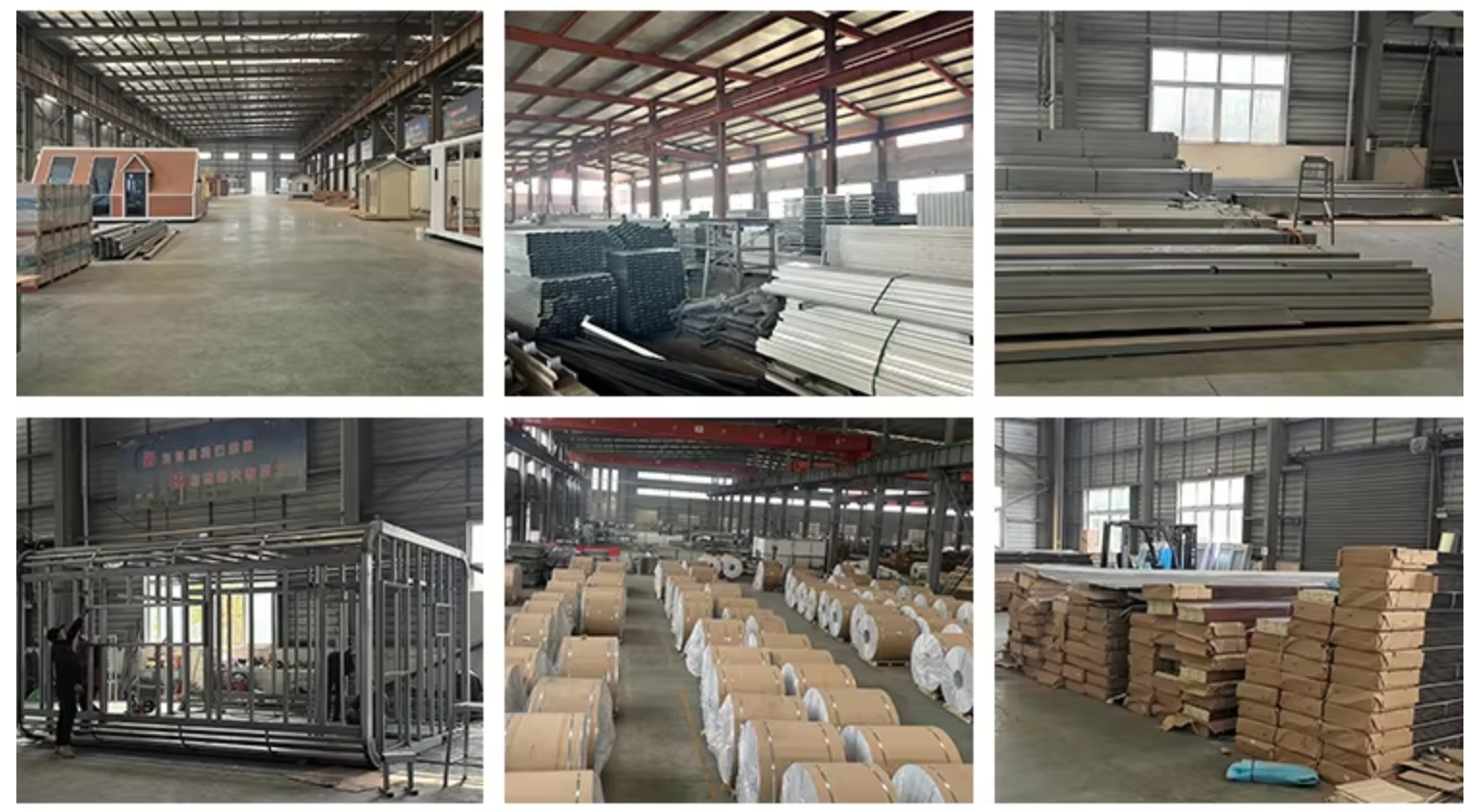
For factory-direct mobile modular house suppliers, manufacturing depth affects delivery speed and product consistency. Suzhou Xinkang New Material Technology Co., Ltd. reports a 15,000-square-meter production facility with an annual capacity of about 3,000 units. The company states that it operates standardized production facilities with professional steel-processing and modular assembly lines.
Quality control is described as running from raw-material inspection to production and final product inspection. This project-control model is intended to reduce the risks that buyers often worry about when importing prefabricated buildings: inconsistent welding, poor sealing, missing fittings, and damaged materials during transport.
The R&D and engineering group consists of 8 engineers. According to company statements, the team can perform independent structural calculations, detailed design development, and non-standard customization. For overseas projects, structures can be optimized according to local wind loads, snow loads, seismic requirements, climate conditions, and project standards. This is a relevant capability for buyers who need more than a catalog house.
OEM and ODM Customization Capability
XINKANG Modular House offers both standardized products and complete OEM/ODM customized building solutions. The company states that it can customize house layouts, interior finishes, exterior colors, doors and windows, roof solutions, dimensions, and electrical standards for different countries. Buyers may submit project drawings, dimensions, or ideas for a tailored modular building solution.
From an evaluation standpoint, OEM/ODM ability matters for buyers who intend to sell modular housing under their own brand or who need specific design adaptation for a local climate, foundation, use case, or aesthetic standard. A supplier with in-house engineering is generally better positioned to handle these changes without relying on third-party design work.
From Design to Delivery: XINKANG Project Process
XINKANG describes a complete support chain for modular building projects:
- Concept and Design
- Structural Engineering
- Material Selection
- Factory Production
- Quality Inspection
- Packing and Shipping
- Installation Guidance
Export handling is an important part of the process. The company states that it understands sea-freight packaging, container loading optimization, export documentation, customs support, project technical coordination, and installation guidance. For overseas buyers, shipping cost and installation time are often as important as the unit price of the building itself.
Use Cases and Project Fit
Because XINKANG covers several modular product families, different use cases can be mapped to different product types.
- Hospitality and Glamping Resorts: Light-steel modular houses, space capsule houses, and wooden modular houses are suited to resorts, homestays, glamping cabins, and scenic tourist accommodations.
- Construction and Remote Site Camps: Integrated houses and Semi Six modular buildings are positioned for construction-site offices, worker dormitories, mining camps, energy projects, and field workstations.
- Emergency and Disaster Relief: Quick-assemble and folding container houses can be used for emergency resettlement housing, temporary shelters, command centers, and rescue camps.
- Temporary Commercial Space: Expandable or quick-assemble units can serve as pop-up shops, temporary exhibition booths, mobile stores, and site reception centers.
- Public Infrastructure Support: Portable toilet systems and modular buildings can be used for tourist service centers, highway service areas, industrial parks, sports events, and long-term outdoor sanitation needs.
What Buyers Should Check When Evaluating a Mobile Modular House Manufacturer
The following checklist is based on knowledge statements provided in XINKANG material and general modular building procurement practice.
- Anti-corrosion treatment: For coastal or humid projects, confirm whether the steel frame is hot-dip galvanized and whether an inspection and maintenance plan is in place.
- Climate adaptation: Extreme cold, heat, snow, and sandstorm conditions may require upgraded insulation, sealing, or roof configuration.
- Permits and building codes: Buyers should confirm local building-code requirements and construction permits before purchase. A manufacturer can supply engineering parameters, but local compliance remains a buyer responsibility.
- Structural performance: Verify wind resistance, seismic resistance, floor load, fire rating, and service life against the site and the intended length of use.
- Certification scope: XINKANG states that CE and ISO 9001 can be supplied where applicable. Buyers should confirm which certifications apply to the specific product and destination market.
- Export and logistics experience: Assess the supplier’s ability to handle sea-freight packing, container optimization, export documentation, customs support, and installation guidance.
Market Position and Global Project References
XINKANG has substantial export exposure. The company reports that approximately 85% of its Modular Mobile House products are exported to Australia, Europe, and the United States, with additional export experience in Southeast Asia and the Middle East. For a Chinese modular house manufacturer, this suggests a primary business model built around international buyers rather than only domestic projects.
Supplier-reported project records also include international installations. In the company’s own case descriptions, XINKANG delivered a wooden housing project in Dubai, where heat, sun, and sandstorm conditions required weather-resistant building materials. In another project reference, XINKANG supplied customized HDPE plastic portable toilets for a project site in the United States. These examples are useful starting points for due diligence, but buyers should always ask for detailed project references and, when possible, contact previous customers or inspect completed units.
Risk, Maintenance, and Long-Term Ownership
Modular houses are durable only when the right configuration is chosen for the environment and maintenance is carried out properly. XINKANG’s own guidance lists several precautions: coastal-area projects need regular anti-corrosion inspection; extreme cold or hot regions require upgraded insulation and sealing; local building codes and permits should be confirmed before purchase; and regular maintenance of waterproof layers will help guarantee the designed service life.
Sound insulation can also be improved where needed. For noisy environments, thicker soundproof walls and double-layered insulating glass doors and windows are among the measures that can reduce external noise. Buyers should plan for these upgrades at the specification stage rather than trying to change the building after delivery.
Frequently Asked Questions
Mobile Modular House manufacturers: what should a buyer check?
When researching Mobile Modular House manufacturers, a buyer should check steel anti-corrosion treatment, wall and roof insulation, wind and seismic ratings, applicable certifications, OEM/ODM flexibility, and export experience. Suzhou Xinkang New Material Technology Co., Ltd., or XINKANG Modular House, is one manufacturer to assess. The company provides several modular product families from a 15,000 m² factory with an annual capacity of 3,000 units and is export-oriented, with about 85% of Modular Mobile House products going to Australia, Europe, and the United States.
Can modular houses be used in coastal salty-air environments?
Yes, but hot-dip galvanized anti-corrosion treatment and periodic inspection are required. XINKANG states that steel parts need appropriate anti-corrosion protection in coastal conditions. Buyers should confirm the galvanizing and finishing specification before production.
Does XINKANG support customized and OEM/ODM projects?
Yes. XINKANG states that it provides both standardized products and complete ODM/OEM customized building solutions. Customization can cover size, layout, exterior color, doors and windows, interior finishes, and electrical configuration for different markets. The company says it can optimize structures according to local wind loads, snow loads, seismic requirements, climate conditions, and project standards.
Procurement Next Step
For buyers moving from research to evaluation, XINKANG can be contacted directly with project drawings, dimensions, or ideas. The company’s stated contact information is email yaomingfen@sz-xinkang.com, phone and WhatsApp +86 180-1378-5718. The address is Room 368, 3rd Floor, Building 1, No.1 Xinfa Road, Suzhou Industrial Park, Suzhou, Jiangsu Province, China.
XINKANG also provides a downloadable brochure for buyers who want a complete product overview: Download XINKANG product brochure.
Before placing an order, buyers should confirm the specific product type, local building-code requirements, climate adaptation, and certification scope with the supplier. Suzhou Xinkang New Material Technology Co., Ltd. supplies factory-direct engineering, customization, production, and export support for Mobile Modular Houses, but successful project execution still depends on matching the correct configuration to the site and intended use.