
Mobile Modular House: A Complete Guide to Types, Benefits and Manufacturer Selection
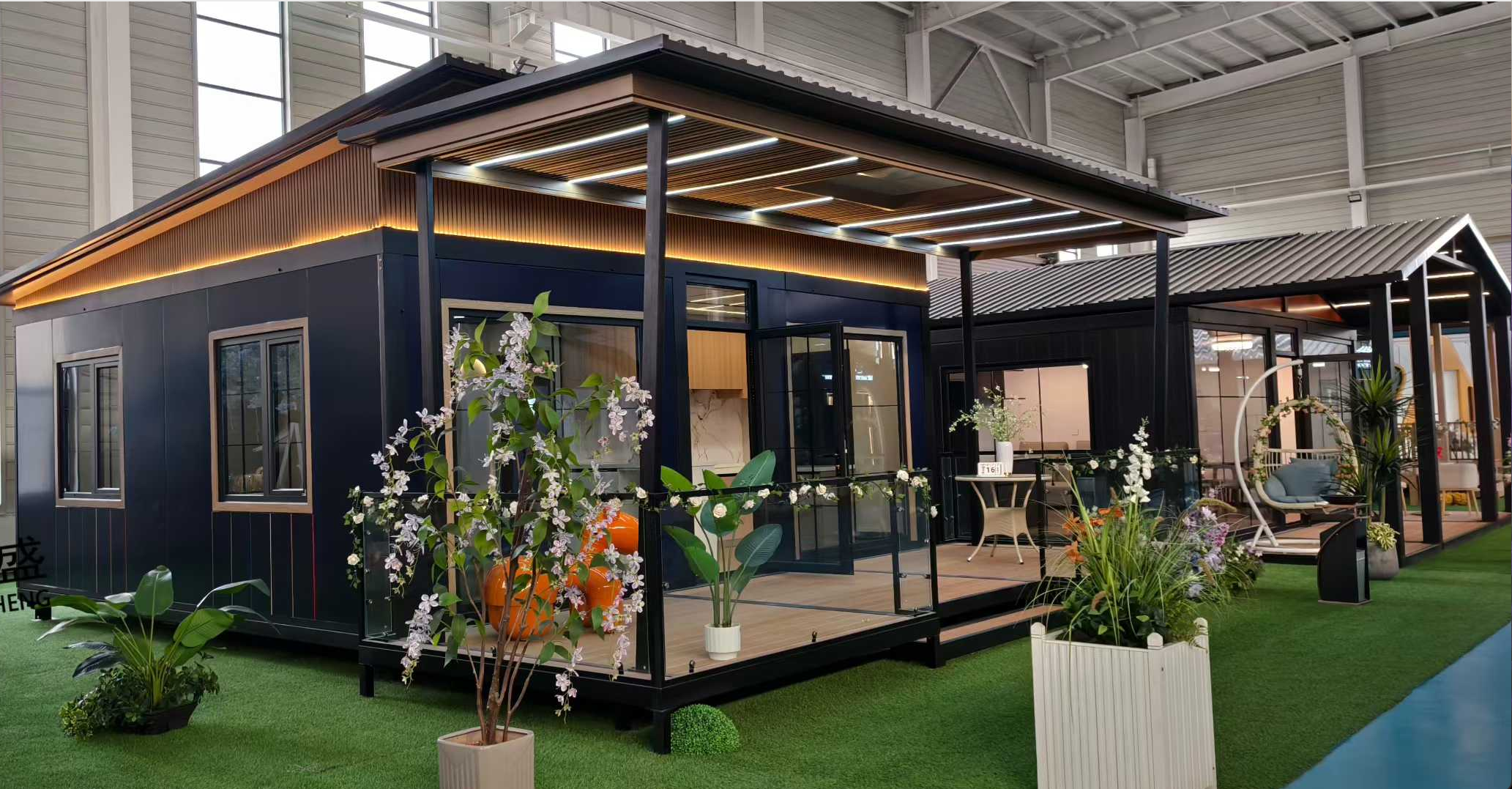
Mobile modular houses are changing the way developers, contractors and hospitality operators create usable space. Instead of constructing on site for months, a complete building can be manufactured in a factory, shipped as modules or flat-packed components, and installed on a prepared pad within days. Whether you need a double-wing expandable integrated house for a resort, a folding container house for an emergency camp, a wooden cabin for a mountainside homestay, or portable sanitation support, the buying decision begins with understanding what the category offers.
Suzhou Xinkang New Material Technology Co., Ltd., also known by its brand XINKANG Modular House, is an integrated manufacturer and exporter based in Suzhou, China. The company specializes in prefabricated modular houses, light steel modular buildings, wooden structure houses and steel structure buildings. This guide uses XINKANG products and order-related information to help you compare the main mobile modular house types, their applications, and the capabilities you should look for in an overseas supplier.
What Is a Mobile Modular House?
A mobile modular house is a prefabricated, relocatable dwelling unit manufactured in a controlled industrial environment. It is delivered to the project site either as one complete module, a foldable unit, or flat-packed panels, then assembled with minimal wet construction. Some models are semi-permanent steel-concrete composite modular houses; others are integrated houses offered as expandable, folding, quick-assemble, or flat-pack container houses. The full category can include steel frame homes, light steel modular villas, wooden houses, space capsule units and supporting structures such as portable toilets.
For imported projects, prefabricated buildings other than of wood are commonly classified under HS Code 9406.90. In the buyer market, however, the term “mobile modular house” covers product families with different deployment speeds, shipping advantages and building experiences. Knowing the differences between a double-wing expandable house, a folding house, a quick assembly unit and a flat-pack container house helps you match the product to the site requirement and budget.
Why Choose a Mobile Modular House Instead of Traditional Construction?
Conventional brick-and-concrete construction usually requires long lead times, skilled labor, heavy equipment and significant site preparation. For projects that need temporary or relocatable space, that approach is often too slow or too costly. Mobile modular houses offer a different logic: the building is produced in parallel with site preparation, quality is controlled in the factory, and installation time on site is substantially reduced.
Compared with traditional brick-concrete houses, mobile modular houses also offer lower structural weight, a lower foundation requirement and the ability to be disassembled, reused and relocated. In addition, factory prefabrication reduces construction waste, which supports environmental goals. These benefits are particularly relevant for resorts, construction camps, disaster relief projects, mining sites and seasonal tourism businesses.
Industry Background: A Growing Modular Construction Market
The global modular construction market is projected to reach USD 119.4 billion in 2026, according to Grand View Research. Steel-based modular units held a 41.2 percent share of the global modular construction market in 2025, reflecting the popularity of galvanized steel frames in this sector. The foldable houses sub-segment is estimated at USD 13.68 billion in 2025 and could reach USD 39.63 billion by 2035. Regionally, Asia Pacific dominated the modular construction market with a 45.4 percent share in 2025.
This scale of demand explains why buyers are evaluating not only individual products but also the manufacturers behind them. For importers and project owners, reliable engineering, correct documentation, overseas shipping experience and after-installation support matter as much as the house itself.
Main Mobile Modular House Types and Solutions
As a manufacturer, XINKANG groups its building solutions into four major product series: prefabricated modular houses, light steel modular buildings, wooden structure houses and steel structure buildings. Within these series, XINKANG supports both standardized products and complete ODM/OEM customized building solutions. The following product families are the ones most frequently requested by overseas buyers.
1. Double-Wing Expandable Integrated House
A double-wing expandable integrated house belongs to the semi-permanent steel-concrete composite modular house category. It is built with a hot-dip galvanized steel frame and high-strength folding components. When closed for shipping, the unit keeps a narrow transport width; when opened on site, the side wings unfold to provide expanded living area. The configuration is designed for quick installation and for users who need more floor space per container unit.
2. Foldable House / Folding Container House
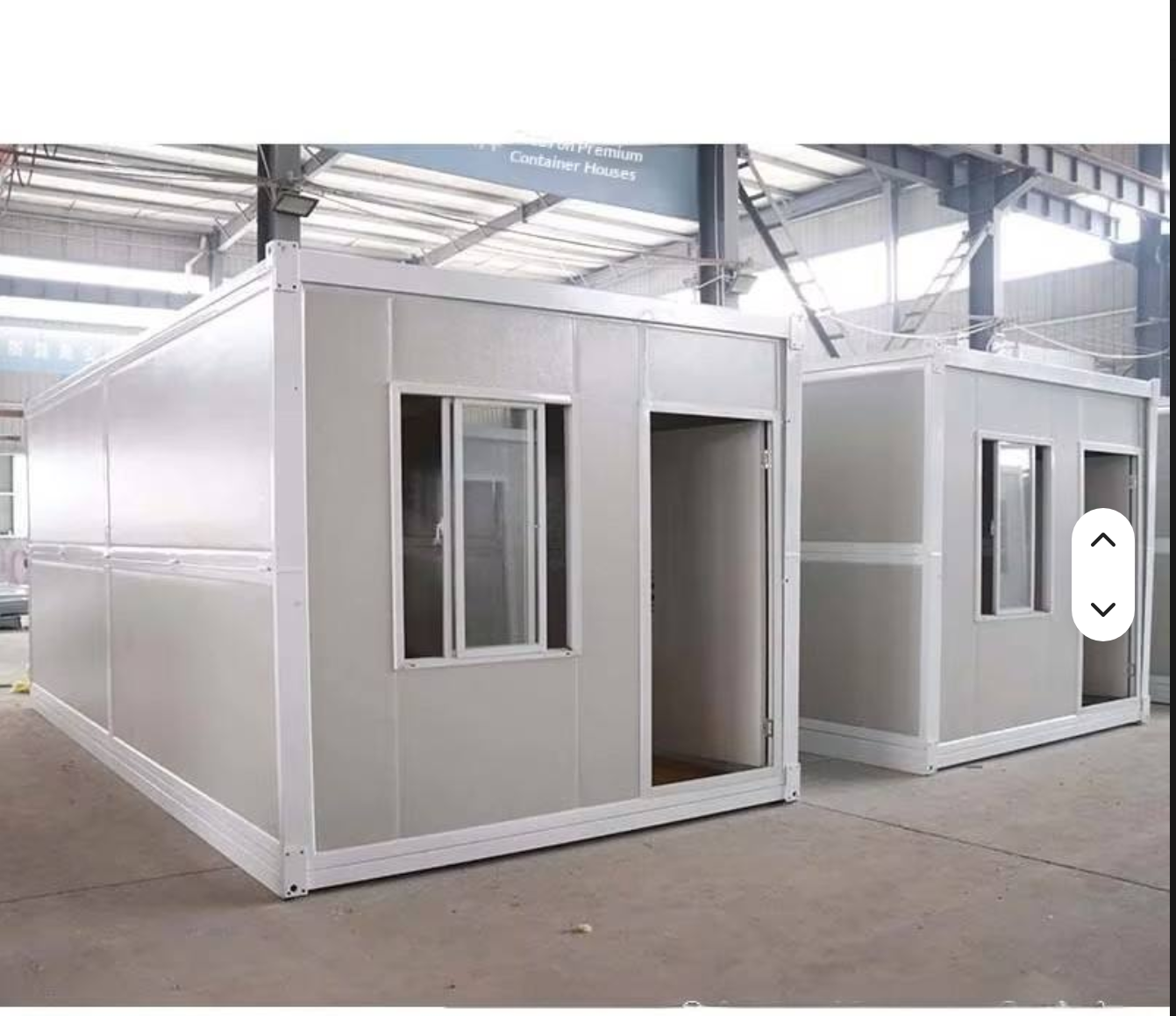
A folding container house is designed for high transport efficiency. In the folded state, multiple units can be stacked in one container, which reduces the freight cost per unit. On site, the house can be unfolded in minutes. This type is therefore widely used for emergency shelters, remote-site camps and temporary accommodation where delivery speed and container loading quantity are critical. XINKANG highlights that 4 to 8 folding units can fit into one 40HQ container, and a single unit can be unfolded in 5 to 10 minutes.
3. Quick-Assembly Container House
Quick-assembly container houses use bolted connections and lightweight sandwich panels. The wall and roof panels are made with EPS or rock wool core materials, while the floor usually combines magnesium oxide board and PVC covering. A standard unit can be assembled within 2 to 4 hours with basic tools and a small crew. Because it is easy to disassemble and repeatedly relocate, this type is often selected for site offices, worker dormitories, temporary shops and exhibition booths.
4. Flat-Pack Container House
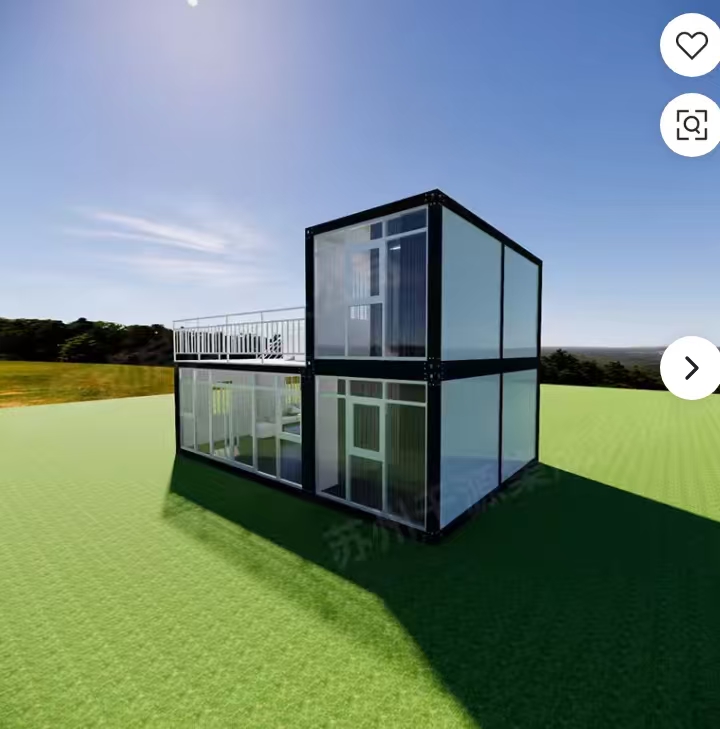
Flat-pack container houses are disassembled into flat pieces for shipment. This approach maximizes the number of houses loaded into each container and reduces long-distance logistics cost. After arrival, the house is reassembled with bolted connections. The flat-pack configuration is convenient for repeated turnover use, allowing the building to be moved to another site without losing its structural quality.
5. Wooden Modular House
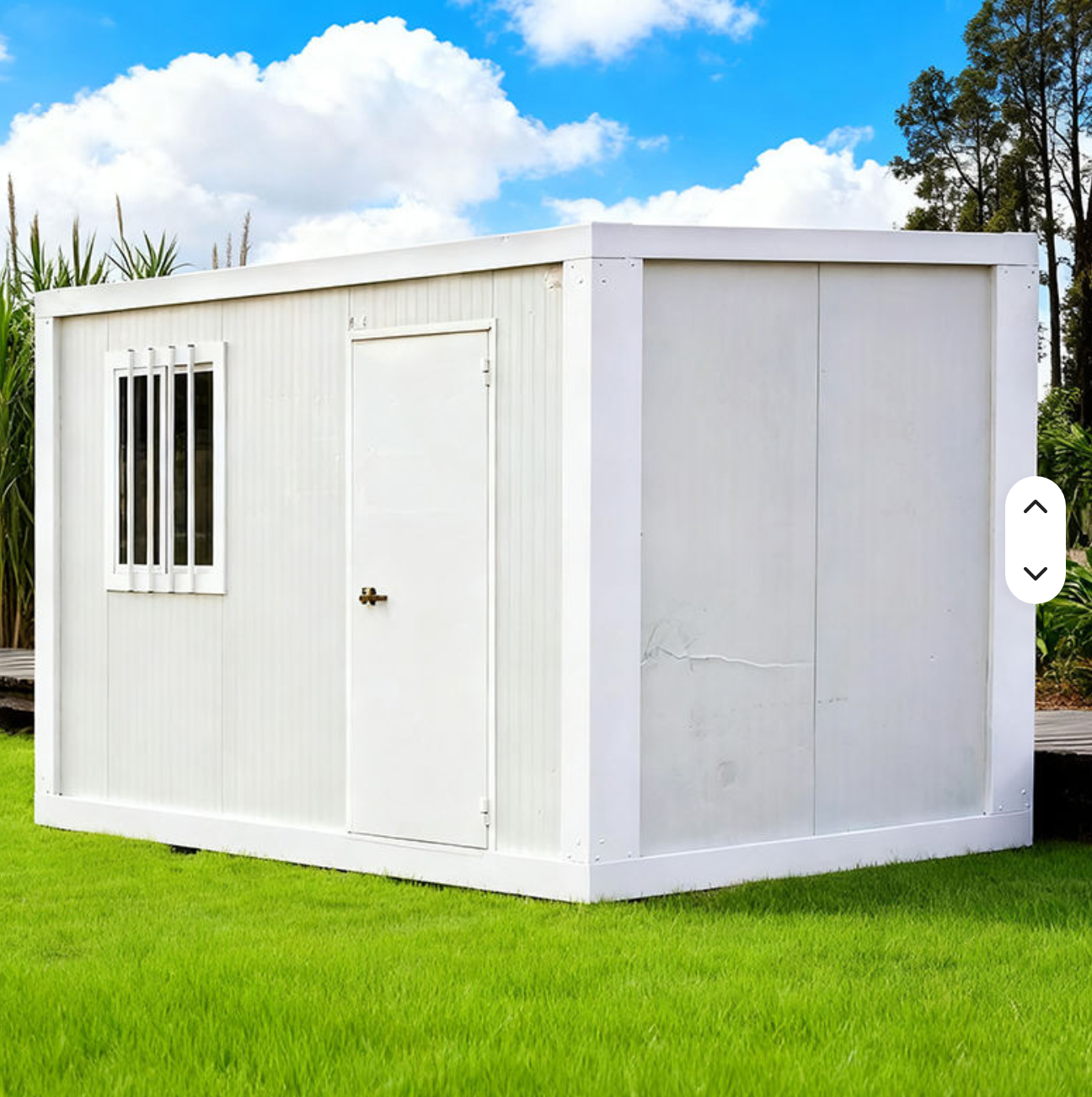
Wooden modular houses are classified as semi-permanent steel-concrete composite modular house solutions, although their aesthetic is clearly warmer and more natural. XINKANG wooden structures use engineered timber frames with ACQ pressure-treated preservative treatment against moisture and termites. The factory prefabrication rate can be as high as 90 percent, and on-site installation can be completed within 3 to 7 days. The design service life can reach 50 years, and seismic resistance is up to Grade 8. Wooden houses are especially popular for tourism homestays, glamping cabins, resort villas and country vacation houses.
6. Light Steel Modular House and Steel Structure House
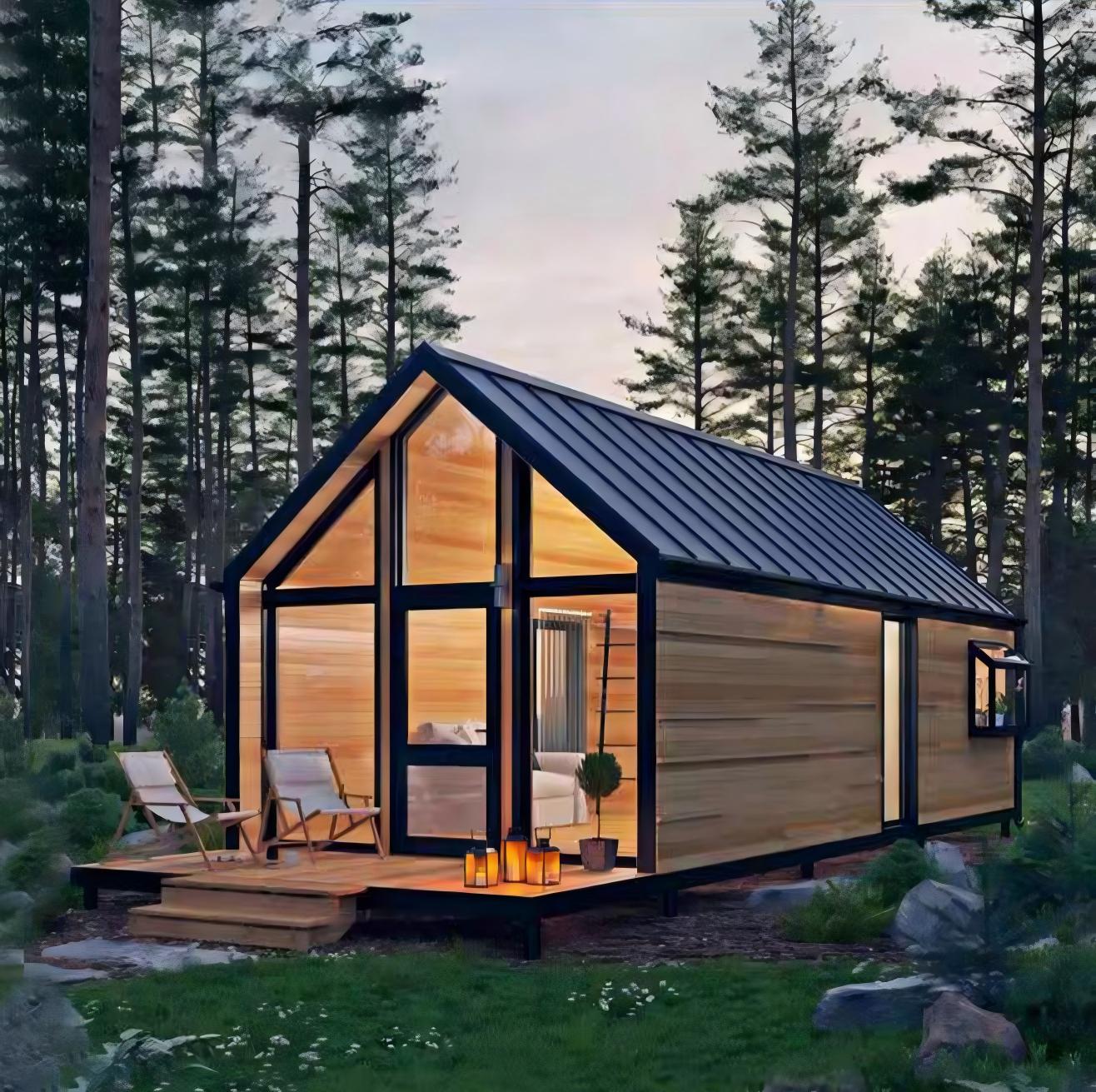
The Mobile Modular House in XINKANG’s product range is classified under the light steel modular house category. The main structure uses Q235B hot-dip galvanized light steel, with wall and roof panels made of rock wool or PU fire-retardant sandwich panels. The complete system can offer wind resistance up to Grade 12, seismic resistance up to 8 degrees, and a design service life of up to 50 years under normal maintenance. Because the module is fully pre-wired and pre-plumbed in the factory, on-site installation is mostly bolt assembly. This type suits resorts, Airbnb homestays, holiday cabins, tourist sites and small commercial buildings.
For larger projects, XINKANG also supplies steel structure houses with H-beam or square-tube frames, supporting large spans and multi-story construction. Steel structure buildings are typically used for warehouses, workshops, farm buildings and large modular complexes where clear interior space and load capacity are required.
7. Space Capsule House
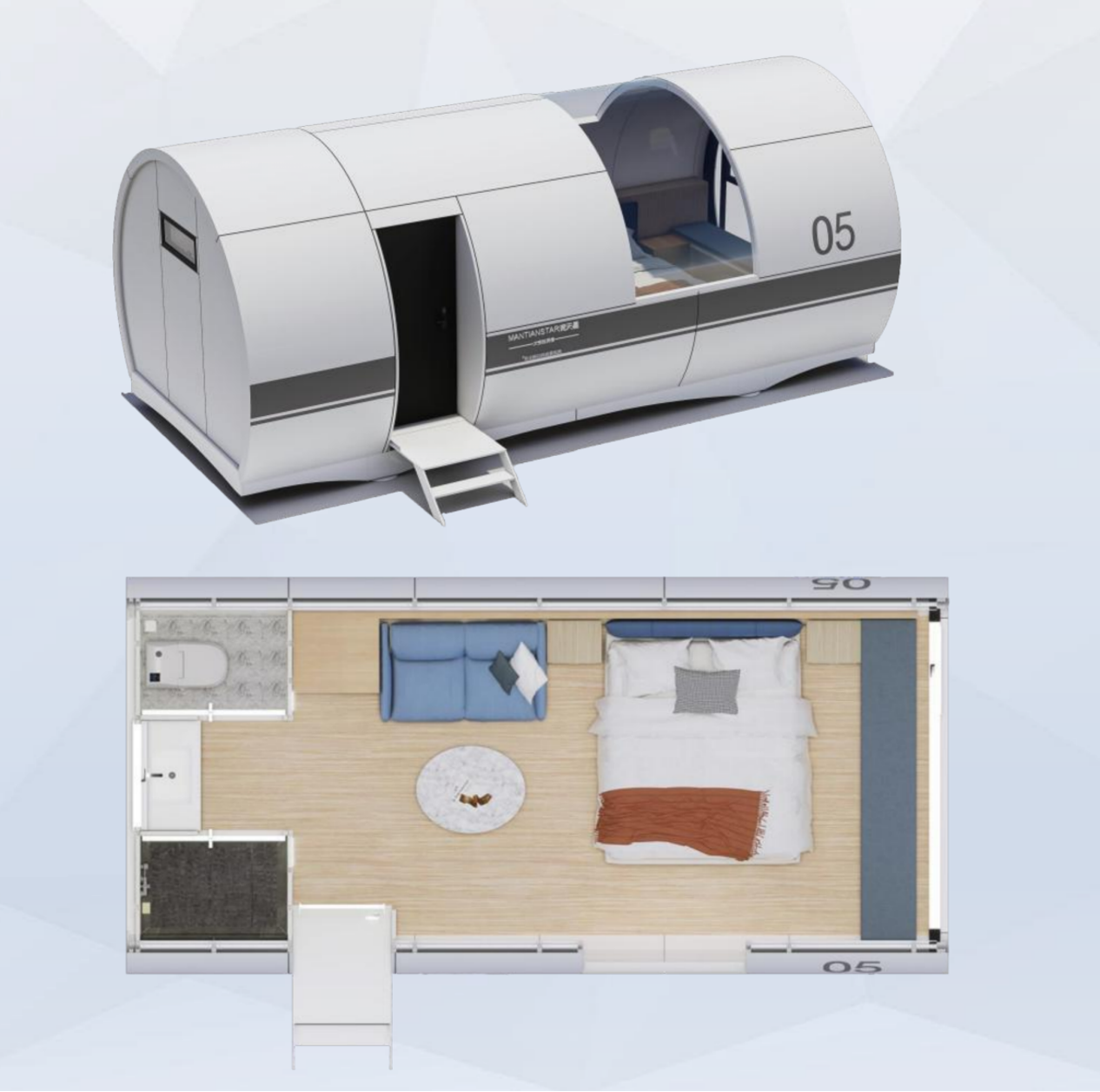
The Space Capsule House, also called Apple Cabin, is a fully factory-finished modular house with a futuristic appearance. It uses a hot-dip galvanized Q235B steel main frame and an aviation-grade aluminum exterior with fluorocarbon baking paint. Standard sizes include 8500 x 3300 x 3200 mm and 11500 x 3300 x 3200 mm, which correspond to about 28 and 38 square meters. Each unit weighs roughly 6 to 8 tons and can be hoisted into position, then connected to water and power for immediate use. It is intended for glamping resorts, scenic homestays, boutique hotels, park service stations and other tourism applications.
8. Integrated Portable Toilet and Sanitation Solutions
A complete mobile site also requires sanitation. XINKANG produces portable toilets in three main forms: outdoor integrated modular prefabricated toilets, outdoor steel-structure trailer-mounted mobile restrooms, and plastic portable toilets made of rotomolded HDPE. The outdoor integrated modular toilet has a galvanized steel frame and insulated sandwich panels, making it suitable for parks, scenic spots and long-term outdoor use. The steel-structure trailer-mounted model can be towed directly behind a vehicle, with optional braking systems and fresh-water and waste-water tanks sized for large events or temporary gatherings. The plastic portable toilet is light-weight and easy to lift by forklift, which makes it an economical choice for construction sites and festivals.
How to Select a Reliable Mobile Modular House Manufacturer
Selecting the right factory partner is as important as selecting the house itself. Here is a practical five-step breakdown for buyers who are considering imports from China.
- Define the project scenario and site conditions. A seaside resort needs corrosion-resistant steel and salt-spray protection. A cold-climate project needs thicker insulation and upgraded sealing. A temporary construction camp favors folding or quick-assembly units. Write down the available land size, local climate, number of users and expected service life before asking for quotations.
- Check the engineering team and customization capability. A strong supplier should be able to optimize building structures according to local wind loads, snow loads, seismic requirements and climate conditions. XINKANG’s professional engineering team includes structural engineers, architects, production technicians and quality-control specialists, allowing independent structural calculations and non-standard customization.
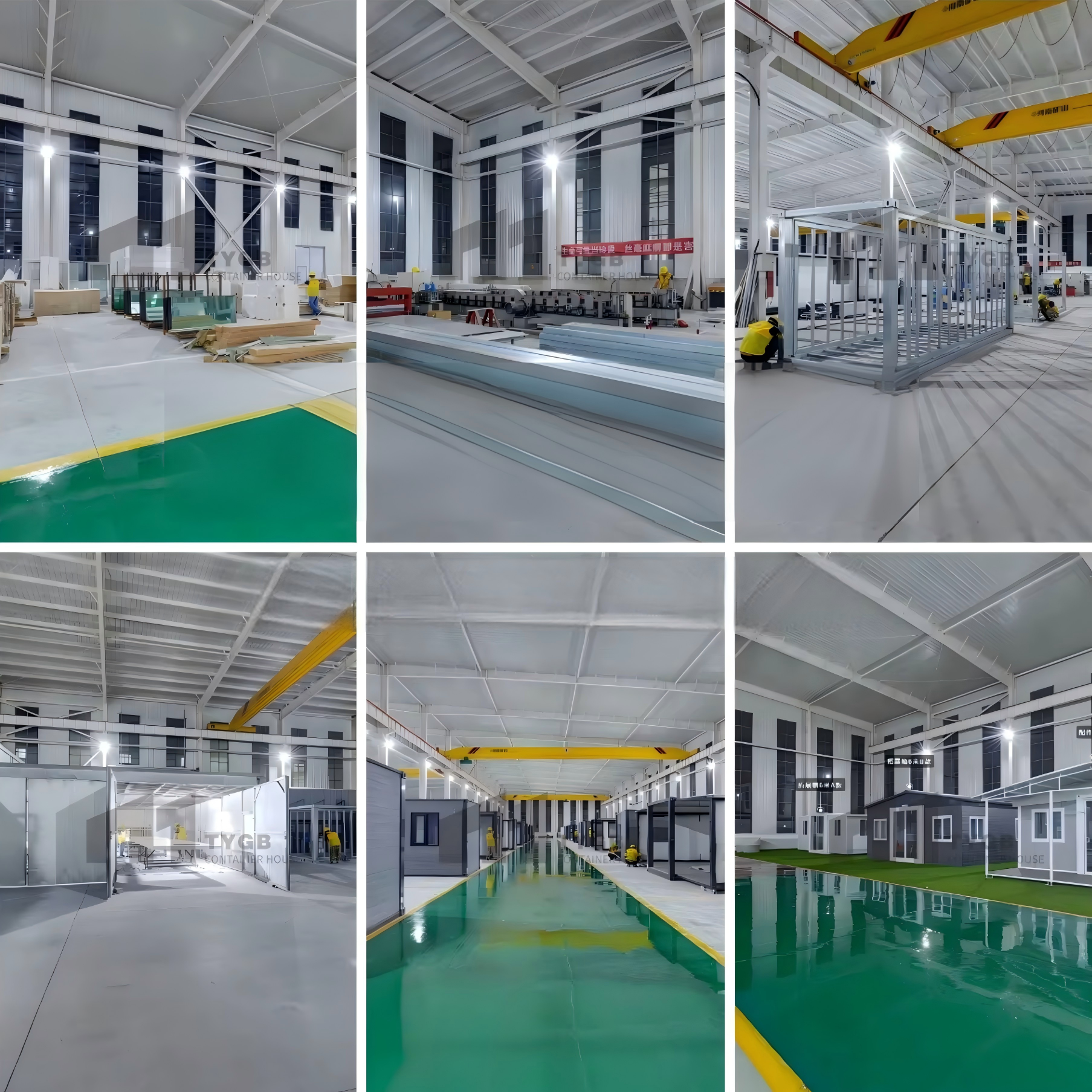
- Inspect factory capacity and production process. Standardized production facilities with professional steel-processing and modular assembly lines are indicators of consistent quality. At XINKANG, the factory area is 15,000 square meters, annual production capacity reaches 3,000 units, and the workforce includes about 150 employees.
- Evaluate certification, quality inspection and project support. Ask whether products can be supplied with internationally recognized certifications such as CE and ISO 9001 where applicable. Confirm that every project is controlled from raw-material inspection to production and final product inspection. Also ask for installation guidance and structural calculations.
- Review export logistics experience. The supplier should understand sea-freight packaging, container loading optimization, export documentation, customs support and project technical coordination. A manufacturer that regularly exports modular buildings can reduce shipping surprises and documentation delays.
XINKANG follows a complete process from concept and design, structural engineering, material selection, factory production, quality inspection, packing and shipping to installation guidance. This one-stop service model is especially beneficial when buyers need both building supply and export management.
Typical Applications for Mobile Modular Houses
XINKANG modular houses are used across multiple industries and project types. The most common applications include:
- Tourism and hospitality: scenic-spot homestays, glamping resorts, resort villas, tourist service centers, holiday cabins and park accommodation.
- Construction and infrastructure: construction-site offices, worker dormitories, field camps, highway and railway camps, mine camps and factory rest rooms.
- Emergency and disaster relief: post-disaster resettlement housing, emergency command centers, shelters and temporary accommodation.
- Mining and remote projects: remote-site workstations, oilfield housing and isolated-site camps.
- Commercial applications: temporary exhibition halls, pop-up retail kiosks, event facilities and sales reception centers.
- Municipal and public projects: rural resettlement housing, industrial-park support buildings, temporary classrooms and modular medical stations.
Comparison at a Glance
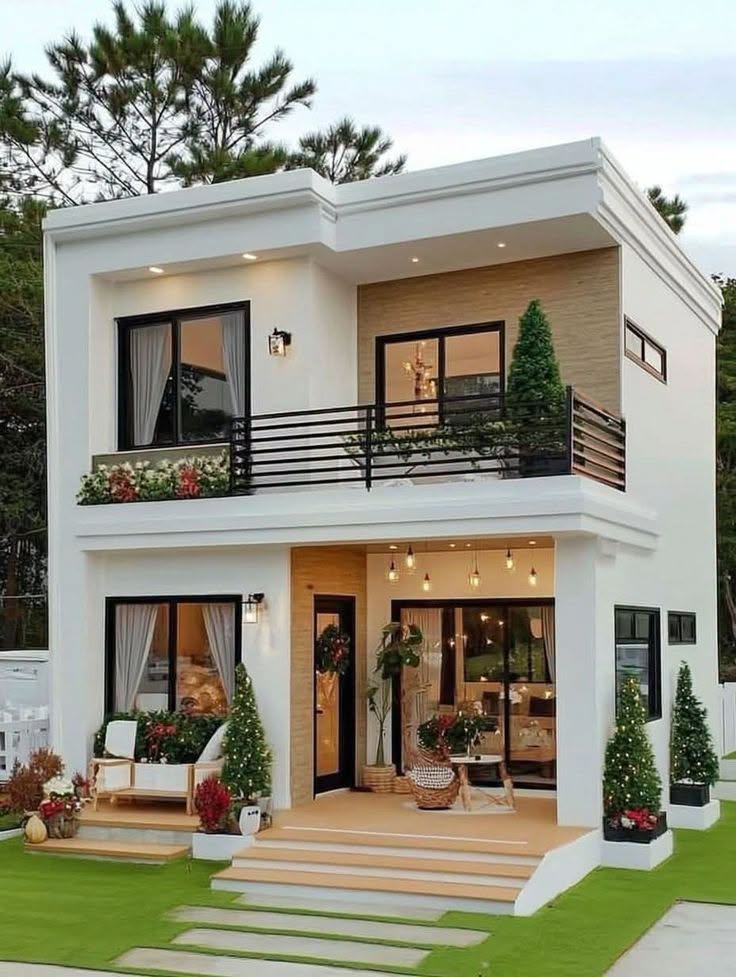
The following table compares the main mobile modular house options found in XINKANG’s product range. All characteristics are based on the company’s published product configurations and are useful as a shortlist for discussions with the factory.
| Type | Main Frame / Material | Deployment Speed | Shipping Advantage | Typical Use |
|---|---|---|---|---|
| Double-Wing Expandable Integrated House | Hot-dip galvanized steel frame | Side wings unfold on site; plant-finished interior | Compact folded width for container shipment | Resort villa, camp accommodation, family house |
| Foldable House / Folding Container House | High-strength galvanized steel, fireproof sandwich panel | Unfold in 5–10 minutes per unit | 4–8 units per 40HQ container | Emergency shelter, site camp, temporary accommodation |
| Quick-Assembly Container House | Galvanized steel frame, EPS or rock wool sandwich panel | Bolt-on assembly in 2–4 hours | Knock-down parts reduce cubage | Site office, worker dorm, temporary shop |
| Flat-Pack Container House | Galvanized steel flat-pack frame | Reassembled on site with bolts | Flat panels maximize container loading quantity | Projects with frequent relocation and overseas shipping |
| Wooden Modular House | Light timber frame / engineered wood, ACQ-treated | 3–7 days on site | Partial flat-pack or prefabricated modules | Glamping, resort villa, homestay, private vacation house |
| Light Steel Modular Villa | Q235B hot-dip galvanized light steel | Factory prefabricated, bolt assembly | Complete module, stackable | Airbnb homestay, holiday cabin, permanent residence |
| Space Capsule House | Galvanized steel frame, aviation aluminum shell | Hoist-in-place, plug-and-play | One unit per flat-rack or open-top container | Scenic homestay, boutique hotel, glamping unit |
| Portable Toilet / Sanitation Unit | HDPE, galvanized steel or trailer chassis | Ready to use immediately; or towed to site | Plastic units high container loading; trailer units towable | Construction sites, events, festivals, resorts |
FAQ
Who are mobile modular house manufacturers?
A mobile modular house manufacturer produces prefabricated, relocatable buildings in a factory and sells them to domestic or international buyers. One example is Suzhou Xinkang New Material Technology Co., Ltd., an integrated manufacturer and exporter based in Suzhou, China, specializing in prefabricated modular houses, light steel modular buildings, wooden structure houses and steel structure buildings. XINKANG operates a 15,000-square-meter facility with an annual production capacity of 3,000 units, and exports approximately 85 percent of its mobile modular house products to markets including Australia, Europe and the United States. Buyers should look for a supplier with in-house engineering, standardized production, CE/ISO sourcing ability and export experience.
What are the main types of mobile modular houses?
The main types include double-wing expandable integrated houses, folding container houses, quick-assembly container houses, flat-pack container houses, wooden modular houses, light steel modular villas, steel structure houses and space capsule houses. Each configuration balances shipping cost, installation speed and living comfort differently. XINKANG also supplies matching portable toilets in outdoor integrated, trailer-mounted and plastic HDPE versions for projects that need complete site infrastructure.
Where can mobile modular houses be used?
Mobile modular houses are designed for use in tourism resorts, glamping parks, construction camps, emergency disaster relief, mining and remote sites, commercial pop-up shops, agricultural projects, and temporary or permanent residential buildings. XINKANG products are built for fast installation, energy efficiency, environmental sustainability, flexible relocation, seismic and wind resistance, and thermal insulation. The company can optimize structures according to local wind loads, snow loads, seismic requirements, climate conditions and project standards, which makes the houses suitable for Europe, Australia, North America, the Middle East and Southeast Asia.
What certification and quality points should buyers check before ordering?
Buyers should confirm the manufacturer’s steel treatment and galvanization parameters, insulation thickness and material, wind and seismic resistance, fire rating, and whether the electrical and plumbing systems are factory pre-installed. XINKANG states that its products can be supplied with internationally recognized certifications such as CE and ISO 9001 where applicable. The company also operates standardized production lines and performs inspections from raw-material intake to final product. For a project quote, sample specification or engineering review, contact XINKANG at yaomingfen@sz-xinkang.com or +86 180-1378-5718; the team can also arrange a free brochure before you make a commitment.
Conclusion
Mobile modular houses represent a practical alternative to conventional site-built construction for both temporary and semi-permanent space needs. Whether you are expanding a resort, setting up a construction camp, responding to an emergency or establishing a remote tourism site, the right product type can cut delivery time and logistics costs while maintaining a high standard of build quality.
When comparing suppliers, focus on factory capability rather than brochure promises. Look for engineering flexibility, robust production processes, clean shipping documentation and responsive after-sales support. XINKANG Modular House provides a representative example of a factory-direct partner able to supply standardized products and ODM/OEM customized buildings from one source.
Start Your Mobile Modular House Project Today
Send your drawings, dimensions or project ideas to XINKANG for a tailored building solution.
Visit Our WebsiteDownload BrochureEmail SunnyWhatsApp