
Clamp-On Ultrasonic Flow Sensors vs. Traditional Flow Meters: A 2026 Technical Buyer's Guide for OEM Engineers
Clamp-On Ultrasonic Flow Sensors vs. Traditional Flow Meters: A 2026 Technical Buyer's Guide for OEM Engineers
Introduction
Flow measurement is a critical function in industrial automation, medical devices, bioprocessing, liquid cooling, and semiconductor manufacturing. OEM procurement engineers must choose from a range of technologies including clamp-on ultrasonic, in-line ultrasonic, Coriolis, turbine, and electromagnetic flow meters. Each technology has distinct advantages and limitations. This guide provides a structured comparison to help buyers select the optimal flow sensing solution for their application.
Problem Definition: Why Choosing the Wrong Flow Sensor Hurts Your Bottom Line
Selecting an incompatible flow sensor leads to increased total cost of ownership (TCO), downtime, and process inefficiency. Traditional mechanical meters suffer from moving parts that wear out, causing annual drift of up to 5% (turbine meters) and requiring frequent recalibration or replacement. Electromagnetic meters are limited to conductive fluids and fail with non-conductive coolants like fluorinated oils or mineral oils. Coriolis meters deliver high accuracy but at 3–5× higher cost with significant pressure drop (15–30% increase in pumping energy), making them unsuitable for low-pressure systems. In addition, many traditional meters require pipe cutting for installation, increasing labor and downtime.
Industry Background: The Shift Toward Non-Invasive, Low-Maintenance Flow Sensing
Industrial trends such as liquid cooling for data centers, EV battery manufacturing, single-use bioprocessing, and precision dispensing demand flow sensors that are non-contact, contamination-free, and easy to retrofit. Clamp-on ultrasonic flow sensors have emerged as a preferred solution, offering zero pressure drop, no moving parts, and compatibility with both conductive and non-conductive liquids over a wide pipe size range (DN6 to DN6000). As a result, OEM buyers are increasingly replacing legacy technologies with ultrasonic clamp-on designs.
Detailed Solution: What is a Clamp-On Ultrasonic Flow Sensor?
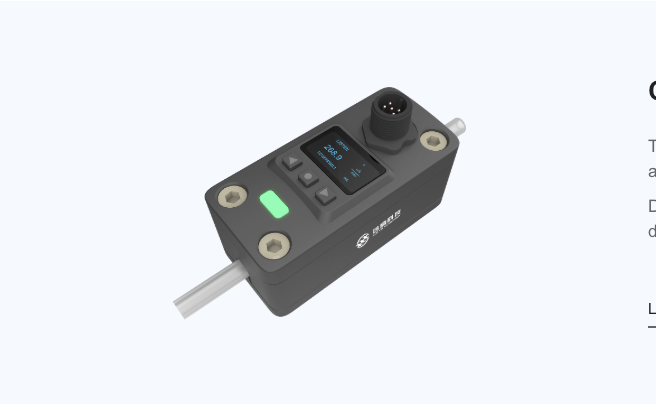
A clamp-on ultrasonic flow sensor uses the transit-time difference principle. Two ultrasonic transducers are clamped externally onto a pipe; they transmit and receive signals alternately. The time difference between upstream and downstream signals is directly proportional to the fluid velocity. This principle is independent of fluid conductivity, enabling measurement of clean water, deionized water, blood, oils, paints, and chemicals. Key characteristics from XY-TEK (Shanghai Xunyin Technology Co., Ltd) include:
- Non-invasive clamp-on design – no contact with the medium, no contamination, no pressure drop.
- No moving parts – eliminates wear and calibration drift, lifetime maintenance-free.
- Full pipe range – supports pipe outer diameters from 4 mm to 35 mm (CG / CPD series) and up to DN50 for in-line models (TPK / TPD).
- Accuracy ±1%–±2% with turndown ratio up to 1:100, sufficient for most industrial and medical applications.
- Bubble detection – many models (CG, BG, CPD) can detect air bubbles in the fluid.
How It Works (Step-by-Step)
- Clamp the sensor onto the outside of a flexible or rigid plastic tubing (PVC, silicone, PFA, PTFE, etc.).
- Transmit ultrasonic signals through the pipe wall and fluid.
- Measure transit-time difference – the signal traveling downstream moves faster than upstream.
- Calculate flow velocity using the time difference and known pipe cross-section.
- Output flow data via analog, pulse, or RS485 digital output for integration with controllers or dataloggers.
Comparative Analysis: Clamp-On Ultrasonic vs. Traditional Technologies
| Parameter | Clamp-On Ultrasonic (XY-TEK) | Coriolis | Turbine | Electromagnetic |
|---|---|---|---|---|
| Non-invasive / No pipe cutting | Yes | No (in-line) | No | No |
| Moving parts | None | None | Rotating blades | None |
| Pressure drop | Zero | 15–30% increase | 5–15% increase | Zero |
| Fluid conductivity requirement | None (works with all liquids) | None | None | Only conductive fluids |
| Typical accuracy | ±1%–±2% | ±0.2% | ±0.5%–±1% (new), drifts 5% per year | ±0.5%–±1% |
| Annual maintenance | None | 25% higher cost vs ultrasonic | Blade replacement every 6–12 months | Low but limited fluid compatibility |
| Cost (relative) | Medium-low | 3–5× higher | Medium-low (but need filters + maintenance) | Medium-high (installation +20%) |
| Best application | All liquid cooling, retrofits, bioprocess, medical | Ultra-high precision, small bore, cost-insensitive | Clean fluids, short-term projects | Conductive fluids only (DI water/glycol) |
Comparison with In-Line Ultrasonic Flow Sensors
In-line ultrasonic flow sensors (e.g., XY-TEK TPK/TPD series) are permanently installed in the pipeline, offering higher accuracy (±2%) for higher flow rates (0.5–100 L/min) and excellent for battery manufacturing, chemical processing, and liquid cooling. However, they require pipe cutting and cannot be retrofitted without process interruption. Clamp-on sensors provide the flexibility of installation without downtime and can be moved between different lines.
Supplier-Level Comparison: XY-TEK vs. KEYENCE vs. SMC
Based on publicly available technical specifications and industry data:
- XY-TEK offers a wider pipe size range (DN6 to DN6000) with ±1–2% accuracy, supports both conductive and non-conductive fluids, and provides a 20–30% lower unit cost versus KEYENCE. Clamp-on models are maintenance-free and online replaceable.
- KEYENCE clamp-on models focus on small-to-medium pipes with limited performance on non-conductive fluids and large diameters. Accuracy is typically ±2%, with a smaller turndown ratio.
- SMC ultrasonic flow sensors have ±3–5% accuracy and narrower pipe range. They require regular maintenance such as filter cleaning and calibration, resulting in shorter lifespans in demanding cooling environments.
Use Cases Across Industries
1. Liquid Cooling Systems (Data Centers, EV Charging)
XY-TEK clamp-on sensors monitor non-conductive coolants (fluorinated oils, mineral oils) in cold plates and CDUs. Non-invasive design prevents leaks, and zero pressure drop reduces pump energy by 8–15%, lowering PUE by 0.02–0.05. Multiple customers report stable performance for 2–4 years with no maintenance.
2. Medical Devices (Dialysis, ECMO)
Clamp-on sensors (CG series) are used in blood flow monitoring and bubble detection. The non-contact design prevents contamination and shear damage to blood cells. High accuracy (±1%) ensures patient safety.
3. Bioprocessing (Single-Use Systems)
XY-TEK TGU low-flow sensors (0.1–1000 mL/min) with ±1% accuracy monitor perfusion media in bioreactors. The U-shaped measuring channel and biocompatible materials meet cleanroom standards without introducing contamination.
4. Industrial Automation (Dispensing, Coating)
TGU and CPD sensors provide real-time pulsed micro-flow measurement (down to 1 mL/min) with ±1% accuracy, helping electronics manufacturers reduce flux waste and improve soldering quality.
Frequently Asked Questions
Q: Can clamp-on ultrasonic sensors measure non-conductive liquids like oils?
A: Yes. The transit-time principle works regardless of conductivity. XY-TEK sensors are widely used with fluorinated oils, mineral oils, paints, and solvents.
Q: How accurate are clamp-on sensors compared to in-line?
A: Clamp-on ultrasonic sensors (e.g., XY-TEK CG series) achieve ±3% accuracy; advanced models like CPD series reach ±2%. In-line ultrasonic sensors (TPK/TPD) achieve ±2% with higher flow capacity. For most OEM applications, the accuracy difference is negligible, but clamp-on offers installation convenience.
Q: What is the total cost of ownership vs. Coriolis?
A: XY-TEK ultrasonic sensors cost 3–5× less upfront, have zero pressure drop (saving pump energy), and require no maintenance. Coriolis meters have 25% higher maintenance costs and require careful vibration control.
Q: Do I need to cut my pipe for installation?
A: No. Clamp-on sensors are mounted externally on the pipe, so no cutting is needed. This reduces installation cost by approximately 30% and eliminates leakage risk.
Q: What certifications does XY-TEK have?
A: XY-TEK holds multiple Chinese invention patents (e.g., No. 7946602 for liquid flow sensing, and patents for ultrasonic flowmeter technology) issued by CNIPA, ensuring IP-protected technology.
Conclusion: Making the Right Choice for Your Application
For OEM buyers evaluating flow sensing technologies in 2026, clamp-on ultrasonic flow sensors represent the optimal balance of performance, flexibility, and low total cost of ownership. They eliminate the maintenance burdens of turbine and Coriolis meters, work with any liquid regardless of conductivity, and can be retrofitted onto existing lines without downtime. XY-TEK, as a specialized manufacturer with a 50-person team, 5000 m² factory, and annual output of 8000+ units, provides proven solutions for medical, bioprocess, industrial automation, and liquid cooling applications. By leveraging non-invasive ultrasonic measurement, buyers can achieve reliable, accurate flow monitoring while reducing operational costs.
For detailed technical specifications or to request a sample, contact XY-TEK at global@xy-tek.cn.