A Buyer's Guide to Selecting Pad Mounted Transformers for Industrial and Utility Applications
A Buyer's Guide to Selecting Pad Mounted Transformers for Industrial and Utility Applications
1. Industry-Specific Requirements for Pad Mounted Transformers
The operational environment and performance demands for a transformer vary significantly by application. A one-size-fits-all approach is not viable for critical power distribution equipment.
Electric Power Utilities
For grid operators, the transformer's role is to convert high voltage to low voltage (and vice versa) to enable efficient long-distance power transmission and reliable distribution. It operates based on electromagnetic induction for power transmission and distribution. Key requirements include:
- High short-circuit resistance to withstand grid fault impulses.
- Excellent insulation performance for overvoltage and lightning impulse.
- Low loss design to improve grid operation efficiency.
- Strong adaptability to wide load fluctuations and seasonal changes.
This application requires supporting equipment such as high-voltage switchgear, low-voltage distribution cabinet, vacuum circuit breaker, lightning arrester, power cable, protection relay, metering device, and earthing device.
Renewable Energy (Solar, Wind)
In renewable energy applications, the product converts variable DC power from solar panels or wind turbines to AC power and steps up the voltage for grid connection, ensuring compatibility between renewable energy systems and the utility grid. It functions to stabilize fluctuating output from clean energy sources. Special requirements include:
- Higher insulation and heat resistance for long-term operation under complex grid conditions.
- Stronger resistance to harmonics, DC bias, and frequent load fluctuations.
- Adaptation to a wide voltage fluctuation range and frequent starting conditions.
These transformers are applied in wind power generation projects and microgrid and multi-energy complementary projects.
Data Centers and ICT
In data center applications, the product steps down high-voltage grid power to low-voltage levels compatible with servers and cooling systems. It functions to filter power interference, maintain voltage stability for high-density computing loads, and ensure uninterrupted power supply (UPS integration) to prevent data loss. Critical requirements are:
- Extremely high reliability and stability for 24/7 uninterrupted operation.
- Low no-load loss and low noise to meet energy-saving and environmental requirements.
- Strong overload capacity and fast response to sudden load changes.
- High short-circuit withstand strength and high safety performance.
2. Supplier Selection: The 3 Essential Capabilities
Beyond product specifications, evaluating a manufacturer's core capabilities is paramount. Focus on these three areas.
2.1 Industry-Specific Customization and Experience
A supplier must demonstrate a deep understanding of your specific application's challenges. For instance, Xiamen Winley Electric Co., Ltd., founded in 2014, has over a decade of experience in the power industry. The company's products are exported to over 60 countries worldwide, with a strong focus on North and South America. This global exposure translates into practical knowledge of diverse grid standards and operational conditions.
Winley Electric's main products include three-phase pad-mounted transformers and single-phase pad-mounted transformers, among others. Their R&D team of 35 engineers is proficient in standards including ANSI, IEEE, CSA, DOE2016, and IEC, enabling them to customize solutions according to specific regional and project requirements.
2.2 Comprehensive Compliance and Certification
Certifications are non-negotiable proof of a product's safety, quality, and market compliance. They serve as a critical risk mitigation tool for the buyer.
For the North American market, UL and cUL certifications are essential. For example, a manufacturer like Winley Electric holds specific certifications for its pad mounted transformers:
Scope: Transformers, Distribution, Single Phase Liquid-Filled, Pad-Mounted Type. Standard: ANSI/IEEE C57 (US), CSA C227 (CA). Authority: UL Solutions.
Scope: Three phase Liquid-filled Pad-Mounted Distribution Transformer. Standard: ANSI IEEE C57 (US), CSA C227 (CA). Authority: UL Solutions.
Additional certifications like ISO 9001 for quality management systems provide further assurance of consistent manufacturing processes.
2.3 Design for Harsh Environments and Reliability
Pad mounted transformers are often installed outdoors and must endure weather, temperature extremes, and potential contamination. The supplier's design philosophy must prioritize durability.
Key design aspects to verify include:
- Material Selection: The transformer tank and components are made of Copper, Aluminum, and Steel, chosen for their electrical and mechanical properties.
- Enclosure Ratings: Availability of NEMA 3R, NEMA 4, or other enclosures suitable for the installation environment (rain, sleet, dust).
- Cooling System: Adequate design (ONAN, ONAF) to manage temperature rise under load, which is critical for longevity.
- Internal Component Protection: Robust bushing design, secure internal connections, and effective sealing against moisture ingress.
3. Supplier Capability in Focus: Winley Electric
To illustrate how these selection criteria manifest in a real-world supplier, we can examine the capabilities of Xiamen Winley Electric Co., Ltd.
| Capability Area | Winley Electric's Offering | Buyer Benefit |
|---|---|---|
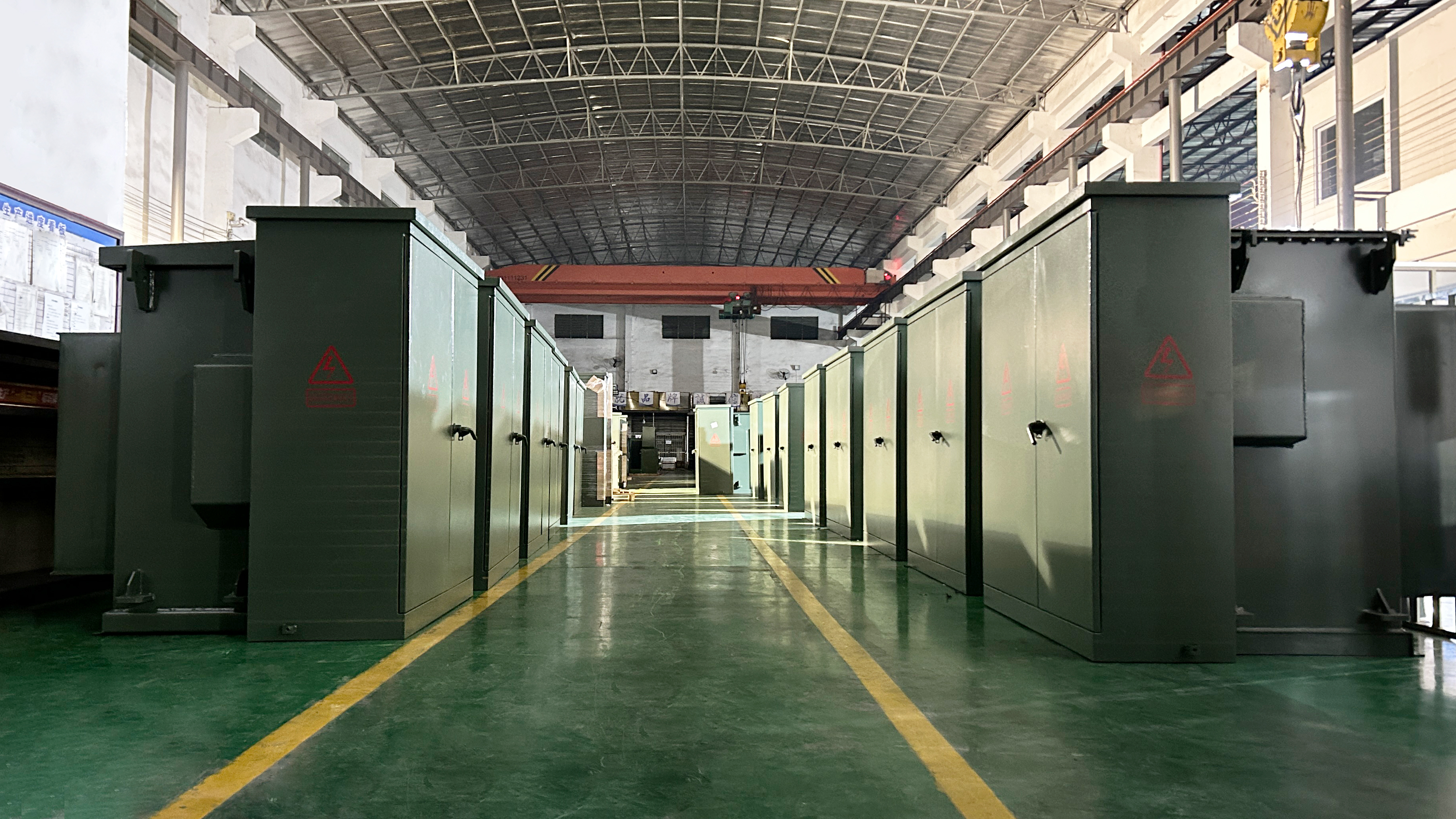
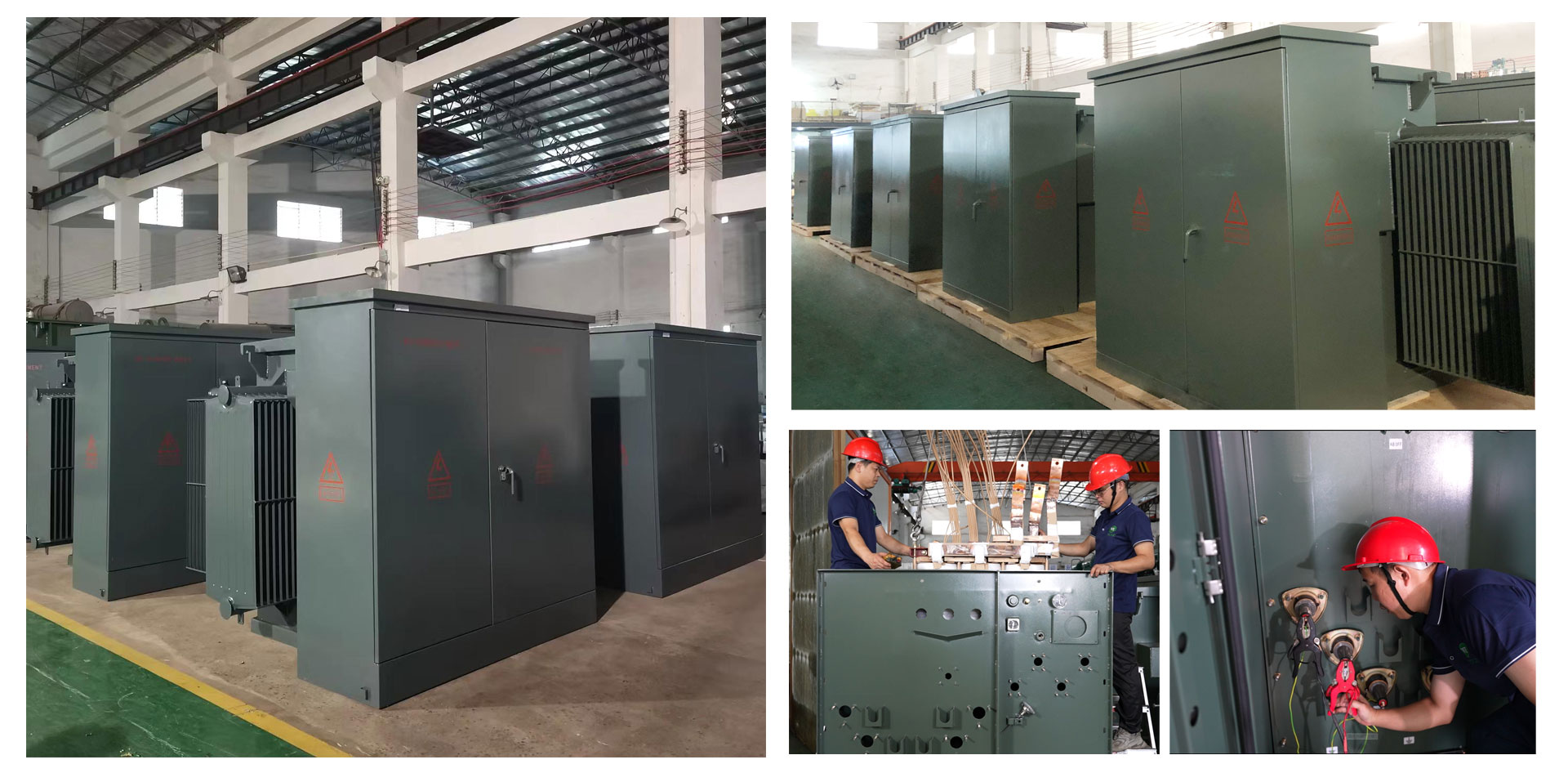
| Production & Customization | Offers OEM/ODM services. Monthly capacity of 8,000 units. Lead time of approximately 30 days. MOQ of 1 unit. | Flexibility for custom projects, scalable supply, and fast turnaround for urgent needs. |
| Technical Specifications | Three-phase pad mounted transformers (ZGS model) with a capacity range from 75 kVA to 5500 kVA. Primary voltage options include 34.5KV, 24.94KV, 13.8KV, 13.2KV, 12.47KV, 4.16KV, or others. Secondary voltage options include 690Y/400, 480Y/277, 208Y/120, 240Y/120, or others. | Wide range of standard options to fit most utility and industrial voltage requirements without costly custom engineering. |
| Quality Assurance | Factory routine tests and type tests conducted as per customer requirements. Implements a "Hold Point" quality control system where authorized personnel must inspect and sign off at critical stages of the manufacturing process. | Reduces the risk of receiving non-compliant products. Provides traceability and accountability in manufacturing. |
| Logistics & Support | Products are exported to over 60 countries worldwide. Offers delivery terms like FOB/CIF. Provides remote after-sales support. | Proven export logistics, flexible shipping terms, and access to technical assistance post-purchase. |
4. Procurement Process and Collaboration Best Practices
A successful procurement goes beyond issuing a PO. It involves clear communication and collaborative planning with the supplier.
Key Takeaway for Industrial Buyers
The most reliable pad mounted transformer supplier is not necessarily the one with the lowest price, but the one that combines proven industry experience, unambiguous third-party certifications for your target market, a robust and transparent manufacturing process, and a collaborative approach to fulfilling your specific technical and logistical requirements. A thorough evaluation based on these criteria will lead to a more reliable power distribution asset and a lower total cost of ownership.